 How to resolve AdBlock issue?
News
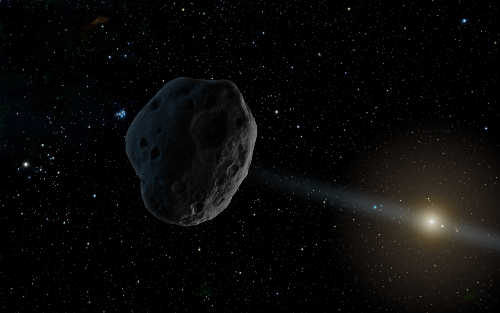
NASA's NEOWISE mission has recently discovered some celestial objects traveling through our neighborhood, including one on the blurry line between asteroid and comet.
Another – definitely a comet – might be seen with binoculars through next week.
An object called 2016 WF9 was detected by the NEOWISE project on Nov. 27, 2016. It's in an orbit that takes it on a scenic tour of our solar system. At its farthest distance from the sun, it approaches Jupiter's orbit.
Over the course of 4.9 Earth-years, it travels inward, passing under the main asteroid belt and the orbit of Mars until it swings just inside Earth's own orbit. After that, it heads back toward the outer solar system.
Objects in these types of orbits have multiple possible origins; it might once have been a comet, or it could have strayed from a population of dark objects in the main asteroid belt.
2016 WF9 will approach Earth's orbit on Feb. 25, 2017. At a distance of nearly 32 million miles from Earth, this pass will not bring it particularly close. The trajectory of 2016 WF9 is well understood, and the object is not a threat to Earth for the foreseeable future.
A different object, discovered by NEOWISE a month earlier, is more clearly a comet, releasing dust as it nears the sun.
This comet, C/2016 U1 NEOWISE, “has a good chance of becoming visible through a good pair of binoculars, although we can't be sure because a comet's brightness is notoriously unpredictable," said Paul Chodas, manager of NASA's Center for Near-Earth Object (NEO) Studies at the Jet Propulsion Laboratory in Pasadena.
As seen from the northern hemisphere during the first week of 2017, comet C/2016 U1 NEOWISE will be in the southeastern sky shortly before dawn.
It is moving farther south each day and it will reach its closest point to the sun, inside the orbit of Mercury, on Jan. 14, before heading back out to the outer reaches of the solar system for an orbit lasting thousands of years. While it will be visible to skywatchers at Earth, it is not considered a threat to our planet either.
NEOWISE is the asteroid-and-comet-hunting portion of the Wide-Field Infrared Survey Explorer (WISE) mission.
After discovering more than 34,000 asteroids during its original mission, NEOWISE was brought out of hibernation in December of 2013 to find and learn more about asteroids and comets that could pose an impact hazard to Earth. If 2016 WF9 turns out to be a comet, it would be the 10th discovered since reactivation. If it turns out to be an asteroid, it would be the 100th discovered since reactivation.
What NEOWISE scientists do know is that 2016 WF9 is relatively large: roughly 0.3 to 0.6 mile (0.5 to 1 kilometer) across.
It is also rather dark, reflecting only a few percent of the light that falls on its surface. This body resembles a comet in its reflectivity and orbit, but appears to lack the characteristic dust and gas cloud that defines a comet.
"2016 WF9 could have cometary origins," said Deputy Principal Investigator James "Gerbs" Bauer at JPL. "This object illustrates that the boundary between asteroids and comets is a blurry one; perhaps over time this object has lost the majority of the volatiles that linger on or just under its surface."
Near-Earth objects (NEOs) absorb most of the light that falls on them and re-emit that energy at infrared wavelengths. This enables NEOWISE's infrared detectors to study both dark and light-colored NEOs with nearly equal clarity and sensitivity.
"These are quite dark objects," said NEOWISE team member Joseph Masiero, "Think of new asphalt on streets; these objects would look like charcoal, or in some cases are even darker than that."
NEOWISE data have been used to measure the size of each near-Earth object it observes. Thirty-one asteroids that NEOWISE has discovered pass within about 20 lunar distances from Earth's orbit, and 19 are more than 460 feet (140 meters) in size but reflect less than 10 percent of the sunlight that falls on them.
The Wide-field Infrared Survey Explorer (WISE) has completed its seventh year in space after being launched on Dec. 14, 2009.
Data from the NEOWISE mission are available on a Web site for the public and scientific community to use. A guide to the NEOWISE data release, data access instructions and supporting documentation are available at http://wise2.ipac.caltech.edu/docs/release/neowise/ .
Access to the NEOWISE data products is available via the on-line and API services of the NASA/IPAC Infrared Science Archive.
A list of peer-reviewed papers using the NEOWISE data is available at http://neowise.ipac.caltech.edu/publications.html .
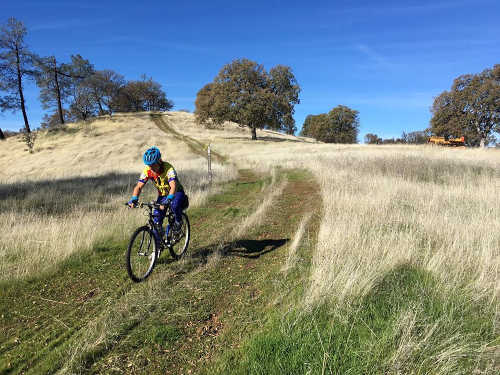
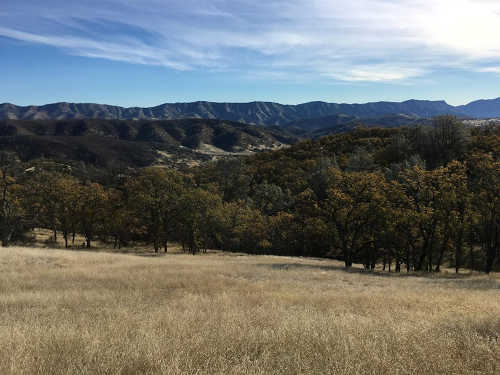
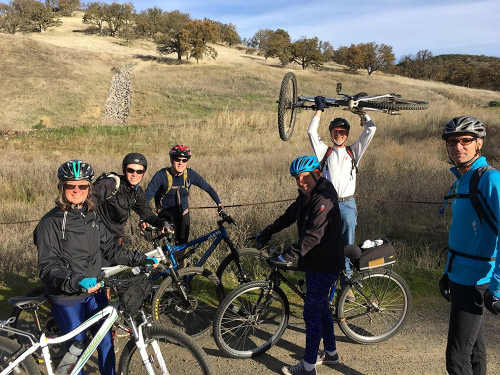
NORTH COAST, Calif. – On Dec. 3, staff members from Tuleyome and the Redwood Empire Mountain Bike Alliance (REMBA) teamed up to lead mountain bikers on an excursion across the top of the Blue Ridge on the border of the Cache Creek Wilderness.
Among the leaders was Andrew Fulks, board president of Tuleyome, and a long-time lover of the outdoors.
Along with his duties at Tuleyome, Fulks is the assistant director of UC Davis Arboretum and Public Garden and has been a constant advocate for appreciation of the Putah and Cache Creek watersheds.
On this outing, Fulks led bikers on a nine-mile ride from the Judge Davis trailhead in Lake County and continued toward Lynch Canyon, to the Three Ponds Trail and along the High Bridge Trail to Highway 16.
REMBA’s mission is to build community among mountain bikers of the Redwood Empire – the region in northern California that lies on the Pacific coast between San Francisco Bay and the Oregon border – through communication, education, trail work, and stewardship of regional parks and open spaces, and it invests resources to build partnerships with organizations that have similar goals like Tuleyome.
This outing was the latest in a series of events hosted by Tuleyome in celebration of the 10th anniversary of the Northern California Coastal Wild Heritage Wilderness Act.
For more information about Tuleyome and upcoming events, visit www.tuleyome.org .
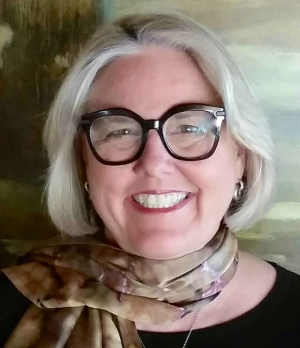
Not long ago, I had dinner with a group of friends from college.
One of the big topics of conversation was Medicare, for which we’ll all be eligible in the next several years. (Farewell, callow youth!) And one of the biggest questions about Medicare was, “How much is it going to cost me?”
Like private health insurance, Medicare has premiums, deductibles and co-pays. These costs can – and often do – change from year to year. What you actually pay depends on your work history, income and inflation.
Only about 1 percent of people with Medicare pay a monthly premium for Medicare Part A, which covers inpatient hospitalization, skilled nursing care and some home health services. That’s because they paid Medicare paycheck deductions for 40 quarters or longer during their working lives.
Most people do, however, pay a monthly premium for Medicare Part B, which covers doctor fees, outpatient treatment, durable medical equipment and other items. Part B premiums are rising for next year, but for most people, the increase won’t be very much.
The law protects most seniors from Part B premium hikes if the cost-of-living adjustment (COLA) in their Social Security benefit doesn’t go up in a given year. Since the Social Security COLA for 2017 will be 0.3 percent, about 70 percent of Medicare beneficiaries will pay an average Part B premium of $109 per month in 2017. That’s up from $104.90 for the past four years.
The remaining 30 percent of Medicare’s 58 million beneficiaries will pay the standard Part B premium of $134 for 2017, a 10 percent increase over the 2016 premium of $121.80.
This smaller group is not protected under the statutory “hold harmless” provision linked to the Social Security COLA. It includes people who don’t receive Social Security benefits; enroll in Part B for the first time in 2017; are directly billed for their Part B premium; are eligible for both Medicare and Medicaid and have their premiums paid by a state agency; and pay higher premiums based on their higher incomes.
This year, as in the past, the government has worked to lessen projected premium increases for these beneficiaries, while maintaining a prudent level of reserves to protect against unexpected costs. The U.S. Department of Health and Human Services will work with Congress as it explores budget-neutral solutions to challenges created by the “hold harmless” provision.
Part B also has an annual deductible, which will rise to $183 in 2017 (compared with $166 in 2016). After your deductible is met, you typically pay 20 percent of the Medicare-approved amount for most doctor services (including most doctor services while you're a hospital inpatient), outpatient therapy, and durable medical equipment.
The Part A deductible, which you pay when admitted to the hospital, will be $1,316 per benefit period in 2017, up from $1,288 in 2016. This deductible covers your share of costs for the first 60 days of Medicare-covered inpatient hospital care in a benefit period.
People with Medicare pay coinsurance of $329 per day for the 61st through 90th day of hospitalization ($322 in 2016) in a benefit period, and $658 per day for lifetime reserve days ($644 in in 2016).
For beneficiaries in skilled nursing facilities, the coinsurance for days 21 through 100 in a benefit period will be $164.50 in 2017 (versus $161 in 2016).
Since 2007, higher-income people with Medicare have paid higher Part B premiums. These income-indexed rates affect about five percent of people with Medicare. So, for example, a person with Medicare who files an individual tax return showing an income between $85,000 and $107,000 will pay a Part B premium of $187.50 per month next year.
Some people choose to get their benefits through privately-operated Medicare Advantage health plans, or purchase a Medicare Part D plan to help cover their prescription drug costs. Many of these plans carry their own monthly premiums.
For more information about 2017 premiums and deductibles, go to www.medicare.gov , or call Medicare any time of day or night, at 1-800-MEDICARE (1-800-633-4227).
Cate Kortzeborn is Medicare’s acting regional administrator for Arizona, California, Hawaii, Nevada, and the Pacific Territories.
LOWER LAKE, Calif. – The Lake County Democratic Club will hold its first meeting of the new year on Wednesday, Jan. 11.
The meeting will begin at 6:30 p.m. in the Lower Lake United Methodist Church Social Hall, 16255 Second St.
The agenda will include setting up officers, committees and priorities for 2017.
Lake County Democratic Club meetings are held on the second Wednesday of every month at 6:30 p.m. in Lower Lake. All meetings are open to the public. Membership is open to registered Democrats.
The Lake County Democratic Club is an officially chartered club of the Democratic Party of Lake County.
Visit www.lakecountydemocraticclub.org or contact the group at
NORTH COAST, Calif. – Caltrans reports that the following road projects will be taking place around Lake County and the North Coast during the coming week.
Included are Mendocino County projects that may impact Lake County commuters.
In observance of the New Year’s holiday, Caltrans crews and contractors will not be performing any activity on state highways that would include lane closures Saturday, Dec. 31, through Monday, Jan. 2. However, Caltrans will respond to emergency situations with traffic control as required.
The agency wishes Californians a happy, healthy and safe holiday season.
LAKE COUNTY
Highway 20
– Pavement repairs from Sayre Avenue to Glenhaven Drive will continue. One-way traffic control will be in effect from 7 a.m. to 6 p.m. weekdays. Motorists should anticipate five-minute delays.
Highway 29
– Valley fire recovery work from the Lake/Napa County line to Hidden Valley will continue. One-way traffic control will be in effect from 7 a.m. to 5 p.m. weekdays. Motorists should anticipate five-minute delays.
Highway 175
– Valley fire recovery work from the junction of Routes 29/175 in Middletown to Loch Lomond will continue. One-way traffic control will be in effect from 7 a.m. to 5 p.m. weekdays. Motorists should anticipate five-minute delays.
MENDOCINO COUNTY
Highway 20
– Pavement repairs from the North Calpella Overcrossing to Road 260 will continue. One-way traffic control will be in effect overnight from 7 a.m. to 5 p.m. weekdays. Motorists should anticipate 20-minute delays.
Highway 101
– Routine maintenance near Frog Woman Rock will continue. Northbound traffic will be restricted to one lane 24 hours per day, seven days per week. Motorists should anticipate minor traffic slowdowns.
– Emergency slide repairs just south of Standish-Hickey State Park will continue. One-way traffic control with a temporary signal will be in effect 24 hours per day, seven days per week. Motorists should anticipate five-minute delays.
– Emergency slide removal work will continue. A full highway closure will be in effect with a detour onto State Route 271. Motorists should anticipate 10-minute delays as they navigate the detour.
The Caltrans Traffic Operations Office has reviewed each project and determined that individual project delays are expected to be less than the statewide policy maximum of 30 minutes, unless noted otherwise above.
For information pertaining to emergency roadwork or for updates to scheduled roadwork, please contact the California Highway Information Network (CHIN) at 1-800-GAS-ROAD (1-800-427-7623).
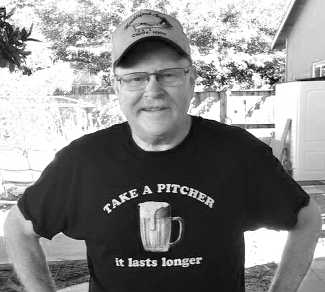
LAKE COUNTY, Calif. – Born Nov. 15, 1951, Craig died in a tragic accident on Dec. 21, 2016, near Lakeport, Calif.
Craig was married to Dana McDonald and has three daughters, Lori Ames (Brian), Trisha McDonald, Kathryn Cole (Craig Wilczewski) and one son, Clint Cole; grandchildren, Tylor, Noah, Kylie, Alex, Lexy, Ravon, Shane, Cristina and Ben; two sisters, Melody Logan (Dan) and Robyn Graham (Leo); nephews, Dan, Brian, Dusty and Logan; and niece, Traci Soltau. Craig was preceded in death by his parents, Jim and Peggy McDonald.
Craig spent most of his life in Redding, Calif., and the last 10 years in Lucerne, Calif. He graduated from Shasta High School in 1969 and Shasta College in 1971. He worked for Bonnyville Market, retired from Holiday Market in Redding and recently retired from Sentry Market in Nice, Calif.
Craig was a people person, loved sharing hunting stories, and trips hunting with his best friends Gary and Lori were the best times of his life. He was a collector of everything, and loved his dog Tater more than life.
He enjoyed taking care of everyone. Some of his special moments were spent just hanging out with his father-in-law, Howard Barker, and his neighbor, Ron.
He was an amazing dad, husband, brother, grandfather and friend to many. He always had a smile and offered a helping hand to anyone.
A memorial service will be held at Chapel of the Lakes Mortuary on Saturday, Jan. 7, at 11 a.m. A celebration of life-potluck will follow at the North Shore Event Center, 2817 Highway 20 in Nice.