 How to resolve AdBlock issue?
News
 MIDDLETOWN, Calif. – The Middletown Art Center, or MAC, invites everyone to get funky and join them on Saturday, Jan. 7, for a celebration of the life and work of the great late James Brown.
Brown passed on Dec. 25, 2006.
Dance in the new year with soul with JB’s music in the front of the house, and videos of his extraordinary performances in the back.
There is a $5 cover fee and wine and beer will be for sale.
Doors open at 7 p.m. The dance starts at 7:30 p.m., and all proceeds benefit the Middletown Art Center.
“By coming, you are not only celebrating the life and work of a great artist, but also supporting the MAC venue and the growing Arts and Culture scene in Lake County,” said Lisa Kaplan, MAC director.
The Middletown Art Center is a nonprofit arts organization that continues to be dedicated to promoting community and economic recovery in south Lake County after the 2015 fires, through the arts, culture, and community events.
Currently on view is the Members Holiday Show, until Jan. 22, an exhibit of variety and curatorial flow showcasing MAC member artists’ work.
“Driven to Abstraction” is MAC’s next show with an opening reception from 6 to 8 p.m. Jan 28. A Call for Work is in process and submissions are due Jan. 10.
To learn about submitting work to MAC for consideration, visit middletownartcenter.org/artists.html .
Remember to drop by MAC to enjoy work by contemporary Lake County Artists. The MAC Gallery is open Thursdays from 11 a.m. to 4 p.m., Fridays from 11 a.m. to 6 p.m., Saturdays from 10 a.m. to 6 p.m., and Sundays from 11 a.m. to 4 p.m. or by appointment.
MAC is located at 21456 State Highway 175, at the junction of Highways 29 and 175 in Middletown and offers an array of memberships, child and adult classes in the arts, performance opportunities and a new Cinema Club.
When you support MAC through membership, donations or purchases of art work, you help support a local creative community and by extension our local economy.
Learn more, join as a member or make a tax deductible contribution at www.middletownartcenter.org , call 707-809-8118 or email
In the wireless technology world, 2016 will go down as the year we learned that Siri has competition from Alexa and that saying “OK Google” can help us order a pizza.
Cars are driving themselves down the road, and we can easily control our appliances, coffee makers and lights from our smartphones.
In 2016, technologies such as 5G and Internet of Things (IoT) took significant steps forward, and more and more smartphone functionality is available on our wrists.
Where will wireless technology take us in 2017? Jay Ellison, executive vice president of operations for U.S. Cellular, said that 2017 will be the year that California residents will regularly experience IoT at home and at work, and that technology will be more ingrained in our lives than ever before.
“There have been a lot of buzzwords in the wireless world over the years, and 2017 may be the year that they move from buzzy to reality,” Ellison said. “It all starts with the smartphone in our hands, and that small device can control almost anything that has an on/off switch. It is really fun and exciting to see how previously difficult or annoying jobs can be handled with the push of a button, and I can’t wait to see what is next on the horizon.”
Ellison anticipates three trends in the wireless industry that you may experience in 2017.
1. Connected homes
The promise of The Internet of Things (IoT) has now come to a new mass market: the connected home. In the span of a few short years, connected devices have entered the homes of millions of Americans, and these devices are now poised for a new wave of growth. We now have connected lightbulbs, connected scales, connected thermostats, connected refrigerators, connected pet dishes, connected grills, connected toasters, and the list goes on.
These “smart” home appliances and devices can be accessed and controlled from any location from a smartphone or tablet, providing us with informative data or making daily tasks simpler and faster. With the rise of affordable IoT devices, the worldwide smart home market is forecast to grow to $43 billion in 2020, from $15.6 billion in 2016, according to Statista.
“Technology is making it easier than ever to stay connected to your home no matter where you are,” said Ellison. “While the smartphone is the centerpiece of it all, we have seen more and more people coming in to our stores and purchasing these IoT devices to see how useful they can be in their daily life.”
2. The business case for drones
The year 2017 will be when drones go beyond recreational use and start being used by a wide range of businesses. We have seen many business sectors be early adopters of drone technology, and it is expected that more businesses will use the technology to simplify their operations.
Some of the common industries where we already see drone use are in agriculture, oil and gas utilities, mining and surveying, but the possibilities are endless. They can also be used in humanitarian efforts to deliver goods to or assess areas that have been hit by natural disasters. In the wireless industry, they could be used to check a damaged tower or monitor a tower in a remote location that is difficult to access.
Many smaller drones can be controlled by a smartphone or tablet application, and the data that can be gathered can be helpful for businesses of all sizes. For those looking to get started using the technology, it is encouraged that you visit http://knowbeforeyoufly.org/ to learn the FAA regulations.
3. Virtual reality becomes a reality for businesses
Virtual Reality (VR) has been around for many years, but it seems to have finally found its place in the market and is here to stay for 2017 and beyond.
While it has become popular in video games and other forms of entertainment, the possibilities for it to be used in business are growing at an increasingly fast rate.
Some estimates put the market for VR at $150 billion within four years, and as the technology becomes more affordable for more people, that may be a conservative estimate.
From virtual meetings to tourism to healthcare, VR has the potential to impact the business world in the very near future.
Architects can make complex drawings in 3D and immerse their clients in what the building will look like. Hundreds of medical students can shadow a surgeon during a procedure no matter where they are, and realtors can take potential home buyers through a virtual tour of homes for sale in a certain area. The money savings VR can bring to these business sectors will be substantial.
As the barriers continue to be lowered for people to try out VR in their home and business life, more benefits will emerge.
FORT BRAGG, Calif. – The Jackson Demonstration State Forest Advisory Group meeting will be held on Monday, Jan. 9.
Anyone wishing to participate will meet at 1 p.m. at the Fort Bragg Library, located at 499 East Laurel Street in Fort Bragg.
This meeting is open to the public and public attendance is encouraged.
The meeting agenda is posted at http://calfire.ca.gov/resource_mgt/resource_mgt_stateforests_jackson.php .
If anyone has any questions regarding the meeting or about Jackson Demonstration State Forest in general, please call 707-964-5674.
California state government as well as academia and nonprofit agencies have been allocated a total of $11,938,300 in the USDA spending plan to prevent the introduction or spread of plant pests and diseases that threaten U.S. agriculture and the environment, as well as ensure the availability of a healthy supply of clean plant stock.
The appropriations are part of a total USDA allocation of $57,762,405 in 2014 Farm Bill funding for support of 513 projects in 53 states, territories and the District of Columbia.
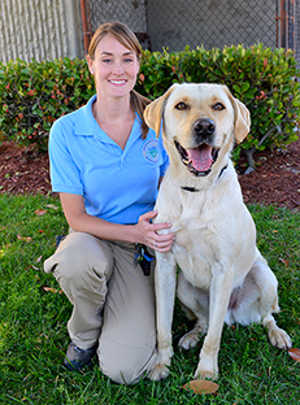
CDFA has been named as a recipient of $3,241,455 for its detector dog teams; $3 million for exotic fruit fly surveys; and $1.7 million for emergency plant health response programs.
The California Dog Teams program enhances inspection and surveillance activities related to plant products entering the State of California via parcel delivery facilities and airfreight terminals. The USDA allocation helps provide for ongoing operations.
The dog teams have demonstrated that unmarked parcels present a high-risk pathway for harmful pests to enter California.
Between July 1, 2014 – June 30, 2015, the teams alerted on 22,583 total marked and unmarked parcels containing agricultural product.
A total of 490 actionable pests were intercepted during this period. An actionable pest may be a pest of economic or environmental concern and is either not known to be established in California or it is present in a limited distribution that allows for the possibility of eradication or successful containment.
Additionally, 2,273 package rejections were issued during that time period for violations of state and federal plant quarantine laws and regulations.
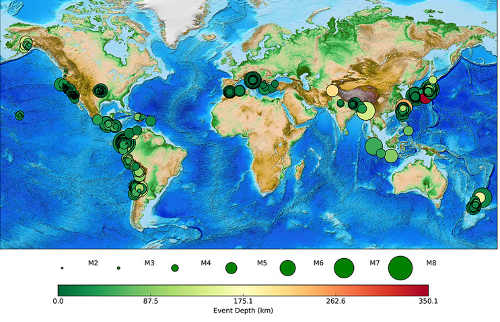
The University of California, Berkeley's worldwide network of smartphone earthquake detectors has recorded nearly 400 earthquakes since the MyShake app was made available for download in February, with one of the most active areas of the world the fracking fields of Oklahoma.
The Android app harnesses a smartphone's motion detectors to measure earthquake ground motion, then sends that data back to the Berkeley Seismological Laboratory for analysis.
The eventual goal is to send early-warning alerts to users a bit farther from ground zero, giving them seconds to a minute of warning that the ground will start shaking. That's enough time to take cover or switch off equipment that might be damaged in a quake.
To date, nearly 220,000 people have downloaded the app, and at any one time, between 8,000 and 10,000 phones are active – turned on, lying on a horizontal surface and connected to a wi-fi network – and thus primed to respond.
An updated version of the MyShake app became available for download Dec. 14 from the Google Play Store, providing an option for push notifications of recent quakes within a distance determined by the user, and the option of turning the app off until the phone is plugged in, which could extend the life of a single charge in older phones.
"The notifications will not be fast initially – not fast enough for early warning – but it puts into place the technology to deliver the alerts and we can then work toward making them faster and faster as we improve our real-time detection system within MyShake," said project leader Richard Allen, a UC Berkeley professor of earth and planetary sciences and director of the seismology lab.
In a presentation on Dec. 14, during the annual meeting of the American Geophysical Union in San Francisco, UC Berkeley developer and graduate student Qingkai Kong summarized the app's performance.
Ten months of operation clearly shows that the sensitivity of the smartphone accelerometers and the density of phones in many places are sufficient to provide data quickly enough for early warning.
The phones readily detect the first seismic waves to arrive – the less destructive P waves – and send the information to Berkeley in time to issue an alert that the stronger S wave will soon arrive.
"We already have the algorithm to detect the earthquakes running on our server, but we have to make sure it is accurate and stable before we can start issuing warnings, which we hope to do in the near future," Kong said in a separate statement.
The app can detect quakes as small as magnitude 2.5, with the best sensitivity in areas with a greater density of phones.
The largest number of phones to record a quake was 103, after the 5.2 magnitude quake that occurred on the San Jacinto fault near Borrego Springs in San Diego County on June 10. Phones 200 kilometers from the epicenter detected that temblor.
The largest quake detected occurred on April 16 in Ecuador: a 7.8 magnitude quake that triggered two phones, 170 and 200 kilometers from the epicenter.
Allen, Kong and their colleagues at Deutsche Telekom's Silicon Valley Innovation Center believe the app's performance shows it can complement traditional seismic networks, such as that operated nationally by the U.S. Geological Survey, but can also serve as a stand-alone system in places with few seismic stations, helping to reduce injuries and damage from earthquakes.
While the app has detected quakes in seismically active areas such as Chile, Mexico, New Zealand, Taiwan, Japan and the West Coast of the U.S., one surprising hot spot has been the traditionally quiet state of Oklahoma.
The practice of injecting oil well wastewater deep underground has activated faults in the area to the extent that the state is rattled hundreds of times a year.
"Oklahoma is now clearly No. 1 in terms of the number of earthquakes in the lower 48 states," Kong said.
Most of Oklahoma's earthquakes are small, but MyShake users in the state, which number only about 200, easily detected the Sept. 3 magnitude 5.8 quake, the strongest ever to hit the state.
During that event, 14 phones in the state triggered, but even this relatively small number of phones allowed the seismology lab to peg the magnitude within 1 percent of estimates from ground seismic stations, and located the epicenter to within 4 kilometers (2.5 miles).
"These initial studies suggest that the data will be useful for a variety of scientific studies of induced seismicity phenomena in Oklahoma, as well as having the potential to provide earthquake early warning in the future," Kong said.
The MyShake app and the computer algorithm behind it were developed by Allen, Kong and a team of programmers at the Silicon Valley Innovation Center in Mountain View, California, which is part of the Telekom Innovation Laboratories (T-Labs) operated by Deutsche Telekom, owner of T-Mobile.
Louis Schreier, the leader of that team, co-wrote a paper with Allen and Kong on the first six months of MyShake's observations, published Sept. 29 in the journal Geophysical Research Letters.
Robert Sanders writes for the UC Berkeley News Center.
After a 12-year battle with cancer my beloved husband John Fulton passed on Nov. 12, 2016.
He fought long and hard for all those years and received so much support from our family, friends and doctors.
Dr. Terrill, Ellen, Sarah and all their staff were wonderful. Dr. Terrill tried every method he could find to slow the progression and give us more years. In truth, I credit his efforts with giving us at least five of those 12 years. No way to put a price on that, he is to be commended!
There were some times we needed the services of Sutter Lakeside Hospital and we were always well taken care of. When it became necessary to have John’s lung drained every couple of weeks, Dena and Dr. Reddy taught me how to do this at home which made the process so much more comfortable for John.
Our family is very grateful for all the support from so many on John’s passing. He touched many during his life, well outside of our immediate family. Your thoughtfulness and expressions of support are truly appreciated! I am still amazed at all the cards, phone calls and messages from the friends we have found over the years in and out of Lake County.
We moved here in January 1989 and the only person we knew was the real estate lady. John found Lake County and I am so grateful he did, we’ve never looked back. Our daughter Dianna joined us a couple of years later along with her family.
I credit our involvement beginning in 1989 with the (then) Greater Lakeport Chamber of Commerce bringing us so many friends. John joined the Sheriff’s Posse becoming a long term volunteer; we joined the Konocti Rod & Gun Club, helped start the ABATE Chapter 28 motorcycle club; became directors in the Lake County Rodeo Association and I became a member of Delta Iota Tau, a chapter of Beta Sigma Phi and the Lakeport Rotary Club.
All of these things have made John’s (and my) lives very meaningful. It also gave him many reasons to fight so hard through those years of pain.
The final group John became involved in are a wonderful group of guys that I call (with love) The Old Farts Coffee Club which meets every day at McDonald's. Those guys became very special to John and he looked forward to being with them. When he could no longer drive himself, Lee Cook and sometimes Steve Davis made sure he didn’t have to miss the gathering.
In late March 2015 we called upon Hospice of Lake County for help. Their care was exceptional and never faltered during the remaining months of John’s life. Jonathon Speak was his nurse and I cannot speak highly enough about Jonathon and all the staff who took such good care of John. They were with us until the very end on Nov. 12.
My gratitude goes to so many for the care he received during his passing. Dianna called our son Mark and daughter-in-law Sonja in Medford and all three were with us the final days along with grandson Eli and his wife Melissa. They were all a blessing to John and me.
John’s service at Chapel of the Lakes was flawless, with the Military Honors Funeral Team, Bill Brunetti, Bill Kearney and Tom Lincoln taking such important parts in saying goodbye.
The celebration of life was beautifully put together by my sisters of Delta Iota Tau with Beth and Jeff Havrilla coordinating the food, while Don Lange/Lakeport Rotary Club took charge of the liquid refreshments. Tony Barthel put together a wonderful video of photos from the 46 years together that John and I shared.
I’m sure I’ve forgotten to mention someone but please know that you are all treasures to me and to my family. I know John felt very honored by the great outpouring of love and caring!
Melissa Fulton lives in Lakeport, Calif.