 How to resolve AdBlock issue?
News
 KELSEYVILLE, Calif. – Awareness of Lake County as a source of high-quality wine is clearly on the rise, according to the Lake County Winery Association and Lake County Winegrape Commission, which noted a significant number of 90-plus ratings for Lake County wines released in 2016.
“This year may be the ‘tipping point,’” said Terry Dereniuk, executive director of the Lake County Winery Association. “We’ve never seen this level of attention, from critics as well as consumers. Today, Lake County wines stand on their own, appearing regularly on retailers’ shelves and restaurant wine lists as both sellers and buyers recognize the quality of these outstanding wines.”
“Winemakers in Napa and Sonoma have been buying fruit from Lake County for many years and blending it into their wines.” said Debra Sommerfield, president of the Lake County Winegrape Commission, which helps growers in the county promote their products to winegrape buyers and others in the wine industry. “Increasingly, wines made from ultra-premium Lake County grapes are bottled and labeled as such, drawing praise from critics like Robert Parker and favorable comparison to other great wine-growing regions.”
The region also is attracting investment, as growers like Andy Beckstoffer and Clay Shannon and winemakers like Jed Steele look to the future.
Beckstoffer, for example, called his vineyard in the Red Hills AVA of Lake County “the most promising site in the New World of wine.”
And he has backed that statement with an innovative project designed to showcase the vineyard’s potential.
Working with a limited number of carefully selected winemakers, Beckstoffer is providing fruit and individually managing vines according to each winemaker’s preferences.
In exchange, the winemakers have made a three-year commitment to creating the best possible single-vineyard wines from that fruit.
“This project not only demonstrates Andy’s commitment to the region but also represents the kind of innovation that is bringing worldwide attention to Lake County,” Sommerfield said.
According to Steele, who has been crafting high-quality and immensely popular wines in Lake County for more than 30 years going back to his time with Kendall-Jackson, improvements in viticulture and winemaking in the region have resulted in the rise to prominence.
“We now have highly professional viticulturists planting large acreages in prime sites with varietals that excel in our soil and climate,” Steele said, who makes wine under four labels. “I am reminded of working in Napa Valley in 1968 to 1969, when the excitement was just stirring there. And I sense that same excitement and anticipation here in Lake County.”
Signs of both improving quality and increasing awareness of Lake County wines are the high scores awarded by prestigious critics such as Jim Gordon at Wine Enthusiast.
Gordon, a 30-year veteran of the wine industry, reviews wines from Lake County for the Wine Enthusiast Tasting Panel.
He explained the ratings this way: “In Wine Enthusiast reviews, 90-93 scores mean excellent quality and highly recommended. Ninety-four to 97 points mean superb wines that are great achievements in winemaking, and 98 to 100 means the pinnacle of quality. But to me, any wine deserving of a 90 or higher score passes a certain invisible threshold of excitement. It's a wine I enthusiastically want to share, by telling my readers and my friends about it.”
In 2016, Wine Enthusiast awarded 90 points or better to more than 30 wines. Here is a sampling:
• 2000 Chacewater Tawny Port (Lake County): 94 points.
• 2011 High Valley Petite Sirah (High Valley, Lake County): 93 points, “Editors’ Choice.”
• 2013 Obsidian Ridge Estate Grown Syrah (Red Hills, Lake County): 93 points, “Cellar Selection.”
• 2012 Steele Stymie Syrah (Lake County): 93 points, “Cellar Selection.”
• 2012 Peter Franus Red (Red Hills, Lake County): 94 points, “Editors’ Choice.”
The full list (with links to the reviews) can be seen on the Lake County Winery Association Web site.
Parker, who is widely acknowledged to be one of the most influential wine critics in the world, also is paying attention to Lake County and recently reviewed several wines from Obsidian Ridge:
• 2013 Obsidian Ridge Cabernet Sauvignon (Red Hills, Lake County): 93 points.
• 2014 Obsidian Ridge Cabernet Sauvignon (Red Hills, Lake County): 92 points.
• 2014 Obsidian Ridge Syrah (Red Hills, Lake County): 92 points.
In his review of the 2013 Obsidian Ridge Cabernet Sauvignon Red Hills, Parker noted “impressive intensity, a dense ruby/purple color, loads of licorice, graphite, mineral and black fruits, a medium to full body and moderate tannin.”
He called the 2014 Obsidian Ridge Cabernet Sauvignon from Red Hills, “a winner, slightly more open and precocious, but with plenty of blackcurrant and blackberry fruit, striking minerality (no doubt from the Obsidian rocks) and a full-bodied, luscious, juicy style with a voluptuous texture.”
According to Clay Shannon, president and CEO of Shannon Ridge Family of Wines, high ratings from well-regarded critics are an affirmation of many years of work and consistent focus on quality.
“We are starting to enter a time where our mountain-grown vines are reaching maturity and the quality and character of the wine is emerging,” Shannon said. “90 point wines are easier to sell and they quickly gain national attention in the retail wine market.”
Shannon Ridge Family of Wines is the largest producer in Lake County and bottles wine under five labels.
For more information about the Lake County Winery Association call 707-357-5237 or visit www.lakecountywineries.org . To learn more about the Lake County Winegrape Commission call 707-279-2633 or visit www.lakecountywinegrape.org .
Once the season of giving ends, a new one begins: the season of returns.
Needing to return a holiday gift at some point is unavoidable – according to a National Retail Federation survey, 38 percent of gift recipients returned at least one item last holiday season. In fact, the same survey found that 10 percent of holiday sales are returned.
Although returns are common, return policies vary greatly across stores. Stores aren’t legally required to accept items for refund, exchange or credit unless goods were defective or misrepresented.
Some stores provide refunds, while others only issue store credits. A few stores consider all sales to be final, while others do so only for sale or clearance items.
There are also usually time limits for returns. The National Retail Federation survey found that 25 percent of stores change their return policy for the holiday season, meaning time limits and other policies may be different than what you’re used to.
Luckily for consumers, most retailers accept returns in some form or another. However, returns can sometimes be frustrating. This is especially true after the holidays. Post-holiday returns usually mean long lines at the store.
Additionally, the National Retail Federation survey found that 32 percent of people rarely or never include receipts with their gifts, making returns potentially more difficult.
In 2015, around one in 10 complaints filed with Better Business Bureau, or BBB, nationally had to do with issues with refunds/exchanges.
Although returning gifts can be stressful, following these tips from your BBB can make it easier:
· Know and understand the policies. Stores are generally not required by law to accept returns unless the item is defective. However, California law does have specifics regarding how a store should disclose their policy to the public. As a consumer, know whether returns are subject to any fees, like restocking fees, and if you’ll receive cash or store credit. There may be different return policies for items bought on sale/clearance, as well as certain items due to health reasons. Return policies may also be different over the holidays, so double-check even if you’re familiar with the retailer. It’s also important to read and know the product’s warranty in case it’s defective.
· Keep receipts and packaging. Keep any receipts that came with the gift and bring them with you. When giving gifts, try and include a gift receipt. To make returns easier, don’t remove tags from clothing and don’t remove items from their packaging until you’re sure you want to keep them. Many items, like electronics and toys, are difficult to return once opened.
· Timing is important. The day after Christmas is known for frustratingly long return lines at stores. Try to plan your trips for days and times that will be less busy. However, don’t wait too long! Many stores have special holiday return policies and won’t accept items after a certain amount of time has passed. Take extra care to know the time limits for returning your item.
· Know how to return gifts bought online. Read the posted return policy to find out if returns are allowed, what reasons are accepted, if there are restocking fees, where to send the item and whether you’ll have to pay for return shipping. You may be able to save shipping costs by returning an item bought online to a store location.
· Re-gift, donate or sell if all else fails. Despite your best efforts, some items may just not be returnable. But don’t let the item go to waste. Consider re-gifting it, donating it or selling it.
Rebecca Harpster works for the Better Business Bureau serving the San Francisco Bay Area and Northern Coastal California.
LAKEPORT, Calif. – Downed cable lines caused a road closure near Lakeport early Friday morning.
The California Highway Patrol said the closure occurred on Highway 175, one-quarter mile east of George Road.
The downed lines were reported just before 12 a.m., with several cable companies called to respond to the scene.
As of 1 a.m. Friday, the California Highway Patrol did not have an estimated time for the road to reopen.
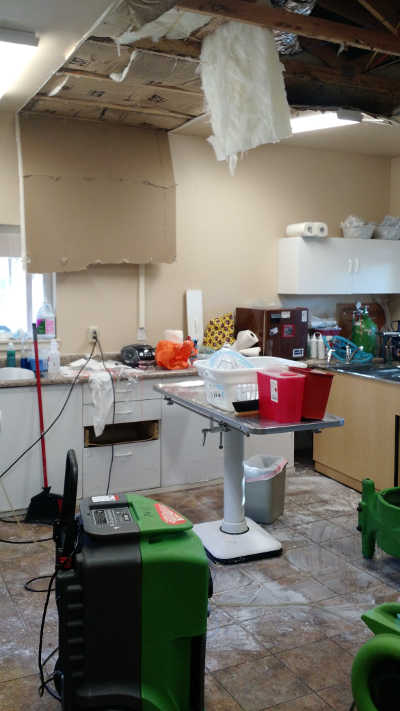
KELSEYVILLE, Calif. – The SPCA of Lake County reported that its Kelseyville facility has has serious damage due to a water pipe that burst earlier this week.
The group reported that on Tuesday afternoon, SPCA Board member Tee Stacy decided to do a quick check of the building as she was in the area.
The building is no longer staffed full-time – it closed as a shelter Jan. 30 – but is used on a regular basis for the monthly vaccination clinics, as well as providing spay and neuter surgeries in partnership with Animal Refugee Response through the Clearlake Pet Project.
The Clearlake Pet Project performed 800 free spays and neuters to Lake County pets in 2016 due to generous grants provided through Pets Mart Charities and Jameson Animal Rescue Ranch.
But on Tuesday, Stacy discovered that no surgeries would be performed anytime soon. A water pipe had burst in the main surgery room, and as she approached the building she observed water running from under the front door, through the parking lot and into the street.
Upon opening the door, she found water on the floor and condensation on the walls in every room, soaking through boxes, paperwork, computer towers and anything not in plastic bins.
The ceiling within the surgery room, as well as insulation, had fallen onto the counters, floors and expensive surgery equipment.
After the water was quickly shut off, the other SPCA Board members were contacted regarding clean up, as well as damage assessment and putting things back in order. SERVPRO was called and they responded to further assist in assessing the damages and cleanup needed.
While the SPCA of Lake County does have insurance coverage through Liberty Mutual, it is not known at this time how much of the damages will be covered. The surgery room is filled with expensive equipment used during surgery to provide anesthesia and sterilize equipment.
Scheduling of the third phase of the Clearlake Pet Project has started for January 2017. However, the SPCA said it is not known at this time if repairs can be made quickly enough for this to continue on schedule.
Ceiling panels, insulation, portions of drywall and floor will have to be replaced in order to mitigate mold concerns not to mention, repairs to pipes and electrical system.
Despite these setbacks, the SPCA of Lake County said it is committed to continuing in its service of providing a low-cost vaccination clinic each month, as well as its spay and neuter services to Lake County residents.
The SPCA is asking for the community's help in the form of financial assistance as it sets about repairing the damage and replacing equipment.
Donations may be sent to P.O. Box 784, Clearlake CA 95422.
For those who would like to volunteer time and skills, please call 707-279-1400 and leave a message.
LAKEPORT, Calif. – A classic airplane will make a stop in Lakeport in January as part of a California tour.
The Ford Tri-Motor will be at Lampson Field from 2 to 5 p.m. Thursday, Jan. 19; and 9 a.m. to 5 p.m. Friday, Jan. 20, through Sunday, Jan. 22.
The tour is presented by the Experimental Aircraft Association, or EAA, based in Oshkosh, Wis.
Known as the “Tin Goose,” the Ford Tri-Motor was first built by the Ford Motor Co. in the late 1920s.
EAA’s Ford Tri-Motor was constructed in 1929 and has a colorful history, with roles ranging from service as a Cuban airliner to fighting forest fires and transporting smoke jumpers.
After a thunderstorm flipped and nearly destroyed the airplane in 1973, EAA founder Paul Poberezny purchased the aircraft. It then underwent a 12-year restoration to return to flying status with many of the same features it had in the late 1920s.
Since then, it has been hangared at the EAA AirVenture Museum’s historic Pioneer Airport when it is not on its national tours or making special appearances.
The airplane also has a Hollywood pedigree, as it made cameo appearances in two major
motion pictures – 1965’s “The Family Jewels” starring Jerry Lewis and 2009’s “Public Enemies”
starring Johnny Depp.
Community members will have a chance to purchase a 15-minute ride on the plane, the world's first mass-produced airline and a piece of American aviation history.
EAA’s Tri-Motor can carry up to 10 passengers at a time, with every seat a window seat that offers the chance to see Lake County's scenery from a new vantage point. Passengers are encouraged to bring a camera to record and share this experience.
Tickets are $75 per person adult for adults (or $70 if booked online prior to Jan. 19) and $50 for children under 18. Rides are sold on a first-come, first-served basis.
People also are welcome to come and view the plane for free.
For more information or to purchase tickets visit www.flytheford.org .
Drivers encounter frequent distractions from their cellular telephones, interacting with passengers and much more, all of which affect their driving ability and pose a significant danger of car crashes.
Teens are at even greater risk of being involved in a collision caused by distracted driving because of peer pressure to stay connected via text and cellular telephones.
The California Highway Patrol has partnered with Impact Teen Drivers, or ITD, to assist in eliminating these preventable collisions.
“Teenage drivers are the most inexperienced motorists on the road, and with added distractions like using their cellular telephones, we have to work even harder to teach them how to drive safely,” CHP Commissioner Joe Farrow said. “Impact Teen Drivers and the CHP share the same goal; to raise awareness of the dangers of reckless and distracted driving.”
At schools and community events across the state, the CHP and ITD work to educate and change the behavior of teen drivers.
Ten percent of all drivers 15 to 19 years old involved in fatal collisions were reported as distracted at the time.
According to the National Highway Traffic Safety Administration, in 2013 this age group represented the largest proportion of drivers who were distracted at the time of a collision.
“We must remember that these crashes are not inevitable accidents, but are preventable tragedies,” said Dr. Kelly Browning, Executive Director of ITD. “Three-quarters of teen crashes are not caused by driving under the influence, but instead by the deadly combination of inexperience and reckless or distracted driving. By educating parents and teens, and enforcing highly effective graduated driver licensing laws, we can change the driving culture to one that is distraction-free and save hundreds of lives each year in California alone.”
The grant-funded Teen Distracted Drivers Education and Enforcement VI campaign consists of an education component, as well as teen distracted driver enforcement operations to be conducted throughout the state until Sept. 30, 2017.
Funding for this program was provided by a grant from the California Office of Traffic Safety through the National Highway Traffic Safety Administration.