 How to resolve AdBlock issue?
News
LAKEPORT, Calif. — The Lakeport Police Department said Friday that it has made an arrest in an early morning sexual battery and burglary, with the suspect also believed to have been responsible for a second break-in hours later.
Markel Plummer, 36, was arrested on Friday, according to a report from Police Chief Dale Stoebe.
Stoebe’s report said that early Friday morning, his department responded to a report of a residential break-in on North Main Street.
When the officers arrived, they learned that the female resident had awakened to find an intruder inside her home.
The intruder had entered through an unlocked door and assaulted the victim, “likely with the intent to commit a sexual assault,” police said.
The victim fought back, forcing the intruder to flee on foot, according to Stoebe’s report.
Police said a coordinated search of the area was conducted, including officers from the oncoming shift.
At approximately 9 a.m. Friday, officers received additional information regarding a related incident, according to the report.
An employee arriving for work at a business in the 1100 block of North Main Street encountered an intruder inside the premises. Police said the intruder assaulted the employee before attempting to flee.
Officers searching the area for the individual responsible for the earlier break-in and assault “quickly responded and detained a man matching the description,” police said.
Through further investigation, officers confirmed that the subject they had detained, who they identified as Plummer, was responsible for both incidents.
Police said Plummer had been hiding inside the business following the initial assault.
Plummer is currently on active Post Release Community Supervision, or PRCS, out of San Francisco County, police reported.
Stoebe’s report said Plummer was arrested and booked into the Lake County Jail on multiple charges, including burglary, sexual battery, battery, threatening the life of public safety officers and providing false identification to law enforcement.
Plummer’s bail was initially set at $15,000, and the Lakeport Police Department is actively pursuing an enhancement of that amount.
“Efforts to secure a no-bail hold for violation of his PRCS probation through the San Francisco County Probation Department have so far gone unanswered,” the Lakeport Police Department said.
“The Lakeport Police Department commends the bravery of the victims and the swift response of its officers in ensuring the suspect was taken into custody,” the report noted.
Anyone with additional information related to these incidents is encouraged to contact the Lakeport Police Department atThis email address is being protected from spambots. You need JavaScript enabled to view it. , or Det. Juan Altamirano at 707-263-9653.
Markel Plummer, 36, was arrested on Friday, according to a report from Police Chief Dale Stoebe.
Stoebe’s report said that early Friday morning, his department responded to a report of a residential break-in on North Main Street.
When the officers arrived, they learned that the female resident had awakened to find an intruder inside her home.
The intruder had entered through an unlocked door and assaulted the victim, “likely with the intent to commit a sexual assault,” police said.
The victim fought back, forcing the intruder to flee on foot, according to Stoebe’s report.
Police said a coordinated search of the area was conducted, including officers from the oncoming shift.
At approximately 9 a.m. Friday, officers received additional information regarding a related incident, according to the report.
An employee arriving for work at a business in the 1100 block of North Main Street encountered an intruder inside the premises. Police said the intruder assaulted the employee before attempting to flee.
Officers searching the area for the individual responsible for the earlier break-in and assault “quickly responded and detained a man matching the description,” police said.
Through further investigation, officers confirmed that the subject they had detained, who they identified as Plummer, was responsible for both incidents.
Police said Plummer had been hiding inside the business following the initial assault.
Plummer is currently on active Post Release Community Supervision, or PRCS, out of San Francisco County, police reported.
Stoebe’s report said Plummer was arrested and booked into the Lake County Jail on multiple charges, including burglary, sexual battery, battery, threatening the life of public safety officers and providing false identification to law enforcement.
Plummer’s bail was initially set at $15,000, and the Lakeport Police Department is actively pursuing an enhancement of that amount.
“Efforts to secure a no-bail hold for violation of his PRCS probation through the San Francisco County Probation Department have so far gone unanswered,” the Lakeport Police Department said.
“The Lakeport Police Department commends the bravery of the victims and the swift response of its officers in ensuring the suspect was taken into custody,” the report noted.
Anyone with additional information related to these incidents is encouraged to contact the Lakeport Police Department at
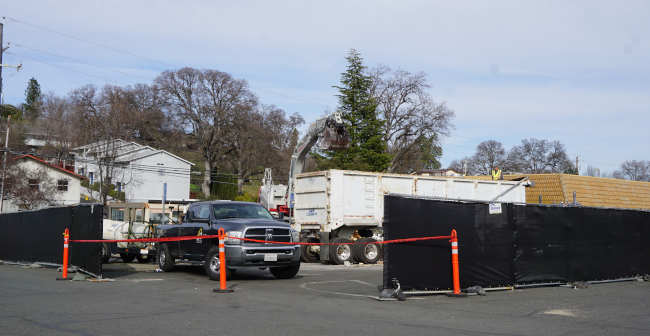
LAKEPORT, Calif. — The building that housed a once-popular restaurant in Lakeport is coming down.
On Wednesday, demolition began on the former Perko’s Cafe at 829 11th St.
The building is located in the Willow Tree Plaza Shopping Center, owned by Safeway since August of 2007.
The condition of the building, which has not been used for a restaurant in over a decade, had reportedly deteriorated, and was the target of break-ins as well as suffering from significant pest infestations.
Work continued on Thursday as a crew worked to knock down the remaining walls and load up piles of debris into a trailer.
The city of Lakeport reported that the demolition work is expected to take place until next week.
Officials ask that people remain cautious and give the construction team space to work safely.
In 2014, Safeway was considering a gas station at the shopping center, although it wasn’t at that time to replace the Perko’s location.
“As of now, the future of the site remains unknown—stay tuned for updates!” the city of Lakeport reported on its Facebook page.
Email Elizabeth Larson at
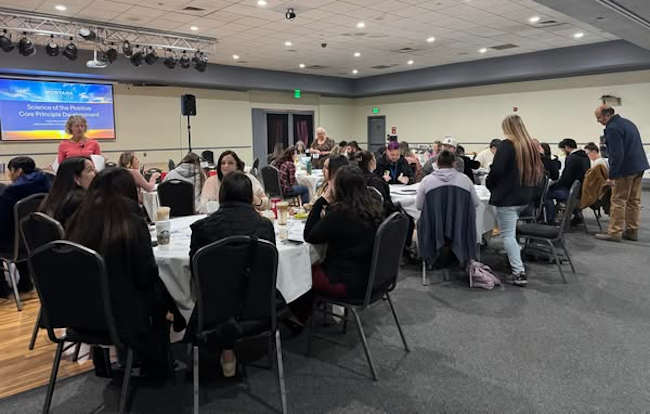
LAKE COUNTY, Calif. — On Jan. 28, the Lake County Office of Education and community partners participated in a transformative training led by The Montana Institute to implement the Science of the Positive framework in Lake County.
The Science of the Positive, developed by The Montana Institute, emphasizes amplifying strengths to inspire hope, connection and growth. By focusing on what is working well in communities, this approach establishes a foundation for sustainable change and healthier outcomes.
The training centered on fostering positive cultural norms and addressing challenges such as substance abuse prevention, mental health, and overall well-being through a strengths-based approach.
“At the Lake County Office of Education, we are committed to fostering environments where students and families can thrive,” said Lake County Superintendent of Schools Brock Falkenberg. “This training provided our community with invaluable tools to shift focus toward solutions and create a stronger, healthier Lake County.”
Throughout the day, participants explored the eight core principles of the Science of the Positive: being positive, present, perceptive, purposeful, perfected, proactive, passionate, and paradoxical. These principles provide a powerful foundation for positive leadership and effective communication.
A key outcome of the training was the development of personalized “big, bold statements” — declarations aligning with the core principles to guide participants' leadership and engagement efforts.
These statements will serve as guiding commitments as community partners deepen their collective understanding of how positive factors shape culture and experiences in Lake County.
“It’s inspiring to see this community come together to celebrate strengths and build upon them. This framework is not just a philosophy — it’s a call to action, and Lake County is answering that call with enthusiasm and dedication,” said Carla Ritz, managing director of The Montana Institute.
As these partners move forward, they will apply the principles learned in the training to transition from being busy to being truly effective.
This framework will help them navigate change and ambiguity while strengthening the positive and protective factors that already exist in the community.
Ana Santana, Healthy Start director for the Lake County Office of Education, highlighted the importance of ongoing collaboration and community involvement. “By working together, we can amplify the positive and create meaningful, lasting change. This training was an important step in that journey, and we are excited to see its impact unfold throughout Lake County.”
Looking ahead, the next Science of the Positive training is scheduled for March 5 at Konocti Vista Casino & Resort.
This upcoming session will build on the momentum from January’s training, offering community leaders, educators, and local partners another opportunity to deepen their understanding of the framework and apply it to their ongoing efforts.
Participants will continue exploring the core principles while developing strategies to sustain positive change in Lake County.
For more information about the Science of the Positive initiative and future events, visit https://www.lakecoe.org/edservices/positive.
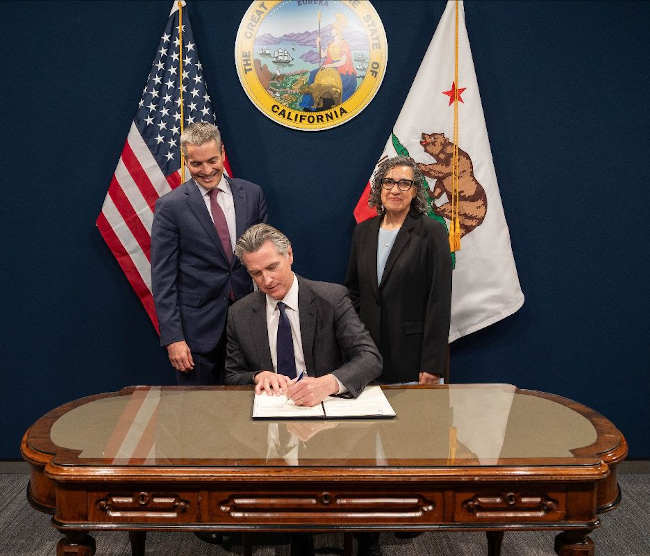
California and a consortium of 21 Brazilian states are partnering together to combat pollution and foster sustainable economic growth.
Gov. Gavin Newsom and Gov. Renato Casagrande of the Brazilian state of Espírito Santo signed a memorandum of understanding on Thursday that establishes a four-year partnership between California and the Brazilian consortium of states leading on environmental protections, Consórcio Brasil Verde, or CBV.
"Together with these 21 Brazilian states, California is committed to advancing a bold, collaborative action plan that tackles pollution, protects public health and safety, and creates good-paying jobs,” said Newsom.
Newsom’s office said this collaboration encompasses clean air, transportation and energy; adaptation; forest management; and more.
The full text of the MOU is available here.
R20 Regions of Climate Action — an organization founded by former Governor Arnold Schwarzenegger to support subnational climate work — played a key role in supporting this MOU.
“This is a historic opportunity to join efforts and share knowledge between Brazilian states and California, which is a reference in combating climate change. The partnership not only reaffirms our commitment to sustainability but also highlights the importance of active participation from everyone in building solutions that benefit our planet,” said Gov. Renato Casagrande.
California met its 2020 climate target six years ahead of schedule thanks to world-leading climate policies and partnerships across the U.S. and around the world, created to share best practices and support cooperation on climate work.
Last year, Gov. Newsom welcomed a new international partnership with South Korea’s Gyeonggi Province to collaborate on climate and economic efforts.
Also last year, Newsom welcomed delegations from Sweden and Norway and signed renewed climate partnerships with the two governments.
In 2023, Governor Newsom led a California delegation to China, where California signed five MOUs — with China’s National Development and Reform Commission, the provinces of Guangdong and Jiangsu, and the municipalities of Beijing, and Shanghai.
The trip also resulted in a first-of-its-kind declaration by China and California to cooperate on climate action like aggressively cutting greenhouse gas emissions, transitioning away from fossil fuels, and developing clean energy.
Also in 2023, California signed a MOU with the Chinese province of Hainan, as well as with Australia.
In 2022, California signed memorandums of cooperation with Canada, New Zealand and Japan, as well as Memorandums of Understanding with China and the Netherlands, to tackle the climate crisis.
The governor also joined with Washington, Oregon, and British Columbia to recommit the region to climate action.


CLEARLAKE, Calif. — Clearlake Animal Control continues to offer new dogs to approved homes.
The shelter has 50 adoptable dogs listed on its website.
This week’s dogs include “Spud,” a 5-month-old mixed breed puppy with a brown and white coat.
Shelter staff said she is very playful, and loves other dogs and toys.
The shelter is located at 6820 Old Highway 53. It’s open from 9 a.m. to 6 p.m. Tuesday through Saturday.
For more information, call the shelter at 707-762-6227, email
This week’s adoptable dogs are featured below.
Email Elizabeth Larson at
LAKE COUNTY, Calif. — As spring approaches, forecasters are expecting conditions across Northern California and Lake County that include a colder start to the season and decent water levels in lakes and reservoirs.
AccuWeather reported that meteorological spring starts on March 1, while astronomical spring begins during the March equinox at 5:01 a.m. Eastern Standard Time on March 20.
Forecasters said last month was the coldest January overall in the U.S. since 2011.
AccuWeather long-range experts say a colder start to spring is expected across the Pacific Northwest due to a persistent pattern of stormy weather which has brought rain and some high elevation snow to Lake County in recent weeks.
Paul Pastelok, senior meteorologist and lead long range forecaster for Accuweather, spoke to Lake County News about the local weather outlook.
Pastelok noted that Northern California had quite a bit of rain last year to start off the spring.
This year, February again has had a wet start, and Pastelok expects that there will be more weather systems grazing Northern California in March.
Those systems are expected to come south from the Pacific Northwest and bring near to average rainfall in March.
He noted that the state’s reservoirs are doing well for storage. “We’re slightly above average” in the major reservoirs’ levels, he said.
In Lake County, Clear Lake was just under 7.70 feet Rumsey, the special measure for the lake, early Thursday morning. The lake is full at 7.56 feet Rumsey gauge.
As is typical, later in the spring — in April and May — Pastelok anticipates a normal dropoff in rainfall. He said the May rainfall totals may be below average.
“We’re going to see this big area of higher pressure develop quite quickly” across the Southwest and expand northward, Pastelok said. That will cause a block to precipitation and not allow many significant weather systems to come in, leading to drier conditions.
Pastelok said the higher pressure starts to build quicker across the Four Corners and expands westward.
“People shouldn’t fear, we’re still good for water levels,” he said, explaining he doesn’t see it getting really warm, especially in late April or early May, but that there will be a gradual rise in temperatures.
He said there have been near average temperatures this year so far, and those may rise above average in May and June, but conditions are not expected to be severe.
When he did the long range forecast, he said he classified Northern California as having a “more typical transition” into spring, with that slow retreat from the northern storm track and a gradual drop off of precipitation.
Late spring isn’t expected to have major warming, but summer looks like it could be hotter, said Pastelok.
Regarding agriculture, Pastelok said there could be a chilly few days in late March, when forecasters are looking at frost potential in a worst case scenario.
He doesn’t see a lot of atmospheric river activity in the region later in the spring. There will be some weather systems in March but he doesn’t expect to see persistent heavy rain.
Weak La Niña in play
Forecasters said water temperatures in the equatorial Pacific Ocean play a major role in weather patterns around the world, as well as where storms track over the United States.
AccuWeather long-range experts say La Niña is currently underway. Water temperatures reached official La Niña status in late December.
“The La Niña pattern occurs when sea surface temperatures in the central and eastern Pacific Ocean drop to lower-than-average levels for an extended amount of time. This process is the exact opposite of El Niño, a phase in which sea surface temperatures rise to above-average levels,” AccuWeather reported.
La Niña, which translates to “little girl” in Spanish, and El Niño, which translates to “little boy” in Spanish, are two phases of a three-pronged natural climate pattern that occurs across a large portion of the tropical Pacific Ocean known as the El Niño-Southern Oscillation, or ENSO, according go to an AccuWeather report.
AccuWeather said ENSO's three phases are broken down into La Niña's cool phase, El Niño's warm phase and a phase that is neither warm nor cool, known as neutral.
Last week, the annual La Niña official statement came out forecasting a weak system for this year.
“It’s still a weak La Niña,” Pastelok said.
He added, “It never got strong anyway, which we didn’t expect.”
AccuWeather said meteorologists often refer to the effects of climate patterns using a concept known as teleconnections. Teleconnections are a series of factors, like sea surface temperatures, that can have implications on weather conditions in areas far from the origin of those factors.
La Niña can shift where the core of severe weather erupts over the U.S. during the spring, what part of the West Coast is the focal point of storms from the Pacific and what parts of the country have more cooldowns than dramatic warmups, AccuWeather said.
“We are looking at a weak La Niña setup as we go into the start of the spring season,” Pastelok explained. “Even if La Niña ends during the spring, there is a lag where it can have a continual influence on the atmosphere and the overall storm track across North America.”
Pastelok said water temperatures are slightly below average offshore which is keeping the region from getting really warm very quickly this spring.
He said La Niña may be neutral in the spring. “The La Niña always has a lag,” he said.
Looking at past La Niñas, Pastelok said they can cause lingering conditions. He expects conditions to remain active until early spring, then weaken.
Pastelok said there is a spring barrier time period when forecasts don’t do well with predicting El Niño and La Niña. Last year’s forecast showed that, when predictions of conditions did not come true until December.
How our warming climate is impacting the spring season
AccuWeather Senior Meteorologist and Climate Expert Brett Anderson said the overall trend for the spring season in the U.S. is getting warmer.
Climatological records show that average spring temperatures have increased roughly 2 degrees Fahrenheit across the contiguous U.S. since 1970, AccuWeather said.
“The AccuWeather 2025 U.S. Spring Forecast for the Southwest favors warmer and drier conditions compared to the historical average, which is in line with the longer-term spring trends that we are seeing for precipitation and average temperature. Many areas, especially across Arizona and New Mexico, are warming an average of 0.5 to 1 degree Fahrenheit per decade during the spring season,” Anderson explained. “Large portions of Southern California and Arizona are losing an average of 0.5 to 1.5 inches of precipitation per decade during the spring. There has also been a notable decrease in the frequency of spring river flooding across large portions of the Southwest during the spring season since the mid-1960s.”
AccuWeather said the overall trend of warmer spring seasons in the U.S. can mean an earlier and more intense seasonal allergy season, earlier mountain snowmelt, and a longer growing season for farmers and gardeners.
Warmer springs can also lead to more problems with pests like fleas, ticks and mosquitoes becoming active and reproducing earlier in the season. That also raises concerns about diseases like West Nile virus, which made an appearance in Lake County last year.
Email Elizabeth Larson atThis email address is being protected from spambots. You need JavaScript enabled to view it. . Follow her on Twitter, @ERLarson, and on Bluesky, @erlarson.bsky.social. Find Lake County News on the following platforms: Facebook, @LakeCoNews; X, @LakeCoNews; Threads, @lakeconews, and on Bluesky, @lakeconews.bsky.social.
AccuWeather reported that meteorological spring starts on March 1, while astronomical spring begins during the March equinox at 5:01 a.m. Eastern Standard Time on March 20.
Forecasters said last month was the coldest January overall in the U.S. since 2011.
AccuWeather long-range experts say a colder start to spring is expected across the Pacific Northwest due to a persistent pattern of stormy weather which has brought rain and some high elevation snow to Lake County in recent weeks.
Paul Pastelok, senior meteorologist and lead long range forecaster for Accuweather, spoke to Lake County News about the local weather outlook.
Pastelok noted that Northern California had quite a bit of rain last year to start off the spring.
This year, February again has had a wet start, and Pastelok expects that there will be more weather systems grazing Northern California in March.
Those systems are expected to come south from the Pacific Northwest and bring near to average rainfall in March.
He noted that the state’s reservoirs are doing well for storage. “We’re slightly above average” in the major reservoirs’ levels, he said.
In Lake County, Clear Lake was just under 7.70 feet Rumsey, the special measure for the lake, early Thursday morning. The lake is full at 7.56 feet Rumsey gauge.
As is typical, later in the spring — in April and May — Pastelok anticipates a normal dropoff in rainfall. He said the May rainfall totals may be below average.
“We’re going to see this big area of higher pressure develop quite quickly” across the Southwest and expand northward, Pastelok said. That will cause a block to precipitation and not allow many significant weather systems to come in, leading to drier conditions.
Pastelok said the higher pressure starts to build quicker across the Four Corners and expands westward.
“People shouldn’t fear, we’re still good for water levels,” he said, explaining he doesn’t see it getting really warm, especially in late April or early May, but that there will be a gradual rise in temperatures.
He said there have been near average temperatures this year so far, and those may rise above average in May and June, but conditions are not expected to be severe.
When he did the long range forecast, he said he classified Northern California as having a “more typical transition” into spring, with that slow retreat from the northern storm track and a gradual drop off of precipitation.
Late spring isn’t expected to have major warming, but summer looks like it could be hotter, said Pastelok.
Regarding agriculture, Pastelok said there could be a chilly few days in late March, when forecasters are looking at frost potential in a worst case scenario.
He doesn’t see a lot of atmospheric river activity in the region later in the spring. There will be some weather systems in March but he doesn’t expect to see persistent heavy rain.
Weak La Niña in play
Forecasters said water temperatures in the equatorial Pacific Ocean play a major role in weather patterns around the world, as well as where storms track over the United States.
AccuWeather long-range experts say La Niña is currently underway. Water temperatures reached official La Niña status in late December.
“The La Niña pattern occurs when sea surface temperatures in the central and eastern Pacific Ocean drop to lower-than-average levels for an extended amount of time. This process is the exact opposite of El Niño, a phase in which sea surface temperatures rise to above-average levels,” AccuWeather reported.
La Niña, which translates to “little girl” in Spanish, and El Niño, which translates to “little boy” in Spanish, are two phases of a three-pronged natural climate pattern that occurs across a large portion of the tropical Pacific Ocean known as the El Niño-Southern Oscillation, or ENSO, according go to an AccuWeather report.
AccuWeather said ENSO's three phases are broken down into La Niña's cool phase, El Niño's warm phase and a phase that is neither warm nor cool, known as neutral.
Last week, the annual La Niña official statement came out forecasting a weak system for this year.
“It’s still a weak La Niña,” Pastelok said.
He added, “It never got strong anyway, which we didn’t expect.”
AccuWeather said meteorologists often refer to the effects of climate patterns using a concept known as teleconnections. Teleconnections are a series of factors, like sea surface temperatures, that can have implications on weather conditions in areas far from the origin of those factors.
La Niña can shift where the core of severe weather erupts over the U.S. during the spring, what part of the West Coast is the focal point of storms from the Pacific and what parts of the country have more cooldowns than dramatic warmups, AccuWeather said.
“We are looking at a weak La Niña setup as we go into the start of the spring season,” Pastelok explained. “Even if La Niña ends during the spring, there is a lag where it can have a continual influence on the atmosphere and the overall storm track across North America.”
Pastelok said water temperatures are slightly below average offshore which is keeping the region from getting really warm very quickly this spring.
He said La Niña may be neutral in the spring. “The La Niña always has a lag,” he said.
Looking at past La Niñas, Pastelok said they can cause lingering conditions. He expects conditions to remain active until early spring, then weaken.
Pastelok said there is a spring barrier time period when forecasts don’t do well with predicting El Niño and La Niña. Last year’s forecast showed that, when predictions of conditions did not come true until December.
How our warming climate is impacting the spring season
AccuWeather Senior Meteorologist and Climate Expert Brett Anderson said the overall trend for the spring season in the U.S. is getting warmer.
Climatological records show that average spring temperatures have increased roughly 2 degrees Fahrenheit across the contiguous U.S. since 1970, AccuWeather said.
“The AccuWeather 2025 U.S. Spring Forecast for the Southwest favors warmer and drier conditions compared to the historical average, which is in line with the longer-term spring trends that we are seeing for precipitation and average temperature. Many areas, especially across Arizona and New Mexico, are warming an average of 0.5 to 1 degree Fahrenheit per decade during the spring season,” Anderson explained. “Large portions of Southern California and Arizona are losing an average of 0.5 to 1.5 inches of precipitation per decade during the spring. There has also been a notable decrease in the frequency of spring river flooding across large portions of the Southwest during the spring season since the mid-1960s.”
AccuWeather said the overall trend of warmer spring seasons in the U.S. can mean an earlier and more intense seasonal allergy season, earlier mountain snowmelt, and a longer growing season for farmers and gardeners.
Warmer springs can also lead to more problems with pests like fleas, ticks and mosquitoes becoming active and reproducing earlier in the season. That also raises concerns about diseases like West Nile virus, which made an appearance in Lake County last year.
Email Elizabeth Larson at