LAKEPORT, Calif. – When it holds its first meeting of the new year this week, the Lakeport City Council will conduct a followup reading on a new ordinance governing commercial marijuana and will consider for approval the mayor’s appointments.
The council will meet beginning at 6 p.m. Tuesday, Jan. 2, in the council chambers at Lakeport City Hall, 225 Park St.
The main item on the agenda is the second reading of the ordinance establishing rules for commercial marijuana, or cannabis, in the city. The ordinance had its first vote at the council’s last meeting in December.
In other business, the council will consider Mayor Mireya Turner’s appointments of council members as liaisons to various boards, committees and commissions for the coming year as well.
They’ll also vote on a resolution appointing council members to represent and vote on behalf of the city at the League of California Cities’ Redwood Empire Division Business meetings and represent the city and vote at division Legislative Committee meetings.
Items on the consent agenda – items considered noncontroversial and usually accepted as a slate on one vote – are ordinances; minutes of the council’s special meeting on Dec. 14 and the regular meeting of Dec. 19; and the Dec. 20 warrant register.
Email Elizabeth Larson at This email address is being protected from spambots. You need JavaScript enabled to view it.. Follow her on Twitter, @ERLarson, or Lake County News, @LakeCoNews.
LAKE COUNTY, Calif. – The three town councils that serve the Northshore in Supervisorial District 3 will meet this month to discuss a fire risk reduction program.
The East Region Town Hall, or ERTH, represents Spring Valley, Clearlake Oaks, the Keys and Paradise Cove.
The Lucerne Town Hall, LTH, represents Lucerne.
The West Region Town Hall, WRTH, represents Nice, Upper Lake, Lake Pillsbury and Blue Lakes.
Collectively these board-approved councils cover all of District 3, the largest of the five Lake County supervisorial districts.
Each council hears issues of importance to their specific constituency and area. Together, the councils may also work across regional lines on issues of broad interest.
“With the addition of the WRTH, the last of the councils to be formed, we can begin District wide projects,” said District 3 Supervisor Jim Steele.
“The first such project is the Fire Risk Reduction Program presently being developed by the Fire Safe Council and fire districts in conjunction with the county. This includes defensible space fuels reduction around the house, house hardening and a forest fuels modification program,” said Steele.
The details of this topic will be the focus of the January 2018 Town Hall meeting agendas for each of the Councils on the following dates in 2018:
– ERTH: Wednesday, Jan. 3, 4 p.m., at the Clearlake Oaks Fire Station, 12655 State Highway 20.
– LTH: Wednesday, Jan. 10, 6 p.m., at the Lucerne Alpine Senior Center, 3985 Country Club Drive.
Steele explained that the experts want to see the county coming together with a total program of risk reduction.
“The quicker we get folks to see the risk reduction protocols and hear about the proposed new ordinances the safer we can be for next fire season,” he said.
Joining Supervisor Steele at these meetings will be Northshore Fire Chief Jay Beristianos.
All meetings are open to the public. Additional items on the agenda are at the discretion of each council as time allows.
For more information contact District 3 Supervisor Jim Steele at 707-295-6198 or email him at This email address is being protected from spambots. You need JavaScript enabled to view it..
LAKE COUNTY, Calif. – The National Weather Service is forecasting several days of rain this new year’s first week, following a dry December.
The agency said winter weather systems will bring the rainstorms, expected to move over Northern California beginning on Wednesday.
The specific Lake County forecast calls for patchy fog conditions on Monday morning with cloudy conditions for much of the day on Monday and Tuesday.
The local forecast predicts chances of rain beginning during the day on Wednesday and continuing through Sunday.
Light winds also are in the forecast throughout Lake County this week.
From Wednesday through the weekend, temperatures are expected to range from the low 30s at night to the low 50s in the Lakeport area, while other parts of the county, including Kelseyville and Middletown, are forecast to have nighttime temperatures in the 40s, ranging up to the high 50s in the daytime.
Email Elizabeth Larson at This email address is being protected from spambots. You need JavaScript enabled to view it.. Follow her on Twitter, @ERLarson, or Lake County News, @LakeCoNews.
LAKE COUNTY, Calif. – The year 2017 was filled with important milestones for Lake County, which also had to once again face more than its share of natural disasters and challenges.
The following is a chronological review of the year’s top stories, from one end of the year to the other.
The 2017 flood: Clear Lake rises to nearly 20-year high
After several years of drought, in early 2017 Lake County experienced heavy winter rains.
Flood watches began in early January, and as the forecast rains arrived, the waters of Clear Lake were pushed to their highest levels since the 1998 flood. At the end of February, the flood waters had peaked at around 10.6 feet Rumsey, about a foot below the 1998 peak.
The sheriff declared a local emergency, residents of low lying areas were forced to evacuate, with many of them staying at an evacuation center at the Lakeport Seventh-day Adventist Church, which at the time also was housing the winter homeless warming center.
For a two-week period starting on Feb. 14, the Board of Supervisors closed Clear Lake to motorized boats due to concerns about wake damaging properties. High waters also led to closure of the Nice-Lucerne Cutoff for nearly a week and a half.
The flooding caused particularly serious damage in Lakeport. The waters undermined Lakeshore Boulevard in an area between Lange and Jones streets.
Powerful wave action in February also caused Library Park to be closed for weeks. The park’s playground wasn’t opened until the end of June, when repairs were completed.
Parts of the park are still fenced off due to public safety concerns. The waves that crested and battered the 550-foot-long seawall in February undermined the wall, which now must be replaced.
In November, city Public Works Director Doug Grider told the Lakeport City Council that he and his staff are going through the lengthy and complex process to receive funds for repairs from the Federal Emergency Management Agency for assistance.
At that time, Grider estimated that it was likely that the seawall would remain fenced off for another summer before the repair work is completed.
City officials expect to receive from FEMA almost 100 percent of the funds to make the repairs necessitated by the storm.
Robinson Rancheria disenrollment action reversed
In February, the Robinson Rancheria Citizens Business Council took a step that’s believed to be a first in Indian Country: It reinstated the membership of dozens of people targeted in a bitterly contested – and divisive – 2008 disenrollment action.
On Feb. 1 the tribal council, led by Chairman Eddie “EJ” Crandell, voted in favor of a resolution that allowed for the reinstatement of about 60 individuals who had been ousted from the tribe following a disputed 2008 tribal election, as Lake County News has reported.
Attorney Gabe Galanda, who has worked to bring attention to the disenrollment issue confronting West Coast tribes, said of the tribe’s action, “This is a first and this is historic.”
The original disenrollment action had followed a 2008 election in which Crandell had run against Chair Tracey Avila.
Approximately 67 tribal members – including a woman who was deceased, elders, some of the tribe’s last native speakers and a 2-year-old child – were disenrolled in an action upheld by the Bureau of Indian Affairs in April of 2010.
Crandell, who would eventually become tribal chair in January 2015, had it as a goal to bring the tribe back together. He said the tribe had started to slowly bring back former members before the main reinstatement action took place earlier this year.
He credited another tribal member, Adrien Malicay, for successfully propeling the initiative forward; at a tribal meeting, Malicay moved to bring the disenrolled members home, and the tribe voted overwhelmingly in support.
Galanda said that disenrollment is a fairly new phenomenon, driven by foreign ideas of commerce and culture.
“California Indians made disenrollment a nationwide tribal trend,” he said, adding that the trend is now being reversed by Northern California tribes such as Robinson.
Money for Clear Lake study, bill creates blue ribbon committee
When Gov. Jerry Brown signed the 2017-18 California State Budget into law in June, it included $2 million to help implement the revitalization of Clear Lake and its regional economy, funds secured by Assemblymember Cecilia Aguiar-Curry (D-Winters), whose district includes Lake County.
It was a major accomplishment for Aguiar-Curry, the former Mayor of winters who took office in December 2016.
Aguiar-Curry called the funds the state’s “first down payment toward improving the environmental health of Clear Lake,” and an important investment in Lake County’s local economy and its people. She said improving the lake’s water quality also is a regional issue.
Along with the funds, Aguiar-Curry wrote AB 707, which establishes a Blue Ribbon Committee for the study and rehabilitation of Clear Lake. In October, Gov. Brown signed AB 707 into law.
Aguiar-Curry told Lake County News that she’s had great support in the effort, including from the environmental community, State Sen. Mike McGuire, Congressman Mike Thompson and local officials.
She said it also was amazing for the governor to give her the money for the effort “right off the bat.”
The Blue Ribbon Committee – which will determine how the funds will be spent – is expected to start meeting soon, with Aguiar-Curry saying there will be public outreach ahead of the meetings.
Aguiar-Curry’s work on the project comes at a time when Clear Lake continues to have its challenges, including the kinds of cyanobacteria blooms that occurred late in the spring and early summer. Low toxin levels were detected at various locations and public health officials issued warnings to the public to avoid contact with the blooms, as Lake County News has reported.
The work to improve Clear Lake, Aguiar-Curry acknowledged, is “going to take some time.”
However, she’s inspired by the Keep Tahoe Blue movement that is improving conditions in that lake.
“I think we can do the same thing with Clear Lake,” she said.
How the process unfolds will make Aguiar-Curry’s effort a story to watch in the year to come.
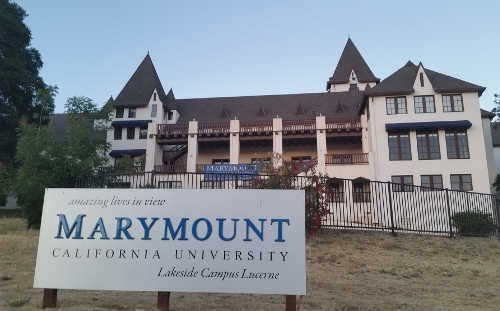
The historic Lucerne Hotel served as the third campus for Marymount California University in Lucerne, Calif., until the college abruptly left in June 2017. Photo by Elizabeth Larson/Lake County News. Marymount California University abruptly departs Lucerne campus
In June, nearly five years after it celebrated the signing of a lease with the county of Lake for use of the historic Lucerne Hotel, Marymount California University abruptly abandoned its Northern California campus without giving prior notice to students, staff, partner organizations such as local community colleges or the county of Lake.
Lake County News published an extensive account of the university’s department and the history of its involvement with the building June 20: http://bit.ly/2zRzkrd .
The county and Marymount entered into a 2012 lease that allowed for the university to rent it for $1 a year for the first five years, with the university supposed to pay 50 percent of its net annual revenue to the county beginning on July 1, 2018. The university also was to cover utility costs, with a purchase option written into the document.
The county of Lake purchased the historic building in 2010 as part of its redevelopment mission on the Northshore. The building’s purchase and renovation helped spur other improvements in the community, and the goal was to bring a four-year university to the county.
The dream of having a university presence in Lake County did bear some fruit, as supporters of the effort have pointed out: About 30 people now have bachelor’s degrees in Lake and Mendocino counties because of the MCU Lakeside Campus.
Since Marymount’s departure, the county of Lake has kept the nearly 90-year-old building shuttered as it worked out a settlement with Marymount for the breaking of the lease.
Still to be determined is the future of the building itself. With the settlement with Marymount now completed – county officials said Marymount paid $65,000 in three payments, the final one made by Nov. 30 – the county’s attention is turning to what to do next.
In December, the Board of Supervisors gave staff direction to move forward on bringing back a request for proposals in the new year for a variety of potential uses – hotel, conference center, restaurant, office space, etc. – that extend well beyond the educational uses the county focused on originally.
Officials also will explore whether to keep the building in county ownership and lease it long-term, lease it with a purchase option or sell it outright.
The building’s importance to the community of Lucerne – which was built around it – and what its future holds makes it a story to watch in 2018.
County settles Lakeside Heights lawsuit for $4.5 million
In June, the county of Lake settled the nearly four-year-old Lakeside Heights lawsuit, filed by property owners in the north Lakeport neighborhood over a landslide that damaged the homes there.
The case was in trial when the county reached the $4.5 million settlement with the Lakeside Heights Homeowners Association and 45 property owners.
The settlement was not covered by the county’s insurance, which necessitated the county seeking outside financing in the form of loans. It also was reported that money was taken from some other funds to cover the settlement, which had to be paid within 90 days.
Lakeside Heights resident Randall Fitzgerald served as the homeowners association’s president for four and a half years. This fall he left the association’s board after the settlement and the associated work was completed.
He said the homeowners and the association have received the settlement. The association was required to complete work at the site, including removing the remainder of damaged homes and debris, and having grading and hillside shaping completed to take the weight off the hillside. That work was done this fall.
Contractor Tracy Coleman – who has done previous work at the site – also created drainage ditches and installed wattles to prevent erosion on the top of the ridgeline and the hill, according to Fitzgerald.
“Everything is stable,” said Fitzgerald.
He added, “The only movement will come with rain and soil erosion. That’s the only way that it will happen.”
Fitzgerald said there have been some home sales in the neighborhood, with those homes being turned into rentals. “We have many more renters up here now than owners who occupy their homes.”
He said he’s planning to stay for the time being, as home values are so low he can’t sell his home for enough to cover what’s owed. “The values up here are one third of what they should be.”
Fitzgerald said every two weeks a Special Districts team comes up to check the sewer line with a camera.
Hill Road, which has been closed the previous three winters due to the hillside movement and dirt in the roadway, has so far remained open.
Public Works Director Scott De Leon told Lake County News this fall that Quincy Engineering has a contract for a design project to address the road’s long-term issues. One of the solutions previously suggested was a gabion wall, which is made up of baskets of rocks that allow for water to pass through the wall.
De Leon said Quincy’s work was pending the completion of geotechnical work. All of that work could move forward in the new year, making it a story to watch in 2018.
Members of the production team of “A Walk Through Time: The Story of Anderson Marsh” at the 46th annual Northern California Emmy Awards on Saturday, June 3, 2017, in San Francisco, Calif. From left to right, Director Dan Bruns, State Parks representative Eddie Guaracha, narrator and Producer Dino Beltran, Executive Producer Leslie Steidl and Co-Producer Dr. John Parker. Photo courtesy of Dr. John Parker. Documentary about Anderson Marsh State Historic Park wins Emmy Award
In June, the documentary “A Walk Through Time: The Story of Anderson Marsh” won in the “Historic/Cultural-Program/Special” category in the 46th annual Northern California Emmy Awards, which were presented on Saturday in San Francisco.
The 28-minute film documents 14,000 years of the park’s history and the first people who lived there, the Koi Nation of Northern California.
It’s believed to be the first Emmy Award for a Lake County-based production.
Dino Beltran, the Koi Nation’s tribal administrator and treasurer, was the film’s producer and the narrator, and a moving force in getting it made.
Production team members also included Director Dan Bruns of the Advanced Laboratory for Visual Anthropology at California State University, Chico; archaeologist Dr. John Parker of Lucerne; Executive Producer Leslie Steidl, a retired associate state archaeologist with the California Department of Parks and Recreation; and Eduardo Guaracha, the superintendent of the California State Parks Northern Buttes District, which includes Lake County.
The group attended the Emmy Award presentation in San Francisco, but Beltran said they didn’t anticipate winning.
“We went there for the experience, and the next thing I know, they announced our film and we were all elated,” Beltran said.
“A Walk Through Time” was produced through a partnership of the Koi National and the California Department of Parks and Recreation.
Beltran said the Koi Nation and Habematolel Pomo of Upper Lake are now working together to produce a new film which will look at the evolution of Ancestors 1, a consortium formed by the Koi Nation, Robinson Rancheria and the Habematolel Pomo to increase protections for cultural resources.
Kelseyville High standout Jasmin Clarke wins national wrestling title
In July, Kelseyville High School wrestler Jasmin Clarke traveled to North Dakota with teammate Alex Garcia to participate in the U.S. Marine Corps Junior and Cadet Nationals in Fargo, North Dakota, considered one of the nation’s toughest wrestling events.
Wrestling in the 200-pound weight class, the sophomore standout blazed through her matches, earning the national championship after winning four straight matches in two days.
Her championship performance earned her an invitation to move up to the 235-pound weight class. In wrestling, where each division is measured carefully to the pound, Clarke’s move up was no small matter; neither was the fact that she was competing against older, more experienced wrestlers in higher grades.
She ended up losing to an opponent who outweighed her by 30 pounds, but added to her accomplishments a second-place finish in that higher weight class as well.
“To place at Fargo is already an impressive task but to win your division and weight class then go up a division and a weight class to still make the finals? Unbelievable. No other words I could think of to describe that,” said her coach, Orlando Zarate.
Clarke’s accomplishment stands out for many reasons. Lake County has produced a growing number of excellent female wrestlers as the sport has gained popularity for young women in recent years, and Clarke’s win is likely to help girls wrestling continue to flourish.
The young woman also is a standout for her community service, including assisting her mother Dr. Paula Dhanda’s organization, Worldwide Healing Hands, at local clinics.
Lake County deputy dies in the line of duty
On Aug. 22, 50-year-old Deputy Rob Rumfelt responded along with Deputy Nate Newton to back up Lakeport Police Sgt. Joe Eastham at a domestic violence call on Healton Circle.
When they arrived, they found Alex Michael Castillo of Nice attempting to walk away from the scene with his 2-year-old child after assaulting his wife.
The deputies took Castillo into custody after a struggle, at which point Rumfelt was reported to have been sweating and complaining of shortness of breath.
A short time later, Rumfelt left the scene in his SUV patrol vehicle. He was seen to slump in the seat and then the vehicle accelerated into a tree halfway down Hartley Street, between Boggs Lane and 20th Street.
Despite attempts to save him, Rumfelt died later that night at Sutter Lakeside Hospital.
Rumfelt’s death was the first in the line of duty for a deputy since 1981, when Sgt. Richard Helbush was gunned down after stopping to help a couple who was broken down along Highway 29. Overall, it’s the fourth line of duty death recorded for law enforcement officers in Lake County.
The farewell to the longtime law enforcement officer included a procession from Napa County – where his autopsy was performed – to Lakeport, and then an early September public funeral at Clear Lake High School, where he had been a football coach.
A medical examiner concluded that the official cause of death in the case was sudden cardiac death 30 minutes after a stressful physical encounter.
Regarding the manner of death, Sheriff Brian Martin told Lake County News that it has been ruled as “could not be determined,” as he ultimately doesn’t know what led to Rumfelt’s death.
As for Castillo, originally he had been arrested for manslaughter in connection to Rumfelt’s death. However, the District Attorney’s Office decided not to pursue that charge.
Instead, Castillo reached an agreement with the District Attorney’s Office to plead guilty to making threats, resisting an officer, felony child endangerment and felony inflicting corporal injury on another person with a prior conviction. In December he was sentenced to four years and eight months in state prison.
Sulphur fire destroys structures in Clearlake, Clearlake Oaks
On the night of Oct. 8 and early into the morning of Oct. 9, fires broke out across Lake, Mendocino, Napa and Sonoma counties.
Ultimately, across the region more than 75,000 people would evacuate from their homes, 380 square miles and 8,900 structures burned, state and federal officials reported.
The highest toll came in the form of lost lives: 44 people died in Sonoma, Napa and Mendocino counties. No deaths were reported in Lake County as a result of the Sulphur fire.
California Insurance Commissioner Dave Jones’ last report in December on insured losses put the North Bay fires losses at $9 billion, making them among the state’s most deadly and costly. At that point, $51 million in residential damages and $171,000 in commercial damages were reported in Lake County alone.
Lake County fire units initially responded on mutual aid to the first of the fires in Napa County, the Tubbs incident, on the night of Oct. 8, according to radio reports.
Then, shortly after 1 a.m. Oct. 9, Northshore Fire Protection District firefighters were dispatched to the area of Sulphur Bank Road near the Elem Indian Colony in Clearlake Oaks for a report of a fire.
The first units to arrive on scene estimated it was about 10 acres, before revising that estimate to 75 acres and then to between 500 and 1,000 acres within the first 20 minutes of dispatch, based on radio reports. By 3:30 a.m., the fire was reported to have burned 1,200 acres.
Within about an hour of the fire’s initial dispatch, mandatory evacuations were ordered for parts of the city of Clearlake, which would be the hardest hit area in the fire.
Altogether, officials said the fire burned nearly 170 structures – of which 136 were reported to be residences – and 2,209 acres.
Cal Fire has still not announced findings related to a cause, with the agency’s investigation under way.
The investigation appears to be looking at the possible involvement of electrical equipment.
A Pacific Gas and Electric Co. incident report released by the California Public Utilities Commission showed that the company found two broken power poles and a burned pole span that had fallen to the ground near Pomo and Sulphur Bank roads on Oct. 10. The time and date of the incident was recorded as two days before the discovery, at 11:55 p.m. Oct. 8, about an hour before firefighters were dispatched.
Some of that damaged utility equipment has been taken by Cal Fire for evidence, according to the report.
Local attorney Jesse Chrisp and his law firm reported that they are investigating the fires and are now taking cases – on a contingency basis – against PG&E for fire damage claims.
Meanwhile, the process to clean up in the wake of the Sulphur fire is continuing.
On Dec. 19, at the last Board of Supervisors meeting of the year, the supervisors continued the declaration of a local emergency in response to the fire.
Retiring Lake County Environmental Health Director Ray Ruminski told the board at that time that 136 rights-of-entry forms had been submitted to the US Army Corps of Engineers – the agency overseeing the cleanup in Lake County – for the government-led cleanup program. Of those, 85 had been cleared, and of those 34 had passed soil tests. Another 13 properties are being cleaned up by private contractors. There also are seven lots – one in the county, six in the city of Clearlake – going through the abatement process.
County officials reported that the goal was to have the debris removal and erosion control work completed by Jan. 15.
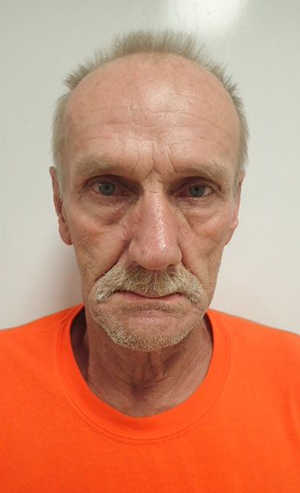
Alan Leroy Ashmore, 61, of Clearlake Oaks, Calif., is facing 21 felony counts for a shooting spree on Monday, October 23, 2017. Lake County Jail photo. Clearlake Oaks shooting spree leads to two deaths; two wounded
On the morning of Oct. 23, Alan Leroy Ashmore, 61, went on a shooting spree in Clearlake Oaks.
In less than an hour, he shot and killed his 85-year-old father, Douglas Ashmore, with a handgun in front of the home they shared on Anchor Village in the Clearlake Keys before killing his longtime friend, 64-year-old Richard Eugene Braden.
He also shot Cantra Hoeck in the foot and shot and struck CHP Officer Steven Patrick in his bulletproof vest before shooting at other victims, robbing a gas station, setting two wildland fires and leading officials on a chase that ended with his surrender at a roadblock on High Valley Road.
Ashmore is facing 21 felony counts, one misdemeanor charge and 24 special allegations for the shootings and crime spree, according to court documents.
District Attorney Don Anderson, who is personally handling the case, said a special allegation for multiple homicides will make Ashmore eligible for the death penalty or life without the possibility of parole if he is convicted.
In November, Ashmore pleaded not guilty to all of the charges.
Anderson said the case is complex and it’s taken a lot of time for investigators to complete the additional reports. “There’s so much to this.”
However, with much of the information now submitted, Anderson said a picture has begun to form about Ashmore’s motivations.
Specifically, Ashmore told investigators that he hated his father, who he claimed had Alzheimer’s and dementia and who he didn’t expect to live a long time.
On the day of the shootings, Ashmore had gotten into an argument with Hoeck. Anderson said Ashmore told investigators he wanted to have sex with the woman, but she wasn’t interested. When his father intervened in the argument, Ashmore killed him before shooting Hoeck in the foot. She escaped and survived.
A short time later, Ashmore shot and killed Braden in his car. Anderson said Ashmore claimed that he shot Braden for getting him started using drugs again – specifically, methamphetamine – after having been off of drugs for 11 years.
Officer Patrick encountered Ashmore at the corner of Keys Boulevard and Anchor Village, near where Braden was killed, Anderson said.
Anderson said Ashmore claimed he shot at Patrick because Patrick first shot at him. However, “The highway patrolman never did shoot,” said Anderson.
As to why he shot at his other victims, Ashmore told investigators that he “would just kill anyone that f****** moved,” Anderson said.
Anderson said it’s still not been confirmed whether or not Ashmore was high on drugs at the time of the shooting.
Despite being injured by the force of the shotgun slug that impacted his bulletproof vest in his abdominal region, CHP officials said Patrick continued to help pursue and eventually capture Ashmore.
“His acts were clearly heroic,” Lt. Hector Paredes, commander of the CHP’s Clear Lake Area office, said of Patrick in an interview with Lake County News following Ashmore’s October arraignment.
When he encountered the roadblock on High Valley Road, Ashmore stopped his SUV and got out with his hands up. “Which is really kind of surprising,” said Anderson.
Anderson said Ashmore will return to court on Jan. 30, at which time the date of his preliminary hearing could be set. Anderson said he is still considering whether or not to take the case instead through a criminal grand jury process.
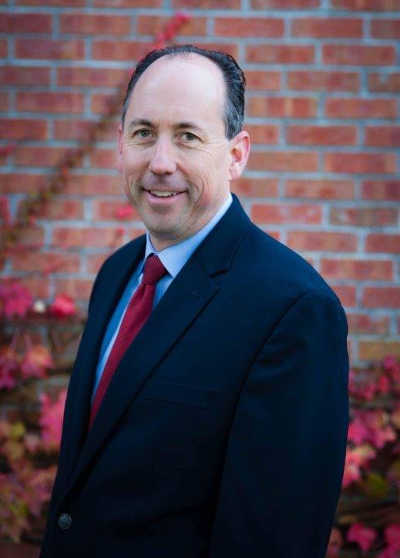
Lakeport, Calif., attorney J. David Markham was appointed to the Lake County Superior Court bench in December 2017. Courtesy photo. Changes in the Lake County Superior Court bench
The Lake County Superior Court has four full-time judges who are assisted by a team of retired part-time judges in handling a heavy caseload.
In 2017, the county’s bench began to see significant shift, as Judge Richard Martin retired in May after 12 years of service.
Martin’s departure would have been a big enough change on its own. However, in November, Judge Stephen Hedstrom, now in his third six-year term, said he would not seek a fourth term in 2018, and will retire when his term ends in January 2019.
Hedstrom, a former district attorney, was elected in 2000 and took his seat on the bench in 2001. He is now the Lake County Superior Court’s most senior full-time judge.
After Hedstrom’s November announcement that he would not seek reelection, Lakeport attorney J. David Markham announced he would run to succeed Hedstrom.
At that point, Markham – a co-administrator of the county’s indigent defense contractor – already was months into the process of applying with the Governor’s Office for the appointment to succeed Martin.
Weeks later, District Attorney Don Anderson – who in November had stated he planned to seek a third term after attorney Steven Brown announced he also would run for the district attorney’s seat – changed course and announced his plan to join the race to succeed Hedstrom.
Then just days before Christmas, Gov. Jerry Brown’s office announced that Markham was among 33 new judges who had been appointed statewide. With his appointment to succeed Martin now confirmed, Markham removed himself from the race for Hedstrom’s seat.
Those developments at the end of December left just Anderson in the race for judge as the year changes over. While several local attorneys are said to be considering a run for the seat, none have come forward with an announcement.
The other seats on the Lake County Superior Court bench – Presiding Judge Andrew Blum and Judge Michael Lunas – also will be up for reelection this year, but are not expected to be challenged.
Besides the matter of elections and reelections, the superior court has a large, ongoing challenge: A new courthouse. The project has been talked about for nearly a decade but has hit repeated roadblocks due to a dearth of state funding. It’s so far unclear if 2018 will bring resolution to Lake County’s need for a safe new location for its courts.
Wildland fire recovery and rebuild continues
The process to rebuild in the wake of the Rocky, Jerusalem, Valley and Clayton fires is continuing.
In addition to affected community members rebuilding their own homes, organizations like Habitat for Humanity, Hammers for Hope and Hope City have been assisting displaced fire survivors.
The effort has received $7.2 million in low- or no-interest CalHome loans to help dozens of homeowners rebuild. The California Department of Housing and Community Development also is making another $4.5 million available for infrastructure.
In April, Hope City, a ministry of the faith-based Hope Crisis Response Network in partnership with a number of area churches that is aiming to rebuild as many as 120 homes, received a $1 million donation to assist with its rebuilding mission from the new owner of Langtry Farms, Chinese developer Yiming Xu.
Xu has plans to build a large resort and residential projects over thousands of acres of the Langtry property, as Lake County News has reported. Formal project plans are pending.
In another portion of the wider rebuild effort, in September local, state and federal officials gathered to celebrate the groundbreaking for the new $10.5 million Anderson Springs wastewater system,
Officials said the wastewater system will allow 119 homes to be rebuilt that otherwise couldn’t be and will also allow full buildout of the community’s 350 lots.
The larger rebuild effort has hit snags. In August, the Board of Supervisors heard from frustrated residents and contractors about holdups with the Community Development Department, which was facing staffing shortages.
The board at that time voted to waive the formal bidding process and contract with Bureau Veritas of Sacramento for plan check and building official services. The county also worked to fill the open planning jobs – at that time, more than a third of the department’s jobs were vacant – and Supervisor Rob Brown himself stepped up to do building inspections to help address the backlog.
The continuing rebuild and Lake County’s recovery from wildland fires will be a key story not just in 2018 but for many years to come.
Email Elizabeth Larson at This email address is being protected from spambots. You need JavaScript enabled to view it.. Follow her on Twitter, @ERLarson, or Lake County News, @LakeCoNews.
LAKE COUNTY, Calif. – The issue of drivers under the influence of drugs, or DUID, rather than alcohol, is an increasingly serious problem in California.
Faced with more instances of DUID, state and local officials are reiterating the message that “DUI Doesn’t Just Mean Booze.”
The message takes on increased importance as the state begins licensing commercial nonmedical cannabis sales on Jan. 1, 2018, under provisions of Proposition 64, the Adult Use of Marijuana Act.
Alcohol-impaired driving is still the most serious problem on our roadways, but the percentage of drivers in fatal collisions who have other impairing substances in their system keeps rising.
“It has taken more than 35 years to convince the vast majority of the public that driving under the influence of alcohol is dangerous, illegal and socially unacceptable,” said Rhonda Craft, director of the Office of Traffic Safety. “With more dying on our roadways every day, we can’t afford to take that long when it comes to driving under the influence of prescription medications, marijuana, illicit drugs and even some over-the-counter medications.”
From 2005 to 2015, the percentage of drivers in fatal collisions who had an impairing drug other than alcohol in their system increased from 26.2 percent to 42.6 percent, according to statistics from the National Highway Traffic Safety Administration.
As far back as 2012, a roadside survey in California showed more drivers tested positive for drugs that may impair driving (14 percent) than did for alcohol (7.3 percent). Of the drugs, cannabis was most prevalent, at 7.4 percent, slightly more than alcohol.
In addition to alcohol or cannabis, a driver could be subject to a DUI arrest if they are under the influence of prescription medications like sleep aids, tranquilizers, barbiturates, opiates and other painkillers, antidepressants, and even over-the-counter allergy or cough medications when they impair your ability to drive a vehicle.
“Just like drunk driving, driving under the influence of drugs is not only dangerous, it is a crime,” CHP Acting Commissioner Warren Stanley said. “What caused the impairment does not matter. In short, “drive high, get a DUI.”
In the face of more drug-impaired drivers on the road, the CHP and local law enforcement are training more officers in Advanced Roadside Impaired Driving Enforcement and Drug Recognition Evaluation. The advanced training augments the Standardized Field Sobriety Test to help identify what substances other than alcohol a driver may be impaired by.
Acting Commissioner Stanley and Director Craft note alternatives to driving impaired, including calling a taxi or a sober friend or family member, using public transportation, or ride-hailing services. If you see a driver who appears to be impaired, do not hesitate to call 9-1-1.
During December, the Office of Traffic Safety ran public awareness announcements concerning prescription medication DUI.
From the end of December and running through January, the emphasis switches to one illustrating that no matter your age or your reasons for consuming cannabis, you should never drive while high.
"Your success and happiness lies in you. Resolve to keep happy, and your joy and you shall form an invincible host against difficulties."– Helen Keller
LAKE COUNTY, Calif. – What are your plans at daybreak on New Year's Day?
A walk in a State Park? California State Parks say, "Ring in the New Year with us!"
Anderson Marsh Interpretive Association is hosting a First Day Hike on Jan. 1 at noon, and Clear Lake State Park is hosting a walk on Jan. 1 at 9 a.m.
For many folks the annual tradition of New Year's resolutions begins. Just how did that practice begin?
The craving to create “good karma” for the year's fresh start is potent. History tells us that back in the day, the Babylonians pledged to the gods to begin the year with a fresh slate by doing good deeds.
In ancient times a good deed could consist of helping a neighbor in need, meeting financial obligations or keeping farm tools in ready condition for the new season.
Some of the old and even ancient traditions which celebrate the New Year are still practiced around the world today, such as bell-ringing and fireworks.
According to the Old Farmer's Almanac, which was founded in 1792, it was customary in Thailand's ancient times to discharge firearms in order to scare off evil spirits.
The American Colonists practiced the same pistol-shooting custom, while the Chinese folks of ancient times believed that lighting firecrackers would aid in delivering them from malevolence.
Folklore tells us that in order to keep smooching your main squeeze, you should give them a smooch on New Year's Eve!
Some of the New Year traditions which have withstood the test of time from around the globe include popping a grape – one for each ring of the clock, so that your mouth is packed with 12 grapes at midnight. Don't forget to eat your black-eyed beans for a New Year's southern-style.
If you were in Pakistan or India you would consume a bowl of rice to ensure good fortune in the coming year, while in Switzerland you may drop a splotch of whipped cream on the floor to guarantee good fortune in the ensuing year.
The Dutch will probably still hold up a glass of mulled wine and the Irish will carry on the tradition of consuming a bannock – or unleavened – round pastry.
So whether you make plans in a traditional, time-honored manner, or create your own New Year's customs, you may want to “turn over a new leaf” and “put your best foot forward” as in the Scottish celebration of Hogmanay when families who visit one another after the bell tolls 12 midnight, step, or put their best foot forward over the threshold of their homes to guarantee goodness in the year ahead.
For information on a New Year's walk, visit the Anderson Marsh Interpretive Association Facebook page at https://www.facebook.com/AMIA.org.
Kathleen Scavone, M.A., is a retired educator, potter, writer and author of “Anderson Marsh State Historic Park: A Walking History, Prehistory, Flora, and Fauna Tour of a California State Park” and “Native Americans of Lake County.” She also formerly wrote for NASA and JPL as one of their “Solar System Ambassadors.” She was selected “Lake County Teacher of the Year, 1998-99” by the Lake County Office of Education, and chosen as one of 10 state finalists the same year by the California Department of Education.
 How to resolve AdBlock issue?