 How to resolve AdBlock issue?
News
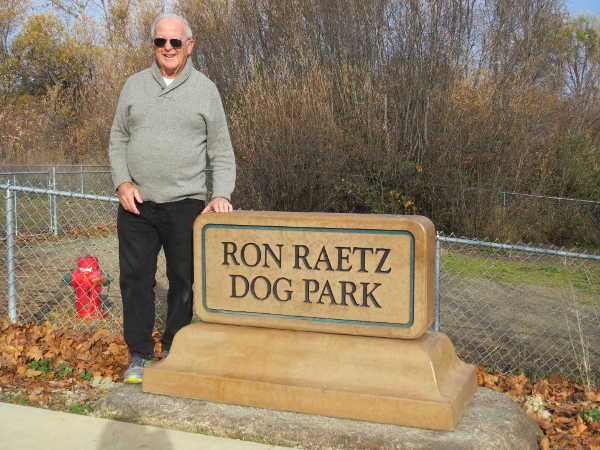
LAKEPORT, Calif. – Recently the Westside Community Park Committee completed installation of the “Ron Raetz Dog Park” sign at the Westside Community Park in Lakeport.
Following a request by the committee to the Lakeport City Council, the council approved the naming of the dog park in recognition of Raetz’s contributions to the park’s development.
Raetz served as the chairperson of the Westside Community Park Committee for eight years.
During his tenure almost $80,000 was raised towards the park’s development, the initial grading and storm drainage was completed on the Jane Barnes Field, the Westside Community Park entry sign was installed and the picnic area at the Rotary Field was constructed.
In addition, Raetz was the driving force behind the construction of the dog park. Without his leadership the dog park might not have been constructed.
In addition to his service on the Westside Community Park Committee , Raetz was a teacher in the Upper Lake High School District, a member of the district’s Board of Trustees and the president of the Konocti Youth Soccer League for 10 years.
In 2017 he saw the installation of lights for the Upper Lake High School football field. The “Lights of Love,” as that project was known, was spearheaded by Raetz.
Raetz has been a leader in the creation of recreation facilities in Lake County and as such it is fitting that the dog park which he worked so diligently to see completed should be named in his honor.
The purchase and installation of the “Ron Raetz Dog Park” sign was made possible by community donations.
Darren Jordon, owner of Rock Creation, donated his skill to create the footing for the sign with concrete donated by Clear Lake Redi-Mix.
The finally installation was completed with the assistance of the city of Lakeport Public Works Department.
NORTHERN CALIFORNIA – North Bay legislators have officially introduced a bill that will set statewide emergency alert protocols.
The new legislation follows the devastating October firestorm that ravaged Sonoma, Napa, Lake and Mendocino counties, destroying more than 6,000 homes, scorching more than 170,000 acres, causing billions in damage and resulting in the death of more than 40 residents.
“The size and scope of wildland fire events in California are only getting worse. It's clear there are shortcomings in our emergency alert system and residents deserve timely notifications and up-to-date information,” Sen. Mike McGuire (D-North Bay) said. “Lives depend on the Legislature and governor taking swift action to ensure statewide emergency alert standards are adopted, training is implemented and funding is secured to ensure communities big and small have reliable alert systems deployed.”
SB 833, introduced this week by Sen. McGuire, along with joint authors Senators Bill Dodd and Jerry Hill, and principal co-authors, members of the Assembly Cecilia Aguiar-Curry, Marc Levine and Jim Wood, creates statewide emergency alert protocols.
There are several different emergency warning systems available to counties that alert residents through cell phone calls, text messages and landline recordings.
Some systems require residents to “opt-in” to the alert notifications, and others have limitations on how they can be targeted in specific areas.
SB 833 will require every county in California to adopt the up-to-date Wireless Emergency Alert system with trained operators who can implement an evacuation order using the alert system.
The legislation will also set out standards for when counties should use the system, the legislation will mandate that alerts have to be sent out via landline telephones and mobile phones along with other communication mediums, it will advance communication between counties and the state at the start of a disaster and it will create guidelines and protocols for when and how the alerts should be sent.
“When wildfires and other disasters strike, it’s critical that impacted residents get emergency alerts as quickly as possible,” said Sen. Bill Dodd (D-Napa). “Regardless of where you live in California, everyone should be able to rely on a comprehensive, modern warning systems that gets information to the people who need it, when they need it. Emergency alerts can save lives, which is why Senator McGuire and I are partnering with our colleagues in the state Assembly to advance a system that meets our twenty-first century needs.”
“The raging wildfires endangering Californians across the state is without precedent. Lawmakers must protect our communities with the best safety notifications available to prevent loss of life during emergency situations,” said Assemblymember Marc Levine (D-Marin County). “All California communities should have dependable emergency alert systems and be notified when lives are in danger.”
“The recent devastating fires in Northern California have put laser focus on our need to fix our emergency notification system,” said Assemblymember Jim Wood (D-Healdsburg). As we now see with the fires in Southern California, the time is now to protect our residents with a system that works for everyone, both urban and rural.”
“As a member of the Joint Committee on Emergency Management, we heard testimony this week on how critical it is for local governments to alert our mutual constituents in times of crisis,” said Assemblymember Aguiar-Curry (D-Winters). “I’m happy to join in this effort with my legislative and local government colleagues, and I look forward to continuing our work together that started during the North Bay wildfires. As the recovery continues, we must also stay vigilant to protect people in the event of future emergencies.”
“Last year’s fires exposed deadly problems in our emergency alert patchwork,” said Senator Jerry Hill (D-San Mateo and Santa Clara Counties). “I applaud Senator McGuire for leading this effort to make sure that the state and local governments properly notify and evacuate residents to save lives during emergencies.”
The new legislation follows the devastating October firestorm that ravaged Sonoma, Napa, Lake and Mendocino counties, destroying more than 6,000 homes, scorching more than 170,000 acres, causing billions in damage and resulting in the death of more than 40 residents.
“The size and scope of wildland fire events in California are only getting worse. It's clear there are shortcomings in our emergency alert system and residents deserve timely notifications and up-to-date information,” Sen. Mike McGuire (D-North Bay) said. “Lives depend on the Legislature and governor taking swift action to ensure statewide emergency alert standards are adopted, training is implemented and funding is secured to ensure communities big and small have reliable alert systems deployed.”
SB 833, introduced this week by Sen. McGuire, along with joint authors Senators Bill Dodd and Jerry Hill, and principal co-authors, members of the Assembly Cecilia Aguiar-Curry, Marc Levine and Jim Wood, creates statewide emergency alert protocols.
There are several different emergency warning systems available to counties that alert residents through cell phone calls, text messages and landline recordings.
Some systems require residents to “opt-in” to the alert notifications, and others have limitations on how they can be targeted in specific areas.
SB 833 will require every county in California to adopt the up-to-date Wireless Emergency Alert system with trained operators who can implement an evacuation order using the alert system.
The legislation will also set out standards for when counties should use the system, the legislation will mandate that alerts have to be sent out via landline telephones and mobile phones along with other communication mediums, it will advance communication between counties and the state at the start of a disaster and it will create guidelines and protocols for when and how the alerts should be sent.
“When wildfires and other disasters strike, it’s critical that impacted residents get emergency alerts as quickly as possible,” said Sen. Bill Dodd (D-Napa). “Regardless of where you live in California, everyone should be able to rely on a comprehensive, modern warning systems that gets information to the people who need it, when they need it. Emergency alerts can save lives, which is why Senator McGuire and I are partnering with our colleagues in the state Assembly to advance a system that meets our twenty-first century needs.”
“The raging wildfires endangering Californians across the state is without precedent. Lawmakers must protect our communities with the best safety notifications available to prevent loss of life during emergency situations,” said Assemblymember Marc Levine (D-Marin County). “All California communities should have dependable emergency alert systems and be notified when lives are in danger.”
“The recent devastating fires in Northern California have put laser focus on our need to fix our emergency notification system,” said Assemblymember Jim Wood (D-Healdsburg). As we now see with the fires in Southern California, the time is now to protect our residents with a system that works for everyone, both urban and rural.”
“As a member of the Joint Committee on Emergency Management, we heard testimony this week on how critical it is for local governments to alert our mutual constituents in times of crisis,” said Assemblymember Aguiar-Curry (D-Winters). “I’m happy to join in this effort with my legislative and local government colleagues, and I look forward to continuing our work together that started during the North Bay wildfires. As the recovery continues, we must also stay vigilant to protect people in the event of future emergencies.”
“Last year’s fires exposed deadly problems in our emergency alert patchwork,” said Senator Jerry Hill (D-San Mateo and Santa Clara Counties). “I applaud Senator McGuire for leading this effort to make sure that the state and local governments properly notify and evacuate residents to save lives during emergencies.”
NORTHERN CALIFORNIA – On Friday the Independent Forensic Team released additional findings from its review of the February 2017 Lake Oroville Spillways incident.
The report builds on the team’s interim memo from September 2017 that identified physical causes of the incident.
While the California Department of Water Resources is in the process of fully reviewing this lengthy report, the department intends to incorporate the latest findings into its ongoing efforts.
“We strongly supported having an independent assessment of the spillway failure and take the findings very seriously,” said DWR Director Grant Davis. “This report is consistent with the independent team’s initial technical findings from last May which were fully incorporated in the design of the reconstructed spillways. As we have done in the past, we will carefully assess this report, share it with the entire dam safety community and incorporate the lessons learned going forward to ensure California continues to lead the nation on dam safety.”
The department said it has already made significant progress to bolster the dam safety program to include comprehensive re-evaluations of every spillway with attributes similar to Lake Oroville’s.
These re-evaluations go far beyond the standard inspections to include extensive hydrologic, structural and geotechnical work and a thorough investigation of records.
In May, DWR began planning for a comprehensive needs assessment of the entire Oroville complex to understand what changes, if any, need to be made long term to bolster dam safety of the Oroville complex.
An evaluation of DWR’s dam safety program is already underway, and as a result of the findings of the Independent Forensic Team, or IFT, DWR will also assess its existing organizational structures.
DWR said it will continue to invest in resources to learn from other dam safety programs and plans to convene experts over the coming months to digest the findings and recommendations from this report to identify tangible actions in response.
In addition to identifying the combined causes that led to the incident, the latest IFT report also comments on decisions made as the spillway incident unfolded in February 2017.
“During the incident, our sole focus was protecting public safety,” said Joel Ledesma, Deputy Director of the State Water Project. “DWR supported this independent assessment – so we can learn from the past and continue to improve now and into the future.”
DWR agrees with the IFT’s conclusion that all dam owners need to reassess current procedures.
As the report notes, “the fact that this incident happened to the owner of the tallest dam in the United States, under regulation of a federal agency, with repeated evaluation by reputable outside consultants, in a state with the leading dam safety regulatory program, is a wake-up call for everyone involved in dam safety. Challenging current assumptions on what constitutes ‘best practice’ in our industry is overdue.”
Following the February incident, the Federal Energy Regulatory Commission directed DWR to establish an Independent Forensic Team to determine the root cause of the spillway incident, as well as other contributing causes including operations, structural, geologic, and management.
To provide an independent review, DWR contacted the Association of State Dam Safety Officials and the United States Society of Dams, two nationally recognized dam safety organizations, to propose a team of experts capable of conducting a forensic evaluation of the Lake Oroville spillways incident. The six members of the IFT were identified on March 15.
Preliminary findings were released on May 5, 2017, listing 24 physical factors that potentially contributed to the main spillway damage and four physical factors that may have contributed to the emergency spillway damage.
On September 5, 2017, the IFT published an interim memorandum summarizing its findings of the Lake Oroville spillways failure and DWR released a statement regarding the memo. The latest report from the IFT incorporates these previous findings in addition to the contributing human factors.
The video above is the latest DWR video update from December, showing work on the spillway’s phase two.

Twinkle, twinkle, little star, how I wonder what you are. Astronomers are hopeful that the powerful infrared capability of NASA’s James Webb Space Telescope will resolve a puzzle as fundamental as stargazing itself — what IS that dim light in the sky?
Brown dwarfs muddy a clear distinction between stars and planets, throwing established understanding of those bodies, and theories of their formation, into question.
Several research teams will use Webb to explore the mysterious nature of brown dwarfs, looking for insight into both star formation and exoplanet atmospheres, and the hazy territory in-between where the brown dwarf itself exists.
Previous work with Hubble, Spitzer, and ALMA have shown that brown dwarfs can be up to 70 times more massive than gas giants like Jupiter, yet they do not have enough mass for their cores to burn nuclear fuel and radiate starlight.
Though brown dwarfs were theorized in the 1960s and confirmed in 1995, there is not an accepted explanation of how they form: like a star, by the contraction of gas, or like a planet, by the accretion of material in a protoplanetary disk? Some have a companion relationship with a star, while others drift alone in space.
At the Université de Montréal, Étienne Artigau leads a team that will use Webb to study a specific brown dwarf, labeled SIMP0136.
It is a low-mass, young, isolated brown dwarf – one of the closest to our Sun – all of which make it fascinating for study, as it has many features of a planet without being too close to the blinding light of a star.
SIMP0136 was the object of a past scientific breakthrough by Artigau and his team, when they found evidence suggesting it has a cloudy atmosphere.
He and his colleagues will use Webb’s spectroscopic instruments to learn more about the chemical elements and compounds in those clouds.
“Very accurate spectroscopic measurements are challenging to obtain from the ground in the infrared due to variable absorption in our own atmosphere, hence the need for space-based infrared observation. Also, Webb allows us to probe features, such as water absorption, that are inaccessible from the ground at this level of precision,” Artigau explained.
These observations could lay groundwork for future exoplanet exploration with Webb, including which worlds could support life.
Webb’s infrared instruments will be capable of detecting the types of molecules in the atmospheres of exoplanets by seeing which elements are absorbing light as the planet passes in front of its star, a scientific technique known as transit spectroscopy.
“The brown dwarf SIMP0136 has the same temperature as various planets that will be observed in transit spectroscopy with Webb, and clouds are known to affect this type of measurement; our observations will help us better understand cloud decks in brown dwarfs and planet atmospheres in general,” Artigau said.
The search for low-mass, isolated brown dwarfs was one of the early science goals put forward for the Webb telescope in the 1990s, says astronomer Aleks Scholz of the University of St. Andrews.
Brown dwarfs have a lower mass than stars and do not “shine” but merely emit the dim afterglow of their birth, and so they are best seen in infrared light, which is why Webb will be such a valuable tool in this research.
Scholz, who also leads the Substellar Objects in Nearby Young Clusters (SONYC) project, will use Webb’s Near-Infrared Imager and Slitless Spectrograph (NIRISS) to study NGC 1333 in the constellation of Perseus.
NGC 1333 is a stellar nursery that has also been found to harbor an unusually high number of brown dwarfs, some of them at the very low end of the mass range for such objects – in other words, not much heavier than Jupiter.
"In more than a decade of searching, our team has found it is very difficult to locate brown dwarfs that are less than five Jupiter-masses – the mass where star and planet formation overlap. That is a job for the Webb telescope,” Scholz said. “It has been a long wait for Webb, but we are very excited to get an opportunity to break new ground and potentially discover an entirely new type of planets, unbound, roaming the Galaxy like stars."
Both of the projects led by Scholz and Artigau are making use of Guaranteed Time Observations, or GTOs, observing time on the telescope that is granted to astronomers who have worked for years to prepare Webb’s scientific operations.
The James Webb Space Telescope, the scientific complement to NASA's Hubble Space Telescope, will be the premier space observatory of the next decade. Webb is an international project led by NASA with its partners, ESA (European Space Agency) and CSA (Canadian Space Agency).
For more information about the Webb telescope, visit www.nasa.gov/webb or www.webbtelescope.org .
Leah Ramsay is a member of the Space Telescope Science Institute in Baltimore, Md.
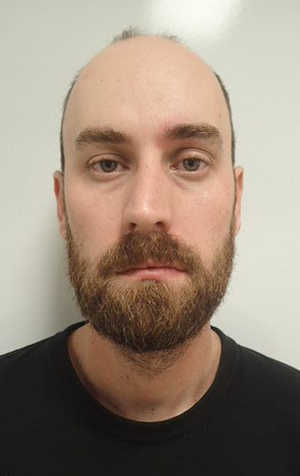
LUCERNE, Calif. – A Lakeport man was arrested for driving under the influence of drugs on Thursday night following a two-vehicle wreck that injured him and three others.
The California Highway Patrol’s Clear Lake Area office reported that 30-year-old Jeremy David Morgan was arrested after the crash.
The CHP said the crash occurred shortly after 6:30 p.m. Thursday on Highway 20 east of Cora Drive, just east of Lucerne.
The CHP said Morgan was driving his 2001 Jeep Cherokee westbound on Highway 20 at a stated speed of between 40 and 50 miles per hour.
Riding with Morgan was 29-year-old Sabrina Contino of Lakeport, who was seated in the right front passenger seat, and 49-year-old Teddy Teel of Nice, who was riding in the rear of the vehicle, the CHP said.
At the same time, Kat Salido, 40, of Cotati was driving her 2004 Hyundai Sonata eastbound on Highway 20 at a stated speed of between 40 and 45 miles per hour, with her 3-year-old son, Kaysen, seated in the right rear seat, according to the CHP report.
The CHP said Morgan lost control of his Jeep as he attempted to negotiate a curve in the roadway. His Jeep began to rotate sideways as it left the westbound lane and entered into the eastbound lane.
It was at that point that Salido rounded the same curve and collided with the right rear of Morgan’s Jeep, which subsequently flipped onto its roof and slid across the roadway before coming to rest facing a northwesterly direction, blocking the eastbound lane of Highway 20, the CHP said.
Salido’s Hyundai came to rest facing an easterly direction, also blocking the highway’s eastbound lane, according to the report.
The CHP said Morgan, who was not wearing a seat belt, suffered minor injuries. Contino, who was wearing her seat belt at the time of the crash, and Teel, who was not wearing his seat belt, both suffered major head and neck injuries and were later transferred to Santa Rosa Memorial Hospital.
Due to weather conditions on Thursday night, air ambulances had not initially been available to respond to the scene to transport the patients, according to radio reports.
Both Salido and her son were wearing their seat belts, with Salido having a complaint of pain to her chest. The child was uninjured. The CHP said both she and her child were released at the scene by medical personnel.
Following the collision, the CHP said Morgan was determined to have been under the influence of a controlled substance at the time of the wreck and subsequently was placed under arrest.
Morgan was booked into the Lake County Jail early Friday morning, with his bail set at $500,000. He is tentatively scheduled to make an initial court appearance on Monday.
The CHP said the crash remains under investigation.
Email Elizabeth Larson at
LAKE COUNTY, Calif. – A common disease has been confirmed as the killer of thousands of waterfowl along Clear Lake’s Northshore.
Over the last few weeks, dead ducks and other waterfowl have been found on Clear Lake’s shoreline in the Lucerne area, as Lake County News has reported.
“It is avian cholera,” Kyle Orr, spokesman for the California Department of Fish and Wildlife, confirmed to Lake County News.
As many as 3,500 waterfowl are estimated to have been affected by this latest avian cholera case, Orr said.
Orr said that on Wednesday, the agency picked up 2,600 dead or dying waterfowl on Clear Lake.
He said the impacted species include, but are not limited to, ruddy ducks, northern pintails and mallards.
Orr said CDFW doesn’t plan any other further response at this time.
“We’re back in a monitoring phase,” he said.
Anyone who picks up any dead waterfowl should use protective clothing that can be disposed of or disinfected, Orr said.
Additionally, he said disposal methods that should be used for the dead waterfowl are incineration or dead burial.
The National Wildlife Health Center reported that avian cholera in wild birds is primarily caused by the type one strain of the bacterium Pasteurella multocida, which most commonly affects ducks and geese, coots, gulls and crows.
The bacteria can be transmitted in a variety of ways – bird-to-bird contact, through infected birds’ feces and other secretions, through food containing the bacteria and aerosol transmission, the center said.
The illness is highly contagious and is known to cause die-offs very rapidly. Quick action, including carcass collection, is used to prevent the disease from spreading, officials reported.
In 2007, an avian cholera die-off on the Northshore claimed more than 8,000 waterfowl, primarily ruddy ducks, about the same number that died in a January 2004 outbreak, as Lake County News has reported.
Email Elizabeth Larson atThis email address is being protected from spambots. You need JavaScript enabled to view it. . Follow her on Twitter, @ERLarson, or Lake County News, @LakeCoNews.
Over the last few weeks, dead ducks and other waterfowl have been found on Clear Lake’s shoreline in the Lucerne area, as Lake County News has reported.
“It is avian cholera,” Kyle Orr, spokesman for the California Department of Fish and Wildlife, confirmed to Lake County News.
As many as 3,500 waterfowl are estimated to have been affected by this latest avian cholera case, Orr said.
Orr said that on Wednesday, the agency picked up 2,600 dead or dying waterfowl on Clear Lake.
He said the impacted species include, but are not limited to, ruddy ducks, northern pintails and mallards.
Orr said CDFW doesn’t plan any other further response at this time.
“We’re back in a monitoring phase,” he said.
Anyone who picks up any dead waterfowl should use protective clothing that can be disposed of or disinfected, Orr said.
Additionally, he said disposal methods that should be used for the dead waterfowl are incineration or dead burial.
The National Wildlife Health Center reported that avian cholera in wild birds is primarily caused by the type one strain of the bacterium Pasteurella multocida, which most commonly affects ducks and geese, coots, gulls and crows.
The bacteria can be transmitted in a variety of ways – bird-to-bird contact, through infected birds’ feces and other secretions, through food containing the bacteria and aerosol transmission, the center said.
The illness is highly contagious and is known to cause die-offs very rapidly. Quick action, including carcass collection, is used to prevent the disease from spreading, officials reported.
In 2007, an avian cholera die-off on the Northshore claimed more than 8,000 waterfowl, primarily ruddy ducks, about the same number that died in a January 2004 outbreak, as Lake County News has reported.
Email Elizabeth Larson at