 How to resolve AdBlock issue?
News

KELSEYVILLE, Calif. – The Lake County Sheriff’s Office reported that it busted two large illegal marijuana grows, made several arrests, eradicated thousands of plants and seized hundreds of pounds of marijuana with a street value of more than $1 million.
Lt. Corey Paulich said the Lake County Sheriff’s Office Narcotics Unit, with the assistance of the California Department of Fish and Wildlife, served a search warrant related to a large-scale illegal marijuana grow in the 2700 block of Holdenried Road on Thursday.
Paulich said detectives arrested three male adults at the location; they were identified as Mario Santiago Santos, 35, of Sacramento; Carlos Reyna, 46, of Lodi; and Miguel Cruz, 35, of Fresno.
Detectives located and eradicated 1,643 marijuana plants growing within a set of eight 100-foot-long hoop-style greenhouses, Paulich said. In addition, the cultivation activity was occurring along Hill Creek with a large amount of garbage and grow site debris in and along the creek.
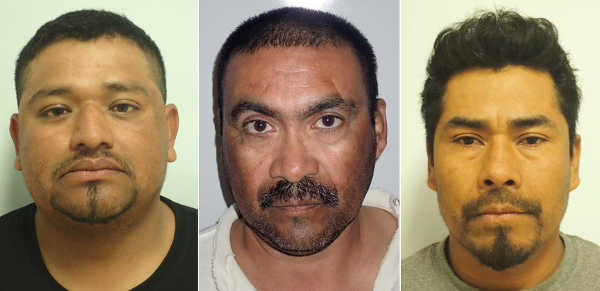
Paulich said the three men were booked into custody at the Lake County Jail for cultivation of marijuana while discharging substance or material deleterious to fish, plant life, mammals or bird life; maintaining a place for the purposes of unlawfully storing or distributing controlled substance for sale; and possession of marijuana for sale.
Detectives continued to investigate the male subjects and were able to identify a second location located in the 4600 block of Clark Drive in Kelseyville which was associated with Santos, Paulich said.
On Friday, the Lake County Sheriff’s Office Narcotics Unit along with the assistance of the California Department of Fish and Wildlife served a second search warrant at the Clark Drive location. Paulich said no suspects were located at this location.
Detectives found the property contained a total of nine additional large greenhouse structures and a sophisticated drying and processing station within a barn. Paulich said detectives located and eradicated a total of 5,554 marijuana plants and seized 760 pounds of processed marijuana.
Paulich said the processed marijuana had a street value of over $1 million.

LAKE COUNTY, Calif. – With Daylight Saving Time beginning on Sunday, March 11, Cal Fire officials are reminding all Californians to ensure they have working smoke alarms in their homes.
Smoke alarms save lives by providing the extra minutes needed to get out of your home safely.
“With the clocks springing forward, now is a great opportunity to spend a few minutes making sure your smoke alarms are less than ten years old, in good working condition and installed in the proper locations,” said Cal Fire Chief of Public Education Lynne Tolmachoff. “Most people know how critical smoke alarms are, but they take them for granted and forget to maintain them. When smoke alarms fail to operate, it is usually because batteries are missing, disconnected, or the smoke alarm unit is dead.”
Some alarming statistics: Did you know that smoke alarms sounded in more than half of the home fires reported? In fires in which the smoke alarms were present but did not operate, almost half of the smoke alarms had missing or disconnected batteries.
No smoke alarms were present in almost two out of every five home fire deaths. Dead batteries caused one-quarter of the smoke alarm failures.
With these facts, it is vital to have a working smoke alarm when you and your family have less than three minutes to get out of a burning home to stay safe, that is not a lot of time.
To help prevent a tragedy, we are highlighting the following life-saving strategies:
• Smoke alarms should be installed on every level of your home, in every sleeping area, and in the hallway leading to every sleeping area. Smoke alarms should be connected so when one sounds, they all sound.
• Inspect smoke alarms monthly, clean them yearly, and replace the entire unit every ten years.
• Replace the battery if the smoke alarm chirps. That is your warning sign that the battery is low.
• Protect your family by developing a home escape plan with two ways out of every room. Make sure to have an outside meeting place, and practice your escape during the day as well as the night.
• People who are hard-of-hearing or deaf can use special alarms. These alarms have strobe lights and bed shakers.
• An ionization smoke alarm is generally more responsive to flaming fires and a photoelectric smoke alarm is generally more responsive to smoldering fires. For the best protection, or where extra time is needed to awaken or assist others, both types of alarms, or combination ionization and photoelectric alarms are recommended.
You can do your part in preventing home fires by checking the dates on your smoke alarms and then testing them to make sure they work.
To find out how old your smoke alarm is and its expiration date, simply look on the back of the alarm where the date of manufacture is marked. If the date is more than 10 years old, it’s time to change the entire smoke alarm unit.
For more information, visit http://www.fire.ca.gov/communications/communications_firesafety_smokealarms.
Smoke alarms save lives by providing the extra minutes needed to get out of your home safely.
“With the clocks springing forward, now is a great opportunity to spend a few minutes making sure your smoke alarms are less than ten years old, in good working condition and installed in the proper locations,” said Cal Fire Chief of Public Education Lynne Tolmachoff. “Most people know how critical smoke alarms are, but they take them for granted and forget to maintain them. When smoke alarms fail to operate, it is usually because batteries are missing, disconnected, or the smoke alarm unit is dead.”
Some alarming statistics: Did you know that smoke alarms sounded in more than half of the home fires reported? In fires in which the smoke alarms were present but did not operate, almost half of the smoke alarms had missing or disconnected batteries.
No smoke alarms were present in almost two out of every five home fire deaths. Dead batteries caused one-quarter of the smoke alarm failures.
With these facts, it is vital to have a working smoke alarm when you and your family have less than three minutes to get out of a burning home to stay safe, that is not a lot of time.
To help prevent a tragedy, we are highlighting the following life-saving strategies:
• Smoke alarms should be installed on every level of your home, in every sleeping area, and in the hallway leading to every sleeping area. Smoke alarms should be connected so when one sounds, they all sound.
• Inspect smoke alarms monthly, clean them yearly, and replace the entire unit every ten years.
• Replace the battery if the smoke alarm chirps. That is your warning sign that the battery is low.
• Protect your family by developing a home escape plan with two ways out of every room. Make sure to have an outside meeting place, and practice your escape during the day as well as the night.
• People who are hard-of-hearing or deaf can use special alarms. These alarms have strobe lights and bed shakers.
• An ionization smoke alarm is generally more responsive to flaming fires and a photoelectric smoke alarm is generally more responsive to smoldering fires. For the best protection, or where extra time is needed to awaken or assist others, both types of alarms, or combination ionization and photoelectric alarms are recommended.
You can do your part in preventing home fires by checking the dates on your smoke alarms and then testing them to make sure they work.
To find out how old your smoke alarm is and its expiration date, simply look on the back of the alarm where the date of manufacture is marked. If the date is more than 10 years old, it’s time to change the entire smoke alarm unit.
For more information, visit http://www.fire.ca.gov/communications/communications_firesafety_smokealarms.

Having one’s affairs in order is like having good health. All related parts have to work together as a whole. That is, each separate estate planning instrument – be it the living trust, the power of attorney, or the designation of death beneficiary form – needs to function, where relevant, harmoniously with one another.
Let us consider some common scenarios where estate planning documents may interrelate.
The living trust and the power of attorney both pertain to incapacity planning. Typically the agent under the power of attorney will use the day to day checking account funds to pay necessary expenses while the principal is incapacitated.
Meanwhile the trustee will manage the investment and savings accounts and will also typically be required to pay upkeep and personal expenses.
The agent, if he or she is not also the trustee, should be authorized in the trust to obtain further money from the trustee if the checking account outside the trust (which is available to the agent) is ever insufficient to meet the principal’s living and healthcare expenses.
Typically the trust requires the trustee to provide the agent with extra funds as needed. Usually this is a moot point as the same person(s) often act as agent and as trustee.
Moreover, sometimes it can be very helpful for the agent under a power of attorney to amend an incapacitated person’s living trust.
Consider someone who tells her agent under a power of attorney that she wants to amend her trust to disinherit her estranged stepson. Then she becomes incapacitated before dying.
The power of attorney authorizes the agent to make changes to the trust. The trust, however, restricts the right to amend the trust to the settlor or his conservator. Accordingly, the trust’s own restrictions on who can amend the trust prevent the settlor’s agent exercising the full scope of authority granted within the power of attorney. The documents are not in harmony.
Next, the will, power of attorney, and designation of death beneficiary forms can also interrelate. That is, an agent under the power of attorney may be authorized to change designation of death beneficiary forms – which control who inherits death proceeds from life insurance, annuities, and retirement accounts.
The will can authorize a decedent’s surviving spouse to make changes to death beneficiary forms that affect the decedent’s community property interests.
Without such authorization the surviving spouse cannot exercise full control over who later inherits any life insurance, annuities and retirement accounts – even though owned by the surviving spouse – which previously were community property assets while the deceased spouse was still alive.
A person’s advance health care directive, power of attorney for personal care, power of attorney for property and financial assets, and living trust can also overlap.
The agents under the health care directive and power of attorney for personal care have the authority to make health care and living arrangements (such as placement in a residential nursing home). Such arrangements will create expenses that need to be paid.
Paying for these health care and living arrangements requires the cooperation of the agent under the power of attorney and the trustee, each of whom may have access to assets.
Accordingly, the power of attorney and trust instruments should either require that the agent pay such expenses or else the same person(s) should act in all roles.
A person’s ownership (title) documents need to be consistent with the person’s estate plan. That is, if the person with a living trust intends for real property assets to pass under a trust, those real properties should all be titled in the name of the trustee. Having them titled outside the trust may trigger an unintended probate.
The foregoing are just some illustrations of how estate planning instruments must be considered in connection with other related estate planning instruments so everything works harmoniously.
Dennis A. Fordham, attorney, is a State Bar-Certified Specialist in estate planning, probate and trust law. His office is at 870 S. Main St., Lakeport, Calif. He can be reached at
Imagine an object moving at supersonic speed. This object, as it moves through a medium, causes the material in the medium to pile up, compress, and heat up. The result is a type of shock wave, known as a bow shock.
A bow shock gets its name from bow waves, the curved ridge of water in front of a fast-moving boat created by the force of the bow pushing forward through the water.
Bow waves and bow shocks can look similar, however bow waves only occur on the surface of water while bow shocks occur in 3 dimensions.
There are bow shocks everywhere, even in space--and these cosmic bow shocks can tell scientists cosmic secrets.
Even the emptiest regions of space contain protons, electrons, atoms, molecules and other matter. When planets, stars, and the plasma clouds ejected from supernovae fly at a high speed through this surrounding medium, cosmic bow shocks are generated in that medium.
The solar wind forms a bow shock in front of Earth's magnetosphere.
“The fast-moving plasma of the solar wind blows past Earth, but it cannot penetrate our magnetosphere,” explained Maxim Markevitch of NASA’s Goddard Space Flight Center. “The solar wind has a magnetic field, and the Earth's magnetosphere is almost like a solid body for that wind. So the solar wind forms a bow shock in front of the outer edge of the magnetosphere.”
Studying Earth’s bow shock can unlock the secrets of the solar wind, allowing us to better understand its complicated effects on our planet.
The high-speed collisions of stars with the interstellar medium create impressive bow shocks. Hot supergiant star Kappa Cassiopeia creates a shock that can be seen by the infrared detectors on NASA's Spitzer Space Telescope. In this Spitzer image, the pile-up of heated material around Kappa Cassiopeia is indicated in red.
Studying stellar bow shocks can reveal the secret motions of the underlying stars, telling us how fast they’re moving, which way, and what they’re moving through.
An example of a bow shock on an even grander scale is seen in this cluster of galaxies located in the Carina constellation, called 1E 0657-558. This X-ray image from the Chandra observatory captures the moment of a gigantic collision of two smaller clusters, the two white regions in the image.
“The clusters are filled with hot plasma, and one of them – the cluster on the right – is smaller and denser. As it flies through the less-dense cloud of plasma that is the bigger cluster it forms a bow shock,” Markevitch said.
Scientists study such cluster shocks to deduce their velocity in the plane of the sky. And the fine structure of the shocks reveals a lot about the interesting, complicated physical processes in the plasmas present in clusters as well as in many other astrophysical objects across the universe.
For more on shocking phenomena found beyond our solar system, stay tuned to http://science.nasa.gov.
EDITOR’S NOTE: This story has been updated regarding the name, age and employment of one of the victims based on a Saturday afternoon followup report from the Napa County Sheriff’s Office.
NORTHERN CALIFORNIA – On Friday night the Napa County Sheriff-Coroner’s Office identified the shooter and his three female victims who were found dead following a daylong standoff with authorities at the Veterans Home in Yountville.
Capt. Steve Blower identified the shooter as Albert Wong, 36, from Sacramento, who was reported to have fired shots at law enforcement officers and taken three women as hostages on Friday morning before he was found dead on Friday evening.
Blower said the three victims are Jennifer Golick, 42, of St. Helena; Christine Loeber, 48, of Napa; and Jennifer K. Gonzales Shushereba, 32, of Napa.
Golick was the clinical director of the Pathway Home treatment program for veterans, located on the campus of the Veteran Home of California in Yountville, while Loeber was executive director and Shushereba was a clinical psychologist with the San Francisco Department of Veterans Affairs Healthcare System, Blower said.
Blower also reported that Shushereba had been 26 weeks pregnant.
Wong had formerly taken part in the Pathway Home program, according to Blower’s report.
Autopsies of the three women and Wong will take place next week at the Napa Sheriff-Coroner’s Office Facility, Blower said.
“We are devastated by today’s tragedy at our Home in Yountville,” said CalVet Secretary Dr. Vito Imbasciani in a Friday night statement. “Our hearts are heavy for the entire Yountville Veterans Home community and the families and friends who are grieving for those who died. Nothing matters more than caring for our veterans and employees during this difficult time. We appreciate the tremendous law enforcement response today and unfailing support of this community.”
The Napa County Sheriff’s Office reported that the California Highway Patrol received a call at 10:20 a.m. Friday of gunshots fired at the Yountville Veterans Home in Yountville.
Several agencies, including the Sonoma County Sheriff’s SWAT team, responded and deputies arrived within four minutes, engaging Wong – who they agency said was armed with a rifle – and exchanging gunfire with him. At that time, there were no injuries.
Wong took the three women hostage and three tactical teams had him confined to a single room, with hostage negotiators from three different agencies part of the response.
The situation continued into the evening. Then, just before 6 p.m., law enforcement officers made entry into the room where Wong was holding the women hostage, according to CHP Golden Gate Division Assistant Chief Chris Childs in a Friday night press conference.
Childs said they found Wong and the three hostages all dead.
“This is a tragic piece of news, one we were really hoping not to come before the public to give,” Childs said.
Childs credited the initial responding Napa County Sheriff's Office Deputy who arrived at the scene and put himself in harm’s way, exchanging gunfire with Wong.
“”We believe and we credit him with saving the lives of others in the area by eliminating the ability for the suspect to go out and find further victims,” Childs said.
Childs said they found Wong’s vehicle, a rental car that was parked near a building.
“Initially, we had a bomb sniffing dog sniff the car and came back with a positive result. The CHP SWAT team and the Explosive Ordnance Disposal Unit were called in and they cleared the car,” Childs said.
While they didn’t find a bomb in the car, Childs said they did find a cell phone.
Noting that it was still an active crime scene, Childs said couldn’t offer further details on other aspects of the incident, including what type of gun Wong had.
“The investigation will take some time to conclude,” Childs said. “We don’t anticipate we’ll have a lot of answers tonight.”
Authorities also asked people to stay away from the grounds of the veterans home while the investigation continued and the home was repopulated.
On Friday night Gov. Jerry Brown and a host of other officials responded to the outcome of the standoff.
“Anne and I are deeply saddened by the horrible violence at the Yountville Veterans Home, which tragically took the lives of three people dedicated to serving our veterans. Our hearts go out to their families and loved ones and the entire community of Yountville,” said Brown.
The governor ordered flags in the State Capitol to be flown at half-staff in recognition of the victims and their families.
“Tonight as a community, we mourn the tragic shooting at the Yountville Veterans Home and the devastating loss for the families, loved ones, and friends of those killed. Law enforcement from our district and around our region responded with truly commendable professionalism and we thank them for their selfless service,” said Congressman Mike Thompson, whose district includes Yountville.
“The Veterans Home is a place where veterans receive the help they have earned through their service. Pathway is a program that gives veterans a guide to improve their lives. Those killed were three wonderful and dedicated women who got up every morning to better the lives of veterans. Tonight all our hearts are heavy,” Thompson said.
“My heart breaks for the residents, visitors, staff, and their families affected by the tragic events at the Yountville Veterans Home today,” said Assemblywoman Cecilia Aguiar-Curry. “We lost three extremely dedicated individuals who did incredible work for our veterans, and nothing can prepare a community for something like this. I would like to thank the California Highway Patrol and all of the first responders and law enforcement that were on the scene today. They have been working for hours bringing comfort and aid, and are still providing assistance into the night. I hope all those impacted feel comfort from the showing support and love, and I will continue to be present as a resource and advocate as we move forward into the coming days."
Email Elizabeth Larson atThis email address is being protected from spambots. You need JavaScript enabled to view it. . Follow her on Twitter, @ERLarson, or Lake County News, @LakeCoNews.
NORTHERN CALIFORNIA – On Friday night the Napa County Sheriff-Coroner’s Office identified the shooter and his three female victims who were found dead following a daylong standoff with authorities at the Veterans Home in Yountville.
Capt. Steve Blower identified the shooter as Albert Wong, 36, from Sacramento, who was reported to have fired shots at law enforcement officers and taken three women as hostages on Friday morning before he was found dead on Friday evening.
Blower said the three victims are Jennifer Golick, 42, of St. Helena; Christine Loeber, 48, of Napa; and Jennifer K. Gonzales Shushereba, 32, of Napa.
Golick was the clinical director of the Pathway Home treatment program for veterans, located on the campus of the Veteran Home of California in Yountville, while Loeber was executive director and Shushereba was a clinical psychologist with the San Francisco Department of Veterans Affairs Healthcare System, Blower said.
Blower also reported that Shushereba had been 26 weeks pregnant.
Wong had formerly taken part in the Pathway Home program, according to Blower’s report.
Autopsies of the three women and Wong will take place next week at the Napa Sheriff-Coroner’s Office Facility, Blower said.
“We are devastated by today’s tragedy at our Home in Yountville,” said CalVet Secretary Dr. Vito Imbasciani in a Friday night statement. “Our hearts are heavy for the entire Yountville Veterans Home community and the families and friends who are grieving for those who died. Nothing matters more than caring for our veterans and employees during this difficult time. We appreciate the tremendous law enforcement response today and unfailing support of this community.”
The Napa County Sheriff’s Office reported that the California Highway Patrol received a call at 10:20 a.m. Friday of gunshots fired at the Yountville Veterans Home in Yountville.
Several agencies, including the Sonoma County Sheriff’s SWAT team, responded and deputies arrived within four minutes, engaging Wong – who they agency said was armed with a rifle – and exchanging gunfire with him. At that time, there were no injuries.
Wong took the three women hostage and three tactical teams had him confined to a single room, with hostage negotiators from three different agencies part of the response.
The situation continued into the evening. Then, just before 6 p.m., law enforcement officers made entry into the room where Wong was holding the women hostage, according to CHP Golden Gate Division Assistant Chief Chris Childs in a Friday night press conference.
Childs said they found Wong and the three hostages all dead.
“This is a tragic piece of news, one we were really hoping not to come before the public to give,” Childs said.
Childs credited the initial responding Napa County Sheriff's Office Deputy who arrived at the scene and put himself in harm’s way, exchanging gunfire with Wong.
“”We believe and we credit him with saving the lives of others in the area by eliminating the ability for the suspect to go out and find further victims,” Childs said.
Childs said they found Wong’s vehicle, a rental car that was parked near a building.
“Initially, we had a bomb sniffing dog sniff the car and came back with a positive result. The CHP SWAT team and the Explosive Ordnance Disposal Unit were called in and they cleared the car,” Childs said.
While they didn’t find a bomb in the car, Childs said they did find a cell phone.
Noting that it was still an active crime scene, Childs said couldn’t offer further details on other aspects of the incident, including what type of gun Wong had.
“The investigation will take some time to conclude,” Childs said. “We don’t anticipate we’ll have a lot of answers tonight.”
Authorities also asked people to stay away from the grounds of the veterans home while the investigation continued and the home was repopulated.
On Friday night Gov. Jerry Brown and a host of other officials responded to the outcome of the standoff.
“Anne and I are deeply saddened by the horrible violence at the Yountville Veterans Home, which tragically took the lives of three people dedicated to serving our veterans. Our hearts go out to their families and loved ones and the entire community of Yountville,” said Brown.
The governor ordered flags in the State Capitol to be flown at half-staff in recognition of the victims and their families.
“Tonight as a community, we mourn the tragic shooting at the Yountville Veterans Home and the devastating loss for the families, loved ones, and friends of those killed. Law enforcement from our district and around our region responded with truly commendable professionalism and we thank them for their selfless service,” said Congressman Mike Thompson, whose district includes Yountville.
“The Veterans Home is a place where veterans receive the help they have earned through their service. Pathway is a program that gives veterans a guide to improve their lives. Those killed were three wonderful and dedicated women who got up every morning to better the lives of veterans. Tonight all our hearts are heavy,” Thompson said.
“My heart breaks for the residents, visitors, staff, and their families affected by the tragic events at the Yountville Veterans Home today,” said Assemblywoman Cecilia Aguiar-Curry. “We lost three extremely dedicated individuals who did incredible work for our veterans, and nothing can prepare a community for something like this. I would like to thank the California Highway Patrol and all of the first responders and law enforcement that were on the scene today. They have been working for hours bringing comfort and aid, and are still providing assistance into the night. I hope all those impacted feel comfort from the showing support and love, and I will continue to be present as a resource and advocate as we move forward into the coming days."
Email Elizabeth Larson at
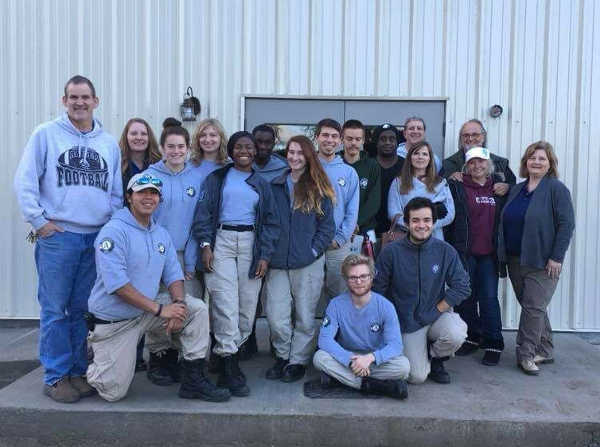
MIDDLETOWN, Calif. – On Jan. 11, a group of 10 young adults began work constructing several houses in the Valley fire area in southern Lake County.
The team, known as Gold 3, is working toward completing 10 months of community service with AmeriCorps National Civilian Community Corps, or NCCC.
Through the sponsorship of local nonprofit North Coast Opportunities, Gold 3 will be aiding Hope Crisis Response Network until April 6.
Hope Crisis Response Network is a nonprofit organization and its mission is “to serve individuals, families and communities impacted by natural or man-made disasters.”
The organization has assisted more than 20,000 families nationwide by providing resources needed to help recover from the impact of a manmade and natural disasters.
It operates all over the country and has assisted in many different disasters including Sept. 11, hurricanes, wildfires, tornadoes and floods.
Hope Crisis Response Network’s Hope City initiative aims to build 150 new homes in Lake County over the course of the next five years and will continuously involve AmeriCorps teams sent from the Sacramento campus.
Team members have learned a variety of new technical skills on the construction site and has engaged with the community by doing additional service projects.
The AmeriCorps group also assists North Coast Opportunities with food distributions and pantries, letting the customers pick from fresh vegetables and fruits, canned goods, dairy, snacks, breakfast products and meat products. Food is also given to the local schools.
The food distributions and pantries create a massive difference in family’s lives and the community by providing groceries.
AmeriCorps NCCC is a full-time, residential, national service program in which 2,800 young adults serve nationwide each year. During their 10-month term, Corps Members – all 18 to 24 years old – work on teams of 8 to 12 on projects that address critical needs. Traditional NCCC members work on a variety of different six- to eight-week-long projects related to natural and other disasters, infrastructure improvement, environmental stewardship and conservation, energy conservation, and urban and rural development. The Pacific Region campus in Sacramento is one of five regional hubs in the nation and serves 10 states in the western part of the country.
In exchange for their service, Corps Members receive $5,780 to help pay for college or to pay back existing student loans. Other benefits include a small living stipend, room and board, travel, leadership development, increased self-confidence, and the knowledge that, through active citizenship, people can indeed make a difference.
Travis Anctil is a member of the AmeriCorps National Civilian Community Corps.