 How to resolve AdBlock issue?
News
NORTHERN CALIFORNIA – The Napa County Sheriff’s Office on Thursday issued an update on the investigation into Friday’s fatal standoff at the Yountville Veterans Home, reporting on the causes of death of the victims and the assailant.
Authorities said Sacramento resident Albert Wong, 36, a former participant in the Pathway Home program located at the Veterans Home campus, was the man responsible for the standoff.
He exchanged gunfire with authorities before taking hostage three women staffers at the facility: Jennifer Golick, 42, of St. Helena, the Pathway Home clinical director; Christine Loeber, 48, of Napa, Pathway Home executive director; and Jennifer K. Gonzales Shushereba, 32, of Napa, a clinical psychologist with the San Francisco Department of Veterans Affairs Healthcare System.
The daylong standoff ended late Friday with the discovery of the bodies of the three women and Wong, authorities said.
At that time, authorities did not confirm that Wong had killed the women, but the autopsies performed this week have led to the conclusion that he in fact fatally shot all three, Blower said.
On Thursday, Blower said the forensic examination and autopsies of the three shooting victims revealed that they all suffered “immediately fatal head wounds caused by a high velocity projectile” consistent with the rifle that Wong had used in this incident.
Shushereba was 26 weeks pregnant at the time of her death with a baby girl. Blower said Shushereba’s unborn baby died due to lack of oxygenated blood caused by her mother’s death.
Blower said Wong’s autopsy revealed that he suffered one self-inflicted fatal wound to his head from a shotgun, with the examination showing that the wound was consistent with the shotgun he had with him at the time of the incident.
“There is no evidence that any of the injuries suffered by the victims were caused by anyone other than Albert Wong,” Blower said.
Last week Gov. Jerry Brown ordered flags in the State Capitol to be flown at half-staff in recognition of the victims and their families.
Email Elizabeth Larson atThis email address is being protected from spambots. You need JavaScript enabled to view it. . Follow her on Twitter, @ERLarson, or Lake County News, @LakeCoNews.
Authorities said Sacramento resident Albert Wong, 36, a former participant in the Pathway Home program located at the Veterans Home campus, was the man responsible for the standoff.
He exchanged gunfire with authorities before taking hostage three women staffers at the facility: Jennifer Golick, 42, of St. Helena, the Pathway Home clinical director; Christine Loeber, 48, of Napa, Pathway Home executive director; and Jennifer K. Gonzales Shushereba, 32, of Napa, a clinical psychologist with the San Francisco Department of Veterans Affairs Healthcare System.
The daylong standoff ended late Friday with the discovery of the bodies of the three women and Wong, authorities said.
At that time, authorities did not confirm that Wong had killed the women, but the autopsies performed this week have led to the conclusion that he in fact fatally shot all three, Blower said.
On Thursday, Blower said the forensic examination and autopsies of the three shooting victims revealed that they all suffered “immediately fatal head wounds caused by a high velocity projectile” consistent with the rifle that Wong had used in this incident.
Shushereba was 26 weeks pregnant at the time of her death with a baby girl. Blower said Shushereba’s unborn baby died due to lack of oxygenated blood caused by her mother’s death.
Blower said Wong’s autopsy revealed that he suffered one self-inflicted fatal wound to his head from a shotgun, with the examination showing that the wound was consistent with the shotgun he had with him at the time of the incident.
“There is no evidence that any of the injuries suffered by the victims were caused by anyone other than Albert Wong,” Blower said.
Last week Gov. Jerry Brown ordered flags in the State Capitol to be flown at half-staff in recognition of the victims and their families.
Email Elizabeth Larson at
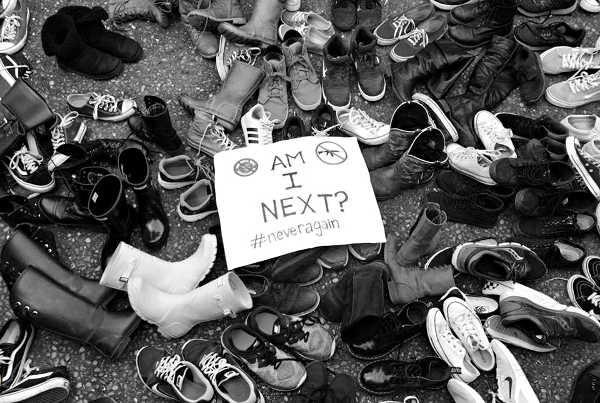
LAKE COUNTY, Calif. – As part of the larger National School Walkout that took place on Wednesday, dozens of students at districts throughout Lake County left classes to participate in peaceful demonstrations.
The walkout event, meant as a student-led protest of gun violence, arose in the wake of the fatal high school shooting on Feb. 14 at Marjory Stoneman Douglas High School in Parkland, Fla., in which 17 students and faculty members were killed by a 19-year-old gunman.
Lake County News was able to confirm student participation in the event in the Konocti, Lakeport, Middletown and Upper Lake districts. Officials in the Kelseyville Unified School District did not respond by press time.
Lake County News also made requests for comment from students involved in organizing the event at Clear Lake High School but did not receive a response Wednesday night.
In the Konocti Unified School District, only five students walked, all at Lower Lake High School, according to Superintendent Donna Becnel.
In the Lakeport Unified School District, a “WalkUp” event was promoted at Clear Lake High School instead of a walkout. Students were encouraged to wear white and walk up to students who sit alone at lunch, reach out to new friends, thank teachers or approach and talk to those with different viewpoints.
The WalkUp event was held in the school’s quad area, according to Superintendent April Leiferman.
She said she was with another group of students who were protesting in front of the gym, up until the time some of them walked off campus.
“I made it clear to the students that they could protest on campus, but could not leave campus because of safety issues,” she said.
Leiferman explained that students cannot leave campus unsupervised and need parent permission to do so, just like for field trips.
“Some of the students did not return after the protest which caused us to worry and we contacted their parents,” she said. “We spoke to those students that did return and discussed with them the legal responsibility of schools to keep students safe from the time they leave home in the morning to the time they return home after school. These students will serve detention together as a group while planning how to protest and be safe at the same time.”
Pictures of a group of students walking from the Lakeport Unified campus to the Lake County Courthouse in downtown Lakeport were posted on social media by Lake County Supervisor Tina Scott, who walked with them.
Scott, a former Lakeport Unified School Board member, had posted on Tuesday night that she planned to march with them. While she said she understood the need to keep students in school, “I also know the importance of standing up for what you believe in.”
In the Middletown Unified School District, Superintendent Catherine Stone said some students also participated.
She said they let students know that they could walk out of class at 10 a.m. but could not leave campus.
“They were encouraged to gather on the quad, and to return to class right afterward. We treated it as an opportunity for students to learn about civic engagement. Students who did not wish to participate stayed in their classes,” she said.
At 10 a.m. Wednesday about 100 students convened in the campus quad, Stone said.
“They spoke quietly among themselves for awhile, and then a student suggested they all take off their shoes and lay them out to represent the students who have been killed at schools across the country,” she said. “They did this and then formed a ring around the shoes and sang ‘Amazing Grace’.”
She said they then spent the rest of the time in silence in honor of the 17 students and faculty who lost their lives in Parkland.
“Right at 10:17, without any prompting, they returned to class,” she said.
Separately, elementary school students at a charter school in Middletown were reported to have participated in a brief march through town.
At Upper Lake High School, school administrators told Lake County News that 23 students walked out of classes but stayed in the quad on the campus.
There are other upcoming demonstrations planned in coming weeks, including the March 24 “March For Our Lives” protests in Washington, D.C. and the National Day of Action Against Gun Violence in Schools on April 20.
Email Elizabeth Larson at
LAKEPORT, Calif. – All of the filing periods for the local elected offices on the June 5 primary have now closed and the fields are set.
The filing periods for district attorney, District 2 supervisor and District 3 supervisor races closed at 5 p.m. Wednesday.
Those three races in the June 5 primary had their filing periods extended due to no incumbents filing for reelection, according to Lake County Registrar of Voters Diane Fridley.
As of the Wednesday evening deadline, the only major change in the makeup of the fields since last week was that Clearlake City Councilwoman Joyce Overton had completed the process to become a candidate for District 2 supervisor, Fridley said.
Overton joins Clearlake Mayor Bruno Sabatier, her colleague on the council, in the race to succeed Supervisor Jeff Smith.
In the District 3 supervisorial race, the two candidates are EJ Crandell and Denise Loustalot, Fridley said. Supervisor Jim Steele is not seeking reelection.
Fridley said the district attorney’s race still has two candidates, attorney Steven Brown and Senior Deputy District Attorney Susan Krones.
District Attorney Don Anderson is not seeking reelection to his current office, and instead has joined Deputy County Counsel Shanda Harry and attorney Andre Ross in the race for Lake County Superior Court judge, to succeed Judge Stephen Hedstrom, who is not running for another term. That race, which follows different deadlines than the county offices, was closed as of Friday evening.
Several other county races closed on Friday and the following incumbents are running unopposed: Assessor-Recorder Richard Ford, County Clerk-Auditor Cathy Saderlund, Sheriff-Coroner Brian Martin and Treasurer-Tax Collector Barbara Ringen.
The race for Lake County superintendent of schools will see incumbent Brock Falkenberg challenged by retired Upper Lake Unified School District Superintendent Patrick Iaccino.
Lake County Superior Court Judge Andrew Blum and Judge Michael Lunas are both running unopposed. Judicial race procedure provides that, because they are not being challenged, their names will not appear on the primary ballot and they will be considered reelected in November, Fridley said.
Fridley said two measures will appear on the June 5 ballot.
They are Measure G, the county of Lake’s proposed 1.5-percent general sales tax estimated to raise $4.5 million per year for 10 years for fire recovery and other budgetary needs, and Measure F, an annual tax of $50 per lot proposed within the Butler-Keys Community Services District in Clearlake Oaks for a period of four years to fund street maintenance.
Email Elizabeth Larson atThis email address is being protected from spambots. You need JavaScript enabled to view it. . Follow her on Twitter, @ERLarson, or Lake County News, @LakeCoNews.
The filing periods for district attorney, District 2 supervisor and District 3 supervisor races closed at 5 p.m. Wednesday.
Those three races in the June 5 primary had their filing periods extended due to no incumbents filing for reelection, according to Lake County Registrar of Voters Diane Fridley.
As of the Wednesday evening deadline, the only major change in the makeup of the fields since last week was that Clearlake City Councilwoman Joyce Overton had completed the process to become a candidate for District 2 supervisor, Fridley said.
Overton joins Clearlake Mayor Bruno Sabatier, her colleague on the council, in the race to succeed Supervisor Jeff Smith.
In the District 3 supervisorial race, the two candidates are EJ Crandell and Denise Loustalot, Fridley said. Supervisor Jim Steele is not seeking reelection.
Fridley said the district attorney’s race still has two candidates, attorney Steven Brown and Senior Deputy District Attorney Susan Krones.
District Attorney Don Anderson is not seeking reelection to his current office, and instead has joined Deputy County Counsel Shanda Harry and attorney Andre Ross in the race for Lake County Superior Court judge, to succeed Judge Stephen Hedstrom, who is not running for another term. That race, which follows different deadlines than the county offices, was closed as of Friday evening.
Several other county races closed on Friday and the following incumbents are running unopposed: Assessor-Recorder Richard Ford, County Clerk-Auditor Cathy Saderlund, Sheriff-Coroner Brian Martin and Treasurer-Tax Collector Barbara Ringen.
The race for Lake County superintendent of schools will see incumbent Brock Falkenberg challenged by retired Upper Lake Unified School District Superintendent Patrick Iaccino.
Lake County Superior Court Judge Andrew Blum and Judge Michael Lunas are both running unopposed. Judicial race procedure provides that, because they are not being challenged, their names will not appear on the primary ballot and they will be considered reelected in November, Fridley said.
Fridley said two measures will appear on the June 5 ballot.
They are Measure G, the county of Lake’s proposed 1.5-percent general sales tax estimated to raise $4.5 million per year for 10 years for fire recovery and other budgetary needs, and Measure F, an annual tax of $50 per lot proposed within the Butler-Keys Community Services District in Clearlake Oaks for a period of four years to fund street maintenance.
Email Elizabeth Larson at
LAKEPORT, Calif. – The county’s work to create cannabis regulations aligning with state law – which has been going on for years but has intensified in recent months – took another step forward on Tuesday, with the Board of Supervisors giving its initial approval to an updated commercial cannabis ordinance.
However, with that step also came another slight delay; the ordinance had been approved the previous week and expected to have its second and final reading on Tuesday.
The board instead decided to accept additional changes proposed by Community Development Department staff which County Counsel Anita Grant cautioned changed the document enough that Tuesday’s consideration needed to be considered the first, not the second, reading.
A copy of the staff’s strike-through and underlined version of the ordinance with changes the board had ordered the previous week, along with additional proposed changes, is published below.
Some of the changes were minor, involving numbering and formatting, while others were more substantive.
Community Development Director Bob Massarelli said one necessary update resulted from the board directing the removal of a requirement for a zoning permit, which would have required modifications of use permits for apartments and mobile home parks, so staff developed language to address that.
Some language was clarifying, such as relating to height of structures, not plants, outlined in the development standards, and ensuring that it’s understood that applications for permits require the property owner’s written consent; outlining differences between necessary state permits and licenses that are required; making clear the qualifications for minor and major use permits; and adding references for early activation of commercial cannabis permits – which existed already in the ordinance – to other parts of the document.
During public comment, the board heard input regarding setting up the sheriff to do the necessary background checks, and fielded a request from Michael Green of the Lake County Growers Association who, while agreeing with the proposed changes, said still more work needed to be done as far as addressing several technical errors his group said the document contains.
And while other growers lauded the board for taking its time to create the rules, they didn’t want further delays, even of just a week.
“Nothing’s ever perfect,” said Frank Perez of Rancho de La Fuente.
Supervisor Jeff Smith wanted to be cautious. “As always, I would rather do it the safe way and the correct way, and that is to do the first reading today and the second reading next week with all the changes that were made.”
Supervisor Moke Simon showed some of the same impatience exhibited by community members. “We gotta get it done,” he said. “It keeps getting pushed down the road.”
Grant told them that no matter what they decided to do, there would likely be future changes as things evolve.
“There will be cleanup, I can promise you that, with a 60-page ordinance or 50-page ordinance of this type,” she said, adding there will be such cleanup in every jurisdiction where such ordinances are being drafted.
The board considered removing Community Development’s latest changes in order to move the ordinance forward. However, Smith pointed out that leaving in a minor use permit for early activation – which staff had suggested be removed – could actually add another step in the process for growers, slowing them down in the long term more than a week’s delay for the ordinance.
Agreeing with Smith that the ordinance needed to be fixed and given final approval at the board’s next meeting, Supervisor Tina Scott moved to approve a first reading of the updated document.
The board voted 4-1 to approve the motion. The lone dissenting vote was Supervisor Rob Brown.
The ordinance is expected to be placed on the March 20 meeting’s consent agenda, as additional changes aren’t anticipated to be made to the document.
In other news, the board continued proclamations of local emergencies due to the Rocky, Jerusalem, Valley, Clayton and Sulphur fires and the atmospheric river storm of last year, heard a report on the 2015 Dislocated Worker Grant for Valley fire disaster and discussed that grant for 2017, considered an appointment to the Building Board of Appeals and finished out the meeting with Grant leading a training and brushup for the board on Brown Act compliance.
Email Elizabeth Larson atThis email address is being protected from spambots. You need JavaScript enabled to view it. . Follow her on Twitter, @ERLarson, or Lake County News, @LakeCoNews.
However, with that step also came another slight delay; the ordinance had been approved the previous week and expected to have its second and final reading on Tuesday.
The board instead decided to accept additional changes proposed by Community Development Department staff which County Counsel Anita Grant cautioned changed the document enough that Tuesday’s consideration needed to be considered the first, not the second, reading.
A copy of the staff’s strike-through and underlined version of the ordinance with changes the board had ordered the previous week, along with additional proposed changes, is published below.
Some of the changes were minor, involving numbering and formatting, while others were more substantive.
Community Development Director Bob Massarelli said one necessary update resulted from the board directing the removal of a requirement for a zoning permit, which would have required modifications of use permits for apartments and mobile home parks, so staff developed language to address that.
Some language was clarifying, such as relating to height of structures, not plants, outlined in the development standards, and ensuring that it’s understood that applications for permits require the property owner’s written consent; outlining differences between necessary state permits and licenses that are required; making clear the qualifications for minor and major use permits; and adding references for early activation of commercial cannabis permits – which existed already in the ordinance – to other parts of the document.
During public comment, the board heard input regarding setting up the sheriff to do the necessary background checks, and fielded a request from Michael Green of the Lake County Growers Association who, while agreeing with the proposed changes, said still more work needed to be done as far as addressing several technical errors his group said the document contains.
And while other growers lauded the board for taking its time to create the rules, they didn’t want further delays, even of just a week.
“Nothing’s ever perfect,” said Frank Perez of Rancho de La Fuente.
Supervisor Jeff Smith wanted to be cautious. “As always, I would rather do it the safe way and the correct way, and that is to do the first reading today and the second reading next week with all the changes that were made.”
Supervisor Moke Simon showed some of the same impatience exhibited by community members. “We gotta get it done,” he said. “It keeps getting pushed down the road.”
Grant told them that no matter what they decided to do, there would likely be future changes as things evolve.
“There will be cleanup, I can promise you that, with a 60-page ordinance or 50-page ordinance of this type,” she said, adding there will be such cleanup in every jurisdiction where such ordinances are being drafted.
The board considered removing Community Development’s latest changes in order to move the ordinance forward. However, Smith pointed out that leaving in a minor use permit for early activation – which staff had suggested be removed – could actually add another step in the process for growers, slowing them down in the long term more than a week’s delay for the ordinance.
Agreeing with Smith that the ordinance needed to be fixed and given final approval at the board’s next meeting, Supervisor Tina Scott moved to approve a first reading of the updated document.
The board voted 4-1 to approve the motion. The lone dissenting vote was Supervisor Rob Brown.
The ordinance is expected to be placed on the March 20 meeting’s consent agenda, as additional changes aren’t anticipated to be made to the document.
In other news, the board continued proclamations of local emergencies due to the Rocky, Jerusalem, Valley, Clayton and Sulphur fires and the atmospheric river storm of last year, heard a report on the 2015 Dislocated Worker Grant for Valley fire disaster and discussed that grant for 2017, considered an appointment to the Building Board of Appeals and finished out the meeting with Grant leading a training and brushup for the board on Brown Act compliance.
Email Elizabeth Larson at
CDD Ver. DRAFT Cannabis Cultivation Ord 03092018 by LakeCoNews on Scribd

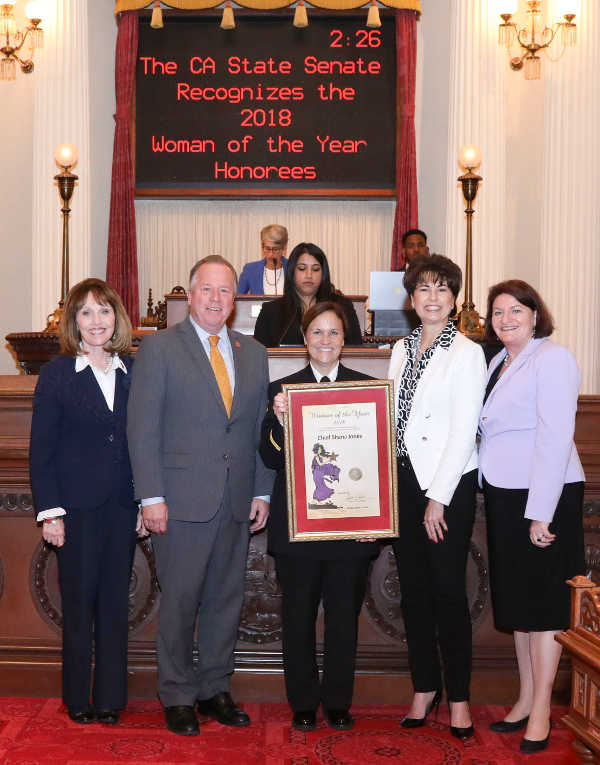
NORTHERN CALIFORNIA – Cal Fire Sonoma-Lake-Napa Unit Chief Shana Jones has been honored as Woman of the Year by Sen. Bill Dodd (D-Napa).
In celebration of Women’s History Month, the state Senate honors women who have made significant contributions to their respective districts and communities.
"I truly love working for Cal Fire, and I am blessed that I am able to serve my communities working alongside so many dedicated first responders and public servants every single day," said Shana Jones, the 2018 Woman of the Year. “There are so many inspiring women, I am truly humbled to have been chosen for this award, and I want to thank Sen. Dodd for the recognition.”
Jones has a long history of serving the public in forest management and fire protection. She is responsible for overseeing all Cal Fire functions within Sonoma, Lake, Napa, Colusa, Yolo and Solano counties.
Throughout her career, Jones has been assigned to numerous complex fires. Most recently, she served as the agency administrator overseeing three Cal Fire incident management teams that orchestrated the response to the October 2017 wildfires in Sonoma, Napa, Lake and Solano counties.
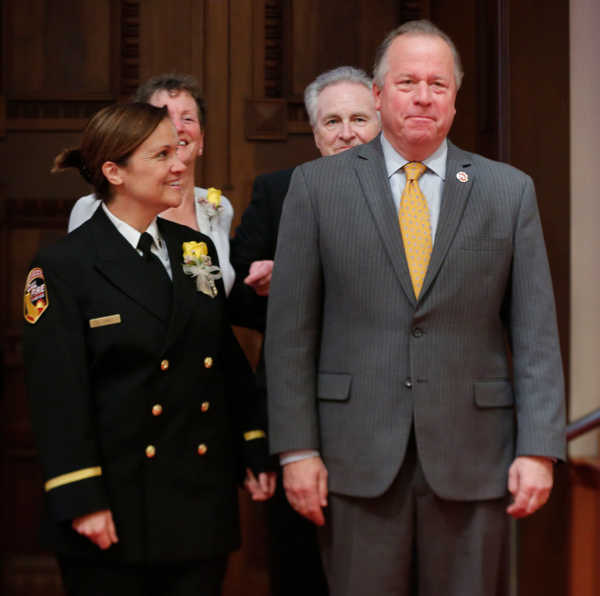
“Shana has dedicated herself to the safety and wellbeing of her neighbors,” said Sen. Dodd. “She leads by example and is truly an inspiration. Her leadership working to save lives and homes during the October wildfires is only the latest example of her commitment. I commend Shana for all that she has accomplished and thank her for everything that she continues to do for our communities.”
Jones, a fifth generation Bay Area native, began her career with the US Forest Service in both forest management and fire protection. She joined Cal Fire in 2000 in the resource management program as a forester. In 2004, she made the transition to fire protection as an assistant chief.
In 2012, Jones was promoted to the position of Northern Region Staff Chief of Management Services for Cal Fire and in 2016 Chief Jones transferred to her current position of unit chief for Cal Fire’s Sonoma-Lake-Napa unit.
She has been part of the curriculum development team and is a member of the Advanced All-Hazards Incident Management cadre, which hones the skills of current and future incident management team members on dealing with a multitude of complex incidents they may face.

LAKEPORT, Calif. – The Lake County Library welcomes sculptor Diego Harris as the speaker at the next installment of “Know Lake County” on Saturday, March 17, at 2 p.m.
The free program will take place at the Lakeport branch of Lake County Library at 1425 N. High St.
Harris learned welding through Mendocino College, then by “messing around at home” in his workshop, he moved from utilitarian welding to sculpture.
His large metal sculptures have been displayed outdoors around Northern California, including in Lake, Mendocino and Sonoma counties.
Harris incorporates spirals, horns, serpentine shapes into fanciful trees, creatures and abstract forms that seem inspired by Dr. Seuss.
This versatile artist also produces wood burned gourds, jewelry, paintings and photography.
Harris owns Diego’s Gallery in Upper Lake where he, Sherry Harris and Derek “Rojax” Harris display their art.
The Diego’s Gallery Web site at http://www.diegoandsherrycraftart.com/DiegoandSherryCraftArtists.html includes a photo gallery of Harris’ works.
Refreshments will be provided by the Friends of the Lake County Library.
The monthly Know Lake County lectures feature speakers from a wide array of organizations and disciplines, each representing some aspect of Lake County.
Lake County PEG TV records each Know Lake County program, broadcasts it on cable Channel 8, posts it on YouTube and creates DVDs that become part of the Lake County Library’s circulation collection.
More information about PEG TV can be found at www.lakecountypegtv.org.
For more information call 263-8817.
The Lake County Library is on the Internet at http://library.lakecountyca.gov and Facebook.
Jan Cook is a technician at the Lake County Library.