How to resolve AdBlock issue?
News
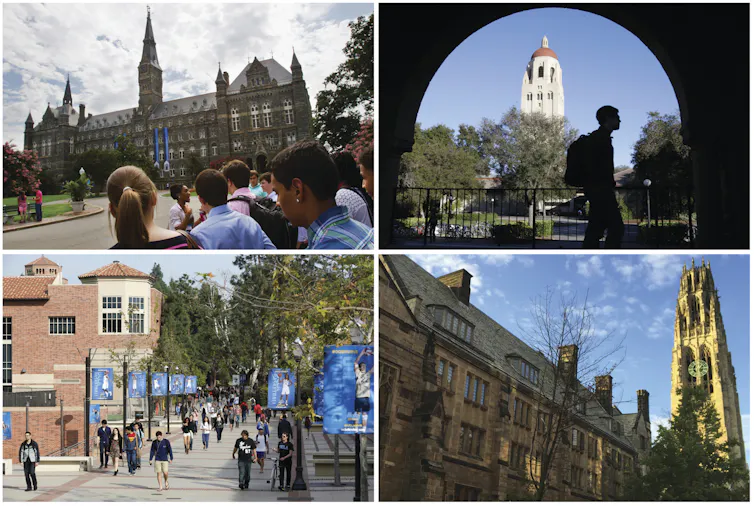
The most damaging myth in American higher education is that college admissions is about merit, and that merit is about striving for – and earning – academic excellence. This myth is often used as a weapon against policies like affirmative action that offer minor admissions advantages to low-income students and racial and ethnic minorities.
From our standpoint as education researchers who specialize in college admissions, what counts in practice as “merit” is more complicated than the public thinks. For universities, building a student body is not only about identifying the most academically accomplished students. Universities also rely on offices of admissions to protect their financial bottom lines and to project a certain image.
The deck is stacked in favor of affluent parents who use their privilege and exploit these institutional needs to find their children a way into elite colleges.
The outrage at the admissions scandal that came to light this month in which affluent parents allegedly used fraudulent means to get their children accepted to high-profile universities, including our own school, is well justified. But in our view, there should be just as much outrage over the many ways that already “disadvantaged” students are further disadvantaged when wealthy families do things to protect their competitive advantage in the college admissions process.
A range of practices worth questioning
At one end of the continuum are the kind of parenting practices that are ethically sound, like enrichment activities for children, which affluent parents are spending more for as of late.
Meanwhile, spending on lower-income kids has barely budged. This practice by middle-upper class parents gives their children tangible advantages, such as stronger resumes. It also gives them unseen advantages, such as self-confidence and comfort in dealing with authority figures like coaches, doctors and professors.
Research by sociologist Annette Lareau shows that children of working-class parents often are not raised to unlock these kinds of hidden advantages.
Test prep
The next step on the continuum is more ethically suspect. It demonstrates the fine line between gaming the system and good parenting. Affluent parents spend big on test preparation for SAT/ACT exams, coaching on admissions essays and sessions with high-priced college admissions consultants. No one blames parents for seeking advantages for their children, but these kinds of behaviors amount to a smokescreen because they make applicants appear stronger without actually improving their skills and abilities.
Backdoors
One step further are backdoor admissions processes that are legal and common, but which only the well-connected know about, often because of the close relationships between selective college admissions offices and the elite high schools where these students enroll. One example is early decision programs, which often offer substantial increases in the likelihood of admission. But people have to know about and understand the advantages that come from the early decision programs to take advantage of them, as well as have the money to commit to the school. Less affluent families, who need to compare financial offers, can rarely make such early commitments, because they would have to accept whatever financial aid offer was made by their accepting institution.
Spring admits
Another example is the so-called spring admit, which colleges use to game U.S. News rankings. In this scheme, colleges admit students with weaker qualifications – often affluent students and athletes – on the condition that they defer their admission to the spring after they graduate high school, rather than enrolling immediately in the fall. The spring admission enables colleges not to count weaker students in their admitted class for ranking purposes.
Donations
Even the notorious “wealthy donor” route – imagine a prospective student’s family giving a large donation – falls into the category of legal but ethically questionable. All of these kinds of advantages are perfectly legal, but they only serve to offer a leg up to people already standing on the top of the pile.
Breaking laws
And finally, there are the outright scandals, such as the one that the Department of Justice announced on March 12. It involves fabrication of test scores, bribes of athletic coaches and more. To be sure, these alleged actions were morally and legally wrong. However, the fact that other practices – such as working with elite college counselors to encourage affluent students to apply in early decision or as a spring admit – are not seen as over the line raises questions about where the line should be drawn.
The plaintiffs in a federal court case against Harvard claim the problem is not with mechanisms that protect pathways of access for the wealthy, but rather with affirmative action based on race.
This despite the fact that affirmative action in college admission is a policy of being race-aware, not race-based – it is just one factor among many that is used to make holistic decisions. Admission officers are prohibited from considering race as a deciding factor in their decisions.
What the public wants
The truth is that voters support affirmative preferences for disadvantaged students, though results are often sensitive to how questions are asked. A poll we conducted recently of California registered voters found that most people support admissions advantages for low-income students and racial or ethnic minorities. This result matches polls from Pew and Gallup, which find that majorities support “affirmative action for racial minorities.”
In contrast, voters in our poll were more opposed to advantages for athletes and for children of donors. Voters’ intuitions may not be far off. In highly selective institutions, once the legacy students, student-athletes and other applicants with highly desirable qualities are admitted, there are fewer spots remaining for which to compete.
The college admissions scandal should be a wake-up call to remake selective college admissions so that wealth doesn’t have so much influence. Since many believe that where a person goes to college matters when it comes to getting a good-paying job, it’s important – at least from an equity standpoint – for selective colleges to be transparent about how they admit students.
If the scandal reveals anything, it is that some affluent parents will stop at nothing to make sure their children win in the high-stakes game of college admissions.
Morgan Polikoff, Associate Professor of Education, University of Southern California; Jerome A Lucido, Professor of the Practice, Executive Director, Center for Enrollment Research, Policy and Practice, University of Southern California, and Julie Renee Posselt, Assistant Professor of Higher Education, University of Southern California
This article is republished from The Conversation under a Creative Commons license. Read the original article.
The following cats at the Lake County Animal Care and Control shelter have been cleared for adoption.

‘Misty’
“Misty” is a domestic short hair cat with a gray and white coat and gold eyes.
She already has been spayed.
She’s in kennel No. 41, ID No. 10105.
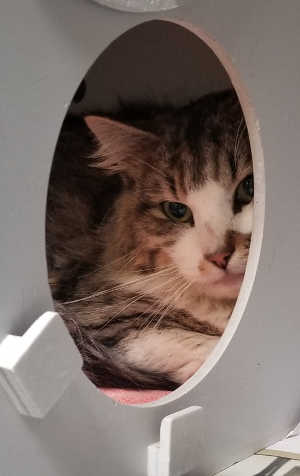
Male domestic longhair
This male domestic longhair cat has a gray tabby and white coat and green eyes.
He’s in cat room kennel No. 138, ID No. 11877.
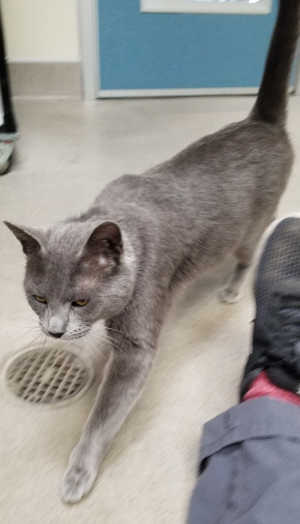
Female domestic short hair
This female domestic short hair cat has a gray coat.
She’s in cat room kennel No. 120, ID No. 11827.
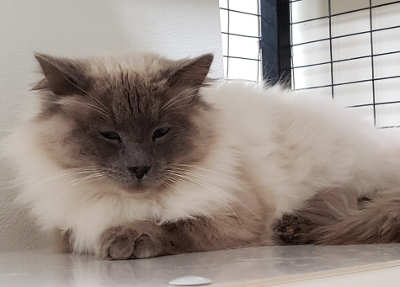
Siamese cat
This Siamese cat of undetermined gender has a long coat and blue eyes.
It’s in kennel No. 16b, ID No. 11840.

Female domestic medium hair
This female domestic medium hair cat has a tortie coat and gold eyes.
She’s in kennel No. 16a, ID No. 11839.
Lake County Animal Care and Control is located at 4949 Helbush in Lakeport, next to the Hill Road Correctional Facility.
Office hours are Monday through Friday, 11 a.m. to 5 p.m., and 11 a.m. to 3 p.m., Saturday. The shelter is open from 11 a.m. to 4 p.m. Monday through Friday and on Saturday from 11 a.m. to 3 p.m.
Visit the shelter online at http://www.co.lake.ca.us/Government/Directory/Animal_Care_And_Control.htm .
For more information call Lake County Animal Care and Control at 707-263-0278.
Email Elizabeth Larson at

LAKEPORT, Calif. – New funding made available through a bond measure California voters approved last year is offering the city of Lakeport the opportunity to pursue a new park development along Clear Lake’s shoreline.
In June, California voters approved Proposition 68, the Parks and Water Bond Act of 2018.
The measure authorizes $4 billion in general obligation bonds meant for projects that extend from local and state parks to flood protection, water infrastructure, environmental protection and habitat restoration.
The state is now taking applications for grant funds, and the city of Lakeport is preparing to apply, according to city Community Development Director Kevin Ingram.
The funds can be used for a variety of aspects of park development, from acquisition to planning and design, Ingram said. The minimum award is $150,000.
“These kinds of funding opportunities don’t come along very often,” said Ingram.
Initially, the city looked at applying for funds to continue development of Westside Community Park, but instead decided to focus its efforts on the lakeside project, Ingram said.
The project the city plans to pursue is located at 810 N. Main St., the former location of Natural High School.
The property is owned by the Lakeport Unified School District.
Over the years it’s been the site for holiday events, including the Seaplane Splash-In and the Memorial Day craft faire. It’s a popular spot for city residents to walk and enjoy the lake, and the Clear Lake Scullers group has its boatyard located there.
As one of the last undeveloped lakeside properties, it’s been of special interest to community members.
During the past 20 years various plans have been floated for the property, including a proposal by the city to bundle the land with the city-owned Dutch Harbor parcel next door and bring in a developer to build a large hotel, a plan which didn’t get any traction after the district refused to sell it.
Ingram confirmed that the city and the district have been in recent negotiations about the property – it was a topic of several closed session discussions by the city council that yielded no reportable action – and that they are still working to reach a formal agreement for the land’s acquisition.
The city also has negotiated with the trustee of a separate property, a strip of land located between the Natural High land and the lake, but as of yet has not solidified a sale agreement regarding that property either, Ingram said.
District and city discuss property
Interim Lakeport Unified Superintendent Patrick Iaccino said he met with City Manager Margaret Silveira on March 5, with the Natural High property one of their topics of conversation.
At that point Silveira was preparing to leave the country on vacation, but Iaccino said they planned to meet after she returned and start a conversation on how to proceed on land negotiations.
Iaccino said that in the time he has been with the district – he was hired in the middle of January – negotiations for Natural High have been included on the closed session portion of each agenda. As of early last week, it hadn’t actually come up yet for discussion.
The property was again on the March 13 district board agenda; Lake County News was not able to confirm whether it was actually discussed in closed session at that meeting.
One key issue in the negotiations is the land’s value.
Ingram said he understood that the city performed an appraisal for the property that he believed included a range as the property has both an open space and resort residential zoning.
“I have not been party to the closed session items so I can’t speak to what the appraised values and given that it still remains a closed session item I can’t request the appraisal documents either,” said Ingram, responding to the questions while Silveira was away.
Asked about the issue of a land appraisal as part of property negotiations, Iaccino did not have the exact land value amount, but said it came out at more than $700,000, according to information he received from Silveira. He said he understood a second appraisal by the city may also have been done, but he didn’t have information on an amount.
About a month ago, Silveira had suggested that the district might want to have its own appraisal completed on the property, Iaccino said.
Iaccino said he’s going to talk to the district board of trustees about having such an appraisal done.
Community meetings begin March 18
Ingram said part of the grant application requirement is for the city to hold a series of community meetings to aid in designing the proposed park facility.
Ingram said Public Health Advocates Inc., a Davis-based nonprofit that helped write the bond funding language, approached the city to help it with pursuing the grant.
As a result, he said the organization will be writing the grant and facilitating the public meetings for the city.
So far, the city has scheduled three of the meetings, all of them at Lakeport City Hall, 225 Park St.: Monday, March 18, from 5:30 to 7:30 p.m.; Thursday, April 18; and Monday, May 13.
Topics of the meetings will include discussions of design, budgeting and the review of community input, he said.
Those who can’t attend the meetings are invited to share their opinions about the features they want to see at the new lakefront community open space area by completing a quick online survey.
Find the survey, in both English and Spanish, here.
In 2017 the city held a series of community meetings on the lakeside promenade plan, taking extensive community input, as Lake County News has reported.
Those meetings contributed to the creation of a lakefront revitalization plan endorsed by the Lakeport Planning Commission and ultimately approved by the Lakeport City Council in September 2017.
Out of those meetings, Ingram said a lakeside promenade came out as the No. 1 community goal.
Ingram said the upcoming meetings may seem reminiscent of those meetings two years ago, but they’re necessary to fulfill the grant requirements. They’ll also be integral to shaping the city’s grant proposal and determining how much funding it will ultimately seek, as he said they currently haven’t settled on a dollar amount.
He said it’s expected that the city will get some credit in the application process for previously having done that planning work.
Community members with questions are invited to contact the Lakeport Community Development Department at 707-263-5615, Extension 204, or email
Email Elizabeth Larson at

In 1997, my students and I traveled to Croagh Patrick, a mountain in County Mayo, as part of a study abroad program course on Irish literature I was teaching for the University of Dayton. I wanted my students to visit the place where, each July, thousands of pilgrims pay homage to St. Patrick, who, according to lore, fasted and prayed on the summit for 40 days.
While there, our tour guide relayed the story of how St. Patrick, as he lay on his death bed on March 17 in A.D. 461, supposedly asked those gathered around him to toast his heavenly journey with a “wee drop of whiskey” to ease their pain.
The mention of whiskey left me wondering if St. Patrick may have unintentionally influenced the way most of the world celebrates the holiday today: by drinking.
It wasn’t always this way. The Festival of St. Patrick began in the 17th century as a religious and cultural commemoration of the bishop who brought Christianity to Ireland. In Ireland, there’s still an important religious and cultural component to the holiday, even as it has simply become an excuse to wear green and heavily drink in the rest of the world.
The legend of St. Patrick
Because historical details about St. Patrick’s life remain shrouded in speculation, scholars are often stymied in their attempts to separate fact from legend.
In his spiritual memoir, “Confessio,” St. Patrick describes how he was brought to Ireland as a slave. He eventually escaped, rejoining his family in Britain, probably Scotland. But while there, he had a recurring dream, in which the “Voice of the Irish” called to him to return to Ireland in order to baptize and minister to them. So he did.


The Irish revere the account of this dream described in the “Confessio”; they accept the simplicity and fervor of his words and feel a debt of gratitude for his unselfish commitment to their spiritual well-being.
St. Patrick’s efforts to convert the Irish to Catholicism were never easy. Viewing him as a challenge to their power and authority, the high kings of Ireland and the pagan high priests, called Druids, resisted his efforts to make inroads with the population.
But through his missionary zeal, he was able to fuse Irish culture into Christianity, whether it was through the introduction of the Celtic Cross or the use of bonfires to celebrate feasts like Easter.
Again, many of these stories could amount to no more than myth. Nonetheless, centuries after his death, the Irish continue to show their gratitude for their patron saint by wearing a spray of shamrocks on March 17. They start the day with mass, followed by a daylong feast, and prayer and reflection at night.
St. Paddy’s Day goes global
From 1820 to 1860, almost 2 million people left Ireland, many due to the potato famine in the 1840s and 1850s. More followed in the 20th century to reunite with relatives and escape poverty and joblessness back home.
Once settled, they found new ways to celebrate St. Patrick’s Day and their Irish identity in their new homes.
Irish-Americans, especially, were quick to transform March 17 into a commercial enterprise. The mandatory “wearin’ of the green” in all its garishness is a far cry from the original tradition of wearing a spray of shamrocks to honor St. Patrick’s death and celebrate Irish solidarity. Parades famously sprung up – especially in New York and Boston – revelry ensued and, sure enough, even the beer became green.

Children of Irish-Americans in the United States have absorbed Irish culture at a distance. Many probably know that St. Patrick is Ireland’s patron saint. But they might not fully appreciate his mythic stature for kids growing up on the emerald isle.
Ask children of any age in Ireland what they know about St. Patrick, and they will regale you with stories of his magical abilities, from his power to drive the snakes out of Ireland to his use of the three leaves and one stem of the shamrock to demystify the Trinity doctrine of the Catholic Church.
They see St. Patrick as a miracle worker, and as adults, they keep the legends alive in their own ways. Some follow St. Patrick’s footsteps all around Ireland – from well to hill to alter to chapel – seeking his blessing and bounty wherever their journeys take them.
Raising a glass
Of course, in America, the holy day is really a party, above all else.
This year, Americans are expected to spend US$5.61 billion celebrating, with 13 million pints of Guinness consumed. Some parts of the country plan a pre-celebration on Sept. 17 – or, as they call it, “Halfway to St. Patrick’s Day.”
Where all of this leads is anyone’s guess. But beginning in the 1990s, Ireland seemed to grasp the earning potential of the Americanized version. Today, March 17 remains a holy day for the natives and a holiday for tourists from around the world, with pubs raking in the euros on St. Patrick’s Day.
But I’ve always wondered: What if St. Patrick had requested a silent prayer instead of “a wee drop of whiskey” to toast his passing? Would his celebration have stayed more sacred than profane?
James Farrelly, Professor of English, University of Dayton
This article is republished from The Conversation under a Creative Commons license. Read the original article.
Dogs available for adoption this week include mixes of Akbash, Australian Shepherd, beagle, Chihuahua, German Shepherd, Jack Russell terrier, pit bull, shepherd, wheaten terrier and wirehaired terrier.
Dogs that are adopted from Lake County Animal Care and Control are either neutered or spayed, microchipped and, if old enough, given a rabies shot and county license before being released to their new owner. License fees do not apply to residents of the cities of Lakeport or Clearlake.
If you're looking for a new companion, visit the shelter. There are many great pets hoping you'll choose them.
The following dogs at the Lake County Animal Care and Control shelter have been cleared for adoption (additional dogs on the animal control Web site not listed are still “on hold”).

Male wheaten terrier
This male wheaten terrier has a long black and gray coat.
He’s in kennel No. 1, ID No. 11866.

Male Jack Russell terrier
This male Jack Russell terrier has a short tan and white coat.
He’s in kennel No. 2, ID No. 11901.

Female Jack Russell terrier-Chihuahua mix
This female Jack Russell terrier-Chihuahua mix has a short tricolor coat.
She’s in kennel No. 3, ID No. 11902.

Male Jack Russell terrier
This male Jack Russell terrier has a short black and tan coat.
He’s in kennel No. 4a, ID No. 11900.

‘Hopps’
“Hopps” is a male terrier-Chihuahua with a short black and tan coat.
He’s in kennel No. 5a, ID No. 11904.

‘Sugar Foot’
“Sugar Foot” is a female beagle-terrier mix with a short tan and white coat.
She’s in kennel No. 5b, ID No. 11905.

‘Buddy’
“Buddy” is a male beagle with a short brown and white coat.
He already has been neutered.
He’s in kennel No. 5c, ID No. 11906.

Male Chihuahua
This male Chihuahua has a short fawn coat.
He’s in kennel No. 7, ID No. 11870.

‘Jaelyn’
“Jaelyn” is a female Chihuahua with a short tan coat.
She already has been spayed.
She’s in kennel No. 9, ID No. 11861.

‘JessJess’
“JessJess” is a male Chihuahua with a short tan coat.
He’s already been neutered.
He’s in kennel No. 9, ID No. 11862.

Female wirehaired terrier
This female wirehaired terrier has a coarse black coat.
She’s in kennel No. 10, ID No. 11891.

‘Sarra’
“Sarra” is a female Akbash with a medium-length white coat and green eyes.
Shelter staff said she should go to a home with no cats, small dogs or livestock.
She’s in kennel No. 12, ID No. 11855.

Male shepherd
This male shepherd has a short black and tan coat.
He’s in kennel No. 18, ID No. 11879.

Pit bull terrier-boxer mix
This female pit bull terrier-boxer mix has a short tan and black coat.
She already has been altered.
Shelter staff said she is a very sweet girl with low energy. She’s good with other dogs and does not show any aggression toward cats or small animals. They believe she would be great with children.
She’s in kennel No. 22, ID No. 11825.

‘Little Foot’
“Little Foot” is a white male Akbash with a long white coat and gold eyes.
Shelter staff said the right home for him will not have cats, small dogs or livestock.
He’s in kennel No. 27, ID No. 11854.

‘Blossom’
“Blossom” is a female pit bull terrier with a short blue coat.
She already has been spayed.
She’s in kennel No. 28, ID No. 11864.

Male shepherd
This male shepherd has a short yellow and black coat.
He’s in kennel No. 30, ID No. 11873.

Male Australian Shepherd
This male Australian Shepherd has a medium-length brown coat.
He’s in kennel No. 31, ID No. 11639.
Lake County Animal Care and Control is located at 4949 Helbush in Lakeport, next to the Hill Road Correctional Facility.
Office hours are Monday through Friday, 11 a.m. to 5 p.m., and 11 a.m. to 3 p.m., Saturday. The shelter is open from 11 a.m. to 4 p.m. Monday through Friday and on Saturday from 11 a.m. to 3 p.m.
Visit the shelter online at http://www.co.lake.ca.us/Government/Directory/Animal_Care_And_Control.htm.
For more information call Lake County Animal Care and Control at 707-263-0278.
Email Elizabeth Larson at
Just as dust gathers in corners and along bookshelves in our homes, dust piles up in space too. But when the dust settles in the solar system, it’s often in rings.
Several dust rings circle the Sun. The rings trace the orbits of planets, whose gravity tugs dust into place around the Sun, as it drifts by on its way to the center of the solar system.
The dust consists of crushed-up remains from the formation of the solar system, some 4.6 billion years ago – rubble from asteroid collisions or crumbs from blazing comets. Dust is dispersed throughout the entire solar system, but it collects at grainy rings overlying the orbits of Earth and Venus, rings that can be seen with telescopes on Earth.
By studying this dust – what it’s made of, where it comes from, and how it moves through space – scientists seek clues to understanding the birth of planets and the composition of all that we see in the solar system.
Two recent studies report new discoveries of dust rings in the inner solar system. One study uses NASA data to outline evidence for a dust ring around the Sun at Mercury’s orbit. A second study from NASA identifies the likely source of the dust ring at Venus’ orbit: a group of never-before-detected asteroids co-orbiting with the planet.
“It’s not every day you get to discover something new in the inner solar system,” said Marc Kuchner, an author on the Venus study and astrophysicist at NASA’s Goddard Space Flight Center in Greenbelt, Maryland. “This is right in our neighborhood.”

Another ring around the sun
Guillermo Stenborg and Russell Howard, both solar scientists at the Naval Research Laboratory in Washington, D.C., did not set out to find a dust ring. “We found it by chance,” Stenborg said, laughing. The scientists summarized their findings in a paper published in The Astrophysical Journal on Nov. 21, 2018.
They describe evidence of a fine haze of cosmic dust over Mercury’s orbit, forming a ring some 9.3 million miles wide. Mercury – 3,030 miles wide, just big enough for the continental United States to stretch across – wades through this vast dust trail as it circles the Sun.
Ironically, the two scientists stumbled upon the dust ring while searching for evidence of a dust-free region close to the Sun. At some distance from the Sun, according to a decades-old prediction, the star’s mighty heat should vaporize dust, sweeping clean an entire stretch of space. Knowing where this boundary is can tell scientists about the composition of the dust itself, and hint at how planets formed in the young solar system.
So far, no evidence has been found of dust-free space, but that’s partly because it would be difficult to detect from Earth. No matter how scientists look from Earth, all the dust in between us and the Sun gets in the way, tricking them into thinking perhaps space near the Sun is dustier than it really is.
Stenborg and Howard figured they could work around this problem by building a model based on pictures of interplanetary space from NASA’s STEREO satellite — short for Solar and Terrestrial Relations Observatory.
Ultimately, the two wanted to test their new model in preparation for NASA’s Parker Solar Probe, which is currently flying a highly elliptic orbit around the Sun, swinging closer and closer to the star over the next seven years. They wanted to apply their technique to the images Parker will send back to Earth and see how dust near the Sun behaves.
Scientists have never worked with data collected in this unexplored territory, so close to the Sun. Models like Stenborg and Howard’s provide crucial context for understanding Parker Solar Probe’s observations, as well as hinting at what kind of space environment the spacecraft will find itself in – sooty or sparkling clean.
Two kinds of light show up in STEREO images: light from the Sun’s blazing outer atmosphere – called the corona – and light reflected off all the dust floating through space. The sunlight reflected off this dust, which slowly orbits the Sun, is about 100 times brighter than coronal light.
“We’re not really dust people,” said Howard, who is also the lead scientist for the cameras on STEREO and Parker Solar Probe that take pictures of the corona. “The dust close to the Sun just shows up in our observations, and generally, we have thrown it away.”
Solar scientists like Howard – who study solar activity for purposes such as forecasting imminent space weather, including giant explosions of solar material that the Sun can sometimes send our way – have spent years developing techniques to remove the effect of this dust. Only after removing light contamination from dust can they clearly see what the corona is doing.
The two scientists built their model as a tool for others to get rid of the pesky dust in STEREO – and eventually Parker Solar Probe – images, but the prediction of dust-free space lingered in the back of their minds.
If they could devise a way of separating the two kinds of light and isolate the dust-shine, they could figure out how much dust was really there. Finding that all the light in an image came from the corona alone, for example, could indicate they’d found dust-free space at last.
Mercury’s dust ring was a lucky find, a side discovery Stenborg and Howard made while they were working on their model. When they used their new technique on the STEREO images, they noticed a pattern of enhanced brightness along Mercury’s orbit – more dust, that is – in the light they’d otherwise planned to discard.
“It wasn’t an isolated thing,” Howard said. “All around the Sun, regardless of the spacecraft’s position, we could see the same five percent increase in dust brightness, or density. That said something was there, and it’s something that extends all around the Sun.”
Scientists never considered that a ring might exist along Mercury’s orbit, which is maybe why it’s gone undetected until now, Stenborg said. “People thought that Mercury, unlike Earth or Venus, is too small and too close to the Sun to capture a dust ring,” he said. “They expected that the solar wind and magnetic forces from the Sun would blow any excess dust at Mercury’s orbit away.”
With an unexpected discovery and sensitive new tool under their belt, the researchers are still interested in the dust-free zone. As Parker Solar Probe continues its exploration of the corona, their model can help others reveal any other dust bunnies lurking near the Sun.

Asteroids hiding in Venus’ orbit
This isn’t the first time scientists have found a dust ring in the inner solar system. Twenty-five years ago, scientists discovered that Earth orbits the Sun within a giant ring of dust. Others uncovered a similar ring near Venus’ orbit, first using archival data from the German-American Helios space probes in 2007, and then confirming it in 2013, with STEREO data.
Since then, scientists determined the dust ring in Earth’s orbit comes largely from the asteroid belt, the vast, doughnut-shaped region between Mars and Jupiter where most of the solar system’s asteroids live. These rocky asteroids constantly crash against each other, sloughing dust that drifts deeper into the Sun’s gravity, unless Earth’s gravity pulls the dust aside, into our planet’s orbit.
At first, it seemed likely that Venus’ dust ring formed like Earth’s, from dust produced elsewhere in the solar system. But when Goddard astrophysicist Petr Pokorny modeled dust spiraling toward the Sun from the asteroid belt, his simulations produced a ring that matched observations of Earth’s ring – but not Venus’.
This discrepancy made him wonder if not the asteroid belt, where else does the dust in Venus’ orbit come from? After a series of simulations, Pokorny and his research partner Marc Kuchner hypothesized it comes from a group of never-before-detected asteroids that orbit the Sun alongside Venus. They published their work in The Astrophysical Journal Letters on March 12, 2019.
“I think the most exciting thing about this result is it suggests a new population of asteroids that probably holds clues to how the solar system formed,” Kuchner said. If Pokorny and Kuchner can observe them, this family of asteroids could shed light on Earth and Venus’ early histories. Viewed with the right tools, the asteroids could also unlock clues to the chemical diversity of the solar system.
Because it’s dispersed over a larger orbit, Venus’ dust ring is much larger than the newly detected ring at Mercury’s. About 16 million miles from top to bottom and 6 million miles wide, the ring is littered with dust whose largest grains are roughly the size of those in coarse sandpaper. It’s about 10 percent denser with dust than surrounding space. Still, it’s diffuse — pack all the dust in the ring together, and all you’d get is an asteroid two miles across.
Using a dozen different modeling tools to simulate how dust moves around the solar system, Pokorny modeled all the dust sources he could think of, looking for a simulated Venus ring that matched the observations. The list of all the sources he tried sounds like a roll call of all the rocky objects in the solar system: Main Belt asteroids, Oort Cloud comets, Halley-type comets, Jupiter-family comets, recent collisions in the asteroid belt.
“But none of them worked,” Kuchner said. “So, we started making up our own sources of dust.”
Perhaps, the two scientists thought, the dust came from asteroids much closer to Venus than the asteroid belt. There could be a group of asteroids co-orbiting the Sun with Venus – meaning they share Venus’ orbit, but stay far away from the planet, often on the other side of the Sun.
Pokorny and Kuchner reasoned a group of asteroids in Venus’ orbit could have gone undetected until now because it’s difficult to point earthbound telescopes in that direction, so close to the Sun, without light interference from the Sun.
Co-orbiting asteroids are an example of what’s called a resonance, an orbital pattern that locks different orbits together, depending on how their gravitational influences meet. Pokorny and Kuchner modeled many potential resonances: asteroids that circle the Sun twice for every three of Venus’ orbits, for example, or nine times for Venus’ ten, and one for one.
Of all the possibilities, one group alone produced a realistic simulation of the Venus dust ring: a pack of asteroids that occupies Venus’ orbit, matching Venus’ trips around the Sun one for one.
But the scientists couldn’t just call it a day after finding a hypothetical solution that worked. “We thought we’d discovered this population of asteroids, but then had to prove it and show it works,” Pokorny said. “We got excited, but then you realize, ‘Oh, there’s so much work to do.’”
They needed to show that the very existence of the asteroids makes sense in the solar system. It would be unlikely, they realized, that asteroids in these special, circular orbits near Venus arrived there from somewhere else like the asteroid belt. Their hypothesis would make more sense if the asteroids had been there since the very beginning of the solar system.
The scientists built another model, this time starting with a throng of 10,000 asteroids neighboring Venus. They let the simulation fast forward through 4.5 billion years of solar system history, incorporating all the gravitational effects from each of the planets. When the model reached present-day, about 800 of their test asteroids survived the test of time.
Pokorny considers this an optimistic survival rate. It indicates that asteroids could have formed near Venus’ orbit in the chaos of the early solar system, and some could remain there today, feeding the dust ring nearby.
The next step is actually pinning down and observing the elusive asteroids. “If there’s something there, we should be able to find it,” Pokorny said. Their existence could be verified with space-based telescopes like Hubble, or perhaps interplanetary space-imagers similar to STEREO’s.
Then, the scientists will have more questions to answer: How many of them are there, and how big are they? Are they continuously shedding dust, or was there just one break-up event?
Dust rings around other stars
The dust rings that Mercury and Venus shepherd are just a planet or two away, but scientists have spotted many other dust rings in distant star systems. Vast dust rings can be easier to spot than exoplanets, and could be used to infer the existence of otherwise hidden planets, and even their orbital properties.
But interpreting extrasolar dust rings isn’t straightforward. “In order to model and accurately read the dust rings around other stars, we first have to understand the physics of the dust in our own backyard,” Kuchner said.
By studying neighboring dust rings at Mercury, Venus and Earth, where dust traces out the enduring effects of gravity in the solar system, scientists can develop techniques for reading between the dust rings both near and far.
Lina Tran works for NASA’s Goddard Space Flight Center.