 How to resolve AdBlock issue?
News
LAKE COUNTY, Calif. – The Lake County Public Services Department is preparing to hold several public meetings this weekend as part of the process to apply for state park grants to make improvements at three county parks.
Public Services Director Lars Ewing said he and his staff are pursuing Proposition 68 grant funds for projects at Hammond Park in Nice, Kelseyville Community Park and Middletown Trailside Nature Preserve.
As part of the application process, the county is holding three meetings on Saturday, March 30, at the following locations and times:
– Middletown: 10 a.m. to 11:45 a.m., at Trailside Park, 21435 Dry Creek Cutoff;
– Kelseyville: 1:15 to 3 p.m., at Kelseyville Community Park, 5270 State St.;
– Nice: 4:15 to 6 p.m., at Hammond Park, 2490 Lakeshore Blvd.
Community members are invited to drop in at any time during the meetings, which will be conducted in an open-house format.
The funding the county is pursuing is from Proposition 68, the Parks and Water Bond Act of 2018, passed by California voters in June.
Proposition 68 authorizes $4 billion in general obligation bonds meant for projects that extend from local and state parks to flood protection, water infrastructure, environmental protection and habitat restoration.
On Tuesday, Ewing received the Board of Supervisors’ approval of an agreement between the county and Foothill Associates for Proposition 68 Statewide Park Development and Community Revitalization Program support services. The estimated contract cost is $20,725.
In his report to the board, Ewing explained that the intent of the Proposition 68 program “is to create new parks, or develop new recreation opportunities in existing parks, located in critically underserved communities. A critically underserved community is defined as an area within a half mile radius of a site that either has less than three acres of park space per 1,000 residents or a median household income below $51,026. Statewide $255 million will be distributed in the 2019 grant round, with an additional $395 million to be made available statewide in future rounds.”
Foothill Associates has formerly done Proposition 68 consulting for the county, according to Ewing, who told Lake County News that the company has helped with work on a lot of Northshore parks, including the Hammond Park master planning process. He said staff already has met with Foothill Associates staff, who are very excited about working on all three parks.
The city of Lakeport also is planning to apply for Proposition 68 funds in this first round of $255 million in grants. Lakeport wants to build a new lakeside park on the former Natural High School property, as Lake County News reported earlier this month.
Clearlake Assistant City Manager Alan Flora, who the Clearlake City Council has appointed to succeed Greg Folsom as city manager later this month, told Lake County News that the city of Clearlake isn’t currently pursuing funding from Proposition 68 for its park projects.
He added that he’s been reviewing the program and will identify if they have projects that will work. The city has projects lined up for Austin Park and Highlands Park, with funds set aside for the former and an application to the state seeking several million dollars in Community Development Block Grant funds for the latter.
If the funds for Highlands Park don’t come through the CDBG grant, Flora said it would be his priority to seek Proposition 68 funds.
Three parks selected for grant submissions
Ewing and his staff reviewed which parks would be eligible, and Hammond Park, Kelseyville Community Park and Middletown Trailside Park had the best fit. He said those three parks also have the most need of further development.
He said they don’t have the specific style down for every park. “That’s why we are going to the public, to find out what they want at each park.”
Each park is very different in its needs and facilities. Ewing said Kelseyville Community Park is the most developed, and includes the skate park, while Hammond Park has been developed – it has one of the county’s best baseball diamonds, built by Ewing’s parks staff – but more can be done.
Trailside Park “is a different animal entirely,” said Ewing.
“It’s a nature preserve,” he said, which means not building too many structures. “We want to be true to that spirit.”
Trailside Park, Ewing said, is unique because of what it’s been through. The Valley fire, burned through its thousands of trees and its playground. The park’s vernal pools survived.
Now, Trailside Park presents a wide open canvas. Tree replanting efforts took place last year and again earlier this month. Ewing said some of those plantings have taken hold, and quite a few of the pine trees have started coming back on their own.
Ewing said that his grandchildren may eventually “enjoy it in something close to what it was a few years ago.”
County staffers have talked to the Middletown Area Town Hall, which put together an ad hoc committee to look at the park. Some of the ideas that Ewing said came out of that committee included identifying trails MATH would like to see rebuilt.
In addition, EcoArts of Lake County will return this summer with its sculpture walk, he said.
Seeking public input
In order to produce competitive grant applications, and maximize points, Ewing said his department will hold the public meetings, with that input then contributing to the resulting park master plans.
By identifying community priorities, that public meeting process also will inform how much funding the county ultimately seeks in its grant applications, Ewing said. While they don’t know the total amount they’ll seek, each grant is to be no less than $200,000, with no match required.
They’re specifically seeking input from residents within a few miles radius of each park. “It’s a big time effort, which we’re happy to do,” he said.
At the Saturday meetings, easels will be out and community members can share ideas and suggest park design elements. The consultants will be on hand to lead people through the design concept; children also are welcome to attend and participate. Ewing said the goal is to generate ideas, like a charrette.
Another round of meetings will take place on Thursday, April 4, with Ewing explaining that the goal is to reach different groups of people.
The meetings on April 4 will take place from 10 to 11 a.m. at Hammond Park, 1 to 2 p.m. at Kelseyville Community Park, and 3 to 4 p.m. at Trailside Park.
Ewing said staff members – not consultants – will guide community members through the process at the April 4 meetings, which will feature a lot of similarities to the meetings on March 30.
For those who can’t make the meetings, Ewing encourages them to participate in online surveys for each of the parks:
– Hammond Park: https://www.surveymonkey.com/r/PLCHNX9.
– Kelseyville Community Park: https://www.surveymonkey.com/r/H5NX7L7.
– Middletown Trailside Park: https://www.surveymonkey.com/r/3LQG6BZ.
The deadline to complete the survey is April 10.
From the meetings and survey results, the goal is to create park design schematics and conceptual plans that should be read for sharing with the community by the summer, Ewing said.
Ewing said an application will be submitted for each of the three parks. The state grant timeline calls for the grant applications to be submitted by Aug. 5, with notifications about selection expected to go out by the end of this year. He said the county has to have compliance with the California Environmental Quality Act completed within six months of the grant application.
Based on the state timeline for the grants, projects selected for funding must be completed by March 2022.
Ewing encourages community members to participate in the process and tell the county what they’d like to see done at their parks.
“Because they are your parks,” he said.
Email Elizabeth Larson atThis email address is being protected from spambots. You need JavaScript enabled to view it. . Follow her on Twitter, @ERLarson, or Lake County News, @LakeCoNews.
Public Services Director Lars Ewing said he and his staff are pursuing Proposition 68 grant funds for projects at Hammond Park in Nice, Kelseyville Community Park and Middletown Trailside Nature Preserve.
As part of the application process, the county is holding three meetings on Saturday, March 30, at the following locations and times:
– Middletown: 10 a.m. to 11:45 a.m., at Trailside Park, 21435 Dry Creek Cutoff;
– Kelseyville: 1:15 to 3 p.m., at Kelseyville Community Park, 5270 State St.;
– Nice: 4:15 to 6 p.m., at Hammond Park, 2490 Lakeshore Blvd.
Community members are invited to drop in at any time during the meetings, which will be conducted in an open-house format.
The funding the county is pursuing is from Proposition 68, the Parks and Water Bond Act of 2018, passed by California voters in June.
Proposition 68 authorizes $4 billion in general obligation bonds meant for projects that extend from local and state parks to flood protection, water infrastructure, environmental protection and habitat restoration.
On Tuesday, Ewing received the Board of Supervisors’ approval of an agreement between the county and Foothill Associates for Proposition 68 Statewide Park Development and Community Revitalization Program support services. The estimated contract cost is $20,725.
In his report to the board, Ewing explained that the intent of the Proposition 68 program “is to create new parks, or develop new recreation opportunities in existing parks, located in critically underserved communities. A critically underserved community is defined as an area within a half mile radius of a site that either has less than three acres of park space per 1,000 residents or a median household income below $51,026. Statewide $255 million will be distributed in the 2019 grant round, with an additional $395 million to be made available statewide in future rounds.”
Foothill Associates has formerly done Proposition 68 consulting for the county, according to Ewing, who told Lake County News that the company has helped with work on a lot of Northshore parks, including the Hammond Park master planning process. He said staff already has met with Foothill Associates staff, who are very excited about working on all three parks.
The city of Lakeport also is planning to apply for Proposition 68 funds in this first round of $255 million in grants. Lakeport wants to build a new lakeside park on the former Natural High School property, as Lake County News reported earlier this month.
Clearlake Assistant City Manager Alan Flora, who the Clearlake City Council has appointed to succeed Greg Folsom as city manager later this month, told Lake County News that the city of Clearlake isn’t currently pursuing funding from Proposition 68 for its park projects.
He added that he’s been reviewing the program and will identify if they have projects that will work. The city has projects lined up for Austin Park and Highlands Park, with funds set aside for the former and an application to the state seeking several million dollars in Community Development Block Grant funds for the latter.
If the funds for Highlands Park don’t come through the CDBG grant, Flora said it would be his priority to seek Proposition 68 funds.
Three parks selected for grant submissions
Ewing and his staff reviewed which parks would be eligible, and Hammond Park, Kelseyville Community Park and Middletown Trailside Park had the best fit. He said those three parks also have the most need of further development.
He said they don’t have the specific style down for every park. “That’s why we are going to the public, to find out what they want at each park.”
Each park is very different in its needs and facilities. Ewing said Kelseyville Community Park is the most developed, and includes the skate park, while Hammond Park has been developed – it has one of the county’s best baseball diamonds, built by Ewing’s parks staff – but more can be done.
Trailside Park “is a different animal entirely,” said Ewing.
“It’s a nature preserve,” he said, which means not building too many structures. “We want to be true to that spirit.”
Trailside Park, Ewing said, is unique because of what it’s been through. The Valley fire, burned through its thousands of trees and its playground. The park’s vernal pools survived.
Now, Trailside Park presents a wide open canvas. Tree replanting efforts took place last year and again earlier this month. Ewing said some of those plantings have taken hold, and quite a few of the pine trees have started coming back on their own.
Ewing said that his grandchildren may eventually “enjoy it in something close to what it was a few years ago.”
County staffers have talked to the Middletown Area Town Hall, which put together an ad hoc committee to look at the park. Some of the ideas that Ewing said came out of that committee included identifying trails MATH would like to see rebuilt.
In addition, EcoArts of Lake County will return this summer with its sculpture walk, he said.
Seeking public input
In order to produce competitive grant applications, and maximize points, Ewing said his department will hold the public meetings, with that input then contributing to the resulting park master plans.
By identifying community priorities, that public meeting process also will inform how much funding the county ultimately seeks in its grant applications, Ewing said. While they don’t know the total amount they’ll seek, each grant is to be no less than $200,000, with no match required.
They’re specifically seeking input from residents within a few miles radius of each park. “It’s a big time effort, which we’re happy to do,” he said.
At the Saturday meetings, easels will be out and community members can share ideas and suggest park design elements. The consultants will be on hand to lead people through the design concept; children also are welcome to attend and participate. Ewing said the goal is to generate ideas, like a charrette.
Another round of meetings will take place on Thursday, April 4, with Ewing explaining that the goal is to reach different groups of people.
The meetings on April 4 will take place from 10 to 11 a.m. at Hammond Park, 1 to 2 p.m. at Kelseyville Community Park, and 3 to 4 p.m. at Trailside Park.
Ewing said staff members – not consultants – will guide community members through the process at the April 4 meetings, which will feature a lot of similarities to the meetings on March 30.
For those who can’t make the meetings, Ewing encourages them to participate in online surveys for each of the parks:
– Hammond Park: https://www.surveymonkey.com/r/PLCHNX9.
– Kelseyville Community Park: https://www.surveymonkey.com/r/H5NX7L7.
– Middletown Trailside Park: https://www.surveymonkey.com/r/3LQG6BZ.
The deadline to complete the survey is April 10.
From the meetings and survey results, the goal is to create park design schematics and conceptual plans that should be read for sharing with the community by the summer, Ewing said.
Ewing said an application will be submitted for each of the three parks. The state grant timeline calls for the grant applications to be submitted by Aug. 5, with notifications about selection expected to go out by the end of this year. He said the county has to have compliance with the California Environmental Quality Act completed within six months of the grant application.
Based on the state timeline for the grants, projects selected for funding must be completed by March 2022.
Ewing encourages community members to participate in the process and tell the county what they’d like to see done at their parks.
“Because they are your parks,” he said.
Email Elizabeth Larson at
LAKEPORT, Calif. – Ballot counts reported at Tuesday’s Board of Supervisors meeting indicate that four new zones of benefit to address vegetation and reduce wildland fire risk in the Kelseyville area have been approved.
The Board of Supervisors on Tuesday morning hosted protest hearings and tabulation counts for the zones of benefit for Buckingham, the Clear Lake Riviera, Riviera Heights and Riviera West.
Supervisor Rob Brown put together the plan for the zones of benefit last year and received the Board of Supervisors’ support to put it to a vote of property owners earlier this year.
Brown’s plan is for the property owners of about 5,000 lots in those four areas, plus adjacent lands, make a one-time payment of $100 per lot for properties of less than one acre, $200 for lots from one to five acres, and $300 for lots of five acres or more.
He said the main goal is to get property owners to clean up their own land, which they can do much cheaper than the county can hire contractors to do it.
If they don’t, the funding raised through the assessment would allow cleanup of certain properties that would be designated as high risk, with the property owners to repay the cleanup costs through liens assessed on their land.
Brown said Tuesday that the county is willing to loan $100,000 up front to the effort so that cleanup can start immediately, ahead of the fire season.
Proposition 218, passed by voters in 1996, is a constitutional amendment that requires that taxpayers be allowed to vote on assessments, general taxes and certain types of user fees, with a 50 percent plus one majority vote required for passage.
Based on Proposition 218’s requirements, the county sent out thousands of ballots to property owners.
Most of the ballots reported in the count on Tuesday had been returned by the board meeting, but some additional ballots came in during the hearings.
County Administrative Officer Carol Huchingson said staff had been counting the ballots and that they would take those ballots turned in during the hearings, tabulate them and return with the final count.
The board heard both support and opposition to the zones of benefit.
Longtime Clear Lake Riviera resident Tom Nixon offered his support. “We’re trying to do everything we can to mitigation the vegetation hazards that we have.”
Emily Miller, one of the adjacent property owners to the Clear Lake Riviera, protested the proposal. “I think it’s poorly written,” along with being underexplained and underdeveloped, she said.
Janet Swedburg thanked Brown for the idea. “This is not just about our property. It is about our lives.”
Riviera Heights resident Henry Berg said he thought the proposal is commendable but deeply flawed, raising issues about the legalities of going onto people’s property. He also raised issues with the envelopes bearing the ballots not being labeled as having the ballots inside, and his concern that the return postage wasn’t enough.
Huchingson would later explain that they based the handling of the ballots on Special Districts assessments that have been done in the past, and that staff had determined the postage was enough to cover the return of the one-sheet ballots.
Staff took the remaining ballots for a count and returned a short time later in the meeting. Marcy Harrison, a County Administrative Office staffer, presented the ballot counts to the board.
The counts are as follows.
Clear Lake Riviera
Total ballots returned: 1,168
Yes: 654 (56 percent)
No: 514 (44 percent)
Buckingham
Total ballots returned: 402
Yes: 250 (62 percent)
No: 152 (38 percent)
Riviera West
Total ballots returned: 266
Yes: 180 (68 percent)
No: 86 (32 percent)
Riviera Heights
Total ballots returned: 308
Yes: 170 (55 percent)
No: 138 (45 percent)
The board took no action beyond receiving the ballot count. County Counsel Anita Grant said that a resolution will be brought back to the board next week confirming the vote and tabulation results.
Later in the meeting, the board unanimously approved the second and final reading of a new ordinance regarding hazardous vegetation abatement on unimproved parcels in the unincorporated county.
The ordinance and its performance is to be reviewed in six months, Grant said.
Email Elizabeth Larson atThis email address is being protected from spambots. You need JavaScript enabled to view it. . Follow her on Twitter, @ERLarson, or Lake County News, @LakeCoNews.
The Board of Supervisors on Tuesday morning hosted protest hearings and tabulation counts for the zones of benefit for Buckingham, the Clear Lake Riviera, Riviera Heights and Riviera West.
Supervisor Rob Brown put together the plan for the zones of benefit last year and received the Board of Supervisors’ support to put it to a vote of property owners earlier this year.
Brown’s plan is for the property owners of about 5,000 lots in those four areas, plus adjacent lands, make a one-time payment of $100 per lot for properties of less than one acre, $200 for lots from one to five acres, and $300 for lots of five acres or more.
He said the main goal is to get property owners to clean up their own land, which they can do much cheaper than the county can hire contractors to do it.
If they don’t, the funding raised through the assessment would allow cleanup of certain properties that would be designated as high risk, with the property owners to repay the cleanup costs through liens assessed on their land.
Brown said Tuesday that the county is willing to loan $100,000 up front to the effort so that cleanup can start immediately, ahead of the fire season.
Proposition 218, passed by voters in 1996, is a constitutional amendment that requires that taxpayers be allowed to vote on assessments, general taxes and certain types of user fees, with a 50 percent plus one majority vote required for passage.
Based on Proposition 218’s requirements, the county sent out thousands of ballots to property owners.
Most of the ballots reported in the count on Tuesday had been returned by the board meeting, but some additional ballots came in during the hearings.
County Administrative Officer Carol Huchingson said staff had been counting the ballots and that they would take those ballots turned in during the hearings, tabulate them and return with the final count.
The board heard both support and opposition to the zones of benefit.
Longtime Clear Lake Riviera resident Tom Nixon offered his support. “We’re trying to do everything we can to mitigation the vegetation hazards that we have.”
Emily Miller, one of the adjacent property owners to the Clear Lake Riviera, protested the proposal. “I think it’s poorly written,” along with being underexplained and underdeveloped, she said.
Janet Swedburg thanked Brown for the idea. “This is not just about our property. It is about our lives.”
Riviera Heights resident Henry Berg said he thought the proposal is commendable but deeply flawed, raising issues about the legalities of going onto people’s property. He also raised issues with the envelopes bearing the ballots not being labeled as having the ballots inside, and his concern that the return postage wasn’t enough.
Huchingson would later explain that they based the handling of the ballots on Special Districts assessments that have been done in the past, and that staff had determined the postage was enough to cover the return of the one-sheet ballots.
Staff took the remaining ballots for a count and returned a short time later in the meeting. Marcy Harrison, a County Administrative Office staffer, presented the ballot counts to the board.
The counts are as follows.
Clear Lake Riviera
Total ballots returned: 1,168
Yes: 654 (56 percent)
No: 514 (44 percent)
Buckingham
Total ballots returned: 402
Yes: 250 (62 percent)
No: 152 (38 percent)
Riviera West
Total ballots returned: 266
Yes: 180 (68 percent)
No: 86 (32 percent)
Riviera Heights
Total ballots returned: 308
Yes: 170 (55 percent)
No: 138 (45 percent)
The board took no action beyond receiving the ballot count. County Counsel Anita Grant said that a resolution will be brought back to the board next week confirming the vote and tabulation results.
Later in the meeting, the board unanimously approved the second and final reading of a new ordinance regarding hazardous vegetation abatement on unimproved parcels in the unincorporated county.
The ordinance and its performance is to be reviewed in six months, Grant said.
Email Elizabeth Larson at
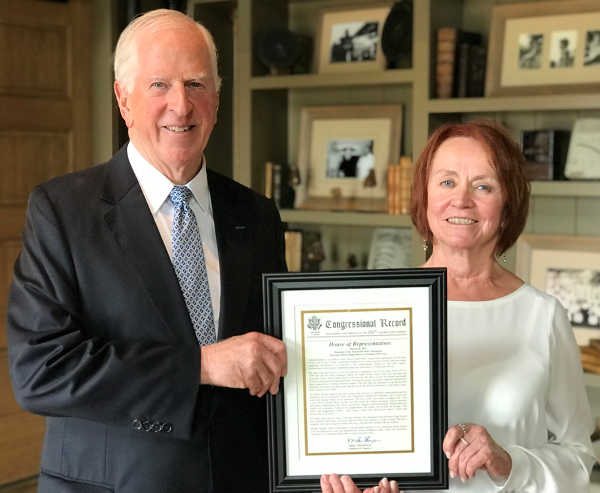
LAKE COUNTY, Calif. – Rep. Mike Thompson (CA-05) has announced Marie Beery as this year’s Woman of the Year in Lake County.
Each year, Thompson honors women from the Fifth Congressional District who make exceptional contributions to our community.
“Marie’s hard work and dedication has touched every part of the Lake County community; from business to agriculture to charitable work to mentorship, her work boosts the entire area. As a business leader, she has helped to put Lake County food and wine on the map. As a community leader, she’s helped support many important charitable causes,” said Thompson. “I’m proud to honor her strong contributions to every part of our community by naming her Lake County Woman of the Year.”
This is the fifth annual Women of the Year Awards, started in honor of Women’s History Month.
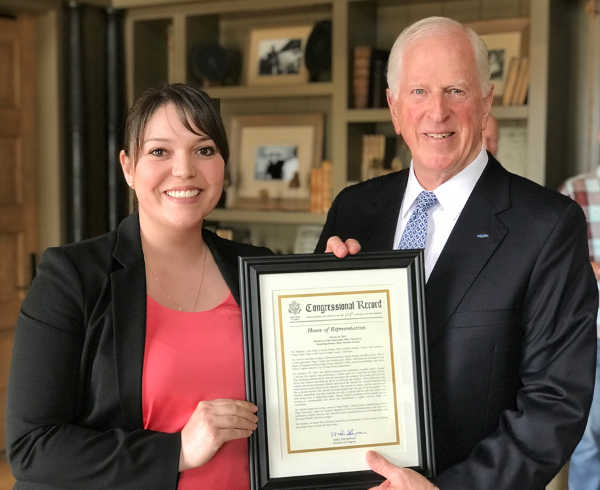
Each year, Thompson recognizes one woman from each of the counties in our district to be recognized for her service to our community.
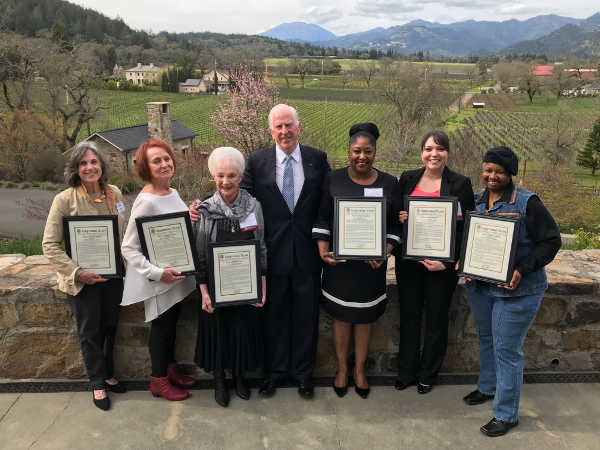
A complete list of 2019 winners includes:
– Tranzena “Kandie” Jones, Contra Costa County;
– Marie Beery, Lake County;
– Mary Jane Bowker, Napa County;
– Verna Mustico, Solano County;
– Lorez Bailey, Sonoma County.
Thompson represents California’s Fifth Congressional District, which includes all or part of Contra Costa, Lake, Napa, Solano and Sonoma counties.
Dungeness crab will be caught off the coast with greater care for endangered wildlife under a settlement announced by the Center for Biological Diversity, the California Department of Fish and Wildlife and the Pacific Coast Federation of Fishermen’s Associations.
The legal settlement protects whales and sea turtles from entanglement in commercial Dungeness crab gear.
The Center for Biological Diversity sued CDFW in October 2017 after a drastic increase in the number of whale entanglements off the West Coast.
“As I’ve said many times, no one wants whale entanglements to happen,” said CDFW Director Charlton H. Bonham. “This agreement represents hours of intense negotiation to help ensure they don’t happen while supporting the resiliency of the crab fishery in the long run. I am thankful for the leadership of the Center for Biological Diversity and the Pacific Coast Federation of Fishermen’s Associations who realized something needed to be done together.”
“This is great news for whales and sea turtles fighting extinction off California’s coast,” said Kristen Monsell, a Center for Biological Diversity attorney. “The settlement will reduce serious threats from crab gear to these beautiful and highly endangered animals. This agreement is a turning point that gets us closer to zero entanglements and a healthy ocean.”
The lawsuit was brought by the Center for Biological Diversity against CDFW (Center for Biological Diversity v. Bonham) in federal court in San Francisco. The Pacific Coast Federation of Fishermen’s Associations, which represents crabbers, intervened in the lawsuit.
The settlement, subject to court approval, creates a comprehensive approach to the problem of whale entanglements. It expedites state regulation, ensures stakeholder input from the Dungeness crab Fishing Gear Working Group and formalizes a first-ever commitment by CDFW to pursue a federal permit for protecting endangered species.
While these steps are executed, the settlement calls for this year’s crab season to end three months early and prescribes protective measures for future springtime fishing seasons, when the greatest number of whales are present off the California coast.
In November 2018, CDFW announced it would seek a federal permit under the Endangered Species Act to address protected species interactions with the crab fishery. Obtaining a permit and developing a conservation plan as part of that process can take years, so the settlement spells out interim protections.
“This settlement represents the path back to normality for California’s crab fishery with built-in protections for whales and crab fishing operations under the Endangered Species Act,” said Noah Oppenheim, executive director of the Pacific Coast Federation of Fishermen’s Associations. “The past several years have been extraordinarily challenging for fishing families, and the actions we’re taking here are no exception. But in the end, we’re going to emerge together with a resilient, prosperous, and protective fishery that will continue to feed California and the nation.”
Details of the settlement can be found here.
The mission of the California Department of Fish and Wildlife is to manage California’s diverse fish, wildlife and plant resources, and the habitats upon which they depend, for their ecological values and for their use and enjoyment by the public.
The Center for Biological Diversity is a national, nonprofit conservation organization with more than 1.4 million members and online activists dedicated to the protection of endangered species and wild places.
The Pacific Coast Federation of Fishermen’s Associations is the largest commercial fishermen’s organization on the West Coast, representing 17 local and regional associations from Santa Barbara to Southeast Alaska. As a major commercial fishing industry trade association, the group represents the interests of commercial fishing families who make their living harvesting and delivering high-quality seafood to America’s tables.
The legal settlement protects whales and sea turtles from entanglement in commercial Dungeness crab gear.
The Center for Biological Diversity sued CDFW in October 2017 after a drastic increase in the number of whale entanglements off the West Coast.
“As I’ve said many times, no one wants whale entanglements to happen,” said CDFW Director Charlton H. Bonham. “This agreement represents hours of intense negotiation to help ensure they don’t happen while supporting the resiliency of the crab fishery in the long run. I am thankful for the leadership of the Center for Biological Diversity and the Pacific Coast Federation of Fishermen’s Associations who realized something needed to be done together.”
“This is great news for whales and sea turtles fighting extinction off California’s coast,” said Kristen Monsell, a Center for Biological Diversity attorney. “The settlement will reduce serious threats from crab gear to these beautiful and highly endangered animals. This agreement is a turning point that gets us closer to zero entanglements and a healthy ocean.”
The lawsuit was brought by the Center for Biological Diversity against CDFW (Center for Biological Diversity v. Bonham) in federal court in San Francisco. The Pacific Coast Federation of Fishermen’s Associations, which represents crabbers, intervened in the lawsuit.
The settlement, subject to court approval, creates a comprehensive approach to the problem of whale entanglements. It expedites state regulation, ensures stakeholder input from the Dungeness crab Fishing Gear Working Group and formalizes a first-ever commitment by CDFW to pursue a federal permit for protecting endangered species.
While these steps are executed, the settlement calls for this year’s crab season to end three months early and prescribes protective measures for future springtime fishing seasons, when the greatest number of whales are present off the California coast.
In November 2018, CDFW announced it would seek a federal permit under the Endangered Species Act to address protected species interactions with the crab fishery. Obtaining a permit and developing a conservation plan as part of that process can take years, so the settlement spells out interim protections.
“This settlement represents the path back to normality for California’s crab fishery with built-in protections for whales and crab fishing operations under the Endangered Species Act,” said Noah Oppenheim, executive director of the Pacific Coast Federation of Fishermen’s Associations. “The past several years have been extraordinarily challenging for fishing families, and the actions we’re taking here are no exception. But in the end, we’re going to emerge together with a resilient, prosperous, and protective fishery that will continue to feed California and the nation.”
Details of the settlement can be found here.
The mission of the California Department of Fish and Wildlife is to manage California’s diverse fish, wildlife and plant resources, and the habitats upon which they depend, for their ecological values and for their use and enjoyment by the public.
The Center for Biological Diversity is a national, nonprofit conservation organization with more than 1.4 million members and online activists dedicated to the protection of endangered species and wild places.
The Pacific Coast Federation of Fishermen’s Associations is the largest commercial fishermen’s organization on the West Coast, representing 17 local and regional associations from Santa Barbara to Southeast Alaska. As a major commercial fishing industry trade association, the group represents the interests of commercial fishing families who make their living harvesting and delivering high-quality seafood to America’s tables.
NORTHERN CALIFORNIA – The California Department of Water Resources is closely monitoring Oroville reservoir levels and current forecasts.
Due to storms expected in the Feather River basin, DWR is taking steps to prepare for use of the main spillway potentially as early as the first week of April.
DWR is following its standard process of notifying regulatory agencies, local law enforcement and local elected officials for the anticipated use.
The department will continue to update the public, media and local partners through emails, news releases and social media.
To prepare for potential use of the spillway, DWR is removing construction equipment from the spillway chute. It will also remove a temporary road below the main spillway that has been utilized during construction. The road will be removed to minimize water quality impacts. Some turbidity is expected while the road is being removed.
Downstream monitoring is in place to track water quality. In addition, temporary cameras and lights have been situated alongside the spillway for observational purposes when water begins to flow down the chute.
Early Wednesday, the Oroville Reservoir was at 845 feet. The elevation on April 5 based on 10-day forecast is projected to be 850 feet.
Forecasts can change quickly and may affect the estimates provided.
Officials said the main spillway and the emergency spillway are reconstructed and able to handle flows as needed to manage lake levels and provide flood protection for the surrounding communities.

NORTH COAST, Calif. – “July Rising,” a full-length narrative feature shot in Lake County and written by a county native, will premiere this Friday at the Sonoma International Film Festival.
“July Rising” was written and directed by Chauncey Crail, who spent much of his childhood ni Lake County before moving to the East Coast with his family as a teenager.
The film follows 16-year-old farmgirl Andy (Alexa Yeames) an orphan now facing a new loss: the sudden death of her grandfather.
Andy struggles to save her family’s farm against foreclosure. She succeeds despite greedy bankers, uncooperative fruit salesmen, a colorful local sheriff who catches her at a bad moment, and even the estranged aunt who has become her guardian to bring the family farm to fruition. But will it be enough?
Set in a Lake County pear orchard, dramatic footage brings to the screen real threats facing rural lands against the incessant march of urban growth.
Andy’s intelligence and perseverance offer hope to young women facing the challenges of a male-dominated field but also illustrate how one person can make a real difference by embracing a vision and not letting go.
“Every time I come home, I realize how much things are changing,” said Crail. “Change is not inherently bad, but I wanted to capture what agriculture means out here before it’s eclipsed by agro-industry, residential and tourism development or climate change.”
“The summer heat and wildfire smoke challenged our scheduling team and since we were shooting during harvest in an actively farmed orchard, we had to coordinate with picking crews and wrap on time every time,” Crail said.
He commended the cast and crew for their dedication. “The sheer stamina of our team inspired me. It’s their dedication that made this film happen.”
Crail said the long days and hard work faced in production were rewarded in the post-production phase. “The gorgeous setting – we have some amazing drone footage of the farm – silenced everyone in the room when we first screened the takes,” Crail said. “I’m thrilled with the results.”
Lead producer Robert Mahaffie, who grew up in Washington D.C., has a different perspective.
“Living in the country during the shoot hammered home the reason we needed to make this film,” Mahaffie said. “It was incredible how hard those farmers work – just keeping the farm equipment running was a huge and constant challenge for us. We’re immensely grateful to the whole Northern California community who helped us. The Kelseyville/Lakeport community is the most welcoming and most generous community I’ve ever worked with.”
Cast auditions were held in New York, Los Angeles and San Francisco but one key role was assigned to local Lake County actor Reed Wolthausen who coincidentally owns a orchard (walnuts) in Lake County. His performance as the charming but serious Grandpa George – while also being an actual local farmer --lend an element of realism to the set.
Bay Area actors Brien DiRito, Jason Kuykendall and Jonathan Vazquez fill key roles.
Several day-players and extras hired regionally are also featured. Some Sonoma County landscapes can be spotted in driving scenes filmed between Lake County and San Francisco.