How to resolve AdBlock issue?
News
The kennels also have many dogs that need to be reunited with their owners. To find the lost/found pet section, click here.
The following dogs are ready for adoption.

‘Bernard’
“Bernard” is a male Staffordshire Bull Terrier mix with a short brindle and white coat.
He already has been neutered.
He is No. 280.

‘Blue’
“Blue” is a male Staffordshire Bull Terrier with a short blue and white coat.
He is No. 2420.

‘Buddy’
“Buddy” is a male Labrador Retriever mix with a short black coat with white markings.
He is No. 2332.

‘Cadbury’
“Cadbury” is a female Staffordshire Bull Terrier mix with a smooth medium-length beige coat.
She is No. 1215.

‘Casanova’
“Casanova” is a male German Shepherd mix with a short blond and gray coat.
He is No. 2457.

‘Frank’
“Frank” is a male American Staffordshire Terrier mix with a short black and white coat.
He is No. 2345.

‘Hamilton’
“Hamilton” is a male German Shepherd with a medium-length brown and black coat.
He is No. 2177.

‘Marley’
“Marley” is a male Labrador Retriever mix with a short tan coat.
He is No. 2430.

‘Melonie’
“Melonie” is a female American Pit Bull Terrier mix with a short red and white coat.
She is No. 2428.

‘Mira’
“Mira” is a female Queensland Heeler mix with a short red and white coat.
She is No. 2412.

‘Panther’
“Panther” is a female Staffordshire Bull Terrier mix with a short black and white coat.
She is No. 2418.

‘Snowflake’
“Snowflake” is a male Chihuahua with a white coat.
He is No. 1864.

‘Sturgill’
“Sturgill” is a male Labrador Retriever mix with a medium-length yellow coat.
He is No. 2460.

‘Tyson’
“Tyson” is a male American Staffordshire terrier mix with a medium-length gray and white coat.
He is No. 1863.

‘Wiley’
“Wiley” is a male German Shepherd mix with a medium-length black and brindle coat.
He is dog No. 2451.

‘Wynn’
“Wynn” is a male American Staffordshire Terrier with a short brindle coat.
Staff said he is a lovely fellow who has been at the shelter for several months.. He loves affection and is available for adoption or through the foster to adopt program.
He’s believed to be about 6 to 7 years old.
He is No. 969.
Clearlake Animal Control’s shelter is located at 6820 Old Highway 53, off Airport Road.
Hours of operation area noon to 4 p.m. Tuesday through Saturday. The shelter is closed Sundays, Mondays and major holidays; the shelter offers appointments on the days it’s closed to accommodate people.
Call the Clearlake Animal Control shelter at 707-273-9440, or email
Visit Clearlake Animal Control on Facebook or at the city’s Web site.
Email Elizabeth Larson at
The Canyon fire in Napa County reached 100-percent containment on Thursday, while the Marshview fire in Solano County was at 90-percent containment, according to Cal Fire.
Cal Fire said the Canyon fire began Monday afternoon on Wragg Canyon Road and Highway 128 at Lake Berryessa
Altogether, it burned 64 acres. Cal Fire said no structures were damaged.
The fire’s cause remains under investigation, Cal Fire said.
In Solano County, the Marshview fire began on Thursday morning on Interstate 680 and Marshview Road south of the community of Cordelia, according to Cal Fire’s report.
By Thursday night, Cal Fire said the blaze had burned 183 acres but was nearing full containment. No structures were reported threatened or damaged.
Cal Fire said firefighters made good progress on Thursday, with crews to continue to construct containment lines and put out hot spots throughout the night.
The Marshview fire’s cause also remains under investigation, Cal Fire said.
Email Elizabeth Larson at

When it comes to news articles about the impact that summer has on student learning, the news is often bad.
For instance, The Economist proclaimed in 2018: “Long summer holidays are bad for children, especially the poor.”
This headline is fairly typical of how summer loss is portrayed. Summer has come to be seen as a time when children lose as much as a month of school learning.
Nearly 50,000 media stories on summer learning – such as the one by The Economist – appeared in 2018. The message influences policy as well. Lawmakers introduced 293 state bills related to summer programming in 2017. These bills dealt with summer learning in a number of ways – from a vetoed Maine bill that tried to establish a “Summer Success Program Fund” to a California bill that enables up to 30% of funds for before and after school programs go to summer learning.
Despite the seeming consensus that children lose learning during the summer, a 2017 report from the Brookings Institute showed that the research on summer learning is actually quite mixed.
Another 2018 analysis found evidence of learning loss every summer between second and ninth grade, but findings differ vastly from one study to the next.
This has lead some researchers – like me – to question if summer loss even occurs.
Using current, nationally representative data, I attempted to determine how big of an issue is summer learning loss. I focused on elementary school students.
Here’s what I found:
1. Most kids aren’t affected
My study using national data suggests that, by and large, the issue of summer learning loss is overblown. Specifically, only 7% of students lose the equivalent of one month of school year learning in reading and 9% in math over the summer between kindergarten and first grade. Over the summer before second grade, this increases to 15% in reading and 18% in math. This suggests that the majority of youngsters don’t experience summer learning loss.
In fact, my research suggests most children gain or maintain their skills over the summer.
2. Losses aren’t long-term
I also wanted to know if children who slid over the summer would stay behind during elementary school. Using national data, my findings suggest that summer sliders and gainers are not much different by the end of fourth grade. For instance, the average score for children who gained versus slid over the summer before second grade differed by just 0.04 points for math and 0.12 points for reading two years later.
3. Strongest students lose the most
I was also curious to see if it was possible to figure out what kinds of student characteristics and background factors relate to summer learning loss. You might predict – as I did – that children with weaker skills before summer would be more likely to lose over the summer. And you would be wrong – as I was.
It was actually children with higher reading or math scores before the start of summer who were more likely to experience a summer slide.
4. Summer ‘homework’ not that important
You also might think that students who do regular math, writing or reading over the summer would hold onto more knowledge over the summer. Overall, this was not the case. For instance, 78% of parents of gainers and 79% of parents of sliders read books to their child regularly; about half do writing activities regularly.
The only exception is that children who read to themselves more frequently were less likely to slide in reading between first and second grade. This is based on my study that shows 71.44% of parents of gainers reported that their child regularly read to themselves, compared to 67.81% of parents of sliders.
5. Let them play
All this is not to say that summer vacation doesn’t come with its share of risks to children, because it does. But if I were going to worry about a threat that summer break poses to my child, it wouldn’t be summer loss. I’d be more concerned about the research that shows children gain more weight over the summer than they do during the school year.
I have no quarrel with parents or educators who want children to read books or study math over the summer to stay sharp academically. But let’s make sure they get to go outside and play so that they can stay in shape physically as well.
Abel J. Koury, Senior Research Associate, The Ohio State University
This article is republished from The Conversation under a Creative Commons license. Read the original article.
CLEARLAKE, Calif. – The city of Clearlake is planning a project to test how it can extend the usable life and quality of the road grading projects it’s carrying out thanks to Measure V funding.
Consulting City Engineer David Swartz presented to the council earlier this month a proposal to do a chip seal project on a portion of the city’s gravel roads in an effort to ascertain whether they could extend the life of road improvements.
He said he took the plan to City Manager Alan Flora, who thought it was a good idea to present to the council.
The discussion at the July 11 meeting begins at the 35:44 minute mark in the video above. A staff report is included in the agenda packet below, beginning at page 37.
In April, city staff started planning about how to use the city’s Measure V sales tax funding for roads to do grading throughout the city, Swartz said.
He said one crew started in the Avenues and another in the “tree” streets – those named for type of trees.
Swartz said he and Road Superintendent Mike Baker visit the work sites weekly to see the challenges the crews face and understand what is prohibiting them from getting more street miles done.
In those inspections, Swartz said they’ve seen that the gravel roads that previously were graded already are degrading.
It seems, he added, like the city is in a cycle of grading and regrading, and he questioned if they could take another approach.
That led to considering solutions to start minimizing the need to regrade the same roads over and again. As a result, Swartz said they came up with a test project, which he said is a double chip seal over the top of gravel roads, which would provide a much longer lifespan of more than five years. Other rural communities use the double chip seal solution.
He said they analyzed manpower, staffing, fuel and other factors and said it currently costs $10,000 a mile to grade roads. That grading only results in six months of useful life, so the roads need to be regraded twice annually, for a total cost of $20,000.
Swartz said they were looking at a 24-foot-wide double chip seal project and have called contractors for bids.
The estimate is for $70,000 a mile to double chip seal the gravel roads, and such work would have a six-year lifespan, Swartz said. That’s compared to a cost of $120,000, per mile, for twice-annual road grading over a six-year period.
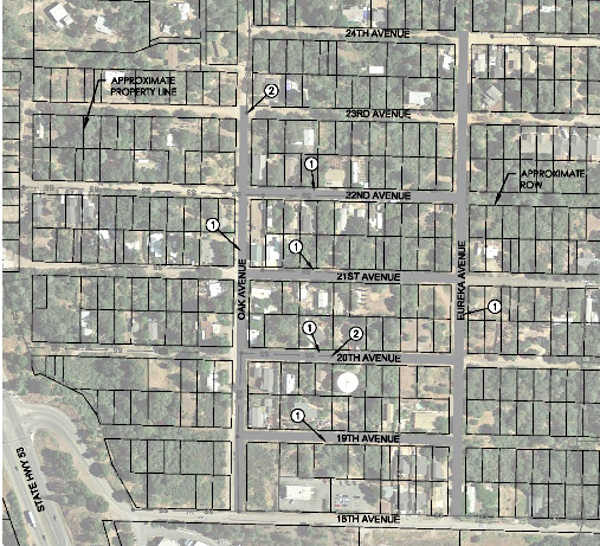
Swartz said they looked at areas that would hold a chip seal and proposed a mile-long project area in the southwest Avenues, on 19th through 22nd avenues and on Oak and Eureka, that has good road base and drainage.
District 2 Supervisor Bruno Sabatier said the proposal was exciting, noting original quotes of $5 million over 10 years for basic road grading.
Sabatier pointed to the domino effect of road improvements, which increase the quality of neighborhoods, with property values in turn rising and improving the quality of life, and the city getting fewer complaints and requests for service.
He asked about the use of Perma-Zyme, a stabilization project meant to lower road construction and maintenance costs that the city previously had considered using. Swartz said the city assessed the product but found it didn’t hold up through the winter.
Flora added that crews have started using more gravel road base as part of their mix, which is new, and was part of their effort to try other things after they didn’t see the results they wanted from Perma-Zyme.
Mayor Russell Cremer said that, despite more gravel being added to the mix, the roads are still showing washboarding. Swartz agreed.
Community member Ray Silva asked about using recycled materials like those currently kept at the city’s corporation yard. Swartz said those leftover grindings don’t work well for the gravel roads and instead they are purchasing natural base rock and using the grindings for pothole repair.
Councilman Dirk Slooten asked if it would be easier to fix the chip seal project area after the six-year usable life. Swartz said yes.
“I’m all in favor of getting a test project going,” Slooten said.
Councilman Phil Harris said chip seal had been thought for some time to be cost prohibitive, but he said he had lived for many years in Spring Valley where chip seal was primarily used. He said those roads had heavy traffic but held up over the course of 10 to 15 years.
Going back to do chip seal over the top of a previous chip seal makes it almost like a paved road, Harris said.
Harris suggested city staff contact area utilities to find out what work they may need to do in the area to prevent them from cutting into the roads after they have been repaired.
He said the Perma-Zyme testing was done in an area of Ogulin Canyon Road with little traffic, and it held up there. “We may have done a very poor test run,” he said, adding they should have chosen a road with traffic.
The council agreed with Swartz’s plan and gave it the green light.
Flora told Lake County News on Wednesday that staff is now going ahead with the next steps.
“Staff is working up bid documents now and we will likely release those in the next week or so. We will open construction bids toward the end of August and then take a contract back to council for award,” Flora said.
Email Elizabeth Larson at
071119 Clearlake City Council agenda packet by LakeCoNews on Scribd

LAKEPORT, Calif. – Authorities are investigating a series of dog bites involving one animal in Lakeport and are seeking additional victims.
The Lakeport Police Department, in conjunction with the Lake County Animal Care and Control Department – which is the city of Lakeport‘s animal control contract agency – said Wednesday that it is currently conducting an investigation regarding complaints of a vicious dog that has frequently been in Library Park and downtown Lakeport area over the past two months or more.
The dog is a male red and white Australian Cattle Dog, commonly referred to as Australian shepherd/heeler.
On Monday evening, Lakeport Police officers were dispatched to the area of the Lakeport Yacht Club to investigate the report of an aggressive dog with a person having been bitten.
During their investigation, officers identified an adult female who reported having been bitten by the dog on July 19 and a male adult who reported being bitten on July 7 by the same dog. Both of these incidents occurred at Library Park.
During the July 22 investigation, officers located the dog and owner near the Lakeport Yacht Club, police said.
“Based on the facts and circumstances known to us at the time and for public safety we ordered the dog impounded under the authority of the Lakeport Municipal Code. The dog was turned over to Lake County Animal Care and Control to be held pending this investigation,” the Lakeport Police Department said in a statement on the case.
Further Investigation revealed that the Lakeport Police Department had taken a report on May 27 regarding the same dog having bitten another adult female subject in downtown Lakeport. Additionally, the agency has other information and reports of the dog being aggressive toward people.
“We are seeking to identify and interview anyone who may have encountered this dog acting aggressive toward people in Lakeport in the recent past. Additionally, we are interested in any information regarding the dog running loose or being left tied up without supervision,” the Lakeport Police Department said.
Anyone with information is asked to contact Det. Dale Stoebe at
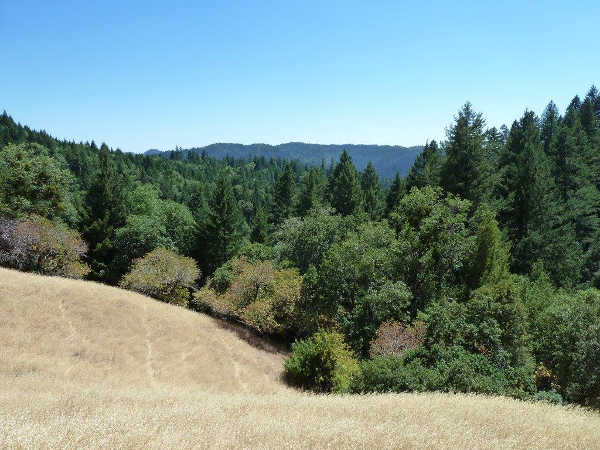
NORTH COAST, Calif. – The Mendocino Land Trust and the Potter Valley Tribe, in partnership with Pacific Gas & Electric Co. and the Pacific Forest and Watershed Lands Stewardship Council, announced that they have permanently conserved 879 acres of land in the Eel River watershed, just northeast of the town of Potter Valley.
In accordance with the terms and conditions stipulated by the California Public Utilities Commission in PG&E’s 2003 bankruptcy settlement agreement, these lands have been donated to the Potter Valley Tribe and a conservation easement over those lands has been conveyed to Mendocino Land Trust, in order to protect and enhance the beneficial public values of the site, in perpetuity.
Together, the Potter Valley Tribe and Mendocino Land Trust will protect the conservation values present on these properties, including fish and wildlife habitat, open space, public view-shed, forest ecosystems, historic and cultural values and public access.
This land constitutes a significant portion of Potter Valley Tribe’s aboriginal territory. As the historic inhabitants, stewards and now owners of these parcels, the tribe looks forward to enhancing existing resources, opening certain areas up for ceremonial and cultural activities, enhancing fishery resources, expanding environmental education programs, and participating in future recreational development opportunities.
The Potter Valley Tribe has been working towards this outcome for over a decade.
“On July 24, after nearly twelve years of diligent effort, the Potter Valley Tribe will receive a donation of over 800 acres from PG&E,” said Salvador Rosales, chairman of the Potter Valley Tribe. “The return of the land from PG&E to the Potter Valley Tribe was not an easy process, but will result in the beneficial public values of the land being protected in perpetuity. We are grateful for the Stewardship Council’s effort to restore ancestral land to the Tribe and the CPUC for approving this very important transaction.”
Mendocino Land Trust has been a leader in land conservation, stewardship and habitat restoration in Mendocino County for more than 40 years. Well known for its extensive network of coastal beaches and public access trails, Mendocino Land Trust also engages in conservation projects countywide. Since 1976, Mendocino Land Trust has worked with willing landowners to protect more than 14,000 acres of forests, wildlife habitat and agricultural lands in Mendocino County.
“Mendocino Land Trust is proud to have been selected by the Stewardship Council to hold these conservation easements for the Potter Valley Tribe. It has been a lengthy process but we feel that we have built a great working relationship with all involved and are happy to see this process to its conclusion. The benefits of watershed conservation and restoration extend to everyone in the county and beyond,” said Ann Cole, executive director of Mendocino Land Trust.