How to resolve AdBlock issue?
News
For the Adult Distracted Drivers campaign, which started Oct. 1, the CHP will conduct at least 100 distracted driving enforcement operations and at least 600 traffic safety presentations statewide.
Simply changing driving habits can help stop distracted driving.
“Our goal with this grant is to educate the public about the hazards associated with distracted driving,” CHP Commissioner Warren Stanley said. “The CHP will continue to encourage drivers to discontinue the deadly habit so everyone can reach their destination safely.”
Each year, distracted drivers kill or injure thousands of people. Distracted driving is a habit that can be broken.
The campaign will remind drivers that the likelihood of being involved in an automobile accident increases dramatically if they drive distracted.
Cell phones are the top distraction for drivers because they have become central to daily life. Steering, braking, and focusing on the roadway are priorities while driving.
A person trying to drive and use a cell phone at the same time cannot do either very well.
“Texting while driving results in longer reaction times than drunk driving. When driving, your attention must be on safety,” Commissioner Stanley added. “Nothing on that phone is worth endangering your life or anyone else’s.”
Funding for this program was provided by a grant from the California Office of Traffic Safety through the National Highway Traffic Safety Administration.
It’s hard to believe, but we’re on the cusp of the holiday season.
In less than three weeks, most of us will be celebrating the quintessential American holiday, Thanksgiving.
Roasted turkey with stuffing, bowls of sweet and white potatoes, gravy, cranberry sauce, and pumpkin pies will fill our tables.
While we consider this delicious fare traditional for the Thanksgiving feast, the truth is that what we serve on this day has evolved over time. What the Pilgrims and Indians ate in 1621 New England bears little resemblance to what we serve today.
In 1841, more than 200 years after what we now refer to as “the first Thanksgiving,” New England historian Alexander Young discovered a letter from Edward Winslow, one of the original colonists, mentioning the 1621 feast. It was Young that gave that feast the moniker mentioned above.
Winslow describes four hunters killing enough fowl to feed the camp for a week. While turkey was plentiful in North America – and eaten by the colonists and Wampanoag Indians – it’s speculated that the “fowl” mentioned in the letter consisted of seasonal waterfowl such as ducks and geese.
Turkey eventually became the fowl of choice on Thanksgiving menus, but not right away. A menu for a New England Thanksgiving dinner circa 1779 mentions roast turkey, but only as one of the meats offered at the meal, not as the star. Also listed are venison, pork, pigeon and goose.
In contrast, this year more than 240 million turkeys will have been raised as the mainstay of our Thanksgiving dinners.
What about the stuffing? Historians tell us that the practice of stuffing the cavities of fowl and other animals with mixtures of breads, spices and other items is ancient. Romans and Arabs employed this cooking technique. The terms “stuffing” and “dressing” as they relate to cookery derive from Medieval European culinary practices.
The English settlers and Wampanoag did occasionally stuff birds and fish, but if stuffing was used, it likely consisted of herbs and onions, rather than bread.
Any cranberries served at the harvest celebration were likely only in Wampanoag dishes. They enjoyed them raw or sweetened with maple sugar.
It would be 50 years before an Englishman mentioned boiling this New England berry with sugar for a “sauce to be eaten with … meat.” Since sugar was expensive in England in 1621, it’s quite possible that there was not any of this imported sweet in New Plymouth at that time.
Today turkey and cranberries are a much-loved food marriage.
The tradition of serving fruit with meat, particularly citrus fruit with fatty meat, goes back thousands of years, likely originating in the Middle East. Examples are found in many cultures and cuisines.
The acid in the fruit cuts the fat in the meat. In the case of lean meats such as turkey and chicken, cranberries add flavor to what is generally considered a bland food.
Other classic meat and fruit combos include pork and applesauce, goose and cherry sauce, fish and lemon, and duck l’orange.
It’s hard to imagine Thanksgiving without mashed potatoes, but the original feast didn’t include them.
Potatoes, which originated in South America, had made their way across the Atlantic to Europe, but had not been generally adopted into the English diet. The potato was virtually unknown there in the 17th century. At that point they were not included in the diet of the Wampanoag Indians, either (though they did eat other varieties of local tubers).
Today’s Thanksgiving meals typically include a version of a sweet potato (or yam) dish, but that wouldn’t have been included in the original harvest meal.
The sweet potato, which originated in the Caribbean, had also made its way to Europe, but was rare and available only to the wealthy.
King Ferdinand and Queen Isabella of Spain liked them and had them planted in their court gardens. King Henry VII of England liked them as well, and considered them to be an aphrodisiac.
Yams are native to Africa and are often confused with sweet potatoes. Most sweet potato dishes – pies included – are just as successfully made with yams.
Like the white potato, neither yams nor sweet potatoes were part of the diet of the Wampanoag Indians or, for the most part, the English at the time of the first feast.
Have you ever wondered why marshmallows are so often paired with sweet potatoes on the Thanksgiving table?
During the late 19th and early 20th centuries, marshmallows were very trendy. They were mass produced, plentiful, and very inexpensive, and were aggressively marketed by the companies that manufactured them.
The earliest recipes found pairing marshmallows and sweet potatoes date to the 1920s. There were typically casseroles where marshmallows were layered with the potatoes. To a lesser extent, they were also paired with candied yams.
Often signature dishes from the 1920s were very sweet, and some historians speculate that this is a reaction to Prohibition.
Pumpkin, native to the New World, was likely available as part of the harvest feast, but not in the form of pie. It may have been baked, possibly by placing it in the ashes of a dying fire, then mixed with animal fat, maple syrup, or honey, and made into a soup, a common way of using it by American Indians.
As for our beloved Thanksgiving pumpkin pie, recipes for stewed pumpkin tempered with sugar, spices and cream wrapped in pastry have roots in Medieval times, when similar pies were made with squash and gourds.
Corn was part of the earliest Thanksgiving feast, though it was hard Indian corn, unlike the corn we know today. American Indians were cooking with corn long before European settlers arrived, and the English colonists learned to grind it for use in breads, pancakes, porridge and puddings as a substitute for the grains they were used to.
While we don’t know exactly what was served at the first Thanksgiving, historians can be pretty certain that it included at least some of the bounty available to them, such as cultivated parsnips, carrots, collards, turnips, parsley, spinach, cabbage, sage, thyme, onions and marjoram, as well as native cranberries, pumpkin, nuts, grapes, lobster, oysters, other seafood and, of course, local fowl.
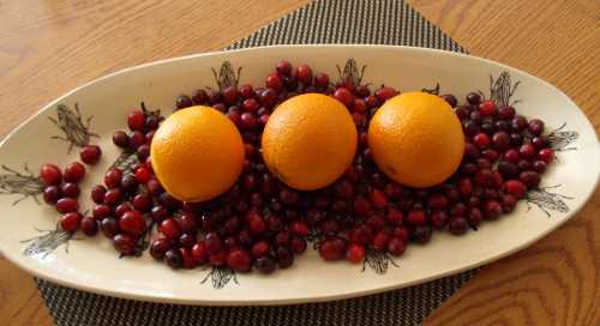
The recipe I offer today is my mother’s orange-cranberry relish which has been offered at our holiday table for as long as I can remember. She served it in hollowed out orange-skin halves, which make for a pleasant and colorful presentation.
A former chef and restaurateur, my mom did organic, locally grown food in our family restaurant before it was cool. She was a true pioneer.
Like me, she cooks in a rather free-form fashion, so my apologies if the recipe seems a bit vague. Please feel free to contact me through Lake County News if you have questions.
The cooking of the oranges three times is to ensure they’re not bitter, since the skins are left on.
Danni’s Orange-Cranberry Relish
2 to 3 oranges, finely chopped with skins on
1 and ¼ cup sugar, divided
12-ounce package of fresh cranberries
Cover oranges with water in saucepan. Bring to a boil and allow oranges to simmer for a few minutes.
Drain oranges in colander and repeat process with fresh water.
Drain oranges again and put in saucepan with fresh water to generously cover them, along with ½ cup sugar.
Bring to a boil and simmer until liquid reduces somewhat and oranges get candied a bit in the sweet water.
Drain them, reserving the cooking liquid, and set aside.
Using the cooking liquid and fresh water, measure 1 cup of liquid into a saucepan.
Add ¾ cup sugar and bring water and sugar to a boil.
Add cranberries, return to a boil, and cook until their skins pop.
Remove from heat and stir in oranges.
Allow mixture to cool and refrigerate until served.
If serving in orange skins, they may be refrigerated after filling.
Recipe by Danielle Loomis Post.
Esther Oertel is a writer and passionate home cook from a family of chefs. She grew up in a restaurant, where she began creating recipes from a young age. She’s taught culinary classes in a variety of venues in Lake County and previously wrote “The Veggie Girl” column for Lake County News. Most recently she’s taught culinary classes at Sur La Table in Santa Rosa, Calif. She lives in Middletown, Calif.
The crash occurred on Highway 29 at Main Street at about 5:45 p.m. Saturday.
Firefighters arriving on the scene reported over the radio that one vehicle was on its side with a partial ejection of a person.
The California Highway Patrol reported that the vehicles involved were a truck and a sedan. The truck was the vehicle that rolled onto its side.
An air ambulance was requested to rendezvous with a Kelseyville Fire ambulance at Lampson Field, based on radio reports.
Incident command reported that they had one person with minor injuries and one person who was critically injured and needed to be extricated.
At 6:10 p.m., incident command canceled the air ambulance, reporting that the critically injured person had died.
A sheriff’s deputy was dispatched shortly afterward for coroner duties, according to scanner traffic.
The crash is the fourth traffic-involved fatality in the last two weeks. Two other incidents involved vehicle wrecks near Clearlake Oaks and Nice, and one pedestrian died after being hit by a vehicle in Nice, as Lake County News has reported.
More information will be published as it becomes available.
Email Elizabeth Larson at
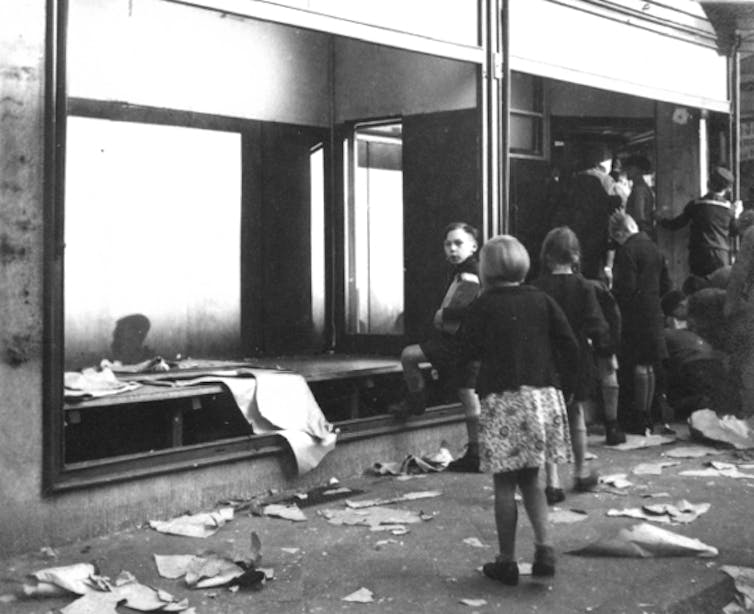
Every November, communities around the world hold remembrances on the anniversary of the Nazis’ brutal assault on the Jews during “Kristallnacht.”
Also known as “the Night of Broken Glass,” it’s one of the most closely scrutinized events in the history of Nazi Germany. Dozens of books have been published about the hours between Nov. 9 and 10, 1938, when Adolf Hitler and his propaganda minister, Joseph Goebbels, decided to unleash violence against Jews across Germany and the annexed territory of Austria with the aim of driving them out of the Third Reich.
Most accounts tend to emphasize the attacks on synagogues and shops, along with the mass arrests of 30,000 men. A few note the destruction of Jewish schools and cemeteries.
Attacks on Jewish homes, however, are barely mentioned.
It’s an aspect of the story that has rarely been researched and written about – until now.
A pattern emerges in survivor accounts
In 2008, when I arrived at the University of Southern California from Germany, I had been researching Nazi persecution of the German Jews for 20 years. I had published more than six books on the topic and thought I knew just about everything there was to know about Kristallnacht.
The university happened to be the new home of the Shoah Foundation and its Visual History Archive, which today includes over 55,000 survivor testimonies. When I started to watch interviews with German-Jewish survivors of the Holocaust, I was surprised to hear many of them talk about the destruction of their homes during Kristallnacht.
Details from their recollections sounded eerily similar: When Nazi paramilitary troops broke the doors of their homes, it sounded as though a bomb had gone off; then the men cut into the featherbeds, hacked the furniture into pieces and smashed everything inside.
Yet none of these stories appeared in traditional accounts of Kristallnacht.
I was perplexed by this disconnect. Some years later, I found a document from Schneidemühl, a small district in the East of Germany, that listed the destruction of a dozen synagogues, over 60 shops – and 231 homes.
These surprising numbers piqued my interest further. After digging into unpublished and published materials, I unearthed an abundance of evidence in administrative reports, diaries, letters and postwar testimonies.
A fuller picture of the brutal destruction of Jewish homes and apartments soon emerged.
For example, a Jewish merchant named Martin Fröhlich wrote to his daughter that when he arrived home the afternoon of that fateful November day, he noticed his door had been broken down. A tipped-over wardrobe blocked the entrance. Inside, everything had been hacked into pieces with axes: glass, china, clocks, the piano, furniture, chairs, lamps and paintings. Realizing that his home was now uninhabitable, he broke down and – as he confessed in the letter – started sobbing like a child.
A systematic campaign of destruction
The more I discovered, the more astonished I was by the scale and intensity of the attacks.
Using address lists provided by either local party officers or city officials, paramilitary SA and SS squads and Hitler Youth, armed with axes and pistols, attacked apartments with Jewish tenants in big cities like Berlin, as well as private Jewish homes in small villages. In Nuremberg, for example, attackers destroyed 236 Jewish flats. In Düsseldorf, over 400 were vandalized.
In the cities of Rostock and Mannheim, the attackers demolished virtually all Jewish apartments.
Documents point to Goebbels as the one who ordered the destruction of home furnishings. Due to the systematic nature of the attacks, the number of vandalized Jewish homes across Greater Germany must have been in the thousands, if not tens of thousands.
Then there are devastating details about the intensity of the destruction that emerge from letters and testimonies from postwar trials.
In Euskirchen, a house was burned to the ground.
In the village of Kamp, near the Rhineland town of Boppard, attackers broke into the house of the Kaufmann family, destroyed furniture and lamps, ripped out stove pipes, and broke doors and walls. When parts of the ceiling collapsed, the family escaped to a nearby monastery.
In the small town of Großauheim, located in the state of Hesse, troops used sledgehammers to destroy everything in two Jewish homes, including lamps, radios, clocks and furniture. Even after the war, shards of glass and china were found impressed in the wooden floor.
‘Everything ravaged and shattered’
The documents I found and interviews I listened to revealed how sexual abuse, beatings and murder were commonplace. Much of it happened during the home intrusions.
In Linz, two SA men sexually assaulted a Jewish woman. In Bremen, the SA shot and killed Selma Zwienicki in her own bedroom. In Cologne, as Moritz Spiro tried to stop two men from destroying his furniture, one of the intruders beat him and fractured his skull. Spiro died days later in the Jewish hospital.
In a letter dated Nov. 20, 1938, a Viennese woman described her family’s injuries to a relative:
“You can’t imagine, how it looked like at home. Papa with a head injury, bandaged, I with severe attacks in bed, everything ravaged and shattered… When the doctor arrived to patch up Papa, Herta and Rosa, who all bled horribly from their heads, we could not even provide him with a towel.”
The brutality of the attacks didn’t go unnoticed. On Nov. 15, the U.S. consul general in Stuttgart, Samuel Honaker, wrote to his ambassador in Berlin:
“Of all the places in this section of Germany, the Jews in Rastatt, which is situated near Baden-Baden, have apparently been subjected to the most ruthless treatment. Many Jews in this section were cruelly attacked and beaten and the furnishings of their homes almost totally destroyed.”
These findings make clear: The demolition of Jewish homes was an overlooked aspect of the November 1938 pogrom.
Why did it stay in the shadows for so long?
In the immediate aftermath of Kristallnacht, most newspaper articles and photographs of the violent event exclusively focused on the destroyed synagogues and stores – selective coverage that probably influenced our understanding.
Yet, it was the destruction of the home – the last refuge for the German Jewish families who found themselves facing heightened public discrimination in the years leading up to the pogrom – that likely extracted the greatest toll on the Jewish population. The brutal attacks rendered thousands homeless and hundreds beaten, sexually assaulted or murdered.
The brutal assaults also likely played a big role in the spate of Jewish suicides that took place in the days and weeks after Kristallnacht, along with the decision that tens of thousands of Jews made to flee Nazi Germany.
While this story speaks to decades of scholarly neglect, it is, at the same time, a testament to the power of survivor accounts, which continue to change the way we understand the Holocaust.
Wolf Gruner, Shapell-Guerin Chair in Jewish Studies and Professor of History; Founding Director, USC Shoah Foundation Center for Advanced Genocide Research, University of Southern California – Dornsife College of Letters, Arts and Sciences
This article is republished from The Conversation under a Creative Commons license. Read the original article.
Dogs available for adoption this week include mixes of Brussels Griffon, heeler, Kuvasz, Labrador Retriever, pit bull, Rhodesian Ridgeback and wirehaired terrier.
Dogs that are adopted from Lake County Animal Care and Control are either neutered or spayed, microchipped and, if old enough, given a rabies shot and county license before being released to their new owner. License fees do not apply to residents of the cities of Lakeport or Clearlake.
If you're looking for a new companion, visit the shelter. There are many great pets hoping you'll choose them.
The following dogs at the Lake County Animal Care and Control shelter have been cleared for adoption (additional dogs on the animal control Web site not listed are still “on hold”).
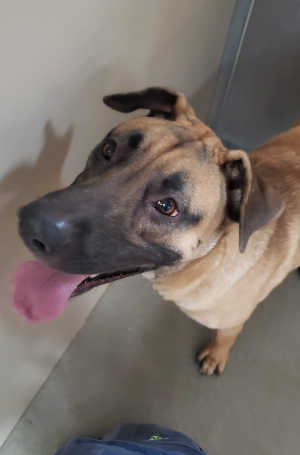
Male Rhodesian Ridgeback
This male Rhodesian Ridgeback has a short tan coat with black markings.
He is in kennel No. 19, ID No. 13210.
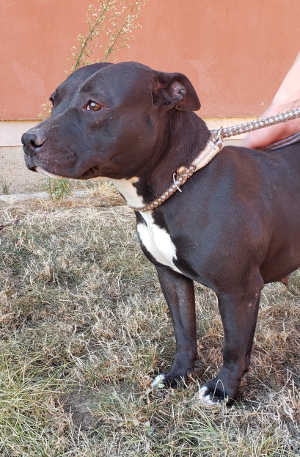
Female pit bull terrier
This female pit bull terrier has a short black and white coat.
She is in kennel No. 21, ID No. 13195.
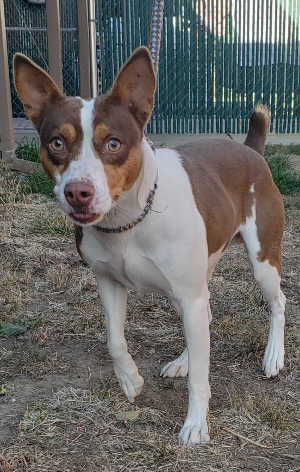
Male heeler
This male heeler has a short brown and white coat.
He is in kennel No. 23, ID No. 13194.
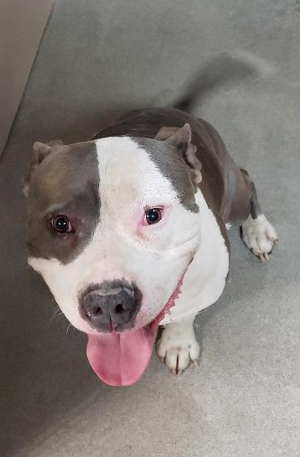
Pit bull terrier
This male pit bull terrier has a shot gray and white coat.
He is in kennel No. 24, ID No. 13172.
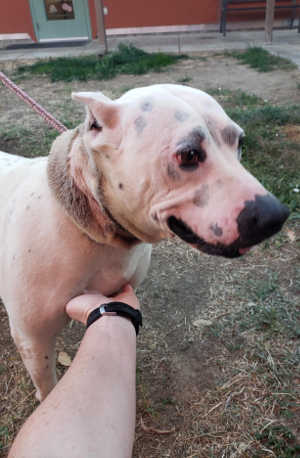
‘Shakira’
“Shakira” is a female pit bull terrier with a short black and white coat.
She already has been spayed.
She is in kennel No. 26, ID No. 6930.
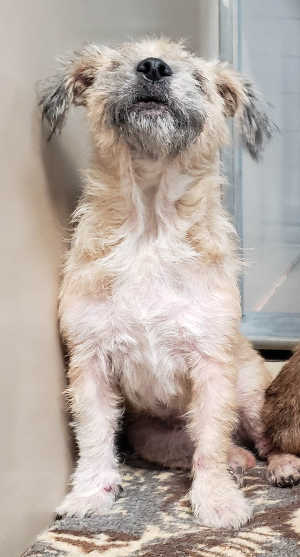
‘Scrappy’
“Scrappy” is a female wirehaired terrier with a coarse tan coat.
She is in kennel No. 27a, ID No. 13174.
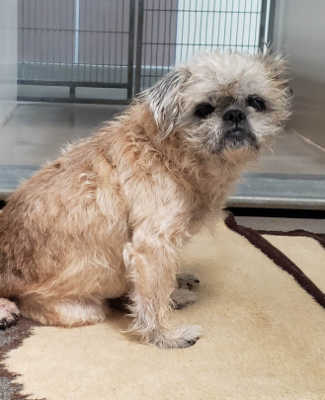
‘Scruffy’
“Scruffy” is a female Brussels Griffon with a medium-length tan coat.
She is in kennel No. 27b, ID No. 13175.
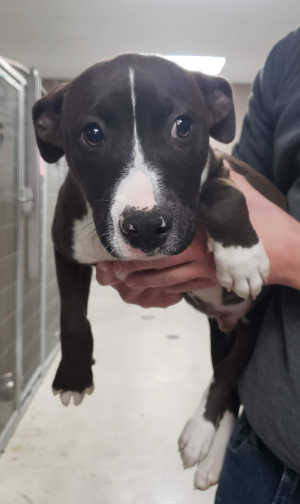
Male pit bull terrier
This young male pit bull terrier has a short brown and white coat.
He is in kennel No. 30a, ID No. 13192.
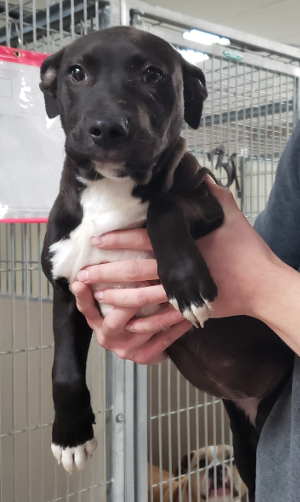
Female pit bull terrier
This female pit bull terrier has a short black andwhite coat.
She is in kennel No. 30b, ID No. 13193.
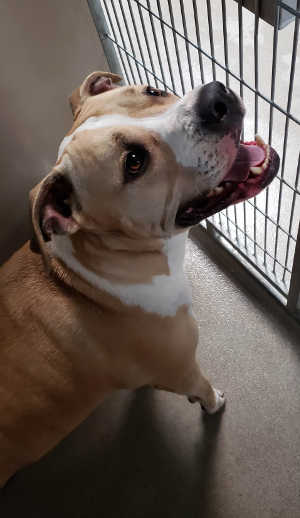
‘Max’
“Max” is a male pit bull terrier with a short tan and white coat.
He has been neutered.
Max is in kennel No. 31, ID No. 13173.
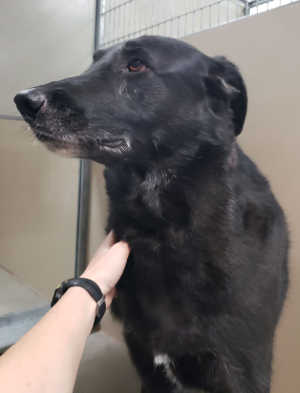
Female Kuvasz
This female Kuvasz has a short black coat with white markings.
She is in kennel No. 33, ID No. 13212.
Lake County Animal Care and Control is located at 4949 Helbush in Lakeport, next to the Hill Road Correctional Facility.
Office hours are Monday through Friday, 11 a.m. to 5 p.m., and 11 a.m. to 3 p.m., Saturday. The shelter is open from 11 a.m. to 4 p.m., Monday through Friday and on Saturday from 11 a.m. to 3 p.m.
Visit the shelter online at http://www.co.lake.ca.us/Government/Directory/Animal_Care_And_Control.htm.
For more information call Lake County Animal Care and Control at 707-263-0278.
Email Elizabeth Larson at
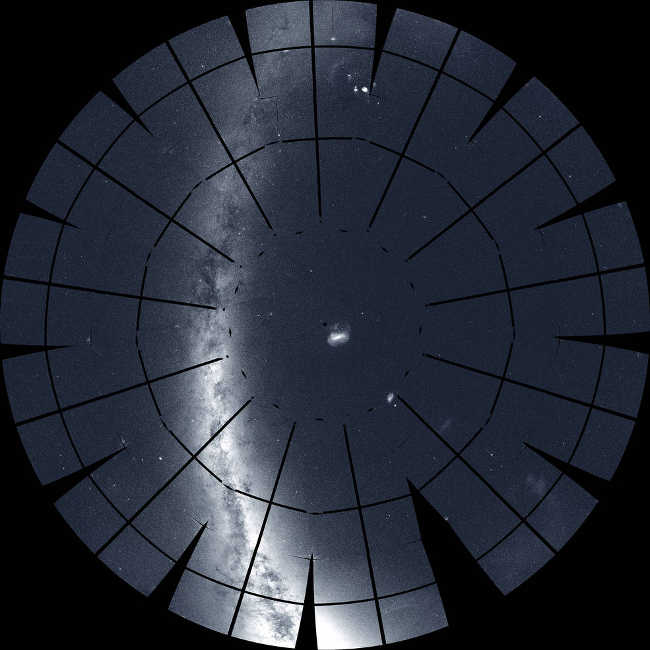
The glow of the Milky Way – our galaxy seen edgewise – arcs across a sea of stars in a new mosaic of the southern sky produced from a year of observations by NASA’s Transiting Exoplanet Survey Satellite, or TESS.
Constructed from 208 TESS images taken during the mission’s first year of science operations, completed on July 18, the southern panorama reveals both the beauty of the cosmic landscape and the reach of TESS’s cameras.
“Analysis of TESS data focuses on individual stars and planets one at a time, but I wanted to step back and highlight everything at once, really emphasizing the spectacular view TESS gives us of the entire sky,” said Ethan Kruse, a NASA Postdoctoral Program Fellow who assembled the mosaic at NASA’s Goddard Space Flight Center in Greenbelt, Maryland.
Within this scene, TESS has discovered 29 exoplanets, or worlds beyond our solar system, and more than 1,000 candidate planets astronomers are now investigating.
TESS divided the southern sky into 13 sectors and imaged each one of them for nearly a month using four cameras, which carry a total of 16 charge-coupled devices, or CCDs.
Remarkably, the TESS cameras capture a full sector of the sky every 30 minutes as part of its search for exoplanet transits.
Transits occur when a planet passes in front of its host star from our perspective, briefly and regularly dimming its light.
During the satellite’s first year of operations, each of its CCDs captured 15,347 30-minute science images.
These images are just a part of more than 20 terabytes of southern sky data TESS has returned, comparable to streaming nearly 6,000 high-definition movies.
In addition to its planet discoveries, TESS has imaged a comet in our solar system, followed the progress of numerous stellar explosions called supernovae, and even caught the flare from a star ripped apart by a supermassive black hole.
After completing its southern survey, TESS turned north to begin a year-long study of the northern sky.
TESS is a NASA Astrophysics Explorer mission led and operated by MIT in Cambridge, Massachusetts, and managed by NASA’s Goddard Space Flight Center in Greenbelt, Maryland. Dr. George Ricker of MIT’s Kavli Institute for Astrophysics and Space Research serves as principal investigator for the mission.
Additional partners include Northrop Grumman, based in Falls Church, Virginia; NASA’s Ames Research Center in California’s Silicon Valley; the Harvard-Smithsonian Center for Astrophysics in Cambridge, Massachusetts; MIT’s Lincoln Laboratory in Lexington, Massachusetts; and the Space Telescope Science Institute in Baltimore.
More than a dozen universities, research institutes and observatories worldwide are participants in the mission.
Francis Reddy works for NASA’s Goddard Space Flight Center in Greenbelt, Maryland.