 How to resolve AdBlock issue?
News

When faced with a rapidly advancing fire threatening a community, it can be hard to know how best to save lives.
Is a rapid evacuation better, or is it safer for residents to stay where they are? The whole situation can change in an instant, and delays and indecision can be fatal.
As wildfires spread across California, a report about a massive fire in London in 2017 can offer useful lessons for emergency managers and residents.
Inside the Grenfell Tower fire
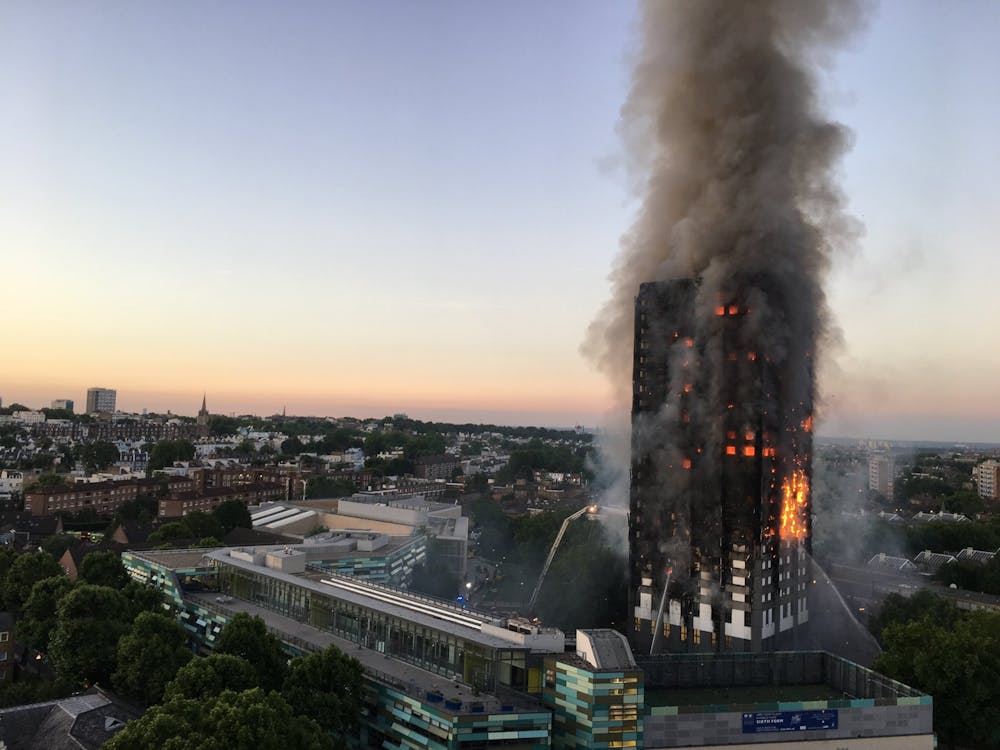
On June 14, 2017, a refrigerator in a London apartment had an electrical malfunction that started a fire. For the first two hours after the fire was reported, officials told the apartment building’s residents not to evacuate. Rather, they recommended people stay in their apartments and trust the building’s design to contain the fire to the unit where it started.
The city’s fire officials were faced with two types of potential tragedy: people dying in their apartments or getting injured or killed trying to evacuate.
In hindsight, they took too long to realize the fire was out of control, and to change their instructions, telling people to get out. Less than four hours after it started, the fire had engulfed the 24-story Grenfell Tower, home to just under 300 people, of whom 72 died.
A similar problem has arisen in California wildfires – including in 2018, when delays in the order to evacuate the town of Paradise, California, led to the deaths of 56 people.
Choosing the ‘least worst’ option
As scholars who study human decision-making in potentially fatal circumstances, we’ve learned that many people, even trained military personnel and emergency responders, find it hard to make decisions in extreme situations, such as large fires.
The resulting delay, which we’ve called “redundant deliberation,” happens when people take too long to make a choice between difficult options.
We’ve found indecision is the most dangerous aspect of a high-stakes situation. We have also proposed theories about the origins of this delay, and how it can be overcome, in our recent book, “Conflict: How Soldiers Make Impossible Decisions.”
Our research has found that redundant deliberation is more likely to occur when there is no standard policy to guide decision-makers, or, as in the Grenfell fire, when the normal practice doesn’t fit the actual circumstances.
Many apartment buildings’ fire plans involve telling residents to stay put, because fireproof walls, floors and ceilings are designed to contain flames to the apartment where they started.
That was the plan at the Grenfell Tower. London fire officials stuck to that advice even as the fire spread into dozens of neighboring apartments.
Their error was in relying too much on fixed rules and written policies, rather than understanding how best to protect human life in a rapidly changing fire that defied the expectations those policies relied on. The London fire chiefs’ years of accumulated firefighting experience had not prepared them to handle what happened at the Grenfell Tower. It was simply too rare an event, with much more at stake than in other fires.

Telling grim stories
Our research has developed a better way to train people to act decisively in urgent situations. Instead of being slowed into indecision by rules and experience, quick-thinking leaders need to be creative, adaptive and imaginative.
We have developed a way to teach people to transcend their past training through a method of guided imagination we call “grim storytelling.” It’s based on scenario-centered discussions in which the participants create situations (often from their own experiences) for their colleagues to work through, in the military and aviation communities.
In sessions we conducted, we had three groups of four people. Each group developed a scenario that was based on a real situation they had dealt with in the past, but far more complicated and challenging. Each group then presented the others with the scenario and asked them to choose a course of action from several options, all of which looked quite bad.
For example, one group presented a scenario of lone shooters attacking civilians around the city. The event became a hostage situation at a local hospital, then got more complicated when a group of armed civilians arrived, saying they would “storm the hospital” if local police weren’t going to.
The most helpful grim stories are those where the group members coming up with the scenario disagree about what option they would choose, or where circumstances require decision-makers to question the standard existing policy or practice.
Some grim stories even have built-in ambushes, like the hospital standoff, where the scenario looks to be unfolding in one way but something happens to change it completely, and responders must deal with the new event.
We’ve found that as military and law enforcement personnel work through these hypothetical situations, they learn a lot about their own values and those of others. They find opportunities to test different policies and flexible problem-solving approaches. Our method is inexpensive and efficient, too, because people can talk about situations without having to physically create or re-enact them. Even when, as happened with the hospital standoff, participants find themselves unable to decide in time, they can gain a real appreciation for how hard some decisions can be and how easy it can be to fall victim to redundant deliberation.
Grim storytelling is also incredibly flexible. In our training with law enforcement and other agencies, we have conducted grim storytelling exercises that last several hours and involve multiple phases, actors, roles and decision makers. But we have also conducted grim storytelling in short bursts, stripped down to simpler, yet no less horrible, decisions.
Whichever method is used, grim storytelling – a skill informed by storytelling and even creative writing – forces people to think in new and unfamiliar ways that can improve their decision-making in real situations that unfold unexpectedly.

.jpg)
Laurence Alison, Director of the Centre for Critical and Major Incident Psychology, University of Liverpool and Neil Shortland, Director, Center for Terrorism and Security Studies; Assistant Professor of Criminology and Justice Studies, University of Massachusetts Lowell
This article is republished from The Conversation under a Creative Commons license. Read the original article.
Catherine McMullen is leaving the county’s employ next week, according to County Administrative Officer Carol Huchingson.
McMullen’s resignation comes in the midst of the official canvass period for Northshore Fire Protection District’s Measure N fire tax – the first and only election she has overseen since taking over as registrar on June 24 – as well as the filing period for supervisorial candidates for seats 1, 4 and 5, which are up for election next year.
McMullen did not respond to Lake County News’ request for comment on her impending departure.
In a letter addressed to Board of Supervisors Chair Tina Scott dated Thursday, Nov. 7 – two days after Northshore voters had voted for Measure N – McMullen said she would be leaving her position as of Friday, Nov. 22.
“While this was not an easy decision to make, it is the best decision moving forward for myself and my family. I wish you, the Board of Supervisors, county staff, and the Registrar of Voters team all the best,” McMullen wrote.
“If I can be of any assistance during the transition, please do not hesitate to ask. As long as I serve as the Registrar of Voters, I remain committed to the voters of Lake County,” McMullen concluded.
The Measure N official canvass period, at the end of which the election results are certified, runs until Dec. 5. A report released by McMullen on Friday indicated that she had less than 50 ballots yet to count or check before finalizing the results.
McMullen was born and raised in Lake County, graduating from Lower Lake High School. She moved back to Lake County – along with her husband and their two children – from Oregon; she had most recently worked for the Multnomah County Elections in Portland.
During her time on the job in Lake County, McMullen was to have hired a permanent deputy registrar. That job has been held temporarily by Marcy Harrison, a County Administrative Office staffer who the board voted in April to place in the job on an interim basis, as Lake County News has reported.
At the same time as McMullen is preparing to depart, Harrison is reported to be moving to a job in the County Auditor-Controller’s Office, leaving the leadership of the elections department uncertain.
Now, with next year’s local, state and federal elections looming – and those elections pushed up due to California’s Super Tuesday presidential primary on March 3 – it will be up to the Board of Supervisors to decide what actions to take with regard to the Registrar of Voters Office’s leadership.
Huchingson did not respond to Lake County News’ specific inquiry about the status of the search for a permanent deputy registrar, but gave a more general reply.
“During the upcoming agenda, the Board will discuss next steps for the Elections office and will provide direction to staff,” Huchingson told Lake County News in an email.
A department in transition
For the past year, the leadership of the Registrar of Voters Office – which had been one of the most stable in the county for decades – has been a matter of increasing concern.
Diane Fridley, who had been the county of Lake for 41 years, retired as registrar of voters at the end of December.
Two months before Fridley’s intended retirement, Huchingson unsuccessfully proposed to the Board of Supervisors that the educational requirements for the registrar of voters job be changed to require a bachelor’s degree rather than allow for experience, as Lake County News has reported.
Such a change would have disqualified the entire registrar’s staff, including then-Deputy Registrar Maria Valadez, who had been with the department for nearly 30 years and was anticipated by many to be the next registrar of voters.
Ultimately, Fridley warned against the change and the board didn’t make it, following up in December by appointing Valadez to act as interim registrar after Fridley’s retirement.
However, the board chose to do a six-month best practices study before recruiting a full-time registrar and so didn’t offer Valadez the job on a permanent basis.
In February, Valadez left the county of Lake to take the assistant county clerk-recorder-registrar of voters with the county of Mendocino.
Her departure, coupled with Fridley’s, meant that the Registrar of Voters Office lost seven decades of experience in just a matter of months.
As Valadez left, the board in February appointed Huchingson interim registrar of voters and opened an initial, unsuccessful recruitment for the registrar’s job. A second recruitment was opened in March.
In March, the board also voted to purchase new election equipment, and followed up on April 2 by voting to appoint Harrison as interim deputy registrar.
The new election equipment was used for the first time in the spring for the Lakeport Fire Protection District’s successful fire Measure M.
In last week’s Northshore Fire election, McMullen’s office posted initial absentee results on Tuesday night but waited a day to publish an update on precinct numbers, a break with established practice of giving an overall preliminary count on election night.
Email Elizabeth Larson at
The district – which spans eight counties, including Lake – said these bonds represent the remainder of the original $190 million bond issuance originally approved by voters in 2006 as Measure J.
This latest issuance will allow the district to access needed funds for the acquisition and improvement of real property and the furnishing, building and equipping of school facilities across the district, officials reported.
“By issuing the remainder of these already approved bonds, the Yuba Community College District can continue to upgrade our campuses,” said Douglas Houston, Chancellor of the Yuba Community College District.
“Community colleges are more vital than ever before. Yuba Community College gives our citizens the advantage they need to be able to compete in today’s new economy. The bonds overwhelmingly approved by voters in 2006, have helped to stimulate our local economies, improve programs to keep pace with today’s rapidly changing workplace and helped produce a prepared and well-educated workforce for tomorrow,” Houston said.
The previous issuance of bonds – totaling $156.5 million – have been used to construct the Colusa and Sutter centers, repair leaky roofs and deteriorating plumbing, upgrade science, math, engineering, technology and vocational education classrooms, improve and expand facilities for nursing and health care training and expand classrooms for good paying careers in construction, agriculture, police science and firefighting.
The district also encompasses Woodland Community College, whose Lake County Campus in Clearlake has benefitted from the bonds through several major building projects including the new life science, library resource and administration building, and culinary arts facility.
District officials said the bonds were sold on Oct. 16 through a competitive bid and the winning interest rate bid was 1.88 percent. The remaining $33.5 million of the 2006 bonds were issued on Oct. 31.
The Yuba Community College District worked with financial advisor Dale Scott & Co of San Francisco to provide advice, counsel and execution of the bond financing.
This recommendation remains strong in light of a new report released Nov. 8 by the Centers for Disease Control and Prevention announcing Vitamin E acetate as a potential chemical of concern in the severe breathing problems and lung damage associated with vaping.
While this finding represents progress in the investigation, it does not rule out other causes or ingredients. The only way to assure that you are not at risk is to refrain from the use of all e-cigarette or vaping products.
If you choose to use cannabis products, purchase them only from a licensed retailer and be sure to read the ingredient label and avoid products containing Vitamin E acetate.
You should avoid all products from unlicensed entities as the ingredients are unknown and may contain Vitamin E acetate and other potentially harmful ingredients.
Be aware that most of the illnesses are associated with THC products purchased from unlicensed entities and other informal sources such as friends, family, and in-person or online dealers.
“It is tragic that yet another person has died from this cause in California and people continue to fall ill. We are working closely with the U.S. Food and Drug Administration, CDC, other state health departments, and local health departments across California, investigating every case and testing products, and we’ll continue until this vaping associated outbreak is over,” said Dr. Sonia Angell, state public health officer and director of CDPH. “Until that time, we urge everyone to stop vaping, especially products from informal sources.”
CDC, California, state and local health departments are making progress in the investigation. However, much remains unknown about the exact cause of the vaping-associated illnesses.
Since August, the Department of Public Health has collected reports on 161 people in California who have a history of vaping and were hospitalized for severe breathing problems and lung damage.
Four people have died. In the past week alone, 10 new cases in California have been identified.
To raise awareness about the dangers of e-cigarette use and vaping, the first phase of a new advertising campaign targeting young adults and parents called Outbreak is airing on TV, radio and online. The campaign addresses the outbreak of vaping associated lung illnesses and the growing teen vaping epidemic.
For more information about the dangers of e-cigarettes and vaping devices, symptoms of the vaping-associated lung illness and where to find help, young adults should visit VapeOutbreak, and parents should visit FlavorsHookKids.
A governor's executive order paved the way for this $20 million statewide digital and social media public awareness campaign to educate youth, young adults, and parents about the health risks associated with vaping nicotine and cannabis products, produced by the State Public Health Department.
The Department is also developing recommendations to reduce vaping among young adults and teens by placing warning signs with health risks where vaping products are sold and on product advertisements.
For more information visit CDPH’s website. For more information on the CDC released study, please visit its website.
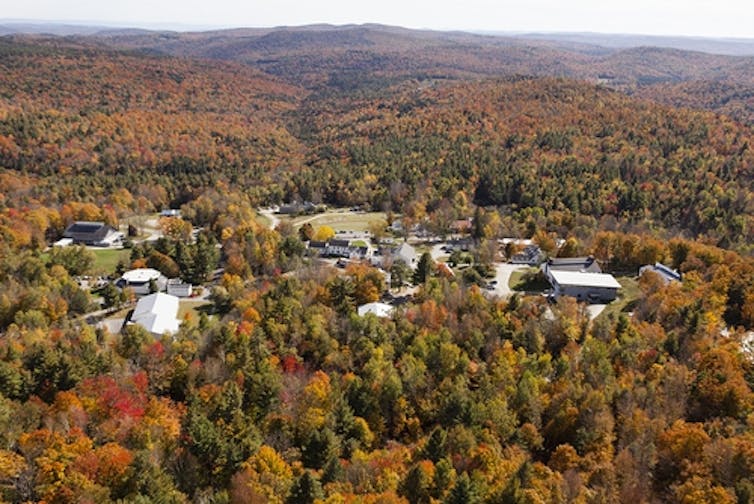

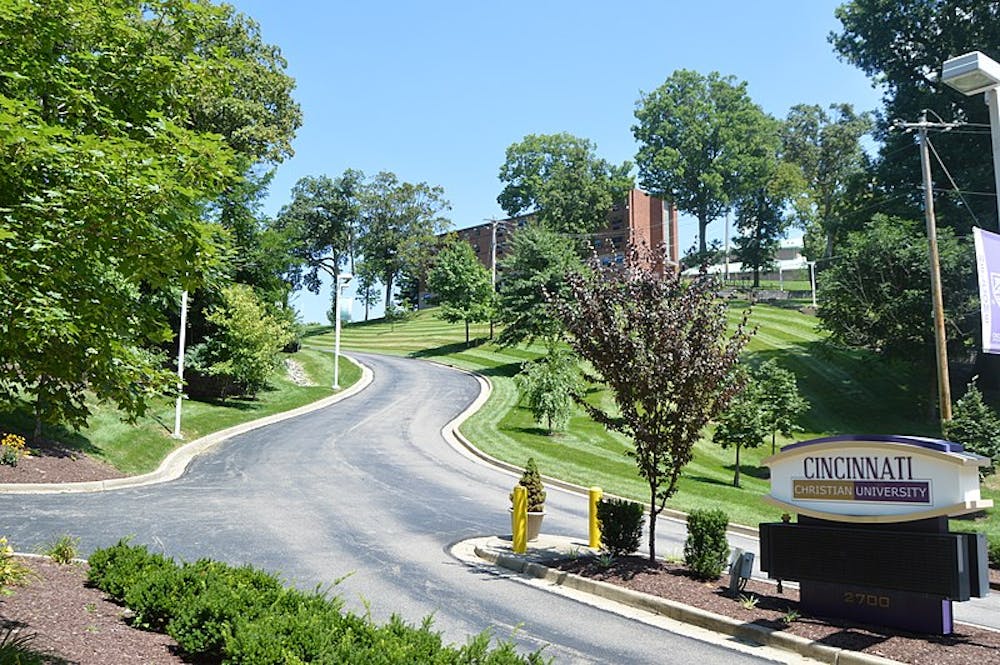
When Cincinnati Christian University became aware of its declining enrollment and dwindling tuition revenue in 2015, the university made a “series of bold bets” to stay afloat.
But the bold moves ended up being a series of strategic mistakes. The school started a football team, revised its mission and laid off faculty and staff to cut costs. It spent most of its US$4 million endowment but was still $6 million in debt in 2018. This fall semester will be the school’s last.
Cincinnati Christian College is one of a growing number of colleges and universities – 21 private colleges since 2016 – forced to close their doors for financial reasons. The trend has affected the public sector, too. At least 33 public colleges – including community colleges – have consolidated within their state systems or merged with other institutions since 2016.

And predictions of the future demise of other colleges abound. Harvard Business School professor Clayton Christensen has said that half of all colleges and universities will close in the next decade. While that view may be overly pessimistic, one study found that about 800 of the approximately 2,300 four-year public and nonprofit private colleges in the nation exhibited characteristics that put them at financial risk: They had fewer than 1,000 students, had no online programs, imposed annual tuition increases of at least 8% and relied on tuition for 85% or more of their revenue. They also discounted their tuition by 35% or more.
These college closures disrupt the academic lives of students, force faculty and staff to find work elsewhere and can hurt a local economy.
As an education professor who has served as the chief enrollment officer at several universities for 30 years, here are four reasons I believe are behind the closures.
1. Rising prices and doubts about value
Talk to any parent of a college-bound high school student and they will express concern about the cost of college. When I conducted research as a consultant for a small college, I found that price was by far the biggest factor in how both parents and students chose a college.
In that 2019 unpublished study, sticker price was the top consideration for 51% of parents when making a college choice. That’s three times the 17% who said academic reputation – as determined by college rankings published by various magazines – was a top factor.
We can expect to see more colleges face declining enrollment as prices continue to increase. The College Board reports that average tuition and fees tripled at public four-year colleges and more than doubled at nonprofit private colleges from academic year 1989 to 2019 – after accounting for inflation.
As college prices continue to rise, more people are questioning whether college is worth the price.
According to a 2019 survey of 1,389 Americans, only 58% think colleges are doing a “good” or “very good” job of providing students a return on their investment. Although the survey found that 69% had favorable views of four-year colleges, respondents also wanted colleges to help students acquire the skills needed to get a good-paying job.
When the value of college is questioned, the first schools that experience enrollment declines are those that aren’t very well known, aren’t very selective, rely heavily on tuition and offer large discounts to attract and keep students.
2. Demographic shifts
Amid rising college costs, the income gap between rich and poor is also getting wider. From 1988 to 2018, the bottom 20% of Americans, in terms of income, saw a 12% increase in their income, while those in the top 20% enjoyed a 51% increase, according to The College Board.
This is particularly true for African American and Hispanic families. In his 2015 book, “Breakpoint,” Jon McGee notes that average incomes of African American and Hispanic families are half those of whites and Asians.
Nathan Grawe’s 2018 book, “Demographics and the Demand for Higher Education,” shows that while the number of high school graduates nationwide will increase slightly between now and 2025, that number will actually decrease by 15% to 20% in the Northeast, which is where many nonprofit, private colleges are located. The increase occurs in the South and Southwest, primarily in the Hispanic population, with lower average incomes. Grawe estimates that the share of Hispanics going to college will increase by about 5 percentage points by 2029, while total student enrollment will decrease by almost 8% between 2025 and 2029.
So, while America’s colleges and universities are expected to enroll a more diverse student body in the coming years, they will also face financial strain as fewer students enroll and more families lack the means to pay tuition.
3. Colleges as competitors
It used to be that colleges could share student information with one another to make sure they were able to offer a price that was in line with the needs of a student’s family.
All that changed in the early 1990s, when the Department of Justice initiated an antitrust investigation of 57 private, nonprofit colleges and universities for alleged price fixing. A consent decree stipulated that colleges were no longer permitted to share financial aid data of students who had applied to different institutions.
That one action changed the competitive landscape forever, leading many colleges to offer more competitive “scholarships,” which in many cases are actually non-need-based discounts. As this practice escalated in recent years, colleges bid against each other for students by offering more generous scholarships. This creates a major financial strain as institutions spend money that they don’t really have and forgo revenue they need.
4. Colleges move too slowly
Colleges and universities are not known for nimble behavior. Those institutions that move fast, such as Southern New Hampshire, Arizona State and Western Governors universities, benefit by getting new programs to market ahead of others.
But that’s not true for most. Brian Mitchell, a former president of Bucknell University and now a higher education consultant, claims that many college trustees are “woefully unprepared” to meet the challenges facing their institutions. Most colleges address enrollment and revenue declines by simply increasing the discount rate to enroll more students. This, Mitchell says, demonstrates a fundamental “misunderstanding of the overall state of higher education” and makes it difficult to achieve meaningful change.
Take the College of New Rochelle in New York, for example. Administrators there discovered “fabricated budgets” in 2016, at least three years after those budgets were closed. Subsequently, an internal audit uncovered $31.2 million in unpaid bills, including state and federal payroll taxes. The college did not close until 2019. The board of trustees was not aware of the debt, nor was the debt listed in its annual audit. Delayed action and management errors effectively killed this once-vibrant institution.
What it takes to survive
In times of economic and demographic downturns, the smallest and weakest of colleges and universities will be challenged to survive. However, if institutions are clear about their missions but willing to expand them; if they welcome change in who their students are, which programs they offer and how they deliver those programs; and if they anticipate the impact of negative headwinds while moving quickly and smartly, they should be able to navigate the choppy waters ahead of them and survive.
[ Like what you’ve read? Want more? Sign up for The Conversation’s daily newsletter. ]
Robert Massa, Adjunct Professor, Rossier School of Education, USC, University of Southern California
This article is republished from The Conversation under a Creative Commons license. Read the original article.

LAKEPORT, Calif. – During a brief special Tuesday evening meeting, the Lakeport City Council approved a contract with a firm that will rebuild the Library Park seawall, with the goal of having the project completed by the summer season.
The old seawall, built of cinder blocks, was destroyed in the February 2017 storms by wave action driven from heavy winds, as Lake County News has reported.
Since then, chain link fence has kept the public away from the seawall and the sidewalk promenade that lines it.
Then, earlier this year, when more flooding occurred, there was further underground water intrusion because the wall couldn’t hold back the water.
With local, state and federal emergency declarations made following the 2017 storms, city Public Works Director Doug Grider and his staff doggedly pursued funding from the Federal Emergency Management Agency to not only replace the wall, but build one that’s far better – built of metal sheet piles, not concrete.
The result of close to three years’ worth of effort – including voluminous paperwork that was part of an often slow federal process – the city has received the go-ahead from FEMA to build the new seawall.
In return, FEMA will pay for most of the cost of the wall, with the city required to cover a 6.38-percent match that will come from its insurance, officials said at Tuesday’s meeting.
With Grider away at an emergency services training on Tuesday, City Engineer Paul Curren was on hand to explain the proposed contract with West Coast Contractors Inc., which also does business as Oregon West Coast Contractors. The company is based in Coos Bay, Oregon.
Grider’s staff report said the project includes 534 feet of new sheet pile wall, along with modifications to the existing center pier; construction of concrete wall cap, terminus ends, and openings for stairs, dock access ramp and center pier; concrete stairs; and other miscellaneous work “necessary to complete the work in place.”
On some previous public works contracts, the city has struggled to get many bids and sometimes has had none at all.
However, that wasn’t the case with the seawall project.
“We had eight bidders on this project, which is phenomenal,” said Curren, adding, “There was a lot of interest.”
Most of the bidders attended the prebid walk-through and submitted questions afterward, he said.
The city engineer’s estimate of cost for the project was $1 million. However, West Coast Contractors’ bid was $799,773.
Curren said that low bid was $200,000 below the engineer’s estimate, and was the same amount below the next-highest bid.
He said West Coast Contractors specializes in such projects around the United States and the world. “This is their bailiwick.”
The company had representatives at the prebid walk-through. “They were thoroughly familiar with the project,” Curren said.
Curren thanked the council for the special meeting, explaining the project is on a tight schedule.
He said staff hopes to have all paperwork done by next week so they can give notice to proceed and the contractor can order the project materials.
“If that goes well, in four weeks we’ll be driving sheet pile,” Curren said.
Grider’s staff report estimated the project will start on Dec. 23.
City Manager Margaret Silveira said they have a limited time to do the project because of the lake level.
Curren added that, with environmental considerations, the work needs to be done by the end of February.
Councilman Kenny Parlet asked how FEMA will pay. Silveira said the city will pay for the project up front out of the general fund and then FEMA will pay the city later.
City Finance Director Nick Walker said the city also has $2.5 million in insurance proceeds to help cover that upfront cost. He said FEMA’s payment timetable depends on how the city requests the drawdown, but that a check is expected within three to six months.
Curren said the promenade replacement is not in this contract; he said that will go out to bid in a separate bid in January, because they didn’t want to mix and match contractors.
The goal, Curren said, is to have both projects finished by Memorial Day.
Silveira said the promenade project also is being sent to the Parks and Recreation Commission for it to look at options.
City council members and staff praised Grider for his persistence and tenacity in seeking federal funding to cover the building of a new seawall.
Parlet said Grider took the initiative, going above and beyond, knowing that FEMA wanted a long-term solution.
“It slowed the process down for awhile, but Doug was very adamant,” said Silveira.
Councilman George Spurr asked how West Coast Contractors is able to do the project for less cost, questioning if it was a matter of getting materials cheaper.
Curren said it wasn’t a matter of the cost of the metal, but the fact that the firm has a wide variety of equipment, and just the right equipment for this job in particular.
“I’m very excited about the idea of having that open for Memorial Day,” said Mayor Tim Barnes.
In response to a series of questions from Lakeport resident Richard Stefanello, Curren explained that the new seawall plus a new concrete cap will be almost 3 feet higher than the existing seawall. Grider got approval from FEMA to heighten the wall for additional protection.
Curren said the sheet pile will be driven close to the shore and the new promenade will be built behind it during the next project. It has been designed to slope toward the lawn; the current promenade slopes toward the lake.
The new seawall has been designed on the 100-year flood level, based on a full geotechnical report. “It’s well engineered,” and should be in place for a long time to come, Curren said.
The contractor will use vibratory driving methods to drive down the nearly half-inch-thick sheet pile 25 feet into the ground, Curren said.
Spurr moved to approve the contract, which Parlet seconded and the council voted unanimously to approve.
After the meeting, Curren told Lake County News that city crews will remove the damaged sidewalk in conjunction with the seawall project, and the next contractor will then put in the base rock and concrete.
He said none of Library Park’s trees will need to be removed as a result of the work.
At the special meeting, the council also voted to approve an amendment to the Dickens Faire application in order to close Second and Third streets between Main and Forbes streets for a temporary skating rink.
Email Elizabeth Larson at