 How to resolve AdBlock issue?
News
The name of the 78-year-old man who died had not been released as of Monday pending notification of his next of kin, according to the California Highway Patrol’s Clear Lake Area office.
The crash occurred at approximately 5:44 p.m. Saturday on Highway 29 north of Main Street, the CHP said.
The CHP said 48-year-old April Flores of Lakeport was driving her white 2005 Infiniti G37 southbound on Highway 29, north of Main Street, at 55 miles per hour.
The male driver was driving his black 1998 Toyota Tacoma pickup and was stopped at the stop sign on Main Street, preparing to turn southbound onto Highway, the CHP said.
For reasons still under investigation, the CHP said the man turned left onto Highway 29, directly into Flores’ path.
The CHP said the left front corner of the Infiniti hit the right rear corner of the Toyota, causing the Toyota to spin in a clockwise manner.
The Toyota travelled off of the west shoulder where it overturned, partially ejecting the male driver, the CHP said.
The CHP report said the male driver was not wearing his seat belt, while Flores was wearing hers.
After the collision, Flores remained on scene for emergency personnel, the CHP said. She was not injured.
The CHP said the male driver was pronounced deceased at the collision scene by medical personnel.
Neither drugs nor alcohol are suspected of being factors in this collision, the CHP said.
Email Elizabeth Larson at
Former CEO Courtny Conkle left in September following the annual Lake County Fair in order to accept the position of manager for the Wyoming State Fair, as Lake County News has reported.
Now, the Lake County Fair Board is launching the search for Conkle’s successor.
“We look forward to this opportunity for change and to finding the best person to take our strengths forward and lead us into the future,” said Board President Tom Turner.
“We need a sharp and exceptional administrator who will implement the board’s policies and manage the day-to-day operations of the fair with business acumen, vision and commitment to the community purpose of this organization,” Turner said.
The job pay range for the exempt position is $6,673 to $8,170 monthly.
To receive an application or for more information on the position, send inquiries to CEO Selection Process, 49th District Agricultural Association, P.O. Box 70, Lakeport, CA 95453, or call 707-263-6181.
Details also are available at the fair’s Web site.
All applications must be submitted according to form, with a resume and a list of five references.
CEO applications should be received by Dec. 6, 2019.
The board of directors intends to start the interview process in mid-December.
The Lake County Fair – also known as the 49th District Agricultural Association – is one of 54 fair organizations that operate as state agencies under the authority of the California Department of Food and Agriculture’s Division of Fairs & Expositions.

Around the world, animals and plants are disappearing at alarming rates. In May 2019, a major U.N. report warned that around one million species were at risk of extinction – more than at any other time in human history.
Conservation scientists like me focus on predicting and preventing extinctions. But we see that as an essential first step, not a final goal. Ultimately, we want species to recover.
The challenge is that while extinction is easy to define, recovery is not. Until recently, there was no general definition of a “recovered” species. As a result, some species recovery plans are much less ambitious than others, and scientists don’t have a common yardstick for recognizing conservation successes.
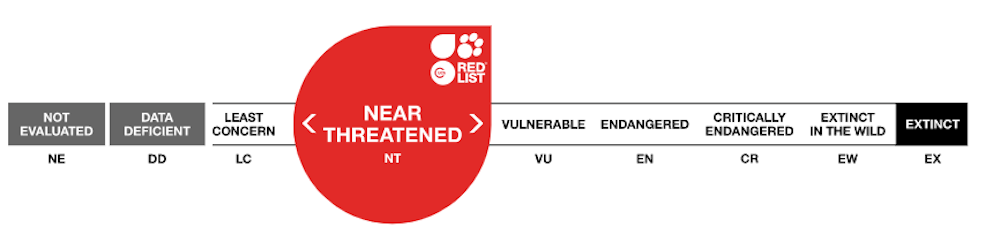
To address this challenge, the International Union for the Conservation of Nature’s Species Survival Commission – the world’s largest network of conservationists – is developing a Green List of Species to highlight species recovery. This tool will complement the well-known Red List, which highlights endangered species.
While the Red List focuses on extinction risk, the Green List will measure recovery and conservation success. As a member of the team charged with making the Green List a practical conservation tool, I see it as a way of measuring the impact of conservation and communicating conservation success stories, as well as learning from failures.
Defining recovery
To know how much conservation has accomplished, and to encourage ambitious conservation goals, we need an objective way to measure progress toward a species’ recovery. Studies of recovery plans developed under the U.S. Endangered Species Act show that some plans consider a species recovered even if its population remains the same or shrinks during the recovery effort. A standard definition of recovery would prevent such inconsistencies and encourage wildlife managers to aim higher.
Conservation scientists have long attempted to identify different facets of species recovery. Reviewing these efforts, our team came up with several requirements for considering a species fully recovered.
As I explain with an international group of colleagues in a new study, one key idea is that populations of the species should be “functional.” By this we mean that they are able to perform all the roles that the species is known to play in ecosystems where it exists. This may seem like an obvious measurement, but in fact, some species that are considered to be “recovered” in the U.S. fail this test.
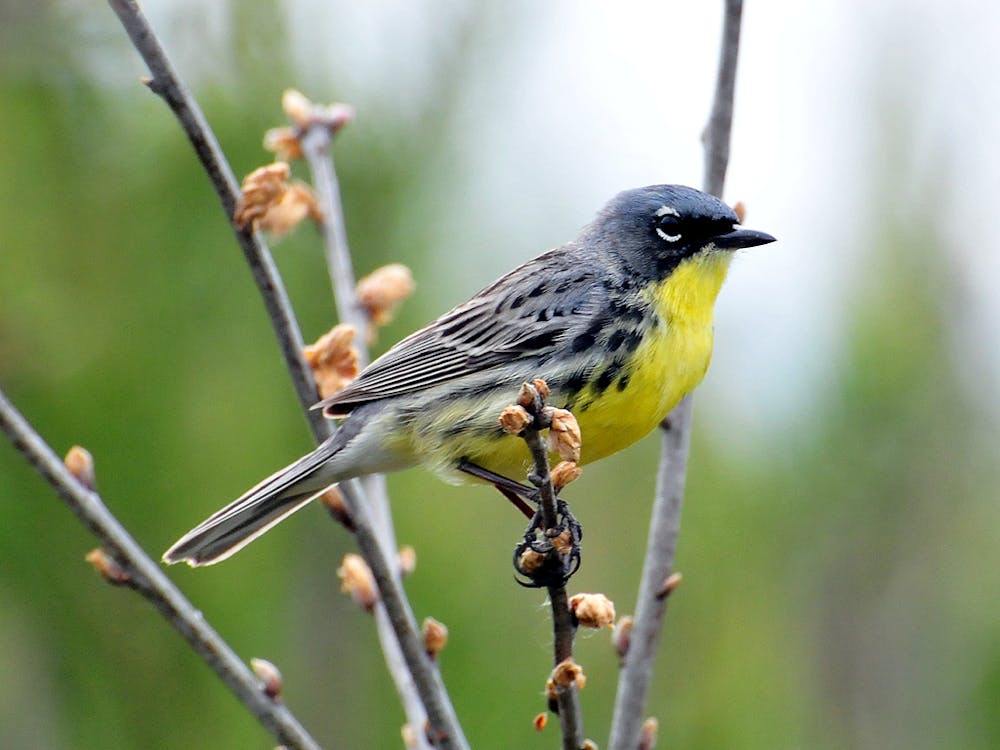
What’s your function?
Each species has many kinds of ecological functions. For example, bees help plants reproduce by pollinating them. When birds and bats eat fruits and later excrete the seeds, they help forests regenerate.
Similarly, when salmon swim upstream to spawn and then are consumed by bears and other predators, that process moves essential nutrients from the oceans up into rivers and forests. And when flammable grasses burn in the U.S. Southeast, they fuel fires that maintain longleaf pine forests.
All these critical functions are possible only when enough members of the key species are present. Put another way, keeping a species alive is not enough – it also is essential to keep its functions from going extinct.
Functional extinction
Scientists have known for decades that species may persist at such low numbers that they do not fulfill the ecological roles they used to perform. This can be true even if significant numbers of animals or plants are present.
One example is the American Bison, which is a great conservation success story in terms of preventing its extinction. Hunting reduced bison to just a few hundred individuals in western states at the end of the 19th century, but conservation initiatives have restored them to public, private and Native American lands across the West.
Today bison do not appear to be at risk of extinction. However, they occupy less than 1% of their historical range, and most of the roughly 500,000 animals that exist today are raised for commercial purposes. Fewer than 20,000 bison live in conservation herds – a small fraction of their pre-Columbian population, which totaled millions or tens of millions.
Before they were reduced to near-extinction, bison shaped prairie habitats and landscapes through wallowing, pounding and grazing. They influenced ecosystems by converting vegetation into protein biomass for predators, including people, and by redistributing nutrients in these ecosystems.
Even though bison are not at risk of extinction, for the purposes of their contributions to the ecosystems and landscapes they once inhabited, I believe the species should be considered to be functionally extinct and not a fully recovered species.
This does not mean its conservation is a failure. To the contrary, according to new conservation metrics that I and other scientists have proposed for the Green List, the bison would receive high scores on several counts, including Conservation Legacy – meaning it has benefited significantly from past protective efforts – and Conservation Gain, or potential to respond positively to further initiatives.

A full recovery
For contrast, consider another species widely viewed as a conservation success story: The osprey. Populations of this fish-eating bird of prey crashed across North America in the 1950s to 1970s, primarily due to poisoning from the insecticide DDT and its derivatives.
Conservation efforts since then, including a federal ban on DDT and provision of nesting structures, have resulted in a dramatic recovery, back to population levels before the declines. Actually, many U.S. and Canadian populations of Osprey now exceed historical numbers. Under the Green List criteria we are proposing, this species would now be considered ecologically functional in most if not all parts of its range.
Ambitious goals
Conservation scientists have long considered a species’ influence on others and on the ecosystems it inhabits to be a fundamental aspect of its essence and its intrinsic value. The Green List of Species initiative seeks to go beyond simply preventing extinctions to defining recovered species as those that are ecologically functional across their natural ranges. This new focus aims to encourage conservation optimism by highlighting success stories and showing that with help, species once at risk can reclaim their places in the web of life.
[ Deep knowledge, daily. Sign up for The Conversation’s newsletter. ]
H. Resit Akcakaya, Professor of Ecology and Evolution, Stony Brook University (The State University of New York)
This article is republished from The Conversation under a Creative Commons license. Read the original article.
On Monday, Nov. 4, Michael Frederick Ward, 28, of Nice, was convicted and sentenced for felony charges of spousal abuse and arson of an inhabited structure, according to Chief Deputy District Attorney Richard Hinchcliff.
According to investigation reports by the Lake County Sheriff’s Office, on April 7 deputies Ben Moore and Collin Coddington responded to the 7200 block of East Butte St. in Nice and contacted Ward’s wife.
She reported that Ward had pushed her down, causing an abrasion to her arm, flushed her deceased mother’s ashes down the toilet and stated that he would blow up the residence if law enforcement came inside.
At the time the victim did not want Ward prosecuted because of fear of retaliation, and deputies were unable to locate Ward, who had fled the residence before deputies arrived, Hinchcliff said.
A Lake County Sheriff’s office investigative report said that on July 4 Ward was still living with his wife and her two children at the East Butte Street residence in Nice. A neighbor reported that the children had come to her residence claiming Ward had a blow torch and was trying to catch the house on fire.
Deputies Justin Newton and Walter White responded, and Ward’s wife advised officers that she had been in an argument with Ward and went into the bedroom to get away from Ward. Ward subsequently nailed the windows and the door to the bedroom shut, and began threatening to burn the house down, the report said.
The victim knocked a hole through the wall to escape, and saw Ward with a propane torch attempting to start a fire. The report said deputies located a propane torch inside the residence and a charred piece of wood on the bedroom door. Deputies were again unable to locate Ward who had fled the residence before deputies arrived.
On July 26, Ward’s wife reported Ward was again inside the residence on Butte Street and was breaking and throwing things inside the residence, and had again threatened to set the residence on fire, another sheriff’s office report stated.
Deputies John Wander, John Drewrey, and other sheriff’s off staff responded to the residence. Upon the deputies’ arrival, Ward was still inside the residence and smoke was coming out of windows in the residence, the report explained.
Deputies Drewrey and Collin Coddington entered the residence to look for Ward or other persons and attempt to put the fire out. They noticed fire burning in more than one location and exited because of heavy smoke, according to the report.
The report said Drewrey and Capt. Chris Chwialkowski then entered the residence again, and once inside believed there may be a gas leak inside the residence, so they exited and advised nearby residents to evacuate the area. About that time Ward was seen attempting to flee out of a window and was detained by deputies Coddington and Jeffrey Mora.
Northshore Fire Protection District Chief Mike Ciancio contacted Keith Warner, a private arson investigator out of Rohnert Park, to conduct the origin and cause investigation. Hinchcliff said Warner has provided assistance numerous times in the past to fire agencies in Lake County and was previously a member of the Lake County Arson Task Force.
Warner’s investigation determined that the fire started in multiple separate locations and was intentionally set. Hinchcliff said the fire caused major damage to the residence, with Northshore Fire estimating the damage totaled $74,401.
Hinchcliff, who handles most of the fire-related prosecutions for Lake County, said he charged Ward with arson of a residence, attempted arson, criminal threats, false imprisonment, and child endangerment and prosecuted the case.
Kevin Davenport was appointed as a public defender to represent Ward. On Aug. 20, a preliminary hearing was held and a trial date was set, Hinchcliff said.
On Oct. 16, pursuant to a negotiated disposition, Ward pleaded no contest to felony arson of an inhabited structure and felony spousal abuse to a stipulated 10 years state prison, according to Hinchcliff.
On Nov. 4, Judge Andrew Blum sentenced Ward to 10 years state prison and ordered restitution in the amount of $74,401, Hinchcliff said.
Hinchcliff said Ward also was ordered to have no contact with the victim or her children, additional restitution was reserved for the victim and Ward was ordered to register as an arson offender for the rest of his life.
The council will meet beginning at 6 p.m. Tuesday, Nov. 12, in the council chambers at Lakeport City Hall, 225 Park St.
The Library Park seawall sustained major damage from waves during the heavy flooding in February 2017, as Lake County News has reported.
Since then, the city has had to keep parts of Library Park fenced off and has been working through a complicated Federal Emergency Management Agency process in order to receive funding for a new seawall.
On Tuesday, the council will consider awarding the seawall construction contract to the lowest bidder, West Coast Contractors Inc. DBA Oregon West Coast Contractors, according to the staff report for the meeting.
The company bid $799,773; the city’s engineer estimate for the project was $1 million.
City staff said the project will be funded by FEMA, with a 6.38-percent match from the city, which will be funded by the proceeds from the city’s insurance policy.
The construction contract will cover the placement of approximately 534 feet of sheet pile wall work and includes modifications to the existing center pier; construction of concrete wall cap, terminus ends, and openings for stairs, dock access ramp and center pier; concrete stairs; and other miscellaneous work necessary to complete the work in place, the staff report explained.
Staff said construction is estimated to start Dec. 23.
The council also will consider approving an amendment to the event application, with staff recommendations, for the Dickens’ Faire street closures.
Email Elizabeth Larson at
111219 Lakeport City Council Special Meeting Agenda Packet by LakeCoNews on Scribd
In recognition of this, Mendocino College will host its annual Native American Heritage Celebration in the Lowery Student Center at the Ukiah campus on Thursday, Nov. 14, from 4 to 7 p.m.
This free event is open to the public, so bring your family and friends to an entertaining evening of traditional Native dancing by Shokawah Ke, crafts, games and cultural activities, which will include a display of historical artifacts and photos that provide a history of the culture of Mendocino and Lake County tribes.
Free Indian tacos will also be served.
The event will begin with a traditional Native American blessing and welcome, followed by a keynote address from Sonny J. Elliott Sr., chairman of the Hopland Band of Pomo Indians, who will speak to the importance of education in the tribal community.
Cultural activities, games, and information tables hosted by local native community members, elders and leaders will include a coloring Pomo language table, traditional stick games, traditional Pomo basket weaving, traditional tule duck and doll making, traditional clacker making, and lessons about the history of Native American tribes of Mendocino County and how to gather and prepare traditional food of the California natives.
The Ukiah campus of Mendocino College is located at 1000 Hensley Creek Road.
For more information about the event, contact the Native American Student Resource Center at 707-468-3000, Extension 4603.