How to resolve AdBlock issue?
Refresh this page
How to resolve AdBlock issue?
Refresh this page
Lake County News,California
  • Home
    • Registration Form
  • News
    • Education
    • Veterans
    • Community
      • Obituaries
      • Letters
      • Commentary
    • Police Logs
    • Business
    • Recreation
    • Health
    • Religion
    • Legals
    • Arts & Life
    • Regional
  • Calendar
  • Contact us
    • FAQs
    • Phones, E-Mail
    • Subscribe
  • Advertise Here
  • Login
How to resolve AdBlock issue?
Refresh this page

News

Californians urged to be safe as the gear up for summer, especially this holiday weekend

Details
Written by: LAKE COUNTY NEWS REPORTS
Published: 04 July 2025

As Californians gear up to celebrate July 4, Gov. Gavin Newsom on Thursday highlighted how the state is rolling out safety measures — from wildfire enforcement and extra highway patrols to real-time heat alerts — to help keep the fun going and our communities safe.

Entering peak wildfire season 

In California, human activities account for about 95% of all wildfire starts, often starting from preventable actions like improperly extinguished campfires, malfunctioning equipment, and fireworks. 

With July 4 celebrations set to go off, Gov. Newsom and state fire officials remind all Californians that the state has no tolerance for illegal fireworks.

Over 600,000 pounds of illegal fireworks have already been seized in 2025. The sale, transport, or use of fireworks without the “Office of the State Fire Marshal Safe and Sane” seal is illegal, as is possessing or using any fireworks in communities where they are not allowed.

Violators face potential fines up to $50,000 as well as a year in jail. For a fun and safe Fourth of July, know your local fireworks laws. Some California communities ban all fireworks, while others allow certain “Safe and Sane” fireworks.

Hitting the road

To keep Californians safe, the California Highway Patrol is implementing a holiday enforcement period beginning at 6:01 p.m. on Thursday, July 3, and continuing through 11:59 p.m. on Sunday, July 6 — keep an eye on distracted and dangerous drivers on the highways. 

Don’t forget — save the celebrations until you’ve reached your destination. During the 2024 Independence Day holiday period, 29 people were killed in crashes on California roads and CHP officers made 1,336 arrests for DUI — one arrest every 17 minutes. 

Staying smart in the heat 

California has launched CalHeatScore — a groundbreaking tool to help protect vulnerable populations from dangerous heatwaves. The state’s new tool provides localized warnings and resources for extreme heat events. 

When high temperatures impact Californians, many regions can experience triple-digit weather. Residents should visit here for resources, including heat safety information and places to stay cool.

Emergency preparedness

Californians are encouraged to sign up for free emergency alerts at listoscalifornia.org/alerts. Emergency alerts are important messages you receive to help keep you safe during a disaster. 

The Disaster Ready Guide, available in multiple languages, includes other important information, such as packing a go-bag and making a plan.

• Recreate responsibly with these helpful tips.
• Carry extra food, water and clothing if you plan to be outdoors for an extended period of time.
Check the weather forecast before you leave.
• Stay aware and alert near bodies of water. Wear a life jacket, supervise children and do not enter cold and/or swift-water areas.
• Be mindful of insects and wildlife, take precautions including wearing long sleeve clothing and repellents.
• Boat sober.

Make an outdoor plan

For those looking to engage with some of California’s natural beauty during the weekend with a visit to one of its 280 state parks, California’s State Parks encourages Californians to be conscientious of their impact on the land around them. Staying on trails, making sure to keep watch on and extinguish any campfires, picking up your trash, and planning ahead can keep you and your families safe, and the wilderness protected for those that come after you.

• Whether you're camping, hiking, or just going outside for some relaxation, know the route you'll be taking and how long you plan to be gone. Tell a responsible person about your plans and when you anticipate you'll be home. 
• Carry extra food, water and clothing if you plan to be outdoors for an extended period of time.
• Check the weather forecast before you leave.
• Stay aware and alert near bodies of water. Wear a life jacket, supervise children and do not enter cold and/or swift-water areas.
• Be mindful of insects and wildlife, take precautions including wearing long sleeve clothing and repellents.

Keep your little ones in mind

As temperatures heat up, many people want to go outside and take their children and pets with them. 

While they love outdoor adventures, the heat can take a toll on them, too. Be sure to limit their outside exposure on hot days. 

With increased flows in waterways during the summer, don't leave anyone unsupervised near streams or rivers. 

Most importantly, never leave your kids or pets alone in a hot vehicle.

Decade of wolf management: CDFW report details wolf research, conservation efforts

Details
Written by: LAKE COUNTY NEWS REPORTS
Published: 04 July 2025
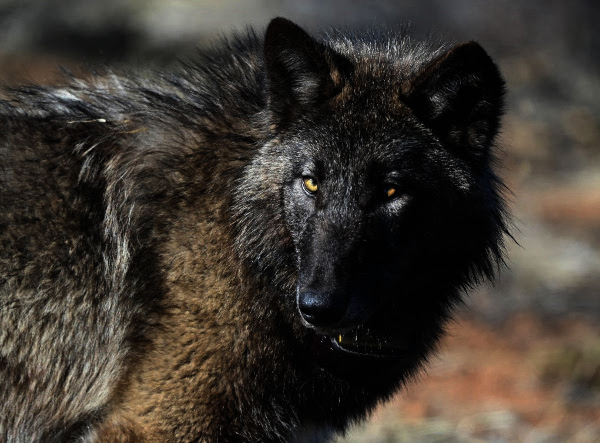
A wolf in the wild. Photo courtesy of the California Department of Fish and Wildlife.


The California Department of Fish and Wildlife, or CDFW, this week published a report summarizing its management and conservation activities for gray wolves (Canis lupus) over the past 10 years.  

“Ten Years of Gray Wolf Conservation and Management in California: 2015-2024” details CDFW’s wolf conservation and management efforts, including wolf monitoring techniques, wolf-livestock depredation investigations, wolf captures and population data for the state’s wolf packs known through 2024, including the minimum number of individuals, breeding pairs and litters produced. 

Wolves were extirpated in California by 1924 and naturally returned to the state in 2011. The first pups born in California were documented in 2015. 

At the end of 2024, CDFW wildlife biologists documented at least 50 wolves in the state. 

Wolves are listed as endangered species under the California Endangered Species Act and the federal Endangered Species Act.  

“Since the wolves’ return CDFW has been monitoring the growing wolf population, working to mitigate wolf-livestock conflict and conducting significant outreach to livestock producers and the public,” said CDFW Director Charlton H. Bonham. “Through these monitoring efforts, studies and outreach, CDFW and partners are building a toolkit that will offer solutions and resources for livestock producers while also allowing a native species to successfully come home.” 

“The return of wolves to California is an epic tale and this report marks an important milestone in that story,” said Amaroq Weiss, a senior wolf advocate at the Center for Biological Diversity. “California’s decade of the wolf demonstrates that when essential legal protections are in place, there can be comeback stories for desperately imperiled animals.”

Starting in 2026, CDFW plans to produce an annual report about its wolf management and conservation activities. Wolf management and conservation is guided by CDFW’s 2016 Conservation Plan for Gray Wolves in California. 

This first report describes 10 years of work by CDFW, such as community engagement efforts, non-lethal deterrent use and the creation of the Wolf-Livestock Compensation Program. 

Maps included in the report show wolf activity in California as well as migration of collared wolves. While the Yowlumni pack has established in Tulare County, all other known packs have home ranges in northeastern California.  

The report highlights include a summary of past and ongoing research that will inform CDFW’s future management of wolves. 

Wolves return after a century

The first wolf in nearly a century to make California part of his range was OR-7, a radio-collared wolf from Oregon that entered California in late 2011. OR-7 traveled across seven northeastern counties in California before returning to southwestern Oregon, where he found a mate and settled down, forming the Rogue pack.

Several of OR-7’s offspring have since come to California and established packs. Those include the original breeding male of the Lassen pack and the breeding female of the Yowlumni pack residing in Tulare County. The Shasta pack, California’s first confirmed wolf pack in nearly 100 years, was discovered in 2015 but disappeared a few months later.

The gray wolf is native to California but was driven to extinction in the state by the mid-1920s. After OR-7 left Oregon for California, the Center and allies successfully petitioned the state to fully protect wolves under California’s endangered species act. Wolves are also federally protected in California under the federal Endangered Species Act. It is illegal to intentionally kill any wolves in the state except in defense of human life.

While California’s first known wolf in modern times entered the state in late 2011, it was not until summer 2015 that the first wolf family here in 100 years, the Shasta pack, was confirmed. At the end of 2024, seven known packs composed of around 50 to 70 wolves ranged across multiple counties in California.

According to the report, between 2015 and 2024, the agency was able to collar 12 wolves across five packs, a known 21 litters of wolf pups were born, and there have been at least nine known wolf deaths.

Of these mortalities, cause of death could not be determined in four instances, three wolves died after being struck by vehicles, one wolf was killed illegally and one wolf’s death is still under investigation.

This spring, the agency confirmed the existence of an additional three packs, bringing the current tally to 10 known wolf families in the state. Nine of those packs are in northeastern California and one pack is 200 miles further south, near Sequoia National Forest.

Months after the first wolf arrived in California, CDFW formed a stakeholder working group that was divided into three subgroups: A wolf-livestock subgroup focused on wolf impacts on livestock and agriculture, a wolf-ungulates subgroup focused on wolf impacts on deer and elk populations, and a wolf conservation subgroup focused on wolf sustainability and health issues. The outcomes of 44 meetings were analyzed. 

Most prevalent were topics relating to the importance of and need for data on wolves in California, including their impact on livestock, wild prey and natural ecological communities; identifying wolf population recovery goals and whether a sustainable population can be maintained over time; how the California Endangered Species Act affects wolf management options; and where lethal controls would fit into wolf management. 

The report also includes an analysis of the Lassen pack’s diet and notes the work of CDFW’s Wildlife Forensics Lab to create a reference library of wolf genetic samples. 

The genetic samples are used to determine the origins and relatedness of California’s wolves, differentiate scats and depredations by coyotes and dogs, identify the genetic “fingerprints” of individual wolves and even determine the coat color of wolves detected only by their DNA. 

“California’s wolves are still in the infancy of their recovery, and ongoing legal protections are essential to keep their small population growing,” said Weiss. “This 10-year report is worth celebrating but California gets this opportunity to celebrate only because we’ve decided wolves are worth protecting.”

The University of California, Davis, Wildlife Health Center initiated The Wolf Project in 2022, with research funded by the Wildlife Conservation Network. In 2023 CDFW began collaborating with researchers at the University of California, Berkeley, on the California Wolf Project. More information about the The Wolf Project and California Wolf Project are available online. 

For more information about wolf conservation in California, CDFW Wolf Livestock Compensation Grants or to view the CDFW Wolf Tracker wolf location map go to CDFW's gray wolf web page. 

The Ten Years of Gray Wolf Conservation and Management in California: 2015-2024 report is now available online. 

How do fireworks work? A pyrotechnics chemist explains the science behind the brilliant colors and sounds

Details
Written by: Paul E. Smith, Purdue University
Published: 04 July 2025

Colors, sparks, booms and whistles all require different pyrotechnic recipes. chensiyuan/WikimediaCommons, CC BY-SA

For many people around the world, the very first moments of the new year will be filled with the sounds and colorful light shows of fireworks. From loud bangs to long whistles, bright reds to pale blues, there are thousands of variations of fireworks and an entire branch of chemistry that explores these fun explosions.

I’m a chemist and president of the Pyrotechnics Guild International, an organization that promotes the safe use of fireworks and their use to celebrate holidays like the New Year.

There are hundreds of chemical formulas – or as I like to think of them, pyrotechnic recipes – for fireworks. These recipes are still based off an ancient mixture of chemicals that produces the quintessential bang, but modern fireworks use all sorts of chemical magic to put on the incredible shows of today.

A pile of shiny black powder and a jar.
Black powder, or gunpowder, is the main ingredient of all fireworks. Lord Mountbatten, CC BY-SA

It all starts with black powder

The first ingredient of any firework is the ancient explosive black powder. It was discovered by Chinese alchemists more than a thousand years ago, and the recipe has been virtually unchanged in the centuries since. To make black powder, all you need to do is mix 75% potassium nitrate, 15% charcoal and 10% sulfur. To make a basic firework or fire cracker, you just put this powder in a container, usually made of thick cardboard or paper.

A parchment of Chinese characters.
The oldest recorded recipe for black powder is from A.D. 1044 China. PericlesofAthens/WikimediaCommons

Black powder is used to launch the firework in the air as well as ignite and propel the effects – like color – into a pattern in the sky. So how does it work?

Once lit with a fuse or spark, the sulfur melts first at 235 F (112.8 C). The sulfur flows over the potassium nitrate and charcoal, which then burn. This combustion reaction quickly produces a large amount of energy and gas – in other words, an explosion. If there is a small hole for the gas to escape, the reaction launches the firework into the air. In a very confined space, it blasts the components of the firework apart and ignites everything nearby.

In addition to changing how confined the black powder is, changing the size of the granules of powder can change how fast it burns, too. Think about a campfire. When you add a large tree limb the flames burn longer and slower. If you toss a handful of sawdust into the flame it burns hot and fast. Black powder works similarly, and this makes it easy to control how much and how fast energy is released.

A mix of red, yellow and green firework explosions.
Adding different elements to a mixture can produce different colored fireworks. Dennis Wong/WikimediaCommons, CC BY

Different chemicals for different colors

If you put very fine black powder powder in a confined space it explodes in a cloud of heat, gas and noise. So where do the colors and bright light come from?

When you heat up any material, what you’re really doing is putting energy into the electrons of that material’s atoms. If you excite the electrons enough, when they fall back to their normal energy levels they release that excess energy as light.

There are a number of different elements that, when added to a firework and heated, release different wavelengths of light that appear as different colors. Strontium makes red. Barium produces green. Copper burns blue, and so on.

[The Conversation’s science, health and technology editors pick their favorite stories. Weekly on Wednesdays.]

Making fireworks that produce blues has long been a challenge for fireworks chemists. Deep blues are too dark and can’t be seen against the night sky. But if the blue is too light, it appears white. So the wavelength of the “perfect blue” has to be very precise. This is hard to achieve because blue light has a shorter wavelength – meaning the distance between the peaks and valleys of the wave of light are very close together.

Certain elements produce different colors, but what about sparkles and flashes? To make these effects, various metals can be added to the pyrotechnic formulas. Aluminum, magnesium and titanium all produce white sparks. By adding iron you get gold sparks. Mixing in various types of charcoal can produce red and orange sparks. Each of these elements burns at a different speed and in a different way and so produces varying colors and intensities of light.

Special formulas and rocket shapes can produce sound effects like whistles.

Making a whistle or a boom

The final piece of a good firework is an exciting sound effect.

To add sound effects to fireworks you need a formula that produces a large amount of gas very quickly. If a firework has a small opening for the gas to exit through it will produce a whistling sound. The velocity of the gas and size of the opening will vary the pitch and sound of a whistle.

Making a boom is much easier. Simply put an energetic formula in a confined space with nowhere for the gas to go. When ignited, the pressure will build and the firework will explode, producing a sudden boom or bang.

As you watch the fireworks this New Year’s Eve or launch some of your own in the backyard, you’ll now know how they work. Fireworks are a lot of fun, but the explosions and burning chemicals are dangerous – even if they do come in colorful packaging. If you can legally launch consumer fireworks in your town, please handle them properly.The Conversation

Paul E. Smith, Lecture Demonstrator for Chemistry, Purdue University

This article is republished from The Conversation under a Creative Commons license. Read the original article.

Celebrations and fireworks planned around Lake County for Independence Day holiday

Details
Written by: LAKE COUNTY NEWS REPORTS
Published: 03 July 2025
Fireworks at the Clearlake Independence Day celebration in June 2018. Photo by Elizabeth Larson/Lake County News.


LAKE COUNTY, Calif. — Lake County is gearing up for events celebrating Independence Day. 

From festivals to fireworks, celebrations in communities around the lake will begin on Thursday and continue through Saturday. 

The following is a schedule of the planned fireworks displays.

THURSDAY, JULY 3

CLEARLAKE OAKS

Clearlake Oaks Independence Day Celebration

The Clearlake Oaks Independence Day Celebration will take place from 11 a.m. to 5 p.m. Thursday, July 3, at Nylander Park.

There will be vendors, food trucks and family fun in the park.

The Maxine Sherman Memorial annual fireworks display will take place on Thursday night. 

The fireworks will be launched at dusk from the lake at the Clearlake Oaks public launch ramp.

FRIDAY, JULY 4

LAKEPORT

City of Lakeport celebration

The city of Lakeport’s July 4 celebration will include a daylong street and craft fair, vendors and food trucks from 11 a.m. to 8 p.m.

At 6 p.m., the boat parade will make its return, traveling along the city's waterfront with a variety of watercraft welcome to participate. Register your boat here:  https://forms.gle/AWPEcwJTpmZKiu2t7.

The city’s fireworks display will cap off the day. The display will be shot off from a barge offshore of Library Park at dusk.

SATURDAY, JULY 5

CLEARLAKE

Redbud Parade and Festival

The Lakeshore Lion’s Club of Clearlake is sponsoring its 67th annual Redbud Parade and Festival. 

The parade will start at Redbud Park at 11 a.m. on Saturday, July 5, and will proceed down Lakeshore Drive to Austin Park. 

The theme of this year’s parade is “Cruising the 50s.” 

The event will feature local marchers, marching bands, decorated floats, vintage cars, parade and show horses, fire and police vehicles, and much more. 

The city of Clearlake will host a free concert showcasing Dylan Schneider at 7 p.m.

The Lakeshore Lion’s Club will sponsor the firework display at dark.

LAKEPORT

Konocti Vista community fireworks show and party

Konocti Vista Casino will hold its free community fireworks show.

The evening will begin with a party at 6 p.m. featuring vendors, food, a DJ and bar, with the Fun Zone Arcade open indoors.

Fireworks start at dusk, approximately 9:30 p.m. They can be viewed from the marina and parking lot.

Konocti Vista is located at 2755 Mission Rancheria Road.

Lakeport Speedway fireworks display

Lakeport Speedway will host its annual fireworks display following an evening of racing on Saturday, July 5.

Grandstands open at 5 p.m. with racing at 7 p.m. and fireworks to follow.

Visit https://www.lakeportspeedwaytickets.com/ for more information and to buy tickets.

  1. Lake Family Resource Center changes plans for Early Head Start relocation 
  2. California awards $26 million in sustainable planning transportation grants to local projects
  3. Every dog has its day, but it’s not the Fourth of July
  • 237
  • 238
  • 239
  • 240
  • 241
  • 242
  • 243
  • 244
  • 245
  • 246
How to resolve AdBlock issue?
Refresh this page