 How to resolve AdBlock issue?
News
- Details
- Written by: Lake County News reports
The town hall will take place from 4:30 to 5:30 p.m.
This is the third in a series of virtual town halls where Thompson and experts from across our district are answering questions on the response to the fallout from coronavirus.
For this week’s virtual town hall, Thompson will be joined by Napa County Public Health Officer Dr. Karen Relucio and Napa County Sheriff John Robertson.
This event will be held over Zoom and interested participants must email Thompson’s office in order to join, as the platform has a capacity of 500 people.
Interested participants will be notified via email with instructions on how to join.
The event will also be streamed on Facebook Live via Thompson’s page, https://www.facebook.com/RepMikeThompson/ .
All constituents of California’s Fifth Congressional District and members of the press are invited to join.
The Fifth Congressional District includes all or part of Contra Costa, Lake, Napa, Solano and Sonoma counties.
- Details
- Written by: Lake County News reports
As the United States and much of the world move toward relaxing shelter-in-place restrictions to let people move about more freely, public health experts hope to rely on antibody tests to determine who has been infected with the COVID-19 virus and may be immune — at least temporarily — and who is still susceptible.
A University of California, Berkeley, and UC San Francisco project to evaluate some of the more than 120 available antibody test kits — only a handful of which have received emergency use authorization from the Food and Drug Administration — should provide the test performance data these doctors and public health officials need to decide which tests to employ and to understand how reliable the results are.
In head-to-head comparisons of a dozen tests, the researchers already have found that many of the tests performed reasonably well, especially two weeks or more after infection, when levels of antibodies in the blood begin to peak. But many of the test kits have false positive rates that may exceed the proportion of people who have been infected in some communities. That means that a large proportion of those testing positive on an antibody test may not actually have had COVID-19.
Some government officials have suggested providing those who test positive with a get-out-of-jail-free card, an “immunity passport” to a normal life. However, additional critical information is still required before assuming that antibody tests can safely predict protection from future infections, the researchers cautioned.
“It's the Wild West right now. These tests are widely available, and many people are buying and deploying them, but I realized that they had not been systematically validated, and we needed to figure out which ones would really work,” said Patrick Hsu, an assistant professor of bioengineering at UC Berkeley and an investigator at the Innovative Genomics Institute (IGI), a joint research collaboration between the two campuses that is focused on CRISPR. “This is a huge, unmet need for public health.”
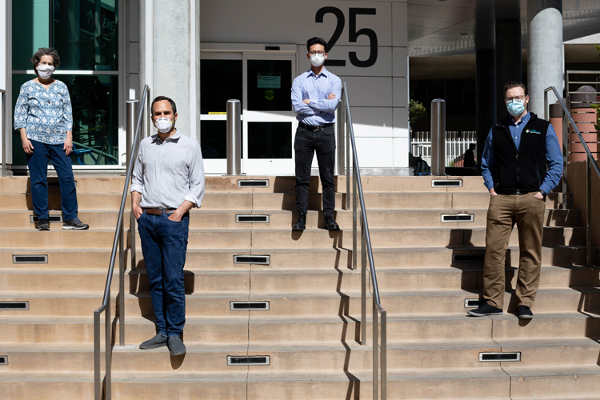
Hsu is leading the effort with Alex Marson, an associate professor of microbiology and immunology at UCSF and IGI’s scientific director for biomedicine, Caryn Bern, a professor of epidemiology and biostatistics at UCSF, and Jeffrey Whitman, a clinical fellow in pathology at UCSF and a resident in laboratory medicine.
They have posted their first results online at https://covidtestingproject.org/, in advance of peer review and submission to a journal, and will continue to update that website so that state and federal policymakers have the information they need before purchasing serology tests. The team cautioned that, as a preliminary report of work that has not been certified by peer review, it should not be relied upon to guide clinical practice or health-related behavior and should not be reported in news media as established information.
Antibody tests complement PCR diagnostics
Current diagnostic tests, such as the standard RT-PCR (reverse transcriptase-polymerase chain reaction) test conducted on samples obtained from nasopharyngeal swabs, can tell doctors if someone is currently infected, but antibody tests might be able identify people who have been exposed to the virus even weeks after their initial infections. Antibody tests could be particularly useful for identifying those who were infected, but never showed symptoms. Some controversial studies have suggested that the proportion of such cases could be as high as one in four.
When infected by a virus like SARS-CoV-2, the cause of COVID-19, the body initially produces antibodies known as IgM (immunoglobulin-M), in an attempt to neutralize the virus. Later, as the body’s adaptive immune system revs up, IgM levels go down, and the body ramps up production of IgG, which more specifically targets the viral invader.
Antibody tests, also called serology tests because they are conducted on blood samples, such as from a finger prick, can assess levels of both IgM and IgG, and the relative levels could indicate whether a person is in the early or late stages of infection.
As such, antibody tests can complement the information from PCR tests, since even these relatively accurate tests can give false negatives. PCR tests for coronavirus generally exhibit lower sensitivity if performed several days to a week after symptom onset, probably because of decreasing levels of the virus in the upper respiratory, tract where samples for testing are commonly taken.
Antibody tests may eventually provide clues to how long immunity lasts and what levels of antibodies are truly protective against subsequent SARS-CoV-2 infections. It’s unclear, for example, if infection with SARS-CoV-2 produces a long-lasting immunity.
The UC Berkeley/UCSF team has so far evaluated 10 point-of-care tests — tests much like home pregnancy or HIV tests, which are called, in general, lateral flow assays — and two different set of tests based on a common laboratory antibody detection method called ELISA (enzyme-linked immunosorbent assay).
Each of the dozen was tested against roughly 300 blood samples. Of these, 108 were obtained before July 2018, so, presumably, from people who had not contracted COVID-19. Most of the remainder came from COVID-19 patients seen at Zuckerberg San Francisco General Hospital and Trauma Center (ZSFG) or UCSF Medical Center. About 130 samples were from individuals who had tested positive for COVID-19 by PCR testing, and around 50 were from people who had been tested for other viruses.
“We have carefully curated the specimens so that we can systematically study how these different antibody tests perform at different times since symptom onset, and across many samples, making our study one of the most comprehensive to date,” Hsu said.
Nevertheless, the team is hampered by the lack of a definitive antibody test with which to compare the many new test kits on the market.
“One of the cornerstones of lab medicine is that a new test is compared to a definitive reference or gold standard,” Marson said. “We do not have a gold standard yet for COVID-19 serology testing, so we are amassing data on a standardized set of blood samples and really looking at how each of these tests performs in relationship to all the others.”
Sensitivity vs. specificity
The COVID-19 patient samples represented blood taken at various stages of illness, starting about three days after initial onset of symptoms. Patients ranged in age from 22 to over 90 and were primarily (69%) of Hispanic/Latinx ethnicity — the demographic largely served by ZSFG and one of the segments of San Francisco’s population hit hardest by COVID-19.
Each test was assessed for how likely it was to detect antibodies in the blood of a coronavirus-positive patient and also for specificity, that is, how good the test was at distinguishing a person who was uninfected. A high specificity means a low false positive rate.
Of the 10 point-of-care tests, “there are multiple tests that have specificities greater than 95%. So, there is some reason for guarded optimism,” Marson said. “Although, it is important to point out that if these infections are rare in a population, a false positive rate of 5% could cloud the picture of the information coming in.”
“Several of our tests had specificities over 98 percent, which is critical for reopening society,” Hsu said.
The extent to which positive results by serology may reflect a protective immune response will require further study, Hsu emphasized. “More research is needed to understand if antibody assays can be used as predictors of protection against re-infection and to prioritize return to work,” he said.
Hsu and Marson noted that, while point-of-care tests are meant to be yes/no tests — either you have antibodies or you don’t — they actually display positive results within a range that can be helpful in judging how certain the results may be. Doctors can set a high bar — a darker band on the dipstick-like tests — to be more certain of negative results, but it would come at the expense of losing sensitivity to small antibody levels.
“Many of the false positives were associated with fainter bands,” Marson noted.
“Accurate use of these tests will depend on adequate training of test readers,” Hsu added. The researchers are now working on methods to standardize rapid serology test interpretation that could eventually be used with a cellphone camera.
The UCSF/Berkeley team also worked with researchers at Massachusetts General Hospital who had independently assessed three antibody kits. One of those kits overlapped with the Bay Area team's set of kits and confirmed its assessment of it.
Community effort
Hsu, a geneticist, works on CRISPR systems that target RNA, so when SARS-CoV-2 came along — an RNA virus — he started to think about ways to use CRISPR enzymes to create a rapid, point-of-care diagnostic for the virus. While he is still working on that project, he learned in March of troublesome issues with antibody tests, and he and his lab colleagues began to acquire some of the tests available — most of them from China and South Korea — in hopes of evaluating them.
In one of the weekly Zoom meetings within IGI, he learned of Marson’s interest in the same issue, and they teamed up to acquire and evaluate more antibody test kits. They recruited Whitman and Bern, who have experience evaluating antibody test kits for other diseases. Whitman was able to acquire patient blood samples from ZSFG and UCSF and use lab equipment in ZSFG’s Department of Experimental Medicine.
With an army of dedicated researchers from UCSF and UC Berkeley, the team has been working around the clock to acquire new test kits, run the assays and evaluate the results.
They continue to expand the number of tests they are evaluating. They are also obtaining new blood samples from patients who have recovered from COVID-19 to look at antibody levels long after recovery in order to determine how long antibodies stick around and how that correlates with severity of the illness and subsequent immunity.
“This is a huge, huge community effort,” Hsu said. “A lot of people really came together. One of the things I think is cool about this study is how many people repurposed themselves from what we normally do to respond to this pandemic. Personally, I find it very inspiring.”
The research is supported by grants from the Chan Zuckerberg Biohub, Anthem Inc. and other local donors.
- Details
- Written by: Elizabeth Larson
CLEARLAKE, Calif. – With a state moratorium in place until the end of May to protect against tenants being evicted due to impacts from COVID-19, the Clearlake City Council chose to repeal its own temporary eviction moratorium during a special Monday morning meeting.
On March 19, the council unanimously enacted an urgency ordinance imposing a moratorium on residential evictions until at least May 19, as Lake County News has reported.
That urgency ordinance’s initial 45-day period was set to run out on May 3, according to City Attorney Ryan Jones.
City Manager Alan Flora said that since the city took its action, Gov. Gavin Newsom established a similar, longer moratorium that ends on May 31.
He said the governor’s moratorium stops the eviction process in the court system and prohibits law enforcement from executing writs of eviction, while the city’s ordinance says landlords cannot even start the eviction process.
Jones’ preference was for the council to either extend or repeal its ordinance, rather than letting it run until its Sunday end date if it’s no longer needed.
Flora said Councilman Phil Harris, who was absent from the meeting, had discussed the matter with him and said it was his preference to stop the city’s moratorium.
Jones said that, although he doesn’t think there is an overt risk of litigation at this point, “If the state’s willing to do the same thing that we want to do and take on all of that potential liability, maybe there is a benefit of doing that.”
Council members agreed with Jones’ analysis about letting the state take on the potential liability.
The city received one public comment from a local landlord, Terry Stewart, which City Clerk Melissa Swanson read to the council.
“My concern with the eviction moratorium is the potential financial hardship is only being shifted from the tenant to the landlord. In most cases (in my experience) once tenants get behind, they never get caught up. Meanwhile, all government agencies continue to expect me to pay my bills directly due to them, or the bills that they have mandated me to pay (such as property taxes, and garbage service). The tenant also expects me to keep the property functioning, you know, things like toilets, water heaters, etc.,” Stewart wrote in a comment submitted through the city’s online portal.
He also noted that the eviction process can take a minimum of six to eight weeks to go through the legal process.
Stewart pointed to the shortage of affordable rental properties. “Each time you, as government officials, take actions that damage landlords financially, many of us conclude that we are no longer valuable to the community, and exit the business. Exacerbating the affordability issue. Also, please bear in mind that most landlords are everyday folks who own a small number of units. Many of us are now in a state of financial distress that equals what our tenants are experiencing … or even worse, since some of them are now making more money being laid off than they were when working, due to enhanced unemployment benefits, and government stimulus money.”
With the state having its moratorium in place, “I don’t see the reason for us to continue with this emergency ordinance,” Mayor Russ Cremer said.
Councilman Russ Perdock moved to approve repeal of the urgency ordinance, which Overton seconded and the council approved 4-0, with Harris absent.
In other business conducted at the hour-long Monday morning meeting, the council presented a proclamation declaring April 12 to 18 as Animal Care and Control Appreciation Week, held a public hearing to approve several parcels that had been owned by the city’s former redevelopment agency, approved tax-exempt lease/purchase agreements for a 2021 Kenworth water truck and a 2021 Kenworth 10-yard dump truck, and authorized the purchase of two trailer-mounted, emergency 70KW generators for $126,500, paying for them with funds from the 2019 CalOES grant the city received earlier this year.
Email Elizabeth Larson at
- Details
- Written by: Elizabeth Larson
Market manager Cornelia Sieber-Davis said she has worked with local health officials and implemented rules at their request to ensure safety at the annual markets.
Sieber-Davis said the markets will take place rain or shine through Oct. 31 from 11 a.m. to 2 p.m. Saturdays in a field across Argonaut Road next to Steele Wines, 4350 Thomas Drive in Kelseyville.
No markets are yet set to return to Library Park in Lakeport, which the city of Lakeport said remains closed to the public.
To start, Sieber-Davis said vendors will include farmers only.
Offerings confirmed so far include stone fruit, organic vegetables, plant starts, honey, olive oil, eggs and jam, she said.
“We are not allowed crafts, music and food to go – yet,” Sieber-Davis said.
Sieber-Davis said she is now working on a preorder system on the Lake County Farmers’ Finest website.
The new market season will kick off with a poetry contest, led by new Lake County Poet Laureate Georgina Marie Guardado.
Submit your food- or farmers’ market-related poems to celebrate this season’s market to Guardado at
Winners will be announced on Friday, May 1. Awards will be in market money, which can be used on fresh goods: $80 for first, $40 for second and $20 for third.
For more information on the markets visit the website, or contact Sieber-Davis at 707-263-6076 or
Email Elizabeth Larson at