 How to resolve AdBlock issue?
News
- Details
- Written by: Kathleen Scavone

LAKE COUNTY, Calif. – As we all practice social distancing and spend more time at home, we become ever more attuned to the nuances of our backyards and surroundings.
For example, the music of nature's wind song and the concurrent movement that creates swaying trees.
Now, wild iris, blue-eyed grass and native sunflowers are all showing up. Who can dispute that the cacophony of birdsong in the early morning hours known as the dawn chorus with its variety of cheeps, chirps, trills and twitters is not amazing?
This is the time of day when mainly the males of the bird species are attempting with all they've got to win a mate, claim their territory or protect their province.
One of nature's more beautiful bird songs is that of the mourning dove. Their song is a gentle coo, and can almost be described as poignant.
Since mourning doves are seed eaters, a pair is often seen near my backyard bird feeder after the blue jays, nuthatches, grosbeaks and house finches spill some tasty tidbits for their meal.
Mourning doves will occasionally consume wild grasses, berries, the occasional snail and other non-seed foodstuffs, but seeds are their food of choice.
While feeding on seed, the birds store the food in pouches located in their esophagus called a crop.
After the crop is full the doves take time to digest the seeds somewhere secluded from danger. If adult male or female doves have young, which are known as squabs, they will feed the digested seeds, or crop milk to their squabs since the young are unable to digest raw seeds themselves.
Both sexes sit on the nests prior to hatching to incubate the eggs in nests made haphazardly of grasses and twigs.
The plump-looking brownish-to-tan birds show black spots on their wings and a long, elegant tail. This species of dove is found all across America.
According to the Cornell Lab of Ornithology another bird in their family, the non-native Eurasian collared-dove is colonizing North America rapidly and may be affecting the native mourning dove populations.
Mourning doves have an extended cultural history affiliated with peace, and celebrations such as weddings and other holidays.
The eastern mourning dove has a starring role as both Michigan and Wisconsin's state symbol of peace.
According to the book, “Pomo Myths” by S.A. Barrett, Dove has a featured part in the Pomo Indian myth called “The Theft of the Sun,” which takes place in Scotts Valley and also features Blue Jay, Lizard, Crow and Buzzard.
North American poets Robert Bly, Jared Carter, Lorine Niedecker and Charles Wright have all incorporated mourning doves into their poetry.
For more information on mourning doves and other birds, and to become involved in citizen science projects, visit the Cornell Lab of Ornithology's Nest Watch site at https://nestwatch.org/ .
Kathleen Scavone, M.A., is a retired educator, potter, freelance writer and author of “Anderson Marsh State Historic Park: A Walking History, Prehistory, Flora, and Fauna Tour of a California State Park” and “Native Americans of Lake County.”

- Details
- Written by: Elizabeth Larson
The council will meet virtually at 9 a.m. Monday, April 27.
The agenda and documents can be found here.
Because of the county’s shelter in place order, Clearlake City Hall remains closed to the public, however, the virtual meeting will be broadcast live on Lake County PEG TV’s YouTube Channel.
Comments and questions can be submitted in writing for City Council consideration by sending them to City Clerk Melissa Swanson at
Each public comment emailed to the city clerk will be read aloud by the mayor or a member of staff for up to three minutes or will be displayed on a screen. Public comment emails and town hall public comment submissions that are received after the beginning of the meeting will not be included in the record.
On Monday the council will present a proclamation declaring April 12 to 18 as Animal Care and Control Appreciation Week.
Business items on the Monday agenda include consideration of extending or repealing Urgency Ordinance 239-2020 relating to a temporary moratorium on residential tenant evictions during COVID-19 emergency. The council first adopted the ordinance on March 19.
Also on Monday, the council will consider authorizing tax-exempt lease/purchase agreements for a 2021 Kenworth water truck and a 2021 Kenworth 10-yard dump truck. Monthly payments will total $7,098.49.
The trucks are needed to replace city equipment that’s no longer compliant with air quality requirements.
The council also will consider authorizing the purchase of two trailer-mounted, emergency 70KW generators with funds from the 2019 CalOES grant the city received earlier this year. The two trailers together will cost $126,500.
In other business, the council will hold a public hearing regarding the proposed sale of several former Redevelopment Agency properties located at 36th Avenue.
On the meeting's consent agenda – items that are not considered controversial and are usually adopted on a single vote – is the adoption of Resolution No. 2020-18, the designation of applicant’s agent for non-state agencies.
This article has been updated to add the information on the 36th Avenue properties.
Email Elizabeth Larson at
- Details
- Written by: Joshua M. Pearce, Michigan Technological University
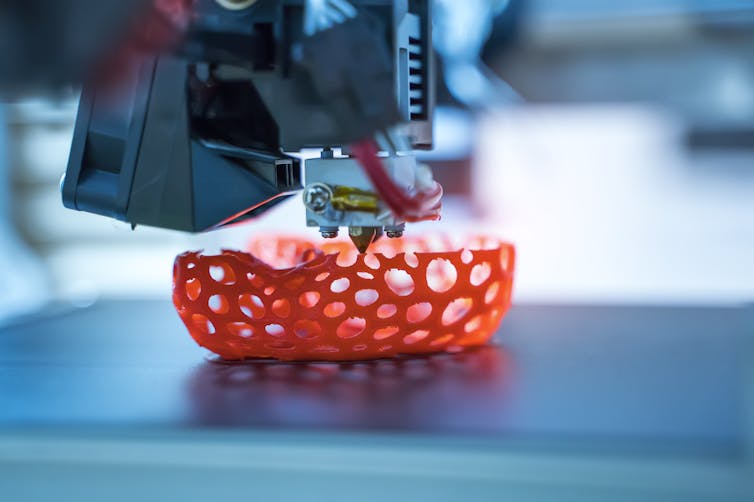
As COVID-19 wreaks havoc on global supply chains, a trend of moving manufacturing closer to customers could go so far as to put miniature manufacturing plants in people’s living rooms.
Most products in Americans’ homes are labeled “Made in China,” but even those bearing the words “Made in USA” frequently have parts from China that are now often delayed. The coronavirus pandemic closed so many factories in China that NASA could observe the resultant drop in pollution from space, and some products are becoming harder to find.
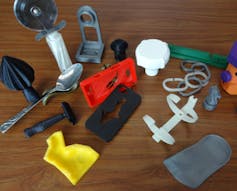
But at the same time, there are open-source, freely available digital designs for making millions of items with 3D printers, and their numbers are growing exponentially, as is an interest in open hardware design in academia. Some designs are already being shared for open-source medical hardware to help during the pandemic, like face shields, masks and ventilators. The free digital product designs go far beyond pandemic hardware.
The cost of 3D printers has dropped low enough to be accessible to most Americans. People can download, customize and print a remarkable range of products at home, and they often end up costing less than it takes to purchase them.
From rapid prototyping to home factory
Not so long ago, the prevailing thinking in industry was that the lowest-cost manufacturing was large, mass manufacturing in low-labor-cost countries like China. At the time, in the early 2000s, only Fortune 500 companies and major research universities had access to 3D printers. The machines were massive, expensive tools used to rapidly prototype parts and products.
More than a decade ago, the patents expired on the first type of 3D printing, and a professor in Britain had the intriguing idea of making a 3D printer that could print itself. He started the RepRap project – short for self-replicating rapid prototyper – and released the designs with open-source licenses on the web. The designs spread like wildfire and were quickly hacked and improved upon by thousands of engineers and hobbyists all over the world.
Many of these makers started their own companies to produce variants of these 3D printers, and people can now buy a 3D printer for US$250 to $550. Today’s 3D printers are full-fledged additive manufacturing robots, which build products one layer at a time. Additive manufacturing is infiltrating many industries.
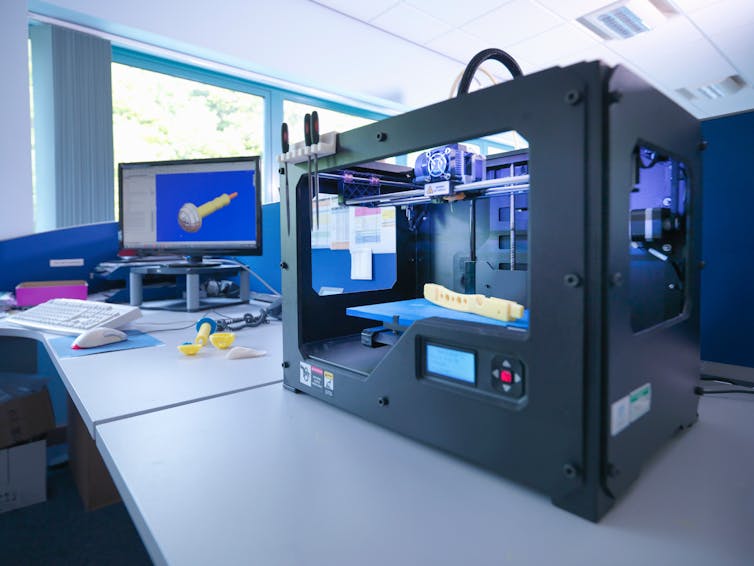
My colleagues and I have observed clear trends as the technology threatens major disruption to global value chains. In general, companies are moving from using 3D printing for prototyping to adopting it to make products they need internally. They’re also using 3D printing to move manufacturing closer to their customers, which reduces the need for inventory and shipping. Some customers have bought 3D printers and are making the products for themselves.
This is not a small trend. Amazon now lists 3D printing filament, the raw material for 3D printers, under “Amazon Basics” along with batteries and towels. In general, people will save 90% to 99% off the commercial price of a product when they print it at home.
Coronavirus accelerates a trend
We had expected that adoption of 3D printing and the move toward distributed manufacturing would be a slow process as more and more products were printed by more and more people. But that was before there was a real risk of products becoming unavailable as the coronavirus spread.
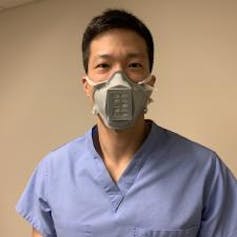
A good example of sharp demand for 3D printed products is personal protective equipment (PPE). The National Institutes of Health 3D Print Exchange, a relativity small design repository, has exploded with new PPE designs.
Already, because of the global impact of the coronavirus, 94% of Fortune 1000 companies are having their supplies chains disrupted and businesses dependent on global sourcing are facing hard choices.
The value of industrial commodities continues to slide because the coronavirus has put a major dent in demand as manufacturers shut down and potential customers are quarantined. This will limit people’s access to products while increasing their costs.
The disruptions to global supply chains caused by strict quarantines, stay-at-home orders and other social distancing measures in industrialized nations around the world present an opportunity for distributed manufacturing to fill unmet needs. Many people are likely, in the short to medium term, to find some products unavailable or overly expensive.
In many cases, they will be able to make the products they need themselves (if they have access to a printer). Our research on the global value chains found that 3D printing with plastics in particular are well advanced so any product with a considerable number of polymer components, even if the parts are flexible, can be 3D printed.
Beyond plastics
Making functional toys and household products at home is easy even for beginners. So are adaptive aids for arthritis patients and other medical products and sporting goods like skateboards.
Metal and ceramic 3D printing is already available and expanding rapidly for a range of items, from high-cost medical implants to rocket engines to improving simple bulk manufactured products with 3D printed brackets at low costs. Printable electronics, pharmaceuticals and larger items like furniture are starting to become available or will be in the near future. These more advanced 3D printers could help accelerate the trend toward distributed manufacturing, even if they don’t end up in people’s homes.
There are some hurdles, particularly for consumer 3D printing. 3D printing filament is itself subject to disruptions in global supply chains, although recyclebot technology allows people to create filament from waste plastic. Some metal 3D printers are still expensive and the fine metal powder many of them use as raw material is potentially hazardous if inhaled, but there are now $1,200 metal printers that use more accessible welding wire. These new printers as well as those that can do multiple materials still need development, and there’s a long way to go before all products and their components can be 3D printed at home. Think computer chips.
When my colleagues and I initially analyzed when products would be available for distributed manufacturing, we focused only on economics. If the coronavirus continues to disrupt supply chains and hamper international trade, however, the demand for unavailable or costly products could speed up the transition to distributed manufacturing of all products.
Joshua M. Pearce, Professor of Materials Science and Engineering, and Electrical and Computer Engineering, Michigan Technological University
This article is republished from The Conversation under a Creative Commons license. Read the original article.
- Details
- Written by: Elizabeth Larson
While the shelter has moved most of its dogs into foster, potential adopters can make appointments to meet and adopt available dogs.
The following dogs are ready for adoption or foster.
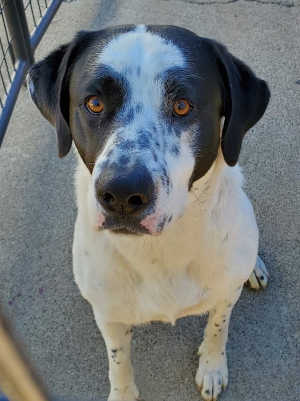
‘Buddy’
“Buddy” is a male spaniel mix with a black and white coat.
He is dog No. 3667.
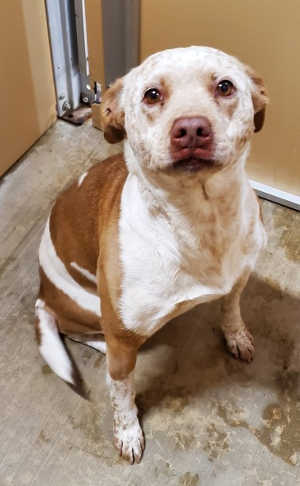
‘Freckles’
“Freckles” is a female Australian Cattle Dog mix with a short red and white coat.
She has been spayed.
She is dog No. 3668.
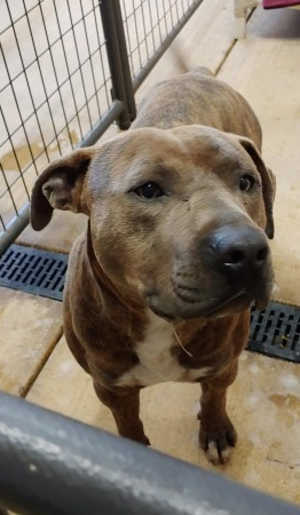
‘Mitch’
“Mitch” is a male American Staffordshire Terrier with a short brindle and white coat.
He is dog No. 3733.
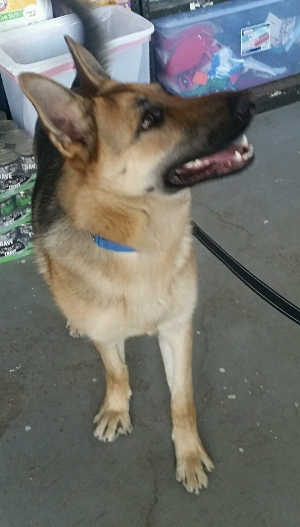
‘Princess’
“Princess” is a female German Shepherd with a black and tan coat.
She has been spayed.
Princess is young and energetic. She previously lived around a smaller dog and has been around the office cat. She will benefit from training and attention.
She is dog No. 3669.
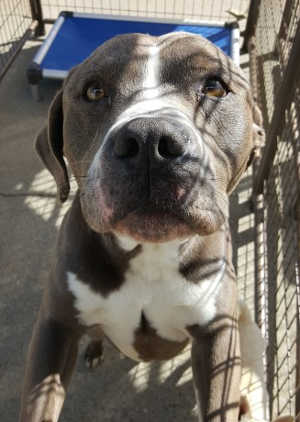
‘Tyson’
“Tyson” is a male American Staffordshire Terrier with a short gray and white coat.
He has been neutered.
He is dog No. 1863.
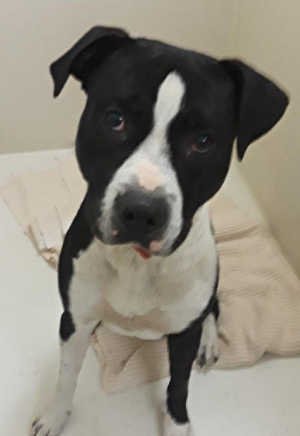
‘Woodrow’
“Woodrow” is a male Staffordshire Bull Terrier with a black and white coat.
He is dog No. 3281.
Clearlake Animal Control’s shelter is located at 6820 Old Highway 53, off Airport Road.
Hours of operation are noon to 4 p.m. Tuesday through Saturday. The shelter is closed Sundays, Mondays and major holidays; the shelter offers appointments on the days it’s closed to accommodate people.
Call the Clearlake Animal Control shelter at 707-273-9440, or email
Visit Clearlake Animal Control on Facebook or at the city’s website.
Email Elizabeth Larson at