How to resolve AdBlock issue?
News
- Details
- Written by: Lake County News reports
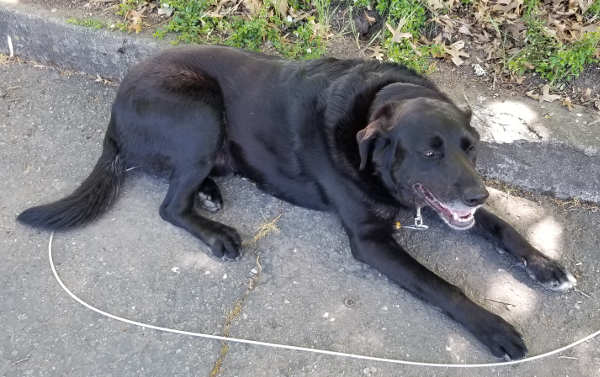
LAKEPORT, Calif. – In an effort to add to the services provided to Lake County's homeless and those without shelter, Hope Harbor has teamed up with Orphan Dog and Elle Vet Services to provide two days of free veterinary clinics.
The clinics will also be available to low- or no-income seniors in the area.
Pets owned by these two vulnerable populations sometimes have no access to veterinary care.
Participants can expect wellness check-ups, parasite protection (for fleas and ticks), worming, microchipping and pain relief.
The services will be available Monday, June 8, and Tuesday, June 9, from 8:30 a.m. to 1:30 p.m.
Anyone who is experiencing homelessness and has a pet or is a low- or no-income senior with a pet is encouraged to call Karen at 707-349-2624 to set up an appointment.
Orphan Dog has been in operation in Lake County since 2004 and has rescued, spayed and neutered thousands of dogs since their founding.
Elle Vet Services is providing medication, vaccines and veterinary staff for the event.
Hope Harbor is Lake County's emergency homeless shelter and is run by the Lake Ministerial Association.
- Details
- Written by: Elizabeth Larson
Dogs available for adoption this week include mixes of cattle dog Chihuahua, German Shepherd, husky, Lhasa Apso and pit bull.
Dogs that are adopted from Lake County Animal Care and Control are either neutered or spayed, microchipped and, if old enough, given a rabies shot and county license before being released to their new owner. License fees do not apply to residents of the cities of Lakeport or Clearlake.
The following dogs at the Lake County Animal Care and Control shelter have been cleared for adoption (additional dogs on the animal control Web site not listed are still “on hold”).
Because the shelter in place order remains in effect, call Lake County Animal Care and Control at 707-263-0278 or visit the shelter online at http://www.co.lake.ca.us/Government/Directory/Animal_Care_And_Control.htm for information on visiting or adopting.

Female Chihuahua
This female Chihuahua has a short tan coat.
She has been spayed.
She’s in kennel No. Q1, ID No. 13659.
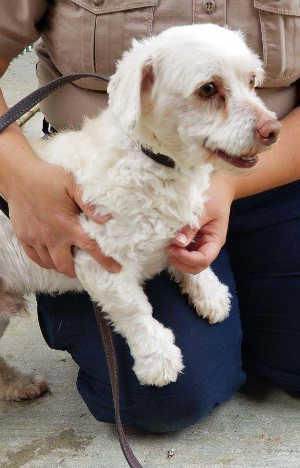
Male Lhasa Apso
This male Lhasa Apso has a shaved white coat with black markings.
He is in kennel No. 20, ID No. 13696.
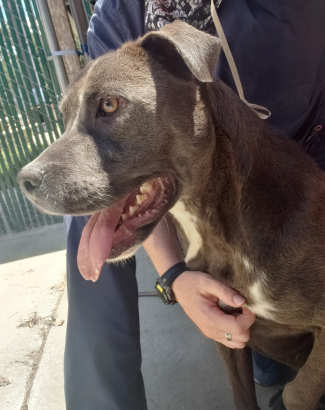
‘Lady’
“Lady” is a female pit bull mix with a short tan coat.
She has been spayed.
She is in kennel No. 22, ID No. 13703.

Cattle dog
This male cattle dog has a short blue and brown coat.
He has been neutered.
He is in kennel No. 24, ID No. 13705.

Female Chihuahua
This female Chihuahua has a short black coat with white markings.
She is in kennel No. 25, ID No. 13686.

Female husky
This young female husky has a medium-length black and cream coat and blue eyes.
She is in kennel No. 27, ID No. 13707.

Male German Shepherd
This young male German Shepherd has a fully brown and black coat.
He is in kennel No. 31, ID No. 13706.
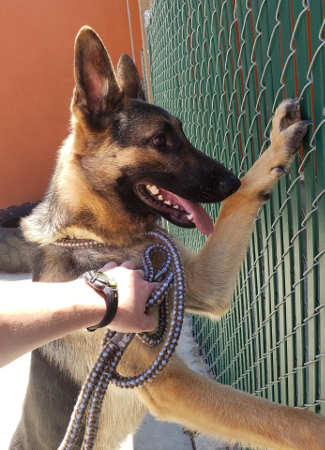
‘Leo’
“Leo” is a young male German Shepherd with a medium-length black and tan coat.
Shelter staff said the ideal home for him will have no cats or livestock.
He is a high energy, sweet boy, staff reported.
He is in kennel No. 33, ID No. 13708.
Email Elizabeth Larson at
- Details
- Written by: David R. Montgomery, University of Washington; Jennifer J. Otten, University of Washington, and Sarah M. Collier, University of Washington
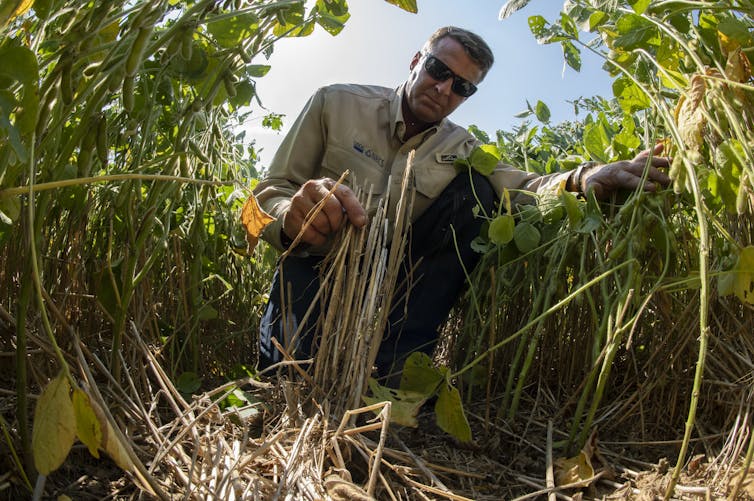
The COVID-19 pandemic and resulting economic shutdowns have severely disrupted and spotlighted weaknesses in the U.S. food system. Farmers, food distributors and government agencies are working to reconfigure supply chains so that food can get to where it’s needed. But there is a hidden, long-neglected dimension that should also be addressed as the nation rebuilds from the current crisis.
As scholars who study different aspects of soil, nutrition and food systems, we’re concerned about a key vulnerability at the very foundation of the food system: soil. On farms and ranches across the U.S., the health of soil is seriously compromised today. Conventional farming practices have degraded it, and erosion has shorn away much of it.
Iowa has lost about half the topsoil it had in 1850. Since they were first plowed, America’s farmland soils have lost about half of their organic matter – the dark, spongy decomposed plant and animal tissue that helps make them fertile.
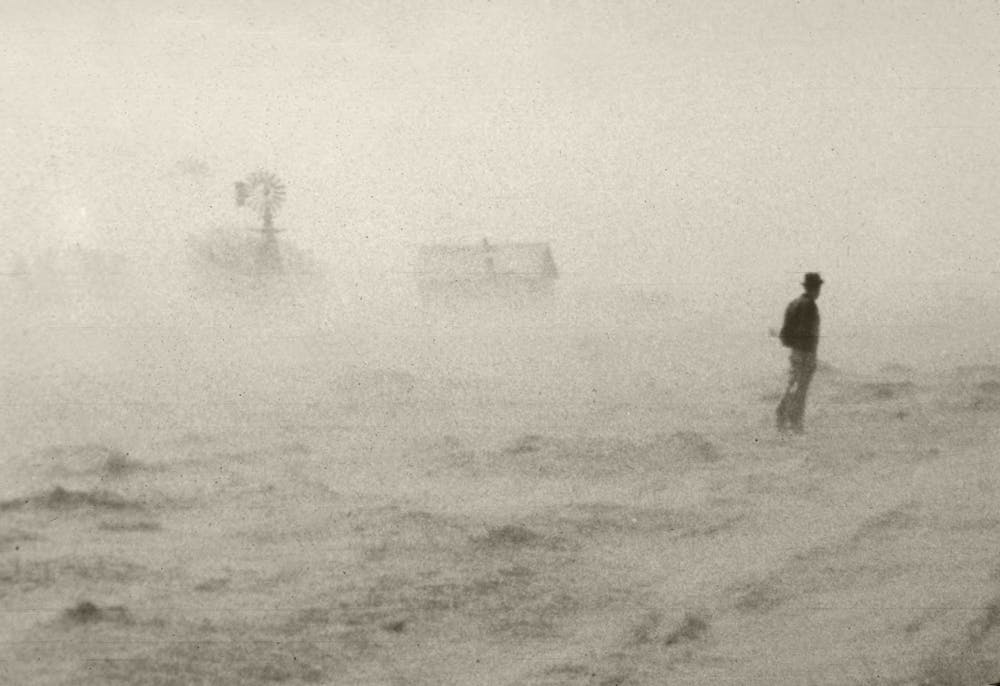
The soil that produces our nation’s food supply is a weakened link slowly failing under ongoing strain. This breakdown isn’t as dramatic as what happened in the 1930s during the Dust Bowl, but it is just as worrying. Human history holds many examples of once-thriving agricultural regions around the world where failure to maintain soil health degraded entire regions far below their potential agricultural productivity, impoverishing the descendants of those who wrecked their land.
We believe there is an urgent need to rebuild soil health across the U.S. This can help maintain harvests over the long run and lay a solid foundation for a more resilient food system. Investing in soil health will benefit environmental and human health in ways that are becoming increasingly apparent and important.
Food production starts with soil
Soil is the foundation of the U.S. food system. Fruits, vegetables, nuts and oils come directly from plants grown in soil. Meat, poultry, dairy products and many farmed fish come from animals that feed on plants. Wild-caught fish and shellfish, which provide a tiny fraction of the typical American diet, are virtually the only exception.
As populations around the globe ballooned over recent centuries, so did pressure to force more productivity out of every available acre. In many parts of the world, this led to farming practices that degraded soil far beyond its natural fertility.
In the Southeastern U.S., for example, agricultural erosion stripped soil from hillsides a hundred times faster than the natural rate of soil formation. Today farmers in the Piedmont, from Virginia to Alabama between the Atlantic coast and the Appalachian mountains, coax crops from poor subsoil rather than the rich topsoil that early European settlers praised.
Researchers, government agencies and nonprofit groups recognize soil degradation as a national problem and have started to focus on rebuilding soil health. The U.S. Department of Agriculture’s Natural Resource Conservation Service helps farmers improve the health and function of their soils. Nongovernment organizations are recognizing the need to restore soil health on agricultural lands. And the 2018 farm bill directed new attention and funding to soil health programs.
Public health
Beyond growing food, soils support human, public and planetary health. Well before the current pandemic, experts in public health and nutrition recognized that modern agriculture was failing to sustain consumers, the land and rural communities. This insight helped spur the emergence of a new multidisciplinary field, known as food systems, that analyzes how food is produced and distributed.
But work in this field tends to focus on the environmental impacts of food production, with less attention to economic and social implications, or to links between farming practices, soil health and the nutritional quality of food. Many studies narrowly focus on greenhouse gas emissions from agriculture when addressing soils and sustainability, without including the many ecological benefits that healthy soils provide.
To be sure, man-made climate change is a major long-term threat to human and planetary health. But soil health is just as critical in its own right. Human actions have already harmed agricultural productivity in areas around the world. And when soil is degraded, food production systems are less able to weather future challenges that we can expect in a changing climate.
The study of soil health can also have its own blind spots. Often agricultural research focuses solely on crop yields or the impact of individual conservation practices, such as adopting no-till planting or planting cover crops to protect soil from erosion. Such analyses rarely consider linkages driven by dietary demand for specific foods and crops, or the effects of farming practices on the nutrient content of forage and crops that sustain livestock and humans.
Food systems experts have called for transforming food production to improve human health and make agriculture more sustainable. Some researchers have proposed specific diets that they argue would accomplish both goals. But fully understanding connections between soil health and public health will require greater collaboration between those studying food systems, nutrition and how we treat the soil.
Growing our values
Now that COVID-19 has deconstructed much of the national food supply network, it would be a mistake to pour efforts into simply rebuilding a flawed system. Instead, we believe it is time to redesign the U.S. food system from the ground up, so that it can deliver both soil health and human health and be more resilient to future challenges.
What would it take to do this? The foundation of a revised system would be adopting regenerative farming methods that integrate multiple soil-building practices, such as no-till, cover crops and diverse crop rotations to restore health to land. It would also take creating and expanding markets for more diverse crops, as well as expanding regenerative grazing and promoting reintegration of animal husbandry and crop production. And it would require investing in research into the linkages between farming practices, soil health and the nutritional quality of foods — and what that all could mean for human health.
In sum, we think it’s time to rethink the food system, based on a recognition that providing healthy diets based on healthy soils is critical to achieving a healthier, more just, resilient and truly sustainable world.
Laura Lewis, Associate Professor of Community and Economic Development at Washington State University, and Dave Gustafson, project director at the Agriculture & Food Systems Institute, contributed to this article.
David R. Montgomery, Professor of Earth and Space Sciences, University of Washington; Jennifer J. Otten, Associate Professor, Center for Public Health Nutrition, University of Washington, and Sarah M. Collier, Assistant Professor of Environmental and Occupational Health Sciences, University of Washington
This article is republished from The Conversation under a Creative Commons license. Read the original article.
- Details
- Written by: Melissa Gaskill
You have likely seen lightning flash from a storm cloud to strike the ground. Such bolts represent only a small part of the overall phenomenon of lightning, though. The most powerful activity occurs high above the surface, in Earth’s upper atmosphere.
Up there, lightning creates brief bursts of gamma rays that are the most high-energy naturally produced phenomena on the planet. Researchers recently measured these high-energy terrestrial gamma-ray flashes, or TGFs, using instruments on the International Space Station. The work helps reveal the mechanism behind the creation of the bright flashes we call lightning.
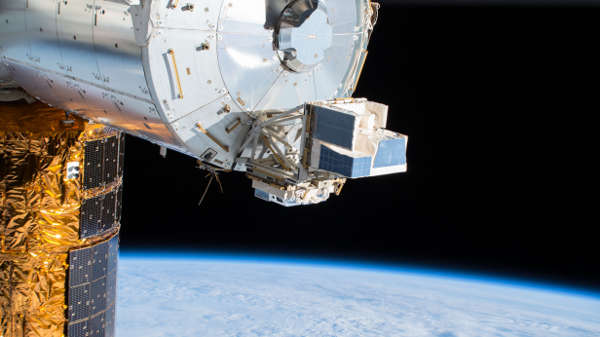
The instruments are part of the Atmosphere-Space Interactions Monitor, or ASIM, a European Space Agency Earth observation facility on the outside of the space station used to study severe thunderstorms and their role in Earth’s atmosphere and climate.
ASIM recorded other types of upper-atmospheric lightning known as transient luminous events, or TLEs, in addition to TGFs.
ASIM’s high-speed instruments helped researchers to determine the sequence of events that produces TGFs, as reported in a paper recently published in the journal Science.
“With ASIM, we see how the atmosphere and clouds bubble like a pot of stew on the stove,” said Torsten Neubert of the National Space Institute, Technical University of Denmark and lead author on the paper. “Convection brings humidity, dust and other particles into the upper atmosphere where they affect Earth’s radiation balance. Lightning is a measure of convection and can be relatively simple to put into weather and climate models.”
Lightning is a rapid discharge of electricity that temporarily equalizes opposite charges within a cloud or between a cloud and the ground. Charging of the cloud is powered by convection, with lighter ice particles carried aloft and heavier particles falling under the pull of gravity.
When these particles collide, they exchange charge, and the lighter particles carry positive charge up while heavier particles take negative charge down.
The atmosphere acts as an insulator between these electrical fields until the strength of the charge overpowers the insulating properties of the atmosphere.
Then the lightning leader – actually a long spark – forms between regions of the cloud or between the cloud and the ground, occurring so rapidly that it is hard for humans to see. When the leader connects to the ground, we see a bright flash of high current: the lightning stroke.
Neubert and his team observed a TGF occurring at the onset of a lightning current pulse, which then generated an elve.
Elves are expanding waves of ultraviolet emission in the ionosphere above a thunderstorm, like cosmic ripples from a pebble dropped into water. Measurements suggested that the onset of the current happens quickly at high amplitude and that the gamma-ray flash is generated by electric fields associated with the lightning leader. These observations provide evidence of a connection between TLEs and TGFs.
When a thunderstorm generates very high energy electrons that burst out into the upper atmosphere, they last only milliseconds but emit X- and gamma-rays that ASIM can measure. The experiment helped pinpoint what happens as these electrons are released.
“As lightning winds its way through a cloud, the atmosphere ahead may break down into a very fast pulse of very high current,” Neurbert said. “In the process, it flings out electrons, which create the bright flashes. Understanding this process opens up the inner life of lightning.”
Because lightning is dangerous, scientists tend to study it in the lab, but that cannot get to its true nature, Neubert added. “We can use this new information on how high energy radiation is generated to learn more about the processes inside lightning.”
TGFs occur at altitudes well above normal lightning and storm clouds, so measuring them is challenging. As the lowest platform in space, much lower than satellites, the space station places ASIM closer to what it measures. ASIM’s instruments also point directly downward from the space station, making it possible to catch as many of the photons in a lightning flash as possible.
Another space station instrument, NASA’s Lightning Imaging Sensor, or LIS, measured characteristics of lightning for 17 years beginning in 1997, but the satellite’s orbit covered only between 35 degrees north and south latitudes, primarily the tropics.
An identical LIS mounted on the space station in 2017 expanded that coverage to between 56 degrees north and south latitudes. LIS data helped scientists examine the relationship between lightning and severe weather.
Comparing ASIM data with that from LIS and other instruments helps make it more useful for weather predictions, Neubert says.
Ultimately, ASIM helps scientists better understand how thunderstorms affect Earth’s atmosphere.
“We soon will have continuous and almost full global monitoring of lightning from U.S., European and Chinese instruments in geostationary orbit. This coverage will improve weather and climate forecasts, provided you know how to use the data. That is where we hope ASIM helps,” Neubert said. “It’s an incredibly exciting time.”
For daily updates, follow @ISS_Research, Space Station Research and Technology News or our Facebook. Follow the ISS National Lab or information on its sponsored investigations. For opportunities to see the space station pass over your town, check out Spot the Station.
Melissa Gaskill works for the International Space Station Program Research Office at the Johnson Space Center.