 How to resolve AdBlock issue?
News
- Details
- Written by: Lake County News reports
The Judicial Council voted 17-2 to rescind, effective June 20, the COVID-19 temporary bail schedule that set presumptive bail at $0 for people accused of lower-level crimes, a measure to curb the spread of COVID-19 in jails and surrounding communities.
At the same time, California Chief Justice Tani G. Cantil-Sakauye rescinded her statewide order extending time for defendants to be arraigned. That change would require defendants again be arraigned within 48 hours.
"The Judicial Council's action better reflects the current needs of our state, which has different health concerns and restrictions county-to-county based on the threat posed by COVID-19," said Justice Marsha Slough, a Judicial Council member and chair of the Executive and Planning Committee. "We urge local courts to continue to use the emergency COVID-19 bail schedule where necessary to protect the health of the community, the courts, and the incarcerated. We are also asking courts to report back by June 20 on whether they plan to keep the COVID-19 emergency bail schedule, or another reduced bail schedule."
The Judicial Council adopted 13 emergency rules to balance providing access to justice with protecting the health and safety of the public, litigants, attorneys, court employees, and judicial officers.
Since the emergency rules were approved, conditions have changed: 51 counties have received a variance and are reopening. Last week, the Judicial Council approved changes to its emergency rule that paused statutes of limitations in civil cases.
The Judicial Council may re-institute these measures if health conditions worsen or change.
Statewide COVID-19 emergency bail schedule and arraignment time extension
The COVID-19 emergency bail schedule set bail at $0 for most people accused, but not yet tried, of misdemeanors and lower-level felonies.
As with a regular bail schedule, law enforcement could petition a judge to raise or deny bail if there was concern for public safety. Those accused of violent felonies, offenses requiring sex offender registration, domestic violence, stalking, or driving under the influence were not eligible.
The Judicial Council’s review of the rule comes as milestones were met:
– Prisons are expected to allow transfers of convicted inmates from jails in all 58 counties to state institutions by June 19, which will continue to lower jail populations.
– More than 20,000 defendants accused of lower-level offenses have been released before their trials from California’s jails since the start of the pandemic, helping keep jails and courts from becoming vectors for the spread of COVID-19 between inmates, jail staff and surrounding communities.
The Judicial Council report suggested courts could keep the emergency COVID-19 bail schedule or reduced bail schedules where appropriate and maximize the safe release of arrestees before or at arraignment. Some counties voluntarily adopted their own COVID-19 emergency bail schedules based on Chief Justice Cantil-Sakauye’s March 20 guidance.
- Details
- Written by: Lake County News reports
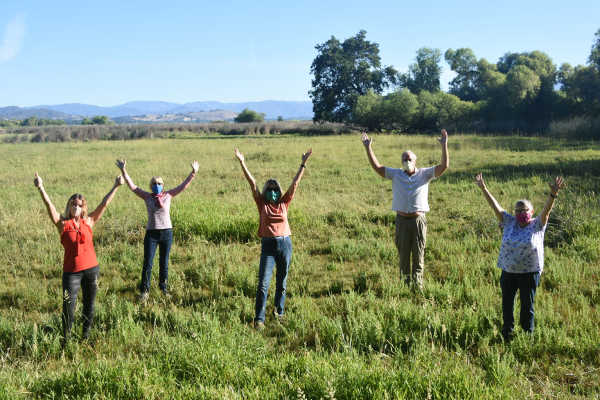
LAKE COUNTY, Calif. – The Lake County Land Trust has completed its latest – and largest – acquisition of a key property that will help preserve native wetlands and other important local ecosystems.
The Land Trust said that as of June 1, the property now known as the Wright Wetland Preserve became “forever wild.”
The organization has been working actively since 2018 to conserve the land, which is not under the Land Trust’s perpetual protection.
The acquisition brings LCLT’s holdings up to five properties and more than 600 acres under its protective purview.
The organization said the addition of the Wright Wetland Preserve is a big win for its Big Valley Wetlands Project. The preserve complements the Melo Property, also part of the larger wetlands project, which was purchased in 2016.
The Lake County Land Trust’s focus is on adding contiguous properties in the Big Valley to increase its impact on the vitality of this wetland area.
A smidge over 200 acres, the Wright Wetland Preserve is easily the largest of LCLT’s portfolio. Its terrain ranges from lake to valley oak woodland with everything from native wetland, freshwater marsh and upland pasture included.
The property is partially bordered by Manning Creek, an important breeding ground for an endemic and threatened fish species, the Clear Lake hitch. Although key to the ecosystem of the lake, hitch numbers have been diminishing over the last few decades.
Encouraging its population to return to former levels creates a ripple effect, benefiting birds, other fish and wildlife, the Land Trust reported.
Riparian and wetland rehabilitation – which the Land Trust plans for this wetland preserve – is necessary for maintaining the sustainability and biological diversity of Clear Lake.
Some of the wildlife observed on this property include white pelicans, otter, black-tailed deer, California quail, wild turkey, prairie falcon and other raptors, white pelicans, herons, black bass, catfish, mink and bobcat.
“From Bernie and Lynne Butcher who donated a $40,000 matching gift challenge, which inspired our community of supporters to rise to the occasion, to Peter Windrem, who facilitated the initial contacts with the Wright family, we have so many people to thank,” sad Land Trust Board President Val Nixon.
“Stacy Schummer pleasantly surprised us with a large monetary gift which brought the fundraising to a very grand finale. Thank you to everyone who saw the value of protecting this essential wetland and donated to its protection,” Nixon said.
Nixon said the Land Trust also offered its appreciation to staff, including Executive Director Tom Smythe, who handled complicated escrow hiccups and was able to bring the project to conclusion with Development Director Melissa Kinsel and Finance Director Anne Martin, working on reaching out to donors and careful fiscal oversight.
“This was definitely an ‘all hands on deck’ type of project,” said Nixon.
In total, $120,000 was raised from donations by individuals to go toward the purchase of the property.
From 2012 to 2014, the Lake County Land Trust developed the Big Valley Wetlands Conceptual Area Protection Plan, a document that underwent extensive review, revisions and consequent adoption by the California Department of Fish and Wildlife.
This agreement made several hundred acres of property in the Big Valley area of Clear Lake’s shoreline eligible for grant funding.
The Big Valley Wetland area is valued by the California Department of Fish and Wildlife and the Wildlife Conservation Board as preservation-priority because of its effect on the health of Clear Lake and surrounding watershed.
The rest of the property’s $775,000 price tag came from grants from Wildlife Conservation Board.
The next phase of the Wright Wetland preserve is to restore its wetlands and tules to their natural state and create public access areas and trails.
“We want all Lake Countians to be able to enjoy this landscape and appreciate its importance. Next steps will include fundraising for these stewardship initiatives,” Nixon said. “I have the greatest respect for the people of Lake County for recognizing the importance of critical wildlands and helping preserve them into the future.”
After Land Trust announced the acquisition to its membership, members of the Wright family emailed the Land Trust to express their support and happiness at having their family property become a family legacy for all Lake Countians to enjoy.
For maps and other information about the property, including a list of the “strong and diverse” community of supporters who helped the Lake County Land Trust achieve its goal, visit the group’s website.
- Details
- Written by: Lake County News reports
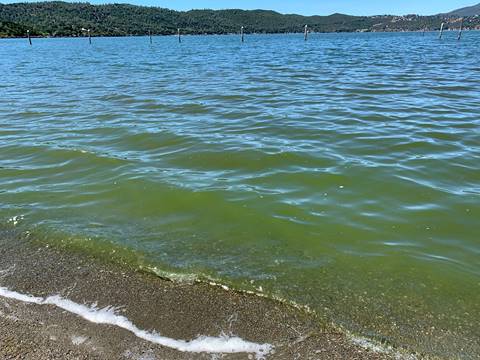
LAKE COUNTY, Calif. – Testing of numerous sites on Clear Lake conducted this week by two local tribes has found elevated cyanobacteria levels near Clearlake’s Austin Park.
Big Valley Band of Pomo Indians and Elem Indian Colony took samples to monitor levels of cyanotoxins – which are produced by blue-green algae, also known as cyanobacteria – at approximately 29 Clear Lake sites on Monday, the county of Lake reported.
Austin Park Beach had a screening Abraxis test strip showing more than 20 parts/billion of microcystin cyanotoxin.
“This is considered ‘elevated,’ and raises concern, and the samples were sent to a regional lab for confirmation and quantification. Caution signs have been posted,” said Lake County Public Health Officer Dr. Gary Pace.
“In the same area, there has been visual evidence of large algal blooms that resemble the kinds that produce cyanotoxins. Additionally, last week, one person reported a skin reaction after boating through a large bloom in the area,” Pace said.
Pace said 28 other sites around the lake were tested and did not show elevated levels on the screening tests performed.
Public Health urges boaters and recreational users to avoid direct contact with or use of waters containing cyanobacteria in Lake County.
The recommendation is based on the potential health risks from cyanobacteria, which is currently blooming at varying levels in the Clearlake Oaks area and the Lower Arm of Clear Lake.
Cyanobacteria can pose health risks, particularly to children and pets. Public Health urges people to choose safe activities when visiting natural bodies of water, particularly where blooms are visible.
It is strongly recommended that people and their pets avoid contact with water and avoid swallowing lake water in an algae bloom area.
If anyone you are with begins to experience problems (skin, gastrointestinal, neurologic) that may be related to contact with blue-green algae (cyanobacteria), contact your medical provider or go to the emergency department. If your animal has symptoms, contact your veterinarian immediately.
In either circumstance, call the Public Health Department, at 707-263-1164, so further investigation can be undertaken.
For current cyanotoxin lab results, please visit the Big Valley Band of Pomo Indians cyanotoxin monitoring website.
For more information and resources, visit the county’s cyanobacteria pages here and here.
For general Water Quality questions regarding Clear Lake, call Lake County Water Resources, at 707-263-2344.
- Details
- Written by: Jan Cook
Barbara Green, Lakeport Library’s popular storytime reader, now reads stories on YouTube videos.
Each week Miss Barbara picks one or two great stories to record and a new video is posted every Friday at 10:15 a.m.
The video stories are available by visiting the library’s Facebook page or by subscribing to the library’s weekly email updates.
Some of the library’s craft clubs and book clubs have started using Zoom meetings and conference calls to gather. The new meeting methods have inspired more creativity. Creative Club has met by conference call and has started a garden craft challenge project. Fabric Club and the Great Reads Book Club have expanded their meetings to Zoom.
On the library’s calendar of events, the online meetings are designated OL to make them easy to see. The description includes information on how to sign in to the meeting. Email
The Lakeport Library Cookbook Club now meets through Zoom and has also created its own Facebook page where people can post recipes, food photos, cooking tips and anything foodie that they want to share. There’s a place for you at the table. The food photos will make your mouth water.
The Aging, Dying and Afterlife Discussion group now uses Zoom for meetings. To get the meeting information, call 707-275-0403 or email
Homebound library patrons have found the Zoom meetings a boon and are delighted to be able to join the fun.
Amy Patton, adult programs coordinator says that the library and the clubs hope to continue the digital meetings so housebound patrons can attend meetings even after the COVID-19 crisis is over.
To find how to join a digital club meeting contact Amy Patton via email at
With a library card, patrons can access the library’s array of digital services without the need to visit a local branch. If you need a library card, you can create an online card with the application form on the library website.
If you have a question about an existing library account, call 707-263-8817 and leave a message. Library staff will be available by phone during normal operating hours to assist with the digital resources.
The Lake County Library continues to offer services during the COVID-19 stay at home. If you want to keep up with library news, sign up for free weekly email updates on the library’s homepage.
Jan Cook is a library technician for the Lake County Library.