 How to resolve AdBlock issue?
News
- Details
- Written by: Lake County News reports
The general municipal election will be held on Tuesday, Nov. 3, for three seats with four-year terms.
The seats up for election currently are held by Phil Harris, Joyce Overton and Russell Perdock.
The candidate filing period opened on Monday and will continue until Friday, August 7, at 5 p.m. Filings can be made by appointment only.
Should one or more incumbent council members not file for reelection, the filing period will be extended to 5 p.m., Wednesday, August 12, for nonincumbents.
If no one or only one person is nominated for each elective office, appointment to the elective office may be made as prescribed by Section 10229, Elections Code of the State of California.
Candidate packets will be available in the Administrative Services/City Clerk’s Office, 14050 Olympic Drive, Clearlake.
Candidates are asked to contact the Administrative Services/City Clerk’s Office at 707-994-8201, Extension 106, or via email at
For more information about running for city council, visit the city of Clearlake’s website.
- Details
- Written by: LAKE COUNTY NEWS REPORTS
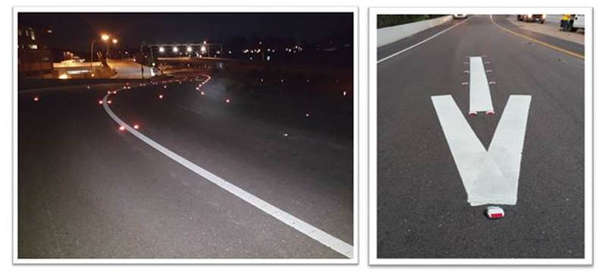
Caltrans and the UC Davis Advanced Highway Maintenance and Construction Technology, or AHMCT, Research Center have released two reports highlighting ways to prevent rare but often deadly collisions involving wrong-way drivers.
One of the prevention measures included in the three-year pilot program – reflectors that alert drivers they are entering the roadway in the wrong direction – was so successful at deterring wrong-way drivers that Caltrans has already installed the reflective markers on hundreds of miles of highways in California, including a portion of Highway 29 in Lakeport.
In San Diego, the number of wrong-way drivers decreased by 44 percent after the reflectors were installed.
“Adding the two-way reflective markers proved to be so effective that Caltrans updated its statewide design standards,” said Caltrans Director Toks Omishakin. “It’s a low-cost measure we can use throughout the state to deter wrong-way drivers and potentially save lives on California’s highway system.”
During the pilot program, Caltrans installed and tested different ways to deter wrong way drivers along exit ramps in Sacramento and San Diego, including:
– Two-way reflective pavement markers that show white or yellow to right way drivers, and red to wrong-way drivers;
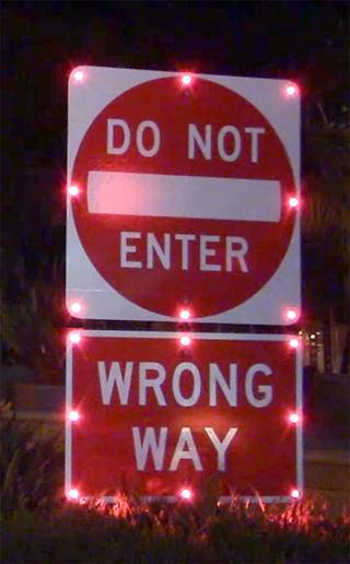
– “Wrong Way” signs at the off-ramp;
– “Do Not Enter” signs equipped with LED lights flashing 24 hours a day;
– Active monitoring systems that use radar to detect wrong way drivers. These systems activate a secondary set of LED signs when a wrong way driver enters the ramp and sends real-time alerts and photos to Caltrans and the California Highway Patrol.
Caltrans monitored the exit ramps throughout the pilot and learned the two-way reflective pavement markers were an effective measure against wrong-way drivers. The department is installing them as it performs maintenance or repaving.
The flashing LED signs showed promise at preventing wrong-way collisions and Caltrans will continue to monitor their impact to determine whether to expand use at exit ramps across the state.
The pilot was developed following 10 wrong-way driver-related collisions on Sacramento and San Diego area freeways in the first six months of 2015.
During the three-year pilot program, UC Davis AHMCT researchers partnered with Caltrans to conduct a second study using a Vision-Based Site Monitoring, or VBSM, system in Sacramento to better understand the actions that lead to wrong-way driving incidents.
“Our hypothesis was that some of the causes of wrong-way driving start before a driver enters the ramp,” said researcher and AHMCT co-director Ty Lasky, who helped lead the study. “In order to test this, we wanted to extend our field of view to capture as much of the roadway around the exit ramp as possible.”
The VBSM system consisted of a camera, analytical software, solar panels, and a modem mounted on poles near exit ramps. The system recorded video when the camera detected a wrong-way driver, which allowed the team to study a vehicle’s path before, during, and after a wrong-way driving incident.
“The video gave us a more comprehensive understanding of driver behavior and factors that contribute to wrong-way driving,” said UC Davis Distinguished Professor and AHMCT co-director Bahram Ravani. “This opens the door for further deployment of our system across the state as counties and municipalities try to mitigate wrong-way driving.”
Wrong-way collisions on divided highways in California are rare – accounting for about 1 percent of all crashes on the state highway system.
“Wrong way crashes do not happen very often but when they do occur, they are typically head-on crashes, resulting in death or severe injuries,” said CHP Commissioner Warren Stanley. “Information obtained through this pilot program is being used to help prevent these crashes and save lives on California roadways.”
On average, 37 people are killed in wrong-way collisions each year on California’s highways. Most wrong-way incidents are caused by drivers who are severely impaired and occur in the left-hand lane for vehicles traveling in the correct direction.
“Seeing someone driving the wrong direction is a scary sight and a clear danger to other road users,” said Office of Traffic Safety Director Barbara Rooney. “Maintaining safe driving behaviors is critical in preventing crashes that have tragic consequences.”
The Advanced Highway Maintenance and Construction Technology Research Center is part of the UC Davis Department of Mechanical and Aerospace Engineering. The center develops and tests new and advanced technologies to improve the safety, reliability and efficiency of highway maintenance and construction tasks.
Read the Caltrans and UC Davis AHMCT studies here.
- Details
- Written by: Elizabeth Larson
On Monday, Public Health reported that cases countywide had risen from 108 to 121.
By early Monday evening, county Public Health departments across California were reporting a statewide total of more than 332,000 positive cases and nearly 7,060 deaths due to the virus.
The latest available case totals for neighboring counties are Colusa, 129; Glenn, 176; Mendocino, 132; Napa, 518; Sonoma, 1819; and Yolo, 966.
Of the 121 cases reported in Lake County on Monday, 30 are active, 90 have recovered and one person has died, according to the Public Health COVID-19 dashboard.
Lake County Public Health said four patients are hospitalized, an increase of one based on numbers the agency reported over the weekend. Total hospitalizations have risen to 10.
“The recent cases tend to be following the general trend – one is hospitalized, one person got sent to a higher level of care,” Public Health Officer Dr. Gary Pace told Lake County News. “Cases generally contracted from contacts of a previously known case, or are being traced back to a family or social gathering.”
Tests conducted in Lake County total 5,322. Based on the number of positive cases and negative tests – now at 4,636 – the results of an estimated 565 tests are pending.
On Monday, the California Department of Public Health reported that 5,544,365 tests have been conducted in the state, an increase of 137,766 over the prior 24-hour reporting period.
As of July 12, local health departments have reported 17,774 confirmed positive cases in health care workers and 100 deaths statewide, the state said.
Email Elizabeth Larson at
- Details
- Written by: Lake County News reports
Affected businesses include restaurants, wineries and tasting rooms, movie theaters, family entertainment centers, zoos and museums, and cardrooms.
These sectors may modify operations to provide services outside or by pick-up.
The state is similarly expanding statewide its order for brewpubs, breweries, bars and pubs to close, both indoors and outdoors, unless they are offering sit down meals outdoors and comply with guidance issued on June 28.
Monday’s order is effective immediately and the closures will remain in effect until the state Public Health officer determines it is appropriate to modify the order based on public health conditions.
Counties on the County Monitoring List for three or more consecutive days – currently 29 counties accounting for 80 percent of the state’s population – must close indoor operations for additional activities including:
– Gyms and fitness centers;
– Places of worship;
– Indoor protests;
– Offices for non-critical infrastructure sectors as identified at www.covid19.ca.gov ;
– Personal Care Services (including nail salons, massage parlors, and tattoo parlors);
– Hair salons and barbershops;
– Malls.
The 29 counties impacted by Monday’s order include:
– Colusa;
– Contra Costa;
– Fresno;
– Glenn;
– Imperial;
– Kings;
– Los Angeles;
– Madera;
– Marin;
– Merced;
– Monterey;
– Napa;
– Orange;
– Placer;
– Riverside;
– Sacramento;
– San Benito;
– San Bernardino;
– San Diego;
– San Joaquin;
– Santa Barbara;
– Solano;
– Sonoma;
– Stanislaus;
– Sutter;
– Tulare;
– Ventura;
– Yolo;
– Yuba.
“Due to increased COVID-19 transmissions statewide and rising hospitalization numbers in many communities, we are taking more actions today to slow transmissions of the disease," said Gov. Newsom. "Each of us has the power to slow the spread of the virus. Here’s how you can help: Avoid mixing with people who are not in your household. If you can’t avoid it, wear a mask, move indoor activities outside, stay physically distant and wash your hands.”
Community spread of COVID-19 continues to be a concern for counties on the County Monitoring List.
Further, officials said rates in counties not on the list have also been increasing at “an alarming rate,” supporting this expanded state action.
As community spread increases, vulnerable populations, including older Californians and those who have chronic conditions or compromised immune systems, are at higher risk of becoming seriously ill due to the virus. Higher cases counts can also threaten the state’s care delivery system capacity.
“Moving outside when you’re at a restaurant, winery or gym is a key step to helping reduce the risk for yourself and others, but that doesn’t mean your actions don’t matter. Letting your guard down around people who don’t live with you, even a family member or close friend, puts you at risk,” said Dr. Sonia Angell, state health officer and director of the California Department of Public Health. “When you go out, wear a face covering, keep physical distance, and wash your hands. The decisions we make today will determine how COVID-19 impacts our communities and families tomorrow.”
Sectors included in today's announcement are all at higher risk of transmission because they promote mixing with others outside of one's household. In addition, some of these sectors are centered on eating and drinking, compliance with face coverings is not possible for the full duration of time someone spends in these establishments.
All industry or sector guidance documents that have been issued to date, including all infectious control measures outlined in those guidance documents, apply in outdoor settings, and must be adhered to.
The state will work closely with counties to ensure businesses are complying with guidance and are modifying operations to reduce the risk of transmitting COVID-19.
California will continue to update and issue guidance based on the best available public health data and the best practices currently employed.
More information about the state's COVID-19 guidance is on the California Department of Public Health's Guidance web page.
More information about reopening California and what individuals can do to prevent the spread of COVID-19, visit www.covid19.ca.gov .