 How to resolve AdBlock issue?
News
- Details
- Written by: Lake County News reports
“Testing is a critical tool that helps us diagnose and treat those who become infected by COVID-19. Testing also helps us understand how COVID-19 moves through our communities so we can identify areas where transmission is occurring. Today we are redoubling our commitment to ensure testing remains a top priority for California,” Dr. Ghaly said Tuesday.
“Our testing capacity has increased exponentially in recent months. At the same time, new national supply chain challenges and large volumes of specimens sent to commercial laboratories have resulted in growing delays in processing times,” Ghaly said.
“Consequently, it is critical we continue to be deliberate and creative about testing. We must do this so that testing is readily available and affordable to those who need it, especially those communities experiencing the worst impacts of COVID-19 and those who are at the highest risk. Testing is a responsibility of our entire healthcare delivery system. Clinics, doctors, and other care sites should provide convenient testing to their patients who need a test,” Ghaly added.
The new plans Ghaly announced include the following.
Testing prioritization
The California Department of Public Health released updated testing guidance that focuses on testing hospitalized individuals with signs or symptoms of COVID-19 and people being tested as part of the investigation and management of outbreaks, including contact tracing.
The testing guidance also prioritizes individuals who have COVID-19 symptoms and individuals without symptoms who fall into high-risk categories, including people who live and work in nursing homes, homeless shelters and prisons, healthcare workers, and patients in hospitals.
The new guidance will ensure that Californians who most need tests get them even if there are limited supplies.
New Testing Task Force co-chairs and goals
Two new co-chairs will lead California’s Testing Task Force, the state’s private-public partnership that has taken the lead role in expanding both the collection and processing of specimens for COVID-19 testing.
Leading the task force starting immediately are Dr. Gilbert Chavez, founding chief of the California Department of Public Health’s Center for Infectious Diseases, and Dr. Bechara Choucair, senior vice president and chief health officer for Kaiser Foundation Health Plan Inc.
Chavez, the state’s former epidemiologist who has led the response to disease outbreak and emerging health threats, is coming out of retirement to help lead the task force.
Dr. Choucair oversees Kaiser’s efforts focused on addressing the social health of its 12.4 million members and the 68 million people who live in the communities it serves.
The task force, which was launched in April, created testing locations where there were none, expanded laboratory capability and helped build a testing supply pipeline, scaling up from just 2,000 tests per day to more than 100,000 tests per day.
Under the leadership of Chavez and Choucair, the task force will recommend testing priorities, continue to create equitable access to testing and support for state-operated community testing sites, and review options to lower overall testing costs.
Health plan coverage of testing
To help ensure that testing is widely available to all Californians, the state is working collaboratively with health insurers to provide reimbursement for testing and with private providers to create additional in-office testing capacity.
With more providers performing tests in the office rather than referring patients to labs or testing sites, the state would have more resources to focus on underserved and high-risk populations.
The state is preparing to file emergency regulations that will classify COVID-19 testing as medically necessary urgent care for essential health workers and people with symptoms of or possible exposure to COVID-19.
- Details
- Written by: Jessica Heiges, University of California, Berkeley and Kate O'Neill, University of California, Berkeley
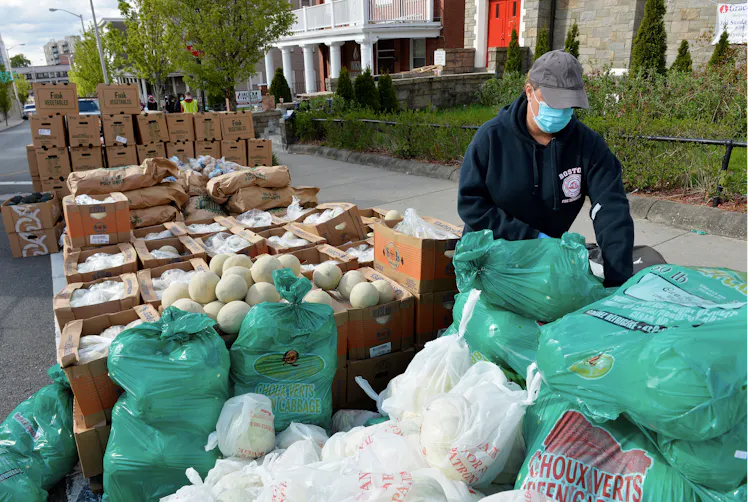
COVID-19 is changing how the U.S. disposes of waste. It is also threatening hard-fought victories that restricted or eliminated single-use disposable items, especially plastic, in cities and towns across the nation.
Our research group is analyzing how the pandemic has altered waste management strategies. Plastic-Free July, an annual campaign launched in 2011, is a good time to assess what has happened to single-use disposable plastics under COVID-19, and whether efforts to curb their use can get back on track.
From plans to pandemic
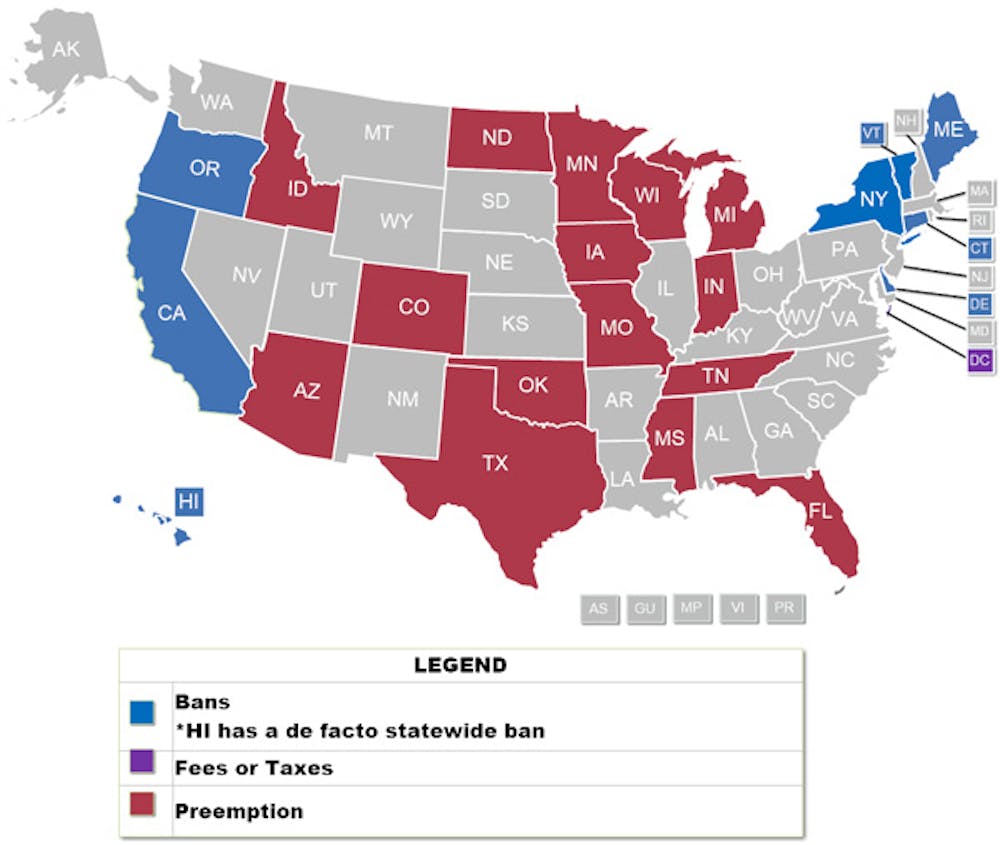
Over several decades leading up to 2020, many U.S. cities and states worked to reduce waste from single-use disposable objects such as straws, utensils, coffee cups, beverage bottles and plastic bags. Policies varied but included bans on Styrofoam, plastic bags and straws, along with taxes and fees on bottles and cups.
Social norms around plastic waste have evolved quickly in the past several years. Pre-COVID-19, “Bring your own” tote bags, mugs and other foodware had become part of daily life for many consumers. Innovative startups targeting reusable foodware niches include Vessel, which partners with cafes, enabling customers to rent stainless steel to-go mugs, and DishCraft, which picks up dirty dishes from dine-in restaurants and to-go food outlets, cleans them with high-tech equipment and returns them ready for reuse.
Just before COVID-19 lockdowns began in March 2020, the New Jersey senate adopted a bill that would have made the state the first to ban all single-use bags made of either paper or plastic. And U.S. Sen. Tom Udall of New Mexico and U.S. Rep. Alan Lowenthal of California introduced the Break Free from Plastic Pollution Act – the first federal measure limiting use of single-use disposable items.
COVID-19 shutdowns drastically changed all of this. In just a few weeks, plastic bags returned to grocery stores in states that had recently banned them. Even before lockdowns were official, restaurants and cafes started refusing personal reusables such as coffee mugs, reverting to plastic cups and lids, wrapped straws and condiment packets.
By late June, cities and states had temporarily suspended almost 50 single-use item reduction policies across the U.S. – mainly bans plastic bag bans. The pandemic also spurred demand for single-use personal protective equipment, such as masks and plastic gloves. These items soon began appearing in municipal solid waste streams and discarded on streets.
The plastic pandemic
With legislation restricting disposables suspended, many food vendors and grocery stores have shifted entirely to disposable bags, plates and cutlery. This switch has raised their operating costs and cut further into their already-low margins.
Grocery stores have sharply increased plastic bag usage. Households are generating up to 50% more waste by volume than they did pre-COVID-19. Anecdotal reports indicate that these waste streams contain more single-use disposable items.
The recycling industry has weighed in on the impacts of more single-use bags and higher residential waste volumes. Waste industry workers, who have been uniformly declared essential, work in closed spaces with many other people, so even if surface transmission of coronavirus is not a serious risk, the pandemic has increased person-to-person transmission risks in the waste industry.
Hygiene: A red herring
The main rationale that states, cities and vendors have offered to justify switching from reusables back to disposables is hygiene. Plastic packaging, the argument goes, protects public health by keeping contents safe and sealed. Also, discarding items immediately after use protects consumers from infection.
This narrative handily dovetails with the plastics industry’s ongoing effort to slow or derail bans and restrictions. The industry has loudly supported turning the clock back toward single-use disposable products.
[The Conversation’s newsletter explains what’s going on with the coronavirus pandemic. Subscribe now.]
In a March 2020 letter to the U.S. Department of Health and Human Services, the Plastics Industry Association argued that single-use items were the “most sanitary” option for consumers. Industry representatives are actively lobbying against the Break Free From Plastics Act.
However, studies show that these products are not necessarily safer than reusable alternatives with respect to COVID-19. The virus survives as long on plastic as it does on other surfaces such as stainless steel. What’s more, studies currently cited by the plastics industry focus on other contaminants such as E.coli and listeria bacteria, not on coronaviruses.
Viewed more holistically, plastics generate pollutants upstream when their raw materials are extracted and plastic goods are manufactured and transported. After disposal – typically via landfills or incineration – they release pollutants that can seriously affect environmental and human health, including hazardous and endocrine disrupting chemicals.
All of these impacts are especially harmful to minority and marginalized populations, who are already more vulnerable to COVID-19. In our view, plastic goods are far from being the most hygienic or beneficial to public health, especially over the long term.
Building resilience
Crises like the COVID-19 pandemic make it hard to see the bigger picture. No longer having to remember reusable tote bags or coffee mugs can be a relief. But the quick return of single-use disposable products shows that recent restrictions are precarious, and that industries don’t cede profitable markets without a fight.
Waste reduction advocates, such as Upstream Solutions and #BreakFreeFromPlastic, are working to gather data, educate the public and prevent decision-making about plastics that is based on perception rather than scientific reasoning. On June 22, 115 health experts worldwide released a statement arguing that reusables are safe even under pandemic conditions.
Some governments are taking notice. In late June, California reinstated its statewide ban on single-use plastic bags and requirement for plastic bags to contain 40% recycled materials. Massachusetts quickly followed suit, lifting a temporary ban on reusable bags.
For the longer term, it is unclear how COVID-19 disruptions will affect consumerism and waste disposal practices. In our view, one important takeaway is that while mindful consumers are part of the solution to the plastics crisis, individuals cannot and should not carry the full burden.
We believe that at the local and federal levels, policymakers need to build cross-jurisdictional alliances, recognizing shared interests with the waste management industry and emerging businesses like Vessel and Dishcraft. To make progress on reducing plastic waste, advocates need to reinforce measures in place before the next crisis hits.
Jessica Heiges, PhD Candidate in Environmental Science, Policy, and Management, University of California, Berkeley and Kate O'Neill, Professor, Global Environmental Politics, University of California, Berkeley
This article is republished from The Conversation under a Creative Commons license. Read the original article.
- Details
- Written by: Elizabeth Larson
The council will hold a closed session at 5 p.m. to discuss existing litigation against Pacific Gas and Electric Co., discuss the sale of a city-owned property as well as two potential cases of anticipated litigation before it meets virtually at 6 p.m. Thursday, July 16.
Because of the county’s shelter in place order, Clearlake City Hall remains closed to the public, however, the virtual meeting will be broadcast live on Lake County PEG TV’s YouTube Channel.
Comments and questions can be submitted in writing for City Council consideration by sending them to City Clerk Melissa Swanson at
To give the council adequate time to review your questions and comments, please submit your written comments prior to 4 p.m. on Thursday, July 16.
The agenda can be seen below or here.
Each public comment emailed to the city clerk will be read aloud by the mayor or a member of staff for up to three minutes or will be displayed on a screen. Public comment emails and town hall public comment submissions that are received after the beginning of the meeting will not be included in the record.
On Thursday the council will meet July’s adoptable dogs and present a certificate of appreciation to the Lakeshore Lions Club for the July 4 celebration.
On the agenda is a discussion regarding a proposed letter of intent between the city and King Management LLC, which is interested in purchasing a four-acre portion of the 27-acre city-owned airport property, located off of Highway 53.
City Manager Alan Flora’s report to the council explained that the two parcels the company wants to purchase are located at 6356 Armijo Ave. and 6393 James St.
“King Management is interested in expanding their portfolio of hotels into the Clearlake area,” Flora wrote.
Flora said city staff is working on a number of options and ideas related to the overall development of the airport property and they believe that the best path forward is to enter into a letter of intent, or LOI, while negotiations continue.
“King Management would like an executed LOI in a timely manner in order to obtain development incentives from a national hotel brand for the site,” Flora said. “This agreement would provide King Management a six-month window to perform due diligence and work though infrastructure and other planning items with the City. If adequate interest exists, the parties would negotiate a purchase and sale contract, or possibly a long-term lease agreement.”
In other business, the council will discuss and consider giving staff direction regarding the implementation of a residential rental housing registration and inspection program.
Thursday’s agenda includes several public hearings for abatement orders and to consider acceptance of the State Community Development Block Grant Coronavirus Aid Relief and Economic Security Act in the amount of $122,279, and a proposal to close multiple roads for 18 months in an effort to reduce illegal dumping.
The council also will discuss and consider an agreement with Hinderliter De Llamas and Associates for tax and fee administration solutions, including short term rental operations management and commercial hotel transient occupancy tax administration services; consider an amendment to the city’s employment agreement with Police Chief Andrew White; and consider a response to the Lake County Civil Grand Jury’s report on tax default auctions.
On the meeting's consent agenda – items that are not considered controversial and are usually adopted on a single vote – are warrant registers; consideration of continuation of declaration of local emergency issued on Oct. 9, 2017, and ratified by council action Oct. 12, 2017, in response to the Sulphur fire; consideration of continuation of declaration of local emergency issued on March 14, 2020, and ratified by council action March 19, 2020; minutes of the June meetings; minutes of the June 10, 2020, LC Vector Control District Board meeting; consideration of a memorandum of understanding with the Konocti Unified School District for a school resource officer authorize the city manager to execute the MOU with KUSD; award of a construction contract for the 2020 Double Chip Seal - South West Avenues Project to Pavement Coatings Co. in the amount of $98,650 and authorize the city manager; consideration of acceptance of the property located at 16034 26th Ave. and authorize the city manager to sign the certificate of acceptance; and notification of expiring committee appointments.
Email Elizabeth Larson at
Agenda and Staff Reports for July 16, 2020 by LakeCoNews on Scribd
- Details
- Written by: Lake County News reports
LAKE COUNTY, Calif. – With COVID-19 cases and hospitalizations continuing to rise in the region and throughout California, on Monday Gov. Gavin Newsom announced an immediate statewide reclosure of indoor operations in certain business sectors.
The sectors impacted are restaurants, wineries and tasting rooms, movie theaters, family entertainment centers, zoos and museums, and cardrooms.
These new restrictions apply to Lake County, and more information is available here.
Lake County Public Health Officer Dr. Gary Pace explained that California businesses in the industries singled out by the governor are allowed to continue to operate to the extent they are able to provide services outdoors and/or offer to-go orders, curbside pickup and delivery.
Bars, brewpubs, breweries and pubs were ordered to immediately close all operations – both indoor and outdoor – statewide, unless they are offering sit-down, outdoor dine-in meals. Alcohol can only be sold in the same transaction as a meal.
In other words, indoor sit-down meals and/or beverage service and on-site seating for alcoholic beverage service, only, even if outdoors, are prohibited.
Breweries with restaurant operations, for example, are able to continue offering outdoor dining, takeout, and curbside pickup. Shipping and delivery-based operations may continue, as well.
The order was also not intended to prohibit breweries from brewing beer, which is considered an essential food manufacturing activity.
More information on the new statewide restrictions added by Gov. Newsom is available here.
Pace said that, in light of the governor’s order, effective immediately, the three Lake County-owned museums will be closed to the public: Historic Courthouse Museum in Lakeport, the Lower Lake Schoolhouse Museum and the Gibson Museum and Cultural Center in Middletown.
The new restrictions announced on Monday, Pace said, signal that the state government is taking a statewide and regional approach to pandemic response in consideration of the movement of people and patients across county lines.
Based on new guidance issued jointly by State Health Officer Dr. Sonia Angell and Gov. Newsom, “Guidance on Closure of Sectors in Response to COVID-19,” Pace said indoor activities are among the first to be limited because recent evidence indicates “closed environments” enable “secondary transmission” of COVID-19.
For the 30 counties on the state’s “watch list,” restrictions were added to further business sectors and activities.
Lake County is not currently on the list, but Pace said the neighboring counties of Colusa, Glenn, Napa, Sonoma and Yolo are listed.
In his Monday message, Gov. Newsom referred to Lake County in a discussion that included the possibility of adding additional counties to the watch list in the coming days. At that point, Lake County’s confirmed cases stood at 121, with 30 active, 90 recovered and one death reported.
“We do not anticipate Lake County will be added at this time, but we must remain vigilant in taking precautions, as regional COVID-19 activity is considerable,” said Pace.