 How to resolve AdBlock issue?
News
- Details
- Written by: Elizabeth Larson
Tuesday’s presidential election was unique primarily due to the impact of COVID-19, which had resulted in more than 22 million vote-by-mail ballots being issued statewide, including 37,717 issued to the registered voters in Lake County.
On Wednesday, an update on the preliminary count issued by Lake County Registrar Maria Valadez’s office showed that 11,157 ballots had been tallied as part of the initial count in the races for president, and state offices and propositions.
Based on past practice, once it has given preliminary reports on the count either by Election Night or the following day, the elections office doesn’t issue any additional updates on race counts until the election is certified in early December.
However, the registrar does report on unprocessed ballots early in the process, and that was the report Valadez issued on Thursday.
Valadez said that altogether her office has approximately 18,270 ballots still to count over the coming weeks, in addition to the more than 11,000 counted so far.
Those 18,270 ballots break down as follows:
– Vote-by-mail ballots received through Election Day, Nov. 3: 9,983.
– Vote-by-mail ballots received on Nov. 4: 232.
– Vote-by-mail ballots received on Nov. 5: 73.
– Vote-by-mail ballots dropped off at the polls on Election Day: 4,344.
– Provisional and conditional ballots voted at the polls on Election Day: 2,950.
– Provisional and conditional ballots voted at the Elections Office: 159.
– Vote-by-mail ballots that require further review for various reasons: 529.
That overall count is still subject to change in the coming weeks.
Normally, state election law allows ballots to be counted if they were postmarked on or before Election Day and arrived no later than three days after the date of the election.
However, a newly enacted state election law, Elections Code section 3020(d), changed the deadline for election officials to receive vote-by-mail ballots returned by mail for the Nov. 3, 2020, General Election only.
Valadez said that new law allows county elections officials to count a vote-by-mail ballot if it is postmarked on or before Election Day and delivered to the elections office by the US Postal Service or a private mail delivery company no later than 17 days after Election Day, or Nov. 20.
Based on the numbers provided so far by Valadez’s office, Lake County appears to be on track for a voter turnout of well over 70 percent.
Ongoing counts common following elections
Having large numbers of ballots still to count following elections, especially for key federal and state offices, is typical, not just in Lake but in other counties across the state and nation.
For comparison, for the Nov. 8, 2016, general election, the Lake County Registrar of Voters Office’s report on unprocessed ballots showed that it had 11,911 ballots remaining to count following Election Day, a number which included 1,497 provisionals – half of this year’s total – and 9,453 vote-by-mail ballots received either by mail, at the polls or the elections office by Election Day, about 5,000 less than this year.
The California Secretary of State’s Office on Thursday issued its reports on the estimated number of unprocessed ballots for the Nov. 3 General Election, reporting that there are 4,523,196 uncounted ballots statewide.
That breaks down as 4,079,126 vote-by-mail ballots, 68,619 provisionals, 285,993 conditional voter registration provisionals – a result of the “same day” voter registration process that’s new this year – and 89,458 ballots classified as “other.”
Overall, the total number of unprocessed ballots in California this year is only about 200,000 less than the number the state reported just after the Nov. 8, 2016, general election.
The biggest difference between the 2016 and 2020 presidential elections, when it comes to the state’s unprocessed ballot numbers, is that in 2016 vote-by-mail ballots totaled just over 3.1 million, compared to just over four million this year.
In 2016, there were more than one million provisional ballots, compared to 354,612 provisions – 68,619 regular provisionals and 285,993 conditional registration provisionals – this year.
The election count is considered preliminary until the official canvass is completed and the election certified in early December.
Valadez’s office has until Dec. 1 to report Lake County’s presidential election results to the Secretary of State’s Office, with a Dec. 4 deadline for state and local contests.
The state in turn will certify results by Dec. 11, three days before the Electoral College is due to meet.
Editor’s note: On Friday, the Registrar of Voters Office issued an updated report which increased the number of vote-by-mail ballots received through Election Day from 9,947 to 9,983. The overall number of ballots still to be counted in that revised report remained at 18,270, the same as in the initial report from Thursday.
Email Elizabeth Larson at
- Details
- Written by: Elizabeth Larson
The agency issued a hazardous weather outlook for Lake, Mendocino and Humboldt counties for the coming week.
The forecast calls for a strong cold front moving into the area through Friday, bringing periods of cooler weather, heavy rain, gusty winds and high elevation snow to Northwest California.
The National Weather Service predicts light mountain showers with possible breaks in precipitation during the day on Saturday. That’s expected to be followed by heavier mountain snow, mainly in the Sierra Nevada, on Saturday night into Sunday.
By Monday, conditions are expected to clear, with dry and cool weather.
The specific Lake County forecast calls for chances of showers overnight Thursday and into Friday, with a 30-percent chance of showers during the day on Friday and a 20 percent chance on Friday night.
At the same time, temperatures are forecast to drop into the 50s through Sunday, with nighttime temperatures into the low 40s. There also are chances of light winds up to 9 miles per hour.
Next week, daytime temperatures are forecast to be back into the 60s while nighttime temperatures could drop into the high 30s.
On Thursday, the forecast calls for a slight chance of showers.
Email Elizabeth Larson at
- Details
- Written by: Lake County News reports
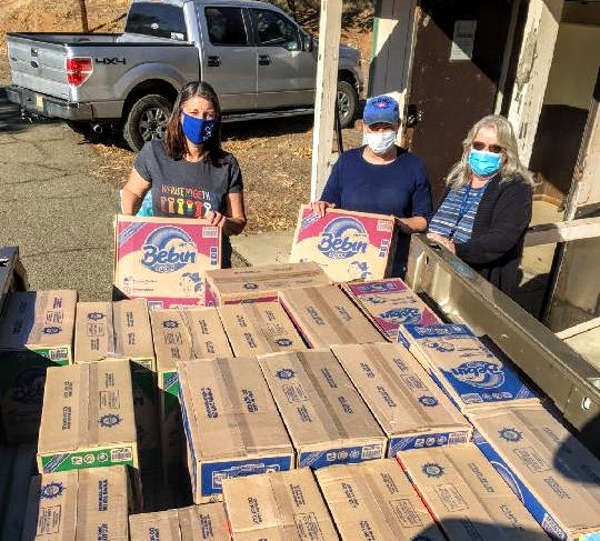
LAKEPORT, Calif. – On Oct. 26, First 5 Lake County’s executive director, Carla Ritz, and chairperson and District 4 supervisor, Tina Scott, distributed 394 cases of diapers and 169 cases of wipes to 12 local family-serving agencies and organizations.
The supplies were provided by First 5 California in response to the growing needs of families with young children due to recent wildfires and the ongoing COVID-19 pandemic.
In April of this year, First 5 California approved up to $4 million to support the acquisition and distribution of county-identified essential supplies for babies and young children, in addition to much-needed sanitation items.
“We have a role to play in helping California overcome this ongoing emergency. My fellow commissioners and I acted quickly to support funding for vital provisions that will help childcare providers and the broader community, while supporting essential workers throughout the state,” said George Halvorson, chair of the First 5 California Commission.
“The need is immediate, it is deep, and it affects more children and families than we can possibly serve,” said Camille Maben, executive director of First 5 California. “With our partners, we will continue to support the child care providers and essential workers who put their own health at risk as they provide much-needed services during this unprecedented time.”
To facilitate the purchase and distribution of these supplies, First 5 California worked in conjunction with www.SupplyBank.org, a California-based nonprofit that specializes in leveraging bulk purchasing power and innovative supply chain strategies to provide low-cost supplies to organizations supporting low-income and vulnerable populations.
“In Lake County,” said Ritz, “we distributed cases of diapers and wipes to our partners: Lake Family Resource Center, Mother-Wise, the Lake County Childcare Planning Council, Child Welfare Services, Lake County Tribal Health, Healthy Start, Adventist Health Clearlake, Sutter Lakeside Hospital, E-Center WIC, Easterseals Bay Area, and Habematolel Pomo of Upper Lake.”
All of these supplies will be distributed by the individual agencies to the Lake County families whom they serve.
Earlier in the pandemic, diapers, wipes, disinfecting solution, hand soap, masks, gloves, and children’s books from First 5 California were delivered to North Coast Opportunities Rural Communities Child Care and distributed to participating child care providers in Lake County who remained open to serve the children of essential workers.
This effort, to distribute essential supplies in times of crisis, is aligned with First 5 Lake’s 2019-2024 Strategic Plan which is based on the Strengthening Families Protective Factors Framework.
Concrete support in times of need is one of the five protective factors identified in the framework which promote the positive wellbeing and healthy development of children.
Additional protective factors include parental resilience, social connections, knowledge of parenting and child development, and social and emotional competence of children.
For more information about this and other First 5 Lake initiatives, visit www.firstfivelake.org.
The First 5 Lake County supports programs and services that promote the health and development of young children and educate parents, grandparents, caregivers and teachers about the critical role they play during a child’s first five years. Funding is derived from California Proposition 10’s voter-mandated tax on tobacco products.
Since its inception in 2000, First 5 Lake has supported thousands of families with programs and services designed to help Lake County children grow up healthy and ready to succeed in school and life.
Current First 5 Lake Commissioners are Denise Pomeroy, Brock Falkenberg, Tina Scott, Crystal Markytan, Susan Jen, Carly Sherman, Allison Panella and Fawn Rave.
- Details
- Written by: Lauren Hughes, University of Colorado Anschutz Medical Campus and Roberto Silva, University of Colorado Denver

As COVID-19 spreads through rural America, new infection numbers are rising to peaks not seen during this pandemic and pushing hospitals to their limits. Many towns are experiencing their first major outbreaks, but that doesn’t mean rural communities had previously been spared the devastating impacts of the pandemic.
Infection rates in rural and frontier communities ebbed and flowed during the first seven months, often showing up in pockets linked to meat packing plants, nursing homes or prisons.
Even if they had no cases, many rural areas were under statewide public health orders that left businesses closed and events canceled. And that has become part of the problem today. The early compassionate and cohesive community responses to COVID-19 quickly gave way to growing anger and compliance fatigue, especially when some isolated towns didn’t see their first positive cases until summer.
That resentment toward public health recommendations, including mask-wearing, is now on a crash course with rising case numbers in the Mountain West, Midwest and Great Plains. For the fifth week in a row, rural counties witnessed a sharp increase in cases, to the point where over 70% of the nation’s nonmetropolitan counties had earned a “red zone” designation, suggesting local viral spread was out of control. The reality, though, is COVID-19 has never been “under control” in the U.S.
As professors of family medicine with experience in rural health policy and medical practice, we have been studying the barriers rural communities are facing during the pandemic and how they can solve COVID-19-related challenges.
Understanding the drivers of increasing COVID-19 cases in rural places is critical to both curtailing the current surge and limiting flareups in the future.
Why rural cases are on the rise
Several factors have contributed to the rise in rural case numbers.
The politicization of the pandemic – and of mask-wearing – has hampered both public health efforts and collaboration among businesses, community organizations and health care entities. Political tensions have given rise to misinformation, reinforced on social media, that can be difficult to turn around. If people aren’t taking protective measures, when COVID-19 does come in, it can easily and quickly spread.
In some communities, the resumption of small-town activities, such as school, church and sports events, has led to more infections. Experts have pointed to social gatherings, including the nearly 500,000-strong Sturgis motorcycle rally in South Dakota in August, as sources of the recent COVID-19 surge in the upper Midwest.
Working from home is also nearly impossible for many rural jobs. Paid sick leave may also be difficult to come by, prompting some people to choose between working while sick and isolating at home without pay. Meat and poultry processing plants and other farm industries often employ immigrants whose living and commuting realities can make social distancing difficult. Many rural places are heavily dependent on recreation and service industries. When visitors arrive from out of town, they may bring COVID-19 with them.
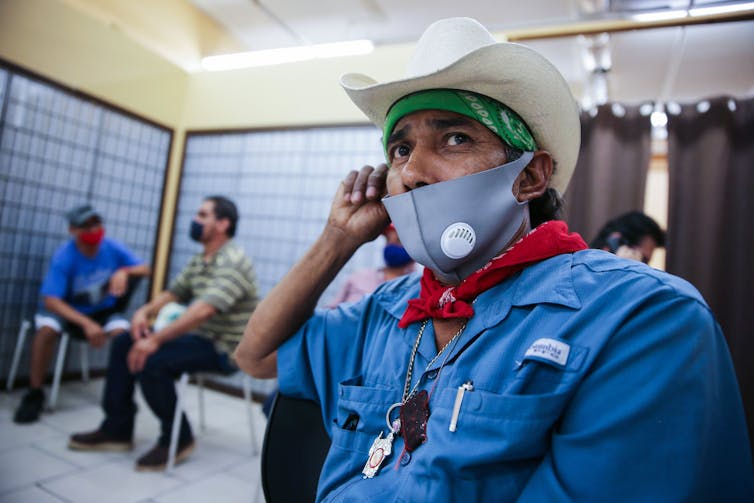
Local health care is already short-supplied
Pinpointing COVID-19 outbreaks early and stopping the spread can also be harder in rural areas.
Funding for rural public health departments has long been anemic, crippling their ability to test, share data and conduct contact tracing. Limited resources also constrain education and outreach efforts.
Many rural hospitals and primary care practices entered the pandemic in financial trouble and chronically short-staffed. They reside squarely at the end of the supply chain, making acquisition of needed personal protective equipment and testing supplies difficult. Rural hospitals have fewer ICU beds per capita than their urban counterparts. Lack of consistent broadband coverage can make access to telehealth difficult, as well.
These factors, compounded by caring for a population that is comparatively older, sicker and poorer, leave rural communities extraordinarily vulnerable as cases continue to rise.
How to turn the tide of rising cases
Intervening now can slow the rate of rise of COVID-19 cases in rural hot spots while simultaneously building a more robust long-term response.
To be most effective, each rural area’s unique demographics, economies and perspectives should be considered as policies are developed.
For example, allowing rural communities to exert control over their reopening and closing decisions based on local disease transmission dynamics would allow them to better balance disease mitigation with economic impacts. Some states allow rural communities with few or no cases to apply for waivers from statewide public health orders. These applications generally look at local infection data, containment measures and health care capacity.
[Deep knowledge, daily. Sign up for The Conversation’s newsletter.]
Changing the nature of the conversation around COVID-19 in the community can also help in implementing simple, effective measures like mask-wearing. When communications are personal, they may be more accepted. For example, a public service message could remind people that wearing a mask keeps your favorite business open and your grandmother healthy. Framing levels of risk in understandable terms for different types of activities can also help, such as how to exercise or socialize safely. Working with trusted local messengers, such as business owners and faith leaders, can help convey evidence-based information.
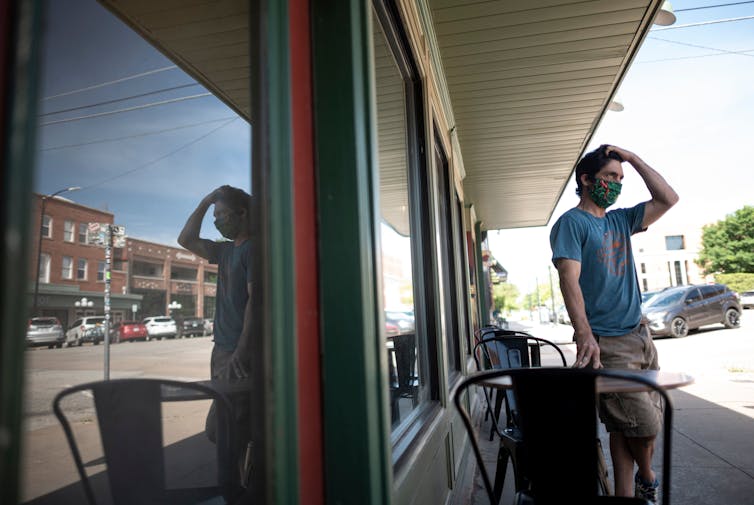
Planning is also essential. Communities need to prepare so they can get supplies, testing and treatment when needed; protect the most vulnerable community members; educate the community; and support people in isolation and quarantine. A rural regional approach to testing and contact tracing, sharing supplies and swapping staff could help bridge some of the gaps. Getting test results closer to home could decrease wait times and courier costs. Sharing resources across health care organizations could also minimize the burden of response.
3 ways to strengthen systems for the future
COVID-19 isn’t likely to be the last pandemic rural America will see. Here are three ways to strengthen rural systems for the future.
-
By partnering with universities and local and state agencies, communities can incorporate their unique susceptibilities into dynamic epidemiological models that could better inform local public health and economic decisions.
-
Aligning public health and health care measures could help governments better balance pandemic responses and ensure all parts of the community are moving toward the same goal.
-
Increasing broadband access and internet speeds in rural and frontier communities could also help. During the pandemic, people everywhere have appreciated the need for internet connectivity for education, remote work and purchasing goods, as well as virtual health care.

Lauren Hughes, Associate Professor of Family Medicine, University of Colorado Anschutz Medical Campus and Roberto Silva, Assistant Professor of Family Medicine, University of Colorado Anschutz Medical Campus, University of Colorado Denver
This article is republished from The Conversation under a Creative Commons license. Read the original article.