 How to resolve AdBlock issue?
News
- Details
- Written by: Elizabeth Larson
The following dogs are ready for adoption or foster.

‘Dorito’
“Dorito” is a male American Staffordshire Terrier mix with a short white and gray coat.
He has been neutered.
He is dog No. 4576.

‘Inky’
“Inky” is a male German Shepherd mix with a long black coat.
He has been neutered.
He is dog No. 4324.

'Jerry'
“Jerry” is a male pit bull terrier mix with a short brindle coat.
He is dog No. 4455.

‘Tiabeanie’
“Tiabeanie” is a female American Bully with a short black with white markings.
She is dog No. 4602.

‘Toby’
“Toby” is a friendly senior male boxer mix.
He has a short tan and white coat.
He is dog No. 4389.
Call the Clearlake Animal Control shelter at 707-273-9440, or email
Visit Clearlake Animal Control on Facebook or on the city’s website.
Email Elizabeth Larson at
- Details
- Written by: David Dezell Turner
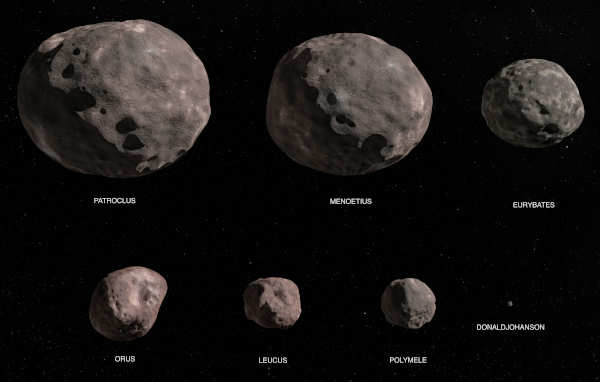
On Feb. 22, 1906, German astrophotographer Max Wolf helped reshape our understanding of the solar system. Again.
Born in 1863, Wolf had a habit of dramatically altering the astronomy landscape. Something of a prodigy, he discovered his first comet at only 21 years old. Then in 1890, he boldly declared that he planned to use wide-field photography in his quest to discover new asteroids, which would make him the first to do so.
Two years later, Wolf had found 18 new asteroids. He later became the first person to use the “stereo comparator,” a View-Master-like device that showed two photographs of the sky at once so that moving asteroids appeared to pop out from the starry background.
It is perhaps unsurprising, then, that on Feb. 22, 1906, Wolf made another important discovery: an asteroid with a particularly unusual orbit.
As Jupiter moved, this asteroid remained ahead of Jupiter, as though it was somehow trapped in Jupiter’s orbit around the Sun. German astronomer Adolf Berberich observed that the asteroid was nearly 60 degrees in front of Jupiter.
This specific position reminded Swedish astronomer Carl Charlier of a peculiar behavior predicted by the Italian-French mathematician Joseph-Louis Lagrange over 100 years earlier. Lagrange argued that if a small body (such as an asteroid) is placed at one of two stable points in a planet’s orbit around the Sun (called the L4 and L5 Lagrange Points), the asteroid would remain stationary from the planet’s perspective due to the combined gravitational forces of the planet and the Sun.
Charlier realized that Wolf’s asteroid was actually caught in Jupiter’s L4 Lagrange point. Until Wolf’s discovery, Lagrange’s prediction had only been a mathematical exercise. Now, these astronomers had photographic proof that Lagrange was right.
Eight months later, one of Wolf’s graduate students August Kopff discovered an asteroid in Jupiter’s other stable Lagrange point L5, as well as another asteroid caught in L4 a few months afterward.
Once three of these Lagrange point-inhabiting asteroids had been discovered, astronomers began wondering what to call them.
At this point, most asteroids were given the names of women from Roman or Greek mythology, unless their orbits were particularly strange.
The asteroids in question certainly had bizarre orbits, so Austrian astronomer Johann Palisa suggested the names Achilles, Patroclus, and Hektor after characters from The Iliad.
Achilles was a nigh-invulnerable Greek hero (except for his heel), and Patroclus was a friend of his. Hektor, prince of the Trojans, eventually killed Patroclus, and Achilles exacted revenge by killing Hektor. The recently discovered asteroids were then given Iliad-inspired names.
As astronomers continued discovering asteroids hiding in Jupiter’s Lagrange points, they continued naming them after heroes of the Trojan War and began referring to them as “Trojan asteroids.” (“Trojan asteroids” would eventually refer to asteroids inhabiting any planet’s stable Lagrange points, though names from The Iliad are reserved for Jupiter’s Trojans.)
It later became convention to name Jupiter’s L4 asteroids after Greek characters and Jupiter’s L5 asteroids after Trojan characters, so L4 and L5 became the “Greek camp” and the “Trojan camp” respectively.
Palisa apparently did not foresee this tradition, for his naming of first three asteroids led to a Greek “spy” residing in the Trojan camp (Patroclus) and a confused Trojan (Hektor) who probably wandered into the Greek camp hoping to order some of their famous custom-built wooden horses.
No spacecraft has ever been to this population of small bodies, called the Trojan asteroids. Now, a new NASA Discovery Program mission called Lucy will fly by seven Trojan asteroids, plus a main belt asteroid, to survey the diversity of this population in a single 12-year record-breaking mission. The Lucy spacecraft launch window opens Oct. 16, 2021.
Southwest Research Institute in Boulder, Colorado, is the principal investigator institution and leads the science investigation. NASA’s Goddard Space Flight Center in Greenbelt, Maryland, provides overall mission management, systems engineering, and safety and mission assurance.
Lockheed Martin Space Systems in Denver is building the spacecraft. Spacecraft payload is being provided by Goddard, the Johns Hopkins University Applied Physics Lab, and Arizona State University. The Discovery Program management is executed by NASA’s Marshall Space Flight Center in Huntsville, Alabama.
David Dezell Turner is with the Southwest Research Institute in Boulder, Colorado.
- Details
- Written by: Elizabeth Larson

LAKE COUNTY, Calif. – The effort to seek protection for the Clear Lake hitch under the Endangered Species Act took another step on Thursday when the Center for Biological Diversity filed a notice of intent to sue the U.S. Fish and Wildlife Service over a December decision not to protect the native fish.
Jeff Miller, a senior conservation advocate at the Center for Biological Diversity, told Lake County News that the notice of intent was filed in federal court.
The process requires the center to give the government a 60-day warning about its intent to take legal action, Miller said.
The hitch is a large minnow found only in Clear Lake and its tributaries.
It was a staple food and cultural component for the area’s original Pomo inhabitants, and also an important food source for numerous birds, fish and other wildlife.
Once numbering in the millions, the hitch’s numbers have plummeted in recent decades. It’s estimated now that the hitch is down to a few thousand spawning fish during good water years, with regular spawning in only a few tributaries.”
It was the Center for Biological Diversity that submitted the state and federal listing petitions on the Clear Lake hitch in September 2012. Miller wrote the petitions.
In August 2014, the California Fish and Game Commission approved the California Department of Fish and Wildlife's recommendation to list the Clear Lake hitch as a threatened species under the California Endangered Species Act, making it the first aquatic listed species in the Clear Lake Basin, as Lake County News has reported.
A 2014 state status review for the hitch determined there has been significant degradation of its suitable habitat, with wetland habitat loss of 85 percent, spawning habitat loss of 92 percent, and degraded water quality throughout the lake and in most tributaries.
The state also found that predation and competition by introduced fishes has a significant impact on hitch.
It also predicted that climate change impacts to stream flows and hitch annual spawning cycles will be significant.
A 2013 report by California native fish experts concluded that hitch are “critically vulnerable” to the impacts of climate change.
On the federal level, however, there was a different outcome.
On Dec. 2, the Trump administration denied protection to 11 species, including the hitch, the southern white-tailed ptarmigan, tufted puffin, three species of Nevada springsnail, a rare Nevada fish, Rocky Mountain monkeyflower, tidewater amphipod, Doll’s daisy and Puget Oregonian snail.
The hitch, Miller said, is “the very definition of a threatened species, but Trump’s Interior Department chose to ignore the science.”
State, federal agencies draw different conclusions
In the case of the hitch, the U.S. Fish and Wildlife Service said its determination that the hitch isn’t warranted a listing under the Endangered Species Act was “based on the best available science.”
The agency said major threats such as the loss of spawning habitat, climate change, drought, and predation and competition from introduced fish are “not likely to adversely affect the overall viability of the Clear Lake hitch in a biologically meaningful way.”
The federal finding also claimed the hitch do not require tributary streams to reproduce, but can also spawn successfully in Clear Lake itself, giving them “behavioral flexibility to variable environmental conditions.”
However, the state review concluded that hitch require tributary streams to successfully spawn, and a 2019 U.S. Geological Survey study concurred that within-lake spawning is not a significant source of Clear Lake hitch production and recruitment.
The Center for Biological Diversity disputes the U.S. Fish and Wildlife Service’s findings and alleges that it wrongfully denied the hitch the listing needed to save it.
“There clearly was something hinky with the determination,” said Miller.
He said it’s inconceivable that a federal agency could arrive at a decision that contradicts the findings of native fish experts, the California Department of Fish and Wildlife and California Fish and Game Commission.
The center reported that Clear Lake hitch numbers have declined due to water diversions, climate change and drought, degradation of spawning habitat, migration barriers, pollution, and competition and predation from invasive fish species.
After the center submitted its listing petitions, the hitch had its three worst spawning runs in recorded history from 2013 to 2015, years which also were notable for being in the midst of a drought, Miller said.
It’s estimated that during those three years there was an annual average of fewer than 1,000 spawning hitch in the entire Clear Lake basin, the center reported.
While hitch numbers have increased a little since then, “they’re still disturbingly low,” said Miller. Since 2013 the combined average number of spawning fish in the two most important tributaries, Kelsey Creek and Adobe Creek, has been under 1,700 fish.
Miller also is concerned that the state may be heading into another extended period of drought.
If several years of drought were to occur, Miller said a complete spawning failure could result and the species could easily be lost.
It’s not an inconceivable possibility. The Clear Lake hitch’s closest relative, the Clear Lake splittail, was driven to extinction in the 1970s due to habitat alterations that dried out spawning streams and barriers that prevented its spawning migration, the center reported.
The attempt to list the hitch has had the support of Lake County’s tribes.
Sherry Treppa, who chairs the Habematolel Pomo of Upper Lake Executive Council, said the tribe was involved in and supported a multi-year, multi tribal project back in 2009 to provide for Hitch conservation and management by increasing the population and habitat restoration.
Once abundant, Treppa said the fish’s numbers have declined over the past two centuries due to altered watersheds and habitat deterioration.
After the December listing denial, Treppa said that the decision was based on “misinformation and likely politics around global warming rather than scientific information and experts in the field.”
She said the decision saddened – but didn’t surprise – her tribe. Like many Native American-related concerns, she added, “the tribes, county and the community will be left undertaking the preservation of this important species on our own with no help from the federal government.”

Next steps in the process
Miller said the Center for Biological Diversity has taken these kinds of legal actions before, which can be very complex and are limited to what is in the listing decision record.
The focus, he said, is whether this decision was arbitrary and capricious and whether the service used the best available science, “and it seems pretty clear that they didn’t”
Because there is now a new presidential administration in place, Miller said the center is not entirely sure of what the process will look like moving ahead.
He said the Biden Administration is reviewing a number of listing determinations made under Trump, including the 11 species – which included the hitch – denied listing in December.
It’s possible, Miller said, that the Biden Administration will choose to reverse the action so the center doesn’t have to sue. “Frankly, that would be the desired outcome.”
In any event, Miller said they want to be ready to go to court, thus the notice of intent filing, as he said such legal actions can take awhile to go through the system.
Miller said the goal is to get recovery actions in place and make sure the hitch is resilient enough to survive challenges with climate, drought and what else humans have thrown at it.
Email Elizabeth Larson at
- Details
- Written by: Elizabeth Larson
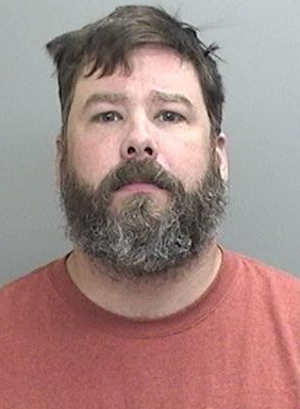
LAKE COUNTY, Calif. – On Thursday, Mendocino County authorities arrested a former Ukiah Police sergeant on charges related to a 2014 rape case.
Kevin Patrick Murray, 37, of Lakeport was taken into custody in Lake County and booked into the Mendocino County Jail Thursday morning on felony charges of rape, forcible oral copulation and being armed in the commission of a felony, according to jail records.
Murray’s booking records show that the charges in question stem from acts authorities say were committed in 2014.
In a criminal complaint the Mendocino County District Attorney’s Office filed this week, Murray is charged with raping a woman sometime between June 1 and July 1, 2014, and is facing a special allegation of being armed with a firearm during the commission of the assault.
The complaint’s second count charges Murray with a felony for forcible oral copulation in an assault on the same victim that occurred on April 10, 2014.
Murray is being held on $500,000 bail.
Just last month, Murray lost his job at the Ukiah Police Department over a separate criminal case that began in November.
In a Jan. 29 Facebook video, Ukiah Police Chief Justin Wyatt reported that Murray, who had been a sergeant in the department, was no longer employed there following a two-month-long internal affairs investigation.
Wyatt said the department first learned of potential misconduct by Murray in late November.
On Nov. 25, Murray is alleged to have committed sexual battery and burglary at a Ukiah motel.
Wyatt said his department contacted the Mendocino County District Attorney’s Office on the evening of Nov. 25 and asked for a criminal investigation into Murray’s conduct.
Wyatt said he wanted the community to know that because the department acted swiftly and took the matter seriously, Murray is now answering for his conduct in the criminal courts.
“The law enforcement profession demands integrity so there is no room in public service and there must be no tolerance for the behavior that was portrayed that evening,” Wyatt said of the Nov. 25 incident.
Eyster’s office filed charges against Murray for the November case on Jan. 22, at which time he was arrested, according to case documents.
In that case, court documents show that he’s charged with two counts of felony first-degree burglary with special allegations of committing the burglary in an occupied room, felony sexual battery and a violation of civil rights, all alleged to have occurred on Nov. 25.
Another charge filed in the same case, misdemeanor possession of methamphetamine, is alleged to have occurred on or about Dec. 1.
Following a preliminary hearing on Feb. 10 and 11, Murray was held to answer in that initial case and is set to return to court for arraignment on March 4, according to Mendocino County Superior Court records.
Murray also is named as a defendant in a federal court case alleging excessive use of force filed against the city of Ukiah last February.
Plaintiff Christopher Rasku said that in an October 2018 incident, Murray – responding to a complaint by Rasku’s neighbor about an argument with another neighbor – “entered the plaintiff's home unlawfully, knocked the plaintiff unconscious, and punched, kneed, and kicked him, causing several broken ribs, a punctured and partially collapsed lung, nerve damage, and other injuries,” according to court filings.
Case records show a settlement conference is scheduled in the Rasku case for March 1.
Email Elizabeth Larson at