 How to resolve AdBlock issue?
News
- Details
- Written by: Robert Sanders
This video takes the viewer on a trip through the Milky Way Galaxy toward Earth, flying through a 6,000-light-year-diameter cloud of more than 1 million binary stars mapped by UC Berkeley’s Kareem El-Badry. After reaching Earth, the video switches to a view into the future as pairs of binary stars move through space. (UC Berkeley video by Roxanne Makasdjian, based on animation by Jackie Faherity, AMNH, and data by Kareem El-Badry.)
The latest star data from the Gaia space observatory has for the first time allowed astronomers to generate a massive 3D atlas of widely separated binary stars within about 3,000 light years of Earth — 1.3 million of them.
The one-of-a-kind atlas, created by Kareem El-Badry, an astrophysics Ph.D. student from the University of California, Berkeley, should be a boon for those who study binary stars — which make up at least half of all sunlike stars — and white dwarfs, exoplanets and stellar evolution, in general.
Before Gaia, the last compilation of nearby binary stars, assembled using data from the now-defunct Hipparcos satellite, included about 200 likely pairs.
“This is just a massive increase in sample size,” said El-Badry. “And it is an increase in what kinds of evolutionary phases we find the binaries in. In our sample, we have 17,000 white dwarfs alone. This is a much bigger census.”
White dwarfs are the end stages of most stars; the sun will likely end up as a compact white dwarf in 5 billion years. El-Badry’s atlas includes 1,400 systems that consist of two white dwarfs and 16,000 binaries that consist of a white dwarf and another type of star
The vast majority of the 2.6 million individual stars are still in the prime of life, however. Astronomers refer to them as main sequence stars, because they cluster along a line when plotted on a graph showing temperature versus brightness.
With such a large sample size, El-Badry said, it’s possible to do population demographics of these stellar twins, asking questions such as: What is the distribution of mass ratios of the two stars in all these binary systems? How are their separations or eccentricities distributed?
El-Badry plans to focus in the future on the white dwarf binaries, because white dwarfs can be assigned an age more precisely than is possible with regular stars. Main sequence stars like the sun can look the same for billions, or even tens of billions, of years, while white dwarfs change — for one thing, they cool down at a well-defined rate. And since binary pairs are birthed at the same time, the age of the white dwarf tells astronomers the age of its main-sequence twin, or of any planets around the stars.
“For a white dwarf, in general, it is easy to tell how old it is — not just how old since it became a white dwarf, but what its total age is,” he said. “You can also measure their masses, because white dwarfs have a well-understood mass-radius relation.”
As an example, El-Badry and colleagues recently used the Gaia data to estimate the age of a Jupiter-sized gas giant discovered by the TESS satellite around a white dwarf-K dwarf pair. That exoplanet, TOI-1259Ab, turned out to be about 4 billion years old, based on the age of the white dwarf.
“In this catalog, there are something like 15 systems like this: star plus planet plus white dwarf,” he said, “and there are another few hundred that are star plus planet plus another star. Those are also potentially interesting because, in some cases, the other star will do something dynamically to the planet.”
The new catalog of nearby binary stars has been accepted for publication in the journal Monthly Notices of the Royal Astronomical Society.
El-Badry also collaborated with Jackie Faherity, a scientist and educator at the American Museum of Natural History in New York City, to create a video fly-through of all the million binary stars around Earth, which represents a good chunk of the entire Milky Way Galaxy.
Binary stars
Until Gaia was launched by the European Space Agency in 2013 to precisely measure the distances and motions of millions of nearby stars, the only way to find binaries was to look for stars close together in the sky. This can be tricky, because stars that look very close from Earth could be hundreds to thousands of light-years from one another, merely sitting along the same line of site.
Ruling out a chance alignment requires lots of observing time to confirm that the two candidates are actually at the same distance and moving together. Because of Earth’s motion around the sun, nearby stars appear to change position in the sky, and that parallax can be used to calculate how far away they are. The star’s motion across the sky, known as proper motion, helps determine its velocity.
Gaia conducts this tedious astrometry continuously for all nearby stars in the sky, 24/7, from its orbit at the Earth-Sun Lagrange point. The space telescope’s survey is most useful for stars within about 3,000 light years of Earth, however, because beyond that, the parallax is usually too small to measure.
El-Badry first looked for binary stars in Gaia data after the mission’s second release of star measurements in 2018, with the help of colleagues Hans-Walter Rix, director of the Max-Planck Institute for Astronomy in Heidelberg, Germany, and Tyler Heintz, a graduate student at Boston University.
They developed computational techniques to identify stars moving together through space and at the same distance from Earth. The technique basically projects each star’s movement over thousands of years, based on its proper motion today, and pulls out stars that are moving in the same direction. If they also turn out to be at the same distance based on parallax, they’re probably bound to one another, he said.
He and his colleagues focus primarily on wide-binaries — those separated by a distance of 10 AU (astronomical units) or more — that is, 10 or more times the distance between Earth and the sun (93 million miles). Stars closer than that typically appear as one point of light and require other spectroscopic techniques to distinguish whether they are true binaries.
To get first crack at Gaia’s latest data, El-Badry arose at 3 a.m. on the release date, Dec. 3 of last year, and joined some 100 other astronomers from around the world on Zoom. He quickly ran pre-programmed queries on the data to extract the catalog information he needed to create the 3D map.
The initial queries returned some 1.8 million binary candidates from Gaia’s catalog of 1.8 billion stars, so El-Badry first had to assess the likelihood that some of the pairs were at the same distance and moving in similar directions just by chance, not because they are paired. He estimates that nearly 1.3 million pairs had at least a 90% chance of being bound, and 1.1 million had a 99% chance.
“About half of all sun-like stars are binaries, many of them too close to distinguish, but we find something like 25% of all sun-like stars have a binary companion at separations of more than 30 AU, about the distance to Pluto,” he said. “The distribution peaks at a separation of 30 or 50 AU.”
Some pairs are separated by as much as a parsec — 260,000 AU, or 3.26 light-years — though most are within 1,000 AU of one another.
One takeaway, he said, is that the new analysis confirms something hinted at in the 2018 data: Many binary star pairs are very similar in mass.
“One thing we already found that is cool — we discovered this with Gaia DR2, but now we can study it better with this sample — is that binaries like to be identical twins,” he said. “That is really weird, because most of these are separated by hundreds or thousands of AU, so they are so far apart that, by conventional star formation theories, their masses should be random. But the data tells a different story: They know something about their companions’ masses.”
The implication, he said, is that they formed much closer together in a process that tended to equalize their masses and then migrated apart, perhaps because of interactions with other nearby stars.
The compilation of binary stars also allowed El-Badry to check the reported uncertainties in Gaia’s measurements of stellar positions, which can assist other researchers who use the data.
Robert Sanders writes for the UC Berkeley News Center.
- Details
- Written by: Lake County News reports
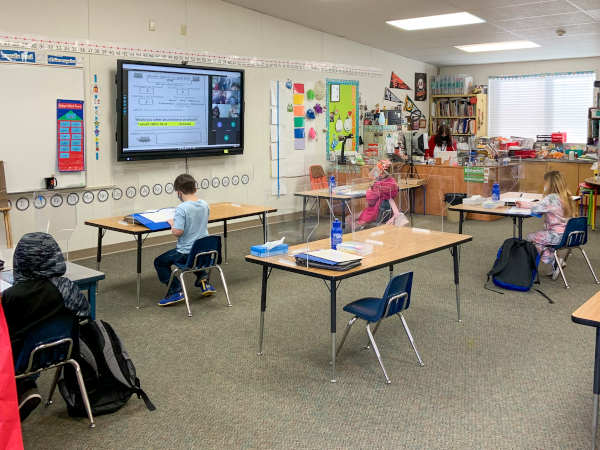
LAKE COUNTY, Calif. – On Monday, the Konocti Unified School District brought elementary school students back onto school campuses in a hybrid model, allowing for social distancing with only about half of the students in the classroom at any given time.
What makes their return to in-person instruction unusual is the technology Konocti Unified has employed to connect the students at home with the students on campus.
“One of the reasons classroom-based learning is so powerful is the connection and interaction with others, so at Konocti Unified, we invested in technology that allows real-time interaction among students and between students and teachers,” said Konocti Unified School District Superintendent Dr. Becky Salato. “Now, even when students are learning remotely, they’ll be getting the same instruction at the same time, and they’ll be able to ask questions and participate rather than having to catch-up later.”
When the pandemic hit, it became clear to Salato that the need for remote instruction could extend beyond the current crisis.
In response, Konocti Unified purchased video cameras, microphones, large screens and the software required to facilitate interactivity for every classroom, TK-12, districtwide.
“Not only will this allow for the most engagement during the hybrid model, but it enables us to leap into the future of education, to provide more engagement and access for all students,” Salato said.
She explained that in the past, when students could not attend class for extended periods of time, they often fell behind, as in the case of a student on home hospital leave.
Salato noted that a one-hour visit once a week from an instructor was a poor substitute for daily class participation. With this new technology, a home-bound student could participate in class without putting their medical recovery at risk.
“It’s clear that after the pandemic ends we’ll continue to see barriers that prevent equal access to instruction. Now, we have a tool to reduce those barriers,” Salato said.
As students return to school campuses this week and in the weeks to come, Konocti Unified is using technology both to enhance academic instruction and to keep students and staff safe.
All students and staff are required to complete a self-evaluation via their cell phone or Chromebook to answer screening questions regarding potential COVID-19 exposure or symptoms before being allowed on campus. This reduces the risk of infection and prevents long waits at the gate when everyone arrives at school.
Elementary schools are open in the hybrid model now and secondary schools will open when Lake County Public Health gives Konocti Unified the green light, likely when Lake County drops from the purple tier to the red tier in the state’s Blueprint for a Safer Economy. That tier change will indicate the spread of COVID-19 has slowed in the community.
KUSD’s extensive safety measures either meet or exceed state and local public health requirements.
In addition to daily self-evaluations for COVID-19 exposure and symptoms, safety measures include mask-wearing and social distancing, no mixing of cohorts, and strict navigational pathways through campuses to reduce face-to-face contact.
Principals also sent videos to student families explaining what to expect upon their return to school, including instructions on how to wash hands and wear masks properly.
“We’ve painted arrows, so students know which direction to go and we have marked spots six feet apart, so they know where to stand before entering their classroom,” Salato explained.
For bus transportation, fewer students are allowed on the buses so children can be safely distanced, masks are required, and windows are open at all times.
On campuses, bathrooms are designated for specific classrooms and are sanitized regularly, and at the end of the day, students receive a grab-and-go lunch rather than eating on campus.
In addition, Konocti Unified provides COVID-19 testing for staff and, with parent permission, students, including both surveillance testing and symptomatic testing.
Based on Public Health guidelines while Lake County is in the purple tier, surveillance testing is offered every other week.
If a student or staff member shows symptoms, a quick-turnaround test is available with results in 15 minutes.
Finally, all Konocti Unified employees interested in being vaccinated have received their first dose and more than half have already received their second dose.
“Families who prefer full-time distance learning can continue to receive all their instruction online, but the overwhelming response from most families has been relief and joy for their children to be allowed to see friends and interact with their teachers in person,” Salato said.
- Details
- Written by: Elizabeth Larson
LAKE COUNTY, Calif. – Lake County’s two members of the House of Representatives have voted to pass the American Rescue Plan, President Joe Biden’s sweeping health and economic relief plan aimed at dealing with the impacts of COVID-19 while expanding vaccine distribution and helping to reopen schools.
The bill, H.R. 1319, provides about $1.9 trillion in relief to help address both the health and economic crises caused by COVID-19.
The legislation includes funding to reopen schools, distribute vaccinations in every American community, send an additional $1,400 stimulus check to individuals, support small businesses and extend unemployment benefits.
Congressmen John Garamendi (D-CA-3) and Mike Thompson (D-CA-5) joined the House majority in narrowly passing the bill early Saturday morning in Washington, DC.
“The COVID-19 pandemic is destroying lives, small businesses, and local communities across this nation as we enter the second year of its existence,” Garamendi said in a statement issued on Friday afternoon, ahead of the vote. “Tragically, over 500,000 American lives have been lost to this virus, and millions more have been infected and are facing long-term health complications. The virus has also disrupted the economic livelihoods of 18 million Americans, who must now count on expanded unemployment benefits that are extended in this bill to keep food on the table.”
“The American people are hurting and they need relief now. Just this week, we hit the tragic milestone of half a million lives lost due to COVID-19. Tens of millions have been sick, millions have lost jobs, businesses are closed, and kids are out of school. Parents are worried about putting food on the table and paying rent. The federal government needs to act now to address this crisis, crush the virus and support our economic recovery,” Thompson said in a statement issued overnight, following the vote.
The American Rescue Plan is expected to provide $26.264 billion to the state of California and $16 billion to local governments.
Estimated breakdowns of the funding show that the county of Lake is anticipated to receive $12 million, the city of Lakeport just over $900,000 and the city of Clearlake $2.9 million.
The bill also includes $128 billion in direct funding to school districts nationwide to support remote learning, help K-12 programs safely reopen and address lost time in the classroom.
Garamendi said Lake County school districts are to receive the following amounts under the bill (an estimate for Kelseyville Unified was not included):
– Konocti Unified School District: $14,581,000.
– Lakeport Unified School District: $3,414,000.
– Lucerne Elementary School District: $995,000.
– Middletown Unified School District: $2,586,000.
– Upper Lake Unified School District: $3,002,000
The bill must now pass the Senate.
Email Elizabeth Larson at
- Details
- Written by: Lake County News reports
Next week, Public Health will resume its usual schedule of clinics, with the goal of administering 500 to 1,000 doses per clinic day, first and second doses, combined.
Clinics will be held in Lakeport on Mondays and Tuesdays, from 10 a.m. to 4 p.m., at Lakeport Auto Movies, 52 Soda Bay Road, and in Clearlake on Thursdays and Fridays, from 10 a.m. to 4 p.m. at Redbud Park, 14655 Lakeshore Drive.
Other partners in the community are also vaccinating people, including Lake County Tribal Health Consortium, Sutter, Adventist, Lakeport Safeway and North Lake Medical Pharmacies.
Public Health Officer Dr. Gary Pace said that, as of Friday, 15 to 20 percent of Lake County’s adult population has been vaccinated, including most of the nursing home residents, health care workers, and teachers and school staff.
“This will help us a lot in the coming months,” Pace said. “Since vaccinating the nursing home residents, we have not had any cases there. This is a tremendous change from a few months ago, and shows what may lie in store for us as we get to late spring and summer.”
Pace said vaccine supply is still not enough to meet the demand, so appointments remain unlimited to people who qualify in the state’s phased system.
This structure works locally as follows.
First dose appointments
Step 1: Make sure you are eligible. Currently, these are people who are:
• In Phase 1A, but didn’t previously get their shot;
• 65 years or older;
• Staff working with elders (IHSS workers, senior center, meals on wheels);
• K-12 school staff;
• Childcare or preschool workers; and
• Farmworkers
“We are hoping to permanently extend eligibility to food service workers in the next week or two,” said Pace.
On March 15, people aged 16 to 64 with certain chronic medical conditions that make them more susceptible to severe COVID-19 complications will become eligible.
Step 2: Visit http://health.co.lake.ca.us/Coronavirus/Vaccines.htm to schedule your appointment.
Links to schedule get updated every few days. If you try it, and you are told the clinic is full, try for a different day. The links for next week will be posted soon.
No internet access?
• Seniors: call 707-993-4644, for assistance.
• Farmworkers, on Fridays, 9 a.m. to 5 p.m.: call 707-262-4162; 707-262-4153; or 707-262-4159 for help.
Don’t call these numbers if there are no appointments available online. They have no additional appointments.
Step 3: Report to your appointment at the assigned time and place, and bring the following:
• Photo ID; and
• Proof of your eligibility (proof of employment, if you are eligible because of your job).
No walk-in appointments are available at this time. If you do not have an appointment, or you do not have proof you qualify, you will be turned away.
Second dose appointments
You may have been given a followup appointment at the time of your first dose, but with the changes in clinic days and locations, these have been changing a lot. Pace said Public Health apologizes for any confusion.
You should receive a call to schedule your followup, Pace said.
“We have had trouble keeping up with these calls, but everyone has been attempted no later than the day before the second dose appointment,” Pace said.
If you have not received a call, email Public Health at
Vacunación de COVID-19: quién es elegible y cómo registrarse y qué sigue
Información, enlaces para programar citas en http://health.co.lake.ca.us/Coronavirus/Vaccines.htm
Condado de Lake, CA (26 de febrero de 2021) – Las complicaciones relacionados con el clima de la semana pasada ya han quedado atrás, y las clínicas de vacunación de COVID-19 están nuevamente en funcionamiento en el condado de Lake. La próxima semana, Salud Pública continuará nuestro horario habitual de clínicas, y nuestro objetivo es administrar 500-1,000 dosis por día de clínica (primera y segunda dosis, combinadas):
• Lakeport: lunes y martes, de 10 a. m. a 4 p. m., Lakeport Auto Movies (52 Soda Bay Rd)
• Clearlake: jueves y viernes, de 10 a. m. a 4 p. m., Redbud Park (14655 Lakeshore Dr)
Otros socios en la comunidad también están vacunando a personas, incluido Lake County Tribal Health Consortium, Sutter, Adventist, y las farmacias de Safeway (en Lakeport, solamente) y North Lake Medical. Esta accesibilidad más amplia es una gran ventaja.
Hemos vacunado al 15-20% de la población adulta en el condado de Lake, incluida la mayoría de los residentes de hogares de mayores, trabajadores de la salud, maestros y personal escolar. Esto nos ayudará mucho en los próximos meses. Desde que vacunamos a los residentes de hogares de mayores, no hemos tenido ningún caso allí. Este es un cambio tremendo con respecto a hace unos meses, y muestra lo que nos puede deparar a medida que nos acercamos a fines de la primavera y el verano.
Desafortunadamente, el suministro de vacunas aún no es suficiente para satisfacer la demanda, por lo que tenemos que limitar las citas a las personas que califican en el sistema por fases del estado. ¿Cómo funciona esto ahora mismo en el condado de Lake?
Citas de primera dosis
Paso 1: asegúrese de ser elegible. Actualmente, estas son personas que son:
• En la Fase 1A, pero no recibieron su oportunidad previamente;
• 65 años o más;
• Personal que trabaja con personas mayores (trabajadores de IHSS, centros para personas mayores, comidas a domicilio);
• Personal de la escuela K-12;
• Trabajadores de guardería o preescolar; y
• Agricultores.
Esperamos extender permanentemente la elegibilidad a los trabajadores del servicio de alimentos en la próxima semana o dos.
El 15 de marzo, las personas de 16 a 64 años con ciertas afecciones médicas crónicas que las hacen más susceptibles a complicaciones graves de COVID-19 serán elegibles: https://www.cdph.ca.gov/Programs/CID/DCDC/Pages/COVID-19/Provider-Bulletin-2-12-21.aspx .
Paso 2: Visite http://health.co.lake.ca.us/Coronavirus/Vaccines.htm para programar su cita.
Los enlaces para programar se actualizan cada pocos días. Si lo trata y le dicen que la clínica está llena, intente hacerlo otro día. Los enlaces para la próxima semana se publicarán luego.
¿Sin acceso a Internet?
• Personas mayores: llame al 707-993-4644 para obtener ayuda.
• Trabajadores agrícolas, los viernes de 9 a 5: llame al 707-262-4162; 707-262-4153; o al 707-262-4159 para obtener ayuda
No llame a estos números si no hay citas disponibles en línea. No tienen citas adicionales.
Paso 3: Preséntese en su cita a la hora y lugar asignados, y traiga lo siguiente:
• Identificación fotográfica; y
• Prueba de su elegibilidad (prueba de empleo, si es elegible debido a su trabajo).
No hay citas al mismo día disponibles en este momento. Si no tiene una cita o no tiene pruebas de que califica, se le rechazará.
Citas de segunda dosis
Es posible que le hayan dado una cita de seguimiento en el momento de su primera dosis, pero con los cambios en los días y ubicaciones de la clínica, estos han cambiado mucho. Nos disculpamos por cualquier confusión.
Debería recibir una llamada para programar su seguimiento. Hemos tenido problemas para mantenernos al día con estas llamadas, pero todos se han intentado a más tardar el día anterior a la cita de la segunda dosis. Si no ha recibido una llamada, envíenos un correo electrónico a
Gracias a los que se vacunan, cuando son elegibles. ¡Estás ayudando a proteger tus comunidades!
Gary Pace, MD, MPH