How to resolve AdBlock issue?
News
- Details
- Written by: Lake County News reports
The virtual town hall will take place from noon to 1:30 p.m.
Click here to join.
To attend by phone, dial in to 866-501-6088; the conference ID is 2735534.
To access the virtual safety town hall or view recordings of past wildfire safety webinars, you can also visit www.pge.com/firesafetywebinars.
PG&E representatives will discuss plans for reducing wildfire risks throughout the service territory.
Topics will include PG&E’s wildfire prevention activities, public Safety Power Shutoff events and resources to help prepare for this wildfire season.
During this town hall, customers will have a chance to ask questions and share feedback with the PG&E team.
- Details
- Written by: Gregory B. Fairchild, University of Virginia
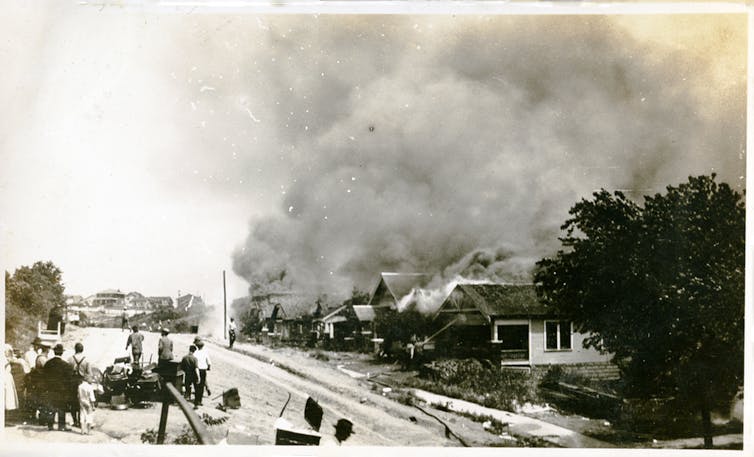
When Viola Fletcher, 107, appeared before Congress in May 2021, she called for the nation to officially acknowledge the Tulsa race riot of 1921.
I know that place and year well. As is the case with Fletcher – who is one of the last living survivors of the massacre, which took place when she was 7 – the terror of the Tulsa race riot is something that has been with me for almost as long as I can remember. My grandfather, Robert Fairchild, told the story nearly a quarter-century ago to several newspapers.
Here’s how The Washington Post recounted his story in 1996:
“At 92 years old, Robert Fairchild is losing his hearing, but he can still make out the distant shouts of angry white men firing guns late into the night 75 years ago. His eyes are not what they used to be, but he has no trouble seeing the dense, gray smoke swallowing his neighbors’ houses as he walked home from a graduation rehearsal, a frightened boy of 17.
His has since been a life of middle-class comfort, a good job working for the city, a warm family life. But he has never forgotten his mother’s anguish in 1921 as she fled toward the railroad tracks to escape the mobs and fires tearing through the vibrant Black neighborhood of Greenwood in north Tulsa.”
“There was just nothing left,” Fairchild told the newspaper.
The Washington Post article said the Tulsa race riots of 1921 were among the “worst race riots in the nation’s history.” It reported: “The death toll during the 12-hour rampage is still in dispute, but estimates have put it as high as 250. More than 1,000 businesses and homes were burned to the ground, scores of Black families were herded into cattle pens at the fairgrounds, and one of the largest and most prosperous Black communities in the United States was turned to ashes.”
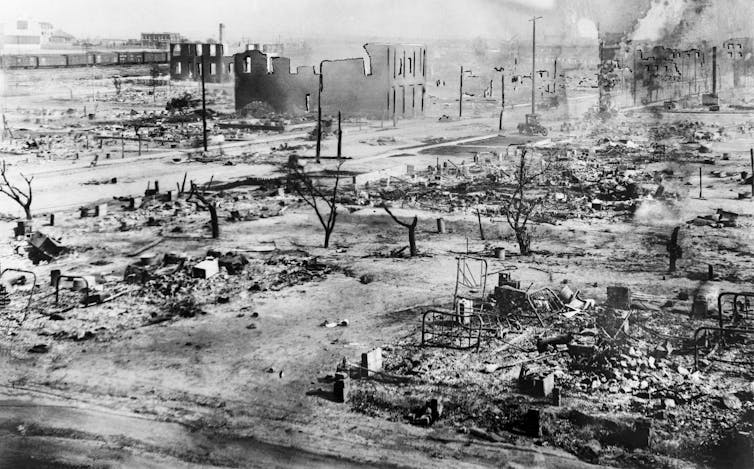
Riots began after a white mob attempted to lynch a teenager falsely accused of assaulting a white woman. Black residents came to his defense, some armed. The groups traded shots, and mob violence followed. My family eventually returned to a decimated street. Miraculously their home on Latimer Avenue was spared.
Disturbing history
Hearing about these experiences at the family table was troubling enough. Reading a newspaper account of your ancestors’ fleeing for their lives is a surreal pain. There’s recognition of your family’s terror, and relief in knowing your family survived what “60 Minutes” once called “one of the worst race massacres in American history.”
In spite of my grandfather’s witness, this same event didn’t merit inclusion in any of my assigned history texts, either in high school or college. On the occasions I’ve mentioned this history to my colleagues, they’ve been astonished.
In 1996, at the 75th anniversary of the massacre, the city of Tulsa finally acknowledged what had happened. Community leaders from different backgrounds publicly recognized the devastation wrought by the riots. They gathered in a church that had been torched in the riot and since rebuilt. My grandfather told The New York Times then that he was “extremely pleased that Tulsa has taken this occasion seriously.”
“A mistake has been made,” he told the paper, “and this is a way to really look at it, then look toward the future and try to make sure it never happens again.”
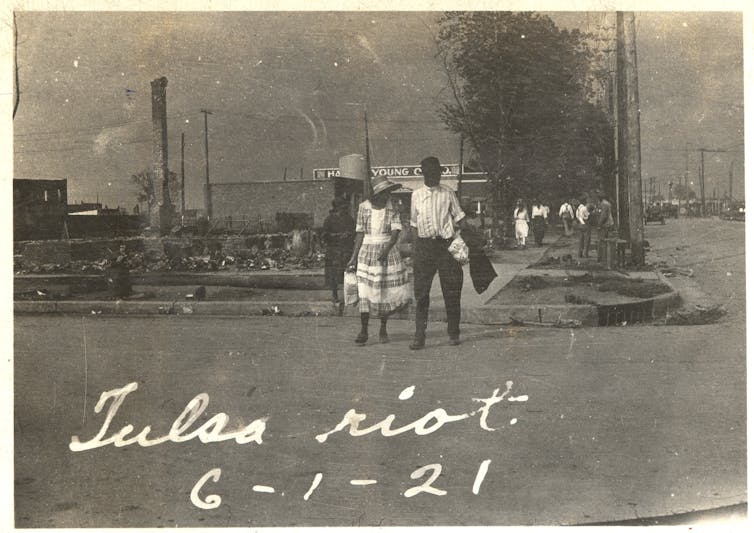
That it took so long for the city to acknowledge what took place shows how selective society can be when it comes to which historical events it chooses to remember – and which ones to overlook. The history that society colludes to avoid publicly is necessarily remembered privately.
Economically vibrant
Even with massive destruction, the area of North Tulsa, known as Greenwood, became known for its economic vitality. On the blocks surrounding the corner of Archer Street and Greenwood Avenue in the 1930s, a thriving business district flourished with retail shops, entertainment venues and high-end services. One of these businesses was the Oklahoma Eagle, a Black-owned newspaper. As a teenager in the early 1940s, my father had his first job delivering the paper.
Without knowing the history, it would be a surprise to the casual observer that years earlier everything in this neighborhood had been razed to the ground. The Black Wall Street Memorial, a black marble monolith, sits outside the Greenwood Cultural Center. The memorial is dedicated to the entrepreneurs and pioneers who made Greenwood Avenue what it was both before and after it was destroyed in the 1921 riot.
Although I grew up on military bases across the world, I would visit Greenwood many times over the years. As I grew into my teenage years in the 1970s, I recognized that the former vibrant community was beginning to decline. Some of this was due to the destructive effects of urban renewal and displacement. As with many other Black communities across the country, parts of Greenwood were razed to make way for highways.
Some of the decline was due to the exit of financial institutions, including banks. This contributed to a decrease in opportunities to build wealth, including savings and investment products, loans for homes and businesses, and funding to help build health clinics and affordable housing.
And at least some was due to the diminished loyalty of residents to Black-owned businesses and institutions. During the civil rights movement, downtown Tulsa businesses began to allow Black people into their doors as customers. As a result, Black residents spent less money in their community.
Historical lessons
At the end of my father’s military career in the 1970s, he became a community development banker in Virginia. His work involved bringing together institutions – investors, financial institutions, philanthropists, local governments – to develop innovative development solutions for areas like Greenwood. For me, there are lessons in the experiences of three generations – my grandfather’s, father’s and mine – that influence my scholarly work today.
On the one hand, I study how years after the end of legal segregation Americans remain racially separate in our neighborhoods, schools and workplaces and at alarmingly high levels. My research has shown how segregation depresses economic and social outcomes. In short, segregation creates closed markets that stunt economic activity, especially in the Black community.
On the other hand, I focus on solutions. One avenue of work involves examining the business models of Community Development Financial Institutions, or CDFIs, and Minority Depository Institutions, or MDIs. These are financial institutions that are committed to economic development – banks, credit unions, loan funds, equity funds – that operate in low- and moderate-income neighborhoods. They offer what was sorely needed in North Tulsa, and many other neighborhoods across the nation – locally attuned financial institutions that understand the unique challenges families and businesses face in minority communities.
Righting historical wrongs
There are interventions we can take, locally and nationally, that recognize centuries of financial and social constraint. Initiatives like the 2020 decision by the Small Business Administration and U.S. Treasury to allocate US$10 billion to lenders that focus funds on disadvantaged areas are a start. These types of programs are needed even when there aren’t full-scale economic and social crises are taking place, like the COVID-19 epidemic or protesters in the street. Years of institutional barriers and racial wealth gaps cannot be redressed unless there’s a recognition that capital matters.
The 1921 Tulsa race riot began on May 31, only weeks before the annual celebration of Juneteenth, which is observed on June 19. As communities across the country begin recognizing Juneteenth and leading corporations move to celebrate it, it’s important to remember the story behind Juneteenth – slaves weren’t informed that they were emancipated.
After the celebrations, there’s hard work ahead. From my grandfather’s memory of the riot’s devastation to my own work addressing low-income communities’ economic challenges, I have come to see that change requires harnessing economic, governmental and nonprofit solutions that recognize and speak openly about the significant residential, educational and workplace racial segregation that still exists in the United States today.
[You’re smart and curious about the world. So are The Conversation’s authors and editors. You can get our highlights each weekend.]
This is an updated version of an article originally published on May 21, 2020.
Gregory B. Fairchild, Associate Professor of Business Administration, University of Virginia
This article is republished from The Conversation under a Creative Commons license. Read the original article.
- Details
- Written by: Claudia Finkelstein, Michigan State University

The U.S. is in far different shape today than it was last Memorial Day, and many Americans are, too.
According to a recent survey by the American Psychological Association, undesired changes in weight driven by pandemic stress are widespread: 42% of adults reported gaining weight, with a median weight gain of 15 pounds, while 18% reported undesired weight loss. About 66% of people reported changes in their sleep habits, and 23% of respondents reported an increase in alcohol use.
In addition, many people have delayed routine medical and dental maintenance: Think mammograms, childhood immunizations and teeth cleaning. There’s also a mental health pandemic underway in parallel with increased substance use, which must also be addressed.
I am a physician and associate professor of medicine at Michigan State University’s College of Human Medicine. In my role as the director of wellness, resiliency and vulnerable populations, I hear the concerns of faculty and staff regarding returning to on-site work.
The switch that got flipped in March 2020 to social distancing, remote schooling, mask-wearing and long-distance work – or no work – is switching back almost as abruptly. With little preparation time, many people are faced with wanting to be in top form for reentry. Resuming – or beginning – healthier habits is a wonderful goal. Trying to get back to normal too quickly, however, may be hard on joints and hearts. Here is a guide to help you get back in shape without hurting yourself.
Attitude matters
It is vital to begin with acceptance of your current state while you plan and implement changes. It may be necessary to hold two seemingly contradictory truths at once – a core tenet of dialectical behavioral therapy, or DBT. A classic example of DBT is when a therapist tells a client, “I love you exactly the way you are, and I’m here to help you change.” The statements are simultaneously in opposition to each other and true.

Doing this in terms of pandemic-driven changes involves three steps:
-
Take note of the current reality, such as, “I am up 10 pounds,” “I am drinking more than before the pandemic,” or “I’m not getting enough exercise anymore,” but without negative self-judgment.
-
Make realistic, measurable goals for change: “I want to lose a pound in four weeks,” “I want to climb a flight of stairs without becoming breathless,” or “I will drink alcohol only when out with friends.”
-
Create a plan to achieve these goals.
Also, wanting to take good care of oneself, rather than wanting to look or be a certain way, is an important focus. A little self-knowledge goes a long way here. People who tend to go “all in,” rather than doing things gradually, need to be sure their plans are safe by seeking professional guidance from a reliable source, such as getting weight loss advice from a family doctor rather than from people or companies that a New York Times opinion writer recently described as “weight-loss profiteers.”
How can this process be applied to some common pandemic-driven health problems? Here are some suggestions.
Sleep
One of the most effective and “simple but not easy” ways to normalize sleep is to pay attention to one’s sleep hygiene. Good sleep hygiene includes having a distraction-free, dark, quiet place to sleep. This may require using a sleep mask, blackout curtains or a white noise machine, and having no TV in the bedroom.
Even parents of very young children who may find these steps unrealistic can make some changes to help improve sleep, such as avoiding naps, sticking to a schedule, developing a routine, and engaging in some physical activity to tire oneself out before bedtime. Having a cutoff time for caffeinated beverages, as well as avoiding late night dining and too much alcohol, also help.

If excessive snoring is a problem, or getting very sleepy and dozing off throughout the day, or any other unusual symptoms, consulting a doctor should be part of the plan.
Alcohol
There are many shades of alcohol consumption between complete abstinence and full blown alcohol use disorder. If the goal is to stop drinking alcohol entirely, it’s important to stay alert to signs of alcohol withdrawal, which can range in severity from symptoms of a mild hangover to delirium tremens (experiencing a sudden and severe state of confusion), seizures and delusions. The good news is that there are now medications in addition to behavioral and support groups that can help.
If you’re concerned, try a brief self-screening test and talk with your physician.
Physical activity
To come up with a safe exercise plan, start with an honest self-assessment. This includes looking at your current age and physical condition (particularly knees, hips, lungs, heart and balance); weight and weight changes during the pandemic; and activity levels before and during lockdown. The National Academy of Sports Medicine offers a downloadable questionnaire that can help with making this self-assessment.

Remember there are weight bearing, aerobic and stretching types of exercises. With each, begin at a level of comfort and gradually go slightly further. For example, if the goal is to start running, consider starting small, with a 30-minute routine a few days a week that involves a jog for one minute followed by walking for four minutes. Each week up the ante, such as shifting on the second week to jogging for two minutes then walking for three.
If the goal is to start walking, setting a time limit can help to achieve tangible goals: a 10-minute walk a few days the first week, 15 minutes the next week and so on, until the walk lasts 30 minutes and happens a few times a week. Then focus on increasing the pace.
Chest or arm pain, dizziness or extreme discomfort, are all signs to stop. While it’s useful to get to know what it feels like to be a little sore from working hard and how that differs from pushing it too far, it’s also a good idea to become familiar with the warning signs of a heart attack.
Whether they involve mental or physical health - while this tends to be an artificial separation - post-lockdown behavior changes should begin with an accurate assessment of how things are, a realistic goal for what they will become, and a plan to get there. All of these should reflect care and love for one’s self and one’s body.
Have a happy - and safe - reentry!
Claudia Finkelstein, Associate Professor of Medicine, Michigan State University
This article is republished from The Conversation under a Creative Commons license. Read the original article.
- Details
- Written by: Lake County News reports
KELSEYVILLE, Calif. — Although challenges posed by the pandemic prevented some students from achieving their goals this year, Kelseyville High School FFA students had a busy and productive year, said FFA advisers and agriculture instructors Donelle McCallister, Heather Koschik and Mike Zeni.
Kelseyville has a reputation for a strong FFA program, which the advisers attribute to the hard work of the students and the consistent support of school and district administrators.
KHS Principal Mike Jones was selected as the 2021 North Coast FFA Region Star Administrator and Kelseyville Unified School District Superintendent Dave McQueen has been a vocal supporter of the program for years.
According to its mission statement, the National FFA Organization is “dedicated to making a positive difference in the lives of students by developing their potential for premier leadership, personal growth and career success through agricultural education.”
This is done through a combination of classroom learning, FFA participation, and Supervised Agriculture Experience, or SAE, projects.
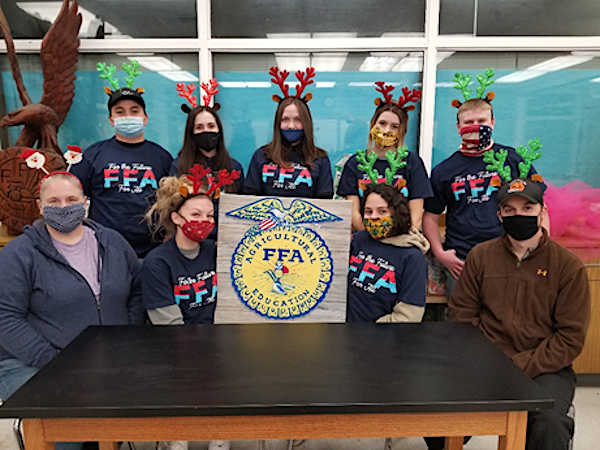
In order to offer an FFA program, high schools must have a certified and approved agriculture program.
McCallister said, “Even though the pandemic affected our schools, several agriculture students maintained SAE projects in livestock, horticulture, ag mechanics, and work experience.” At the 2020 Lake County Fair, for example, FFA students competed in market hogs, market steers, and rabbits with the following results:
— Grand Champion Market Steer and 1st in Showmanship: Laynie Wright.
— Grand Champion Market Hog: Robin Adams.
— Reserved Grand Market Hog: Laynie Wright.
— Hog Showmanship: 11 of the 14 students with hogs received showmanship pins.
— Reserved Grand Champion Rabbit Meat Pen: Katey Brown.
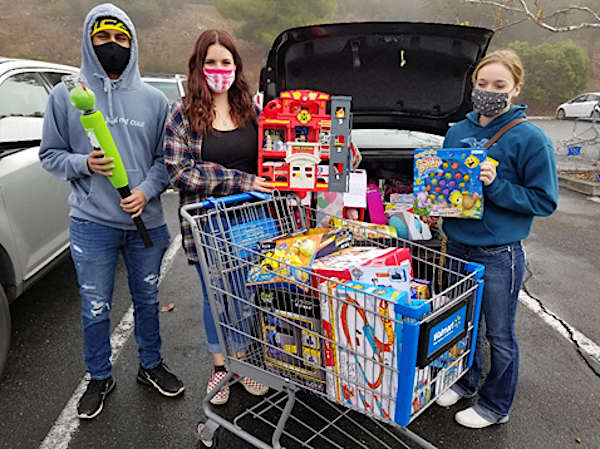
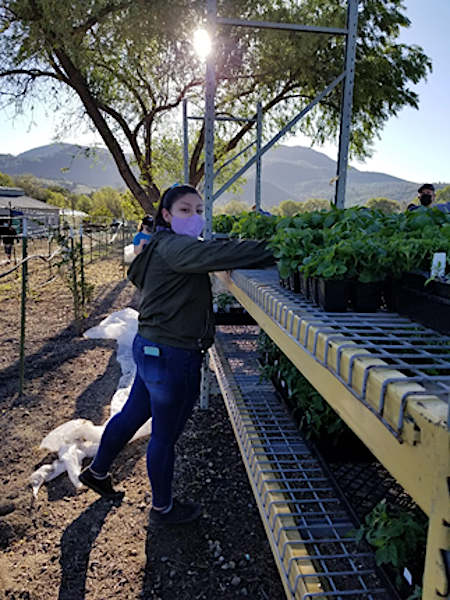
Students also participated in activities such as operating the Wildhurst Pumpkin Patch and Corn Maze in fall, donating toys for Lake County shelters in winter, selling thousands of plants they had grown during a two-day sale in spring, and assisting at the Lake County Gleaners with food packaging and delivery days in summer.
Although FFA officers always take on significant responsibility to manage their 300-student membership, the officers elected in May of 2020 had to overcome restrictions imposed by the pandemic.
The following students developed a program of activities and successfully ran monthly chapter meetings using Google Classroom: President Hanna Scully; Vice President Laynie Wright; Secretary Dallis Beverlin; Reporter Iyali Aguirre; Reporter Robin Adams; Treasurer Jenna Williams; Treasurer Omar Cacho; Sentinel Steven Frace; and ASB representative Macy Holt.
Four KHS students received their State FFA degree, a rare accomplishment with only 3 percent of the membership achieving this honor each year: Omar Cacho, Iyali Aguirre, Kaylie Davis, and Victor Sepulveda.
Requirements for the degree include completing two years of ag and earning or investing $1,000 in SAE; working in excess of 300 hours beyond school in SAE; 50 hours of community service participation in local-and-above chapter activities; completing agriculture experience tracker record books and submitting the books and applications.
Because FFA recognizes the importance of leadership, it hosts competitions to encourage public speaking, a key leadership skill.
At the Mendo/Lake FFA Section Job Interview Contest, Hanna Scully placed first and Iyali Aguirre placed second. At the Mendo/Lake Impromptu Speaking Contest, Steven Frace placed first.
In March, KHS junior Iyali Aguirre was elected as North Coast FFA Regional President for the 2021-22 school year, representing 38 North Coast FFA chapters. Aguirre was then selected to serve on the State FFA Nominating Committee interviewing 49 potential State Officer candidates to select 12 for the State ballot.
The 12 members of the State Nominating Committee selected Aguirre to announce the candidates for ballot and approval of the committee report during the State FFA Conference.
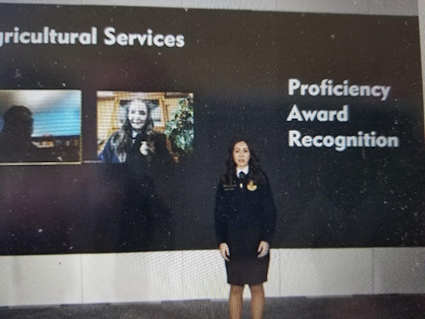
In March, KHS senior Hanna Scully was selected as the North Coast Regional winner in a proficiency award in Agricultural Services based on her work at her family-owned pear packing shed, Scully Packing. Based on her regional performance, she competed at the state level in May where she was announced as the winner.
She is currently in the process of submitting an application for the National Proficiency competition. Scully also won a State FFA Scholarship, the Mabel W. Jacks Memorial State Scholarship.
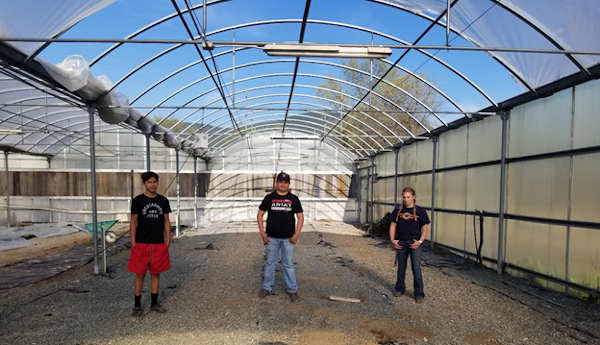
Kelseyville High School’s ag program features a two-acre ag farm on the high school campus with a livestock barn where students can keep and care for projects, a 7,000-square-foot greenhouse that recently got a permanent roof, a one-acre Sauvignon Blanc vineyard, a show ring, gardens, and more.
KHS also has a new ag mechanics shop, one of the projects funded by Measure U, the $24 million bond measure passed in 2016. The shop allows students to gain practical skills in woodworking, ag, metals, and mechanics.
“We cannot thank our community enough for their support,” McCallister said.