 How to resolve AdBlock issue?
News
- Details
- Written by: Karen Sullivan, Kim Riley and Terre Logsdon
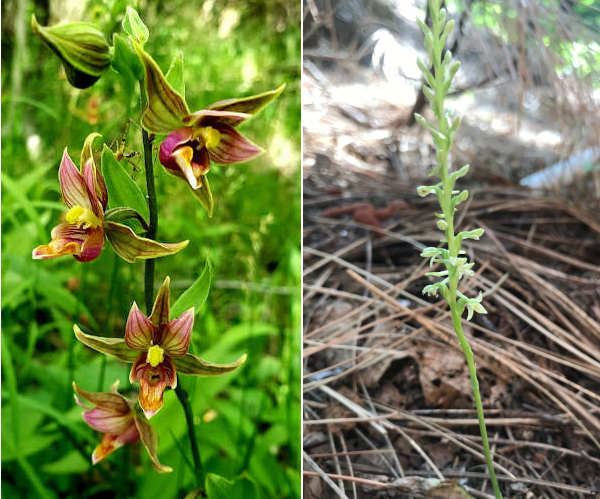
LAKE COUNTY, Calif. — When you think of orchids, it is usually along the lines of beautiful flowers, long bloom time, tropical location, then an impulse purchase of one from the grocery store, which you bring one home to enjoy for a while but it never blooms again no matter what you do and eventually shrivels up and dies.
But this is a column about native wildflowers in Lake County so why are we talking about orchids? Well, they grow here as well!
Actually, orchids grow on every continent in the world (except Antarctica) and Lake County is home to nearly 20 species of orchids and are delightful to observe in the wild and some species can be purchased from native plant nurseries to cultivate in your home garden.
“In the wild, E. gigantea lives near the water. Any water. They have been found in stream banks, perennial seeps, the edges of lakes, in marshes and even at the margins of hot springs! They are almost indifferent to water chemistry and temperature (if plants can grow in the water, it will),” according to the Orchid Society of Northern Nevada.
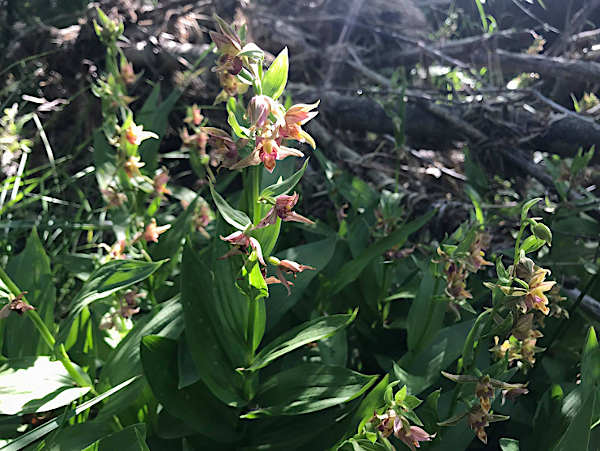
They prefer wet or marshy soils, but can survive being underwater occasionally (wet winters), which describes many of our riparian areas in Northern California and Lake County where streams go dry in the summer and when they do, giant stream orchids also dry up as well, and return in the late spring after a winter of rain even if they’ve been underwater for a while.
Tolerant of a range of soil types, giant stream orchids can grow in gravel, sand, or clay and can thrive with dappled sunlight, all the way to full sun depending on the amount of moisture in the soil, and are the best bet to attempt to grow orchids in your gardens here in Lake County.
When the two basal leaves of the Rein Orchid (Piperia elegans) begin growing in your yard in Cobb, you recognize that they look like orchid leaves — but Cobb is not a tropical environment — so you watch, and are delighted when the single stem with multiple buds open to fragrant small white/green flowers.
“Rein orchid plants are best enjoyed in their natural environment and they’re almost certain to die if you attempt to transplant wild plants into your garden,” according to the website Gardening Know How. “Like many terrestrial orchids, rein orchids have a symbiotic relationship with tree roots, fungus, and decaying plant debris in the soil and they won’t grow in a habitat that isn’t just right.”
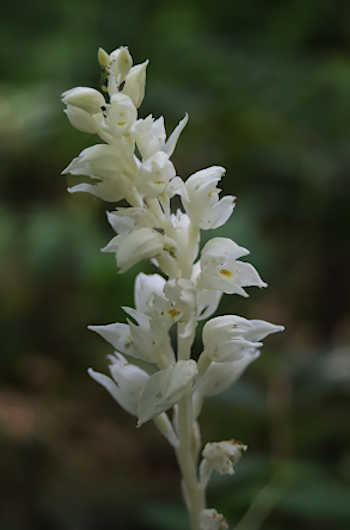
Another orchid that relies on fungus is the phantom orchid, and is the only Cephalanthera species entirely dependent on symbiotic mycorrhizae (fungus) for its nutrition. This mycoheterotrophic orchid has no chlorophyll, so it makes no energy for itself which causes the entire plant to be white, except for parts of the flowers.
Sadly, phantom orchids are becoming more scarce as its habitat — dense, isolated forest — becomes more rare, but a few still pop up in Lake County on Cobb and other higher-elevation forests, but climate change models forecast decline and possible extinction of this species by the year 2100.
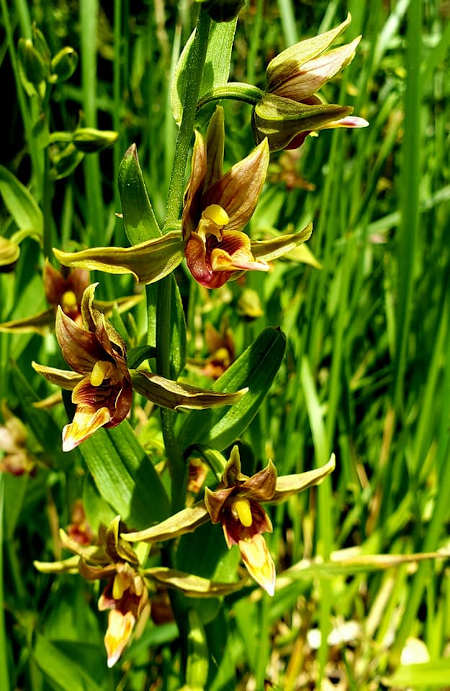
Although there are a wide variety of orchids native to Lake County, your best bet for growing some in your yard is the giant stream orchid — and it is a lovely choice if you have the right environment.
Find interesting information here on stream orchids and here for orchids in general.
To see and learn more about the species of Orchids in Lake County, visit CalFlora.
Find nurseries where you can purchase giant stream orchids here.
Terre Logsdon is an environmentalist, certified master composter, and advocate for agroecology solutions to farming. An avid fan and protector of California wildflowers, plants, natural resources, and the environment, she seeks collaborative solutions to mitigate the effects of climate change. Kim Riley is retired, an avid hiker at Highland Springs, and has lived in Lake County since 1985. After 15 years of trail recovery and maintenance on the Highland Springs trails, she is now focused on native plants, including a native plant and pollinator garden on her property as well as promoting and preserving the beauty of the Highland Springs Recreation Area. Karen Sullivan has operated two nurseries to propagate and cultivate native plants and wildflowers, has lived in Kelseyville for the past 30 years, rides horses far and wide to see as many flowers as possible, and offers native plants and wildflowers for sale to the public. You can check her nursery stock here. They are collaborating on a book, Highland Springs Recreation Area: A Field Guide, which will be published in the future. In the meanwhile, please visit https://www.facebook.com/HighlandSpringsNaturalists and https://www.facebook.com/HighlandSpringsRecreationArea.
- Details
- Written by: Lake County News reports
Boating appears to be surging in popularity in California and nationwide.
California agencies combating the spread of invasive quagga and zebra mussels ask new and seasoned boaters to remain cautious over the three-day Memorial Day weekend to prevent the spread of quagga and zebra mussels by cleaning, draining and drying their watercraft after each outing.
Quagga and zebra mussels are invasive freshwater mussels native to Europe and Asia. They multiply quickly, encrust watercraft and infrastructure, alter water quality and the aquatic food web, and ultimately impact native and sport fish communities.
These mussels spread from one waterbody to another by attaching to watercraft, equipment and nearly anything that has been in an infested waterbody.
Invisible to the naked eye, microscopic juveniles are spread from infested waterbodies by water that is entrapped in boat engines, ballasts, bilges, live-wells and buckets.
Quagga mussels have infested 34 waters in Southern California and zebra mussels have infested two waters in San Benito County, 13 of which are boatable by the public.
To prevent the spread of these mussels and other aquatic invasive species, people launching vessels at any waterbody are subject to watercraft inspections and should clean, drain and dry their motorized and non-motorized boats, including personal watercraft, and any equipment that contacts the water before and after use.
“The California Department of Food and Agriculture operates Border Protection Stations that inspect trailered watercraft entering the state” said California Department of Fish and Wildlife Invasive Species Program Manager Martha Volkoff. “These inspections are an integral part of preventing further introductions of mussels and are also a window into changes in boating trends.”
In the past two years, Volkoff said CDFW has seen a nearly 20% increase in watercraft passing through border protection stations between January and May since the COVID-19 pandemic began.
“Because of the additional boats, we have seen more mussel-fouled boat interceptions, but more concerning, we have also seen a significant increase in the proportion of mussel-fouled boats. We attribute this to many new boaters, who aren’t aware of the mussel issue and how to prevent their spread. Memorial Day is a great opportunity to spread the word to these boaters about the simple actions they should take,” Volkoff said.
CDFW advises boaters to take the following steps before leaving a waterbody to prevent spreading invasive mussels, improve the efficiency of your inspection experience next time you launch, and safeguard California waterways:
CLEAN — inspect exposed surfaces and remove all plants and organisms,
DRAIN — all water, including water contained in lower outboard units, live-wells and bait buckets, and
DRY — allow the watercraft to thoroughly dry between launches. Watercraft should be kept dry for at least five days in warm weather and up to 30 days in cool weather.
CDFW has developed a brief video, shown above, demonstrating the ease of implementing the clean, drain and dry prevention method as well as a list of Watercraft inspection Programs statewide.
In addition, California State Parks Division of Boating and Waterways has a detailed guide to cleaning vessels of invasive mussels and other information available on their web page.
Travelers are also advised to be prepared for inspections at California Department of Food and Agriculture border protection stations.
Over the past decade more than 1.5 million watercraft entering California have been inspected at the border protection stations.
Inspections, which can also be conducted by CDFW and California State Parks, include a check of boats and personal watercraft, as well as trailers and all onboard items.
Contaminated vessels and equipment are subject to decontamination, rejection, quarantine or impoundment.
Quagga and zebra mussels can attach to and damage virtually any submerged surface. They can:
— Ruin a boat engine by blocking the cooling system and causing it to overheat.
— Jam a boat’s steering equipment, putting occupants and others at risk.
— Require frequent scraping and repainting of boat hulls.
— Colonize all underwater substrates such as boat ramps, docks, lines and other underwater surfaces, causing them to require constant cleaning.
— Impose large expenses to owners.
A multi-agency effort that includes CDFW, DBW, CDFA and the Department of Water Resources has been leading an outreach campaign to alert the public to the quagga and zebra mussel threats.
CDFW’s invasive species e-mail,
- Details
- Written by: Elizabeth Larson
Dogs available for adoption this week include mixes of husky, McNab, pit bull, Rottweiler and shepherd.
Dogs that are adopted from Lake County Animal Care and Control are either neutered or spayed, microchipped and, if old enough, given a rabies shot and county license before being released to their new owner. License fees do not apply to residents of the cities of Lakeport or Clearlake.
The following dogs at the Lake County Animal Care and Control shelter have been cleared for adoption (additional dogs on the animal control website not listed are still “on hold”).
Call Lake County Animal Care and Control at 707-263-0278 or visit the shelter online at http://www.co.lake.ca.us/Government/Directory/Animal_Care_And_Control.htm for information on visiting or adopting.
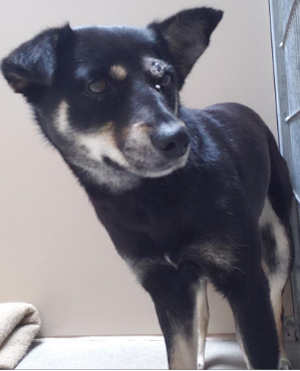
Female Rottweiler-shepherd
This female Rottweiler-shepherd mix has a medium-length black and red coat.
She is in kennel No. 12, ID No. 14575.
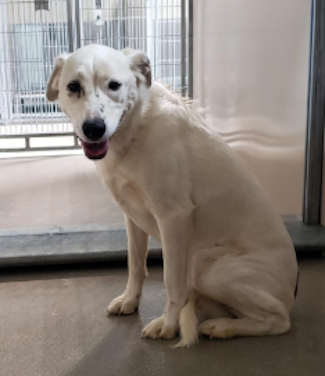
“Stimpy” is a young female McNab mix with a medium-length white and brindle coat.
She is in kennel No. 14, ID No. 14570.
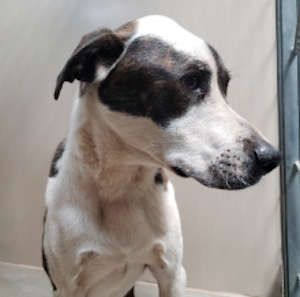
“Ren” is a young male McNab mix with a short brindle and white coat.
He has been neutered.
He is in kennel No. 15, ID No. 14571.
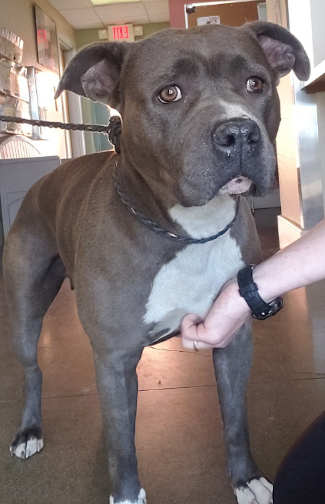
Female pit bull terrier
This female pit bull terrier has a short blue and white coat.
She is in kennel No. 22, ID No. 14486.

Rottweiler-pit bull mix
This female Rottweiler-pit bull mix has a short black coat.
She has been spayed.
She is in kennel No. 27, ID No. 14551.
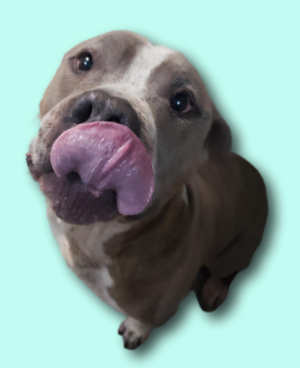
‘Brutus’
“Brutus” is a male pit bull terrier with a short gray and white coat.
He is in kennel No. 28, ID No. 14507.
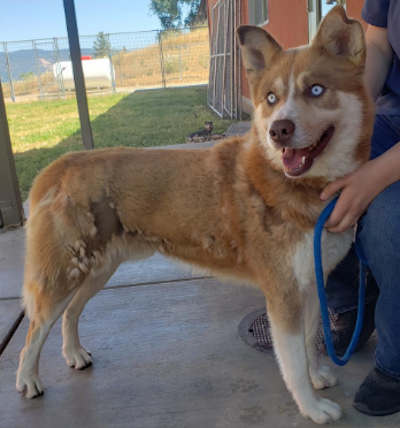
“Apollo” is a male husky mix with a medium-length red and white coat and blue eyes.
He is in kennel No. 31, ID No. 14569.
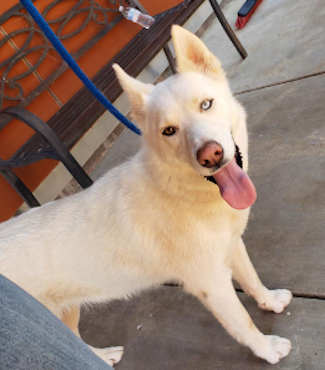
‘Ghost’
“Ghost” is as male husky mix with a white coat and blue eyes.
He has been neutered.
He’s in kennel No. 32, ID No. 14563.
Email Elizabeth Larson at
- Details
- Written by: NATIONAL AERONAUTICS AND SPACE ADMINISTRATION
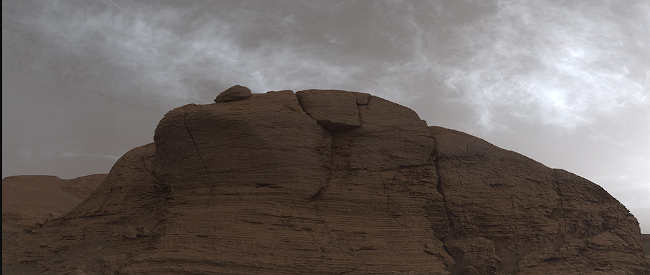
Cloudy days are rare in the thin, dry atmosphere of Mars. Clouds are typically found at the planet’s equator in the coldest time of year, when Mars is the farthest from the Sun in its oval-shaped orbit.
But one full Martian year ago — two Earth years — scientists noticed clouds forming over NASA’s Curiosity rover earlier than expected.
This year, they were ready to start documenting these “early” clouds from the moment they first appeared in late January.
What resulted are images of wispy puffs filled with ice crystals that scattered light from the setting Sun, some of them shimmering with color.
More than just spectacular displays, such images help scientists understand how clouds form on Mars and why these recent ones are different.
In fact, Curiosity’s team has already made one new discovery: The early-arrival clouds are actually at higher altitudes than is typical.
Most Martian clouds hover no more than about 37 miles in the sky and are composed of water ice. But the clouds Curiosity has imaged are at a higher altitude, where it’s very cold, indicating that they are likely made of frozen carbon dioxide, or dry ice.
Scientists look for subtle clues to establish a cloud’s altitude, and it will take more analysis to say for sure which of Curiosity’s recent images show water-ice clouds and which show dry-ice ones.
The fine, rippling structures of these clouds are easier to see with images from Curiosity’s black-and-white navigation cameras. But it’s the color images from the rover’s Mast Camera, or Mastcam, that really shine – literally.
Viewed just after sunset, their ice crystals catch the fading light, causing them to appear to glow against the darkening sky.
These twilight clouds, also known as “noctilucent” (Latin for “night shining”) clouds, grow brighter as they fill with crystals, then darken after the Sun’s position in the sky drops below their altitude. This is just one useful clue scientists use to determine how high they are.
Even more stunning are iridescent, or “mother of pearl” clouds. “If you see a cloud with a shimmery pastel set of colors in it, that’s because the cloud particles are all nearly identical in size,” said Mark Lemmon, an atmospheric scientist with the Space Science Institute in Boulder, Colorado. “That’s usually happening just after the clouds have formed and have all grown at the same rate.”
These clouds are among the more colorful things on the Red Planet, he added. If you were skygazing next to Curiosity, you could see the colors with the naked eye, although they’d be faint.
“I always marvel at the colors that show up: reds and greens and blues and purples,” Lemmon said. “It’s really cool to see something shining with lots of color on Mars.”
For more about Curiosity, visit https://mars.nasa.gov/msl/.
For more about NASA’s Mars program, visit https://mars.nasa.gov.