 How to resolve AdBlock issue?
News
- Details
- Written by: Elizabeth Larson
Lake County’s unemployment rate for April was 7.6 percent, down from 7.9 percent in March, according to the California Employment Development Department.
Statewide, unemployment held steady at 8.3 percent for the second month.
In April 2020, Lake County’s unemployment rate — as well as the statewide rate, were both 16 percent.
The Bureau of Labor Statistics said the nationwide unemployment rate in April was 6.1 percent, compared to 6 percent in March and 14.8 percent in April 2020.
In Lake County in April, total nonfarm jobs increased by 1.2 percent while the total farm jobs industry was down, -11.8 percent, over the previous month.
Total nonfarm job subcategories that showed the largest growth compared to March included transportation, warehousing and utilities, 30.5 percent; state government, 11.8 percent; mining, logging and construction, 10.1 percent; trade, transportation and utilities, 5.4 percent; and goods producing, 5.2 percent.
The five subcategories with the largest declines were information, -11.1 percent; wholesale trade, -10 percent; nondurable goods, -6.9 percent; government, -6.2 percent; and manufacturing, -5.6 percent.
Lake County was ranked No. 33 out of California’s 58 counties in this latest jobless report.
Neighboring county jobless rates and ranks for April are: Colusa, 13 percent, No. 57; Glenn, 6.9 percent, No. 25; Mendocino, 6.5 percent, No. 20; Napa, 6.3 percent, No. 17; Sonoma, 5.7 percent, No. 7; and Yolo, 6 percent, No. 11.
Marin had the lowest unemployment, 4.6 percent, while Imperial County’s 16.1 percent ranked it No. 58.
The state employment picture
California payroll jobs totaled 16,248,200 in April 2021, up by 101,800 from March 2021 and up by 1,302,100 from April 2020, the report said.
California’s April job gain accounts for 38 percent of the national gain of 266,000 jobs.
From February through April, the Employment Development Department said California added 390,300 total nonfarm payroll jobs, marking the state’s third consecutive month of gains over 100,000 jobs.
Seven of California’s 11 industry sectors gained jobs in April. Leisure and hospitality (+62,800) continued to have the state’s largest month-over increase thanks in large part to full-service restaurants. Professional and business services (+19,000) also posted a large gain thanks to strength in professional, scientific, and technical services, as did other services (+10,500) with an increase in personal care services.
Leisure and hospitality and other services, the hardest hit sectors during the pandemic, combined for nearly two-thirds of California’s job gains over the past three months.
Information (-3,500) saw the largest month-over industry sector loss, largely due to a decrease in software publishers.
The number of jobs in the agriculture industry decreased by 8,000 from March 2021 to 413,900 jobs in April. The agricultural industry had 44,700 more farm jobs in April 2021 than it did the April prior.
The Employment Development Department said there were 579,498 people certifying for Unemployment Insurance benefits during the April sample week. That compares to 680,279 people in March and 1,889,250 people in April 2020.
Concurrently, 78,640 initial claims were processed in the April 2021 sample week, which was a month-over decrease of 17,572 claims from March and a year-over decrease of 246,876 claims from April 2020, the state reported.
Email Elizabeth Larson at
- Details
- Written by: Adriana Navarro
As President Joe Biden and Senate Republicans grapple with determining the cost and layout of a new infrastructure plan, experts that AccuWeather spoke with explained how both a lack of upkeep as well as upward trends in damaging weather have accumulated into an "infrastructure crisis."
Dr. Marccus Hendricks told AccuWeather in an interview that the current infrastructure crisis the U.S. is facing stems mostly from prioritizing new infrastructure and focusing on initial construction and installation without attention to maintenance and management over the lifecycle of these assets.
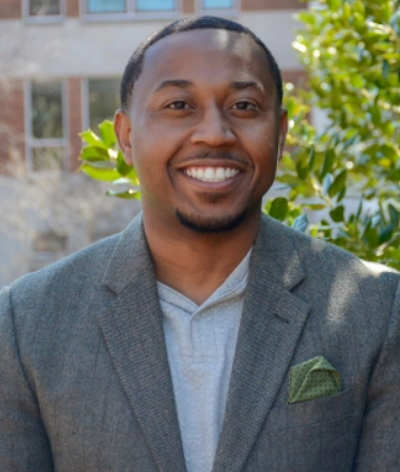
Hendricks is an assistant professor of urban studies and planning and the director of the stormwater infrastructure resilience and justice lab at the University of Maryland.
"We've allowed these systems to drop below a condition where we can fiscally save money by doing more incremental investments to maintain these assets," he said, explaining that it now requires a large investment to repair these systems in a way that meets the needs of the community.
Like a compromised support beam, the neglect of the systems over the decades has set the stage for pending catastrophes as damaging weather hits the communities.
"The crisis has been in the making in terms of every single day with every car passing on a road, with every storm event requiring systems to manage stormwater runoff," Hendricks said.
What's crumbling beneath our feet
It's long been acknowledged that a warming atmosphere and ocean have contributed to stronger, more intense natural disasters such as hurricanes, but the changing climate has also had its impact on the more mundane weather events. And as the more common weather events, such as a simple rainfall, grows, the more it outgrows and strains the infrastructure designed for a past age and climate.
"Our stormwater systems as they're currently installed and designed will require complete overhaul in terms of being able to address the needs of these wet weather events in light of climate change," Hendricks said.
As the climate changes and warms, more water evaporates. For every 1 degree Fahrenheit increase in temperature, the atmosphere can hold around 4% more water vapor, leading to heavier rain and increased risk of flooding of rivers and streams, according to Climate Central.
Since the 1950s, the wettest day of the year has grown wetter in 79% of the 244 cities analyzed by Climate Central in a research brief from 2019. In addition to this, even though 78% of the cities analyzed have data dating back at least a century, 35% of them have set rainfall records since 1990.
"One of the things that we've noticed, as it relates to flooding anyways, is especially in the last, let's say, 20 to 30 years or so, is that we've seen flood risk increasingly get worse in the country," Chad Berginnis, the executive director of the Association of State Floodplain Managers, told AccuWeather.
Some communities, however, are facing a disproportionate threat of flood risk. In March 2021, an analysis of 38 major cities by the real estate brokerage Redfin found that once-redlined neighborhoods with a large population of people of color were at a greater danger of flooding caused by climate change, Reuters reported.
"Redlining" refers to a practice, common from the 1930s into the late 1960s, in which mortgage lenders refused loans in parts of the cities with mainly large minority populations. The mortgage lenders would carve up the map in red, hence the name. As a result, the practice reduced the opportunities to own homes and investments in those areas.
The analysis found that of the cities analyzed, there are $107 billion worth of homes in formerly redlined areas at high flood risk compared to $85 billion worth of homes in areas marked green as best for loans, providing a glimpse at how redlining, while now illegal, had lasting consequences on today's generations.
"Communities of color have always faced issues of elevated risk, Hendricks said, "whether it's the sighting of land areas that were set aside for them to develop their communities and those areas usually being lower-lying areas or flood plains where no one else wanted to live or even thinking about the ways in which redlining was formally incorporated within municipalities to sequester and segregate certain communities and to be able to dictate which communities receive services and had the opportunity to own or buy housing."
"When you look at those [redlining] maps, they look strikingly similar to high flood risk [maps]," Redfin Senior Economist Sheharyar Bokhari, a co-author of the study, told Reuters.
Ironically, several fair housing organizations accused Redfin of systematic racial discrimination in a lawsuit during 2020, saying the online company offered fewer services to homebuyers and sellers in minority communities in a type of digital redlining, The Associated Press reported.
Hendricks added that civil rights, social justice and environmental injustice across the country are connected to "what we're contemporarily seeing as well as what we've historically seen in terms of disenfranchisement and marginalized communities being underserved or unserved all together."

How much are these events costing us?
With an increase in damaging weather events, it's only natural to see an increase in costs alongside them.
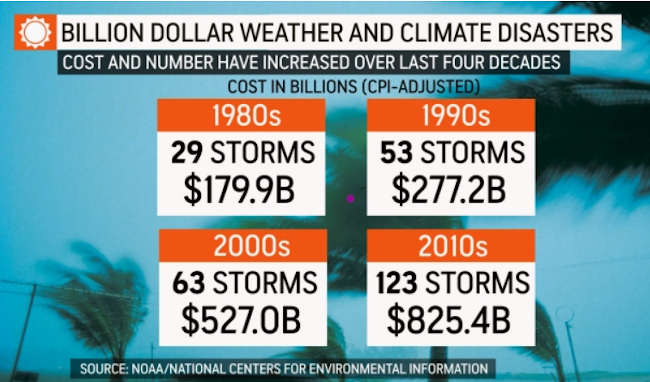
From 1980 into 2021, the U.S. has sustained 291 weather and climate disasters where the overall cost of damages reached or exceeded $1 billion, according to the National Oceanic and Atmospheric Administration (NOAA). Over the 41 years, these disasters have claimed the lives of more than 14,000 people and have racked up a price tag in excess of $1.9 trillion.
According to the NOAA data, the number of those events has increased each decade from 1980 through 2019.
The year 2020 was no less destructive. Hurricane Laura damaged the coastal area of southern Louisiana, broke water systems and severely damaged the area's electric grid; a record-breaking wildfire season scorched more than 10.2 million acres across the American West and destroyed several towns in California, Oregon and Washington; and storms and severe flooding along the shoreline of Lake Michigan in January caused significant damage to roads, homes and Port Milwaukee.
As Americans dealt with not only a global pandemic, but possibly even job loss and financial strain, 2020 generated a record-breaking 22 billion-dollar events, claiming 262 lives and costing $96.4 billion in damage. It shattered the previous annual record of 16 disaster events that occurred both in 2011 and 2017.
Carolyn Kousky, the executive director of the Wharton Risk Management and Decision Process Center at the University of Pennsylvania, told AccuWeather in an interview that low- and moderate-income households and communities typically struggle with access to resources for rebuilding efforts following disasters, despite the allocation of disaster aid.
"There's a common misperception that for big disaster events you can rely on federal disaster," Kousky said. But disaster aid is instead extremely limited and is often delayed in reaching households, she added, creating a recovery gap for lower-income households and communities after the disaster.
On the other hand, she added, there are localized events, such as intense rainfall, that are worsening with climate change that can cause flooding, but the disaster may be limited to just be one small community and neighborhood. Due to the small scale, it doesn't rise to the level that would enable the community to qualify for federal resources. But even the federal funding, such as grants from FEMA in the wake of the larger disasters, only goes so far.
The federal grants aren't designed to bring homes back to pre-disaster conditions. Instead, they are intended to make homes safe and habitable again after a disaster, Kousky said.
Another form of federal aid comes from the big events when Congress decides to allocate money through the Department of Housing and Urban Development, but it generally takes years before the money makes it into the pockets of the people impacted by the disaster.
"The challenge here, too, is that financial recovery really underpins all other aspects of recovery. So if you don't have the resources to make your home safe again and to get back into your home, then that causes all these negative sort of consequences," Kousky said.
For example, someone might have to divert funds from other important needs like health care to pay for keeping a home safe. The stress, she added, could also impact mental health.
As far as insurance goes, Kousky told AccuWeather that as climate disasters grow more severe, public policy over insuring losses from them may also change.
"As climate change is increasing the frequency and severity of many types of natural disasters, we're starting to see areas around the country where insurance becomes very difficult to get or extremely expensive," Kousky said, adding that they started to see signs of that kind of stress in California after the wildfires in 2017 and 2018.
Another example Kousky gave was that in general, the impact of sea levels on coastal area could rise through coastal flooding becoming more common.
"That's not a risk anymore," Kouksy said. "That's a certainty and we don't insure certainties, so this is going to start to be a problem in many parts of the country."
Building for tomorrow's weather
When planning for infrastructure to go up against floods, Berginnis suggests not designing it for today's weather, but for the flood conditions that might be realistic in the future, and Hendricks echoed his concerns.
"We can only expect for the intensity and frequency of wet weather and rainfall events to increase," Hendricks said. "With these increasing rainfall events, it adds a significant amount of pressure to existing systems."
However, Hendricks added that an additional challenge when planning ahead lies in the possibility that by the time the lengthy bureaucratic process is through, the designs that were developed for the systems and the costs associated with them may not be enough with the environment changing and atmospheric conditions evolving.
As far as managing insurance prices goes, Kousky suggests a tighter partnership between insurance, local-level building code and land-use decisions.
"What makes insurance cheaper and more available is lowering the risk, and so it really comes back to changing how we're living in high-risk areas, and that is a much harder conversation to have with people," Kousky said.
In addition, Hendricks added that part of the answer of how to build for the future lies not only in climate adaptation, but also climate resilience -- and making sure no communities fall behind in the process.
"If we don't provide an opportunity for just transitions, allowing for communities of color [and] low-income communities to be able to take advantage of some of these emerging technologies and green infrastructures and low-impact development, then essentially we perpetuate the same inequalities that we've seen historically and we leave communities behind," Hendricks said. "As some communities get greener, healthier or resilient, communities that have been historically overburdened and again underserved will be left behind and still burdened with antiquated systems of the past."
He went on to say that a vulnerable segment of a system anywhere makes the entire system more vulnerable.
"As cliché as it may sound, when it comes to infrastructure systems, we are quite literally only as strong as our weakest link," Hendricks said. "In order for us all to be resilient, we have to serve those vulnerable and underserved aspects of the system first."
Adriana Navarro is an AccuWeather staff writer
- Details
- Written by: Elizabeth Larson
However, in granting the appeal of the We Grow LLC project permit filed by concerned neighbors, the board said it was doing so without prejudice.
That will allow owner Zarina Otchkova the chance to resubmit the proposal, which her consultant indicated she planned to do.
In early 2020, Otchkova purchased 309 acres at 16750 Herrington Road, 17610 Sandy Road and 19678 Stinson Road in Middletown.
She went to the Lake County Planning Commission in April and received a vote of approval for a major use permit for a project that includes nine acres of cultivation, 35 greenhouses, four 50-foot by 100-foot drying buildings, a 200-square-foot shed, four 2,500-gallon water tanks and fencing, as Lake County News has reported.
By the following week, an appeal had been filed by a group of neighbors, some of them on hand for the board meeting on Tuesday morning.
However, while the appellants and their supporters showed up with signs ready to protest, they were caught off guard by what happened next.
When the hearing began, Board Chair Bruno Sabatier gave the floor to Scott De Leon, the county’s Community Development, Water Resources and Public Works director.
“This is a very large project, and it’s certainly the subject of a great deal of public interest,” as evidenced by attendance at Tuesday’s hearing, said De Leon, who attended the meeting from his office via Zoom.
“We’ve been diligent in our evaluation of the appeal and the questions raised about the environmental analysis for this project,” he said.
Based on that review, Community Development was modifying its recommendations to the board because De Leon said staff had discovered “procedural errors” that have rendered the project’s initial environmental study defective.
As a result, De Leon said the project could not move forward as presented.
He explained that changes were made to the project during the review process and the potential impacts to the environment that could result from those changes were not considered.
Due to those factors, he said he and his staff recommended the board grant the appeal and deny the project without prejudice, a statement interrupted by applause from the socially distanced audience in the board chambers.
De Leon said they expected the applicant would reapply, which they have the right to do, and staff will make revisions to the environmental analysis for the modified site plan and in consideration of concerns raised by the public.
Sabatier asked County Counsel Anita Grant to explain the meaning of denial without prejudice.
Grant said that it will allow the reapplication without waiting a standard six months. She said the board was prevented from making their required finding for the project in order to grant or deny a permit because the California Environmental Quality Act — or CEQA — analysis was defective.
“You cannot rely upon it in order to make the decisions that you have to make,” she said of the analysis.
“It is not just a choice, it is effectively the only reasonable choice you can make, which is to grant the appeal and deny the use permit without prejudice,” Grant added.
She said that will allow the applicant to reapply and allow the department to take the necessary corrective action as to the CEQA analysis, which has to be done before either the planning commission can hear it or the board can move forward.
Community members outline concerns
The board moved forward with allowing comments from the concerned community members who were in attendance either in the board chambers or on Zoom.
Hidden Valley Lake resident Jim Ryan, who lives on Greenridge Road directly below the project, said the concerns will remain in a month or a year. He said the proximity of large commercial cannabis grows to major residential areas is what needs to be addressed.
“We don’t want it to be a continuing issue, but it may be,” he said, adding a main issue is water.
Ryan added the neighbors were all in shock about the property’s suggested use.
Dan Levine, who lives in the nearby Shadow Hills Subdivision, told the board, “The negative impacts from this project would have been very substantial and quite numerous.”
Like Ryan, Levine said the problems won’t go away once We Grow reapplies.
“Please don’t trade our environment and our quality of life for a few extra tax dollars,” Levine said.
Scott Nagelson, whose family owns the property adjacent to the We Grow site, said he was grateful for what transpired at the meeting.
“We’re not gonna go away. We will be back if they reapply. We are all adamant that this is not appropriate for our neighborhood,” he said.
Jesse Cude, a representative of the appellants and a Shadow Hills Subdivision resident, asked the board to uphold the appeal with prejudice and to refund the appeal fees — which county documents showed totaled $1,136.30 — because he said they shouldn’t have to pay for the mistakes of others.
He also asked them to stop allowing new permits for any growing — whether it be cannabis for winegrapes — due to the drought.
Sufyan Hamouda, We Grow’s consultant, offered brief comments during the meeting. He said they received an email from Community Development on Monday letting them know the department was changing its recommendation to the board on Tuesday due to procedural oversight and the CEQA document that was submitted for this project.
“We do agree with the staff’s new recommendations,” said Hamouda.
Hamouda said he’d spoken with his client and will work closely with Community Development to make sure the amended CEQA document is accurate for the proposed project, which he indicated they intended to pursue.
At one point, Sabatier responded to criticisms from speakers about the planning commission — including assertions that they didn’t care about the community — noting that the commissioners are shackled by the rules and regulations the board created.
Attending remotely, Bart Levenson spoke about how the planning commission had listened to solid testimony about concerns with We Grow’s plans but concluded with its members saying they had no reason to deny the project.
She said the old rules do not apply, considering issues with droughts and fires. If the commission is shackled by the rules, “It is urgent that those rules be reexamined. It’s not OK to just say, ‘The rules are the rules.’ Not anymore.”
Donna Mackiewicz, representing the Redbud Audubon Audubon Society, pointed to other deficiencies with the environmental study of the project.
She said not all of the land had been fully surveyed. The biological report said the property is home to only 10 species of bird. Yet, Mackiewicz said she walked the property perimeter for a few hours on Sunday and saw 40 bird species.
Shannon Williams told the board about the unpermitted activity that We Grow started the minute they bought the property, including construction and an illegal cannabis grow.
Both in her statements to the board on Tuesday and in a letter in the board packet, Williams outlined another concern relating to a potential conflict of interest with a planning commissioner. Although she did not name the commissioner in question, it was an apparent reference to District 4 Commissioner Christina Price, appointed by Supervisor Tina Scott.
Price is a real estate agent who works for the same brokerage that represented Otchkova when she bought the land last year, said Williams, who said she also is in real estate.
“I see a huge conflict of interest there,” Williams said.
Board takes action; chair raises issue of rule changes
As the board prepared to take action, Grant explained, “This is going to be a reapplication process. This isn’t just kicking it back to the planning commission.”
She said county staff will have the opportunity to have an accurate and sufficiently comprehensive CEQA analysis. For the use permit, she said certain findings have to be made relating to services such as water, streets and highways, and the general comfort and welfare of the neighborhood.
Sabatier said the board had no other decision other than to deny the permit without prejudice.
He suggested concerned community members speak to the supervisors should the county ordinance that allows such cannabis operations need to be changed. He said the ordinance took three years to craft and while it has had amendments, there has been no major revisions.
Sabatier said rural residential zoning, where agriculture operations are allowed, is one area where it’s starting to get sensitive for certain areas when it comes to cannabis operations.
“Let’s have that conversation and see where it goes,” he said.
Supervisor Moke Simon said establishing the new cannabis industry comes with challenges. “It is one portion of the economic development opportunities.”
At Simon’s request, Grant gave the wording of the motion, which was to grant the appeal on the basis that the CEQA analysis was defective and to deny the use permit without prejudice.
Simon offered that motion, with Supervisor Jessica Pyska seconding and the board voting 5-0.
The vote received a round of applause.
Email Elizabeth Larson at
- Details
- Written by: Elizabeth Larson
The hearings will begin at 9 a.m. Wednesday, June 9, in the board chambers on the first floor of the Lake County Courthouse, 255 N. Forbes St., Lakeport.
The meeting can be watched live on Channel 8, online at https://countyoflake.legistar.com/Calendar.aspx and on the county’s Facebook page. Accompanying board documents, the agenda and archived board meeting videos also are available at that link.
To participate in real-time, join the Zoom meeting by clicking this link.
The meeting ID is 952 9577 3063, pass code 570411.
The meeting also can be accessed via one tap mobile at +16699006833,,95295773063#,,,,*570411#.
All interested members of the public that do not have internet access or a Mediacom cable subscription are encouraged to call 669-900-6833, and enter the Zoom meeting ID and pass code information above.
To submit a written comment on any agenda item visit https://countyoflake.legistar.com/Calendar.aspx and click on the eComment feature linked to the meeting date. If a comment is submitted after the meeting begins, it may not be read during the meeting but will become a part of the record.
On Wednesday the board will hold a public hearing on the recommended 2021-22 fiscal year budget, along with position allocations and the consideration of authorization for department heads to proceed with purchasing selected capital assets before the adoption of the final recommended budget later this year.
County Administrative Officer Carol Huchingson’s written report to the board notes that the fiscal year 2020-21 adopted budget was $322,362,410; the recommended budget for the new fiscal year is down by more than $15.3 million, for a total of $306,971,923.
Huchingson attributed the decrease to appropriation reductions in capital project funds.
Over the next two years, it’s expected Lake County will receive more than $12 million from the American Rescue Plan Act, Huchingson said.
Also on Wednesday, the supervisors — sitting as the Lake County Air Quality Management District Board of Directors — will consider the district’s 2021-22 final draft budget. That hearing is set to follow the main hearing.
Email Elizabeth Larson at