How to resolve AdBlock issue?
News
- Details
- Written by: Sofie Bates
While scientists at our partner institutions are directly focusing on shark conservation, NASA's Earth-observing satellites collect key information about sharks' habitat — the ocean.
NASA's satellites measure the height of the ocean, track currents, monitor marine habitats, and oversee water quality events like harmful algal blooms.
Our long-term data sets also help us understand how climate change is affecting the ocean and marine life. NASA shares ocean data with conservation groups, researchers and partners like the National Oceanic and Atmospheric Administration, or NOAA.

1. NASA satellites help track marine animals' movement
NASA satellite data combined with field measurements help scientists construct a clearer picture of the travel routes of sharks and other marine animals.
In 2019 with the Cloud-Aerosol Lidar and Infrared Pathfinder Satellite, or CALIPSO, a joint venture between NASA and the French space agency, the Centre National D'Etudes Spatiales, or CNES, observed a massive animal migration that takes place on our planet.
In this case, marine animals such as fish, krill and squid rise from the ocean depths to the surface to feast on microscopic plants called phytoplankton as well as smaller zooplankton and other animals on a daily basis.
Studies like this provide information about the food supply available to sharks and how changes in ecosystems could impact the health of sharks and other large marine wildlife.
Knowing where marine animals are by using NASA satellite data and field observations also supports sustainable fishing practices and reduces bycatch.
2. NASA studies the productivity of Earth's oceans
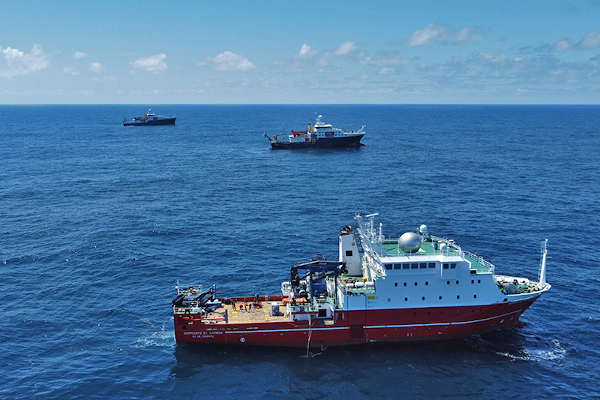
From space and ships and autonomous underwater vehicles, NASA's EXport Processes in the Ocean from Remote Sensing, or EXPORTS, campaign is studying the ocean's biological pump — the process by which carbon from the atmosphere and surface ocean is sequestered in the deep ocean.
This process starts at the surface, where phytoplankton draw carbon out of the atmosphere through photosynthesis.
This kicks off the marine food web because phytoplankton turn atmospheric carbon into food when they are eaten by tiny animals called zooplankton.
Those in turn are eaten by fish who are eaten by other fish and large marine animals, including sharks. When fish and marine animals die, they can carry the carbon stored in their bodies to the ocean floor.
3. A Hubble star-mapping algorithm tracks whale sharks
Back in 1986, a researcher at Princeton University developed an algorithm to map the stars and galaxies captured by NASA's Hubble Telescope.
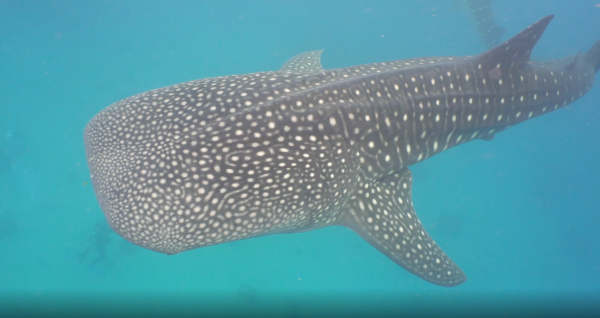
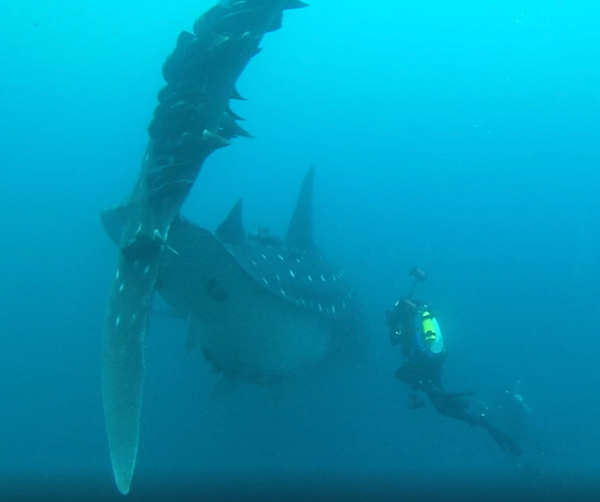
Now, that algorithm has been adapted to recognize the star-like patterns on speckle-skinned whale sharks.
This allows the algorithm to identify individual whale sharks, which helps scientists keep tabs on these rare, 40-foot-long sharks as part of the Australian nonprofit ECOCEAN's Whale Shark Photo-Identification Library.
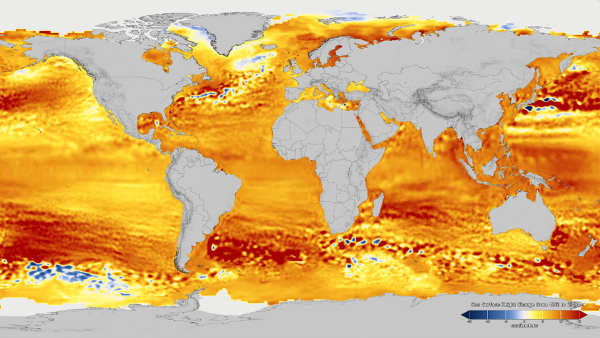
4. NASA measures changes in sea level rise and climate patterns
NASA has been measuring ocean height for almost 30 years, starting with the TOPEX/Poseidon satellite mission from 1992-2006 and continuing with the Jason-1, OSTM/Jason-2, Jason-3 and Sentinel-6 Michael Freilich missions.
These satellites can detect changes in ocean height within an inch, giving extremely precise measurements of sea level.
This information is crucial for understanding storm severity, sea level rise and climate patterns like La Niña, El Niño and the Pacific Decadal Oscillation that impact marine animals.
Sea surface height data is also useful for cleaning up marine oil spills, sustainably managing fisheries, routing ships and understanding the behavior of ocean animals like Stellar sea lions and whales.
In addition, sea level measurements are used to derive ocean surface currents and ocean eddies that continuously stir and mix the water, changing its biogeochemistry and thus impacting the behavior and migration patterns of sharks.

5. NASA is developing new missions to study Earth's oceans
NASA has three new missions planned to study the ocean. Scheduled to launch in 2022, the Surface Water and Ocean Topography, or SWOT, mission will measure small-scale ocean currents and swirling eddies to better understand the mixing and transport of water and nutrients as well as the dispersal of pollution into the ocean.
Monitoring ocean eddies is important to predict migratory patterns of megafauna, including sharks. SWOT is jointly developed by NASA and CNES with contributions from the Canadian Space Agency and United Kingdom Space Agency.
The Plankton, Aerosol, Cloud, ocean Ecosystem mission will use next generation "ocean color" technology to learn more about phytoplankton that live in the upper ocean. In addition to being the base of the marine food web, phytoplankton play a similar role to land plants by absorbing carbon dioxide and producing oxygen.
The Geosynchronous Littoral Imaging and Monitoring Radiometer (GLIMR) instrument will provide unique observations of ocean biology, chemistry and ecology in the Gulf of Mexico, portions of the southeastern United States coastline and the mouth of the Amazon River where it enters the Atlantic Ocean.
In the future, NASA's upcoming Earth System Observatory will use new and innovative techniques to study all facets of our planet, including the more than 70% of Earth's surface covered by ocean.
Sofie Bates is a member of NASA's Earth Science News Team based in Greenbelt, Maryland.
- Details
- Written by: Elizabeth Larson

LAKE COUNTY, Calif. — The Lake County Sheriff’s Office has concluded that damage to a boat led to a fatal boating accident on Clear Lake that claimed the lives of a Fresno couple last month.
Webster Medley III, 51, and Novia Walton, 50, died as a result of the accident, which involved the capsizing of Medley’s 19-foot 1985 Bayliner.
Early on the morning of Saturday, June 5, Medley and Walton, along with three members of Medley’s family, were on a nighttime fishing trip offshore of Clearlake Oaks when the boat began to take on water and capsized, as Lake County News has reported.
Family members said Medley had tried to save Walton, who couldn’t swim, when he went missing in the lake. She was found a short time later, face down in the water, while the other three passengers made it to shore safely.
Walton was transported to an out-of-county trauma center where she died later on June 5.
Medley’s body was found not far from the accident scene on the morning of June 6.
Following the accident, the Bayliner was transported to a county facility where Lt. Rich Ward said the sheriff’s Marine Patrol conducted a secondary examination.
Ward said that in addition to the Marine Patrol’s examination of the boat, the investigation was based on witness statements Marine Patrol received.
Based on that evidence, Ward said Marine Patrol had reached a conclusion.
“The cause of the accident is directly related to a damaged outboard transom,” he said.
The transom is the vertical section at the rear of a boat that strengthens its structure. It’s also where the outboard motor is mounted.
Ward said the autopsies of Medley and Walton concluded that the cause of death for both was asphyxia brain injury due to submersion in water and drowning.
The couple’s family reported that celebrations of life for Medley and Walton were held three days apart at the end of June in Fresno.
Email Elizabeth Larson at
- Details
- Written by: Lake County News reports
Assemblymember James C. Ramos (D-Highland) introduced HR 60, and the measure was the first proposal endorsed by the newly-formed California Native American Legislative Caucus which Ramos chairs.
The Assembly passed the measure on Thursday.
“Students were sent to these schools to coerce assimilation,” Ramos said. “They were punished for speaking their language and practicing their culture and religious beliefs. They were submitted to poor sanitation, disease, malnutrition and even starvation. Parents were not kept informed about the well-being of their children despite inquiries. Through Secretary Haaland’s investigation we have the opportunity to end the generations-long guessing game about what happened to those who did not return from the boarding schools.”
Native children were allowed to be separated from their families under the 1819 the Indian Civilization Act. The goal was to force assimilation by erasing Indian culture by separating Indigenous children from their parents and sending them to boarding schools.
Ramos added that a prevailing attitude was that of boarding school proponent, Capt. Richard Pratt: “Kill the Indian, and save the man.”
The U.S. government ran 25 boarding schools nationwide, of which three were in California, according to Gold Chains, a website dedicated to uncovering the hidden history of slavery in California.
Those schools were the Greenville School & Agency, founded in 1890; the Perris Indian School, which later became the Sherman Indian School, founded in 1892; and the Fort Bidwell Indian School, founded in 1898, according to the Carlisle Indian School Digital Resource Center.
However, several more schools, run by other organizations — including religious denominations — have been reported throughout California, with different groups studying the schools offering varying estimates of numbers.
Among those religious schools was St. Turibius Mission School in Kelseyville, run in the early 1900s.
The book “Lake County Schoolhouses,” by Antone Pierucci, Lake County’s former museum coordinator, explains, “From the latter part of the 19th century onward, Native children in Lake County were educated in segregated schools operated by a hodgepodge of the Bureau of Indian Affairs (BIA) and/or religious leaders. The reports sent to the state by the county superintendent indicate that at any one time, only two to three such segregated schools existed: Middle Creek north of Upper Lake, West Lake north of Lakeport, and Big Valley north of Kelseyville. Stories still told within families also suggest that many young children were sent to one of several BIA-operated boarding schools in the state.
Haaland’s investigation will identify boarding school facilities and sites, the location of known and possible student burial sites located at or near the school facilities and sites, and the identities and tribal affiliation of children interred at such locations.
Investigators will collect and review historical records including those at the American Indian Records Repository and the National Archives as well as school enrollment records, administrative reports, maps, photographs and other documents.
Haaland’s team will also formally consult with the tribal nations, Alaska Native corporations and Native Hawaiian organizations to determine the nature and scope of the proposed work, cultural concerns, potential dissemination of sensitive information and future protection of burial sites and repatriation of remains in compliance with the Native American Graves Protection and Repatriation Act.
A final report will be issued by April 1, 2022.
HR 60 was approved on a bipartisan unanimous voice vote with 71 Democrat and Republican members adding on as co-authors.
- Details
- Written by: Lake County News reports
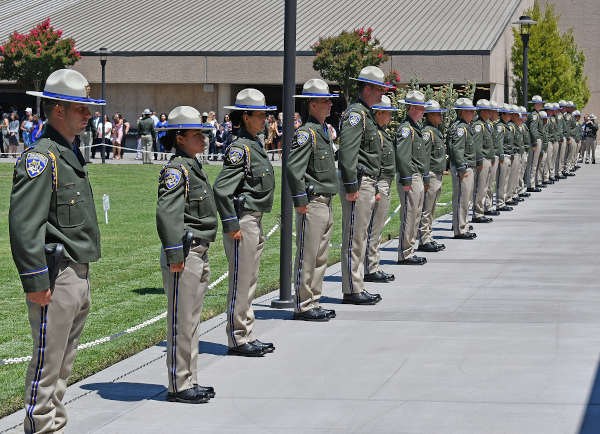
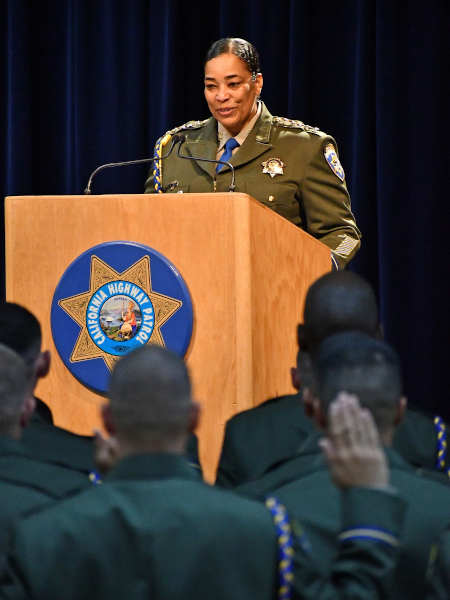
A determined group of California Highway Patrol cadets made it to graduation this week after a year of pandemic-related delays and challenges.
The long-awaited graduation of California Highway Patrol Cadet Training Class I-20 took place on Friday at the CHP Academy in West Sacramento.
The CHP’s 119 newest officers — 18 women and 101 men — received their badges following a swearing-in ceremony 75 weeks after their training began.
Lake County is among the many counties included in the CHP’s vast Northern Division.
A total of six new officers have been assigned to the following Northern Division offices: one, Garberville; one, Humboldt; two, Willow Creek Resident Post; and two, Garberville, Laytonville Resident Post, said CHP spokesperson Jaime Coffee.
Traditionally, cadet training at the CHP Academy takes place over 29 weeks.
However, a little more than a month after arriving at the academy on Feb. 10, 2020, safety precautions necessitated by the COVID-19 pandemic led to the closure of the live-in training facility in West Sacramento.
While away from the academy, cadets were assigned to CHP Area offices throughout the state to observe a wide variety of activities and tasks uniformed officers routinely perform, enhancing the knowledge they had gained in the classroom.
Cadets also participated in online learning for the first time.
“To say these cadets have been well-trained would be an understatement,” CHP Commissioner Amanda Ray said Friday. “Today’s graduates persevered through challenging circumstances over a lengthy period of time, demonstrating their commitment to serving the people of California.”
At the CHP Academy, cadet training starts with nobility in policing, leadership, professionalism and ethics, and cultural diversity. Cadets also receive instruction on mental illness response and crisis intervention techniques.
The training also covers vehicle patrol, accident investigation, first aid, and the apprehension of suspected violators, including those who drive under the influence of alcohol or drugs.
The cadets also receive training in traffic control, report writing, recovery of stolen vehicles, assisting the motoring public, issuing citations, emergency scene management, and knowledge of various codes including the California Vehicle Code, Penal Code and Health and Safety Code.
Upon graduation, these uniquely trained cadets will be reporting for duty to CHP Area offices throughout the state.
The mission of the CHP is to provide the highest level of safety, service and security.