 How to resolve AdBlock issue?
News
- Details
- Written by: Lake County News reports
To help protect its patients, workforce and communities from the highly contagious COVID-19 delta variant, not-for-profit Sutter Health — the parent organization of Sutter Lakeside Hospital in Lakeport — on Wednesday announced a new policy requiring its workforce to be fully vaccinated against COVID-19 by Sept. 30.
“Our integrated network has a shared commitment to protecting the health and safety of our patients and the communities we serve,” said Sarah Krevans, president and CEO of Sutter Health. “I am grateful the majority of our workforce and allied physicians have already demonstrated their leadership and their confidence in the COVID-19 vaccines by getting fully vaccinated.”
Sutter joins a growing number of leading organizations across the country who are requiring employees to get vaccinated to help protect against the virus.
The new policy at Sutter comes as the highly infectious delta variant is rapidly increasing the number of COVID-19 cases.
“Our rigorous COVID-19 infection prevention protocols have so far helped protect the health and safety of our patients and our workforce,” said William Isenberg, M.D., Ph.D., Sutter Health’s chief quality and safety officer. “However, these measures alone are not enough against the increasing threat of highly infectious variants like delta.”
Isenberg said the only way to get ahead of this virus once and for all is for everyone who is eligible to get vaccinated as soon as possible. “The unfortunate reality is that the delta variant is driving a surge in hospitalizations throughout our network and around the country, mostly among unvaccinated people.”
Lake County Public Health officials have reported in recent weeks that both Adventist Health Clear Lake and Sutter Lakeside Hospital have had more COVID-19 patients than ER beds.
That’s because Lake County’s case rate per 100,000 over a seven-day average has remained the highest in the state for the past month. On Wednesday, it was 57 per 100,000, according to the California Department of Public Health.
Over the weekend, Charlie Evans, MD, Lake County’s acting Public Health officer, had reported that the critically high county case rate had been putting the two hospitals under strain for the previous two weeks.
The situation prompted Evans to ask people not to overuse the county’s limited intensive care and emergency medicine resources, but to seek testing, vaccination and care for mild symptoms through other health care facilities and clinics.
Kim Lewis,a spokesperson for Adventist Health, told Lake County News that Lake County is currently at a positivity rate of 17%, where the rest of the state is around 6%.
“We are seeing an influx of patients with COVID-19 related symptoms and are providing them with appropriate care,” said Lewis.
Lewis said that because patients’ needs change daily, the hospital isn’t able to provide an exact count. “We have a 25 bed in-patient capacity, but can expand as needed.”
Lewis added, “As we continue to treat patients with COVID-19, we would like to remind our community and neighbors of the important role we all must play. Getting vaccinated and following CDC and state guidelines supports the health and well-being of community members and the physicians and nurses on the front lines.”
Ahead of its vaccination policy announcement, Sutter Health earlier this week said it was having challenges with growing numbers of COVID-19 patients.
“As much as we’re all ready to be done with the COVID-19 pandemic, it’s not yet done with us. The highly contagious delta variant is driving an increase in hospitalizations throughout our network and around the country, mostly among unvaccinated people,” the organization said in a statement.
Sutter Health urged people to get vaccinated, to be tested if necessary and informed them that they will need to wear masks at all of the organization's facilities.
- Details
- Written by: Lake County News reports
Those Lake County properties were burned in last year’s LNU Lightning Complex.
The return to county officials of the final outstanding property by state debris officials makes Lake County the second Bay Area county with every participating property returned as ready for the start of the permitting process.
Earlier, state debris officials returned the last of 28 participating properties in Mendocino County to county officials.
Properties are returned to officials in their respective county after the abatement of bulk quantities of asbestos containing materials; the removal of burned metal, concrete, ash and contaminated soils; confirmation by a certified laboratory that soil samples taken from the property meet state health and environmental standards; the implementation of erosion control measures; the removal of hazardous trees; and a final walk-through by state debris officials to make sure debris removal operations on the property meet the standards of the program.
To date, debris officials have returned an additional 471 properties to officials in four other Bay Area counties as ready to start the permitting process.
State debris officials have returned 227 participating properties to officials in Napa County. The 227 returned properties represent 70.5% of the 322 properties whose owners chose to take part in either the full debris removal program or the program's hazardous trees only element.
The state also has returned 160 or 65.6%, of 244 participating properties in Sonoma County as well as 75, or 98.7%, of 76 participating properties in Santa Clara County to local officials.
In addition, state officials have sent back nine, or 30%, of the 30 participating properties in San Mateo County to local officials.
As of Aug. 4, 2,254, or 50.1%, of the 4,497 properties statewide participating in either the full debris removal program or the hazardous trees only element of the program have been returned to their respective county to begin the permitting process.
In 2020, more than 8,000 climate-induced wildfires burned 4.2 million acres of California, destroying more than 5,700 homes.
Property owners incur no direct costs for participation in the state-managed clean up and recovery program, administered by the California Department of Resources Recycling and Recovery, or CalRecycle, and the California Governor's Office of Emergency Services, or Cal OES, in collaboration with 25 participating counties.
Major clearing work: 98% complete
To date, the remains of 2020 wildfire survivors’ homes and property — burned metal, concrete, ash, and contaminated soil — have now been cleared from 98.3% of the properties enrolled in California’s statewide Consolidated Debris Removal Program.
Most properties still need critical soil testing, erosion control, and hazard tree removal to ensure the lots are safe for families to rebuild.
Wildfire survivors had the option to either use their own contractor or enroll in the state-managed program. Of the 5,991 properties with damage from the 2020 fires, 3,842 signed up to have the remains of their homes and other structures cleared by the state.
An additional 655 property owners signed up to participate in the Hazardous Trees Only element of the program.
As of Aug. 4, state-managed crews cleared burned metal, concrete, ash and contaminated soil from 3,775 of the properties throughout the state participating in the full debris removal program.
In Napa County, crews have removed eligible debris from 310, or 99.4%, of the 312 properties taking part in the full program.
Earlier, crews have cleared debris from the last of 214 Sonoma County properties participating in the full program, as well as from all 72 Santa Clara County participating in the full program.
State contractors also have cleared eligible debris from all 28 Mendocino County properties participating in the full program; as well as all 13 San Mateo County and all nine Lake County properties participating in the full program.
Before homeowners can begin rebuilding, cleared properties need additional work including:
— Separate contractors collect soil samples for verification at a state certified laboratory that they meet state environmental health and safety standards.
— Contractors next may install erosion control measures.
— Certified arborists or professional foresters assess wildfire-damaged trees in danger of falling on the public or public infrastructure for removal by separate contractors.
— Finally, state officials inspect the property to verify all completed work meets state standards. Debris officials submit a final inspection report to local officials to approve the property for reconstruction.
Property owners can track the above data on the Debris Operations Dashboard for the 2020 statewide wildfires. The dashboard is updated every hour and provides users with the ability to search by county or address.
- Details
- Written by: Edna Ledesma, University of Wisconsin-Madison and Alfonso Morales, University of Wisconsin-Madison
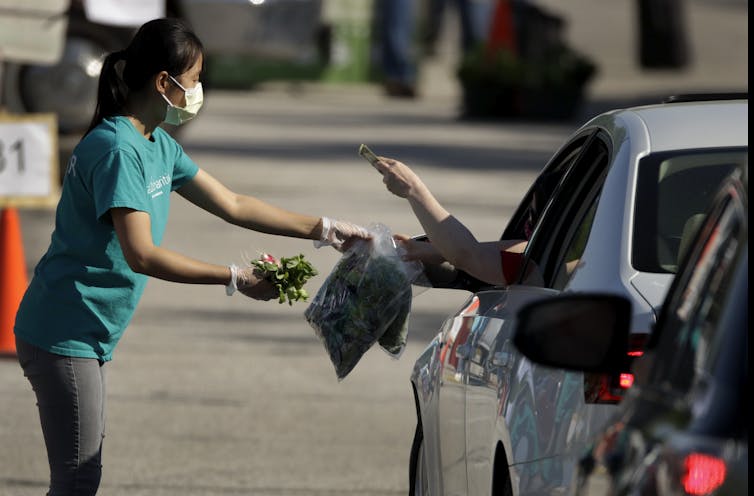
For many Americans, buying fresh local food at one of the estimated 9,000 farmers markets across the U.S. is one of summer’s pleasures. But farmers markets aren’t just nice amenities. Over the past 18 months, many have filled food supply gaps caused by COVID-19 shutdowns.
While numerous farmers markets shut down at the start of the pandemic, many soon reopened under state or local guidelines that mandated masks, social distancing and other precautions.
When grocery store supply chains were disrupted, consumer interest in local foods spiked, along with concerns about exposure to the coronavirus while shopping. Farmers market managers adapted swiftly, experimenting with options like prepackaged goods and drive-thru pickup.
In fact, many farmers markets enjoyed their strongest-ever sales in 2020. Affluent shoppers became more interested in buying local food, while lower-income buyers were able to use federal benefits like the Supplemental Nutrition Assistance Program. Stepping into this expanded role was no mean feat – but we know from our research in city planning and urban food systems that with adequate support, marketplaces respond vigorously to crises and opportunities.
The fall and rise of urban farmers markets
Farmers have been selling their goods at public markets in the U.S. for centuries. Many U.S. cities evicted or sidelined street vendors in the mid-20th century to make room for large-scale retail stores. But in the 1970s and ‘80s, farmers markets started reappearing in middle-class communities and suburbs.
This resurgence, which reflected the rise of the environmental movement, was most evident in university towns like Berkeley, California, and Madison, Wisconsin. In these communities, restaurants, farmers markets and educated consumers converged around the idea of eating locally produced food. Consumers wanted to taste flavors they remembered from childhood, and a new generation of growers were learning and practicing ecologically friendly farming methods.
At the same time, the U.S. Department of Agriculture became interested in the related phenomena of organic products and local foods sold directly to consumers. In the 1990s, the agency began to document the number of U.S. farmers markets.
Cities like Des Moines, Iowa, and San Antonio began to promote “placemaking” initiatives around markets, using them to help create quality public spaces. By the 2000s multifunctional markets became common, often serving racially and economically diverse populations.
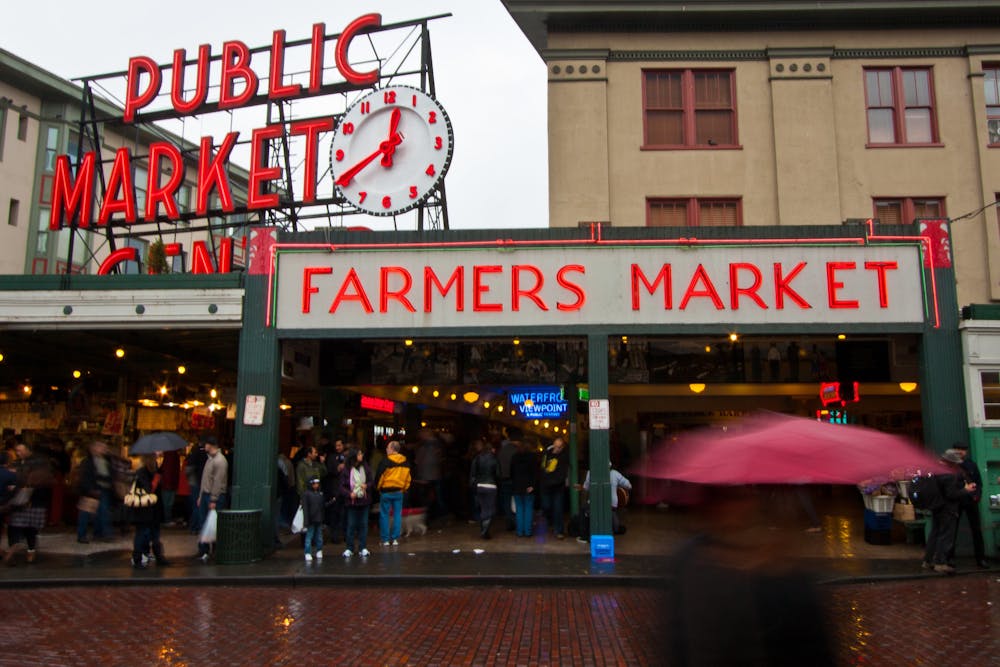
For example, by 2019 Chicago had 27 outdoor farmers markets across the city, offering goods such as clothing and furniture along with food. Some cities repurposed sites such as fairgrounds and drive-in theaters to house outdoor markets.
Governments began to view markets as policy tools for promoting food security, fostering new farmers and supporting place-based community development. Advocacy organizations supporting farmers markets also emerged to help markets attract public and private support. In 2008 the Farmers Market Coalition, a California-based nonprofit, was launched to represent markets around the country.
Filling COVID gaps
The pandemic worsened food insecurity in the U.S., where it already was a serious concern. A lack of reliable access to healthy food contributes to many long-term health issues, and has severe implications for child development.
According to the nonprofit organization Feeding America, food insecurity in the U.S. rose dramatically because of the pandemic. In 2020, 45 million people – including 15 million children – experiencing food insecurity, up from 35 million in 2019.
Farmers markets have become important tools for reducing food insecurity over the past 15 years. Most studies that measure food access focus on two factors: households’ proximity to food sources and access to transportation. Food sources can include supermarkets, discount stores, convenience stores, farmers markets and food pantries. Among these options, consumers purchase healthy food mostly at supermarkets and farmers markets.
Federal funding distributed through the U.S. Department of Agriculture transformed food security during the COVID-19 pandemic. The Coronavirus Food Assistance Program took a variety of steps to move locally and regionally produced food into schools, food banks and farmers markets.
About US$19 billion went to these various outlets. Farmers markets helped to expand access to food, with most states declaring them to be essential services.
While there are no uniform national statistics, surveys and media reports show that many food-insecure people shopped at farmers markets during the pandemic. A survey by the Farmers Market Coalition found that in the summer of 2020, purchases using SNAP benefits – the largest federal food assistance program – increased over 2019 levels at nearly 40% of markets that responded. From central Texas to western North Carolina to Connecticut, farmers markets reported dramatic increases in customers using SNAP and Pandemic Electronic Benefits Transfer cards.
Farmers markets for the 21st century
As the pandemic showed, farmers markets make communities more resilient during catastrophic events. We are working to help markets become more effective and efficient so that they can play even larger roles in their communities.
We have developed a toolkit called Farm 2 Facts for market managers to help them collect and analyze economic, ecological and other data to address a wide range of questions. For example, markets have used the program to track visitor counts and demographic trends, conduct outreach to low-income and minority shoppers and estimate the markets’ local economic impacts.
We also are developing ecosystem metrics to help farmers and markets educate consumers about farmers markets’ important ecological benefits. This tool will enable farmers to measure how their products promote environmental goals such as biodiversity and soil health.
[Over 100,000 readers rely on The Conversation’s newsletter to understand the world. Sign up today.]
Technology investments are helping farmers markets to grow. One priority is having the capability to process electronic benefits transactions so that the markets can serve customers at all income levels. And decision-support software like Farm 2 Facts can help them document how farmers markets promote health, equality and sustainability.
The next time you visit a farmers market, look past the corn and cucumbers. You’ll see an organization that’s promoting health and wellness, contributing to the local economy and bringing people together.
Edna Ledesma, Assistant Professor of Planning and Landscape Architecture, University of Wisconsin-Madison and Alfonso Morales, Vilas Distinguished Achievement Professor of Planning and Landscape Architecture, University of Wisconsin-Madison
This article is republished from The Conversation under a Creative Commons license. Read the original article.
- Details
- Written by: Elizabeth Larson
Brittany Marie Turner, 31, was identified as the crash victim, said Lt. Corey Paulich of the Lake County Sheriff’s Office.
In its Wednesday report on the crash, the CHP’s Clear Lake Area office said the crash occurred at 2:50 p.m. Saturday on Highway 20 west of Blue Lakes Road.
Brittany Turner was driving a 1997 Mazda Protege sedan eastbound with 34-year-old Patrick Turner of Ukiah riding as her passenger, the CHP said.
Driving westbound and approaching the Mazda was 18-year-old Robert Fetzer of Redwood Valley in a 2001 Volkswagen Jetta, with passenger Taylor Travis, 19, of Ukiah, the CHP said.
The CHP said that for reasons still under investigation, Brittany Turner’s Mazda sedan crossed over the solid double yellow lines and collided head-on into Fetzer’s Volkswagen.
Both vehicles became disabled within the westbound lane, the CHP said.
The CHP said Brittany Turner was extricated from the vehicle but, after life saving measures, she succumbed to her injuries on scene.
Neither alcohol nor drugs are suspected with the parties involved in the crash, the CHP said.
The CHP said Patrick Turner, who was not using his safety equipment, suffered major injuries. Fetzer had minor injuries, as did Travis.
The crash at Blue Lakes was the second fatal automobile wreck in Lake County on Saturday. Earlier in the day, a Hidden Valley Lake man died after his pickup was hit by a box truck near Middletown, as Lake County News has reported.
Email Elizabeth Larson at