 How to resolve AdBlock issue?
News
- Details
- Written by: Elizabeth Larson
The following cats at the shelter have been cleared for adoption.
Call Lake County Animal Care and Control at 707-263-0278 or visit the shelter online at http://www.co.lake.ca.us/Government/Directory/Animal_Care_And_Control.htm for information on visiting or adopting.

Female domestic shorthair kitten
This female domestic short hair kitten has a black coat.
She is in cat room kennel No. 11d, ID No. LCAC-A-1145.

Domestic medium hair cat
This 3-year-old female domestic medium hair cat has a brown tabby coat.
She is in cat room kennel No. 58, ID No. LCAC-A-1029.

Male domestic shorthair
This male domestic shorthair has a gray and white coat.
He is 1-year-old and weighs nearly 6 pounds.
He is in cat room kennel No. 120, ID No. LCAC-A-874.

Female domestic shorthair
This 2-year-old female domestic shorthair cat has a white coat and blue eyes.
She is in cat room kennel No. C123, ID No. LCAC-A-1152.

Female domestic shorthair
This 1-year-old female domestic shorthair cat has a black coat.
She is in cat room kennel No. 135, ID No. LCAC-A-1133.
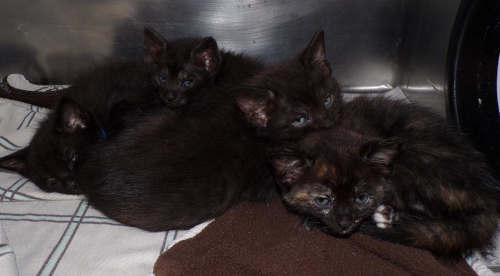
Domestic shorthair kittens
Two of the kittens in this litter remain available for adoption.
They are both males, No. 125B and ID No. LCAC-A-1139, and a No. 125C and ID No. LCAC-A-1140.
Email Elizabeth Larson at
- Details
- Written by: Mathew Barlow, University of Massachusetts Lowell
Leer en espanol
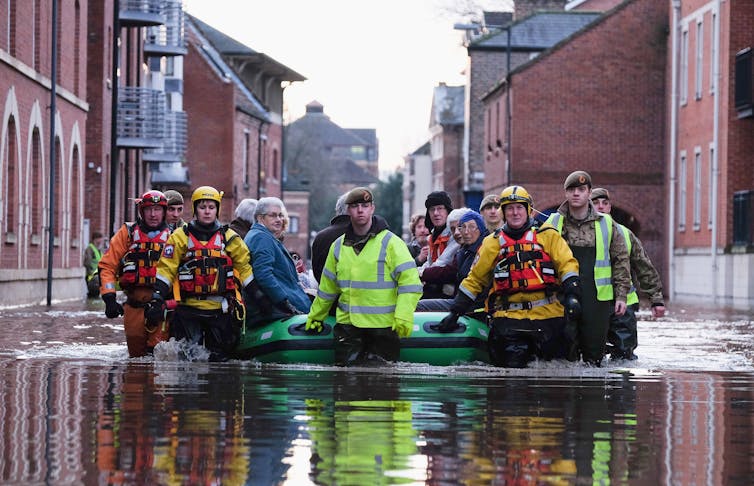
The world watched in July 2021 as extreme rainfall became floods that washed away centuries-old homes in Europe, triggered landslides in Asia and inundated subways in China. More than 900 people died in the destruction. In North America, the West was battling fires amid an intense drought that is affecting water and power supplies.
Water-related hazards can be exceptionally destructive, and the impact of climate change on extreme water-related events like these is increasingly evident.
In a new international climate assessment published Aug. 9, 2021, the Intergovernmental Panel on Climate Change warns that the water cycle has been intensifying and will continue to intensify as the planet warms.
The report, which I worked on as a lead author, documents an increase in both wet extremes, including more intense rainfall over most regions, and dry extremes, including drying in the Mediterranean, southwestern Australia, southwestern South America, South Africa and western North America. It also shows that both wet and dry extremes will continue to increase with future warming.
Why is the water cycle intensifying?
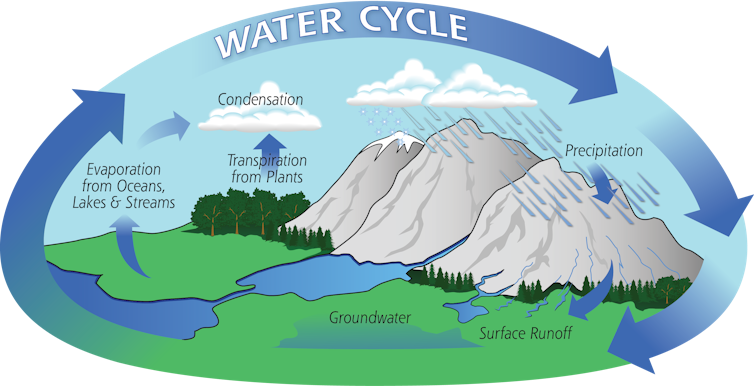
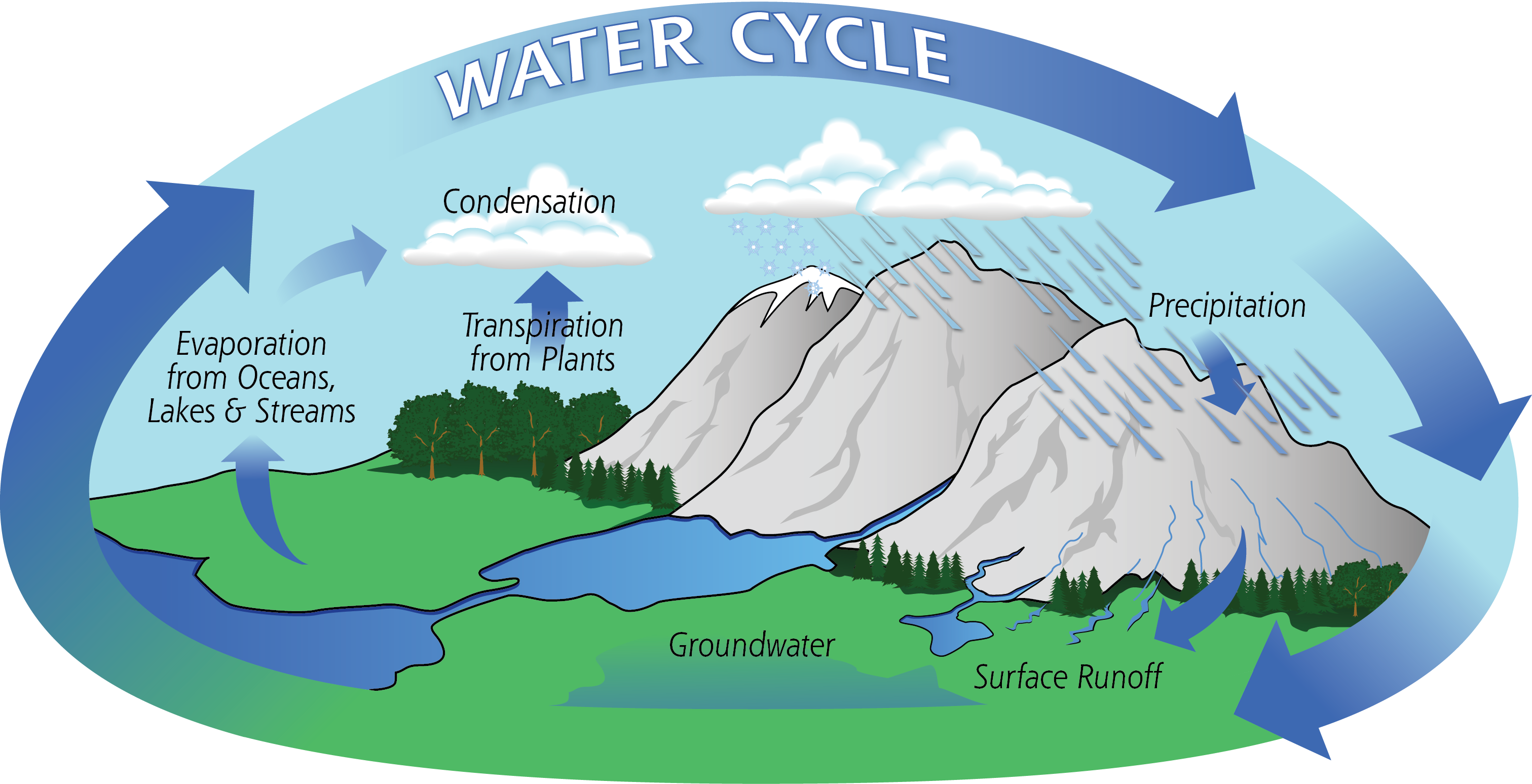
Water cycles through the environment, moving between the atmosphere, ocean, land and reservoirs of frozen water. It might fall as rain or snow, seep into the ground, run into a waterway, join the ocean, freeze or evaporate back into the atmosphere. Plants also take up water from the ground and release it through transpiration from their leaves. In recent decades, there has been an overall increase in the rates of precipitation and evaporation.
A number of factors are intensifying the water cycle, but one of the most important is that warming temperatures raise the upper limit on the amount of moisture in the air. That increases the potential for more rain.
This aspect of climate change is confirmed across all of our lines of evidence: It is expected from basic physics, projected by computer models, and it already shows up in the observational data as a general increase of rainfall intensity with warming temperatures.
Understanding this and other changes in the water cycle is important for more than preparing for disasters. Water is an essential resource for all ecosystems and human societies, and particularly agriculture.
What does this mean for the future?
An intensifying water cycle means that both wet and dry extremes and the general variability of the water cycle will increase, although not uniformly around the globe.
Rainfall intensity is expected to increase for most land areas, but the largest increases in dryness are expected in the Mediterranean, southwestern South America and western North America.
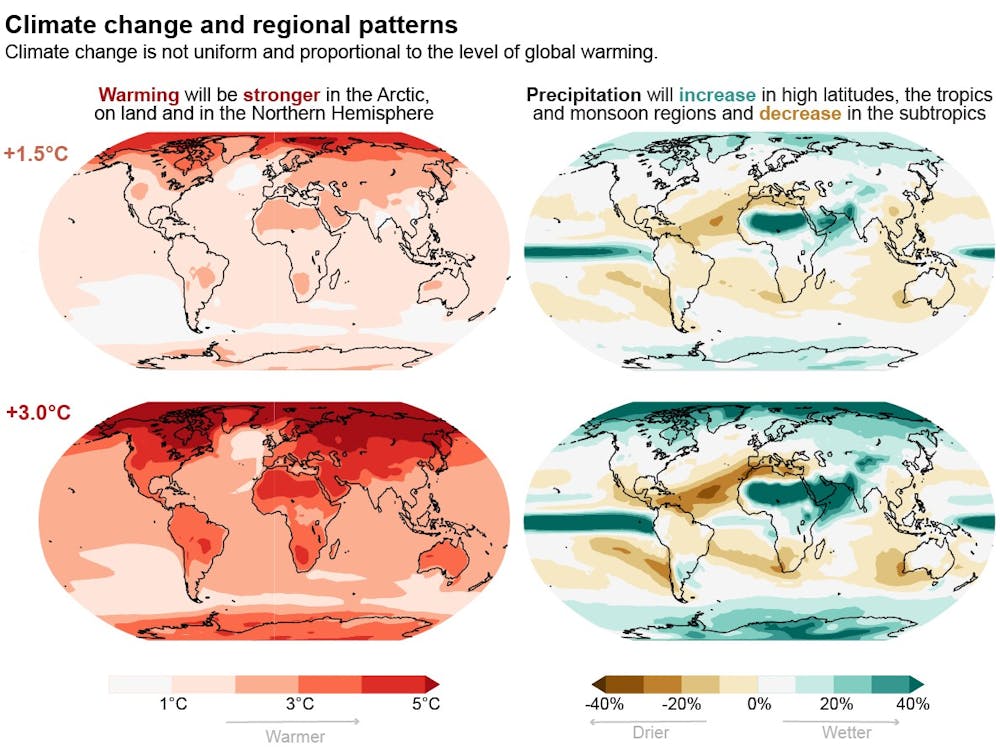
Globally, daily extreme precipitation events will likely intensify by about 7% for every 1 degree Celsius (1.8 degrees Fahrenheit) that global temperatures rise.
Many other important aspects of the water cycle will also change in addition to extremes as global temperatures increase, the report shows, including reductions in mountain glaciers, decreasing duration of seasonal snow cover, earlier snowmelt and contrasting changes in monsoon rains across different regions, which will impact the water resources of billions of people.
What can be done?
One common theme across these aspects of the water cycle is that higher greenhouse gas emissions lead to bigger impacts.
The IPCC does not make policy recommendations. Instead, it provides the scientific information needed to carefully evaluate policy choices. The results show what the implications of different choices are likely to be.
One thing the scientific evidence in the report clearly tells world leaders is that limiting global warming to the Paris Agreement target of 1.5 C (2.7 F) will require immediate, rapid and large-scale reductions in greenhouse gas emissions.
Regardless of any specific target, it is clear that the severity of climate change impacts are closely linked to greenhouse gas emissions: Reducing emissions will reduce impacts. Every fraction of a degree matters.
[Understand new developments in science, health and technology, each week. Subscribe to The Conversation’s science newsletter.]
Mathew Barlow, Professor of Climate Science, University of Massachusetts Lowell
This article is republished from The Conversation under a Creative Commons license. Read the original article.
- Details
- Written by: ESTHER OERTEL
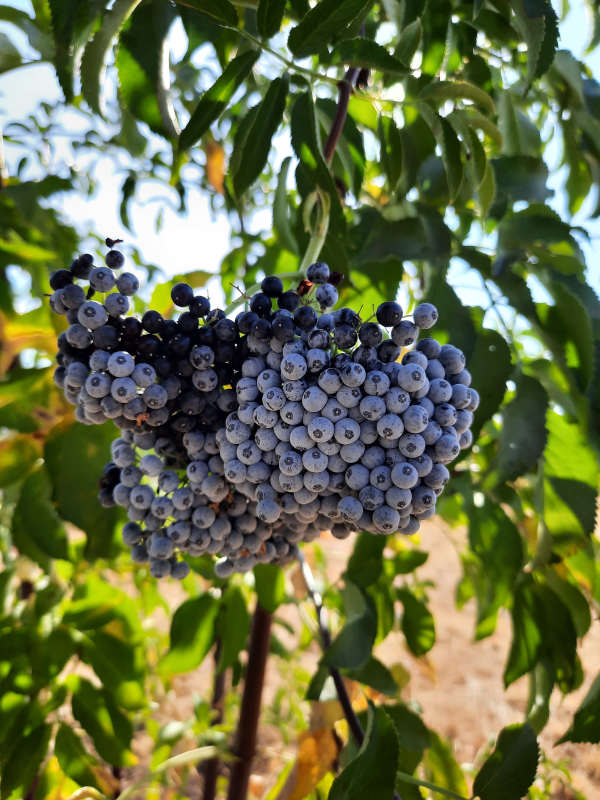
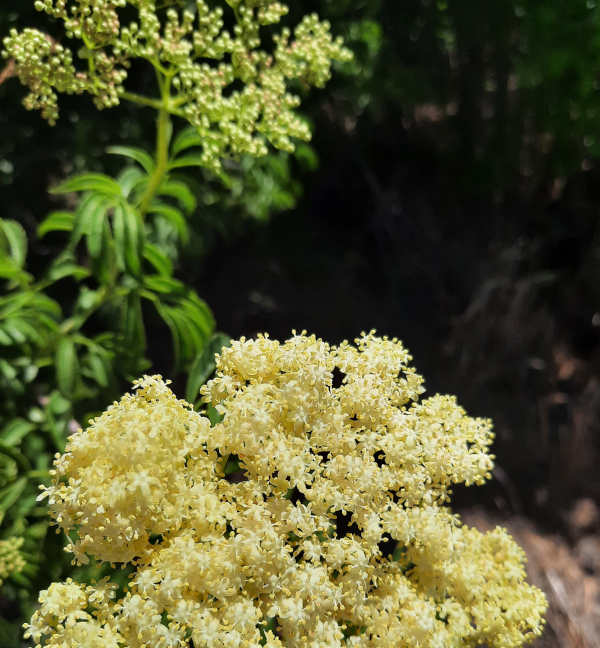
LAKE COUNTY, Calif. — Elderberries are hiding in plain sight almost everywhere this time of year. What begins as large, lacy, cream-colored flowers in late spring culminates in compact clusters of dark purply-blue berries ripe for the picking as summer winds down.
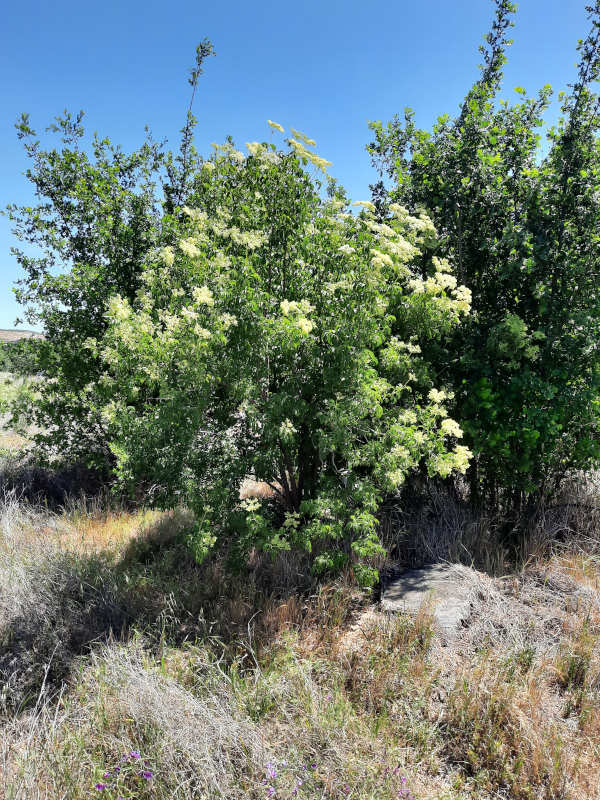
Elderberry shrubs are native to Lake County and bloom along roadways, hillsides and fields in May and June. Once I began looking for them, I realized just how ubiquitous they are. I noticed them along major roadways, in county parks, within residential areas, on mountainsides and in lower elevations.
What we see here is the blue elderberry, a deciduous shrub endemic to an area from Oregon to Baja California and as far east as western Texas. Also known as the Mexican Elderberry or Tapiro, it sometimes grows to a height of 30 feet, making it quite tree-like when it gets that tall. Most are of shorter stature.
These plants are tough and fast growing — they can get up to 15 feet high in just three years if conditions are right. Its berries are one of the most important food sources for birds in California.
Elderberries have long had a place in human history, with evidence of their use found in Stone Age sites. They’ve been used as folk medicine for thousands of years, and no wonder — they’re full of antioxidants, fiber, and vitamins A, B and C, as well as being immune-boosting, anti-inflammatory and antiviral.
They were an important resource for indigenous peoples throughout California, including Lake County tribes, who utilized all parts of the plant for a variety of things — food, medicines, baskets, dyes, game pieces, pipes and musical instruments.
According to Sage LaPena, a Nomtipom and Wintu ethnobotanist and certified medical herbalist, “Elderberry is one of our most important traditional medicines and we’ve never stopped using it. When we look at our traditional ecological knowledge, how we use elderberry — which includes all parts of the plant: roots, wood, berry, flower — they are all harvested at specific times of year.”
In fact, the elderberry lifecycle served as some tribes’ indicator of seasonal rhythms, guiding the timing of other food harvests. For example, Coastal Pomo tracked the shellfish harvesting window by the flowering and ripening of the elderberry.
The flowers were used medicinally — as a tea for treating fevers and other ailments, or in a hot bath to induce sweating. The berries were dried and stored for winter use, when they were cooked to create a rich, sweet sauce.
Millie Simon, Middletown Rancheria of Pomo Indians tribal elder, recalls gathering elderberries with her mother as a child. On occasion an aunt joined them in this traditional food gathering role. They ate fresh berries as they picked them, but most were saved to process into a jelly-like sauce for use throughout the year.
Elderberries can be used in a variety of ways in cuisine — tasty syrups, jams, wines and liqueurs can all be created from the berries, and a handful can be thrown into your favorite muffin or pancake recipe with delicious results.
Dried elderflowers (from those harvested locally or ordered online) can be added to batters and baked into cakes, and wine and syrup can also be made from the flowers.
Tea is made from dried flowers or berries, sometimes mixed with other herbs.
Supporters of elderberry say the fruit is one of nature’s most versatile solutions for what ails you. Hippocrates, often called the father of medicine, referred to the elder tree as his “medicine chest.”
Some experts recommend elderberries to help prevent and lessen cold and flu symptoms, and they’ve also been used as a treatment for a variety of ailments from constipation to fever to epilepsy to skin conditions.
Caution should be used when consuming elderberries in their raw state. The shrubs contain cyanogenic glucosides, substances that release cyanide; however, cooking the ripe berries render them harmless.
Dr. Kenneth Lampe, author of the AMA Handbook of Poisonous Injurious Plants, says, “the flowers are probably non-toxic and limited quantities of raw fruit are generally considered to have no adverse effect. The danger comes mainly from roots, stems and leaves.”
Even so, be careful. I can’t recommend consuming the berries in their raw state unless you’re a practiced forager of these goodies. Either way, be sure not to consume under ripe berries, as they can cause stomach upset.
If you’re interested in foraging for the berries, keep these things in mind:
— Know what you’re looking for. If you’re unsure what shrubs contain blue elderberries or what they look like when ripe, ask someone in the know to show you.
— Make sure to discard the leaves and stems after picking.
— Blue elderberries may look more powdery white than blue. This is from a naturally occurring yeast that coats the berries. It’s perfectly harmless.
— Don’t pick the berries individually; cut off the clusters whole. When you’re home and after they’re washed, freeze them. Once frozen, place the clusters over a bowl and run your fingers through them. The hard berries will fall off easily for use. Be sure to discard the stems.
— A good method for washing is to swirl them in a bowl of water and then rinse in a colander.
— Lastly, be sure to leave some for the birds to enjoy.
Today’s recipe is for elderberry syrup. While it can be made with dried berries, this recipe utilizes the fresh ones available now.
The syrup can be used medicinally or drizzled over pancakes, waffles, French toast and even ice cream.
Elderberry syrup
2 cups fresh elderberries
1 cinnamon stick (optional)
1 - 2 inch length of orange zest, any white pith removed (optional)
2 cups water
1 cup honey
Place the elderberries and water in a saucepan. Add the cinnamon stick and orange zest, if using, and bring to a boil over medium-high heat.
Reduce heat to medium-low and gently simmer the mixture until it has reduced by half, about 30 minutes or so.
Place a fine mesh sieve over a bowl and strain mixture, pressing on the solids to release all liquid. Discard the solids.
Let the liquid cool for 20 minutes, then stir the honey into the still warm mixture until fully combined.
Pour the syrup into a glass jar with a lid and store in the refrigerator.
This recipe makes about one pint of syrup and should last three months if stored in glass and refrigerated.
Note: Dried elderberries can be ordered online. If using those, reduce the amount of berries to ¾ cup.
Esther Oertel is a writer and passionate home cook from a family of chefs. She grew up in a restaurant, where she began creating recipes from a young age. She’s taught culinary classes in a variety of venues in Lake County and previously wrote “The Veggie Girl” column for Lake County News. Most recently she’s taught culinary classes at Sur La Table in Santa Rosa. She lives in Middletown, California.
- Details
- Written by: Elizabeth Larson
On Saturday evening, Cal Fire said the Coyote fire was 127 acres and 95% contained.
The fire began shortly after 5 p.m. on Friday, the reported result of a vehicle fire on Highway 29 near the Coyote Grade, north of Hidden Valley Lake.
It resulted in an evacuation order for parts of Hidden Valley Lake that later was downgraded to an evacuation warning.
A few small outbuildings on a property near Hidden Valley Lake were reported to have been destroyed, but there have so far been no reports of damaged homes.
Email Elizabeth Larson at