 How to resolve AdBlock issue?
News
- Details
- Written by: Elizabeth Larson
Suzette Michelle Casarotti, 59, of Clearlake, died in the crash, said Lt. Corey Paulich.
The California Highway Patrol said Casarotti was driving a 1998 Mazda Protege southbound on Highway 29 and north of Argonaut Road near Lakeport shortly before 10 a.m. Thursday when she drifted into the oncoming lane of traffic.
Casarotti’s Mazda collided head-on with a 2016 Jeep Grand Cherokee driven by Charmaine Garcia, 66, of Kelseyville, the CHP said.
Authorities said Casarotti was pronounced dead at the scene, while Garcia suffered major injuries and was transported to Sutter Lakeside Hospital.
Email Elizabeth Larson at
- Details
- Written by: Lake County News reports
The settlement agreement was reached in 2019, and resolves allegations by the Attorney General’s Office, the United Food and Commercial Workers and Employers Benefit Trust and class action plaintiffs that Sutter’s anticompetitive practices led to higher health care costs for consumers in Northern California compared to other places in the state.
The settlement requires Sutter to pay $575 million in compensation, prohibits anticompetitive conduct, and requires Sutter to follow certain practices to restore competition in California’s health care markets.
“This is a groundbreaking settlement and a win for Californians,” said Bonta. “Sutter will no longer have free rein to engage in anticompetitive practices that force patients to pay more for health services. Under the terms of our agreement, Sutter’s transparency must increase, and practices that decrease the accessibility and affordability of health care must end. A competitive health care market is essential to ensuring patients and families aren’t bearing the brunt of health care costs while one company dominates the market.”
Sutter Health said in a previous statement that the settlement’s final approval would “ultimately help preserve our integrated network of care and is in the best interests of our patients and the communities we serve.”
Sutter is the largest hospital system in Northern California. The Sutter network consists of some 24 acute care hospitals — including Sutter Lakeside in Lakeport — along with 36 ambulatory surgery centers, and 16 cardiac and cancer centers. It also includes some 12,000 physicians and over 53,000 employees. In addition, Sutter negotiates contracts on behalf of the Palo Alto Medical Foundation and many affiliated physician groups.
This settlement is the result of litigation that began in 2014 when UEBT filed a class-action lawsuit that challenged Sutter’s practices in rendering services and setting prices. They sought compensation for and an end to what they alleged were unlawful, anticompetitive business practices, which caused them to pay more than necessary for health care services and products.
In March 2018, the Attorney General’s Office filed a similar lawsuit against Sutter on behalf of the people of California, seeking injunctive relief to compel Sutter to correct its anticompetitive business practices moving forward.
The separate lawsuits were combined by the court into one case. In October 2019, one day before the trial, the parties reached an agreement to settle. The settlement was filed with the court on December 19, 2019, and in March, Judge Massullo granted preliminary approval.
Today’s finalized settlement requires Sutter to:
— Pay $575 million to compensate employers, unions, and others covered under the class action, and to cover costs and fees associated with the legal efforts.
— Limit what it charges patients for out-of-network services, helping ensure that patients visiting an out-of-network hospital do not face outsized, surprise medical bills.
— Increase transparency by permitting insurers, employers, and self-funded payers to provide plan members with access to pricing, quality, and cost information, which helps patients make better care decisions.
— Halt measures that deny patients access to lower-cost plans, thus allowing health insurers, employers, and self-funded payers to offer and direct patients to more affordable health plan options for networks or products.
— Stop all-or-nothing contracting deals, thus allowing insurers, employers, and self-funded payers to include some but not necessarily all of Sutter’s hospitals, clinics, or other commercial products in their plans’ network.
— Cease anticompetitive bundling of services and products which forced insurers, employers, and self-funded payers to purchase for their plan offerings more services or products from Sutter than were needed. Sutter must now offer a stand-alone price that must be lower than any bundled package price to give insurers, employers, and self-funded payers more choice.
— Cooperate with a court-approved compliance monitor to ensure that Sutter is following the terms of the settlement for at least 10 years. The monitor will receive and investigate complaints and may present evidence to the court.
— Prevent anticompetitive practices by clearly defining clinical integration to include patient quality of care. The settlement makes clear that for Sutter to claim it has clinically integrated a system, it must meet strict standards beyond regional similarities or the mere sharing of an electronic health record, and must be integrating care in a manner that takes into consideration the quality of care to the patient population. This is important because clinical integration can be used to mask market consolidation efforts by hospital systems, when in fact there is no true integration of a patient’s care. For example, saying that hospitals are regionally close or that hospitals are sharing electronic health records is not enough, there must be close coordination that will lead to less costly, higher quality care for local communities.
A report by the University of California, Berkeley showed that over-consolidation drives up prices for consumers. According to the study, outpatient cardiology procedures in Southern California cost nearly $18,000 compared to almost $29,000 in Northern California. For inpatient hospital procedures, the cost in Southern California is nearly $132,000 compared to more than $223,000 in Northern California, a more than $90,000 difference.
A 2016 study found that a caesarean delivery in Sacramento, where Sutter is based, costs more than $27,000, nearly double what it costs in Los Angeles or New York, making Northern California one of the most expensive places in the country to have a baby.
- Details
- Written by: DENNIS FORDHAM
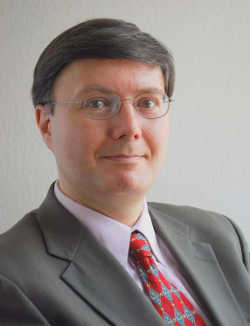
A person who is authorized to act in a representative capacity is a fiduciary and must follow certain fiduciary (legal) duties.
Application of the duties vary with the legal authority granted and the situation.
Agents, conservators, trustees, personal representatives, and even spouses (in relationship to their spouse) are all fiduciaries.
Let us discuss how these fiduciaries may sell or gift real property using their fiduciary powers.
First, an agent can be authorized in a written power of attorney to sell or gift real property belonging to the principal (whom they represent).
The power of attorney must specifically authorize the agent to sell and/or to gift the real property, as relevant, and must specifically state the real property subject to such authority; title companies require the real property’s legal description to be included in the power of attorney.
The original power of attorney (or a certified copy by a notary public) must be recorded with the county recorder where the real property lies soon after its execution (for title companies to respect it). Gifting by the agent to themselves is prohibited unless the power of attorney specifically allows and waives the agent’s duty not to self-deal.
Second, in California, conservators are appointed by the superior court to manage the affairs of the person and/or the estate of a conservatee (i.e., a conserved person). Conservatorships occur due to the conservatee’s severe physical and/or mental disabilities or their severe inability to avoid fraud, coercion or undue influence.
When appointed, the court issues the conservator with “letters of conservatorship.” If the letters grant “independent powers” (under section 2590 of the Probate Code) the conservator can sell the conservatee’s real property, other than the conservatee’s personal residence, without court confirmation.
Court certified copies of the letters must be recorded with the county where the real property lies prior to sale. If a conservatee’s personal residence is being sold a court order approving the sale must also be recorded.
For a conservator to gift the conservatee’s real property, the conservator must first petition the court for an order of substituted judgment (under section 2580 of the Probate Code).
A substituted judgment proceeding requires notice to certain persons, a court petition and a court hearing (which may be contested) and, if successful, an order authorizing the action.
A certified copy of the court order of substituted judgment, and a certified copy of the letters, must be filed with the county recorder where the real property lies.
Third, in California, personal representatives of a decedent’s estate are appointed by the superior court and act as officers of the court to represent and manage a decedent’s estate.
When appointed, the court issues the conservator with either “letters testamentary” (to an executor) or “letters of administration” (to an administrator), “letters”, as relevant.
If the letters grant the personal representative “full authority” (not “limited authority”), under section 10400 et. seq. of the Probate Code, the Personal Representative can sell the decedent’s real property without court confirmation (approval).
To sell using “full authority,” a court certified copy of the letters must be recorded with the county where the real property lies and signed consents (or signed waivers) by the heirs or beneficiaries of the estate (as relevant) — in response to a timely notice of proposed action regarding the sale — must be filed with the superior court overseeing the probate.
Fourth, in California, other than selling the married couple’s family home, a spouse acting alone may, in the best interest of both spouses, sell real property that is their community property in limited situations.
Nonetheless, the written consent of the other spouse, or a court order, is always necessary to gift real property or to sell the family home and to sell any real property of a conserved spouse. Having a trust or a power of attorney is better planning.
The foregoing is a limited discussion and is not legal advice. If needing guidance on such issues, consult a qualified attorney.
Dennis A. Fordham, attorney, is a State Bar-Certified Specialist in estate planning, probate and trust law. His office is at 870 S. Main St., Lakeport, Calif. He can be reached at
- Details
- Written by: Robert Sanders

BERKELEY — An interplanetary mission led by the University of California, Berkeley, to put two satellites — dubbed "Blue" and "Gold" — into orbit around Mars has been officially authorized to prepare for launch in October 2024.
The announcement last week by NASA means that by 2026 the spacecraft will likely be exploring the red planet's atmosphere and its interaction with the solar wind.
Called the Escape and Plasma Acceleration and Dynamics Explorers, or ESCAPADE, mission, it is the culmination of two years of intense work by scientists at UC Berkeley's Space Sciences Laboratory, or SSL, to show that relatively inexpensive spacecraft — the design, build, test, integration and launch will cost less than $80 million — can be assembled in a short period of time to explore other planets.
Typical NASA planetary missions often require more than a decade of preparation and can exceed $1 billion in costs.
"ESCAPADE and two other NASA missions recently approved are experiments to see whether advances in the space industry over the last five to 10 years can translate to a much better bang for the buck in terms of science per dollar," said mission leader Robert Lillis, SSL's associate director for planetary science and astrobiology. "Sending two spacecraft to Mars for the total cost of under $80 million is just unheard of, but current NASA leadership is taking the risk."
The UC Berkeley team will work with Rocket Lab, a space contractor based in Long Beach, California, which will supply two Photon spacecraft to house and support the instruments.
The academic/industry collaboration is an example of what NASA hopes to encourage with its Small Innovative Missions for Planetary Exploration, or SIMPLEx, program, designed to fund compelling planetary space science with small satellites and provide more opportunities for flight experience to the science community.
These missions represent "a new commercial, higher risk, high reward way of doing things," Lillis said. “Instead of spending $800 million for a 95% chance of success, can we spend $80 million for an 80% chance? This is what NASA is trying to find out with these missions, and we are lucky to be one of the guinea pigs.”
The mission's goal is to collect data that could help reconstruct the climate history of Mars and determine how and when it lost its atmosphere, which was once dense enough to allow for running water, including rivers, lakes and possibly oceans.
ESCAPADE also will study the ionosphere of Mars, which can interfere with radio communications on the surface and between Earth and Mars colonists.
"With simultaneous two-point observations of the solar wind and Mars’ ionosphere and magnetosphere, ESCAPADE will bring us the first 'stereo' picture of this highly dynamic plasma environment," Lillis said.
“This constellation of two satellites at Mars will answer big questions about the atmosphere and the solar wind in real time,” said Shannon Curry, project scientist for the mission at UC Berkeley.
Rocket Lab, which teamed with UC Berkeley in June, has been building rockets and spacecraft platforms since 2006 for civil, defense and commercial customers.
NASA evaluated the mission’s preliminary design and project plan and determined last week that both UC Berkeley and Rocket Lab had met all milestones — called key decision points — necessary to prepare for launch.
The next steps include the final design of the mission and building of the instruments.
“ESCAPADE is an innovative mission that demonstrates that advanced interplanetary science is now within reach for a fraction of traditional costs, and we’re proud to make it possible with Photon,” said Rocket Lab founder and CEO Peter Beck in a statement. “Passing the key decision point is a critical milestone in ESCAPADE’s development and is testament to the world-class science and engineering work of the UC Berkeley and Rocket Lab teams. We are delighted to receive the green light from NASA to proceed to flight.”
The mission builds on decades of experience at SSL in building satellite instruments and fleets of spacecraft to explore regions around Earth, the moon and Mars, specializing in magnetic field interactions with the wind of particles from the sun.
Each of the two satellites, named after UC Berkeley's school colors, will carry instruments built at SSL to measure the flow of high energy electrons and ionized oxygen and carbon dioxide molecules escaping from Mars, magnetic field detectors built at UCLA and a probe to measure slower or thermal ions built at Embry-Riddle Aeronautical University in Daytona Beach, Florida.
With twin satellites, it is possible to measure conditions simultaneously at two places around the planet, Lillis said, allowing scientists to connect plasma conditions at one site to the escaping ion flux at another. Over the course of the mission, the two satellites will change positions to map the upper atmosphere and magnetosphere of nearly the entire planet from an altitude of between 150 and 10,000 kilometers.
When selected by NASA in 2019 to receive $8.3 million for a conceptual design, ESCAPADE was scheduled to piggyback aboard a rocket that was launching another mission, called Psyche, in August 2022.
But that opportunity evaporated when the launch vehicle was changed, and NASA looked for another option. The agency eventually deciding to launch ESCAPADE as a secondary payload aboard a different, as-yet-unselected commercial rocket
“For ESCAPADE, we’re evaluating a number of rideshare options to enable this critically important science while also lowering costs,” said Alan Zide, program executive for the mission at NASA headquarters, in a blog post on NASA's website.
As a result, while the instruments remain unchanged, they have to be reconfigured to fit the Photon platform.
"The instruments haven't changed, the science objectives haven't changed, but everything from the launch pad to the orbit in space is completely different," Lillis said. "We are going with a brand new contractor, a different propulsion system and a very much shorter mission plan in getting to Mars."
The trip to Mars will take about 11 months, after which Blue and Gold will separate and start their mission.
Lillis said that his reaction to NASA's decision was "just unbridled joy and happiness," but admitted that he won't rest easy until early in 2026, "when we get our first data from orbit around Mars."
Robert Sanders writes for the UC Berkeley News Center.