 How to resolve AdBlock issue?
News
- Details
- Written by: Elizabeth Larson
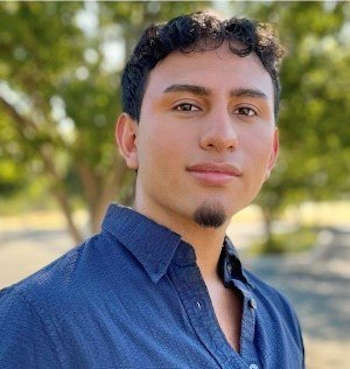
LAKE COUNTY, Calif. — A Lake County resident now studying at Mendocino College has been elected to a state board that will give him the opportunity to advocate for community college students.
Leonardo Rodriguez of Kelseyville, who turned 20 in June, was elected on Aug. 12 to the California Community College Trustees Board as its student member for the 2021-22 academic year.
Born in Mexico, Rodriguez’s family came to the United States when he was 5 years old.
He refers to himself as a “Dreamer” — a reference to the DREAM Act that was proposed, but not passed, in Congress to assist young people with immigration status.
He’s lived in Lake County since he was in fifth grade. He’s a 2019 graduate of Kelseyville High School and a first-generation college student.
Rodriguez also is the student trustee for the Mendocino-Lake College District Board of Trustees, a role he was selected to fill last semester by fellow students.
Student trustees have the same general responsibilities as all trustees to represent the interests of the entire community, while also providing a student perspective on the issues facing the board.
Mendocino College Superintendent/President Tim Karas said Rodriguez’s selection to the California Community College Trustee, or CCCT, Board is a first for the Mendocino-Lake College District.
“This is transformational for us. Student Trustee Rodriguez will provide a voice for 2.1 million California community college students. His voice will inform and shape statewide strategic directions. Having an advocate for rural colleges with an equity mindset is critical to deliver higher education to all,” Karas said.
The CCCT Board consists of 21 members elected statewide by the 73 district California Community College governing boards and a student-member elected by the student trustees.
The board takes positions on and formulates education policy issues that come before the California Community Colleges Board of Governors, the State Legislature, and other relevant state-level boards and commissions.
This policy board provides input to the League Board to advance the mission and effectively serve the organization's member colleges.
Rodriguez told Lake County News that he ran for the CCCT Board on a platform of implementing anti-racist and equitable policies, expanding dual enrollment in urban and rural communities, and establishing student retention initiatives.
He wants to see policies instituted that are race conscious and which look at impacts on all student demographics. Making sure classes are culturally relevant and ensuring student success are part of implementing anti-racist policies, he said.
Rodriguez was endorsed by District 5 Supervisor Jessica Pyska and community organizer Luisa Acosta.
An introduction to service
Before he was elected to the college and state boards, Rodriguez served on the Lake County Latinx COVID-19 advocacy group, which started last year when there was an outbreak in the agricultural sector.
The group had urged officials to give out masks and do on-site testing, and it was there he worked with Acosta. He said he also felt then-Public Health Officer Dr. Gary Pace had valued his voice and ideas as he advocated for the Hispanic community.
Rodriguez felt that if his voice was valued there, he wondered if it would also be welcomed at the college board level.
“Really, it was about representation,” he said, explaining his entry into running for the college boards.
In July, Rodriguez also spoke to the Lake County Board of Supervisors to raise his concerns about the impact of COVID-19 on students, suggesting that with the surge and the fact that only about half of the county was vaccinated, that schools should probably not yet reopen.
Rodriguez told Lake County News that COVID-19 hasn’t revealed new problems in education, but rather has highlighted existing issues, including academic failure, financial insecurity, mental health and inequities when it comes to access to technology.
“Community colleges are often almost a home for a lot of students,” he said. “It really does become their space.”
Having their space taken away by COVID-19 has impacted students both in the short-term and the long-term as they struggled to make the transition from in-person to online courses, he said.
He said some students also are having to give up their dreams of college to help their families stay afloat, an issue he’s been hearing a lot about.
Students are missing the in-person dynamics, discussion and interaction that are part of the full package of what higher education is, Rodriguez said.
This is Rodriguez’s second year in college and he’ll be graduating from Mendocino College soon. He is on track to graduate with associates degrees in three majors — political science, history and liberal arts with a focus on social sciences.
He plans to transfer to Sacramento State University to pursue his bachelor's degree in political science and will then go on to obtain his master’s degree.
Rodriguez plans to do internships in Sacramento so he can meet legislators and continue working with the community to learn about the problems people in society face.
Advocacy for the Hispanic community is a key concern for Rodriguez, noting he looks forward to seeing immigration reform passed.
He said he wants to serve California and its people “in any capacity that will allow me to complete my life dream of being a voice for those who are unheard.”
Email Elizabeth Larson at
- Details
- Written by: Elizabeth Larson
The head-on crash occurred at about 9:15 p.m. Saturday on Highway 20 east of Clearlake Oaks, in the area of mile post marker 39.5, according to radio traffic and California Highway Patrol reports.
Vehicles involved were described as a silver SUV and a white sedan, with a third vehicle reported to be 30 feet down an embankment.
First responders reported the vehicles were blocking the roadway when they arrived.
There were a total of six patients, with two seriously injured, according to radio reports.
Firefighters and deputies were reported to be looking for additional crash victims in the creek but radio traffic did not indicate any were found.
Ground ambulances transported several of the patients, with two air ambulances requested to respond to Adventist Health Clear Lake Hospital to transport two crash victims to out-of-county trauma centers, scanner traffic said.
The air ambulances were reported to have flown the two most seriously injured patients to Santa Rosa Memorial Hospital.
Firefighters reported clearing the scene just after 11 p.m.
Additional information was not immediately available late Saturday night.
Email Elizabeth Larson at
- Details
- Written by: DOROTHY DE LOPE
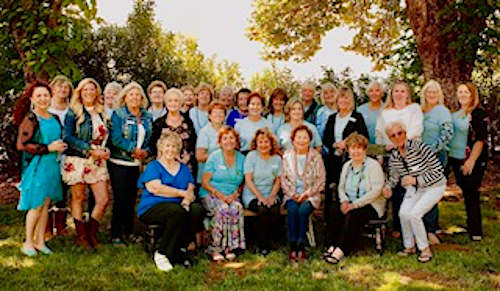
LAKE COUNTY, Calif. — A new organization, the Konocti Women’s Service Club, has formed to continue the work that has been done for more than 40 years by the Konocti Lioness Club.
In the 1920s, service clubs called Ladies Auxiliary were partners in service with Lions Clubs.
By 1949 there were auxiliary clubs forming throughout the world and dedicating themselves to volunteering.
In 1975, the international body that governs the Lions Clubs formally recognized Ladies Auxiliaries as Lioness Clubs. By 1985, 5,300 Lioness Clubs were active in 92 countries with membership totaling 139,412.
In the shadow of Mount Konocti in Lake County, the Konocti Lioness Club was formed in 1980 and its members have served their community as dedicated Lionesses for 40 years with their motto of “For Kids’ Sake.”
In 1992 the international body that governs Lioness Clubs decided they could no longer support the Lioness Program as it was. Individual Lioness Clubs could continue as a service program with their local Lions Club still maintaining a Lion liaison officer.
Consequently, in 2018, that same governing body announced the end of the Lioness Program as it was known, dissolving all ties to the program effective June 30, 2021.
Across the globe, Lioness clubs have chosen to leave the international body in favor of their own programs and will launch under new names and banners.
That resulted in a new beginning.
In 2021, many of the former Lioness Clubs aligned to form the Global Service Organization, a global community of service clubs. Their goal is to continue the service the Lioness Clubs began creating a platform that will allow members to build a global service community and continue serving for many years to come.
The Konocti Lioness Club has reorganized to become the Konocti Women’s Service Club, a proud independent service club, looking forward to serving the Lake County community with the same motto, “For Kids’ Sake.”
All of the money raised goes to charities that support at-risk children.
The purpose of their club is to provide opportunities for women to unite in friendship and in mutual understanding, and to guide, teach and reach the children of our community.
Their goal is to give service and to be philanthropic with their money to support youth with dignity and motivation.
Over the last five years, the club has given high school scholarships totaling $15,000 and has supported their local schools with supplies.
They partnered with Flotilla 88 of Lake County to provide youngsters life jackets and have provided and staffed three summer day camps for elementary age children.
The Konocti Women’s Service Club has been supported recently by the folks at Dream of a Better World, whose generosity helped the club to provide Christmas gifts to individuals who had fallen on hard times in December of 2020.
Now, the club is glad to be on the move and happy to be a part of the worldwide community of the Global Service Organization.
Konocti Women’s Service Club members are fun, strong and energized to do good for their community. They are also looking forward to meeting other service clubs throughout the world.
Dorothy De Lope is a member of the new Konocti Women’s Service Club.
- Details
- Written by: Katie Headrick Taylor, University of Washington

My son’s kindergarten teachers, holding class on Zoom last year, instructed: “Eyes watching, ears listening, voices quiet, bodies still.” However, I noticed my 6-year-old’s hands would stay busy with items found around our house, building with Legos, shaping clay or doodling with a crayon.
While some might describe this child as being “off task,” research suggests his manipulation of materials actually aroused his mind, allowing it to focus on the required task.
As a parent of two school-aged children and a professor and researcher of learning with technology, I believe current models of remote education are inefficient for learning, teaching and productivity.
That’s because sitting in front of a computer screen subdues, or completely detaches people from, many of the sense-making abilities of their bodies. To learn most efficiently, our minds depend on the movement of our bodies, working with a variety of tools, being in dynamic places and having our collaborators nearby.
The body’s role in thinking
Most notably, remote learning assumes that as long as the mind is engaged, it’s fine if the body stays still. But this argument is backward.
Research from embodied cognition – the study of the body’s role in thinking – shows that the body must first be interacting with the world to activate and open up the mind for learning.
That’s why, for example, students working with a variety of tools and materials during a learning activity are better able to grasp abstract concepts, such as gravitational acceleration or fractions.
To ask students to sit still while performing their work actually increases their cognitive load, or the burden on the mind. It requires them to concentrate on quieting their bodies, which are seeking out avenues for sense-making, as well as on the primary task that fixes them to their desk or digital screen.
As psychologists Christine Langhanns and Hermann Müller concluded from studies of people solving math problems, “Sitting quietly is not necessarily the best condition for learning in school.”
Learning from our environment
Humans’ internal thoughts are extensions of the world around them. The technologies and tools they use, the people they collaborate with, the walk they take to school or work, all evoke feelings in the body. Their minds then assemble these feelings, making meaning or thoughts that are informed by past experiences.
In this way, thoughts are iterative. People sense their way through current moments while bringing to bear what they have learned over the body’s accumulated history. Learning to safely cross the road, for instance, takes practice. Over time, the brain organizes input from the senses to recognize a good time for crossing.
Importance of gesture
Gesture is yet another essential use of the body for thinking and learning.
Not only do people’s hand movements, head turns and shrugs add nuance and emphasis to words spoken to listeners, gestures help speakers form thoughts into words before speaking them.
In problem-solving scenarios, research shows that for many math learners, their gestures show they understand strategies before they can articulate those solutions through speech. In this way, educators trained to look for and understand gesture can see a learner’s process and progress in understanding concepts before a student is able to translate that understanding to speech or a written test.
Additionally, educators and other experts can use gesture to more efficiently explain concepts to students and novices. Gestures make abstractions visible, giving them temporary form.
A view of the whole person, therefore, facilitates learning from one another. But that’s a stark contrast to a year spent seeing only the faces of fellow students and teachers, or just a blank box.
[Get the best of The Conversation, every weekend. Sign up for our weekly newsletter.]
Get ready to move
Some students will remain online this school year – due to health or other concerns – while others will return to in-person classrooms. I believe both models of school can better incorporate the body to support learning. The following tips are for educators designing remote or in-person classes, though parents and students can also encourage and help sustain an active classroom culture.
-
Normalize movement during classes, not just during movement breaks. For instance, make a neighborhood walk the mode of inquiry for the day’s science lesson. Ask students to bring back their observations to the whole group.
-
Begin every class with time to assemble different materials to think and work with, such as notebooks and different kinds of paper, various writing and drawing instruments, putty and blocks. Incorporate interaction with these tools throughout the lesson.
-
Encourage and use gestures. If online, invite camera use, and back away to give students a wider view.
-
Build in time for students to tune in to how their body is feeling as a window into their emotional state.
-
Provide opportunities for iteration, practicing a task in different contexts and with different tools and people that engage the body in different ways. The content or big idea stays the same, but how and with whom students engage shifts.
-
If online, try out videoconferencing platforms like Ohyay that try to replicate physical closeness and movement in a virtual space.
-
Consider the classroom as extending out into the school campus and neighborhood. Allowing students to experience a familiar location in a different way, with their classmates and teacher, can evoke new perspectives and thoughts.
Teachers, parents and students can all change their expectations of what being “on task” looks like. Walking, running or dancing may not seem related to a particular task at hand, but these activities often help people do their best thinking. Activating the body activates the mind, so “seat time” might better be titled “activity time.”
Katie Headrick Taylor, Associate Professor of Learning Sciences and Human Development, University of Washington
This article is republished from The Conversation under a Creative Commons license. Read the original article.