 How to resolve AdBlock issue?
News
- Details
- Written by: DENNIS FORDHAM

A residence can be held in further trust for the benefit of one or multiple beneficiaries after the owner’s death.
In California, a trust can hold title to real property either for up to ninety years or for a period that ends no later than 21 years after the death of an individual who was alive at the real property owner’s death (when the trust is established).
Let us discuss when, why and how the so-called “house trust” is used, so-named because its primary asset is a residence.
First, consider a second-marriage with stepchildren, where the couple reside in a residence owned solely by one spouse.
The spouse who owns the residence may want to allow the other (surviving) spouse to continue to live in a residence but ensure that the residence ultimately goes to his or her own children.
Second, consider parents who want to maintain a significant family residence after they die for the shared benefit of multiple children.
In the first (second marriage) scenario, the spouse who owns the residence wants to protect their surviving spouse from being forced out of their home.
The spouse also wants to ensure that when the surviving spouse dies (or moves out) that the residence ultimately benefits their children from before the second marriage.
The house trust controls the rights and duties of the beneficiary spouse and the future beneficiaries.
For example, the spouse may be allowed lifetime rent-free use of the residence but be required to pay the insurance, taxes, upkeep and utilities for the house while living in the house.
The spouse may also be allowed to require the trustee to sell the residence and purchase another residence with the sale proceeds; this would help if the spouse decides to downsize or relocate.
Ultimately, when the surviving spouse dies or does not keep his or her duties the trust will terminate and the remaining assets of the trust are distributed to the children of the spouse who owned the residence.
In the second scenario, the parents want the benefits and burdens associated with maintaining a residence to be shared amongst multiple children (and their families).
Here, the house trust addresses how multiple beneficiaries share the use of the residence over the calendar year, what duties the children (and their families) have for the upkeep of the residence and for each other, and how the many costs of owning the house are divided.
Drafting the house trust provisions varies with each family situation and objectives. In all cases it allows for a trustee (or co-trustees) to manage the residence, enforce the rules, and avoid outright distribution or sale of the residence at the death of the spouse who owns the residence.
It also provides creditor protection for the house against most creditor claims related to the beneficiaries’ personal debts.
Outright distribution might otherwise mean the house is sold, becomes subject to claims by a beneficiary’s own creditors, or is not used in the intended manner.
The foregoing is a limited and simplified discussion of a larger and fact driven subject. It is not legal advice. Consult an attorney for guidance.
Dennis A. Fordham, attorney, is a State Bar-Certified Specialist in estate planning, probate and trust law. His office is at 870 S. Main St., Lakeport, California. He can be reached at
- Details
- Written by: NATIONAL AERONAUTICS AND SPACE ADMINISTRATION

In 2023, NASA’s Volatiles Investigating Polar Exploration Rover, or VIPER, will land near the western edge of the Nobile Crater at the Moon’s South Pole to map and explore the region’s surface and subsurface for water and other resources.
Part of Artemis, VIPER will launch on a SpaceX Falcon-Heavy rocket for delivery to the Moon by Astrobotic’s Griffin lander under NASA’s Commercial Lunar Payload Services initiative.
The Moon’s South Pole is one of the coldest areas in our solar system. No prior missions to the Moon’s surface have explored it — scientists have thus far only studied the region using remote sensing instruments, including those on NASA’s Lunar Reconnaissance Orbiter and the Lunar Crater Observation and Sensing Satellite.
Data from these and other missions helped scientists conclude that ice and other potential resources exist in permanently shadowed areas of the Moon near the poles.
After an extensive landing site selection process, the mountainous area west of Nobile Crater was chosen as VIPER’s landing site due to its rover-accessible terrain and array of nearby sites of scientific interest, including permanently shadowed areas.
“Once on the lunar surface, VIPER will provide ground truth measurements for the presence of water and other resources at the Moon’s South Pole, and the areas surrounding Nobile Crater showed the most promise in this scientific pursuit” said Thomas Zurbuchen, associate administrator for science at NASA Headquarters.
“The data VIPER returns will provide lunar scientists around the world with further insight into our Moon’s cosmic origin, evolution, and history, and it will also help inform future Artemis missions to the Moon and beyond by enabling us to better understand the lunar environment in these previously unexplored areas hundreds of thousands of miles away,” Zurbuchen said.
Nobile Crater is an impact crater that was formed through a collision with another smaller celestial body, and is almost permanently covered in shadows, allowing ice to exist there.
Smaller, more accessible craters surrounding Nobile’s perimeter, will also provide VIPER with ideal locations to investigate in its search for ice and other resources.
“Selecting a landing site for VIPER is an exciting and important decision for all of us,” Daniel Andrews, VIPER project manager, said. “Years of study have gone into evaluating the polar region VIPER will explore. VIPER is going into uncharted territory — informed by science — to test hypotheses and reveal critical information for future human space exploration.”
Landing site selection
NASA’s team evaluated viable rover traverse paths, taking into account where VIPER could use its solar panels to charge and stay warm during its 100-day journey. The area near Nobile Crater provided a lot of flexibility.
VIPER’s currently planned trajectory allows the rover to visit at least six sites of scientific interest, with additional time to spare.
“Our evaluation of the landing site was driven by science priorities,” said Anthony Colaprete, VIPER lead project scientist at NASA's Ames Research Center in Silicon Valley, California. “We seek answers to some pretty complex questions and studying these resources on the Moon that have stood the test of time will help us answer them.”
The VIPER team aims to address how frozen water and other resources arrived on the Moon in the first place. They also plan to identify where they came from, how they remained preserved for billions of years, how they escape, and where they go.
VIPER’s journey across the Nobile Region
The area VIPER will study in the Nobile region covers an approximate surface area of 36 square miles, 10 to 15 miles of which VIPER is expected to traverse through during the course of its mission.
During this time, the rover will visit carefully chosen areas of scientific interest that will provide further insight into a wide array of different kinds of lunar environments.
The VIPER team will look to characterize ice and other resources in these areas using VIPER’s sensors and drill.
As VIPER moves among each area of scientific interest, it will collect samples from at least three drill locations. Analysis of these samples from a variety of depths and temperatures will help scientists to better predict where else ice may be present on the Moon based on similar terrain, allowing NASA to produce a global resource map.
This map, and the other science VIPER will produce, will allow scientists to better understand the distribution of resources on the Moon and help inform future crewed missions to establish a long-term presence on the lunar surface.
Learn more about the VIPER mission at https://www.nasa.gov/viper.
- Details
- Written by: Elizabeth Larson
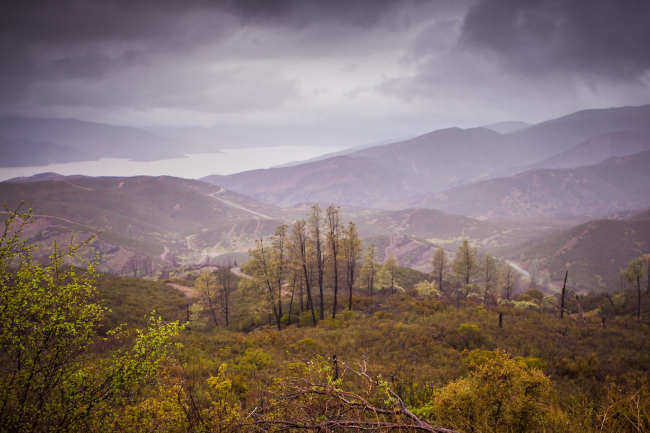
LAKE COUNTY, Calif. — The Board of Supervisors this week voted to send a letter in support of a new federal bill to expand the Berryessa Snow Mountain National Monument.
Congressman John Garamendi’s Berryessa Snow Mountain National Monument Expansion Act would add the 4,000-acre Walker Ridge area in Lake County to the 330,000 acre national monument, which President Barack Obama created in July 2015.
The letter is addressed to Garamendi, who represents the northern portion of Lake County, but also is being sent to Congressman Mike Thompson, who represents the county’s southern portion, and to the county’s state legislators, Assemblywoman Cecilia Aguiar-Curry and Sen. Mike McGuire.
Walker Ridge — which is owned by the Bureau of Land Management — was in the monument’s original footprint but was not in the final declaration, board members EJ Crandell and Bruno Sabatier explained in their memo asking their fellow supervisors to support the letter.
“We bring this letter of support for the Expansion Act for the board’s consideration, believing that this expansion will enhance the opportunities that this National Monument brings to our county both for conserving our precious surroundings and for the economic advantages that a National Monument destination brings to local jurisdictions,” Crandell and Sabatier explained in their memo.
During Tuesday’s meeting, Crandell said he had struggled with some of the other things that have been proposed for Walker Ridge, an apparent reference to large wind turbine projects that have been on the drawing board over the past decade.
By adding Walker Ridge to the monument, Crandell said they can now concentrate on preserving the area the way it should be.
Sabatier said he was invited by Tuleyome, the nonprofit organization that has advocated for the national monument, to fly over Walker Ridge, which he said is a stunning area filled with rare plants, and also is the flight path for many migrating birds.
He said it’s an amazing area that needed to be part of the original monument.
Tuleyome representative Victoria Brandon of Lower Lake said she was delighted the county is taking this position.
“This is a wonderful resource for our county, and it’s underutilized and under-recognized,” Brandon said of Walker Ridge.
By adding Walker Ridge to the monument, it will be included in the comprehensive monument planning which will give it the opportunity to be recognized for what it is.
The letter explained, “Walker Ridge is a remarkable ecological treasure in need of conservation. The landscape supports many habitats including chaparral, grasslands, unique low elevation forests of pine and cypress, and oak woodlands. Rare and endemic plants have evolved to grow only on unusual serpentine soils derived from ancient sea floor. Walker Ridge is also home to imperiled wildlife such as bald and golden eagles, badger, ringtail, and peregrine falcon among a long list of others, besides being a recognized wildlife migration pathway for a multitude of
species, including deer, elk, mountain lion, black bear, and bobcat. Walker Ridge is steeped in thousands of years of rich history and culturally significant to several Native American tribes.”
It also noted that it’s in Lake County’s interest to permanently preserve Walker Ridge, which is used for everything from outdoor recreation to scientific and nature study.
“Special designations such as National Conservation Area and National Monument have been shown to help local communities diversify their economies and increase tourism, as well as
helping attract businesses, thereby generating economic benefits for nearby communities through local employment and tax revenue,” the letter said.
Crandell moved to approve the letter of support, with Supervisor Jessica Pyska seconding and the board voting 5-0.
Email Elizabeth Larson at
Letter of Support - National Monument Expansion by LakeCoNews on Scribd
- Details
- Written by: Lake County News reports
DeVries worked for the library for over 33 years and has been the guiding force of the Adult Literacy program.
Year after year, she recruited and encouraged thousands of volunteer tutors and paired them with students looking to improve their reading and writing.
“Ginny has a wonderful ability to encourage others. She inspired countless volunteers to help people improve their literacy skills,” said Library Director Christopher Veach. “Her passion for literacy helped motivate students to take that leap and sign up to improve their reading and writing.”
The Lake County Library has started recruitment for a new Literacy Program coordinator. An application is available on the County website at http://jobs.lakecountyca.gov.
The coordinator works 20 hours per week. The application closes on Oct. 4 at 5 p.m.
The Lake County Library Adult Literacy program helps adults who need help learning to read and write. Anyone interested in helping others with reading or who needs help with their reading can participate.
Residents can contact the Library’s Adult Literacy Program by calling 707-263-7633. They can also visit the Lakeport Library on 1425 N. High St. in Lakeport in person.
More information about the Literacy Program is also available on the library website, including forms to sign up.
The Adult Literacy Program is supported through County Library funds, a grant administered by the California State Library, and donations from the local non-profit the Lake County Literacy Coalition.
Visit the Lake County Library website at http://library.lakecountyca.gov.