 How to resolve AdBlock issue?
News
- Details
- Written by: Lake County News reports

LAKE COUNTY, Calif. — The Lake County Sheriff’s Office said this week that DNA technology has helped it solve a decades-long mystery involving the identity of a murdered man whose remains were found near Lower Lake.
Lt. Corey Paulich said this week that the investigation has identified the remains as belonging to Leopoldo Torres Melendez, whose family said he had gone missing nearly 50 years ago.
Paulich said that on Nov. 28, 1976, the Lake County Sheriff’s Office received a report regarding human remains located in a heavily wooded area near Highway 29 in Lower Lake.
Throughout the investigation, it was determined the death was a homicide due to blunt force trauma to the head, Paulich said.
Despite exhaustive investigative efforts, Paulich said the remains were not identified and the murder victim’s identity remained a mystery.
In January 2007, the victim’s skull and teeth were sent to the California Department of Justice for analysis. In December 2007, a partial DNA profile was uploaded to the Combined DNA Indexing System, or CODIS. However, Paulich said the sheriff’s office never received a match due to the degradation of the bone and the victim’s DNA likely not being in CODIS.
In January 2020, Det. Jeff Mora requested assistance from Parabon Nanolabs, which is a DNA technology company, regarding the possibility of identifying the decedent through investigative genetic genealogy, Paulich said.
In August 2020, the remains were sent to Marshall University Forensic Science Center in West Virginia. Paulich said a DNA sample suitable for genetic genealogy was extracted from the skull.
In June 2021, Parabon Nanolabs delivered a genetic genealogy report. Paulich said the report listed possible matches for the victim and a list of family members to contact.
After numerous family interviews, Paulich said authorities believed the remains to be those of Leopoldo Torres Melendez, who was born in Puerto Rico and mentioned in the genetic genealogy report as a potential match.
An oral swab was obtained from a family member who identified herself as his biological sister. The swab was sent to the California Department of Justice to be compared to the DNA extracted from the victim’s skull, Paulich said.
This past August, the DNA results confirmed the family member was in fact the biological sister of the victim. Based on the totality of the evidence, Paulich said the sheriff’s office was able to positively identify the victim as Torres Melendez and notify his family.
Through interviews with the family, it was discovered that Torres Melendez was believed to have gone missing in the early 1970s, Paulich reported.
Paulich said Torres Melendez would have been approximately 41 years old at the time of his death and was last known to live in the San Francisco area.
Family members searched for Torres Melendez, but were never able to figure out what happened to him until now, Paulich said.
The sheriff’s office thanked Parabon Nanolabs, Marshall University Forensic Science Center and the California Department of Justice for their assistance.
Paulich said the sheriff’s office will continue this investigation, noting they hope to have provided a sense of closure to the family.
“Obviously this investigation is old and the suspect(s) are likely elderly or deceased,” Paulich said.
If anyone believes they have information regarding this case, please contact Det. Jeff Mora by email at
- Details
- Written by: Lake County News reports
Every year millions of Americans deal with the reality of living with a mental health condition. Mental illness affects all of us directly or indirectly, through family, co-workers or friends.
Each day, Lake County Behavioral Health Services staff provide support, fight stigma, advocate for equal care and strive to educate the community around mental health.
The United States Congress established Mental Illness Awareness Week in 1990, to recognize efforts by the National Alliance on Mental Illness, or NAMI, to educate and increase awareness about mental illness.
“This year’s campaign is ‘Together for Mental Health,’ an appropriate and community-minded theme which resonates during these unprecedented times,” said Todd Metcalf, director of Lake County Behavioral Health Services. “Mental Illness Awareness Week provides a time for people to unite, and recognize the passion and strength of those working to improve the lives of those affected by mental illness.”
According to NAMI, about one in five adults is believed to be experiencing some form of mental illness. That number may be even higher, as stigma tends to reduce reporting.
In addition, the National Comorbidity Survey Replication Study showed 45% of adults affected by mental illness meet criteria for two or more mental disorders.
These range from common mood disorders to the much more serious anxiety, depression and schizophrenia disorders. Anxiety disorders tend to be the most common, affecting approximately 40 million American adults.
Mental health programs and services provided by Lake County Behavioral Health Services are designed to offer robust community-based partnerships with individuals and families grappling with serious mental illness, including those who have co-occurring mental health and substance use disorders.
Recovery-oriented services include assistance establishing stable housing, medications management, access to physical health care, trauma-informed counseling and peer supports.
During Mental Illness Awareness Week, Sunday, Oct. 3, through Saturday, Oct. 9, please join Lake County Behavioral Health Services in shining a light on mental illness and replacing stigma with hope.
For more information, please contact Lake County Behavioral Health at 707-274-9101 or 707-994-7090.
- Details
- Written by: Lake County News reports

On Friday, Gov. Gavin Newsom announced plans to add the COVID-19 vaccine to the list of vaccinations required to attend school in-person when the vaccine receives full approval from the Food and Drug Administration for middle and high school grades, making California the first state in the nation to announce such a measure.
Following the other first-in-the-nation school masking and staff vaccination measures, Gov. Newsom announced the COVID-19 vaccine will be required for in-person school attendance — just like vaccines for measles, mumps, rubella and more.
“The state already requires that students are vaccinated against viruses that cause measles, mumps, and rubella — there’s no reason why we wouldn’t do the same for COVID-19,” Gov. Newsom said Friday. “Today’s measure, just like our first-in-the-nation school masking and staff vaccination requirements, is about protecting our children and school staff, and keeping them in the classroom.”
He added, “Vaccines work. It’s why California leads the country in preventing school closures and has the lowest case rates. We encourage other states to follow our lead to keep our kids safe and prevent the spread of COVID-19.”
Thanks to the state’s public health measures, California continues to maintain the lowest case rate in the entire country and is one of only two states to have advanced out of the CDC's “high” COVID-19 transmission category.
The vast majority of school districts have reported that over 95% of students have returned to in-person instruction this school year, as can be seen on the state’s Student Supports & In-Person Dashboard.
Thanks to unprecedented resources and public health measures (measures shown to be highly effective), California is leading national trends in preventing school closures and keeping kids in classrooms, accounting for only 14 out of over 2,000 school closures nationwide, or roughly 0.7% — despite the fact that California educates an estimated 12% of the nation’s public school students. If California’s rates had aligned with national trends, the state would have seen upwards of 240 school closures.
In order to further protect students and staff and continue supporting a safe return to in-person instruction for all students, the governor directed the California Department of Public Health, or CDPH, to follow the procedures established by the Legislature to add the COVID-19 vaccine to other vaccinations required for in-person school attendance — such as measles, mumps and rubella — pursuant to the Health and Safety Code.
COVID-19 vaccine requirements will be phased-in by grade span, which will also promote smoother implementation.
Upon full FDA approval of age groups within a grade span, CDPH will consider the recommendations of the Advisory Committee on Immunization Practices of the United States Department of Health and Human Services, the American Academy of Pediatrics, and the American Academy of Family Physicians prior to implementing a requirement.
Following the existing statute, full approval of ages 12+ corresponds to grades 7 to 12, and full approval of ages 5 to 11 corresponds to grades K-6.
Students who are under the age of full approval, but within the grade span, will be required to be vaccinated once they reach the age of full approval (with a reasonable period of time to receive both doses), consistent with existing procedures for other vaccines.
The requirement will take effect at the start of the term following full approval of that grade span, to be defined as Jan. 1 or July 1, whichever comes first.
Based on current information, the requirement is expected to apply to grades seven to 12 starting on July 1, 2022.
However, local health jurisdictions and local education agencies are encouraged to implement requirements ahead of a statewide requirement based on their local circumstances.
- Details
- Written by: Lake County News reports
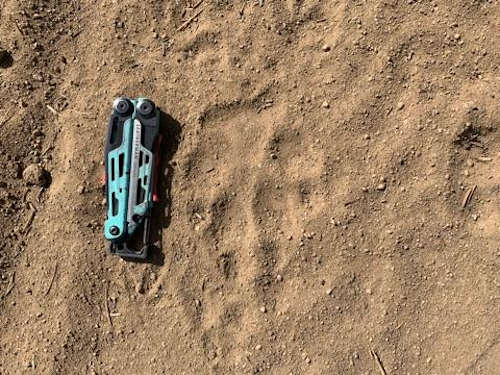
Wildlife officials said Friday that a gray wolf that’s traveled from Oregon to Ventura County may be the first gray wolf to be found that far south in California in nearly a century.
Between Sept. 20 and 26, the California Department of Fish and Wildlife received three separate reports of a gray wolf with a purple collar in northern Ventura County.
CDFW staff began site inspections and have confirmed recent wolf tracks in the vicinity.
Though CDFW does not have forensic evidence to confirm this at this time, the wolf could be OR-93.
The recent reports match the description of OR-93, who was fitted with a purple tracking collar by the U.S. Fish and Wildlife Service and Confederated Tribes of Warm Springs in Oregon in June 2020.
The collar was monitored by the Oregon Department of Fish and Wildlife, or ODFW, but it stopped transmitting in April.
Neither CDFW nor ODFW can determine the wolf’s current location, but if an opportunity arises, CDFW may attempt to capture and re-collar the wolf to continue tracking its journey.
Though historically all of California is wolf habitat, this is the farthest south in California that any gray wolf has been documented since one was captured in San Bernardino County in 1922.
OR-93 is a male wolf born in 2019. He dispersed from the White River pack in northern Oregon.
When his collar was providing information, he was tracked entering Modoc County on Jan. 30.
After briefly returning to Oregon, he reentered Modoc County on Feb. 4. On Feb. 24, he entered Alpine County after passing through portions of Lassen, Plumas, Sierra, Nevada, Placer, El Dorado, Amador and Calaveras counties.
On Feb. 25, he entered Mono County. In mid-March, he was in western Tuolumne County. By late March he was in Fresno County, and then entered San Benito County after crossing Highway 99 and Interstate 5.
He was in Monterey County on April 1 and his last collar transmission was from San Luis Obispo County on April 5.
Through April 5 he had traveled at least 935 air miles in California, a minimum average of 16 air miles per day.
In August, CDFW received trail camera video from May 15, showing a collared gray wolf in southwest Kern County that may have been OR-93.
The trail camera records wildlife use at a water trough on private property. Though the video was from May, the trail camera was not checked until August, when it was provided to CDFW.
CDFW strongly encourages the public to be aware that the wolf population continues to grow in California and to know the difference between wolves and coyotes.
Though gray wolves are generally much bigger than coyotes, they can sometimes be misidentified.
Officials encourage the public to review this page that provides tips for differentiating between wolves, coyotes and dogs.
Gray wolves are listed as endangered pursuant to California’s Endangered Species Act, or CESA. It is unlawful to harass, harm, pursue, hunt, shoot, wound, kill, trap or capture gray wolves.
Anyone who believes they have seen a wolf in California can report it to CDFW here.
Gray wolves pose very little safety risk to humans. CDFW is working to monitor and conserve California’s small wolf population and is collaborating with livestock producers and diverse stakeholders to minimize wolf-livestock conflicts.
Gray wolf management in California is guided by CESA as well as CDFW’s Conservation Plan for Gray Wolves in California, finalized in 2016.
More information is available on CDFW’s wolf webpage.