How to resolve AdBlock issue?
News
- Details
- Written by: Lake County News reports

LAKEPORT, Calif. — A Lakeport man arrested numerous times over the past month was booked into the Lake County Jail on Friday after being found with an expensive mountain bike that’s believed to have been stolen as well as methamphetamine.
Matthew Alan Wratislaw, 36, was taken into custody on Friday, according to the Lakeport Police Department.
On Sept. 19 shortly after 4:30 p.m., Lakeport Police officers were dispatched to the area of North Forbes Street at Fourth Street for a report of a male working on a vehicle that did not belong to him. Officers arrived on scene and contacted Wratislaw, who was actively working on the reported vehicle.
The police department said the officers determined through their investigation that Wratislaw was not the owner of the vehicle and did not have any legal connection to the vehicle to be working on it. Wratislaw further admitted to trying to “get” the vehicle.
The officers placed Wratislaw under arrest for tampering with a vehicle and possession of burglary tools. Due to the ongoing COVID-19 pandemic bail-related restrictions, officers were unable to have Wratislaw booked into the Lake County Jail and issued Wratislaw a criminal citation and released him.
Just after 10:30 p.m. Thursday, Lakeport Police officers were patrolling the area of 11th Street at High Street when they observed Wratislaw riding a bicycle without any lights or reflectors in violation of the California Vehicle Code.
Lakeport Police officers attempted to stop Wratislaw using the emergency lights on their patrol vehicle but Wratislaw continued north on High Street and then east through an unpaved alleyway, Rose Avenue.
Officers attempted to pursue Wratislaw on foot while verbally commanding him to stop. They ultimately lost sight of Wratislaw as he continued north on North Main St.
The officers then conducted a search of the area and located Wratislaw sitting behind a residence on Lakeshore Boulevard at Ashe Street and placed him under arrest.
During a search of Wratislaw’s person and belongings following his arrest, officers located 0.9 grams of suspected methamphetamine as well as methamphetamine paraphernalia. Officers also located suspected burglary tools including lock picks.
Wratislaw was transported to the police department where he was issued a criminal citation and released as he was again not bookable due to the current COVID-19-related bail schedule.
On Friday, another Lakeport Police officer observed Wratislaw in a fenced area of a closed business on North Forbes Street at 11th Street.
The officer noted that Wratislaw had walked away from a large black dirt bike gear bag. Police said the officer moved closer to the bag and realized that it matched the description of stolen property that had been reported to the police department earlier in the day.
The bag and the items it contained, which mostly consisted of dirt bike-related gear, were valued to be worth approximately $2,000.
The officer detained Wratislaw and additional Lakeport Police officers responded to the scene. Officers contacted the victim of the theft and were able to confirm that the items were those that had been reported stolen.
A further search of the bag containing the reported stolen items yielded additional suspected methamphetamine and methamphetamine paraphernalia. Wratislaw was then placed under arrest.
Police said those crimes were not bookable due to current California laws. However, due to Wratislaw’s history of recent arrests and suspected criminal activity, officers believed that Wratislaw would continue to victimize Lakeport residents if not booked into jail, police said.
The officers contacted a Lake County Superior Court judge to apply for a bail increase. The bail increase was granted and officers transported Wratislaw to the Lake County Jail.
Authorities said he was booked without further incident on charges of felony possession of stolen property, possession of a controlled substance and possession of controlled substance paraphernalia with bail set at $15,000.
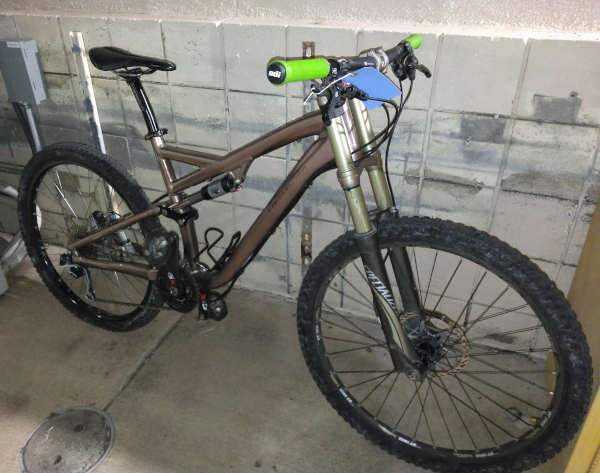
During Wratislaw’s latest arrest, a Specialized mountain bike, with an approximate value of over $2,000 was also found to be in his possession. The bike is currently believed to possibly be stolen.
If you recognize the bicycle in the photos published here, contact the police department at 707-263-5491.
Additionally, in recent days several other thefts have been reported to the police department in which Wratislaw is a suspect.
If you have been the victim of theft or other criminal activity in the city of Lakeport, and you have not yet made a police report, please contact the police department.
- Details
- Written by: Tracy Roof, University of Richmond

The U.S. Department of Agriculture adjusts Supplemental Nutritional Assistance Program benefits to reflect changes in food prices once a year. The government agency will take two other factors into account when it increases those benefits, which help people buy food, on Oct. 1, 2021.
One is an unprecedented update of the Thrifty Food Plan – an estimate of the minimum cost of groceries to meet a family’s needs. That revision is behind the largest-ever permanent increase in benefits and puts a healthier diet within reach for the 42 million Americans enrolled in SNAP, which replaced food stamps.
The other change, the expiration of a temporary 15% increase in SNAP benefits to offset some of the economic hardship caused by the coronavirus pandemic, will have the opposite effect.
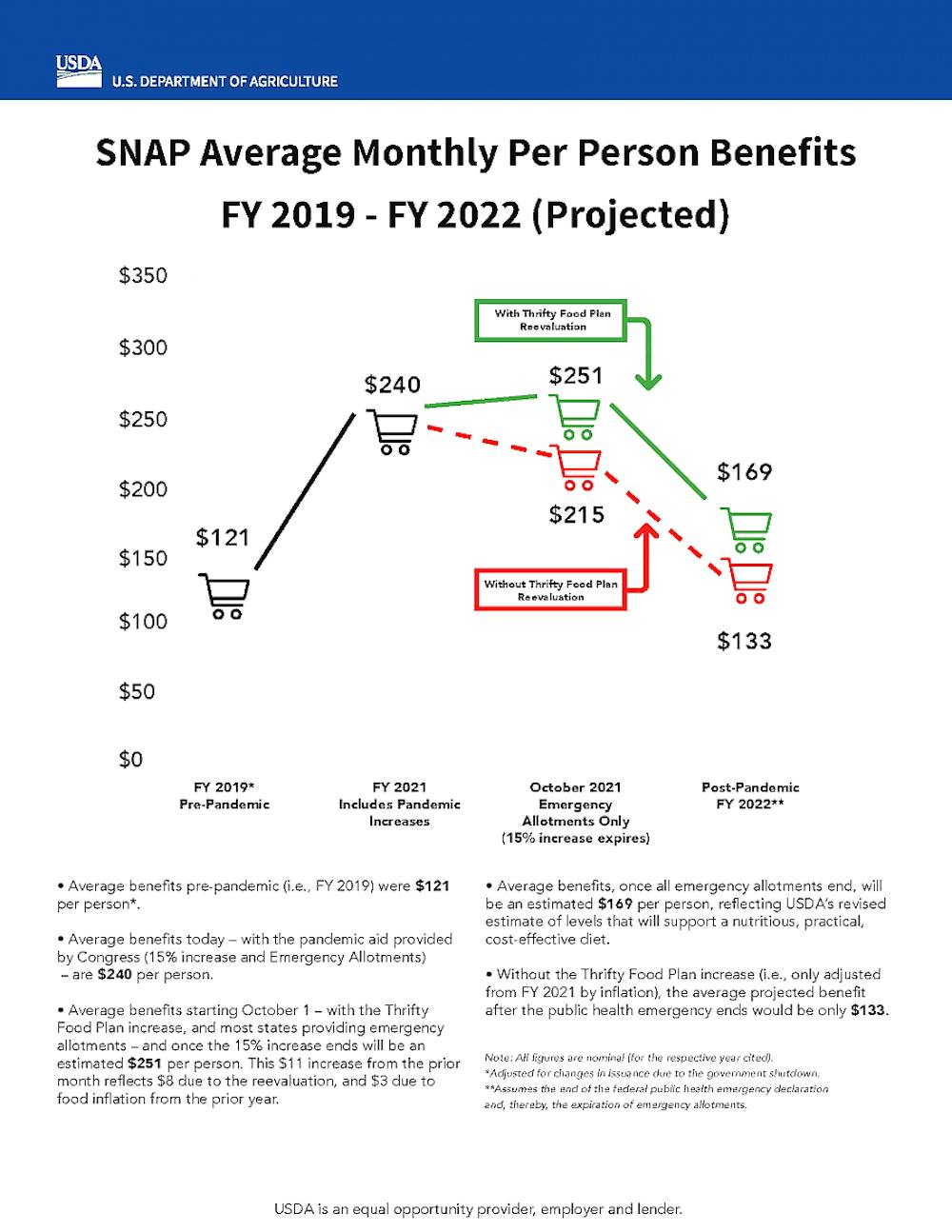
Initially, most households enrolled in the program will see their benefits rise from US$12 to $16 per person per month, the USDA says.
In doing the research for an upcoming book on the history of the food stamps program, I have found that the government has often temporarily expanded nutritional assistance during tough economic times. Long-term increases in benefits, however, are unusual. And the origins of this change are quite surprising.
How high will SNAP benefits be?
The maximum SNAP benefit for a family of four with little or no income will rise to $835 per month. That’s 21% above pre-pandemic levels after inflation is taken into account.
Since March 2020, states, which administer this federally funded program, have been allowed to give every family eligible for SNAP the maximum amount of assistance for their household size as emergency help during the COVID-19 pandemic. Under normal circumstances, SNAP benefits are distributed on a sliding scale based on income levels.
Without the emergency help, a single person might get a benefit as low as $20 a month. With it, they get $250.
This policy has given many families who would otherwise qualify for lower SNAP benefits hundreds of extra dollars a month to buy food.
The Trump administration did not offer emergency help to the lowest-income SNAP participants already getting the maximum benefit, but the Biden administration reversed this policy starting April 1, 2021.
Once the federal government declares an end to the public health crisis, these extra benefits will end. States can opt out sooner, and some began to do that in the spring of 2021.
What’s the Thrifty Food Plan?
The Thrifty Food Plan is a blueprint for a budget-conscious and nutritionally adequate diet for a family of four with two kids under 12.
The USDA relies on this standard when it sets monthly SNAP benefit amounts.
The agency created the Thrifty Food Plan in 1975. A replacement for a previous system developed in 1962, the plan included shopping lists of foods that were supposed to meet national dietary guidelines and food consumption patterns.
Many experts on food insecurity and advocates for a stronger safety net have said it didn’t cover the full cost of feeding a family from the start.
Over time, observers argued its assumptions regarding the time American families spend shopping for food and preparing meals as well as what they actually eat became more and more unrealistic.
For example, the old plan expected families to spend over two hours daily preparing food from scratch and counted on them eating over five pounds of beans a week.
The new plan allows people getting benefits to spend more on prepared foods, vegetables and grains, as well as dairy products and other sources of protein.
Why didn’t benefits rise more in the past?
Until 2021, the USDA had updated the Thrifty Food Plan in 1983, 1999 and 2006 only to accommodate changing nutritional guidance and food preferences.
But the USDA had never revised the Thrifty Food Plan in such a way that it would cost more, aside from inflation-related adjustments, to buy the recommended food. Therefore the government never increased the purchasing power of nutrition benefits.
The USDA acknowledged in 2006 that the Thrifty Food Plan fell short of what was needed for a nutritious diet. But it didn’t revise the Thrifty Food Plan to fix that problem because the agency concluded it wasn’t possible to do so without spending more on SNAP.
The 2018 farm bill required the USDA to update the Thrifty Food Plan by studying “current food prices, food composition data, consumption patterns and dietary guidance.”
It called for a review to take place by 2022 and every five years thereafter. The USDA completed the review in August 2021.

What difference will the increase make?
Anti-poverty advocates have long argued that SNAP benefits are too low.
Even in a strong economy, more than 1 in 5 SNAP recipients would use up their benefits by the middle of the month, and 1 in 3 depleted them by the end of the third week.
And 61% of SNAP recipients said the cost of healthy food prevented them from eating better, according to USDA research released in June 2021.
Researchers estimate that the maximum benefit will now cover the cost of modest meals in 79% of counties, compared with only 4% of counties under the old formula.
This update to national nutrition standards could pull 2.4 million SNAP recipients out of poverty, including more than 1 million children, the Center for Budget and Policy Priorities, a think tank, has estimated.
How did this happen?
In making this change, the Biden administration continued with a process the Republican-controlled Congress set in motion three years earlier.
Republicans held a majority of seats in both houses in 2018, when President Donald J. Trump signed the farm bill into law. But it does not look like Republican lawmakers meant to make this change. In fact, Republican lawmakers, like the Trump White House, repeatedly sought to scale back SNAP benefits.
Former Rep. K. Michael Conaway, a Republican who played a pivotal role when Congress passed the bill, has said the law was drafted under the assumption that the USDA would refrain from changes to the Thrifty Food Plan that would increase benefits.
[Over 110,000 readers rely on The Conversation’s newsletter to understand the world. Sign up today.]
Republican lawmakers are criticizing the SNAP benefit increases, calling them “a shameless executive branch exploitation of Congressional intent.” Two GOP members of Congress have asked a government watchdog agency to review the administration’s actions.
The USDA has insisted that data drove these changes and that complying with the farm bill’s requirements made them essential.
Without further action by Congress, future administrations will revisit the Thrifty Food Plan every five years and may again use it to adjust the amount of SNAP benefits.
Tracy Roof, Associate Professor of Political Science, University of Richmond
This article is republished from The Conversation under a Creative Commons license. Read the original article.
As Fire Prevention Week arrives, Cal Fire urges state residents to ‘Learn the Sounds of Fire Safety’
- Details
- Written by: Lake County News reports
This year’s campaign, Oct. 3 to 9, works to educate everyone about simple but important actions they can take to keep themselves and those around them safe.
“What do the sounds mean? Is there a beep or a chirp coming out of your smoke or carbon monoxide alarm? Knowing the difference can save you, your home, and your family,” said Lorraine Carli, vice president of outreach and advocacy at NFPA.
Cal Fire encourages all residents to embrace the 2021 Fire Prevention Week theme by taking time to familiarize yourself with the smoke detector(s) and carbon monoxide detector(s) in your home.
“It’s important to learn the different sounds of smoke and carbon monoxide alarms. When an alarm makes noise — a beeping sound or a chirping sound — you must take action,” said Chief Thom Porter. “Make sure everyone in the home understands the sounds of the alarms and knows how to respond. To learn the sounds of your specific smoke and carbon monoxide alarms, check the manufacturer’s instructions that came in the box, or search the brand and
model online.”
“This Fire Prevention Week we want to provide the public with knowledge to help them take action in preventing injuries and/or fatalities due to fire, smoke and toxic gases,” said State Fire Marshal Mike Richwine. “We want residents to understand that working smoke alarms and carbon monoxide detectors are critical to ensure home fire safety. These safety devices are required in every residence, hotel/motel, dormitory, and lodging house. It is imperative that everyone is familiar with the emergency notification signals to enable them to safely exit the home.”
Safety tips to help you “Learn the Sounds of Fire Safety”:
• A continuous set of three loud beeps—beep, beep, beep—means smoke or fire. Get out, call 9-1-1, and stay out.
• A single chirp every 30 or 60 seconds means the battery is low and must be changed.
• All smoke alarms must be replaced after 10 years.
• Chirping that continues after the battery has been replaced means the alarm is at the end of its life and the unit must be replaced.
• Make sure your smoke and CO alarms meet the needs of all your family members, including those with sensory or physical disabilities.
In California all new individually sold smoke alarms contain a nonreplaceable, nonremovable battery capable of powering the smoke alarm for a minimum of 10 years. While residents should still test them monthly, these new alarms wouldn’t need new batteries each year. If the alarm chirps, warning that the battery is low, replace the entire smoke alarm right away.
For more general information about Fire Prevention Week and fire prevention in general, visit www.fpw.org.
Middletown Art Center plans diverse slate of programs to weave the arts into Lake County communities
- Details
- Written by: ESTHER OERTEL
MIDDLETOWN, Calif. — The Middletown Art Center, or MAC, has plans for a diverse slate of programs focused in great part on cross-cultural projects for communities throughout Lake County.
Adapting to the challenges of a pandemic hasn’t been easy, but through creativity, willpower and the support of community, the MAC is weathering the storm while ambitiously striving to extend its reach by weaving the arts further into Lake County communities.
“MAC is committed to providing inclusive, affordable and equitable arts access in a safe and welcoming environment for all peoples in Lake County,” said Lisa Kaplan, MAC’s executive director. “Countywide, we grapple with issues of poverty and the trauma of recurring wildfires and recognize that local underrepresented communities in particular have specific needs and barriers that require distinct and varied outreach efforts to help facilitate equity.”
To realize MAC’s vision of extending the reach of the arts into Lake County’s diverse communities, the organization expanded its board, committees and staff to reflect the county’s various populations. This facilitated new collaborations and outreach opportunities.
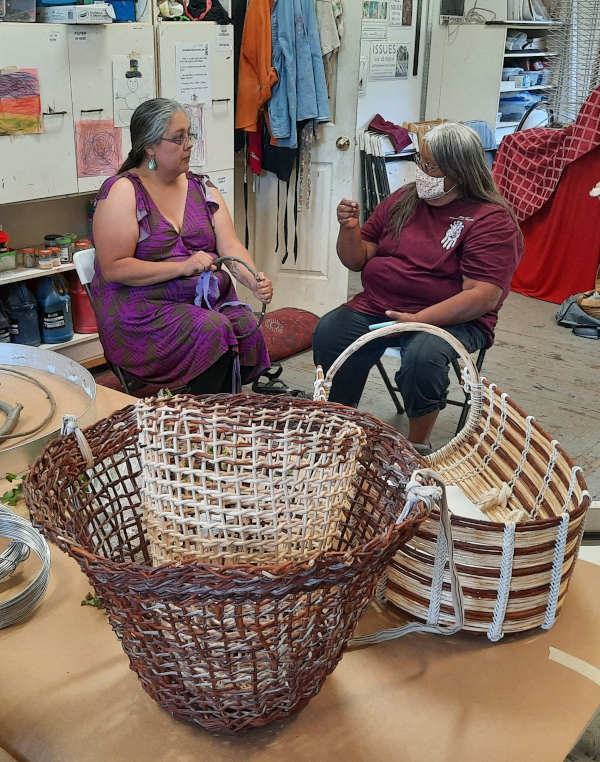
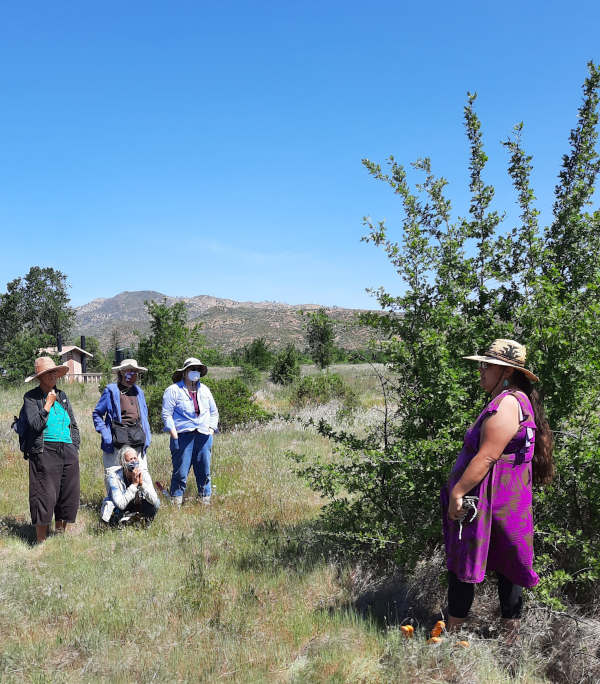
MAC’s staff applied for an Impact Project Grant from the California Arts Council for “Weaving Baskets, Weaving Bridges,” a program which was collaboratively designed by MAC team members, Middletown tribal elder Millie Simon, cultural educator Rose Steele and Pomo basket weaver and cultural educator Corine Pearce. They recently welcomed the good news that the project was funded.
“Weaving” will begin in early November and will run through the summer of 2022.
A multifaceted project, “Weaving” uses the art of basketry as a vessel for healing and understanding with a holistic approach, from native plant cultivation and preparation to weaving in community.
The project comprises basketry workshops, a native plant demonstration garden and a variety of cross-cultural engagement opportunities to provide historical and cultural context. Pomo storytelling, readings, art presentations and film screenings will all be included.
The project will culminate in an exhibit of contemporary and traditional Indigenous art at MAC with Pomo basketry exhibits at Lake County’s three historical museums.
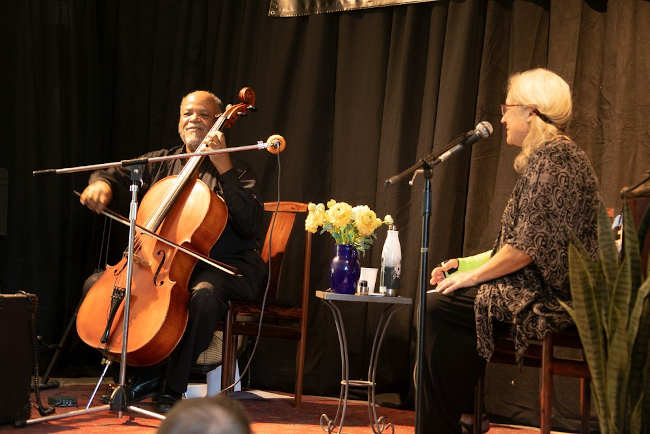
In addition to programs that honor local Indigenous culture, the experiences of African American musicians living and working in Lake County are being highlighted through another project, “Sounds of Liberation: Discovering Wisdom and History in African American Music,” a series of intimate conversations and performances about race and music.
Events in 2020, including George Floyd’s tragic death and the wide participation in the calls for justice that followed, were in part the inspiration for Sounds of Liberation.
A collaboration with local African American composer, cellist, and educator Clovice Lewis, Sounds of Liberation was launched on Juneteenth (June 19) at the MAC with a conversation with and performance by Lewis. Lewis was interviewed by arts professional and social justice advocate Sabrina Klein-Clement, and this was followed by a Juneteenth celebration.
The second event in the series was a conversation between Lewis and singer-songwriter Gloria Scott. Additional events will follow in the months to come.
Both “Weaving” and Sounds of Liberations provide options for in-person and Zoom-based remote participation.
Sounds of Liberation is funded in part by a grant from California Humanities, a partner of the National Endowment for the Humanities.
“We are honored that our current projects have been funded by state agencies,“ said Kaplan. “The awards cover a significant portion of project costs, but not all, and they are designated to the project only, not to general operations or facilities.”
Kaplan said MAC relies heavily on community support through membership, donations and program attendance, all of which have been much lower during the pandemic.
During COVID-19, MAC benefited from CARES Act support which enabled it to adapt, continue operations and develop programs during a time of distancing.
Before COVID, many of MAC’s community-focused arts and culture activities happened on site, from classes and exhibit openings to live music performances and dances.
MAC continues to weave the arts into the fabric of Lake County through gallery shows, events, school field trips to the gallery and studio, and many other educational programs for youth and adults, now to include multigenerational weaving workshops.
As to the EcoArts Sculpture Walk at Trailside Park in Middletown, there are currently eight works on view, including a couple of new or refreshed pieces. Due to the pandemic, proposals for sculpture installations continue to be accepted on a rolling basis. MAC hopes to hold a festive opening in 2022.
Much more is in store for MAC as it serves the community in the coming months.
A “MAC for Lake County” celebration of MAC’s 7th year of operations is scheduled for Saturday, Oct. 9, from 4:30 to 7 p.m. This will include an interactive sound and light installation that is part of the new “LIGHT” exhibit, which is on view through the end of 2021. Learn more and RSVP to this free milestone event on the MAC website.
As MAC Board President Amanda Martin said, “Looking to the year ahead, we have a full slate of activities planned, including Weaving and Sounds of Liberation, additional virtual exhibits, artistic work at the MAC building, and new marketing programs, collaborations and partnerships. We also plan to expand the MAC’s committees and volunteer base.”
The MAC continues to encourage and welcome new community volunteers, committee and board members, and, of course. new artists. Calls for artwork are posted at www.middletownartcenter.org/calls-for-work. To learn more about volunteer opportunities, you may email
The MAC is located in Middletown at 21456 State Highway 175.
To support their work, to learn more, or to sign up for current programs, please visit their website at www.middletownartcenter.org.
Esther Oertel is a features contributor and columnist for Lake County News.