 How to resolve AdBlock issue?
News
- Details
- Written by: Tama Prokopowich
Each month, as we consider Lake County’s real estate sales, we look at last year’s statistics compared to this year with an overview of changes from the previous month. This helps to see how the market is trending month over month and changes from last year at this time.
Countywide changes from August to September show that sales were down, from 93 to 70; the median price was up, from $335,000 to $372,000; active listings rose from 228 to 251; median days on the market went from 13 to 17; the sales to list price dropped slightly, from 100% to 99.7%; and price reductions were up from 33.3% to 43%
Sales numbers range across communities
Countywide, existing single-family residential sales were at 70 in September, which is down from 93 in August and down 38.6% from last year, showing an overall slowing of home sales.
Lakeport’s sales were at 13, which is up by three over August and up by 8.3% over September of last year.
Kelseyville’s sales totaled were at 12, that’s down 50% from last month and down 63.6% from the previous September.
In Clearlake, sales totaled 13, up only one from August and down 7.1% from September of 2020.
Hidden Valley Lake’s sales were at 14, down by one in August and down 36.4% from September last year.
Median price continues to increase
Lake County’s median price for existing single family residences totaled $372,000 in September, compared to August’s $335,000 and up 21% in a year-over comparison.
By community, the median prices for September broke down this way:
• Lakeport: median price, $435,000, up from $389,000 in August, up 12.3% from September 2020.
• Kelseyville: median price, $360,000, up from $353,000 in August and up 9.6% from the previous September.
• Clearlake: median price, $255,000, up from August’s $223,000, and up 32.5% from September 2020.
• Hidden Valley Lake: median price, $377,000, up from $355,000 in August and up 14.1% in a year-over comparison.
Active listings up
Countywide, active listings were at 251, which is up over August’s 228 and up 55.9% over September of last year.
By community, listings for September were as follows:
• Lakeport: active listings, 45, up two from August; up 125% over September 2020.
• Kelseyville: active listings, 56, up five from August; up 55.6% over last September.
• Clearlake: active listings, 31, up two over August; down 6.1% from September 2020.
• Hidden Valley Lake: active listings, 31, up three from August; up 34.8% in a year-over comparison.
Days on market
Across Lake County, the median days on the market was 17, sales to list price was 99.7%, and 43% of active listings had reduced prices.
Lakeport’s median days on the market was 13, sales to list price was 99.5% and 53.3% of active listings had reduced prices.
Kelseyville’s median days on the market was 11, sales to list price was 100% and 50% of active listings had price reductions.
Clearlake’s median days on the market was 14, sales to list price was 100% and 41.9% of active listings had price reductions.
Tama Prokopowich is president-elect of the Lake County Association of Realtors.
- Details
- Written by: Sara Sawyer, University of Colorado Boulder; Arturo Barbachano-Guerrero, University of Colorado Boulder, and Cody Warren, University of Colorado Boulder
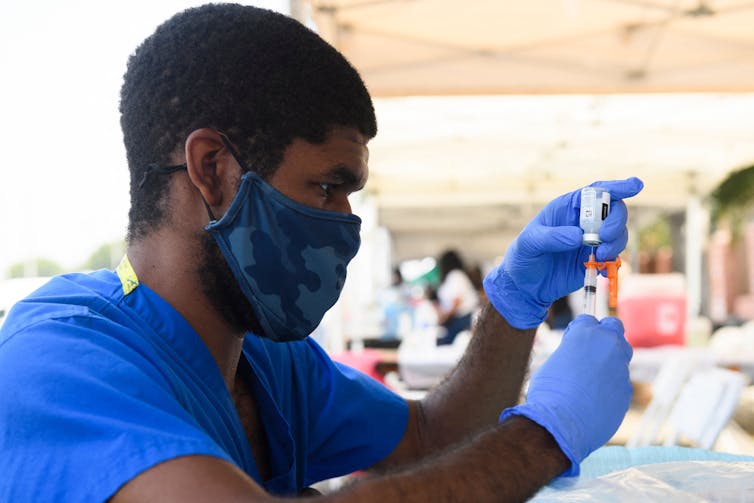
Now that kids ages 5 to 11 are eligible for COVID-19 vaccination and the number of fully vaccinated people in the U.S. is rising, many people may be wondering what the endgame is for COVID-19.
Early on in the pandemic, it wasn’t unreasonable to expect that SARS-CoV-2 (the virus that causes COVID-19) might just go away, since historically some pandemic viruses have simply disappeared.
For instance, SARS-CoV, the coronavirus responsible for the first SARS pandemic in 2003, spread to 29 countries and regions, infecting more than 8,000 people from November 2002 to July 2003. But thanks to quick and effective public health interventions, SARS-CoV hasn’t been observed in humans in almost 20 years and is now considered extinct.
On the other hand, pandemic viruses may also gradually settle into a relatively stable rate of occurrence, maintaining a constant pool of infected hosts capable of spreading the virus to others. These viruses are said to be “endemic.”
Examples of endemic viruses in the United States include those that cause the common cold and the seasonal flu that appear year after year. Much like these, the virus that causes COVID-19 likely won’t die out, and most experts now expect it to become endemic.
We are a team of virologists and immunologists from the University of Colorado Boulder studying animal viruses that infect humans. An essential focus of our research is to identify and describe the key adaptations that animal viruses require to persist in the human population.
What determines which viruses become endemic?
So why did the first SARS virus from 2003 (SARS-CoV) go extinct while this one (SARS-CoV-2) may become endemic?
The ultimate fate of a virus depends on how well it maintains its transmission. Generally speaking, viruses that are highly contagious, meaning that they spread really well from one person to the next, may never die out on their own because they are so good at finding new people to infect.
When a virus first enters a population with no immunity, its contagiousness is defined by scientists using a simple mathematical term, called R0, which is pronounced “R-naught.” This is also referred to as the reproduction number. The reproduction number of a virus represents how many people, on average, are infected by each infected person. For example, the first SARS-CoV had an R0 of about 2, meaning that each infected person passes the virus to two people on average. For the delta variant strain of SARS-CoV-2, the R0 is between 6 and 7.
The goal for public health authorities is to slow the rate by which viruses spread. Universal masking, social distancing, contact tracing and quarantines are all effective tools to reduce the spread of respiratory viruses. Since SARS-CoV was poorly transmissible, it just took a little bit of public health intervention to drive the virus to extinction. Given the highly transmissible nature of the delta variant, the challenge for eliminating the virus will be much greater, meaning that the virus is more likely to become endemic.

Is COVID-19 ever going away?
It’s clear that SARS-CoV-2 is very successful at finding new people to infect, and that people can get infected after vaccination. For these reasons, the transmission of this virus is not expected to end. It’s important that we consider why SARS-CoV-2 moves so easily from one person to the next, and how human behavior plays into that virus transmission.
SARS-CoV-2 is a respiratory virus that is spread through the air and is efficiently transmitted when people congregate. Critical public health interventions, like mask use and social distancing, have been key in slowing the spread of disease. However, any lapse in these public health measures can have dire consequences. For instance, a 2020 motorcycle rally brought together nearly 500,000 people in Sturgis, South Dakota, during the early phases of the pandemic. Most of the attendees were unmasked and not practicing social distancing. That event was directly responsible for an increase in COVID-19 cases in the state of South Dakota and nationwide. This shows how easily the virus can spread when people let their guard down.
The virus that causes COVID-19 is often associated with superspreading events, in which many people are infected all at once, typically by a single infected individual. In fact, our own work has shown that just 2% of the people infected with COVID-19 carry 90% of the virus that is circulating in a community. These important “supercarriers” have a disproportionately large impact on infecting others, and if they aren’t tracked down before they spread the virus to the next person, they will continue to sustain the epidemic. We currently don’t have a nationwide screening program geared toward identifying these individuals.
Finally, asymptomatically infected people account for roughly half of all infections of COVID-19. This, when coupled with a broad range of time in which people can be infectious – two days before and 10 days after symptoms appear – affords many opportunities for virus transmission, since people who don’t know they are sick generally take few measures to isolate from others.
The contagious nature of SARS-CoV-2 and our highly interconnected society constitute a perfect storm that will likely contribute to sustained virus spread.
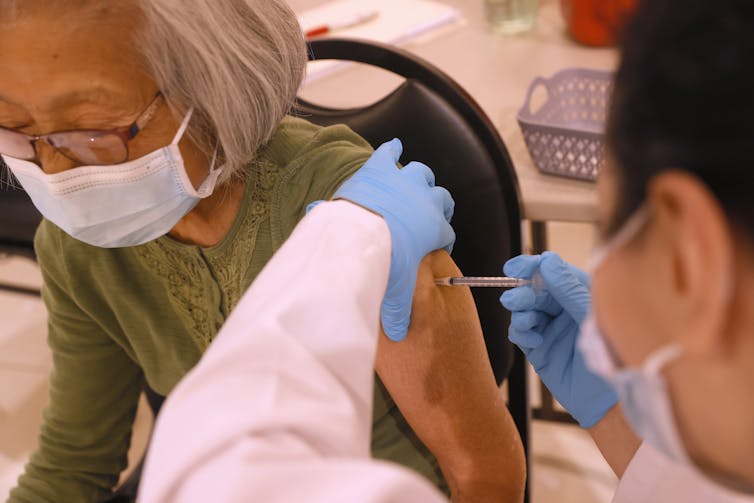
What will our future with COVID-19 look like?
Given the considerations discussed above and what we know about COVID-19 so far, many scientists believe that the virus that causes COVID-19 will likely settle into endemic patterns of transmission. But our inability to eradicate the virus does not mean that all hope is lost.
Our post-pandemic future will heavily depend on how the virus evolves over the coming years. SARS-CoV-2 is a completely new human virus that is still adapting to its new host. Over time, we may see the virus become less pathogenic, similar to the four coronaviruses that cause the common cold, which represent little more than a seasonal nuisance.
Global vaccination programs will have the greatest impact on curbing new cases of the disease. However, the SARS-CoV-2 vaccine campaign so far has touched only a small percentage of people on the planet. In addition, breakthrough infections in vaccinated people still occur because no vaccine is 100% effective. This means that booster shots will likely be needed to maximize vaccine-induced protection against infection.
With global virus surveillance and the speed at which safe and effective vaccines have been developed, we are well poised to tackle the ever-evolving target that is SARS-CoV-2. Influenza is endemic and evolves quickly, but seasonal vaccination enables life to go on as normal. We can expect the same for SARS-CoV-2 – eventually.
How will we know if and when SARS-CoV-2 becomes endemic?
Four seasonal coronaviruses circulate in humans endemically already. They tend to recur annually, usually during the winter months, and affect children more than adults. The virus that causes COVID-19 has not yet settled down into these predictable patterns and instead is flaring up unpredictably around the globe in ways that are sometimes difficult to predict.
[Over 115,000 readers rely on The Conversation’s newsletter to understand the world. Sign up today.]
Once rates of SARS-CoV-2 stabilize, we can call it endemic. But this transition may look different based on where you are in the world. For instance, countries with high vaccine coverage and plentiful boosters may soon settle into predictable spikes of COVID-19 during the winter months when the environmental conditions are more favorable to virus transmission. In contrast, unpredictable epidemics may persist in regions with lower vaccination rates.
Sara Sawyer, Professor of Molecular, Cellular and Developmental Biology, University of Colorado Boulder; Arturo Barbachano-Guerrero, Postdoctoral Researcher in Virology, University of Colorado Boulder, and Cody Warren, Postdoctoral Fellow in Virology and Immunology, University of Colorado Boulder
This article is republished from The Conversation under a Creative Commons license. Read the original article.
- Details
- Written by: LAKE COUNTY NEWS REPORTS
To combat this issue, the California Highway Patrol received the Adult Distracted Drivers (ADD) XII grant to keep California roads safe through education and enforcement.
“Distracted driving is a serious issue that is 100 percent preventable,” said CHP Commissioner Amanda Ray. “We are encouraging drivers to make a conscious choice to not drive distracted. This simple decision can have a tremendous positive impact on the safety of California’s roadways.”
Drivers who choose to drive distracted exponentially increase the odds of being involved in a vehicle crash.
According to data from the CHP’s Statewide Integrated Traffic Records System, in 2019 there were nearly 19,000 crashes where driver inattention played a role.
Of the 9,371 drivers involved in a fatal or injury distracted driving crash that year, nearly 10 percent cited cellphone use as the source of inattention.
Though there are numerous distractions for a driver, cellphones are the most prevalent. Handheld cellphone use while driving is not only illegal in California, it is an unsafe activity behind the wheel.
In California, drivers under the age of 18 are prohibited from using a cellphone while driving for any reason, including hands-free devices.
“Driving safely requires complete attention, so it is best to stay focused on the road. Distraction behind the wheel jeopardizes your safety, your passengers’ safety, and the well-being of those around you,” Commissioner Ray added.
Funds from the ADD grant will help support the CHP’s completion of at least 400 traffic safety presentations statewide and a minimum of 80 distracted driving enforcement operations between Oct. 1, 2021, and Sept. 30, 2022.
Funding for this program is provided by a grant from the California Office of Traffic Safety, through the National Highway Traffic Safety Administration.
- Details
- Written by: Elizabeth Larson
Following a lengthy discussion, the board approved a motion offered by Trustee Bill Roderick — whose coverage area includes Lake County — to direct Associate Vice Chancellor Jake Hurley to present an adjusted timeline to the board to extend the chancellor’s search six to 12 months.
That additional time, Roderick said, is to allow the district to deal with human resources and fiscal issues. He clarified that it isn’t restarting the process, but that the intention is, “We hit pause.”
Chancellor Douglas Houston left at the end of April, and in June the board appointed Dr. James Houpis interim chancellor, effective July 1.
Houpis’ contract calls for him to serve through June 30, 2022. That was to allow for the recruitment for a permanent chancellor. According to statements at Wednesday’s meeting, Houpis’ contract precludes him from applying for the job on a permanent basis.
Since he joined the district, Houpis has earned praise from classified staff and faculty for the way he has worked with them and addressed the district’s problems.
It’s a particularly challenging time for the district, which is facing dropping enrollment — exacerbated by the pandemic — and the accompanying financial challenges.
In October, the board received a report from the state’s Fiscal Crisis and Management Assistance Team, or FCMAT, that pointed to the potential for the district to face a “fiscal cliff” in the 2024-25 academic year should it not be able to increase enrollment across the district.
Board members raise concerns about timing
During public comment, before the discussion on the chancellor’s search, Jennifer Hanson, professor of economics at the college as well as a governing board member of the Lakeport Unified School District, encouraged the board to take its time selecting the next chancellor.
She recounted how Lakeport Unified had an interim superintendent for a year and a half. “I hope you don’t rush this search. It’s really important,” she said.
Hanson added, “Waiting is sometimes a very good thing. It worked well for us.”
The board also heard from search committee members Olga Nevarez and Marcia Stranix, both of whom felt the recruitment should move forward.
“We have a process that is set up that is thoughtful and timely,” said Nevarez, explaining that the district can always reopen the recruitment if it doesn’t find the right person.
Houpis, who attended the meeting via Zoom, recused himself from the chancellor’s search discussion.
Hurley said the board had asked for discussion of the process during a special board meeting on Oct. 27.
Trustee Jesse Ortiz, who supported continuing the search, said one of the concerns had been about the timeline. He asked if the timeline was doable, and Guy Lease of PPL Inc., the firm conducting the search, said it absolutely was.
Lease said the recruitment has been progressing right on schedule and was on track to open for applications on Nov. 15.
The district’s timeline includes two months to accept applications, with the deadline set for Jan. 14. The following week, PPL was scheduled to review applications for minimum qualifications, with a ranking summary due to be completed on Feb. 22.
The 23-member screening committee formed to be a part of the interview process would hold the first interviews in the middle of March, with the first board interviews with candidates at the start of April, in order to have a new chancellor in place by July 1.
Lease said that there had been an issue raised at the Oct. 27 meeting regarding time conflicts for the screening committee, but he said having time conflicts for such a large group isn’t unusual.
He said they’ve already begun conversations with people within California and from out of state who they think would be good candidates.
The next step was for the board to approve the position announcement, another item on the Wednesday night agenda.
If the board chose to stop, Lease said the firm would be ready to work with the district in the future. He said they didn’t see the timeline as being rushed or there being a need to stop.
Lease said now is the prime time for the recruitment process in order to get candidates looking to start a new job in July or August. He said they risked losing great candidates to other districts that get ahead of them.
Trustee Richard Teagarden, who chairs the steering committee, said they had already gone through a lengthy process and there was 100% participation from the committee. He recommended staying on track, adding the board could extend or revise the schedule in the future if necessary.
Two 500-pound gorillas
Roderick explained that two 500-pound gorillas — human resources issues that have been uncovered and are being cleaned up by Dr. Houpis and Hurley, and the FCMAT findings regarding the district’s financial position — are what brought the discussion forward.
He said it would be a disservice to bring in a new chancellor in the middle of the situation while, at the same time, losing the momentum that Houpis and Hurley have developed in working with staff and addressing the financial challenges.
Roderick said he wanted to give Houpis a chance to clean house and set up a new chancellor for long-term success.
Trustee David Wheeler said the board’s primary duty is to hire a chancellor, and he saw it as an abdication of duty not to move forward.
“It is the chancellor who is going to lead us out of our problems,” Wheeler said, suggesting the board was overstepping and changing policy by not actively recruiting a long-term chancellor.
“Since we’ve started this process, a lot has been uncovered,” said Trustee Dennise Burbank, referring to the human resources issues and the FCMAT report. She said she was supportive of waiting as long as a year to continue the recruitment.
Board President Susan Alves asked Hurley about what significant functions and challenges the district has now that would make it not the best time to bring in a new chancellor.
Hurley said there are concerns around the FCMAT report and addressing structural concerns in the district’s finances that the report raises. There also are ongoing issues with COVID-19, including board policies going into effect in December requiring staff to be vaccinated or tested and a similar requirement for students that begins in January.
There also are labor negotiations with the district’s four bargaining units in January, Hurley said.
“This is an incredibly busy time for the district, and I don't think there would be much disagreement about that,” Hurley said.
Ortiz said it was because of the district’s issues that it needed a permanent chancellor sooner rather than later, in order for that individual to be involved in creating the solutions.
“We have the authority to stop this search at any time,” Ortiz said, adding that it could be halted if they didn’t get the quality of candidates they wanted.
He offered a compromise that the board ultimately rejected that would have allowed the recruitment to go forward, revisiting the status of the search at the Feb. 10 meeting.
Alves said she had “a major concern” about waiting that long, and allowing people to put the work into an application process that could be suddenly halted. She felt the decision needed to be made immediately.
“This is one of the most important jobs that we have as a board,” and if it takes time, that’s fine, said Alves.
Alves said so much work needs to be done to get the district on the right footing fiscally, and she also was concerned about bringing a new chancellor into the middle of the process, losing momentum and impacting students and the district as a whole.
Board splits over action
Trustee Juan Delgado offered a motion to restart the search at a future date. Ortiz then offered an amendment to revisit the search at the board’s Feb. 10 meeting, which the board voted down.
Delgado then withdrew his motion, and Roderick offered a new motion to have Hurley present a timeline adjusted by six months to a year.
“I am totally against this motion and what we’re doing in terms of stopping this search from going forward,” said Wheeler.
He said it seemed like there was another agenda beyond FCMAT and he wanted to know what it was.
Ortiz said he also opposed it, adding that believing problems will go away if they waited another year is a misrepresentation of how education works today.
Teagarden said he also was against the motion, adding that if Houpis is doing a good job, his contract could be revised and he could apply for the job, which would offer continuity.
Delgado said staff is finally working as a team under the current leadership and employees are being allowed to do their jobs. “I really strongly feel this is the right path for all of us.”
Wheeler suggested that Roderick’s motion put Hurley in charge of running the district, and that they were creating a transparency issue, with a hidden agenda at work.
“It is absolutely outrageous. I am totally opposed to this. You ought to be ashamed of yourselves,” Wheeler said.
Alves replied by asking Wheeler not to make comments pointed at other trustees.
In the vote that followed, Roderick, Burbank, Delgado and Alves voted yes, with Ortiz, Teagarden and Wheeler voting no. Student representatives Maria Ornelas and Donovan Hutchins cast no votes, but their votes are only advisory.
Later in the meeting, the board unanimously approved the chancellor’s job announcement, which has no dates in it. Ortiz moved to approve it just before Roderick moved to table it.
Ultimately, the entire board agreed to honor the work of the committees so far and approve the document. Ortiz said that, when the district gets serious about recruiting a new chancellor, they will have to review the announcement.
Burbank said she wanted to see the current and previous recruitment announcements side by side at some point.
Correction: The student representatives cast no votes, not yes votes, for the final motion to pause the search.
Email Elizabeth Larson at
YCCD Chancellor Position Announcement — DRAFT for Board Approval by LakeCoNews on Scribd