 How to resolve AdBlock issue?
News
- Details
- Written by: Craig Austin, Florida International University
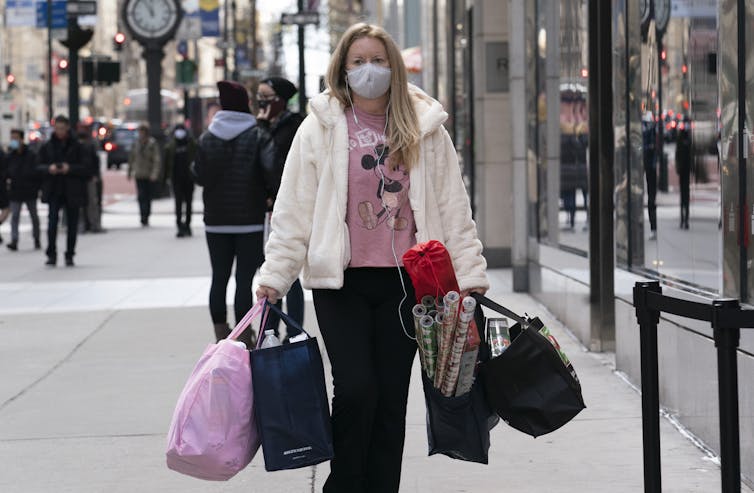
Consumer prices soared in October 2021 and are now up 6.2% from a year earlier – higher than most economists’ estimates and the fastest increase in more than three decades. At this point, that may be no surprise to most Americans, who are seeing higher prices while shopping for shoes and steaks, dining at restaurants and pumping fuel in their cars.
One of the big debates going on right now among economists, government officials like Treasury Secretary Janet Yellen and other observers is whether these soaring costs are transitory or permanent.
The Federal Reserve, which would be responsible for fighting inflation if it stays too high for too long, insisted again on Nov. 3, 2021, that it’ll be temporary, in large part because it’s tied to the supply chain mess bedeviling economies, companies and consumers.
Not everyone agrees – including some within the Fed itself – and there’s been a growing chorus of economists, strategists and business executives sounding the alarm that high inflation will likely be with us well into 2022 and beyond.
I study supply chains and their impact. It’s true that prices are surging largely because of the severe shortages of both goods and labor in supply chains, but based on my research, that doesn’t mean it’ll be temporary. Rather, it suggests that inflation is here to stay.
Demand is up
Inflation began to soar in early 2021 and has been hovering at above 5% or so, year on year, since May. That’s more than double the 2% pace that the Fed has set as a target.
The reasons prices are rising are complex and many. But one of the most important relates to the dynamic of supply and demand. And both are to blame.
Let’s start with demand.
Even though early in the pandemic consumer demand dropped as people hunkered down amid lockdowns and unemployment skyrocketed, it has soared over the past year – not for services like restaurants and travel, but for goods, mostly ordered online.
E-commerce activity has simply mushroomed to levels that never existed before the pandemic. Demand for products has significantly outstripped the market’s capacity to produce or ship what is ordered. Some people aren’t even going to the supermarket, hardware store or restaurant anymore because they do all their ordering online.
Many retailers, such as Macy’s, Target and others, have had to navigate this economy with scarce inventories and higher freight costs to stay alive during the pandemic.
These trends have created more demand than the delivery carriers can accommodate, stretching their ability to deliver products. For example, the holiday shopping season is predicted to have 4.7 million packages a day beyond what the system can possibly absorb or deliver. Storing these packages for even a short period costs money.
Given there is great difficulty finding drivers, containers and labor across industries, big retailers are offering generous education and other benefits to both attract and keep employees on hand as a means of adding capacity.
All these added costs – to hire, store and deliver – are usually passed on to consumers.
Supply is down
At the same time, supply chains remain a mess – and are only getting worse.
Bottlenecks have piled up all across Asia, putting great strains on the capacity of supply chains to deliver in a timely fashion. And severe global shortages of drivers and other workers are making it difficult to expand capacity or fix other problems plaguing the supply chains, so they can’t break free of the thick mud they’re in.
This creates a shortage of products getting through that limit competition, causing price increases.
There are dozens of huge container ships continually idling near ports in Los Angeles, New York and elsewhere around the world, which is tying up large quantities of merchandise waiting to be unloaded. There are over 500,000 shipping containers with about 12 million metric tons of goods near Southern California alone.
Ports have tried to lengthen their operating hours – U.S. President Joe Biden has made it a key issue and plans to spend billions of dollars fixing the problems – but there are not enough workers and drivers to unload the cargo.
Such delays cost money, because businesses choose then to carry more inventory, which they pass on to customers.
As an illustration, let’s look at Nike, which largely depends on Vietnam for much of its shoe production. It lost 10 weeks of production because of lockdowns within that country. And it’s taking an average of 80 days to get shoes from Asia to retailers in North America – twice as long as before the pandemic. As a result, shoe prices are soaring like everything else.
Or consider Malouf, a Utah-based furniture retailer, which reports that it has only 55% of its normal inventory on hand because of freight delays. Cars get stuck in garages because of the shortage of spare parts. Living room, kitchen and dining room furniture prices are up 13.1% from a year ago.
Another way to think about it is to examine one single product: Bullfrog Spa’s M9 hot tub. It requires 1,850 separate parts. Supply chain disruptions have pushed manufacturing time from six weeks to six months.
There is no industry unaffected.
Why there’s no easy fix
In other words, there’s no end to the supply chain problems. Consumer demand is only going to increase through the holiday season and beyond. And that’s why inflation isn’t going away anytime soon.
Corporate executives – who in many ways will determine whether prices keep rising at a fast clip – are already warning that all of these challenges are going to continue into 2022 at the earliest. Some say the problems will extend into 2023 as well.
Economists surveyed by Bloomberg in October expect inflation to slow to 3.4% next summer and hit 2.6% by the end of the year. While that would be encouraging, it’s still well above the pre-pandemic average of 1.8% and outside the Fed’s target. It’s unclear whether economists are recalibrating their expectations after the October Consumer Price Index report.
Regardless, consumers should get used to the higher prices. They’re the new normal.
[Over 115,000 readers rely on The Conversation’s newsletter to understand the world. Sign up today.]
Craig Austin, Assistant Teaching Professor of Logistics & Supply Chain Management, Florida International University
This article is republished from The Conversation under a Creative Commons license. Read the original article.
- Details
- Written by: Elizabeth Larson
Call Lake County Animal Care and Control at 707-263-0278 or visit the shelter online at http://www.co.lake.ca.us/Government/Directory/Animal_Care_And_Control.htm for information on visiting or adopting.
The following cats at the shelter have been cleared for adoption.
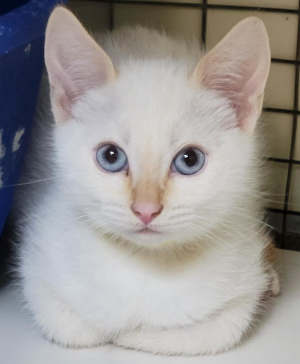
Male domestic shorthair kitten
This male domestic shorthair kitten has a white coat and blue eyes.
He is in cat room kennel No. 68a, ID No. LCAC-A-1863.
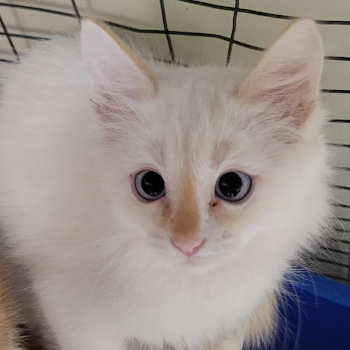
Male domestic shorthair kitten
This male domestic shorthair kitten has a white coat and blue eyes.
He is in cat room kennel No. 68b, ID No. LCAC-A-1864.

Female domestic shorthair kitten
This female domestic shorthair kitten has an orange tabby coat.
She is in cat room kennel No. 68c, ID No. LCAC-A-1865.

Female domestic shorthair kitten
This female domestic shorthair kitten has an orange tabby coat.
She is in cat room kennel No. 68d, ID No. LCAC-A-1866.
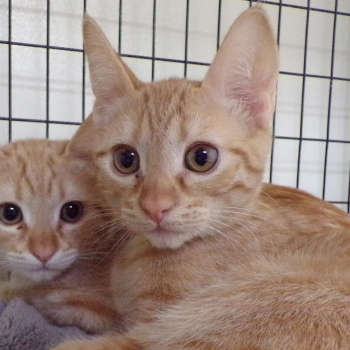
Male domestic shorthair kitten
This male domestic shorthair kitten has an orange tabby coat.
He is in cat room kennel No. 96a, ID No. LCAC-A-1871.
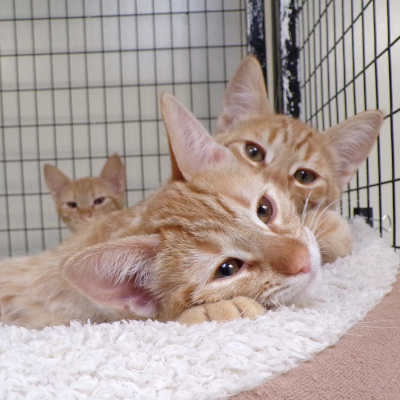
Male domestic shorthair kitten
This male domestic shorthair kitten has an orange tabby coat.
He is in cat room kennel No. 96b, ID No. LCAC-A-1872.

Male domestic shorthair kitten
This male domestic shorthair kitten has an orange tabby coat.
He is in cat room kennel No. 96c, ID No. LCAC-A-1873.

Female domestic shorthair kitten
This female domestic shorthair kitten has an orange tabby coat.
She is in cat room kennel No. 96d, ID No. LCAC-A-1874.
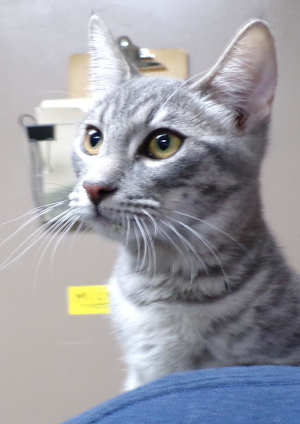
Female domestic shorthair kitten
This female domestic shorthair kitten has a gray tabby coat.
She is in cat room kennel No. 101a, ID No. LCAC-A-1945.
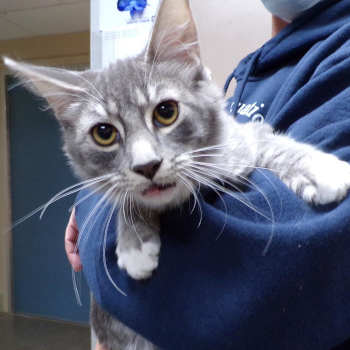
Female domestic shorthair kitten
This female domestic shorthair kitten has a gray tabby coat.
She is in cat room kennel No. 101b, ID No. LCAC-A-1946.
Email Elizabeth Larson at
- Details
- Written by: ESTHER OERTEL
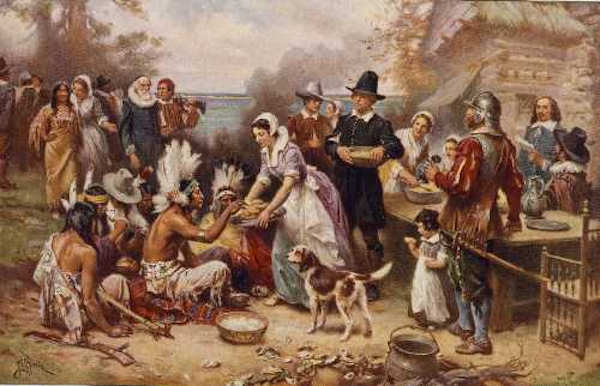
Thanksgiving is fast approaching, and in honor of the holiday, I thought it would be fun to look back on a column about the evolution of the Thanksgiving meal. I enjoyed digging up these facts when I researched it more than 10 years ago.
Several months after its initial publication by Lake County News in 2010, I discovered quite by chance that the column was picked up by a newspaper in Plymouth, Massachusetts. This means what you’re about to read has also been read by those who live near the site of the first Thanksgiving meal.
I’ve kept the recipe I offered when first published, a colonial recipe for pumpkin pie, and have added another, my own pumpkin-apple soup. That way you’ll have recipes to open and close your Thanksgiving dinner.
Sit back, relax, and enjoy the column … and most of all, I hope you have a wonderful Thanksgiving!
In less than two weeks, most of us will be celebrating the quintessential American holiday, Thanksgiving. Roasted turkey with stuffing, bowls of sweet and white potatoes, gravy, cranberry sauce, pumpkin pies and more will fill our tables.
While we consider this delicious fare traditional for the Thanksgiving feast, the truth is that what we serve on this day has evolved over time. What the Pilgrims and Indians ate in 1621 New England bears little resemblance to what we serve today.
In 1841, more than 200 years after what we now refer to as “the first Thanksgiving,” New England historian Alexander Young discovered a letter from Edward Winslow, one of the original colonists, mentioning the 1621 feast. It was Young that gave that feast the moniker mentioned above.
Winslow describes four hunters killing enough fowl to feed the camp for a week. While turkey was plentiful in North America — and eaten by the colonists and Wampanoag Indians — it’s speculated that the “fowl” mentioned in the letter consisted of seasonal waterfowl such as ducks and geese.
Turkey eventually became the fowl of choice on Thanksgiving menus, but not right away. A menu for a New England Thanksgiving dinner circa 1779 mentions roast turkey, but only as one of the meats offered at the meal, not as the star. Also listed are venison, pork, pigeon, and goose. In contrast, this year more than 240 million turkeys will have been raised as the mainstay of our Thanksgiving dinners.
What about the stuffing? Historians tell us that the practice of stuffing the cavities of fowl and other animals with mixtures of breads, spices, and other items is ancient. Romans and Arabs employed this cooking technique. The terms “stuffing” and “dressing” as they relate to cookery derive from Medieval European culinary practices.
The English settlers and Wampanoag did occasionally stuff birds and fish, but if stuffing was used, it likely consisted of herbs and onions, rather than bread.
Any cranberries served at the harvest celebration were likely only in Wampanoag dishes. They enjoyed them raw or sweetened with maple sugar. It would be 50 years before an Englishman mentioned boiling this New England berry with sugar for a “sauce to be eaten with … meat.” Since sugar was expensive in England in 1621, it’s quite possible that there was not any of this imported sweet in New Plymouth at that time.
Today turkey and cranberries are a much-loved food marriage.
The tradition of serving fruit with meat, particularly citrus fruit with fatty meat, goes back thousands of years, likely originating in the Middle East. Examples are found in many cultures and cuisines. The acid in the fruit cuts the fat in the meat. In the case of lean meats such as turkey and chicken, cranberries add flavor to what is generally considered a bland food.
Other classic meat and fruit combos include pork and applesauce, goose and cherry sauce, fish and lemon, and duck l’orange.
It’s hard to imagine Thanksgiving without mashed potatoes, but the original feast didn’t include them. Potatoes, which originated in South America, had made their way across the Atlantic to Europe, but had not been generally adopted into the English diet. The potato was virtually unknown there in the 17th century. At that point they were not included in the diet of the Wampanoag Indians, either (though they did eat other varieties of local tubers).
Today’s Thanksgiving meals typically include a version of a sweet potato (or yam) dish, but that wouldn’t have been included in the original harvest meal.
The sweet potato, which originated in the Caribbean, had also made its way to Europe, but was rare and available only to the wealthy. King Ferdinand and Queen Isabella of Spain liked them and had them planted in their court gardens. Their nephew, King Henry VII of England, liked them as well, and considered them to be an aphrodisiac.
Yams are native to Africa and are often confused with sweet potatoes. Most sweet potato dishes — pies included — are just as successfully made with yams.
Like the white potato, neither yams nor sweet potatoes were part of the diet of the Wampanoag Indians or, for the most part, the English at the time of the first feast.
Have you ever wondered why marshmallows are so often paired with sweet potatoes on the Thanksgiving table? During the late 19th and early 20th centuries, marshmallows were very trendy. They were mass produced, plentiful, and very inexpensive, and were aggressively marketed by the companies that manufactured them.
The earliest recipes found pairing marshmallows and sweet potatoes date to the 1920s. There were typically casseroles where marshmallows were layered with the potatoes. To a lesser extent, they were also paired with candied yams.
Often signature dishes from the 1920s were very sweet, and some historians speculate that this is a reaction to Prohibition.
Pumpkin, native to the New World, was likely available as part of the harvest feast, but not in the form of pie. It may have been baked, possibly by placing it in the ashes of a dying fire, then mixed with animal fat, maple syrup, or honey, and made into a soup, a common way of using it by American Indians.
As for our beloved Thanksgiving pumpkin pie, recipes for stewed pumpkin tempered with sugar, spices, and cream wrapped in pastry have roots in Medieval times, when similar pies were made with squash and gourds.
Corn was part of the earliest Thanksgiving feast, though it was hard Indian corn, unlike the corn we know today. American Indians were cooking with corn long before European settlers arrived, and the English colonists learned to grind it for use in breads, pancakes, porridge, and puddings as a substitute for the grains they were used to.
While we don’t know exactly what was served at the first Thanksgiving, historians can be pretty certain about it included at least some of the bounty available to them, such as cultivated parsnips, carrots, collards, turnips, parsley, spinach, cabbage, sage, thyme, onions, and marjoram, as well as native cranberries, pumpkin, nuts, grapes, lobster, oysters, and other seafood.
In the spirit of the colonial U.S., I’ll leave you with a modern interpretation of Abigail Adams’ Pumpkin Pie, courtesy of The Thirteen Colonies Cookbook by Mary Donovan, et al, as well as a more modern recipe, my own “Thanksgiving Pumpkin Soup with Apples and Sage.” Enjoy!
Abigail Adams' pumpkin pie
1 1/2 cups pumpkin
3/4 cup brown sugar, firmly packed
1/2 teaspoon fresh ginger root, grated
1 teaspoon freshly grated nutmeg
1/2 teaspoon salt
1 cup heavy cream
3/4 cup milk
1/4 cup dark rum, or brandy
3 eggs, lightly beaten
Pecans
Whipped cream
10-inch pie shell, unbaked
Mix all ingredients together and pour them into the prepared pastry shell. Bake at 425 degrees Fahrenheit for 10 minutes. Reduce heat to 350 degrees F and bake for 40 minutes more, or until a knife inserted in the center comes out clean. Garnish with pecans and whipped cream flavored with rum or brandy.
Thanksgiving pumpkin soup with apples
2 tablespoons extra-virgin olive oil
1 tablespoon butter (unsalted preferred)
1 medium yellow onion, peeled and diced
4 sweet, flavorful apples (such as Fuji), peeled, cored, and diced
2 large garlic cloves, peeled and minced
1 quart vegetable or chicken broth
1 large (29 ounce) can pure pumpkin
1 cup apple juice (unfiltered preferred)
1 teaspoon salt
½ teaspoon nutmeg
½ cup half and half
Heat olive oil and melt butter in a Dutch oven or large stockpot.
Add onions and apples and cook over medium heat until tender and caramelized to a golden brown color, about 15 to 20 minutes, stirring to prevent burning.
Add garlic and cook a minute longer, stirring to prevent burning.
Add about a cup of broth to deglaze pot, stirring to pick up caramelized bits of apple and onion. Add the rest of the broth and the pumpkin and stir to combine.
Bring to a boil, then reduce heat and simmer for about 10 minutes, stirring to prevent burning. Remove from heat.
Puree the soup in batches in a blender until smooth, being sure not to overfill the blender. (Note: Be sure the blender lid is sealed well and hold it tight with a towel when blending soup. Hot liquids in a blender can cause the lid to blow off.)
Return soup to pot over low heat to keep warm. Add apple juice, nutmeg, and salt and stir to combine. Taste and adjust seasonings, if necessary.
Just before serving, add half and half and stir to combine.
This makes over two quarts of soup, plenty for six to eight servings.
Recipe by Esther Oertel.
Esther Oertel is a writer and passionate home cook from a family of chefs. She grew up in a restaurant, where she began creating recipes from a young age. She’s taught culinary classes in a variety of venues in Lake County and previously wrote “The Veggie Girl” column for Lake County News. Most recently she’s taught culinary classes at Sur La Table in Santa Rosa. She lives in Middletown, California.
- Details
- Written by: LAKE COUNTY NEWS REPORTS
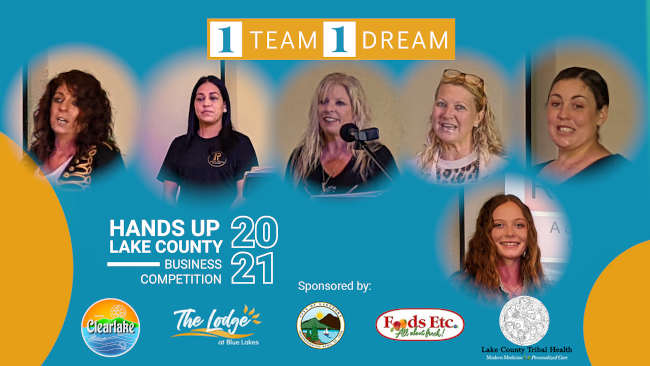
LAKE COUNTY, Calif. — The Hands Up Lake County Small Business “Mini” Competition announced it has narrowed selected its finalists in this year’s event.
The event’s board also offered congratulations to the competitors in this year’s event, noting that each of the 17 participants deserve notice and appreciation.
All are working to make a living in, and be a part of, the local small business economy that is so vital to Lake County.
Five winners selected by a team of judges will now advance to the final competition on Dec. 12: BottleRock Candle Studio, Jennifer Marie Gayda, Cobb; Party Ideas, Anahi Maria Silva, Clearlake; Reese Ranch Retreat, Catherine Ann Reese, Witter Springs; Send Rover on Over, Valeri Ann Stallings, Lakeport; and Wild Hope Bakery, Ashley Ruth Garrigus, Middletown.
Brianna Elisabeth Thomas was selected as the alternate. Thomas’ business, Red Feather Leather, is in Lakeport. She will prepare alongside the five finalists and step in should there be a cancellation.
In its second year, the small business competition drew 50 applicants; 20 were selected to go to phase two, a one-day workshop and training on business planning and digital marketing.
Nineteen attended the training and 17 participated in the next phase, a mini competition which took place on a recent rainy Saturday at the Konocti Vista Casino, Resort & Marina event center in Lakeport.
Judges for the mini competition had a very tough decision — to select the five businesses (and one alternate) who would advance to the final competition and the chance to win one of five cash awards totaling $50,000.
Dennis Darling, owner of Foods Etc. was judging the event for the second time. He believes in the mission of and need for the small business competition.
“Without the businesses and services available locally, buyers go elsewhere to nearby counties for their shopping,” Darling said. “By giving our local entrepreneurs a boost to help with their inventory, equipment, distribution, and other expenses while also investing in their training and development, we can help solve the problem of people taking their business outside the County. This benefits all of us.”
An early supporter of the small business competition, Darling has contributed his time and made a generous donation to the effort. He will be one of several donors who will present the cash awards at the final competition.
The presenters were required to hit key points — a business plan with financial projections, a compelling story about their start in business, a marketing plan and understanding of market ups and downs, among other factors.
Tasked with judging the outcomes Bobby Dutcher, president of the Lake County Chamber of Commerce, said he wished they could award every presenter with the $20,000 1st prize.
“I appreciated being asked to judge the competition, and enjoyed the experience, though I have to say I wasn’t expecting the decision to be so challenging,” he said. “The organizers did a very good job preparing the competitors.”
Judge Sabrina Andrus, owner of three small businesses in Kelseyville — A + H General Store, maker and paper & poppy, said, “What I saw during the competition was a remarkable expression of determination, enthusiasm and dedication — many of the attributes needed to make it in a tough business environment. The diversity of ideas was impressive, our task was incredibly daunting.”
Nic and Mayra Lam, owners of Lam Printing in Clearlake and last year’s first place winners, will be on hand at the Dec. 12 final competition.
“We’ll be there to support small businesses and the dream team who put this all together,” they said.
The Lams also said they wanted to encourage small businesses to apply next year because in the end, all businesses benefit from the opportunity to hone their business plans, polish their ideas and presentation skills, and expand their business networks.
“The publicity on social, online and print media all participating businesses receive is icing on the cake,” they said.
Monica Rosenthal of “R” Vineyards, one of last year’s judges and a recent addition to the 1Team 1Dream Board said, “Getting into the final competition and winning one of the cash prizes is, of course, important. But more than that, the project is helping to build a network of entrepreneurs and startup businesses who now better understand how to develop or enhance their business models for long term sustainability. Too often, we see small businesses close their doors, sometimes in their first year. The idea is to build resiliency. We want to support small businesses for the benefit of the entire County.”
Hands Up Lake County is the signature project of the 1Team 1Dream nonprofit formed to support small businesses who are dedicated to making a home and raising their families in Lake County.
“We believe small businesses are essential to our rural economy and that with a hand up, ideas can become realities,” said founder and major sponsor, Maryann Schmid, who along with her husband, Peter, owns The Lodge at Blue Lakes. “We raised $50,000 for cash prizes this year, up from $28,400 in our first year. For our third annual competition, we’re setting a much higher fundraising goal so we can increase our support for small businesses.”
“The public is invited to support the small businesses and alternate selected for the final competition by voting for the Fan Favorite,” said 1Team 1Dream Board Chair Olga Steele.
From Nov. 17 to Dec. 11 voting will take place on the 1Team 1Dream Facebook page. The winner (and award) will be announced at the final competition.
The Dec. 12 event will be livestreamed, from 11 a.m. to 2 p.m., also on Facebook.
To sponsor the event or for more information contact Olga Steele at 916-849-8170 and visit www.1team1dream.net.