 How to resolve AdBlock issue?
News
- Details
- Written by: LAKE COUNTY NEWS REPORTS
“We at Public Health want to encourage flexibility and understanding at this very challenging moment. Our aim is to help the schools stay open, while keeping students and staff as safe as possible,” said Dr. Gary Pace, who continues to act as interim Public Health officer.
Pace said the California Department of Public Health, or CDPH, and the California Occupational Safety and Health Administration have recommendations that guide isolation of positive cases and quarantine of close contacts.
With Omicron spreading through communities, Pace said health officials are better understanding how the variant behaves, and how vaccination status affects transmission. “Guidance has been rapidly evolving, as a result.”
Pace said Lake County Health Services’ Public Health Division has no plans to order schools to shut down to prevent spread of the virus. “However, some sites may be very challenged by staffing shortages, and may have to adapt.”
He said local school staff and administrators are working extremely hard to educate children and try to keep them safe. “In this rapidly-changing environment, they are being handed an almost impossible task.”
Pace added, “We are hoping this surge will only last a month or so. Please take steps to keep your children safe, and the schools open.”
To keep schools open and children and communities safe, Pace urged community members to be vaccinated, be tested when symptomatic or after close contact.
More on vaccination and testing resources are available at the county’s website.
- Details
- Written by: LAKE COUNTY NEWS REPORTS
The workgroup also confirmed the federal authorization of a third vaccine dose for certain immunocompromised children ages 5 to 11.
The Workgroup provided its confirmation to the governors of California, Nevada, Oregon and Washington on Wednesday.
The workgroup recommended the following actions regarding the Pfizer-BioNTech COVID-19 vaccine:
• Expand the use of a single Pfizer-BioNTech booster dose to include use in individuals 12 through 15 years of age;
• Shorten the time between the completion of primary vaccination of the Pfizer-BioNTech COVID-19 vaccine and a booster dose to at least five months;
• Allow for a third primary series dose for certain immunocompromised children 5 through 11 years of age.
"It's simple, vaccines save lives,” said California Gov. Gavin Newsom. “Everyone 12 and older should keep their immunity strong and protect themselves and their families against COVID-19, including the highly transmissible Omicron variant, by getting a booster dose. The state has ample vaccine supply, so don’t wait — get your booster today.”
On Monday, the U.S. Food and Drug Administration authorized the expanded use of the Pfizer-BioNTech booster shot and the CDC affirmed those decisions on Wednesday. The Workgroup reviewed and affirmed the federal decisions Wednesday evening and Thursday.
California Health and Human Services Agency Secretary Dr. Mark Ghaly and Director of the California Department of Public Health and State Public Health Officer Dr. Tomás J. Aragón, issued a joint statement on the workgroup’s recommendation.
“Getting a booster shot is the best way to keep your immunity strong and protect you and your loved ones from being hospitalized or dying because of COVID-19, including from the fast-spreading Omicron variant. With today’s recommendation expanding booster eligibility to those 12 and older, as well as decreasing the time between primary series and booster dose to five months for Pfizer vaccine recipients, Californians should go out and get themselves and their children boosted. The state has ample vaccine supply, so don’t wait – get your booster today,” the statement said.
They also said that now is not the time to let our guard down. All Californians, regardless of vaccination status, should continue to practice the safety basics – wear a mask with good fit and filtration indoors, get tested if you’re exposed to the virus or have symptoms, improve ventilation indoors, and stay home when sick.
Washington, Oregon and Nevada joined California’s COVID-19 Scientific Safety Review Workgroup in October 2020.
The workgroup, made up of nationally-acclaimed scientists with expertise in immunization and public health, has concurrently and independently reviewed the FDA’s actions related to COVID-19 vaccines. It will continue to evaluate other COVID-19 vaccines as they go through the federal process.
MyTurn.ca.gov is currently being updated to reflect the expanded eligibility. Parents and guardians are encouraged to check with their youth’s health care provider to schedule their booster appointment.
For the latest information on the Omicron variant, go to CDPH.ca.gov and to find a COVID-19 testing site, call 833-422-4255 or visit your local county public health website.
- Details
- Written by: Elizabeth Larson
The program, which gave rise to what city staff is calling “parklets,” is now the focus of an effort to create permanent rules.
However, some business owners said the parklets made sense in the earlier days of COVID but are now outgrowing their usefulness and have unintended consequences — from blocking off businesses to cutting into downtown’s limited parking.
In May 2020, as the pandemic was still in its early months, then-City Manager Margaret Silveira authorized an executive order approving the emergency temporary use zoning permit process to expand the temporary use of property for businesses impacted by COVID-19 with a no-fee, expedited process, according to Community Development Director Jennifer Byers’ written report to the council.
Byers said Tuesday that the city originally approved 11 of the permits, with eight still in effect. Ten of those original 11 were used for outdoor dining; the 11th was for a church.
She said the eight still being used are for food and beverage establishments.
Most of those in use have been set up like large tents, with heavy plastic roofs and walls over metal frames.
Byers reported that in June Gov. Gavin Newsom extended relief measures allowing restaurants and bars to continue expanded outdoor operations through Dec. 31. In October, Newsom signed a pro-restaurant package of bills that provides relief concerning outdoor dining, sale of
alcoholic beverages and outdoor expansion of a business to mitigate pandemic restrictions.
She said allowing outdoor dining was never a mandate. The series of regulatory relief notices and support of expanded outdoor operations were meant to slow the spread of the virus, while assisting the industry in its economic recovery.
“Who knew that we were still going to be in the situation that we're in,” Byers said.
In July, the Lakeport Main Street Association issued a survey to downtown business owners, asking if the parklet program should continue. During the meeting, Marie Schrader, the association’s executive director, said she put the survey together and sent it out several times. They ended up getting 18 responses.
Of those, Byers said 50% said the program should continue, 33% said maybe and 16% said no.
Byers said the city has received some complaints about issues such as parking and decreased visibility, and comments about there needing to be support for businesses other than restaurants.
With indoor mask wearing in public places once again required in the state, “We don't really know where it’s going to go from here,” Byers said.
She said city staff is working with the Lakeport Planning Commission to come up with permanent standards, but those won’t be ready until spring.
Schrader told the council that her biggest concern is that the parklets aren’t very aesthetically appealing and they don’t do anything to enhance the historic look of Main Street.
The council also heard from business owners who raised concerns about their businesses being blocked from view, the parklets taking up space on the sidewalks, reduced parking and the parklets not being utilized much any longer.
Barbara Flynn, owner of Wine in the Willows, said she had taken the Lakeport Main Street Association survey and originally was all for outdoor seating.
However, Flynn said most restaurants now have plenty of indoor seating and have some outdoor seating they don't use.
She said she feels the parklets provide a freebie. “Nobody’s paying for extra space but they’re getting extra space,” she said, adding, “You need to do what’s fair for everybody.”
Travis Nieto, another downtown business owner, called the parklets “hideous” and said they make it look like a homeless camp is there.
He said restaurants are getting preference and hindering other struggling businesses. “The restaurants have been favored over everybody else.”
Deanne Padel, owner of the Gaslight Grill, thanked the council for the parklets, explaining that they helped her restaurant survive. While they don’t look great, “They work for now.”
Council members appeared sympathetic to the need for the parklets but also for taking into consideration other businesses impacted by them.
Councilwoman Mireya Turner said that with the Omicron variant of COVID-19 surging, outdoor dining is safer than indoor.
However, Turner said it’s not OK for some businesses to fail so others can succeed. “It’s about all of our businesses.”
Councilman Kenny Parlet said he had faith city staff can mitigate problems like visibility while working on permanent standards.
The council reached consensus to direct staff to leave the temporary zoning permits in place, allowing the parklets to continue, while city staff finishes developing the permanent standards.
City Manager Kevin Ingram said the city can work with businesses in the meantime, starting with visibility measures such as removing the walls of the parklet tents.
Email Elizabeth Larson at
- Details
- Written by: LAKE COUNTY NEWS REPORTS
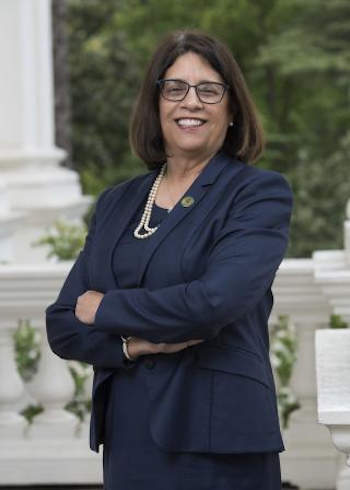
LAKE COUNTY, Calif. — Assemblymember Cecilia Aguiar-Curry has announced she will run for reelection to the State Assembly in the newly drawn Fourth Assembly District.
The new district includes all of Yolo, Napa, Lake and Colusa counties, along with the city of Sonoma and Sonoma County communities of Boyes Hot Springs, El Verano and Eldridge.
The district was created through the work of the California Citizens Redistricting Commission, which completed its decennial redistricting work last month.
The constitutionally-established commission is tasked with drawing new districts for the State Assembly, Senate, Board of Equalization and Congress based upon the 2020 census.
The districts will remain in effect until the California Citizens Redistricting Commission reconvenes to draw new maps based on the 2030 census for elections in 2032.
Aguiar-Curry currently represents the Fourth Assembly District, which now includes all or parts of Napa, Lake, Yolo, Sonoma, Colusa and Solano counties.
A Yolo County native who previously served on the Winters City Council and was the city’s first female mayor, Aguiar-Curry was first elected to the state Assembly in 2016.
“Over the last five years, we have brought people together to accomplish great things for our district and our state and made real progress on so many critical issues: empowering parents and teachers to educate our children; providing job training and workplace standards for our workers; building affordable housing and the infrastructure our people and economy need to thrive; funding and deploying broadband and telehealth in the small cities and rural communities of our region; fighting for our family farms; protecting our environment and open space, and combating climate change; responding to the pandemic and resulting health care and economic crises; establishing new ways to prevent and respond to disasters, and supporting victims of wildfires; and so much more,” said Aguiar-Curry.
“I am excited to continue to represent the many communities my team and I have served since 2016, and I am equally excited about meeting my new constituents and local leaders in Colusa and Sonoma counties. Together we will build a brighter future,” she said.