 How to resolve AdBlock issue?
News
- Details
- Written by: OFFICE OF CONGRESSMAN MIKE THOMPSON
The Emergency Relief Program, or ERP, offers critical assistance to agricultural producers, including grapegrowers, whose crops were impacted by smoke taint.
“Communities in our district and across the country have been devastated by natural disasters, including wildfires and drought,” said Thompson. “That’s why I am proud to work with a bipartisan group of my colleagues to introduce legislation to reauthorize the Emergency Relief Program. This program is an essential support system for our growers to recover from wildfires, smoke damage, and other natural disasters. As we continue to deal with the impact of climate change, I am committed to ensuring that all producers and growers have the resources they need to offset their losses.
“The Emergency Relief Program is a necessary resource for Central Washington farmers as they continue to recover from this year’s late spring, which significantly impacted tree fruit production. I am pleased to introduce this legislation and encourage my colleagues to support this important program that will provide much-needed assistance to Central Washington’s growers so they can continue producing the high-quality Washington crops Americans enjoy for many years to come,” said Newhouse.
“The Emergency Relief Program is critical to farmers in my district, providing them the assistance they need to recover from the ongoing impacts of the drought and wildfires,” said Costa. “I am proud to introduce this bipartisan bill to provide much-needed relief to California farmers and ranchers. Supporting and advocating for California agriculture has always been one of my highest priorities, representing California as the number one agricultural state in the nation.”
“Iowa farmers know all too well how common and devastating natural disasters have been,” said Axne. “The Emergency Relief Program, which I fought hard for, has provided assistance to thousands of Iowan farmers who suffered from the 2020 derecho. By reauthorizing the Emergency Relief Program for 2022, this bill provides certainty to farmers that should disaster strike, assistance will be ready.”
“California winegrape growers appreciate the leadership and commitment of Congressman Thompson and other members of the California delegation to provide disaster assistance for those who suffered crop losses due to wildfires and other natural disasters. Through this tremendous leadership, growers have received much-needed aid for past disasters, and we applaud Rep. Thompson's efforts to enact assistance for the 2022 crop year,” said Natalie Collins, California Association of Winegrape Growers Interim President.
“For several years now, California farmers and ranchers have experienced significant losses due to ongoing droughts, wildfires, and other natural disasters. In order to maintain the well-being of our nation’s food supply, it is critical to ensure that our agricultural producers receive the support and resources necessary to recover from the impacts of such events. We applaud Congress for moving forward on reauthorization for the Emergency Relief Program so that these crucial safety nets in place,” said Jamie Johansson, California Farm Bureau President.
ERP is a vital program that provides desperately needed payments to agricultural producers to offset losses from wildfires, drought, hurricanes, derechos, freeze, polar vortex, excessive heat and other qualifying natural disasters.
This relief is critical as prolonged drought, severe weather events and natural disasters continue to wreak havoc on crops and livestock.
This bill is endorsed by the National Farmers Union.
Thompson represents California’s Fifth Congressional District, which includes all or part of Contra Costa, Lake, Napa, Solano and Sonoma counties.
- Details
- Written by: Elizabeth Larson
Dogs available for adoption this week include mixes of catahoula leopard dog, German shepherd, Great Pyrenees, hound husky, Labrador retriever, pit bull, poodle, shepherd, terrier and treeing walker coonhound.
Dogs that are adopted from Lake County Animal Care and Control are either neutered or spayed, microchipped and, if old enough, given a rabies shot and county license before being released to their new owner. License fees do not apply to residents of the cities of Lakeport or Clearlake.
The following dogs at the Lake County Animal Care and Control shelter have been cleared for adoption.
Call Lake County Animal Care and Control at 707-263-0278 or visit the shelter online for information on visiting or adopting.

‘Autumn’
“Autumn” is a 6-year-old female treeing walker coonhound with a short tricolor coat.
She is in kennel No. 1, ID No. LCAC-A-1776.

Male terrier-poodle mix
This 1-year-old male terrier-poodle mix has a curly cream and orange coat.
He is in kennel No. 2, ID No. LCAC-A-3743.
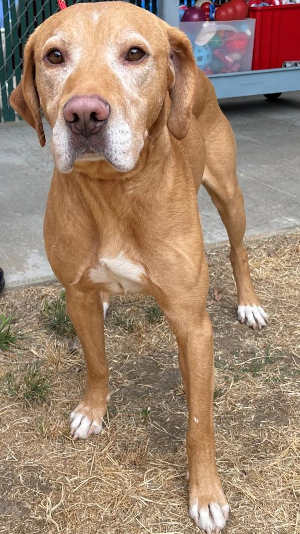
Male Labrador retriever mix
This 5-year-old male Labrador retriever mix has a short gold coat.
He is in kennel No. 8, ID No. LCAC-A-3737.

Female catahoula leopard dog mix
This 2-year-old female catahoula leopard dog mix has a short brindle coat.
She is in kennel No. 18, ID No. LCAC-A-3768.

Female hound mix
This 1-year-old female hound mix has a short brown and white coat.
He is in kennel No. 19, ID No. LCAC-A-3766.
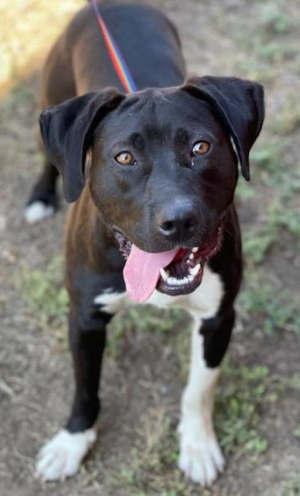
Male hound mix
This 1-year-old male hound mix has a short black and white coat.
He is in kennel No. 20, ID No. LCAC-A-3767.

Female treeing walker coonhound
This young female treeing walker coonhound has a short black brindle coat.
She is in kennel No. 22, ID No. LCAC-A-3776.
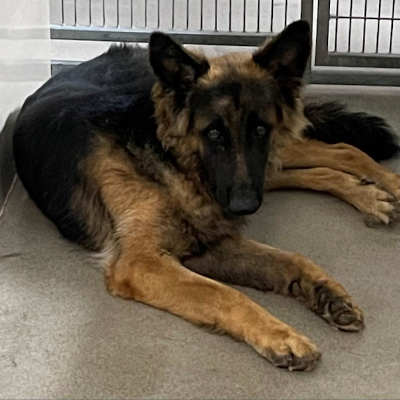
Male German shepherd mix
This 1-year-old male German shepherd mix has a long black and tan coat.
He is in kennel No. 23, ID No. LCAC-A-3775.

Female German shepherd
This 1-year-old female German shepherd has a short black and tan coat.
She is in kennel No. 24, ID No. LCAC-A-3780.
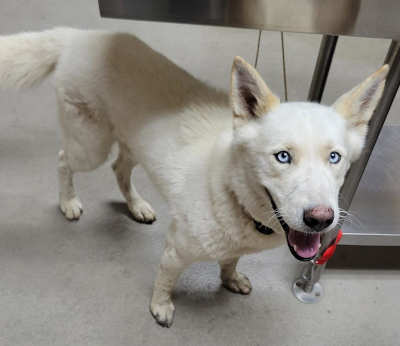
Male husky
This 4-year-old male husky has a white and cream coat and blue eyes.
He is in kennel No. 25, ID No. LCAC-A-3797.

‘Rebel’
“Rebel” is a 7-year-old female yellow Labrador retriever with a short coat.
She is in kennel No. 27, ID No. LCAC-A-3783.
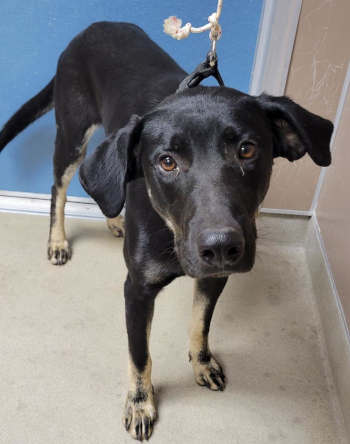
Male shepherd mix
This 1-year-old male shepherd mix has a black and tan coat.
He is in kennel No. 28, ID No. LCAC-A-3796.

Female Great Pyrenees
This young female Great Pyrenees has a gray and white coat.
She is in kennel No. 30, ID No. LCAC-A-3790.
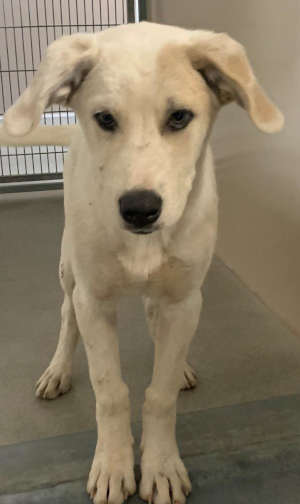
Male Great Pyrenees
This young male Great Pyrenees has a short white coat.
He is in kennel No. 31, ID No. LCAC-A-3791.
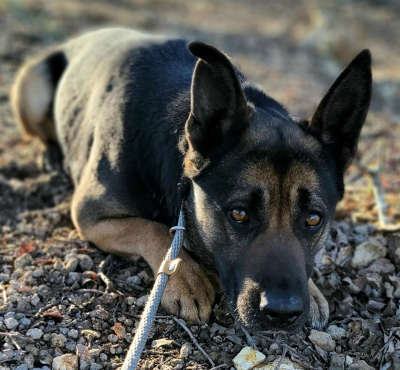
‘Maya’
“Maya” is a 2-year-old female German shepherd with a short black and tan coat.
She is in kennel No. 32, ID No. LCAC-A-2598.
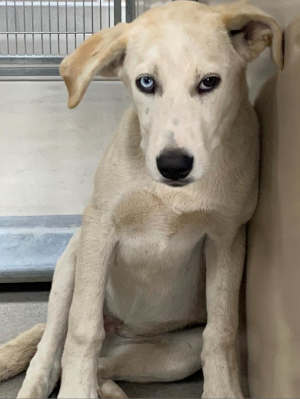
Female Great Pyrenees
This young female Great Pyrenees has a short white coat.
She is in kennel No. 34, ID No. LCAC-A-3789.
Email Elizabeth Larson at
- Details
- Written by: NATIONAL AERONAUTICS AND SPACE ADMINISTRATION
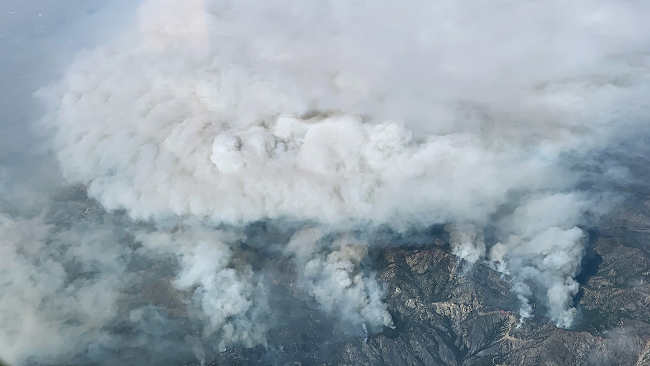
A new study uses data from the ECOSTRESS instrument aboard the space station to better understand why some parts of a wildfire burn more intensely than others.
Even in drought-stricken California, not all areas face the same degree of wildfire risk. A recent study featuring data from NASA’s ECOSTRESS mission found relationships between the intensity of a wildfire and the water stress in plants measured in the months before the blaze.
The correlations weren’t just a matter of dry plants burning more than hydrated ones; some areas where vegetation had sufficient water burned more severely, possibly because fires had more fuel to consume.
The research, led by scientists at NASA’s Jet Propulsion Laboratory in Southern California, draws on plant water-use data collected by ECOSTRESS, short for the ECOsystem and Spaceborne Thermal Radiometer Experiment on Space Station.
The instrument measures the temperature of plants as they heat up when they run out of water. For this study, researchers focused on data collected during portions of 2019 and early 2020 over six areas — three in Southern California mountains and three in the Sierra Nevada — that were subsequently scorched by wildfires.
Other research has shown that wildfire season across the Western U.S. is starting earlier in the year and increasing in length and severity. In California — a state with 33 million acres (13 million hectares) of forests, much of it managed by federal, state, and local agencies — detailed insights on the relationship between wildfire and the availability of water to vegetation could help fire-management officials identify not just whether an area will likely catch fire, but how serious the damage will be if it does.
“We are in an intense megadrought — the worst in 1,200 years — and it’s creating conditions for more catastrophic fires,” said Christine Lee, a study co-author at JPL. “Data sets like those from ECOSTRESS will be critical for advancing science and can provide information to support those who are responding to climate-change crises.”
Comparing the ECOSTRESS data with separate postfire satellite imagery, researchers found that the rate at which plants release water by “sweating” — a process known as evapotranspiration — as well as how efficiently they use water for photosynthesis, can help predict whether subsequent wildfires are more or less intense. Both measures indicate whether a plant community is getting enough water or is under stress from lack of it.
“We were trying to understand what drives differences in why some areas have severe burns and other areas don’t,” said Madeleine Pascolini-Campbell, a water and ecosystems scientist at JPL and lead author of the paper. “The results show how crucial water stress is for predicting which areas burn the most and why it’s important to monitor vegetation in these regions.”
Tracking plant stress
Like humans, plants struggle to function when they’re too hot. And in much the same way that sweating helps humans stay cool, plants rely on evapotranspiration to regulate their temperature.
Evapotranspiration combines the rate at which plants lose water as it evaporates from the soil and by transpiration, in which they release water through openings in their leaves, called stomates. To avoid losing too much water, plants start closing their stomates if they get too dry.
“As a result, they start to heat up because they don’t have the benefit of ‘sweating’ anymore,” Lee said. “With ECOSTRESS, we can observe these really fine changes in temperature, which are used to understand changes in evapotranspiration and water-use efficiency.”
In general, slower evapotranspiration and lower efficiency signal that plants are water-stressed. Higher values indicate that plants are getting enough water.
ECOSTRESS tracks evapotranspiration via a high-resolution thermal radiometer that can measure the temperature of patches of Earth’s surface as small as 130 by 230 feet (40 by 70 meters).
High versus low stress
In the paper, published in Global Ecology and Biogeography, researchers found that water-stress-related variables, along with elevation, were dominant predictors of burn severity in areas struck by three Southern California wildfires in 2020: the Bobcat Fire in the Angeles National Forest, along with the Apple and El Dorado fires in the San Bernardino National Forest.
Whether higher or lower stress predicted more severe burning depended on the primary type of vegetation in an area, Pascolini-Campbell said.
For example, stressed pine forests tended to burn more severely, suggesting that drier conditions made trees more flammable. Meanwhile, in grasslands, lower stress tended to correlate with more burn damage, a possible indication that robust vegetation growth produced more fuel, resulting in more intense blazes.
And in the Sierra Nevada regions burned by the Creek Fire, the Sequoia Complex Fire, and the North Complex Fire, results showed weaker relationships between pre-fire stress and burn severity. The study authors hypothesize that variables not captured in the analysis — wind or other weather conditions — were more influential in those burn areas.
Supporting decision-makers
The study comes as NASA is ramping up efforts to mobilize its technology, expertise, and resources to study wildfires. The agency in May announced the formation of NASA Wildland FireSense, an initiative aimed at bringing together experts from different disciplines, along with advanced technology and analytical tools, to develop approaches that can inform and guide fire management decision-makers.
The importance of tools such as ECOSTRESS, which is scheduled to operate until September 2023, will grow as climate change drives greater wildfire risk across the Western U.S., Pascolini-Campbell said. “It’s a high-priority region for using these types of studies to see which areas are the most vulnerable,” she added.
More about the mission
JPL, a division of Caltech in Pasadena, built and manages the ECOSTRESS mission for the Earth Science Division in the Science Mission Directorate at NASA Headquarters in Washington. ECOSTRESS is an Earth Venture Instrument mission; the program is managed by NASA’s Earth System Science Pathfinder program at the agency’s Langley Research Center in Hampton, Virginia.
More information about ECOSTRESS is available here: https://ecostress.jpl.nasa.gov/.
- Details
- Written by: LAKE COUNTY SHERIFF’S OFFICE
Lake County has already experienced the effects of fire season, with multiple fires in June and July.
As the summer progresses, now is the time to make all necessary preparations.
Here are five steps you can take to prevent and prepare for wildfire.
Get alerts/stay up-to-date:
• Update your LakeCoAlerts email, phone number, and address to stay up-to-date with all messages from the Lake County Sheriff’s Office. Add LakeCoAlerts to your phone contacts or caller I.D., so you know we are trying to reach you. The phone number you will see is 707-289-8964. When you receive a text message, you will see the number 89361.
• Know your local radio stations to tune into for timely reports and situation updates.
• Follow the LCSO and Office of Emergency services on social media for the latest updates and important information: https://www.facebook.com/lakesheriff and https://www.facebook.com/LakeCountyOES/.
Know your zone and evacuation options:
• Zonehaven is a tool that the public can use to look up their zone number ahead of an emergency. During an emergency, information can be viewed at https://community.zonehaven.com/. Zonehaven does not require an account and is not a service to sign-up for. There is an option to subscribe to alerts when viewing zone information. This will take you to LakeCoAlerts. LCSO will use zone numbers when sending evacuation orders, shelter-in-place warnings, and other emergency information via LakeCoAlerts.
Make a plan:
• Have a go-bag ready for you and your household. Visit ready.gov/kit for examples of what to include.
Prepare your home:
• Fire-safe starts with defensible space. Take time now to ensure that your property is clear of dead or overgrown brush, trees, and grass. Contact your HOA, landlord, or local fire department for more information.
Help your community:
• Individual efforts contribute to the success of all. Talk with your neighbors about being fire ready. Start making plans now — ensuring your neighborhood stays safe and has the help they need. Be sure to tell them to sign up for LakeCoAlerts.
Remain vigilant:
• Each incident may behave unpredictably and rapidly, and no one should wait for an electronic alert before evacuating if the threat is imminent. If a situation appears threatening, evacuate immediately.