How to resolve AdBlock issue?
Refresh this page
How to resolve AdBlock issue?
Refresh this page
Lake County News,California
  • Home
    • Registration Form
  • News
    • Education
    • Veterans
    • Community
      • Obituaries
      • Letters
      • Commentary
    • Police Logs
    • Business
    • Recreation
    • Health
    • Religion
    • Legals
    • Arts & Life
    • Regional
  • Calendar
  • Contact us
    • FAQs
    • Phones, E-Mail
    • Subscribe
  • Advertise Here
  • Login
How to resolve AdBlock issue?
Refresh this page

News

Even small drops in vaccination rates for US children can lead to disease outbreaks

Details
Written by: David Higgins, University of Colorado Anschutz Medical Campus
Published: 14 October 2025

Xerius Jackson, age 7, gets an MMR vaccine during the Texas measles outbreak in March 2025. Jan Sonnenmair via Getty Images

More than three-quarters of U.S. counties and jurisdictions are experiencing declines in childhood vaccination rates, a trend that began in 2019, according to a September 2025 NBC News–Stanford University investigation. The report also found a “large swath” of the U.S. no longer has the “basic, ground-level immunity” needed to stop the spread of measles.

Dr. David Higgins, an assistant professor of pediatrics at the University of Colorado CU Anschutz Medical Center and a pediatrician who researches vaccines, discusses the dangers of not vaccinating your children.

Dr. David Higgins discusses back-to-school vaccinations.

The Conversation has collaborated with SciLine to bring you highlights from the discussion, edited for brevity and clarity.

What vaccines are typically required for schoolchildren, and why?

David Higgins: The vaccine requirements for kids to attend school are set by states, not the federal government. Most states require kindergartners get vaccines for pertussis – that’s whooping cough – and tetanus, measles, mumps, rubella and chickenpox.

For older kids, a booster of the tetanus and pertussis vaccine is typically required, as well as a vaccine for meningococcal disease.

Vaccines reduce the risk of outbreaks in places where transmission of these diseases is easy. Not only do vaccinations help keep both students and teachers safe, it also encourages overall higher community coverage for these vaccines.

How do scientists track the safety of vaccines over time?

Higgins: Before vaccines are approved, they undergo rigorous trials. During this process, scientists look at the safety and effectiveness of the vaccine, testing it first in small groups to assess safety, then in larger groups to confirm protection and detect uncommon side effects. That process continues after the vaccine is approved. Those systems continually monitor the safety of vaccines, both here in the U.S. as well as around the world.

What are the vaccination coverage trends for kindergartners?

Higgins: What we have seen is a small downward trend since 2019, the year prior to the COVID-19 pandemic. It slipped from 95% of new kindergartners being up to date on many of their routine vaccines to about 92%.

That’s a small percentage decrease, so a great majority of parents are still vaccinating their kids. But at the same time, anything below our target of 95% for diseases like measles becomes a problem, because that’s below the level that’s needed for what we call herd immunity, or community immunity. When that happens, it’s not a matter of if, but when, we see an outbreak of these infectious diseases.

And while nationwide rates are important to look at, outbreaks happen at local community levels. For example, earlier this year, an outbreak of measles in West Texas spread rapidly through communities where vaccination rates had slipped well below the state average.

So, the vaccination rate at your own school or community is much more meaningful than what the national vaccination rate is.

How do non-medical vaccine exemptions work?

Higgins: First, actual medical exemptions are rare, and these occur when the vaccine is unsafe for the child to receive, like when he or she has a known severe allergic reaction to vaccine ingredients.

Non-medical exemptions for vaccines are often for religious, personal or philosophical reasons. They have been increasing for the past several years, rising from the range of 1 to 2% up to 3.6% in the 2024–25 school year. That’s a small increase, but again, it’s still concerning.

Why are some parents vaccine hesitant?

Higgins: There are multiple reasons. These include misinformation which algorithm-driven echo chambers on social media can spread at an alarming rate right now. Also, Americans report less trust in institutions and experts, and studies have found growing partisanship around vaccines.

Additionally, vaccines are victims of their own success. They have worked so well that many diseases like polio aren’t routinely seen anymore. That might lead a parent to think the risk for their child is so low that the vaccine is not necessary. But the fact is, vaccines are simply holding these diseases at bay. And as vaccination rates drop, these diseases will come back and more kids will be at risk.

What advice do you have for parents?

Higgins: The most important thing you can do as a parent is to keep your kids up to date on required vaccines. That includes the annual flu shot. Follow your state’s requirements and current recommendations from trusted sources like the American Academy of Pediatrics and your own personal pediatrician to know which vaccines your child should have.

You also want to reinforce other common sense approaches to keeping your children healthy. Make sure they know how to wash their hands properly and that they stay home when they’re sick. Teach them to sneeze and cough into their elbow instead of into their hands – even though doing so isn’t a perfect solution.

As a pediatrician, I love when my families come and talk to me about their concerns. I help them walk through their worries so they can feel more confident that they’re making a truly informed decision that’s in the best interest of their child’s health.

SciLine is a free service based at the American Association for the Advancement of Science, a nonprofit that helps journalists include scientific evidence and experts in their news stories.The Conversation

David Higgins, Assistant Professor of Pediatrics, University of Colorado Anschutz Medical Campus

This article is republished from The Conversation under a Creative Commons license. Read the original article.


Millions to participate in Great California ShakeOut

Details
Written by: Elizabeth Larson
Published: 13 October 2025

LAKE COUNTY, Calif. — Millions of Californians — including thousands of Lake County residents — are planning to take part this week in an annual statewide drill meant to prepare participants to respond to a major earthquake.

The Great California ShakeOut will take place as part of International ShakeOut Day on Thursday, Oct. 16.

At 10:16 a.m. (local time) on Oct. 16, participants will join millions of people across California practicing earthquake safety. 

As of Sunday, 52.8 million people worldwide were set to take part, and 10,001,200 participants had registered in the 2025 Great California ShakeOut.

Of those, more than 7,200 are in Lake County, with the largest number — over 5,900 — will be in local schools.

Those who want to register can do so here.

“Everyone, everywhere, should know how to protect themselves during earthquakes, whether they live, work, or travel to an area where earthquakes are common,” explained a statement on the ShakeOut website.

The site also explained, “The goal of ShakeOut is to encourage people and organizations to be prepared to survive and to recover quickly when the next big earthquake happens.”

Participants can either take part on Oct. 16 or set another day to practice the drill.

The Great California ShakeOut website has resources and guides for drills as well as emergency planning to keep safe year-round.

Participation is free and may take only a few minutes, depending on drill plans. Learn more and register to participate at ShakeOut.org.

Email Elizabeth Larson at This email address is being protected from spambots. You need JavaScript enabled to view it.. Follow her on Twitter, @ERLarson, and on Bluesky, @erlarson.bsky.social. Find Lake County News on the following platforms: Facebook, @LakeCoNews; X, @LakeCoNews; Threads, @lakeconews, and on Bluesky, @lakeconews.bsky.social. 

Helping Paws: Many big and little dogs

Details
Written by: Elizabeth Larson
Published: 13 October 2025

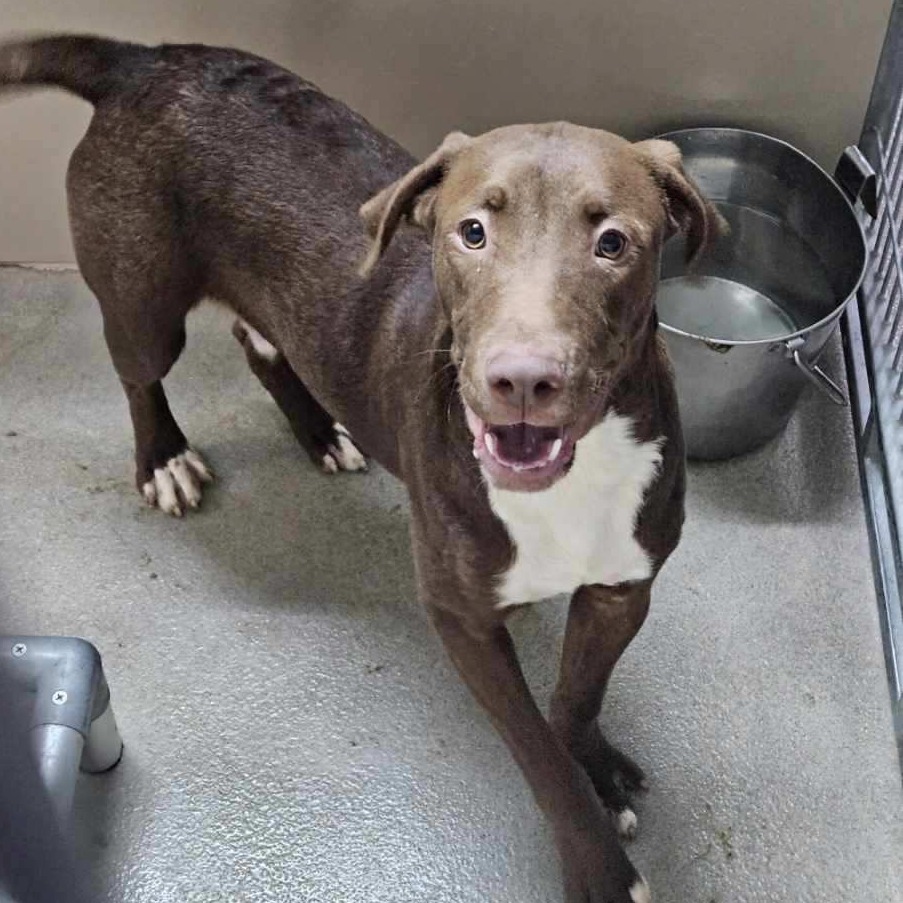
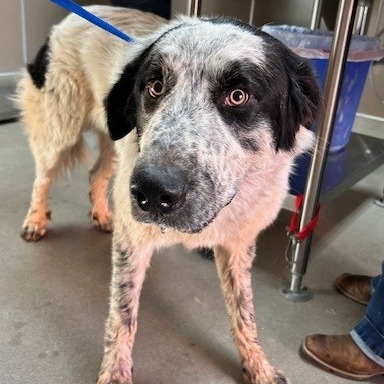
LAKE COUNTY, Calif. — Lake County Animal Care and Control has new dogs of all sizes and breeds ready to be adopted.

The dogs available for adoption this week include mixes of Australian shepherd, bulldog, cattle dog, Chihuahua, German shepherd, Labrador Retriever, pit bull terrier, terrier and shepherd.

Dogs that are adopted from Lake County Animal Care and Control are either neutered or spayed, microchipped and, if old enough, given a rabies shot and county license before being released to their new owner. License fees do not apply to residents of the cities of Lakeport or Clearlake.

Those animals shown on this page at the Lake County Animal Care and Control shelter have been cleared for adoption.

Call Lake County Animal Care and Control at 707-263-0278 or visit the shelter online for information on visiting or adopting.

The shelter is located at 4949 Helbush in Lakeport.

Email Elizabeth Larson at This email address is being protected from spambots. You need JavaScript enabled to view it.. Follow her on Twitter, @ERLarson, and on Bluesky, @erlarson.bsky.social. Find Lake County News on the following platforms: Facebook, @LakeCoNews; X, @LakeCoNews; Threads, @lakeconews, and on Bluesky, @lakeconews.bsky.social. 

Kennel#34b Truffle's preview photo
Kennel#34b Truffle

Kennel#18 Eva 's preview photo
Kennel#18 Eva

Kennel#11 Celina's preview photo
Kennel#11 Celina

Kennel#13 Stalone's preview photo
Kennel#13 Stalone

Kennel#7 Lulu's preview photo
Kennel#7 Lulu

 Kennel#9's preview photo
Kennel#9

Kennel#8 Lilly's preview photo
Kennel#8 Lilly

 Kennel#2 Lee's preview photo
Kennel#2 Lee

Kennel#15 Dino's preview photo
Kennel#15 Dino

Kennel#27 Caramel's preview photo
Kennel#27 Caramel

Kennel#24 Teeter's preview photo
Kennel#24 Teeter

 Kennel#3 Modie's preview photo
Kennel#3 Modie

 
Kennel#29's preview photo
Kennel#29

Kennel#12's preview photo
Kennel#12

Kennel#14a's preview photo
Kennel#14a

Kennel#14b's preview photo
Kennel#14b

 
Kennel#19's preview photo
Kennel#19

Kennel#21 Winston's preview photo
Kennel#21 Winston

Kennel#28(Tessa)'s preview photo
Kennel#28(Tessa)

 
Kennel#10 River's preview photo
Kennel#10 River

Kennel#16 Lita's preview photo
Kennel#16 Lita

Kennel#30 Timmy's preview photo
Kennel#30 Timmy

Kennel#25 Marvel's preview photo
Kennel#25 Marvel

Kennel#26's preview photo
Kennel#26

Kennel#5's preview photo
Kennel#5

Kennel#32's preview photo
Kennel#32

Kennel#4's preview photo
Kennel#4

Kennel#23's preview photo
Kennel#23

Kennel#20 Lillith's preview photo
Kennel#20 Lillith

Kennel#22 Azula's preview photo
Kennel#22 Azula

Kennel#6's preview photo
Kennel#6

Kennel#17's preview photo
Kennel#17

Kennel#31's preview photo
Kennel#31

 
Kennel#33 Oreo's preview photo
Kennel#33 Oreo

Weather delays restart of Cobb road project

Details
Written by: LAKE COUNTY NEWS REPORTS
Published: 13 October 2025
A map of the Cobb Area Pavement Project. Image courtesy of the Lake County Public Works Department.


LAKE COUNTY, Calif. — The Lake County Public Works Department reported that a road project that had been set to start on Monday has been pushed back to midweek due to weather conditions.

The Cobb Area Pavement Project is now set to start on Wednesday, Oct. 15, due to anticipated stormy weather, Public Works reported.

The contractor will be working from north to south through the project area.

It’s anticipated that there will be five to seven days of preparation followed by eight days of paving.

Public Works said it’s expected that work should be completed in the first week of November, weather permitting.

For questions or more information, contact the Lake County Public Works Department at 707-263-2341.

  1. Can you really be addicted to food? Researchers are uncovering convincing similarities to drug addiction
  2. Long-running Goat Mountain repeater project completed
  3. Lower Lake wildland fire close to full containment
  • 130
  • 131
  • 132
  • 133
  • 134
  • 135
  • 136
  • 137
  • 138
  • 139
How to resolve AdBlock issue?
Refresh this page