 How to resolve AdBlock issue?
News
- Details
- Written by: LAKE COUNTY NEWS REPORTS
The event will be held from noon to 2 p.m. Monday, Jan. 16, at the Clearlake Methodist Church, 14521 Pearl Ave.
The program includes unity speeches from a diverse group of people from different cultures, ethnicities, colors, socioeconomic backgrounds and gender identifications.
Local political leaders, churches, law enforcement, social agencies and state representatives have been invited.
There will be music and performances by local musicians, Pomo dancers and the African drum group.
Everyone in Lake County is encouraged to come to be a part of this “Unity Day.”
Organizers said It is vitally important for the well-being of our community and our country in these times of division and hate speech to come together as one world and on one accord.
The event is open to the entire county.
Please contact organizer Lynette Kirkwood at 707-461-9409 if you want to participate or would like more information.
- Details
- Written by: GOVERNOR’S OFFICE
“California is grateful for President Biden’s swift approval of this critical support to communities reeling from these ongoing storms,” said Governor Newsom, who earlier on Saturday met with evacuated residents in Merced County and surveyed damage in the area. “We’ll continue to work in lockstep with local, state and federal partners to help keep Californians safe and make sure our communities have the resources and assistance they need to rebuild and recover.”
The Presidential Major Disaster Declaration will help Californians in impacted counties through eligibility for several programs and supports, and includes public assistance to help state, tribal and local governments with ongoing emergency response and recovery costs and hazard mitigation.
Saturday’s declaration makes federal funding available to affected individuals in the counties of Merced, Sacramento and Santa Cruz. Additional impacted counties may be included once storm conditions allow state, local and federal officials to safely assess the scope of damage.
Earlier this week, President Biden approved the governor’s request for a Presidential Emergency Declaration to bolster state, local and tribal government storm response efforts.
Gov. Newsom has activated the State Operations Center to its highest level and proclaimed a state of emergency statewide.
Amid ongoing storms and flooding, the state and its partners are working quickly to initiate recovery efforts and help Californians return home as soon as it is safe to do so.
Work is underway to remove hazardous waste and clear debris and there are teams on the ground conducting damage assessments documenting the extent of the losses so that the state can maximize its requests for federal aid.
Residents and business owners who sustained losses in the designated areas can begin applying for assistance by registering online at www.DisasterAssistance.gov or by calling 1-800-621-3362 or 1-800-462-7585 TTY
- Details
- Written by: Elizabeth Larson
Dogs available for adoption this week include mixes of Akita, Alaskan malamute, American blue heeler, Belgian Malinois, German shepherd, hound, husky, Labrador retriever, pit bull, poodle, shepherd and terrier.
Dogs that are adopted from Lake County Animal Care and Control are either neutered or spayed, microchipped and, if old enough, given a rabies shot and county license before being released to their new owner. License fees do not apply to residents of the cities of Lakeport or Clearlake.
The following dogs at the Lake County Animal Care and Control shelter have been cleared for adoption.
Call Lake County Animal Care and Control at 707-263-0278 or visit the shelter online for information on visiting or adopting.

Male poodle-terrier mix
This 1-year-old male poodle-terrier mix has a long white coat.
He is in kennel No. 5, ID No. LCAC-A-4508.

Lab-pit bull mix puppy
This female Labrador retriever-pit bull mix puppy has a short black coat with white markings.
She is in kennel No. 2, ID No. LCAC-A-4451.
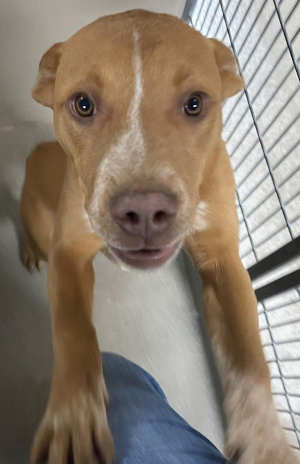
American blue heeler-hound
This 5-month-old female American blue heeler-hound has a short brown and white coat.
She is in kennel No. 6a, ID No. LCAC-A-4521.

American blue heeler-hound
This 5-month-old female American blue heeler-hound has a short brindle coat.
She is in kennel No. 6b, ID No. LCAC-A-4522.
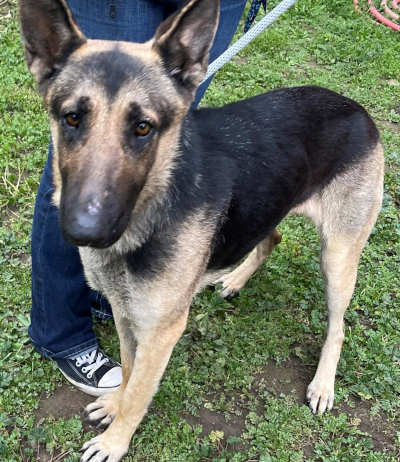
Female German shepherd
This 10-month-old female German shepherd has a black and tan coat.
She is in kennel No. 8, ID No. LCAC-A-4448.

Male American blue heeler-hound
This 5-month-old male American blue heeler-hound has a short brindle coat.
He is in kennel No. 9a, ID No. LCAC-A-4519.

Male American blue heeler-hound
This 5-month-old male American blue heeler-hound has a short brown coat.
He is in kennel No. 9b, ID No. LCAC-A-4523.

Female Belgian Malinois
This 6-month-old female Belgian Malinois has a short black and tan coat.
She is in kennel No. 10, ID No. LCAC-A-4447.
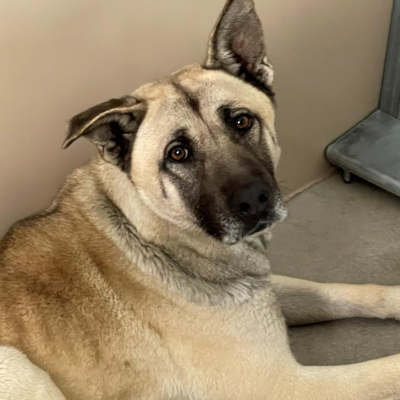
Male Akita-shepherd
This 2-year-old male Akita-shepherd has a short fawn-colored coat.
He is in kennel No. 13, ID No. LCAC-A-4538.

Female pit bull terrier
This 1-year-old female pit bull terrier has a short tan and white coat.
She is in kennel No. 14, ID No. LCAC-A-4493.
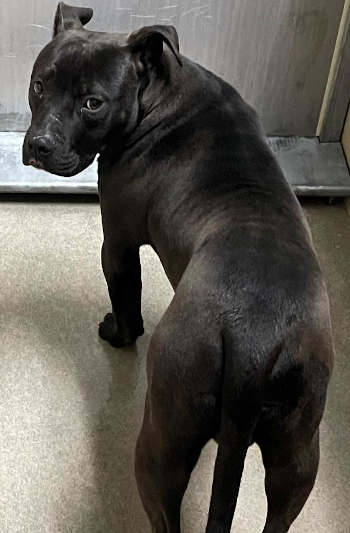
Male pit bull terrier
This 1-year-old male pit bull terrier has a short black coat.
He is in kennel No. 15, ID No. LCAC-A-4494.

‘Malachi’
“Malachi” is a 4-year-old male Alaskan malamute with a long black and white coat.
He is in kennel No. 18, ID No. LCAC-A-4434.
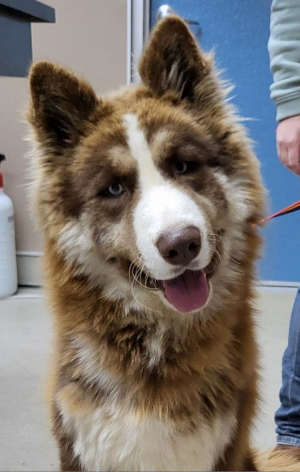
‘Tyson’
“Tyson” is a handsome male husky with a red and white coat.
He is in kennel No. 20, ID No. LCAC-A-4344.

Male Dutch shepherd
This 1.5-year-old male Dutch shepherd has a sable coat.
He is in kennel No. 22, ID No. LCAC-A-4509.

Female terrier
This 7-month-old female terrier has a short brown coat.
She is in kennel No. 23, ID No. LCAC-A-4436.

Female pit bull terrier
This 2-year-old female pit bull terrier has a short black and white coat.
She is in kennel No. 24, ID No. LCAC-A-4484.

Male pit bull
This 3-year-old male pit bull has a short black and white coat.
He is in kennel No. 26, ID No. LCAC-A-4445.

American blue heeler/hound mix
This 5-month-old female American blue heeler/hound mix has a short brindle and white coat.
She is in kennel No. 28, ID No. LCAC-A-4524.

Female German shepherd
This 1-year-old female German shepherd has a black and tan coat.
She is in kennel No. 30, ID No. LCAC-A-4486.
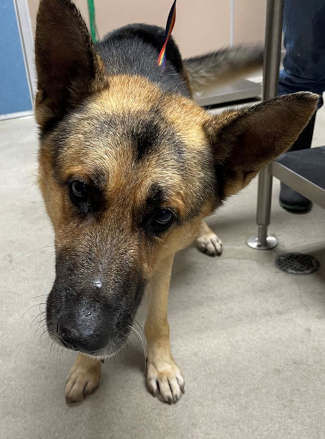
Male German shepherd
This 8-year-old male German shepherd has a black and tan coat.
He is in kennel No. 32, ID No. LCAC-A-4518.
Email Elizabeth Larson at
- Details
- Written by: NATIONAL AERONAUTICS AND SPACE ADMINISTRATION
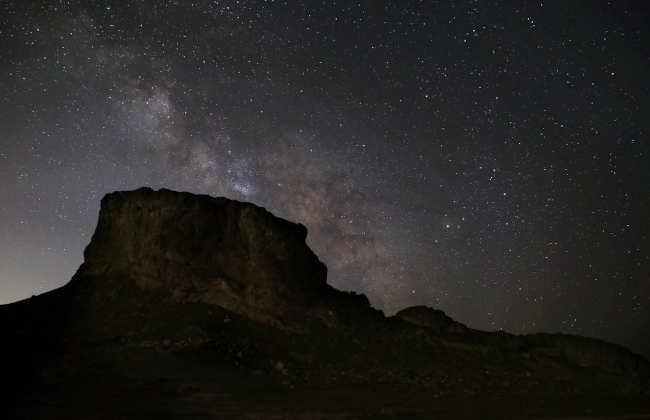
The Exoplanet Watch project invites you to use your smartphone or personal telescope to help track worlds outside our solar system.
More than 5,000 planets have been confirmed to exist outside our solar system, featuring a wide array of characteristics like clouds made of glass and twin suns. Scientists estimate there could be millions more exoplanets in our home galaxy alone, which means professional astronomers could use your help tracking and studying them.
This is where Exoplanet Watch comes in. Participants in the program can use their own telescopes to detect planets outside our solar system, or they can look for exoplanets in data from other telescopes using a computer or smartphone.
Exoplanet Watch began in 2018 under NASA’s Universe of Learning, one of the agency’s Science Activation programs that enables anyone to experience how science is done and discover the universe for themselves.
Until recently there were limits on how many people could help look through the data collected by other telescopes, but now this program is easily available to anyone. By following the site’s instructions, participants can download data to their device or access it via the cloud, and then assess it using a custom data analysis tool.
“With Exoplanet Watch you can learn how to observe exoplanets and do data analysis using software that actual NASA scientists use,” said Rob Zellem, the creator of Exoplanet Watch and an astrophysicist at NASA’s Jet Propulsion Laboratory in Southern California. “We’re excited to show more people how exoplanet science is really done.”
Helping without a telescope
Participants without telescopes can help astronomers comb through data that’s already been taken. The project has 10 years of exoplanet observations, collected by a small ground-based telescope south of Tucson, Arizona.
This year, the project will start collecting additional data from two other telescopes at the Table Mountain facility in Southern California, which JPL manages.
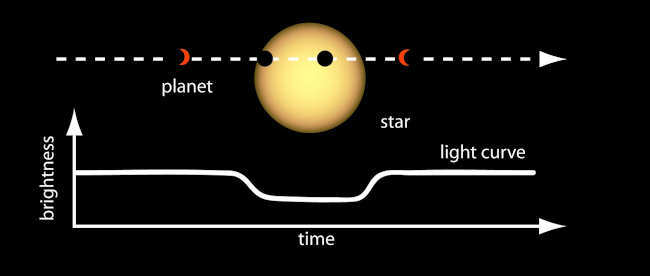
These telescopes look at nearby stars and search for what scientists call exoplanet transits: regular dips in a star’s brightness caused by a planet passing between the star and Earth. Essentially, a transit is an observation of a planet’s silhouette against the bright glare of its star.
Multiple NASA telescopes look for exoplanet transits as a way to discover new planets, but Exoplanet Watch participants primarily observe transits by planets that have already been discovered to gain more information about their orbits.
The time between exoplanet transits reveals how long it takes an exoplanet to orbit its parent star; the more transits that are measured, the more precisely the length of the orbit is known.
If the timing of the orbit isn’t measured precisely, scientists who want to study those planets in more detail with large ground-based or space-based telescopes can lose valuable observing time while they wait for the planet to appear. Having volunteers sort through the data will save significant computing and processing time.
Exoplanet Watch participants will also look for variations in the apparent brightness of stars – changes caused by features such as flares (outbursts of light) and star spots (dark spots on a star’s surface). In transit measurements, these changes make a planet appear smaller or larger than it actually is. This work will help scientists anticipate the variability of a particular star before they study its exoplanets with large, sensitive telescopes like NASA’s James Webb Space Telescope.
Helping with your own telescope
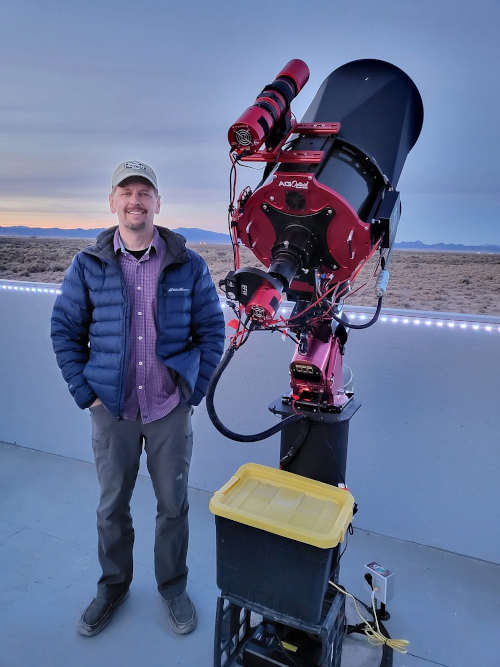
Want to take your own data? Although the number of targets you can see increases with the size of the telescope used, there’s no minimum size requirement. For example, Exoplanet Watch can help you detect exoplanet transits for hundreds of nearby stars with just a 6-inch (15-centimeter) telescope.
Exoplanet Watch combines observations of the same target by multiple sky watchers in order to get a higher-fidelity measurement. Combining observations is also useful if the planet’s transit lasts longer than the time a star is visible in the sky for a single observer: Multiple participants at different locations around the globe can collectively watch the duration of a long transit.
That was the case with a planet called HD 80606 b, which Webb will observe this year. A recent study of this planet led by Kyle Pearson, the Exoplanet Watch deputy science lead at JPL, combined observations from more than 20 Exoplanet Watch participants.
The volunteer effort on HD 80606 b will free up almost two hours of time on Webb for other observations. And on missions that aim to observe hundreds or thousands of exoplanets, the number of minutes saved by refining planet transit measurements can add up and free a significant amount of observing time, according to Zellem.
One of the program’s policies requires that the first paper to make use of the observations or analysis done by volunteers will list those volunteers as co-authors, which was the case with the study led by Pearson. “I hope this program lowers barriers to science for a lot of people and inspires the next generation of astronomers to join our field,” said Zellem.
The ground-based data for the project was collected by the MicroObservatory Robotic Telescope Network, supported by NASA’s Universe of Learning and managed by the Center for Astrophysics | Harvard & Smithsonian in Cambridge, Massachusetts. Volunteer-generated data is uploaded to the American Association of Variable Star Observers’ (AAVSO) Exoplanet Database.
NASA’s Universe of Learning is a competitively selected member of the NASA Science Activation program. The Science Activation program connects NASA science experts and real content and experiences with community leaders to do science in ways that activate minds and promote deeper understanding of our world and beyond.
This work is supported by NASA under award number NNX16AC65A to the Space Telescope Science Institute, in partnership with Caltech/IPAC, Center for Astrophysics | Harvard & Smithsonian, and JPL.
For more information about Exoplanet Watch, visit https://exoplanets.nasa.gov/exoplanet-watch/.
For more information about NASA’s Universe of Learning, visit https://www.universe-of-learning.org/.
For more NASA citizen science projects, visit https://science.nasa.gov/citizenscience.