 How to resolve AdBlock issue?
News
- Details
- Written by: Elizabeth Larson
Dogs available for adoption this week include mixes of border collie, boxer, chow chow, German shepherd, hound, husky, Labrador retriever, Pekingese, pit bull, shepherd, treeing walker coonhound and terrier.
Dogs that are adopted from Lake County Animal Care and Control are either neutered or spayed, microchipped and, if old enough, given a rabies shot and county license before being released to their new owner. License fees do not apply to residents of the cities of Lakeport or Clearlake.
The following dogs at the Lake County Animal Care and Control shelter have been cleared for adoption.
Call Lake County Animal Care and Control at 707-263-0278 or visit the shelter online for information on visiting or adopting.
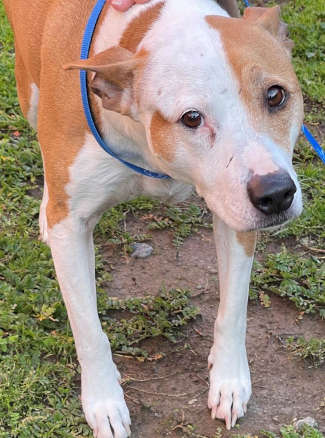
“Samantha” is an 8-year-old pit bull terrier mix with a short tan and white coat.
She is in kennel No. 4, ID No. LCAC-A-4703.

Border collie-Labrador mix puppy
This 2-month-old male border collie-Labrador mix puppy has a short brown and white coat.
He is in kennel No. 7, ID No. LCAC-A-4672.
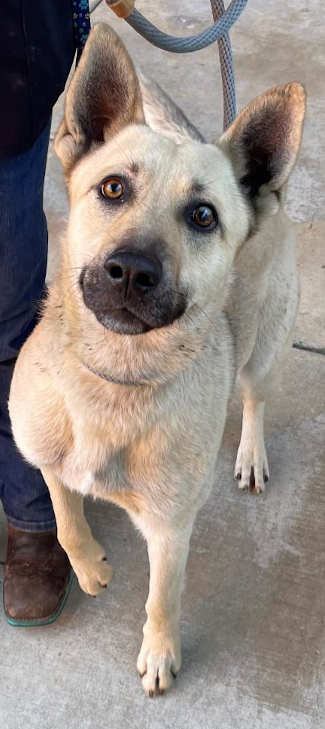
Male German shepherd
This 9-month-old male German shepherd has a short fawn coat.
He is in kennel No. 8, ID No. LCAC-A-4684.
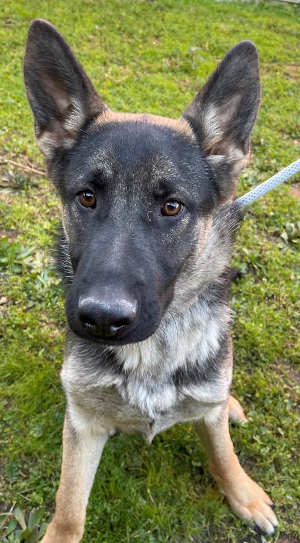
Male German shepherd
This 6-month-old male German shepherd has a black and tan coat.
He is in kennel No. 10, ID No. LCAC-A-4689.
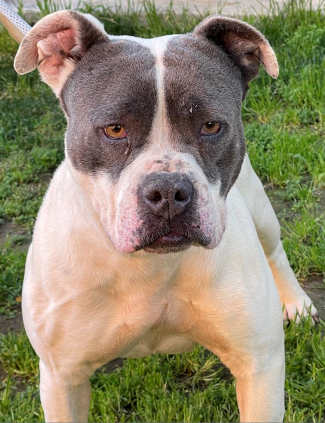
Female pit bull
This 6-year-old female pit bull has a short white coat with gray markings.
She is in kennel No. 11, ID No. LCAC-A-4677.

‘Oreo’
“Oreo” is a 2-year-old male treeing walker coonhound with a short tricolor coat.
He is in kennel No. 13, ID No. LCAC-A-4738.

‘Ducky’
“Ducky” is a 6-month-old male terrier with a short black coat.
He is in kennel No. 14, ID No. LCAC-A-4596.

‘Teddy’
“Teddy” is a 2-year-old male Pekingese with a long brown and white coat.
He is in kennel No. 15, ID No. LCAC-A-4700.
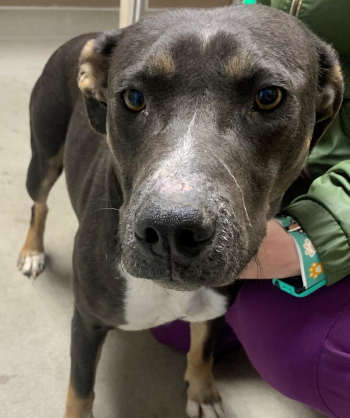
Female pit bull-Labrador retriever mix
This female pit bull-Labrador retriever mix has a short tricolor coat.
She is in kennel No. 17, ID No. LCAC-A-4692.
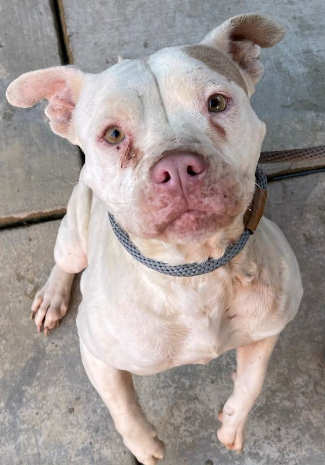
Female pit bull
This 4-year-old female pit bull has a short white coat with gray markings.
She is in kennel No. 19, ID No. LCAC-A-4676.
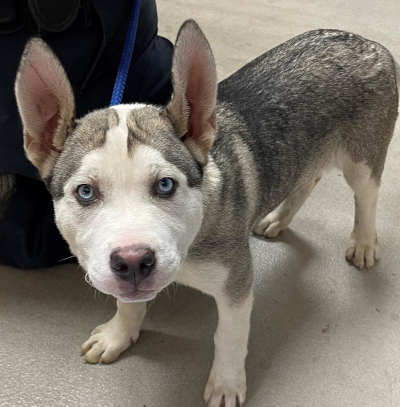
Male husky-pit bull mix puppy
This 3-month-old male husky-pit bull mix puppy has a short gray and white coat.
He is in kennel No. 20, ID No. LCAC-A-4714.
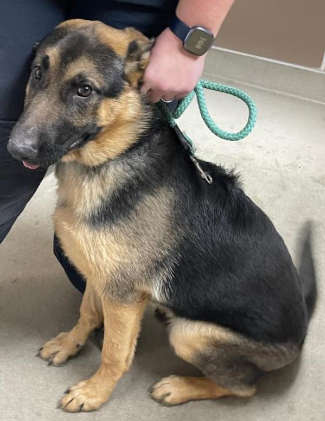
Female German shepherd
This 1-year-old female German shepherd has a black and tan coat.
She is in kennel No. 23, ID No. LCAC-A-4715.

Female shepherd-pit bull mix
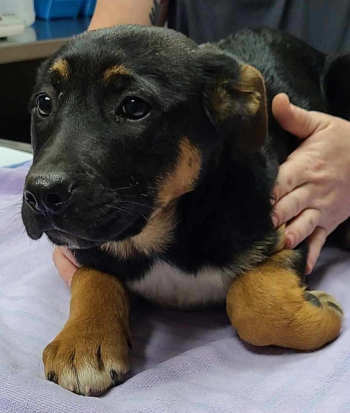
This 2-month-old female shepherd-pit bull mix has a short tricolor coat.
She is in kennel No. 24a, ID No. LCAC-A-4693.
Female shepherd-pit bull mix
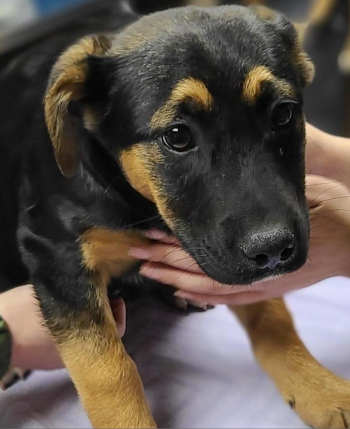
This 2-month-old female shepherd-pit bull mix has a short tricolor coat.
She is in kennel No. 24b, ID No. LCAC-A-4694.
Female shepherd-pit bull mix
This 2-month-old female shepherd-pit bull mix has a short tricolor coat.
She is in kennel No. 24c, ID No. LCAC-A-4695.
Male boxer-pit bull mix
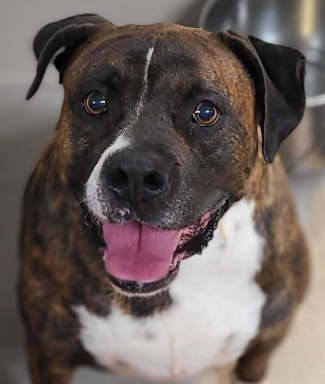
This 8-year-old male boxer-pit bull mix has a short brown brindle coat.
He is in kennel No. 26, ID No. LCAC-A-4678.
‘Lola’
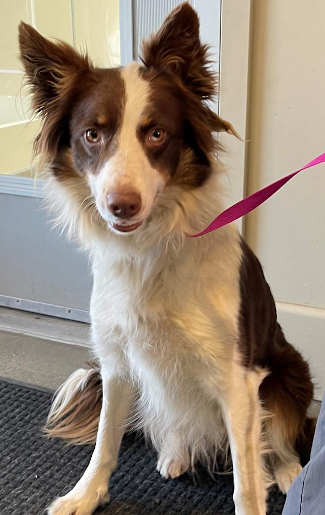
“Lola” is a 2-year-old female border collie mix with a red and white coat.
She is in kennel No. 27, ID No. LCAC-A-4729.
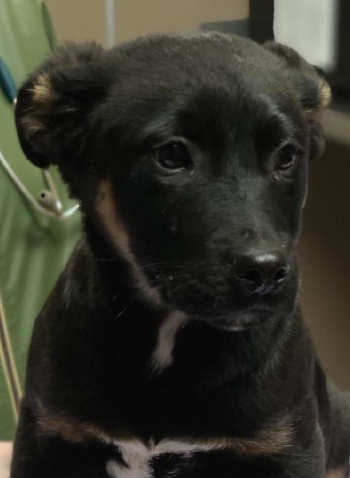
Male shepherd-pit bull mix
This 2-month-old male shepherd-pit bull mix has a short tricolor coat.
He is in kennel No. 28a, ID No. LCAC-A-4696.

Male shepherd-pit bull mix
This 2-month-old male shepherd-pit bull mix has a short tricolor coat.
He is in kennel No. 28b, ID No. LCAC-A-4697.

Male shepherd-pit bull mix
This 2-month-old male shepherd-pit bull mix has a short tricolor coat.
He is in kennel No. 28c, ID No. LCAC-A-4698.
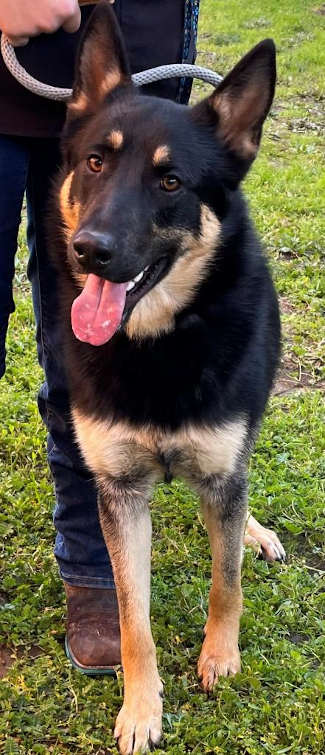
Male German shepherd
This 1-year-old male German shepherd has a short black and tan coat.
He is in kennel No. 29, ID No. LCAC-A-4710.

‘Diesel’
“Diesel” is a 2-year-old male pit bull terrier with a short white coat with black markings.
He’s in kennel No. 31, ID No. LCAC-A-4549.
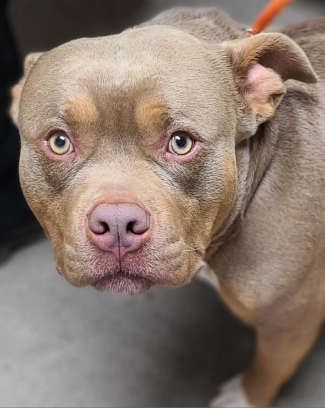
Male bulldog
This 3-year-old male bulldog has a short brown coat.
He is in kennel No. 32, ID No. LCAC-A-4745.
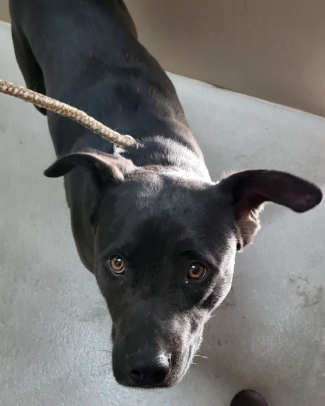
Chow chow-Labrador mix
This 1-year-old male chow chow-Labrador retriever mix has a short black coat.
He is in kennel No. 33, ID No. LCAC-A-4713.
Email Elizabeth Larson at
- Details
- Written by: Lily Zhu, Washington State University

Do you think that creativity is an innate gift? Think again.
Many people believe that creative thinking is difficult – that the ability to come up with ideas in novel and interesting ways graces only some talented individuals and not most others.
The media often portrays creatives as those with quirky personalities and unique talent. Researchers have also identified numerous personality traits that are associated with creativity, such as openness to new experiences, ideas and perspectives.
Together, they seem to paint a dire picture for those who consider themselves conventional thinkers, as well as those who do not work in creative occupations – including roles that are often considered traditional and noncreative, such as accountants and data analysts.
These beliefs miss a key part of how creativity works in your brain: Creative thinking is actually something you engage in every day, whether you realize it or not.
Moreover, creativity is a skill that can be strengthened. This matters even for people who don’t consider themselves creative or who aren’t in creative fields.
In research that I recently published with organization and management scholars Chris Bauman and Maia Young, we found that simply reinterpreting a frustrating situation can enhance the creativity of conventional thinkers.
Using creative thinking to cope with emotions
Creativity is often defined as the generation of ideas or insights that are novel and useful. That is, creative thoughts are original and unexpected, but also feasible and useful.
Everyday examples of creativity are plentiful: combining leftover food to make a tasty new dish, coming up with a new way to accomplish chores, mixing old outfits to create a new look.
Another way you do this is when you practice what’s called “emotional reappraisal” – viewing a situation through another lens to change your feelings. There is an element of creativity to this: You’re breaking away from your existing perspectives and assumptions and coming up with a new way of thinking.
Say you’re frustrated about a parking ticket. To alleviate the bad feelings, you can think of the fine as a learning moment.
If you’re anxious about a presentation for work, you can cope with the anxiety by framing it as an opportunity to share ideas, rather than as a high-stakes performance that could result in demotion if handled poorly.
And if you’re angry that someone seemed unnecessarily combative in a conversation, you might reevaluate the situation, coming to view the behavior as unintentional rather than malicious.
Training your creative muscles
To test the link between creative thinking and emotional reappraisal, we surveyed 279 people. Those who ranked higher on creativity tended to reappraise emotional events more often in their daily life.
Inspired by the link between emotional reappraisal and creative thinking, we wanted to see whether we could use this insight to develop ways to help people be more creative. In other words, could emotional reappraisal be practiced by people in order to train their creative muscles?
We ran two experiments in which two new samples of participants – 512 in total – encountered scenarios designed to provoke an emotional response. We tasked them with using one of three approaches to manage their emotions. We told some participants to suppress their emotional response, others to think about something else to distract themselves and the last group to reappraise the situation by looking at it through a different lens. Some participants were also given no instructions on how to manage their feelings.
In a seemingly unrelated task that followed, we asked the participants to come up with creative ideas to solve a problem at work.
In the experiments, conventional thinkers who tried reappraisal came up with ideas that were more creative than other conventional thinkers who used suppression, distraction or received no instructions at all.
Cultivating flexible thinking
Negative emotions are inevitable in work and life. Yet people often hide their negative feelings from others, or use distraction to avoid thinking about their frustrations.
Our findings have implications for how managers can think about how to best leverage the skills of their workers. Managers commonly slot job candidates into creative and noncreative jobs based on cues that signal creative potential. Not only are these cues shaky predictors of performance, but this hiring practice may also limit managers’ access to employees whose knowledge and experience can play major roles in generating creative outcomes.
The result is that the creative potential of a significant part of the workforce may be underutilized. Our findings suggest that supervisors can develop training and interventions to cultivate creativity in their employees – even for those who might not seem predisposed to creativity.
Our research also indicates that people can practice flexible thinking every day when they experience negative emotions. Although people may not always have control over the external circumstances, they do have the liberty to choose how to cope with emotional situations – and they can do so in ways that facilitate their productivity and well-being.
Lily Zhu, Assistant Professor of Management, Information Systems and Entrepreneurship, Washington State University
This article is republished from The Conversation under a Creative Commons license. Read the original article.
- Details
- Written by: NATIONAL AERONAUTICS AND SPACE ADMINISTRATION
When NASA’s Curiosity rover arrived at the “sulfate-bearing unit” last fall, scientists thought they’d seen the last evidence that lakes once covered this region of Mars.
That’s because the rock layers here formed in drier settings than regions explored earlier in the mission. The area’s sulfates – salty minerals – are thought to have been left behind when water was drying to a trickle.
So Curiosity’s team was surprised to discover the mission’s clearest evidence yet of ancient water ripples that formed within lakes. Billions of years ago, waves on the surface of a shallow lake stirred up sediment at the lake bottom, over time creating rippled textures left in rock.
“This is the best evidence of water and waves that we’ve seen in the entire mission,” said Ashwin Vasavada, Curiosity’s project scientist at NASA’s Jet Propulsion Laboratory in Southern California. “We climbed through thousands of feet of lake deposits and never saw evidence like this – and now we found it in a place we expected to be dry.”
Layers of history
Since 2014, the rover has been ascending the foothills of Mount Sharp, a 3-mile-tall (5-kilometer-tall) mountain that was once laced with lakes and streams that would have provided a rich environment for microbial life, if any ever formed on the Red Planet.
Mount Sharp is made up of layers, with the oldest at the bottom of the mountain and the youngest at the top. As the rover ascends, it progresses along a Martian timeline, allowing scientists to study how Mars evolved from a planet that was more Earth-like in its ancient past, with a warmer climate and plentiful water, to the freezing desert it is today.
Having climbed nearly a half-mile above the mountain’s base, Curiosity has found these rippled rock textures preserved in what’s nicknamed the “Marker Band” – a thin layer of dark rock that stands out from the rest of Mount Sharp.
This rock layer is so hard that Curiosity hasn’t been able to drill a sample from it despite several attempts. It’s not the first time Mars has been unwilling to share a sample: Lower down the mountain, on “Vera Rubin Ridge,” Curiosity had to try three times before finding a spot soft enough to drill.
Scientists will be looking for softer rock in the week ahead. But even if they never get a sample from this unusual strip of rock, there are other sites they’re eager to explore.
Martian clues
Far ahead of the Marker Band, scientists can see another clue to the history of Mars’ ancient water in a valley named Gediz Vallis. Wind carved the valley, but a channel running through it that starts higher up on Mount Sharp is thought to have been eroded by a small river.
Scientists suspect wet landslides also occurred here, sending car-size boulders and debris to the bottom of the valley.
Because the resulting debris pile sits on top of all the other layers in the valley, it’s clearly one of the youngest features on Mount Sharp. Curiosity got a glimpse of this debris at Gediz Vallis Ridge twice last year but could only survey it from a distance. The rover team hopes to have another chance to view it later this year.
One more clue within the Marker Band that has fascinated the team is an unusual rock texture likely caused by some sort of regular cycle in the weather or climate, such as dust storms. Not far from the rippled textures are rocks made of layers that are regular in their spacing and thickness. This kind of rhythmic pattern in rock layers on Earth often stems from atmospheric events happening at periodic intervals. It’s possible the rhythmic patterns in these Martian rocks resulted from similar events, hinting at changes in the Red Planet’s ancient climate.
“The wave ripples, debris flows, and rhythmic layers all tell us that the story of wet-to-dry on Mars wasn’t simple,” Vasavada said. “Mars’ ancient climate had a wonderful complexity to it, much like Earth’s.”
The Curiosity mission is led by NASA’s Jet Propulsion Laboratory, which is managed by Caltech in Pasadena, California. JPL leads the mission on behalf of NASA’s Science Mission Directorate in Washington. Malin Space Science Systems in San Diego built and operates Mastcam.
For more about Curiosity, visit http://mars.nasa.gov/msl.
- Details
- Written by: LAKE COUNTY NEWS REPORTS
On Feb. 10, at approximately 2:57 p.m., deputies from the Lake County Sheriff’s Office were dispatched to Kelseyville Elementary School for a report of a subject on their way to shoot up the school, said sheriff’s public information officer Lauren Berlinn.
Out of an abundance of caution the school district placed all schools in the area on lockdown. Berlinn said the first deputy arrived on scene at approximately 3:03 p.m.
Due to the potential seriousness of the incident, several other deputies, detectives, members of the California Highway Patrol, Lake County Probation and California State Parks also responded, Berlinn said.
Once on scene, Berlinn said detectives from the Lake County Sheriff’s Office Major Crimes Unit assumed the investigation.
During the course of the investigation, a juvenile suspect was identified, Berlinn said. A search warrant was authored and later served at approximately 9:45 p.m.
The juvenile suspect was located and the threat was determined to be a prank call. Berlinn said no weapons were located during the search of the residence and the juvenile was ultimately arrested.
Berlinn said the juvenile was later transported to the Lake County Probation Department for booking.
“The Lake County Sheriff’s Office takes these types of investigations very seriously and urges the public to report any type of threat to schools or children,” Berlinn said.
Berlinn said detectives are asking anyone with additional information regarding this investigation to contact Det. Antonio Castellanos by email at
The Lake County Sheriff’s Office thanked the agencies that responded for assistance during this incident and their commitment to the safety of the community’s schools and children.