 How to resolve AdBlock issue?
News
- Details
- Written by: Elizabeth Larson
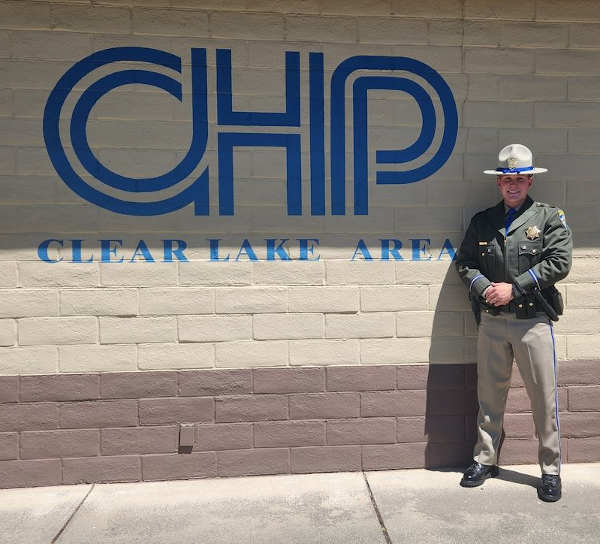
KELSEYVILLE, Calif. — The California Highway Patrol’s Clear Lake Area office has welcomed to its ranks one of the newest officers to graduate from the CHP Academy.
Officer Cameron Ramsey was among the 101 officers who graduated from the CHP Academy in West Sacramento on June 30.
At the ceremony, Ramsey and his fellow cadets officially became officers and were sworn in after 26 weeks of intense training.
Ramsey is now among the more than 6,550 sworn CHP officers across California. The CHP is the largest state police agency in the United States.
Officer Ramsey’s class is joining the CHP in the midst of a campaign to put 1,000 new officers on the road.
The Clear Lake Area office reported that Ramsey is from Redwood Valley and the son of a CHP officer who works in the Ukiah Area office.
While the academy is behind him, there is more education ahead.
He is set to receive extensive in-field training with experienced officers for approximately four months and later be on his own, the Clear Lake Area office reported.
“Lake County is a unique area and different than large metropolitan areas. It will challenge this officer’s skills,” the office said.
Email Elizabeth Larson at
- Details
- Written by: LAKE COUNTY NEWS REPORTS
The event will take place from 5 to 8 p.m. Tuesday, Aug. 1, on the Austin Park splash pad, 14077 Lakeshore Drive.
The agency said Nationl Night Out is “ night to unite.”
It will feature free food, giveaways, raffle prizes, fun on the splash pad and family fun for all.
North Bay Animal Services will also be on hand with dogs available for adoption.
Grab a towel and bring the family down to cool off.
“This is an evening you won’t want to miss,” the department said.
- Details
- Written by: Riley Post, University of Iowa
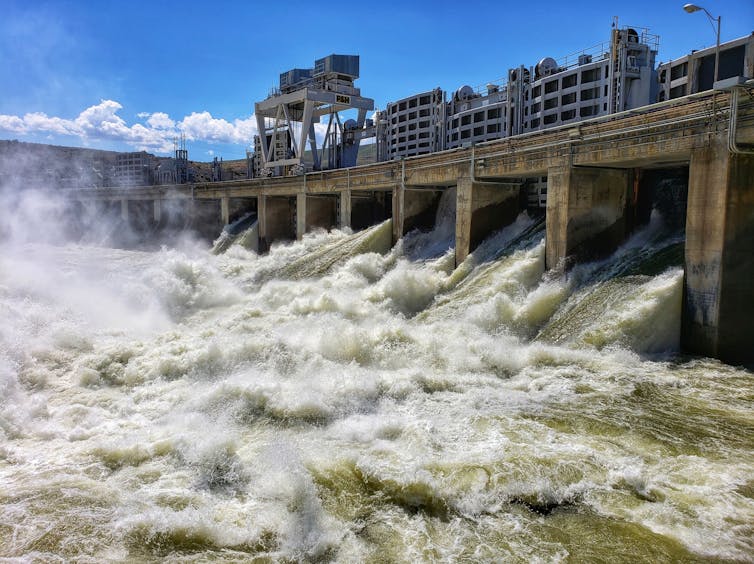
The arduous task of cleaning up from catastrophic flooding is underway across the Northeast after storms stretched the region’s flood control systems nearly to the breaking point.
As rising global temperatures make extreme storms more common, the nation’s dams and reservoirs – crucial to keeping communities dry – are being tested. California and states along the Mississippi River have faced similar flood control challenges in 2023.
Managing these flood control systems is a careful balancing act. Do managers release water to make room for the storm’s runoff, increasing the risk of flooding downstream, or hold as much as possible to protect downstream farms and communities, which could increase the chance of larger floods if another storm comes through?
The earlier decisions can be made, the better the chance of avoiding downstream damage. But forecasts aren’t always reliable, and waiting for the rain to fall may mean acting too late.
I managed flood control reservoirs in Iowa and locks and dams along the Mississippi and Illinois rivers for a decade, and I now research the operation of large systems of reservoirs for flood control at the University of Iowa’s Iowa Flood Center. Here’s what reservoir managers think about during storms, and how efforts to improve forecasting may soon be able to reduce flood damage:
The many roles of dams
The United States is home to over 50,000 operable reservoirs that are overseen by dozens of state and federal agencies. Cumulatively, these dams store more water than Lakes Erie and Tahoe combined. Thousands of square miles of rainfall may run off the landscape into rivers and streams and ultimately drain into a single reservoir.
Using a gated outlet, reservoirs smooth streamflow throughout the year by storing water during heavy rains and releasing it to offset the effects of drought. This helps ensure a reliable water supply for agriculture, power generation and residential use.
Importantly, the reservoirs also provide flood protection for downstream communities.
Extreme storms can mean difficult trade-offs
Reservoir management can be drastically complicated when rainfall occurs in concentrated bursts.
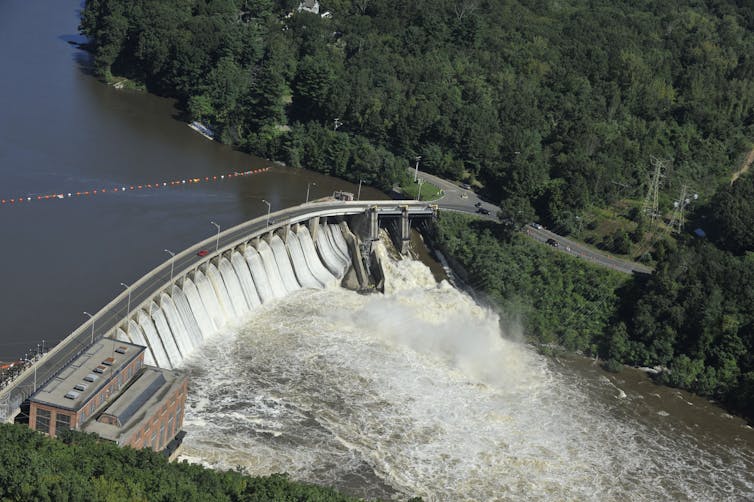
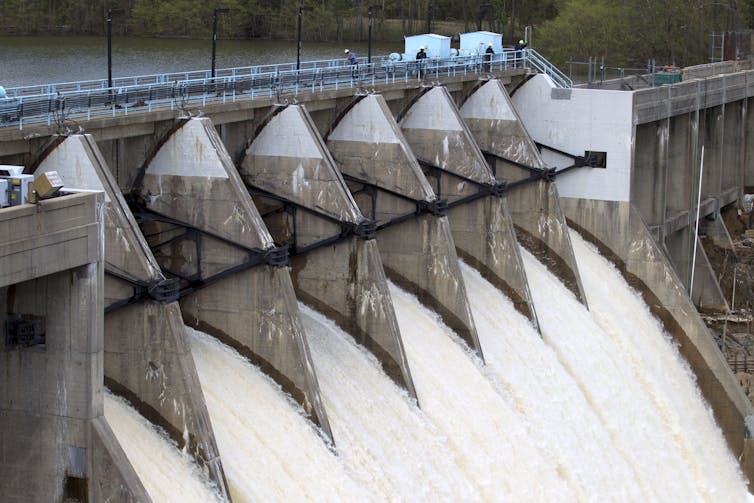
Reservoir operators are ready around the clock to respond to heavy rain. By adjusting gates within a reservoir’s outlet, water can be stored behind the dam, just like a bathtub with the drain partially blocked. That allows operators to release water slowly, in a controlled manner, to avoid flooding downstream communities.
Operators can also help downstream communities at risk of flash flooding by limiting the amount of water they release from the reservoir. That decision has to be made quickly, though – water takes time to move downstream. If the flow is cut too late, the manager may squander the opportunity to help.
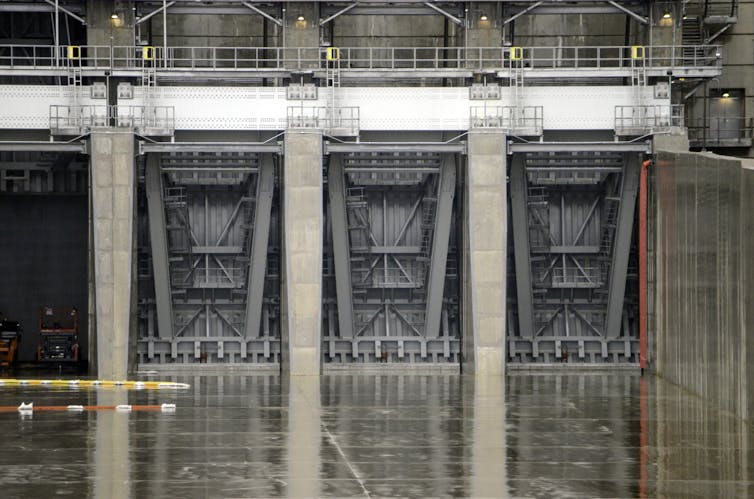
It’s when the entire region is getting heavy rain – both upstream and downstream from the reservoir – that reservoir operators face the greatest stress.
When rainfall is heavy or multiple storms occur in a short period, there often is not enough time to release the accumulated water from one event to make room for the next storm. If a reservoir is full, an overflow spillway will likely be activated, routing additional water around the dam to avoid damaging the dam itself. Though this maintains the structural integrity of the dam, it can drastically worsen downstream flooding.
What the manuals say
To help managers make these tough decisions, most flood control reservoirs have a regulation manual that outlines the process for operating the gates during floods.
Every flood control reservoir is unique, and these documents account for the specific priorities associated with each location. A flood control manual may stipulate maximum allowable outflows as reservoir levels rise. It also may constrain flows based on downstream river gauges to reduce flood impacts.
Managers still have to make choices, though. While the manual may give specific storage or downstream flow targets, no two floods are the same. It is up to reservoir operators to determine how to meet those targets. Releasing too little water can increase the risk of even larger floods in the future if more storms are on the way.
This trade-off between current and future flood risk is known as “hedging.”
Years of research with complex computer models and simulation have helped optimize this decision-making process. Unfortunately, what looks good on paper isn’t always easy to put into practice, particularly when many of the nation’s aging dams require manually opening or closing the gates. Further, these decisions are often made during heavy rainfall, when conditions change quickly, and the operators do not have the gift of hindsight.
Accurate forecasts are essential
To make the best possible decisions about water releases, accurate forecasts are essential. This is an area ripe for improvement.
The value of a rainfall forecast for reservoir operation can be thought of as a three-legged stool built on where, when and how much rain falls. A rainfall forecast that only gets two of these three variables correct may do more harm than good. For example, a manager could preemptively release water for a storm that is expected upstream of a reservoir – only to see the storm hit downstream instead, potentially causing flood damage when combined with those preemptive releases.
To mitigate this risk, many flood control reservoirs are operated using a “water on the ground” approach. Rather than using a forecast, this approach waits to see where the rain falls and then reacts. Though this often results in a delayed reservoir response, it also reduces the risk of operational mistakes.
Recent projects using “forecast-informed reservoir operation” have shown how advancements in hydrologic forecasting may lead to better reservoir management. Though many of these projects are in early phases, studies show that there may be potential to use forecast-informed reservoir operation to help manage floods, while also maximizing water supply within regions that are prone to droughts. This trade-off has historically been particularly hard to navigate.
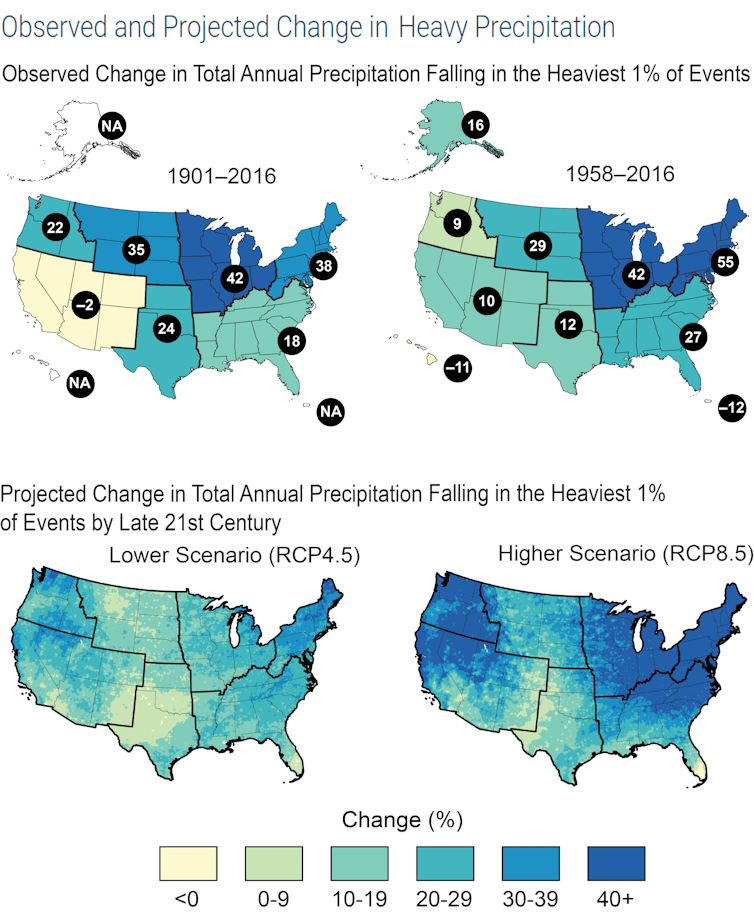
As climate change makes extreme rainfall more common, it will further test the nation’s flood-fighting capabilities and reservoir networks’ finite storage.
Expanding the number and size of reservoirs could help, but the social and ecological impacts make reservoir construction a tough political sell. Optimizing existing storage is the next-best strategy. Regardless, reservoir managers and forecasters are positioned at the front line of a battle that will become more challenging in a warming future.
Riley Post, PhD Candidate in Water Resources Engineering, University of Iowa
This article is republished from The Conversation under a Creative Commons license. Read the original article.
- Details
- Written by: LAKE COUNTY NEWS REPORTS
MIDDLETOWN, Calif. — The Middletown Art Center invites the public to join the first of many “Reciprocity” events that will revitalize the EcoArts Sculpture Walk at Trailside Park.
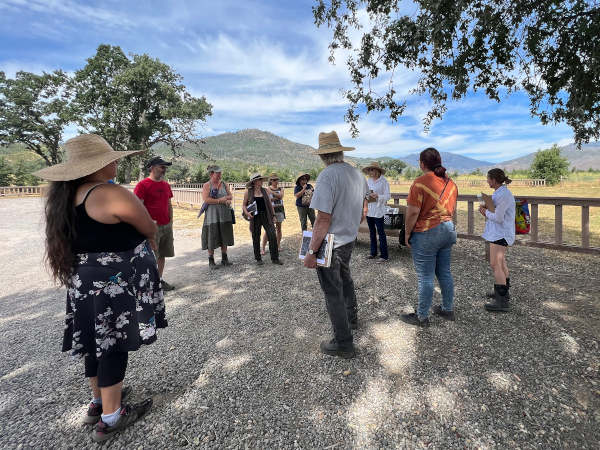
On Saturday, July 29, and Sunday, July 30, renowned Pomo basket weaver Corine Pearce and sculptor Laura Kennedy will lead community-engaged artmaking to cocreate sculptures of animal species that once inhabited park lands from natural materials.
This and all Reciprocity events are free and open to people of all ages and abilities.
Gathering at the park at 9:30 a.m. on Saturday, Pearce will share with the group stories and the wisdom and practice of caring for the trees, land, and all of its inhabitants as we work together to create larger than life animal sculptures from oak and manzanita branches.
Participants will spend some time learning to tend to sprouting oaks at the park with sensitivity to their role in, and health of, the ecosystem.
Before it gets too hot, the group will move to the MAC studio where they will work together as the sculptures begin to take on life.
No experience is required. Please bring clippers, loppers and gloves if you have them, plenty of water and a lunch as work will continue into the afternoon.
Everyone is invited to join again, or for the first time on Sunday morning at 10 a.m. at MAC with hopes to install the first sculpture later that day.
This event is sure to be not only fun and educational, but meaningful as well. Please RSVP at MACLake.org.
The MAC received grant funding from Upstate California Creative Corps and the California Arts Council for Reciprocity.
MAC has brought 19 artists and culture bearers together to embark on an artmaking journey designed to bring people together in nature as we learn about what it means to be stewards of the land and honor one another’s cultural and personal identity.
Over the course of a year, free public art-making workshops will be held offering variety of opportunities to create from natural and discarded materials, learn about fire mitigation, native and nonnative species, the role of pollinators in our environment, the plight of the Clear Lake hitch, organism habitat, cultural diversity and using plants to make cordage, as they engage in creative expression and problem solve collaboratively.
Following 12 years of annual, temporary exhibits, the 13th annual EcoArts sculpture walk was destroyed in the 2015 Valley Fire. Tens of thousands of trees and shrubs were removed from the park.
In 2019 EcoArts reopened in a fire damaged venue with half the number of artists. COVID, combined with park conditions, discouraged artist participation. The sculpture walk has been dormant for three years.
“We designed Reciprocity with tremendous enthusiasm, hope, and commitment to the people, land, and all living things in this beautiful place we all call ‘home’ — Lake County,” said project lead artist and MAC’s Artistic Director Lisa Kaplan. “Reciprocity is a vision not only to revitalize the sculpture walk, but to utilize the trail as a way to bring diverse people together in a meaningful experience that models healthy and sustainable ways of living with the land and each other.”
Drawing on ancient and traditional knowledge that modern society haphazardly discarded in the name of progress, organizers recognize that it is vital in these rapidly changing times to slow down and reevaluate how we choose to move forward together.
The MAC believes It is imperative to find a new way of being that embraces old wisdom, to be willing to learn from the past, and cultivate an openness to creating a more beautiful and sustainable world our hearts know is possible. As we learn about how to tend the land through the lens of the first people of this place, we also learn how to work, learn and grow together.
Middletown Art Center is a Lake County nonprofit dedicated to engaging the public in art making, art education, and art appreciation. Through exhibitions, performances, workshops and community events, the Art Center provides a platform for diverse voices and perspectives, striving to create an inclusive and accessible space for all.
The MAC is located at 21456 State Highway 175. Trailside Park is located about three minutes away at 21435 Dry Creek Cutoff off Highway 175.
To learn more or support MAC’s work visit www.middletownartcenter.org or call 707-809-8118.