 How to resolve AdBlock issue?
News
- Details
- Written by: DENNIS FORDHAM
To understand a car’s performance you have to understand the unseen mechanics lying underneath the hood and elsewhere.
To understand a trust’s sufficiency to meet your intended goals you need to understand its “boilerplate” provisions in addition to the customized provisions (i.e., the intended beneficiary and distribution provisions).
Certain boilerplate articles merit discussion.
An important feature of a revocable living trust is that it may be amended (changed) in whole or in part to contain different provisions.
For the amendment, i.e., the new provisions, to be effective, how the amendment is executed must follow the correct approach (procedure).
In California, a trust can always be amended by using the approach (procedure) provided in the trust.
The trust itself may also require that its own approach be used and not the statutory approach. If the trust does not have any approach, however, then the statutory approach can be used as the default approach (Section 15401 Probate Code).
California’s statutory approach, which may be the same as the trust approach, is basically that, ”the trust may be amended by a writing signed by the settlor or the person holding the power of revocation and delivered to the Trustee.”
A division of opinion exists amongst at the appellate court level whether the approach provided in the trust is always mandatory, i.e., even if the trust does not so require (read Balisteri v Balisteri (2022) 75 CA5th 511, 52 and Cundall v Mitchell-Clyde (2020) 51 CA5th 571) for conflicting opinions).
Any difference(s) in the trust’s own approach and the simple statutory approach may impact whether or not an amendment was correctly executed so whether it will stand up in court.
The “disinheritance” and “no contest” clauses are intended to prevent disinherited and/or dissatisfied heirs and beneficiaries from either claiming any inheritance (if disinherited) or claiming a different (usually greater) inheritance than what is provided in the contested trust or will.
A revocable living trust and a will should each contain a disinheritance clause to prevent successful claims by so-called “omitted heirs.”
A disinheritance clause expressly says that the settlor disinherits heirs who are not otherwise named as beneficiaries.
If disinheriting a spouse or child, it is best to expressly state their individual names as such relatives are very close heirs and not remote relatives like cousins.
A “no contest” clause deters a beneficiary under the trust (or will) from disputing the inheritance to claim something other than what is expressly provided.
A no-contest clause means that if a beneficiary contests the trust and loses their contest that the beneficiary loses any inheritance that they would otherwise have been entitled to receive under the trust if not so contested.
Consideration should be given whether to include in the “no contest” clause that the trustee is authorized to defend the terms of the trust using the trust assets. Otherwise, the trustee, who is often a trust beneficiary or is related to a trust beneficiary, may be forced to use their own personal assets to defend the trust and afterwards to seek court approved reimbursement from the trust if successful.
A “spendthrift clause” when included in trusts protects the trust assets from being answerable for the debts of a settlor’s beneficiary (e.g., a death beneficiary).
So long as the assets are not yet required to be distributed out to the beneficiary, most creditors (with some important exceptions, such as for spousal and child support payments) cannot force the trustee to pay a beneficiary’s debts.
The definitions article in a trust defines important terms, such as, “beneficiary,” “child,” “stepchild,” “education” and “incapacity.”
These definitions, as and when relevant, may decide whether or not a distribution is made to (or for the benefit of) a person, that is, depending on whether or not such person meets the definition.
People wonder why trusts can be so long. That is because trusts are contracts and the drafter of the trust may wish its provisions to cover more subjects and do so in more or less depth.
The foregoing is a brief discussion of certain overlooked aspects of a trust. For legal guidance in drafting or administering trust consult a qualified attorney.
Dennis A. Fordham, attorney, is a State Bar-Certified Specialist in estate planning, probate and trust law. His office is at 870 S. Main St., Lakeport, Calif. He can be reached at
- Details
- Written by: LAKE COUNTY NEWS REPORTS
This is the Golden State’s southernmost pack and it is at least 200 air miles from the nearest known pack in northeastern California.
In July, the California Department of Fish and Wildlife, or CDFW, received a wolf sighting report from a location in the Sequoia National Forest.
CDFW investigated the reported location, found wolf tracks and other signs of wolf presence, and collected 12 scat and hair samples from the immediate area for genetic testing.
CDFW’s Wildlife Forensics Laboratory performed DNA analysis to determine if the samples were from wolf, as well as sex, coat color, individual identity, relation to one another and pack origin. All 12 samples were confirmed gray wolf.
The new pack consists of at least five individuals not previously detected in California, including one adult female, who is a direct descendant of California’s first documented wolf in the state in recent history, OR7, and four offspring — two females, two males.
None of the samples collected came from an adult male, however the genetic profile from the offspring indicate that the breeding male is a descendant of the Lassen Pack.
Gray wolves are native to California but were extirpated in the state by the 1920s.
In late 2011, OR7 crossed the state line to become the first wolf in nearly a century to make California part of his range before returning to Oregon to form the Rogue Pack.
Wolves are protected under California’s Endangered Species Act and are federally protected in California under the federal Endangered Species Act.
It is illegal to intentionally kill or harm wolves in the state.
For more information and to report potential sightings, please visit CDFW’s Gray Wolf Program webpage at https://wildlife.ca.gov/Conservation/Mammals/Gray-Wolf.
- Details
- Written by: Mary Magnuson, The Conversation

The House subcommittee on National Security, the Border, and Foreign Affairs met in July 2023 to discuss affairs so foreign that they may not even be of this world. During the meeting, several military officers testified that unidentified anomalous phenomena – the government’s name for UFOs – pose a threat to national security.
Their testimony may have raised eyebrows in the chamber, but there’s still no public physical evidence of extraterrestrial life. In fact, most UFO sightings have earthly explanations, from tricks of the light to weather balloons.
Whether or not these testimonials hold any grains of truth, some scholars argue that simply by listening for signs of extraterrestrials, we’re already engaging in the first phase of contact with alien life.
These four articles from our archives dive into what went down during the subcommittee hearing, why perceived UFO sightings usually have human explanations, and how humanity can learn from history when it comes to engaging with extraterrestrials.
1. Whistleblower allegations
The most interesting testimony of the July 26 subcommittee hearing came from ex-Air Force Intelligence Officer David Grusch, who claimed that the U.S. has nonhuman biological material recovered from a UFO crash site. The Pentagon has denied this claim, and it has denied the existence of any program designed to retrieve and reverse-engineer crashed UFOs.
All witnesses at the hearing advocated for more government transparency around reports of UFOs. Intelligence agencies and the Pentagon currently steward this data, most of which is not public. While having access to more data may help understand what’s going on, as the University of Arizona’s Chris Impey put it, “the gold standard is physical evidence.”
2. Sociological explanations
Again, while no physical evidence has been made public, anyone surfing the internet can see plenty of alleged UFO videos, photos and stories. Barry Markovsky, from the University of South Carolina, is a sociologist of shared beliefs and misconceptions who explained why UFOs seem to captivate the public every few years.
People want explanations for ambiguous situations, and they’re easily influenced by others. Social media enables a concept called bottom-up social diffusion. Say one user posts a blurry video claiming it depicts a UFO. It’s easy for that user’s network to see and repost the video and so on, until it goes viral. Then, when organized institutions like news outlets or government sources publish UFO-related information, that’s called top-down social diffusion.
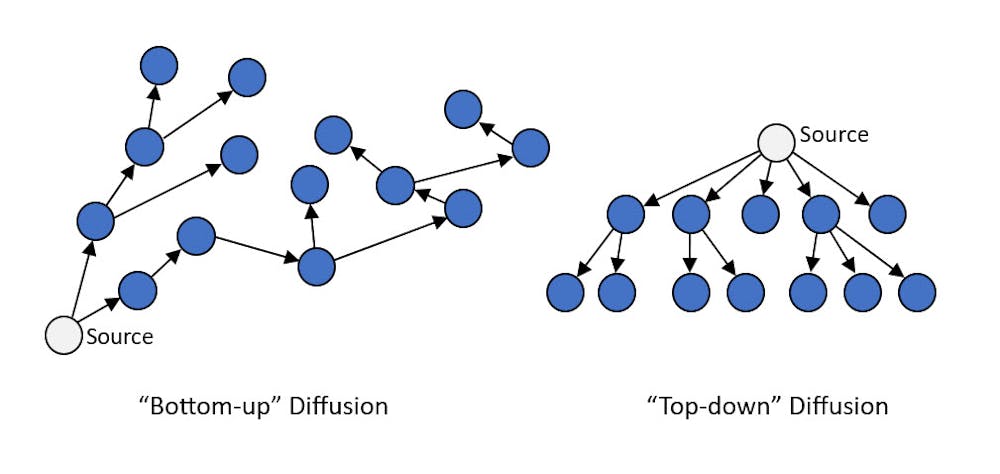
“Diffusion processes can combine into self-reinforcing loops. Mass media spreads UFO content and piques worldwide interest in UFOs. More people aim their cameras at the skies, creating more opportunities to capture and share odd-looking content,” Markovsky wrote. “Poorly documented UFO pics and videos spread on social media, leading media outlets to grab and republish the most intriguing. Whistleblowers emerge periodically, fanning the flames with claims of secret evidence.”
3. Signature detection
While UFOs might have traction on social media, it’s likely that the first trace of extraterrestrial life won’t come from a crashed alien spaceship. Instead, scientists could potentially pick up signals like radio waves or pollution from some distant galaxy that might indicate extraterrestrial technology.
The Search for Extraterrestrial Intelligence is a group of scientists all working on the search for extraterrestrial life. Part of what they do is listen for these “technosignatures”.
As two astronomers who work on the Search for Extraterrestrial Intelligence, Penn State’s Macy Huston and Jason Wright wrote about how humans often unintentionally broadcast signals like radio waves into space. In theory, extraterrestrial civilizations could be doing the same thing – and if scientists can pick up on these signals, they might have their first hints at alien life.
“However, this approach assumes that extraterrestrial civilizations want to communicate with other technologically advanced life,” Huston and Wright explained. “Humans very rarely send targeted signals into space, and some scholars argue that intelligent species may purposefully avoid broadcasting out their locations. This search for signals that no one may be sending is called the SETI Paradox.”
4. Ethical considerations
While the Search for Extraterrestrial Intelligence hasn’t yet detected any extraterrestrial technosignatures, a working group of interdisciplinary scholars in Indigenous studies argued that the act of listening for these signals may already count as engaging in first contact with extraterrestrial life.
The Indigenous studies working group argued that first contact may not be just one event – rather, you can think of it as a long phase that begins with listening and planning. Listening can be an act of surveillance, and with that comes ethical considerations.
But research groups like the Search for Extraterrestrial Intelligence don’t often include perspectives from the humanities, even though there are many histories of first contact between groups of people here on Earth to draw from.
James Cook’s 1768 voyage to Oceania, for example, was planned as scientific exploration. But its legacy of genocide still affects the Indigenous people of Australia and New Zealand today.
“The initial domino of a public ET message, or recovered bodies or ships, could initiate cascading events, including military actions, corporate resource mining and perhaps even geopolitical reorganizing,” wrote David Shorter, William Lempert and Kim Tallbear. “No one can know for sure how engagement with extraterrestrials would go, though it’s better to consider cautionary tales from Earth’s own history sooner rather than later.”
Editor’s note: This story is a roundup of articles from The Conversation’s archives.
Mary Magnuson, Assistant Science Editor, The Conversation
This article is republished from The Conversation under a Creative Commons license. Read the original article.
- Details
- Written by: Lake County News reports
With high temperatures expected to persist over much of the next week, many Lake County residents will be seeking opportunities to escape the heat.
Staff from the Lake County Library system and county-operated Peer Support Centers want to ensure members of the public know their facilities’ doors are open during normal business hours; at least one facility is open each day of the week.
Shopping at local businesses and eating at local restaurants with air-conditioned facilities during the warmest hours of the day can also be great ways to support the community while cooling off, county officials reported.
It’s important to recognize the signs of heat related illness and make safe choices during hot weather. The website https://www.ready.gov/heat offers these tips:
• Never leave people or pets in a closed car on a warm day;
• If air conditioning is not available in your home, go to a cooled facility, like Lake County’s Library Branches and Peer Support Centers (details below);
• Take cool showers or baths;
• Wear loose, lightweight, light-colored clothing;
• Use your oven less to help reduce the temperature in your home;
• If you’re outside, find shade and wear a hat wide enough to protect your face;
• Drink plenty of fluids to stay hydrated (don’t wait until you’re thirsty!);
• Avoid high-energy activities or work outdoors during midday heat, if possible;
• Check on family members, older adults and neighbors;
• Consider pet safety – if they are outside, make sure they have plenty of cool water and access to comfortable shade;
• Remember, asphalt and dark pavement can be very hot to your pet’s feet;
• Watch for heat cramps, heat exhaustion and heat stroke;
• Remember, heat stroke is an emergency! Call 9-1-1.
Heat-related illnesses can require urgent action. What are the signs?
Heat stroke
Signs include:
• Extremely high body temperature (above 103 degrees F, temperature taken orally)
• Red, hot and dry skin with no sweat;
• Rapid, strong pulse; or
• Dizziness, confusion or unconsciousness
If you suspect heat stroke, call 9-1-1 or get the person to a hospital immediately. Cool down with whatever methods are available until medical help arrives. Do not give the person anything to drink.
Heat cramps
Signs include:
• Muscle pains or spasms in the stomach, arms or legs
Heat exhaustion
Signs include:
• Heavy sweating;
• Paleness;
• Muscle cramps;
• Tiredness;
• Weakness;
• Fast or weak pulse;
• Dizziness;
• Headache;
• Fainting, nausea or vomiting.
If you have signs of heat cramps or heat exhaustion, go to a cooler location and cool down by removing excess clothing and taking sips of sports drinks or water. Call your healthcare provider if symptoms get worse or last more than an hour.
For resources on preparedness for many types of emergencies and challenging weather-related events, visit https://www.ready.gov/.
Working or leading crews working outside? Visit https://99calor.org/ or https://99calor.org/english.html.
Beating the heat at Lake County’s libraries and peer support centers
While none of these are formal cooling centers, and capacity is limited at each site, they are invaluable community resources, as temperatures rise.
Here is information on normal operating hours and services available at each facility.
County library facilities
Lake County’s four public library branches are open and accessible to all during their normal business hours. While you cool off, check out the many new materials and digital services the library has to offer – there is something for everyone.
Here is a list of Lake County Library locations, and their customary hours of operation:
Lakeport Library
1425 N. High St.
707-263-8817
Tuesday, 10 a.m. to 5 p.m.; Wednesday, 10 a.m. to 7 p.m.: Thursday through Saturday, 10 a.m. to 5 p.m.
Redbud Library
14785 Burns Valley Road, Clearlake
707-994-5115
Tuesday, 10 a.m. to 5 p.m.; Wednesday, 10 a.m. to 7 p.m.: Thursday through Saturday, 10 a.m. to 5 p.m.
Middletown Library
21256 Washington St.
707-987-3674
Tuesday through Friday, 10 a.m. to 5 p.m.; Saturday, 10 a.m. to 5 p.m.
Upper Lake Library
310 Second St.
707-275-2049
Tuesday through Friday, noon to 5 p.m.; Saturday, 10 a.m. to 3 p.m.
Peer support centers
Lake County Behavioral Health Services also reminds their peer support centers are open as a refuge from the heat. Each provides an air-conditioned place to sit and rest. Water and light snacks are offered to guests, and restrooms are available. Referrals to social services can also be made. All are welcome.
Below is a list of peer support centers, with their customary hours and locations:
The Big Oak Peer Support Center
13300 East Highway 20, Suite O
Clearlake Oaks
707-998-0310
Sunday-Saturday: 8:30 a.m. to 4:30 p.m.
Circle of Native Minds Cultural Center
525 N. Main St., Lakeport
707-263-4880
Monday through Friday, 8:30 a.m. to 4:30 p.m.
Closed Saturdays and Sundays
The Harbor on Main
154 South Main St., Lakeport
707-994-5486
Monday through Friday, 8:30 a.m. to 4:30 p.m.
Closed Saturdays and Sundays
La Voz de la Esperanza Centro Latino
14092 Lakeshore Drive, Clearlake
707-994-4261
Monday through Friday, 8:30 a.m. to 4:30 p.m.
Closed Saturdays and Sundays