 How to resolve AdBlock issue?
News
- Details
- Written by: Jasmine Travers, New York University
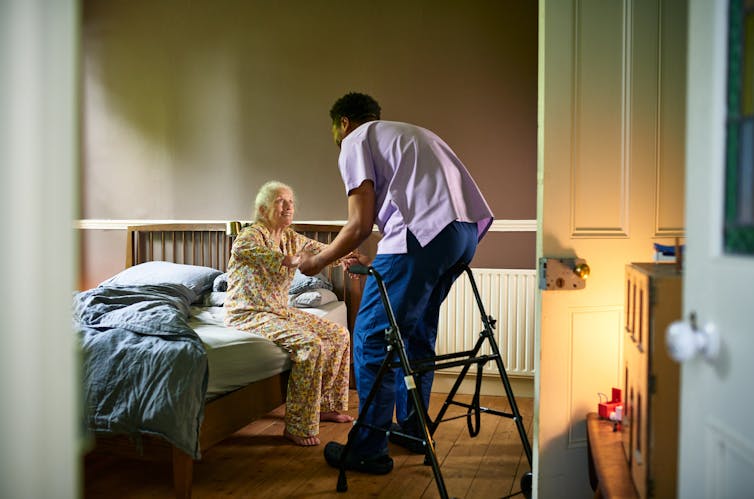
More than 80% of U.S. nursing homes reported staffing shortages in early 2023. SciLine interviewed Dr. Jasmine Travers, a gerontological nurse practitioner and assistant professor of nursing at New York University Rory Meyers College of Nursing, and asked her how the shortage affects health care for nursing home residents, if nursing homes in poorer neighborhoods have been hit harder by the shortages, and what can be done to fix the problem.
Below are some highlights from the discussion. Answers have been edited for brevity and clarity.
Who lives in nursing homes in the United States?
Jasmine Travers: There are 15,000 nursing homes with approximately 1.2 million residents. That population can range in age, although most commonly it’s those 65 years of age or older.
What is the current state of nursing home staffing?
Jasmine Travers: In 2001, the Centers for Medicare & Medicaid Services proposed minimum staffing standards. They indicated that total nursing hours should be 4.1 hours per resident per day. And that’s including the registered nurse, the licensed practical nurse and the certified nursing assistants. Only 25% of nursing homes were found to be meeting those total nursing hours in 2019.
How did the COVID-19 pandemic affect nursing home occupancy and staffing?
Jasmine Travers: Occupancy levels hovered at about 80% prior to the pandemic. During the pandemic, occupancy went down to a low of 67%. By the end of 2022, those levels had gone up to 72%.
Lower occupancy levels can be a significant issue. Higher occupancy brings in more revenue to the nursing homes. With lower occupancy and less revenue coming in, then that’s a decrease in financial support that the nursing home needs to run their day-to-day activities.
How does nursing home staffing affect the quality of care and health outcomes for residents?
Jasmine Travers: A number of studies show that when staffing is low, emergency hospitalization visits increase. Some of these visits could have been addressed by care provided in the nursing home setting. We also see increased instances of pressure ulcers, urinary tract infections, falls and deficiency citations – issued when a nursing home does not meet a certification minimum standard.
When nursing homes are understaffed, that means there might not be a sufficient number of certified nursing assistants to, for example, answer call bells. That might translate to residents sitting in their beds needing help for longer periods of time.
In those instances, if a person doesn’t have someone to get them out of bed, sometimes they might try to get up themselves. And when they do that, they could be at risk of falling. Or if they stay in bed and they’re soiled, they’re at increased risk for urinary tract infections or pressure ulcers.
What can be done to alleviate nursing home staffing challenges?
Jasmine Travers: Areas that are socioeconomically deprived or that lack good transportation, housing and schools are less desirable places to work.
Just recently, the Centers for Medicare & Medicaid Services released an announcement that they are going to allow for those in pediatric specialties to receive loan reimbursements and loan forgiveness for working in underserved areas. A similar program for those working in nursing homes would likely increase staffing.
I’d also like to see improved wages and benefits and more investment in retention efforts to keep the people who are already working in nursing homes working there.
One of the biggest issues when it comes to staffing is turnover. People will stay when the work environment is changed. And when people stay longer, they know their residents more. That consistency translates to better quality of care.
Watch the full interview to hear more.
SciLine is a free service based at the nonprofit American Association for the Advancement of Science that helps journalists include scientific evidence and experts in their news stories.
Jasmine Travers, Assistant Professor of Nursing, New York University
This article is republished from The Conversation under a Creative Commons license. Read the original article.
- Details
- Written by: LAKE COUNTY NEWS REPORTS

LAKE COUNTY, Calif. — The final preparations are underway for the annual Lake County Fair, which opens next week.
The fair will take place from Thursday, Aug. 31, through Sunday, Sept. 3.
The gates open on Aug. 31 at 6 p.m., starting with the Blue Ribbon Dinner and the 8 p.m. grand opening.
This year’s grand marshal is the Lake County Tribal Health Consortium.
Volunteer of the Year is Larry Leonard of Leonard’s Hauling & Tractor Service.
Lake County Fair’s nightly grandstand events start at 8 p.m. and are always free with admission.
Kicking off a fun-filled four days of all things fair will be Thursday night’s toughest trucks, Jeeps and more in the Mud Boggs.
On Friday, you have to see the amazing sideways action sponsored by Twin Pine Casino of the drifters and burnouts.
Saturday’s double action night with the destruction derby and the enduring favorite — the boat races.
Sunday, Fiesta Day is Lake County Tribal Health’s Los Campeones Mas Jovenes Del Jaripeo Ranchero Professional and bandas, música and baile.
This year’s fair also will include corn hole, free kids area, Lake County Idol, daily karaoke, Mr. & Miss Lake County Fair and on Sunday during the diaper race a new washing machine will be given away by Pardini Appliance.
The Lake County Fairgrounds are located at 401 Martin St., Lakeport.
For tickets visit the fair website.

- Details
- Written by: LAKE COUNTY NEWS REPORTS
The Slide 1 fire, located 1.5 miles north of Mount Linn in the Yolla Bolly Middle Eel Wilderness, was 100% contained at 473 acres as of Tuesday evening, forest officials reported on Wednesday.
The fire began Aug. 14 due to lightning from thunderstorms passing over the forest.
“I want to express my deep appreciation for everyone’s hard work,” said Forest Supervisor Wade McMaster.
Precipitation moved over the fire on Monday and rained on firefighters for several hours during the day shift.
Hotshot crews finished securing the containment line during Tuesday’s shift, officials said.
On Wednesday, crews backhauled supplies and equipment from the fireline using aircraft.
Officials said that over the next several days firefighters will be working with resource advisors on opportunities for suppression repair. Several crews and equipment are being demobilized. A helicopter remains assigned to the incident for reconnaissance.
On Thursday the type-3 incident will transition to a type-4 incident, which means more resources will need to be assigned.
Forest officials remind visitors that a closure is in effect for the Yolla Bolly Middle Eel Wilderness area within the Grindstone Ranger District, Ides Cove Backpacker Trailhead, Ides Cove Horsepacker Trailhead, roads and trails in that area.
Information about the Slide 1 Fire and related closures are available on Inciweb at https://inciweb.wildfire.gov/incident-information/camnf-2023-slide-1.
- Details
- Written by: Justin Angle, University of Montana
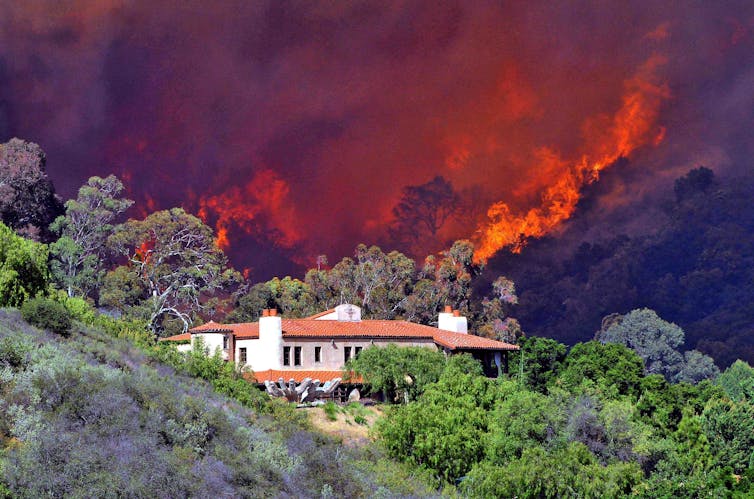
Humans have learned to fear wildfire. It can destroy communities, torch pristine forests and choke even faraway cities with toxic smoke.
Wildfire is scary for good reason, and over a century of fire suppression efforts has conditioned people to expect wildland firefighters to snuff it out. But as journalist Nick Mott and I explore our new book, “This Is Wildfire: How to Protect Your Home, Yourself, and Your Community in the Age of Heat,” and in our podcast “Fireline,” this expectation and the approach to wildfire will have to change.
Over time, extensive fire suppression has set the stage for the increasingly destructive wildfires we see today.
The problem with fighting every fire
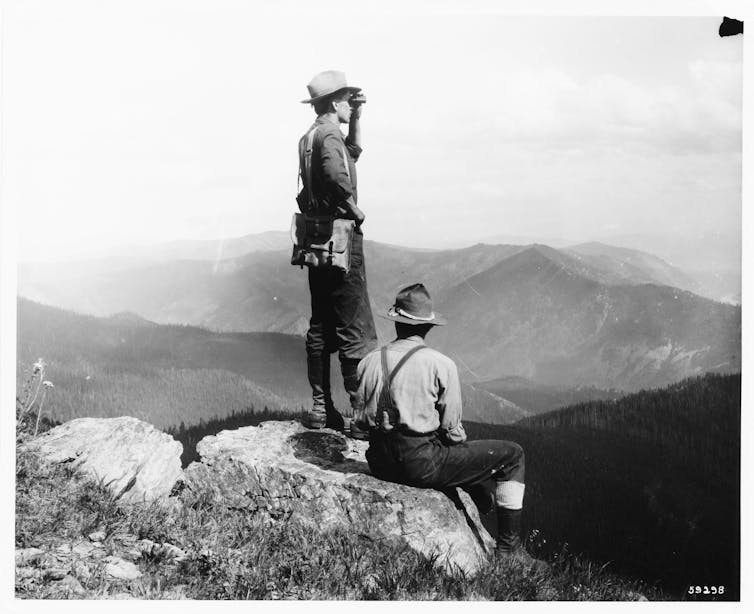
The way the U.S. deals with wildfires today dates back to around 1910, when the Great Burn torched some 3 million acres across Washington, Idaho, Montana and British Columbia. After watching the fire’s swift and unstoppable spread, the fledgling Forest Service developed a military-style apparatus built to eradicate wildfire.
The U.S. got really good at putting out fires. So good that citizens grew to accept fire suppression as something the government simply does.
Today, state, federal and private firefighters deploy across the country when fires break out, along with tankers, bulldozers, helicopters and planes. The Forest Service touts a record of snuffing out 98% of wildfires before they reach 100 acres (40 hectares).
As a result, many forest ecosystems that would have periodically burned have become clogged with underbrush, new growth and woody debris that can easily ignite. Efforts by the Forest Service to adopt a more selective policy have run into opposition from Western politicians.
At the same time, people have built more homes and cities in fire-prone areas. And the greenhouse gases released by decades of increasingly burning fossil fuels have caused global temperatures to rise.
Climate change and wildfires
The relationship between climate and wildfire is fairly simple: Higher temperatures lead to more fire. Higher temperatures increase moisture evaporation, drying out plants and soil and making them more likely to burn. When hot, dry winds are blowing, a spark in an already dry area can quickly blow up into dangerous wildfire.
Given the rise in global temperatures that the world has already experienced, much of the Western U.S. is actually in a fire deficit because of the practice of suppressing most fires. That means that, based on historical data, we should expect far more fire than we’re actually seeing.
Fortunately, there are things everyone can do to break this cycle.
What fire managers can do
First, everyone can accept that firefighters can’t and shouldn’t put out every low-risk wildfire.
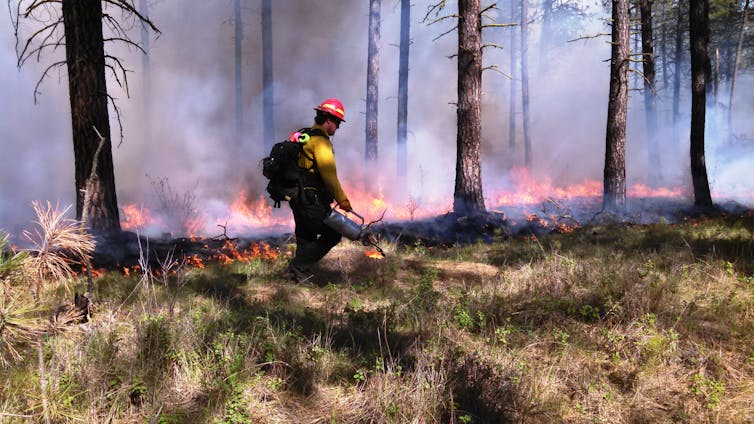
Remote fires that pose little threat to communities and property can breathe life into ecosystems. Low-level fires that clear out undergrowth but don’t kill the trees create space for trees, plants and wildlife species to thrive, and they return nutrients to the soil. Some tree and plant species depend on fires to open their seeds to reproduce.
Natural fires can also help avoid catastrophic fires that occur when too much underbrush has built up for fuel. And they create fuel breaks on the landscape that could halt the advance of future flames.
.jpg)
Fire managers have advanced mapping technology that can help them decide when and where forests can burn safely. Thoughtful prescribed burning – meaning low-intensity fires intentionally set by professionals – can offer many of the same benefits as the flames that historically burned in forests and grasslands.
The Forest Service is aiming to ramp up its prescribed burning on more acres in more areas across the country. However, the agency struggles to train adequate staff and pay for the projects, and environmental reviews sometimes cause yearslong delays. Other groups offer beacons of hope. Indigenous groups across the country, for example, are returning fire to the landscape.
Adapting homes to fire risk
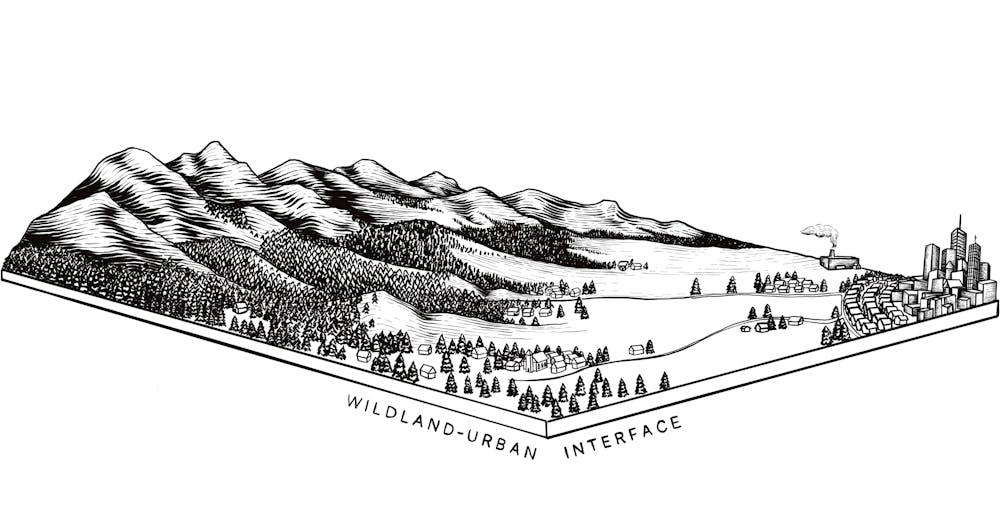
For decades, scientists have understood the relationship between wildfire and community destruction. However, little has been done to live safely with fire on the ground. More than one-third of U.S. homes are in what’s known as the wildland-urban interface – the zone where houses and other structures intermingle with flammable vegetation.
The biggest risk to homes comes from burning embers blowing on the wind and landing in weak spots that can set a house ablaze. Those embers can travel over a miles to nestle in dry leaves or pine needles clogging a gutter, a wood-shingle roof or shrubs, trees and other flammable vegetation close to a structure.
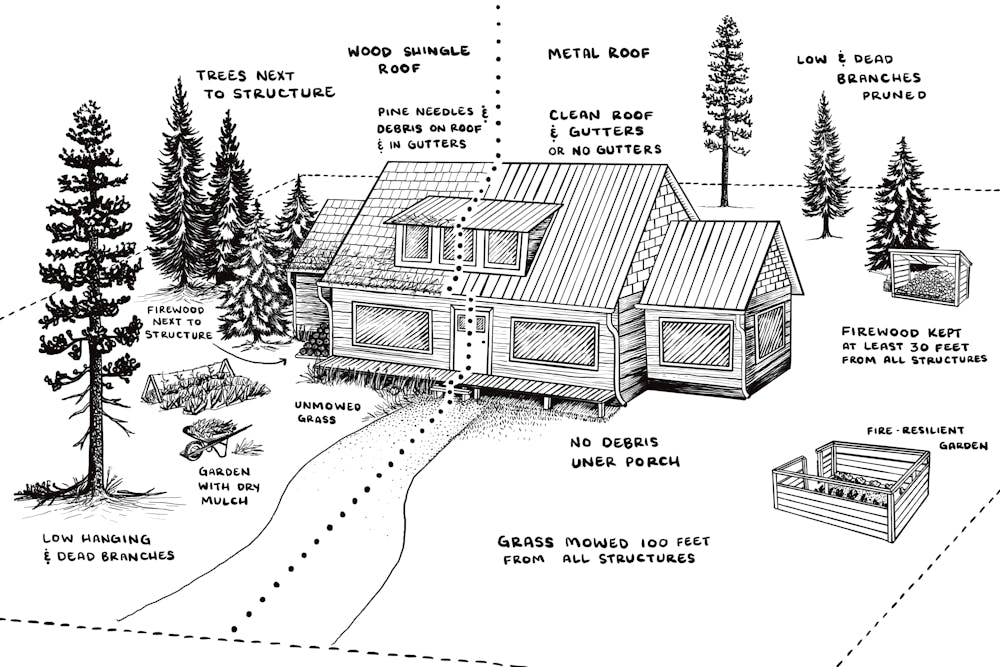
Some of these vulnerabilities are easy to fix. Cleaning a home’s gutters or trimming back too-close vegetation requires little effort and tools already around the house.
Grant programs exist to help harden homes against wildfire. But enormous investment is needed to get the work done at the scale the fire risk requires. For example, nearly 1 million U.S. homes in wildfire-prone areas have highly combustible wooden roofs. Retrofitting those roofs will cost an estimated US$6 billion, but that investment could both saves lives and property and reduce wildfire management costs in the future.
Homeowners can look to resources like Firewise USA to learn about the “home ignition zone.” It describes the types of vegetation and other flammable objects that become high risks at different distances from a structure and steps to make properties more fire resilient.
For example, homes should not have flammable plants, firewood, dried leaves or needles, or anything burnable, on or under decks and porches within 5 feet (1.5 meters) of the house. Between 5 and 30 feet (9 meters), grasses should be mowed short, tree branches should be pruned to at least 6 feet (2 meters) from the ground, and the tree canopy should be at least 10 feet (3 meters) from the structure.
What communities can do
Many counties and cities have their own wildfire programs to educate homeowners and connect them with resources. Some have started “tool libraries” to help anyone begin the necessary work on their property.
Beyond individual actions, states and communities can enact forward-looking wildfire resilience policies.
These can include developing zoning rules and regulations that require developers to build with fire-resistant materials and designs or might even prohibit building in areas where the risk is too high. The International Wildland-Urban Interface Code, which provides guidance for safeguarding homes and communities from wildfire, has been adopted in jurisdictions in at least 24 states.
Living in a world with wildfire
Prevention and suppression will always be critical pieces of wildfire strategy, but adapting to our fiery future means everyone has a role.
Educate yourself on proposed forest projects in your area. Understand and address risks to your home and community. Help your neighbors. Advocate for better wildfire planning, policy and resources.
Living in a world where more wildfire is inevitable requires that everyone see themselves as part of solving the problem. Wildfire can be terrifying, but also natural and essential. Embracing both isn’t always easy, but I believe it is the only way forward.
Justin Angle, Professor of Marketing, University of Montana
This article is republished from The Conversation under a Creative Commons license. Read the original article.