 How to resolve AdBlock issue?
News
- Details
- Written by: Rotary Club of Lakeport

LAKEPORT, Calif. — The Rotary Club of Lakeport reported that its recent fundraiser to help those impacted by the fires in Maui was a “remarkable” success.
The event took place on Wednesday at Wine in the Willows in downtown Lakeport.
It not only brought the community together in a spirit of camaraderie but also raised over $3,500 in funds to support those affected by the devastating Maui fires.
The Rotary Club of Lakeport extends heartfelt gratitude to everyone who generously contributed to the Maui Fire Fund.
This outpouring of support is a testament to the incredible unity and compassion of the Lakeport community.
These funds will play a vital role in aiding the recovery and relief efforts for those affected by the fire's impact.
A significant highlight of the event was the silent auction, where an array of unique items and experiences were generously donated by local businesses and individuals.
The Rotary Club of Lakeport would like to express sincere appreciation to the following donors for their invaluable contributions to the silent auction:
• Chasewater Wines;
• Lake County Theatre Co.;
• Clear Lake High School Culinary Department;
• Herb Lingl;
• Management Connections;
• Anna Sabalone;
• Flowers By Jackie;
• Tanner Mansell;
• Fixin' It Up With Sandra;
• Flawless Skin;
• Lucci Art;
• Back Stage Magazine;
• Brassfield Winery;
• Scully Packing Co.;
• Boatique Winery;
• Gail Salituri;
• Ripe Choice Farm and Catering;
• Tom and Ruth Lincoln;
• R Vineyards;
• John Zirelli.
Their commitment to supporting the community and their willingness to contribute to the auction played a significant role in the event's success. Their generosity embodies the spirit of cooperation and empathy that Lakeport stands for, Rotary leadership said.
Wine in the Willows prepared a sumptuous charcuterie board for the benefit’s guests to enjoy in addition to offering beverage sales.
In addition to the generous contributions generated by the silent auction, Cinamon Vann, owner of the wine bar and community gathering place, contributed all tips plus 20% of the evening's sales to the Maui Fire Fund.
The Rotary Club of Lakeport looks forward to continuing its mission of service and giving back to the community. The success of this fundraising event further emphasizes the positive impact that collective efforts can achieve.
For more information about the Rotary Club of Lakeport and its upcoming activities, please visit www.lakeportrotary.org.
The Rotary Club of Lakeport is a dedicated group of individuals committed to making a positive difference in the greater Lakeport community.
Through various projects and events, the club aims to create a lasting impact in areas such as education, healthcare, and disaster relief.
- Details
- Written by: CALTRANS
“The auditor’s findings are a testament to the substantial progress Caltrans, the California Transportation Commission and our partners have made as we work together to improve and rebuild our state’s critical transportation infrastructure,” said California Transportation Secretary Toks Omishakin. “This progress has been especially noteworthy since the passage of Senate Bill (SB) 1, the Road Repair and Accountability Act of 2017 — landmark legislation that ushered in a new era of infrastructure investment to rebuild California.”
Omishakin added, “Our elected officials and the people of California entrusted us with their hard-earned tax dollars to upgrade the state’s aging infrastructure, and we have delivered and will continue to make good on that trust. Coupled with Gov. Newsom’s infrastructure streamlining package and a $15 billion investment in clean transportation infrastructure, along with recent increased federal infrastructure funding, our state is in an incredible and unique position to keep making progress and accelerate our transition to a cleaner, safer, more equitable and more connected transportation system that benefits all Californians.”
The auditor first designated California’s deteriorating transportation infrastructure as a high-risk issue in May 2007, noting at the time that a long-term stable funding source was needed to address maintaining and upgrading the state’s aging roads and bridges, reduce traffic delays, improve goods movement, and increase options for transit, intercity rail and active transportation like walking and biking.
That all changed with the passage of SB 1, which provides more than $5 billion in transportation funding annually that is shared about equally between state and local agencies. SB 1 represented the first significant, stable and ongoing increase in state transportation funding in more than two decades.
To date, California has invested $18.3 billion in SB 1 funding in more than 10,000 projects in communities throughout the state, creating more than 237,000 jobs.
As the auditor notes, keeping California’s transportation infrastructure in good repair is important because it enhances safety and maintains the usable life of critical state assets, which currently consists of 50,000 lane miles of pavement, 13,200 bridges, 213,000 culverts and drainage facilities, and nearly 21,000 transportation management system elements (changeable message signs, meters, etc.).
Caltrans already has exceeded the 10-year SB 1 targets in three of the four primary infrastructure targets and is making substantial progress on the fourth. Since the start of SB 1, Caltrans has:
• Enhanced pavement on nearly 15,000 lane miles on the state highway system so 99% of pavement is in good or fair condition – above the SB 1 goal of 98% by 2027.
• Fixed 1,512 bridges — more than doubling the number of structures repaired annually and already surpassing the SB 1 goal of 500 additional bridges restored by 2027.
• Repaired 578,285 linear feet of culverts — a more than three-fold increase from pre-SB 1 levels — and cleaned more than 1.6 million linear feet of culverts so 90% of drainage systems on the state highway network are now in good or fair condition, in line with SB 1’s 10-year goal.
• Added or repaired nearly 6,200 traffic management system elements, with 77% currently in good or fair condition and on track to reach the SB 1 target of 90% in good condition by 2027.
To leverage this notable progress in upgrading and rebuilding the state’s critical infrastructure, Gov. Newsom signed a $15 billion clean transportation infrastructure package as part of the 2022-23 state budget to further the state’s ambitious climate goals.
These historic multiyear investments are improving and expanding transit and passenger rail service throughout the state, increasing safe walking and biking options, making key safety improvements that will save lives, reconnecting communities, continuing progress on the nation’s first electrified high-speed rail line, and upgrading the state’s supply chain infrastructure to support a more efficient, sustainable and resilient goods movement system.
In addition to these historic state investments, California is receiving an influx of federal funding through the Infrastructure Investment and Jobs Act.
Also known as the “Bipartisan Infrastructure Law,” this represents a once-in-a-generation federal investment in the nation’s infrastructure to improve the sustainability and resiliency of the country’s energy, water, broadband and transportation systems.
Since November 2021, California has received more than $22 billion in federal infrastructure funding.
That includes nearly $16 billion in federal transportation funding to upgrade the state’s roads, bridges, rail, public transit, airports, electric vehicle charging network, ports and waterways.
These transportation investments alone have already created nearly 48,000 jobs.
To review the latest news and information on state and federal infrastructure investments, visit RebuildingCA.ca.gov, which contains data on the increased funding. Website visitors can learn more about the different state and federal infrastructure programs, track the amount of funding California is receiving, and find projects on an updated interactive map.
- Details
- Written by: Neil Carter, University of Michigan
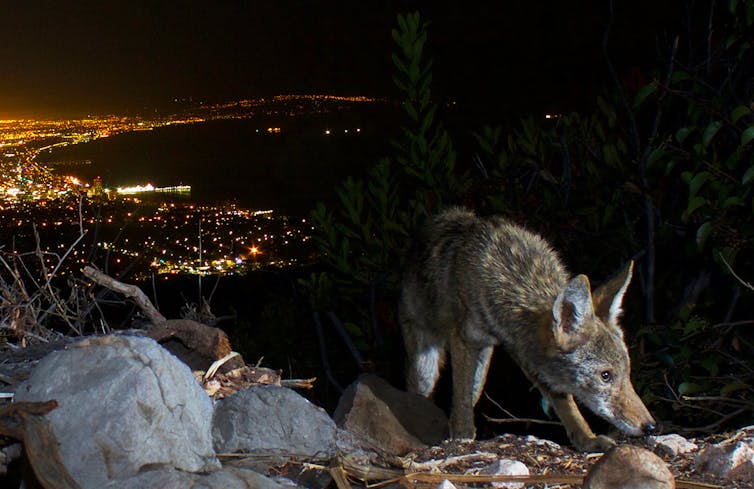
A video showing a close encounter between a hiker in Utah and a mountain lion defending her cubs went viral in 2020. The video, during which the hiker remained calm as the mountain lion followed him for several minutes, served as a visceral reminder that sharing the land with carnivores can be a complicated affair.
For conservation scientists like me, it also underscored that Americans have a fraught relationship with large carnivores like wolves, bears and mountain lions. My colleagues and I have proposed a federal policy that, when combined with other initiatives, could allow for sustainable coexistence between people and carnivores.
Major state and federal government efforts are underway to reintroduce grizzly bears to the Northern Cascades and gray wolves to Colorado. These are places where stable populations of these animals have not roamed for many decades.
More human development and, in some cases, expanding carnivore populations have led to more encounters between humans and carnivores. Coyote attacks on pets are more common, alligator bites are on the rise in some regions, and the killing of livestock by wolves has spread.
Increasing conflict with these species may unravel decades of conservation success.
From conflict to coexistence
To manage these risks, people too often default to the widespread killing of carnivores. In 2021 alone, the U.S. Department of Agriculture Wildlife Services euthanized nearly 70,000 bears, wolves, mountain lions, bobcats, coyotes and foxes.
In the same year, controversial laws passed in Idaho and Montana that substantially reduced wolf numbers because people perceive these animals as risks to livestock production and game species hunting.
Thousands of animals die every year in wildlife killing contests that often target carnivores such as coyotes and bobcats. These contests are legal in more than 40 U.S. states – under the guise that they help with wildlife management and protect livestock.
But research has found that extensive carnivore killing to reduce levels of conflict is largely ineffective, ethically tenuous and undermines their conservation.
Instead, coexisting with carnivores can benefit both carnivores and people. For example, the presence of wolves and mountain lions lowers the frequency of vehicle collisions with deer, saving money and human lives. Foxes, likewise, reduce an abundance of small mammals that carry ticks, likely reducing cases of Lyme disease in humans. Sea otters maintain healthy kelp forests that support tourism and fisheries and capture carbon.

However, the U.S. has no unified approach for making interactions with carnivores more peaceful in the spaces that people share with them. Shared spaces – like multiuse forests and grasslands, coastlines, croplands and even cities – constitute over 70% of the continental U.S. by one estimate.
These spaces will grow more crowded as human development and population growth pushes people into greater contact with carnivores. Currently, however, the management of conflicts with carnivores is piecemeal across states and municipalities. It lacks sufficient resources and polarizes the public over how to manage these animals in the future.
And mitigating conflict as a policy objective is a short-term and partial solution that doesn’t enable long-term coexistence.
Policy for enabling coexistence
A federal policy like the one my colleagues and I propose that sets goals for sharing spaces with carnivores could allow for coexistence between people and carnivores while also recognizing local priorities.
While much of wildlife management takes place at the state level, having a federal policy framework could provide resources and incentives for states and communities to adopt specific coexistence strategies relevant to the carnivores in their area.
Large-scale policy goals may include lowering conflicts, increasing human tolerance to risks and fostering self-sustaining carnivore populations.
Coexistence strategies should prioritize using proven, nonlethal deterrence methods such as properly disposing of trash or other attractants, bringing pets inside, erecting barriers to separate livestock from carnivores in risky places and times, and working with guard animals such as dogs that are trained to protect herds from carnivores. These strategies not only reduce carnivores’ impact on human property and well-being but also facilitate carnivore recovery.
Several local projects demonstrate that nonlethal deterrence programs work. In Montana’s Blackfoot watershed, natural resource managers and local residents coordinate the disposal of livestock carcasses away from ranches. This prevents grizzlies and wolves from approaching the ranches.
The city of Durango, Colorado, has supplied its residents with automatically locking bear-resistant trash containers. These containers keep bears from damaging property or scaring residents while looking for food in them. A study found that these new trash containers reduced trash-related conflicts with bears by 60%.
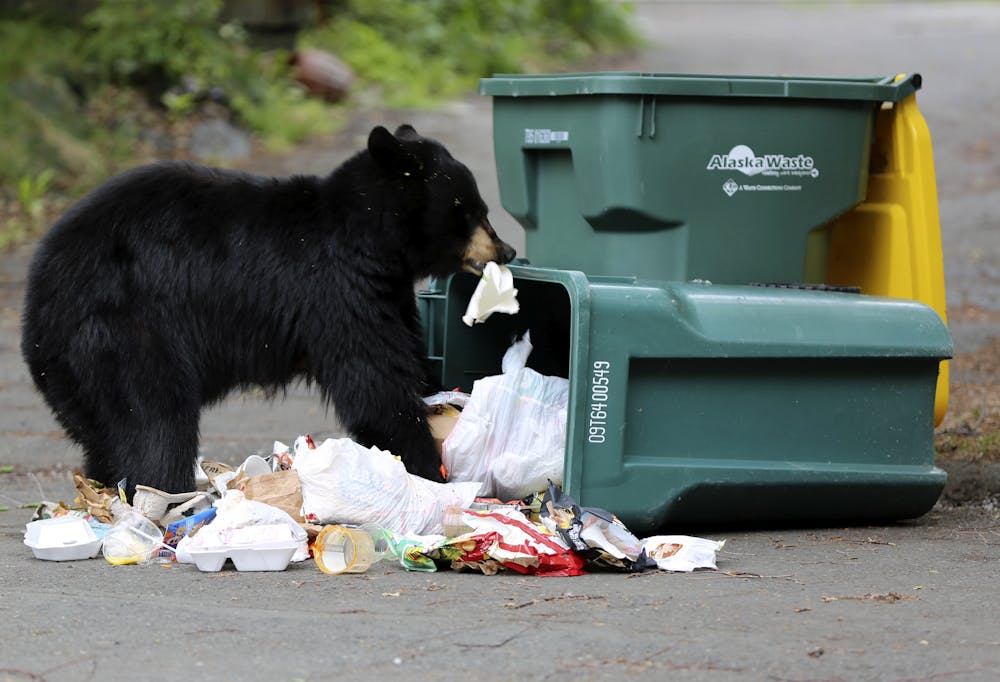
Negative encounters with carnivores still occur in these cases, but now that the communities are collectively adapting to them, they are less severe. And these carnivores are less likely to be euthanized.
Some states are also taking incremental steps toward coexistence. For example, to reduce animal suffering, New Mexico passed the Wildlife Conservation and Public Safety Act in 2021 that bans the use of a trap, snare or poison to kill an animal on public land.
In 2023, Maryland and Colorado authorized provisions that help fund provisions to prevent lethal encounters with black bears and gray wolves, respectively.
A broader coexistence framework
These local and state-level successes are encouraging, but not enough to address the issue at a broader, national scale. A federal coexistence policy could harness the insights from these individual communities’ coexistence efforts and encourage other communities to adopt these techniques.
For example, members of universities, businesses, tribes, government and nongovernmental organizations and the public could come together at regional coexistence workshops to showcase their coexistence actions, receive support for new ideas and share tools and best practices.
A federal policy could allow states and communities to try out high-risk, high-reward initiatives, like Pay for Presence programs. One such program, established in northern Mexico near the U.S. border in 2007, compensates landowners for the documented presence of jaguars on their properties.
A federal policy might also facilitate the adoption of market-based solutions like predator-friendly meats. The predator-friendly certification enables ranchers who do not use lethal predator control to sell their meat products at a premium price.
A federal coexistence policy could also support community outreach and education programs. Teaching communities about carnivore behavior can help them to avoid potentially risky situations, like jogging with a dog or leaving children unattended in mountain lion territory.
By reducing negative encounters, these programs can enhance the adoption of nonlethal coexistence strategies, foster more positive attitudes toward carnivores and share the benefits carnivores offer humans.
There are promising signs that the federal government and some states are starting to pay more attention to coexistence with carnivores. As the segment of the American public that views wildlife as deserving of rights and compassion grows, translating an ethic of coexistence into good policy could better align policy with public values.
Neil Carter, Associate Professor of Wildlife Conservation, University of Michigan
This article is republished from The Conversation under a Creative Commons license. Read the original article.
- Details
- Written by: Jay L. Zagorsky, Boston University

The space industry has changed dramatically since the Apollo program put men on the moon in the late 1960s.
Today, over 50 years later, private companies are sending tourists to the edge of space and building lunar landers. NASA is bringing together 27 countries to peacefully explore the Moon and beyond, and it is using the James Webb Space Telescope to peer back in time. Private companies are playing a much larger role in space than they ever have before, though NASA and other government interests continue to drive scientific advances.
I’m a macroeconomist who’s interested in understanding how these space-related innovations and the growing role of private industry have affected the economy. Recently, the U.S. government started tracking the space economy’s size. These data can tell us the size of the space-related industry, whether its outputs come mainly from government or private enterprise, and how they have been growing relative to the economy at large.
Companies like SpaceX, Blue Origin and Virgin Galactic made up over 80% of the U.S. space economy in 2021. The government held a 19% share of space spending, up from 16% in 2012 – mostly thanks to an increase in military spending.
Ways to measure the space economy
There are many ways to measure economic success in space.
One way is the economic impact. The U.S. Bureau of Economic Analysis, which tracks the nation’s gross domestic product and other indicators, recently began to monitor the space economy and published figures from 2012 to 2021. The Bureau of Economic Analysis calculated the impact of space using both broad and narrow definitions.
The broad definition comprises four parts: things used in space, like rocket ships; items supporting space travel, like launch pads; things getting direct input from space, like cell phone GPS chips; and space education, like planetariums and college astrophysics departments.
In 2021, the broad definition showed that total space-related sales, or what the government calls gross output, was over US$210 billion, before adjusting for inflation. That number represents about 0.5% of the whole U.S. economy’s total gross output.
The Bureau of Economic Analysis also has a narrow definition that excludes satellite television, satellite radio and space education. The difference in definitions is important because back in 2012 these three categories represented one-quarter of all space spending. However, by 2021, they only represented one-eighth of spending because many people had switched from watching satellite TV to streaming movies and shows over the internet.
Space’s share of the economy
A closer look at the data shows that space’s share of the U.S. economy is shrinking.
Using the broad definition and adjusting for inflation, the relative size of the space economy fell by about one-fifth from 2012 to 2021. This is because sales of space-related items – everything from rockets to satellite TV – have barely changed since 2015.
Using the narrow definition also shows the space economy is getting relatively smaller. From 2012 to 2021, the space sector’s inflation-adjusted gross output grew on average 3% a year, compared with 5% for the overall economy. This suggests space is not growing as fast as other economic sectors.
Space jobs
The number of jobs created by the space economy has also declined. In 2021, 360,000 people worked full- or part-time space-related jobs in the private sector, down from 372,000 about a decade earlier, according to the Bureau of Economic Analysis.
The Bureau of Economic Analysis could not track all space-related government jobs since spy agencies and parts of the military don’t provide much information. Nevertheless, it has tracked some since 2018. The military’s Space Force, which is the smallest branch, adds about 9,000 workers. NASA has about 18,000 employees, which is half of its 1960s peak.
Combining these government workers plus all private workers results in just under 400,000 people. To give some perspective, Amazon’s U.S. workforce is over twice as big and Walmart’s is four times bigger than reported U.S. space-related employment.
Growing competition in space
The U.S. has long dominated the space economy, especially in terms of government spending.
The U.S. government spent a little more than $40 billion in 2017, compared with about $3.5 billion spent by Japan and less than $2 billion by Russia.
Moreover, most of the top private space companies are based in the U.S., led by Boeing, SpaceX and Raytheon, which gives the U.S. a leg up in continuing to play a leading role with the rockets, satellites and other stuff needed to operate in space.
The U.S. also published more than twice the amount of space research in 2017 as its next nearest rival – China.
But China is catching up and has narrowed the gap in recent years as top Chinese officials decided success in space is a national priority. Their goal is reportedly to surpass the U.S. as the dominant space power by 2045. China recently put a large space station called the Tiangong into orbit and aims to put people on the Moon.
China’s not the only one joining the 21st century space race. India is expanding its space economy rapidly, with 140 space-tech startups. India launched a rocket on July 14, 2023, designed to put a lander and rover on the Moon. And the European Space Agency’s Euclid spacecraft plans to map parts of the universe to study dark matter. The ESA released the craft’s first test images at the end of July 2023.
The U.S. has a strong foothold in space. But whether it can maintain its lead – as the space race moves into a new frontier of space mining and missions to Mars – remains to be seen.
Jay L. Zagorsky, Clinical Associate Professor of Markets, Public Policy and Law, Boston University
This article is republished from The Conversation under a Creative Commons license. Read the original article.