 How to resolve AdBlock issue?
News
- Details
- Written by: Elizabeth Larson
Dogs available for adoption this week include mixes of Anatolian shepherd, Belgian malinois, border collie, Dogo Argentino, German shepherd, Great Pyrenees, mastiff and pit bull.
Dogs that are adopted from Lake County Animal Care and Control are either neutered or spayed, microchipped and, if old enough, given a rabies shot and county license before being released to their new owner. License fees do not apply to residents of the cities of Lakeport or Clearlake.
The following dogs at the Lake County Animal Care and Control shelter have been cleared for adoption.
Call Lake County Animal Care and Control at 707-263-0278 or visit the shelter online for information on visiting or adopting.

Male German shepherd puppy
This 2-month-old male German shepherd puppy has a black and tan coat.
He is in kennel No. 31a, ID No. LCAC-A-5784.

Male Great Pyrenees
This 1 and a half year old male Great Pyrenees has a white coat.
He is in kennel No. 3, ID No. LCAC-A-5469.

‘Jake’
“Jake” is a 3-year-old male Anatolian shepherd-mastiff mix with a short fawn coat.
He is in kennel No. 5, ID No. LCAC-A-5276.

‘Roasie’
“Roasie”is a 2-year-old female pit bull terrier with a short black and white coat.
She is in kennel No. 7, ID No. LCAC-A-5434.

Male border collie
This 1-year-old male border collie has a black and white coat.
He is in kennel No. 9, ID No. LCAC-A-5643.

Female German shepherd
This 2-year-old female German shepherd has a black and tan coat.
She is in kennel No. 12, ID No. LCAC-A-5488.

Female shepherd mix puppy
This 6-month-old female shepherd mix puppy has a short tricolor coat.
She is in kennel No. 15, ID No. LCAC-A-5659.

‘Zeta’
“Zeta” is a 1-year-old female pit bull terrier with a black and tan coat.
She is in kennel No. 16, ID No. LCAC-A-5427.

Female Dogo Argentino
This 3-year-old female Dogo Argentino has a short white coat.
She is in kennel No. 18, ID No. LCAC-A-5729.

Male pit bull
This 1-year-old male pit bull has a short brindle coat.
He is in kennel No. 21, ID No. LCAC-A-5616.

Male shepherd
This 2-year-old male shepherd has a black and tan coat.
He is in kennel No. 22, ID No. LCAC-A-5423.

Male pit bull terrier
This 1-year-old male pit bull terrier has a short tan coat.
He is in kennel No. 25, ID No. LCAC-A-5628.

Male shepherd
This 1 and a half year old male shepherd has a short tricolor coat.
He is in kennel No. 26, ID No. LCAC-A-5424.

Female German shepherd
This 7-year-old female German shepherd has a black and tan coat.
She is in kennel No. 30, ID No. LCAC-A-5629.

‘Nana’
“Nana” is a 2-year-old female shepherd mix with a short yellow coat.
She is in kennel No. 33, ID No. LCAC-A-5277.

‘Dory’
“Dory” is a 1-year-old female German shepherd-Belgian malinois with a black and tan coat.
She is in kennel No. 34, ID No. LCAC-A-5323.
Email Elizabeth Larson at
- Details
- Written by: Maida Lynn Chen, University of Washington
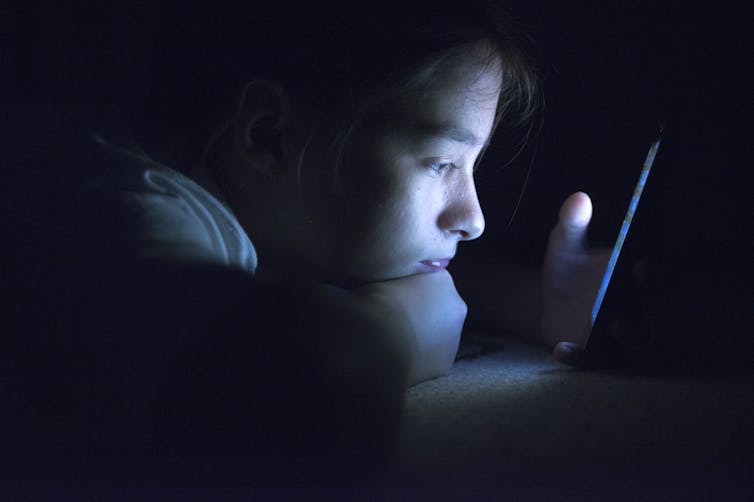
With the start of a new school year comes the inevitable battle to get kids back into a healthy bedtime routine. In many cases, this likely means resetting boundaries on screen use, especially late in the evenings. But imposing and enforcing those rules can be easier said than done.
A growing body of research is finding strong links between sleep, mental health and screen time in teens and tweens – the term for pre-adolescent children around the ages of 10 to 12. Amid an unprecedented mental health crisis in which some 42% of adolescents in the U.S. are suffering from mental health issues, teens are also getting too little sleep.
And it is a vicious cycle: Both a lack of sleep and the heightened activity involved in the consumption of social media and video games before bedtime can exacerbate or even trigger anxiety and depression that warrant intervention.
I am the lead physician of the sleep center at Seattle Children’s Hospital, where I study various pediatric sleep disorders. Our team of physicians and providers routinely observe firsthand the negative effects of excessive screen time, and particularly social media, both of which affect not only sleep, but also the physical and mental health of our patients.
Relationship between mental health and poor sleep
Research has long shown a clear relationship between mental health and sleep: Poor sleep can lead to poor mental health and vice versa. People with depression and anxiety commonly have insomnia, a condition in which people have trouble falling or staying asleep, or both, or getting refreshing sleep. That ongoing sleep deprivation further worsens the very depression and anxiety that caused the insomnia in the first place.
What’s more, insomnia and poor-quality sleep may also blunt the benefits of therapy and medication. At its worst, chronic sleep deprivation increases the risk of suicide. One study found that just one hour less sleep during the week was associated with “significantly greater odds of feeling hopeless, seriously considering suicide, suicide attempts and substance use.”
And what do young people do when lying in bed awake, frustrated and unable to sleep? You guessed it – far too often, they get on their smart devices.
Studies across the world in over 120,000 youth ages 6 to 18 who engage in any sort of social media have repeatedly shown worsened quality and decreased quantity of sleep. This is happening across the globe, not just in the U.S.
The strong pull of screens and social media
Although social media has some benefits, I believe research makes it clear that there are significantly more downsides to social media consumption than upsides.
For one, scrolling social media requires being awake, and hence, displaces sleep.
Second, the light emitted from most hand-held devices, even with a night filter, a blue light filter or both, is enough to decrease levels of melatonin, the primary hormone that signals the onset of sleep.
When melatonin release is inhibited by staring at a lit device near bedtime, falling asleep becomes more challenging. For some people, melatonin supplements can help with inducing sleep. However, supplements cannot overcome the highly stimulating powers of internet content and light.
Third, and perhaps most problematic, is the content that young people are consuming. Taking in fast-paced imagery like that found on TikTok or video games before bedtime is disruptive because the brain and body are highly stimulated by these exposures, and require time to settle back into a state that is conducive to sleep.
But it’s not just the speed of the imagery flitting by. Media content can disrupt both nondream and dream sleep. Have you ever fallen asleep watching a disturbing thriller or a horror movie and had scenes from that movie enter your dreams? And it’s not just dreams that are affected – the brain also may not sustain deep nondream sleep since it is still processing those fast-paced images. These intrusions in your sleep can be very disruptive to overall quality and quantity of sleep.
Worst of all, social media can contribute to FOMO – short for the fear of missing out. This can occur when a teen becomes enmeshed with an influencer or role model through posts, reels and stories, all of which are cultivated to reflect unrealistic perfection, not reality.
In addition, research has found a clear link between social media consumption and poor body image in kids and teens, as well as overall worse mental health and worsened sleep problems.
These issues are troubling enough that in May 2023, the surgeon general issued a statement warning of the dangers of social media and encouraging caregivers, teachers and policymakers to work together to create a safer online environment.
A state of chronic sleep deprivation
Making sleep a high priority is a cornerstone of overall health and mental health, and it is also key to staying alert and attentive during the school day.
Multiple professional medical and scientific organizations have recommended that teens sleep eight to 10 hours per night. But only 1 in 5 high schoolers come close to that.
Some of this is due to school start times that don’t align with the natural rhythms of most teens, so they don’t fall asleep early enough on weekdays.
Teens who don’t get enough sleep may suffer from weak academic performance, a lack of organizational skills and mediocre decision-making. Teens don’t have fully formed frontal lobes, the part of the brain that controls impulse and judgment. Sleep deprivation further impairs those behaviors. This, in turn, may lead to poor decisions regarding drug and alcohol use, driving under the influence, sexual promiscuity, fighting or the use of weapons, and more. And these behaviors can start in middle school, if not earlier.
In addition, sleep deprivation is directly linked with high blood pressure, heart attacks and the development of diabetes in adulthood. Lack of adequate sleep is also linked with childhood and adolescent obesity. Undesired weight gain occurs with sleep deprivation though a series of complex mechanisms, including shifts in metabolism, a more sedentary lifestyle and poor dietary choices.
A way forward
So what can be done to pry teens and tweens away from their screens? Keeping goals realistic is key, and sometimes it is helpful to start by focusing on just one goal.
Parents need to prioritize sleep for the entire household and model good screen time habits. Caregivers too often send mixed messages around screen time use, given their own bad habits.
Ultimately, parents and caregivers need to recognize the warning signs of sleep deprivation and progressive mood and anxiety disorders. Seek professional help for disordered sleep, troubled mental health or both, keeping in mind that finding mental health professionals can take time.
When it comes to digital media, the American Academy of Pediatrics recommends avoiding screens for at least an hour before going to bed and not sleeping with devices in the bedroom.
For older kids who have homework to do online, avoiding screen use right before bedtime can feel next to impossible. What’s more, this rule tends to lead to covert use of electronic devices.
So if one hour before bedtime is too stringent, then start by avoiding media for even 15 or 30 minutes prior to going to sleep. Or if some media is needed as a compromise, try watching something passive, like TV, rather than engaging in social media apps like Snapchat.
Remember that not everything has to be done all at once – incremental changes can make a big difference over time.
Maida Lynn Chen, Professor of Pediatrics, School of Medicine, University of Washington
This article is republished from The Conversation under a Creative Commons license. Read the original article.
- Details
- Written by: NATIONAL AERONAUTICS AND SPACE ADMINISTRATION
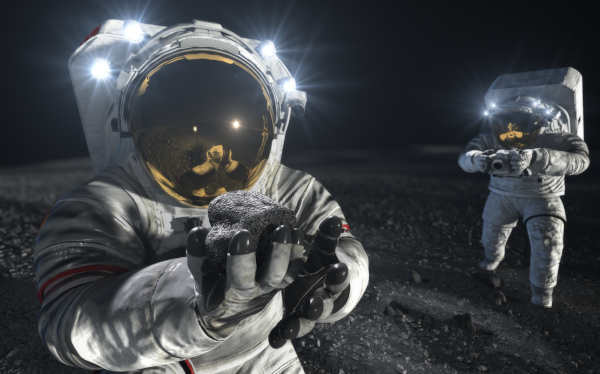
NASA has selected the geology team that will develop the surface science plan for the first crewed lunar landing mission in more than 50 years. NASA’s Artemis III mission will land astronauts, including the first woman to land on the Moon, near the lunar South Pole to advance scientific discovery and pave the way for long-term lunar exploration.
“Science is one of the pillars of Artemis,” said Dr. Nicky Fox, NASA Science Associate Administrator. “This team will be responsible for leading the geology planning for humanity’s first return to the lunar surface in more than 50 years, ensuring that we maximize the science return of Artemis and grow in our understanding of our nearest celestial neighbor.”
The Artemis III Geology Team, led by principal investigator Dr. Brett Denevi of the Johns Hopkins University Applied Physics Laboratory in Laurel, Maryland, will work with the agency to determine the mission’s geological science objectives and design the geology surface campaign that the Artemis astronauts will carry out on the Moon during this historic mission. These objectives will be defined in accordance with the established Artemis science priorities.
“Selecting this team marks an important step in our efforts to optimize the science return of Artemis III. This team of well-respected lunar scientists has demonstrated experience with science operations, sample analysis, and operational flexibility, all of which is critical for the successful incorporation of science during Artemis III,” said Dr. Joel Kearns, deputy associate administrator for exploration in NASA’s Science Mission Directorate at NASA Headquarters in Washington. “With the establishment of the Artemis III Geology Team, we are ensuring that NASA will build a strong lunar science program.”
The other co-investigators on the Artemis III Geology Team are:
• Dr. Lauren Edgar (deputy principal investigator), U.S. Geological Survey in Reston, Virginia;
• Dr. Bradley Jolliff, Washington University in St. Louis, Missouri;
• Dr. Caleb Fassett, Johns Hopkins University Applied Physics Laboratory in Laurel, Maryland;
• Dr. Dana Hurley, Johns Hopkins University Applied Physics Laboratory in Laurel, Maryland;
• Dr. Gordon Osinski, University of Western Ontario in London;
• Dr. Jennifer Heldmann, NASA’s Ames Research Center in Silicon Valley, California;
• Dr. Jose Hurtado, University of Texas at El Paso;
• Dr. Juliane Gross, Rutgers University in New Brunswick, New Jersey;
• Dr. Katherine Joy, University of Manchester in the United Kingdom;
• Dr. Mark Robinson, Arizona State University in Tempe;
• Dr. Yang Liu, NASA’s Jet Propulsion Laboratory in Southern California.
The Geology Team’s focus will be to plan the Artemis III astronauts’ science activities during their moonwalks, which will include field geology traverses, observations, and the collection of lunar samples, imagery, and scientific measurements.
The team will also support the real-time documentation and initial assessment of scientific data during astronaut lunar operations. Members will then evaluate the data returned by the mission, including preliminary examination and cataloguing of the first lunar samples collected by NASA since 1972.
“The Artemis III Geology Team will have the unique opportunity to analyze the first-ever samples from the lunar south pole region, helping us not only to unlock new information about the formation of our Solar System, but also with planning for future Artemis missions and establishing a long-term lunar presence,” said Jim Free, associate administrator for NASA’s Exploration Systems Mission Directorate.
The collection of samples and data from this region, which contains some of the oldest parts of the Moon, estimated to be at least 3.85 billion years old, will help scientists better understand fundamental planetary processes that operate across the solar system and beyond.
The resulting analysis from the geology team’s activities could also help yield important information about the depth, distribution, and composition of ice at the Moon’s South Pole.
This information is valuable from both a scientific and a resource perspective because oxygen and hydrogen can be extracted from lunar ice to be used for life support systems and fuel.
The team, which was chosen through a dual-anonymous peer review process, will have a budget of $5.1 million to lead the geology for Artemis III.
The members of this geology team are part of the broader Artemis Science Team and will work in coordination with Artemis III Project Scientist, Dr. Noah Petro, and the NASA Artemis Internal Science Team, as well as participating scientists, and deployed payload teams that will be selected from future or ongoing competitive solicitations.
Through Artemis, NASA will land the first woman and first person of color on the Moon, establishing a long-term, sustainable lunar presence to explore more of the lunar surface than ever before and prepare for future astronaut missions to Mars.
For more information on Artemis, visit https://www.nasa.gov/artemisprogram/.
- Details
- Written by: Elizabeth Larson
The crash occurred on Highway 29 near Diener Drive outside of Lower Lake just after noon, according to the California Highway Patrol’s Clear Lake Area office.
CHP Officer Efrain Cortez told Lake County News that a 52-year-old Kelseyville man died as a result of the wreck.
Reports from the scene indicated that a tractor trailer and a pickup truck collided, leaving one person trapped.
Shortly before 12:30 p.m., radio reports confirmed that one person had died and the second person involved was uninjured.
Cortez said he expected more information would become available over the weekend.
Email Elizabeth Larson at