 How to resolve AdBlock issue?
News
- Details
- Written by: LAKE COUNTY NEWS REPORTS
The meeting will begin at 4 p.m. at the Moose Lodge, located at 15900 Moose Lodge Lane in Clearlake Oaks.
The meeting will be available via Zoom. The meeting ID is 986 3245 2684, pass code is 666827.
This month’s guest speaker is Trevor Oppezzo from Caltrans District 1.
Caltrans is developing the Caltrans Complete Streets proposal, a project focused along Highway 20 in the areas around Upper Lake, Nice, Glenhaven and Clearlake Oaks.
Oppezzo will discuss the proposed improvements as well as hear input at the meeting.
Also on the agenda is an update on Spring Valley covering items including illegal cannabis cultivation, FireWise Community safety and Spring Valley Lake recovery.
Standing agenda items for the meeting include commercial cannabis cultivation projects, the cannabis ordinance task force update, an update from Northshore Fire Protection District, a report from Supervisor EJ Crandell, new business and announcements.
The group’s next meeting will take place on Oct. 4.
ERTH’s members are Denise Loustalot, Jim Burton, Tony Morris and Pamela Kicenski.
For more information visit the group’s Facebook page.
- Details
- Written by: LAKE COUNTY LIBRARY

MIDDLETOWN, Calif. — Middletown Libraries across America connected this summer through a unique pen pal program.
In late May, Youth Librarian Mary Geers from Midpointe Library in Middletown, Ohio, contacted the Middletown branch of the Lake County Library.
She proposed connecting young patrons from Middletown libraries across the USA through a pen pal program during Midpointe’s summer reading program “All Together Now.”
Sara Coel and Sheryl Ison at Lake County’s Middletown branch worked with Greers on the initiative, which was a complete success.
Lake County Middletown’s young patrons received 65 letters in return from Middletown, Ohio, and Middletown, New Jersey. The libraries hope to continue the pen pal program during the holiday season.
Unique and creative children’s programming can be found all year round at all four Lake County Library branches, including crafts, “Read to a Dog,” Lego Club and more.
Sign up for library newsletters, follow the library on social media, or watch the events calendar on the library website to join upcoming events.
Visit the Lake County Library at https://library.lakecountyca.gov, on Facebook at https://www.facebook.com/LakeCountyLibrary, Twitter @LakeCoLibrary, Instagram @lakecountylibrary, YouTube @lakecountycalibrary and TikTok @lakecountycalibrary.
To contact the Middletown library by phone, call 707-341-7971.
- Details
- Written by: Steven Bender, Texas A&M University
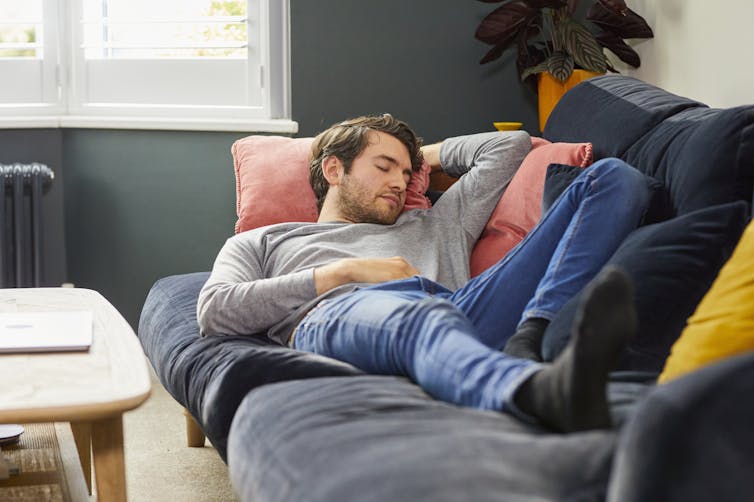
Napping during the day is an ancient custom that is practiced worldwide.
While some people view napping as a luxurious indulgence, others see it as a way to maintain alertness and well-being. But napping can come with drawbacks as well as benefits.
As an orofacial pain specialist, I have extensive education in sleep medicine and how sleep impacts wellness, due mostly to the relationship between sleep and painful conditions such as headaches and facial pain. My training involved all aspects of sleep, especially sleep breathing disorders, insomnia and sleep-related movement disorders.
As such, I’m aware of the complex nature of napping, and why a short nap – that is, a nap during the daytime that lasts from 20 to 30 minutes – may be beneficial in myriad ways.
An abundance of health benefits
Research shows that there are many benefits to napping. Short naps can boost mental functioning and memory, as well as improve alertness, attention and reaction time.
Short naps are also linked to increased productivity and creativity. Because napping seems to improve creative thinking, some companies have attempted to harness this by introducing napping rooms into the workplace.
What’s more, it appears the brain uses nap time to process information gathered throughout the day, which appears to enhance problem-solving abilities. One small study revealed that people who took short naps were less frustrated and impulsive, which resulted in better focus and efficiency when performing work-related tasks. Napping may even lead to an improved ability to learn new motor skills, such as a golf swing or the playing of a musical instrument. This is because these memories or skills become consolidated in the brain during sleep, whether at night or while napping.
Napping can also reduce stress. One study found that naps of approximately 20 minutes improved the overall mood of participants. However, longer naps lasting more than 30 minutes are not typically associated with improved mood and increased feelings of well-being.
Short naps may also be associated with a reduced risk of cardiovascular diseases. If we are awake more than we should be, we tend to have a buildup of the “fight or flight” chemicals in our bodies. Studies show that more consistent sleep will help lower these chemicals, resulting in a normalization of blood pressure and heart rates. Napping appears to help this process for some people.
But just as in nighttime sleep, some people may have trouble drifting off for a nap, especially when they have limited time. Progressive muscle relaxation techniques have been shown to be beneficial for both nighttime sleep and napping. Other nonspecific relaxation techniques, like listening to relaxing music, appear to also be beneficial for falling asleep. Interestingly, many people overestimate their time awake when trying to sleep and underestimate the time they actually spent sleeping.
Napping can have drawbacks
One condition associated with napping longer than 30 minutes is sleep inertia – the grogginess and disorientation that people sometime experience after waking from a longer nap.
Usually, the longer the nap, the more sleep inertia there is to overcome. This can impair cognitive function from several minutes up to half an hour. In many cases, these effects can be minimized by consuming caffeine directly after the nap.
But it is important to note that caffeine is not a substitute for sleep. Caffeine acts to temporarily block the action of a chemical known as adenosine, a sleep-promoting agent that builds up during waking hours. If you are habitually dependent on caffeine consumption to keep you awake and alert, it may suggest that there is an underlying sleep disorder such as insomnia or sleep apnea, in which a person temporarily stops breathing during sleep.
Long or late afternoon naps can also interfere with nighttime sleep, either by leading to difficulties falling asleep or staying asleep during the night. This disruption of the regular sleep-wake cycle can result in overall sleep deprivation, which can have numerous negative health effects.
What’s more, for those age 60 and up, longer naps – beyond 30 minutes – may increase the risk for cardiovascular problems. Researchers found that older adults taking naps for more than one hour per day have a higher incidence of increased blood pressure, high blood sugar, excess body fat around the waist, and abnormal cholesterol or triglyceride levels, sometimes known as metabolic syndrome.
The reason for this phenomenon is mostly unknown. Older individuals tend to nap more frequently than younger adults partly due to more disturbed sleep during the night. This could be related to more pain or other health factors that will interfere with sleep, sleep altering medications and altered sleep rhythms seen with aging.
Best practices
So, to maximize benefits while reducing risks, here are some tips: Keep naps short to avoid sleep inertia and nighttime sleep disruptions. Nap in the early afternoon, as that aligns with a decrease in energy levels after lunch and with the body’s natural circadian dip, which is an increase in sleepiness similar to what occurs at dusk. Avoid late afternoon naps, finish naps at least four to six hours before bedtime, and create the right environment by napping in a quiet, comfortable and dimly lit space.
If you’re struggling with daytime sleepiness, it’s best to address the root cause rather than relying solely on napping. Reducing caffeine consumption, maintaining a regular sleep schedule and getting adequate nighttime sleep are essential steps to reduce daytime sleepiness.
Ultimately, napping should complement a healthy sleep routine, not serve as a substitute for sufficient nighttime rest. A balanced approach to napping can contribute to a more energized, focused and resilient life.
Steven Bender, Clinical Associate Professor, Texas A&M University
This article is republished from The Conversation under a Creative Commons license. Read the original article.
- Details
- Written by: Institute for Health Metrics and Evaluation
In a new study covering three decades of global anemia data (1990–2021), a complex picture emerges of how several key factors play into the divergence in success stories among men, women and children.
Published in The Lancet Haematology, the study was conducted by the Institute for Health Metrics and Evaluation, or IHME, based in Seattle, and its Global Burden of Disease anemia collaborators.
“From this 30-year study, we know the global picture around anemia has improved, but there are still wide disparities when you narrow the focus on geography, gender, and age,” said Dr. Nick Kassebaum, senior author of the study, head of IHME’s Neonatal and Child Health team, and Professor in Anesthesiology at the University of Washington. “We modeled 37 underlying causes for anemia. It’s very important for clinicians to treat these causes in parallel to the anemia itself. We hope they use these data to design more comprehensive intervention and treatment plans, especially for the most vulnerable—women of reproductive age, children, and the elderly.”
Globally, in 2021, 31.2% of women had anemia compared with 17.5% of men. The gender difference was more pronounced during the reproductive years, ages 15–49. In this age group, anemia prevalence in women was 33.7% versus 11.3% in men.
“Over the years, there’s been a lot of focus on reducing anemia globally, but as a group, women and children have shown the least progress,” said Will Gardner, researcher at IHME and lead author of the paper. “This is a nuanced situation that revolves around access to nutrition, socioeconomic status, unmet need for contraception, and the ability to identify and treat underlying causes of anemia. Our data show how one group — adult men — has fared much better than two other groups, women (ages 15 to 49) and children younger than five years. This speaks to the need for a shift to multisectoral approaches and improved cultural awareness to make sure women and children are not left behind.”
Causes of anemia and impact
The leading cause of anemia in 2021 was dietary iron deficiency, constituting 66.2% of total anemia cases, with 825 million women and 444 million men affected globally. Inadequate intake of iron may have been the single most common cause of anemia, but many other conditions are major drivers of anemia.
The study found that gynecological disorders and maternal hemorrhage were important contributors to anemia burden among women of reproductive age.
For children younger than 5 years, the main cause of anemia was dietary iron deficiency, but hemoglobinopathies, other infectious diseases, HIV/AIDS, and malaria were also important contributors in geographic locations where these diseases are prevalent.
“Anemia plays out differently depending on the group that’s struggling with the condition. For children, anemia can impact brain development and cognition, so early treatment and management are crucial. This might mean accessing high-quality, nutrient-rich foods and/or receiving treatment for parasitic infections and malaria,” said Dr. Theresa McHugh, scientific writer at IHME who focuses on neonatal and child health. “For many young women and girls, there’s an education gap about blood loss during menstruation, inadequate options for effectively managing menstrual problems in those who have them, and not enough knowledge about how to manage and/or reverse anemia when it occurs. We know anemia can impact mental health because the associated weakness and fatigue can interfere with desired activities.”
Previous studies have shown that anemia is associated with increased rates of anxiety and depression and higher rates of preterm labor, postpartum hemorrhage, low birthweight, short gestation, stillbirth, and infections for both child and mother.
Regions and risk
The research shows sub-Saharan Africa and South Asia are currently facing the greatest burden. In 2021, Western sub-Saharan Africa (47.4%), South Asia (35.7%), and Central sub-Saharan Africa (35.7%) had the highest anemia prevalence. The regions with the lowest anemia are Australasia (5.7%), Western Europe (6%), and North America (6.8%).
Countries with highest anemia: Mali, Zambia, Togo (each had >50% anemia burden).
Countries with lowest anemia: Iceland, Norway, Monaco (each had <5% anemia burden).
Regional variation in disease distribution was also reflected in cause-specific anemia burden.
For example, HIV/AIDS was the second largest contributor to anemia YLDs in Southern sub-Saharan Africa. Anemia due to malaria was most prominent in the Central, Eastern, and Western sub-Saharan Africa regions.