 How to resolve AdBlock issue?
News
- Details
- Written by: Elizabeth Larson
The National Weather Service is predicting moderate heat risk for much of Lake County on Thursday and into the weekend.
Conditions are expected to be unusually warm and dry over the coming days, with high temperatures expected to challenge records over numerous locations in the western United States, the agency said.
Parts of the Bay Area are under a heat advisory until Thursday night, according to the forecast.
In Lake County, temperatures are expected to top 90 degrees on Thursday, before dropping into the 80s on Friday and back into the 70s for much of next week, before hitting the 60s by midweek.
Nighttime temperatures throughout the week will range from the high 40s to mid 50s.
The National Weather Service said there are chances of rain in Lake County on Saturday night and Sunday morning.
Conditions are then expected to clear on Monday, before chances of rain return on Tuesday.
Email Elizabeth Larson at
- Details
- Written by: LAKE COUNTY NEWS REPORTS
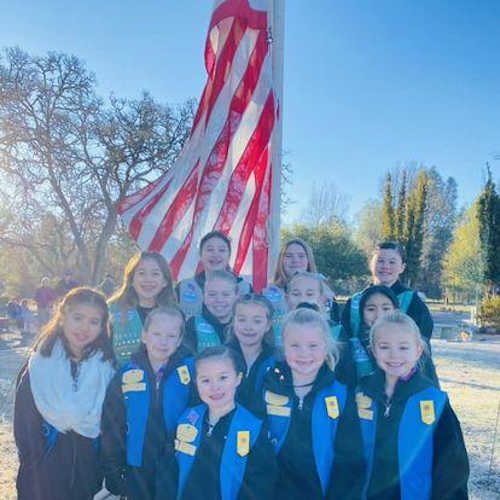
KELSEYVILLE, Calif. — The National nonprofit Wreaths Across America announced that the Kelseyville Cemetery has once again joined in the mission to “Remember, Honor, Teach,” as an official location for 2023.
Wreaths Across America, or WAA, started as a simple gesture of thanks that has grown into a national movement of dedicated volunteers and communities coming together to not only remember the nation’s fallen and honor their service, but to teach the next generation about the sacrifices made for us to live freely.
This year, there will be more than 3,100 participating locations placing Veterans’ wreaths on National Wreaths Across America Day — at 9 a.m. Saturday, Dec. 16 — with more than two million volunteers coming together.
The goal for The Kelseyville Cemetery is to raise enough funds to place 515 sponsored veterans’ wreaths on the headstones of all the local heroes laid to rest there, to ensure that the individuals who served to protect the freedoms of our country never be forgotten and to bring the community together in patriotic commemoration.
Allison Panella, event coordinator stated “We are grateful for the opportunity to support the Wreaths Across America initiative at Kelseyville Cemetery where we take pride in honoring our Veterans and teaching our youth the value and cost of our freedom”
Girl Scout Troops 10145 and 10490 have been working diligently all year long to raise sponsorships for the wreaths.
Both Girl Scout Troops 10145 and 10490 along with Big Valley 4-H will be facilitating the brief ceremony and placing wreaths on veterans graves.
They invite the community to join them from 9 to 10 a.m. Saturday, Dec. 16, to remember and honor our local heroes. The ceremony is free and open to the public.
Those interested in volunteering for Wreaths Across America or sponsoring a wreath for The Kelseyville Cemetery, are invited to visit here.
- Details
- Written by: LAKE COUNTY NEWS REPORTS

Teenage drivers are at greater risk of being involved in a fatal car crash due to distractions and inexperience behind the wheel.
To help teens stay safe behind the wheel, the California Highway Patrol is offering the Start Smart teen driver safety education class to help address the dangers typically encountered by this age group.
Between federal fiscal years 2020 and 2022, there was a combined total of 21,308 fatal and injury crashes within CHP jurisdiction involving at least one teen driver between the ages of 15 and 19.
Unfortunately, fatal and injury crashes increased by nearly 10% over that time, which indicates it is essential to improve the education of teenage drivers and their parents/guardians to help enhance road safety.
Start Smart is a free two-hour class aimed at informing new drivers of the responsibilities that accompany the privilege of being a licensed California driver.
Parents or guardians are required to attend with their teenage driver as they participate in this class, which is conducted by public information officers at local CHP Area offices.
Completion of this course may lower the cost of a young driver’s vehicle insurance.
“Every decision a teen driver makes behind the wheel has the potential to impact their future and the lives of those around them,” said CHP Commissioner Sean Duryee. “The Start Smart program has been instrumental in educating new drivers and their parents/guardians in an effort to save lives.”
Parents and teenagers can register for a Start Smart class by contacting their local CHP Area office.
More information about the program and California’s provisional licensing law can be found on the free CHP Start Smart app, which is available for both iOS and Android.
This mobile app includes access to the California Driver Handbook and a trip logger to track driving time as teens prepare to obtain their driver’s license.
Funding for this program was provided by a grant from the California Office of Traffic Safety, through the National Highway Traffic Safety Administration.
- Details
- Written by: Kyra Clark-Wolf, University of Colorado Boulder and Philip Higuera, University of Montana
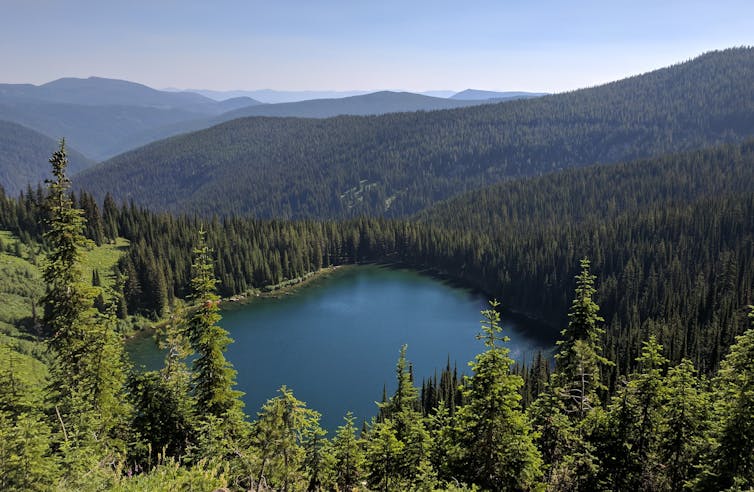
Strong winds blew across mountain slopes after a record-setting warm, dry summer. Small fires began to blow up into huge conflagrations. Towns in crisis scrambled to escape as fires bore down.
This could describe any number of recent events, in places as disparate as Colorado, California, Canada and Hawaii. But this fire disaster happened over 110 years ago in the Northern Rocky Mountains of Idaho and Montana.
The “Big Burn” of 1910 still holds the record for the largest fire season in the Northern Rockies. Hundreds of fires burned over 3 million acres – roughly the size of Connecticut – most in just two days. The fires destroyed towns, killed 86 people and galvanized public policies committed to putting out every fire.
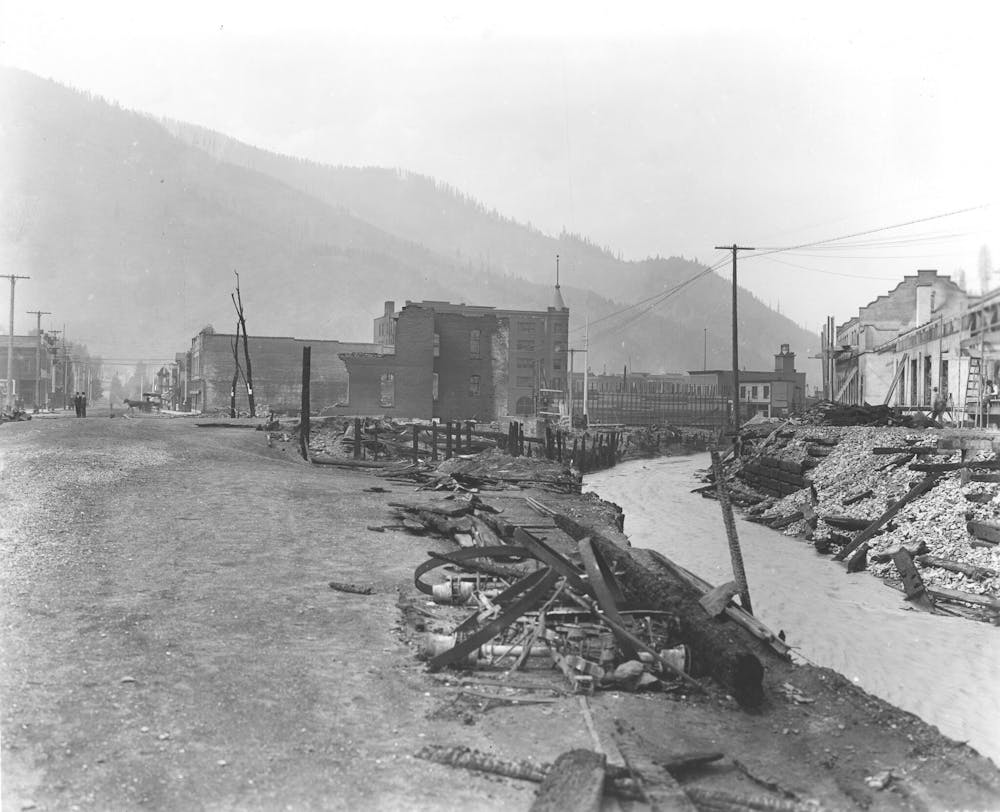
Today, as the climate warms, fire seasons like in 1910 are becoming more likely. The 2020 fire season was an example. But are extreme fire seasons like these really that unusual in the context of history? And, when fire activity begins to surpass anything experienced in thousands of years – as research suggests is happening in the Southern Rockies – what will happen to the forests?
As paleoecologists, we study how and why ecosystems changed in the past. In a multiyear project, highlighted in two new publications, we tracked how often forest fires occurred in high-elevation forests in the Rocky Mountains over the past 2,500 years, how those fires varied with the climate and how they affected ecosystems. This long view provides both hopeful and concerning lessons for making sense of today’s extreme fire events and impacts on forests.
Lakes record history going back millennia
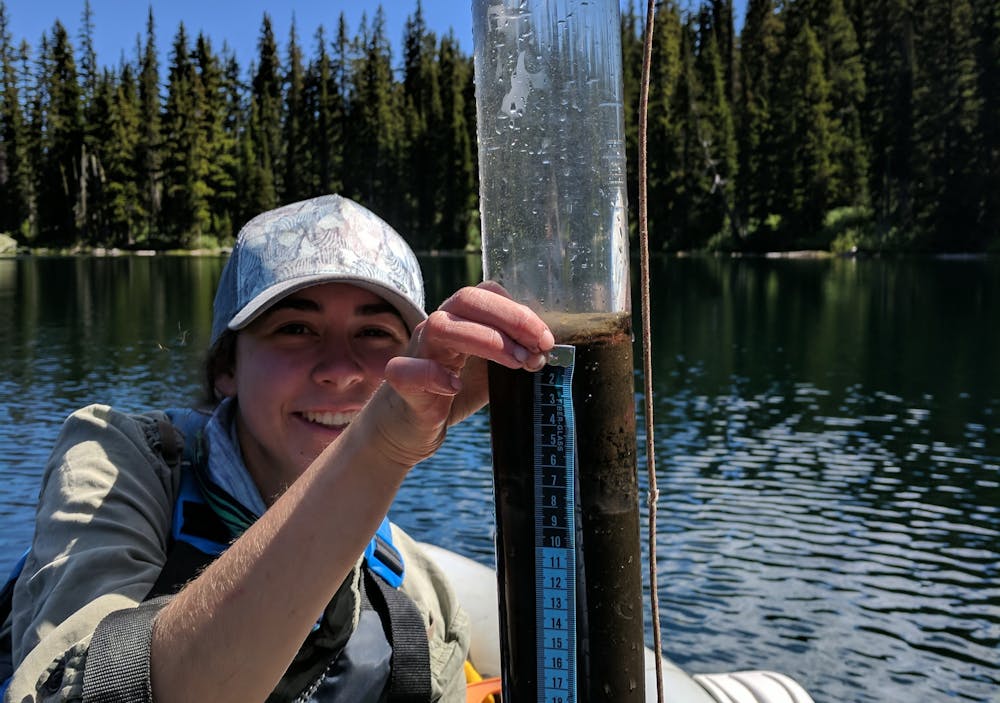
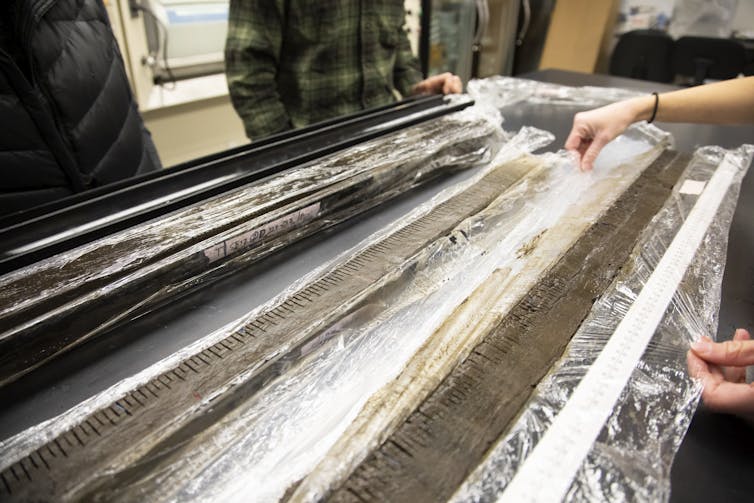
When a high-elevation forest burns, fires consume tree needles and small branches, killing most trees and lofting charcoal in the air. Some of that charcoal lands on lakes and sinks to the bottom, where it is preserved in layers as sediment accumulates.
After the fire, trees regrow and also leave evidence of their existence in the form of pollen grains that fall on the lake and sink to the bottom.
By extracting a tube of those lake sediments, like a straw pushed into a layer cake from above, we were able to measure the amounts of charcoal and pollen in each layer and reconstruct the history of fire and forest recovery around a dozen lakes across the footprint of the 1910 fires.
Lessons from Rockies’ long history with fire
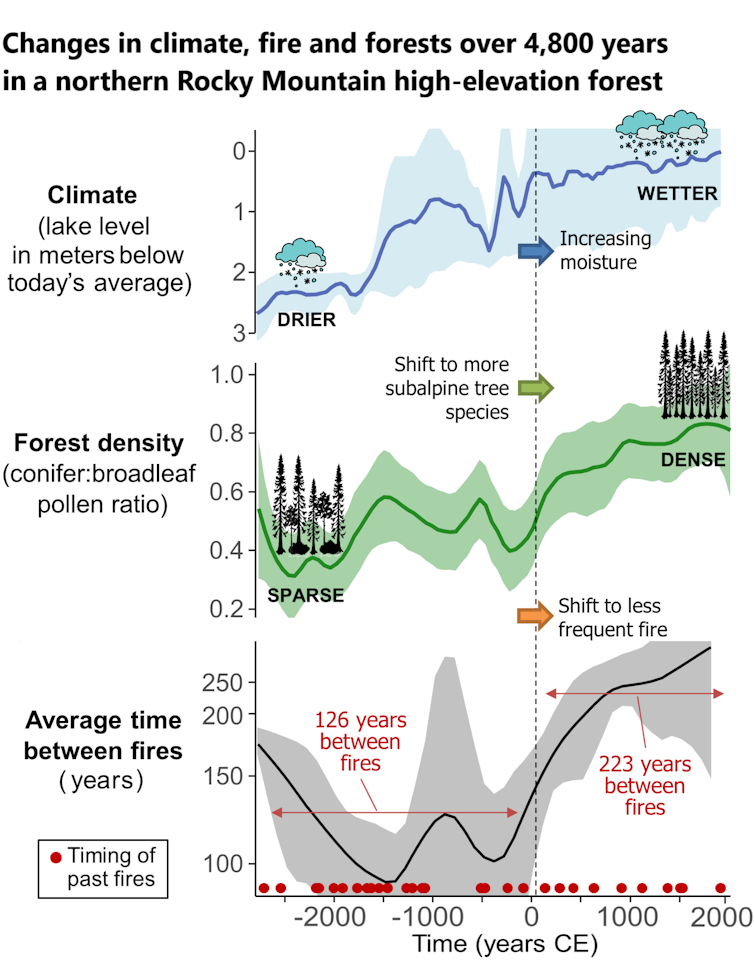
The lake sediments revealed that high-elevation, or subalpine, forests in the Northern Rockies in Montana and Idaho have consistently bounced back after fires, even during periods of drier climate and more frequent burning than we saw in the 20th century.
High-elevation forests only burn about once every 100 to 250 or more years on average. We found that the amount of burning in subalpine forests of the Northern Rockies over the 20th and 21st centuries remained within the bounds of what those forests experienced over the previous 2,500 years. Even today, the Northern Rockies show resilience to wildfires, including early signs of recovery after extensive fires in 2017.
But similar research in high-elevation forests of the Southern Rockies in Colorado and Wyoming tells a different story.
The record-setting 2020 fire season, with three of Colorado’s largest fires, helped push the rate of burning in high-elevation forests in Colorado and Wyoming into uncharted territory relative to the past 2,000 years.
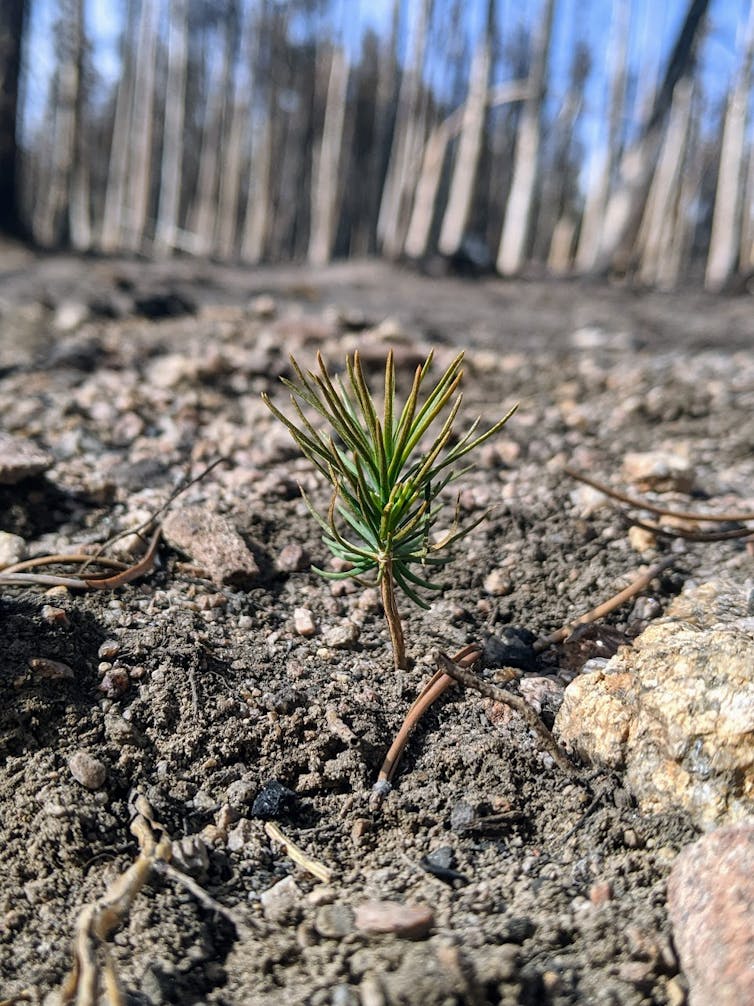
Climate change is also having bigger impacts on whether and how forests recover after wildfires in warmer, drier regions of the West, including the Southern Rockies, the Southwest and California. When fires are followed by especially warm, dry summers, seedlings can’t establish and forests struggle to regenerate. In some places, shrubby or grassy vegetation replace trees altogether.
Changes happening now in the Southern Rockies could serve as an early warning for what to expect further down the road in the Northern Rockies.
Warmer climate, greater fire activity, higher risks
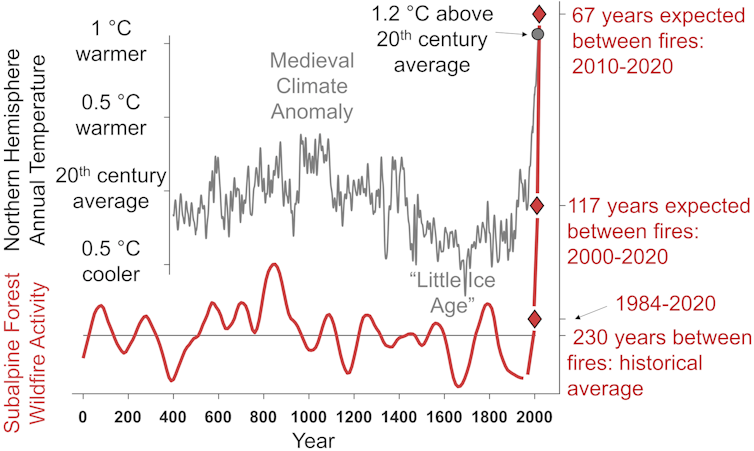
Looking back thousands of years, it’s hard to ignore the consistent links between the climate and the prevalence of wildfires.
Warmer, drier springs and summers load the dice to make extensive fire seasons more likely. This was the case in 1910 in the Northern Rockies and in 2020 in the Southern Rockies.
When, where and how climate change will push the rate of burning in the rest of the Rockies into uncharted territory is harder to anticipate. The difference between 1910 and 2020 was that 1910 was followed by decades with low fire activity, whereas 2020 was part of an overall trend of increasing fire activity linked with global warming. Just one fire like 1910’s Big Burn in the coming decades, in the context of 21st-century fire activity, would push the Northern Rockies beyond any known records.
Lessons from the long view
The clock is ticking.
Extreme wildfires will become more and more likely as the climate warms, and it will be harder for forests to recover. Human activity is also raising the risk of fires starting.
The Big Burn of 1910 left a lasting impression because of the devastating impacts on lives and homes and, as in the 2020 fire season and many other recent fire disasters, because of the role humans played in igniting them.
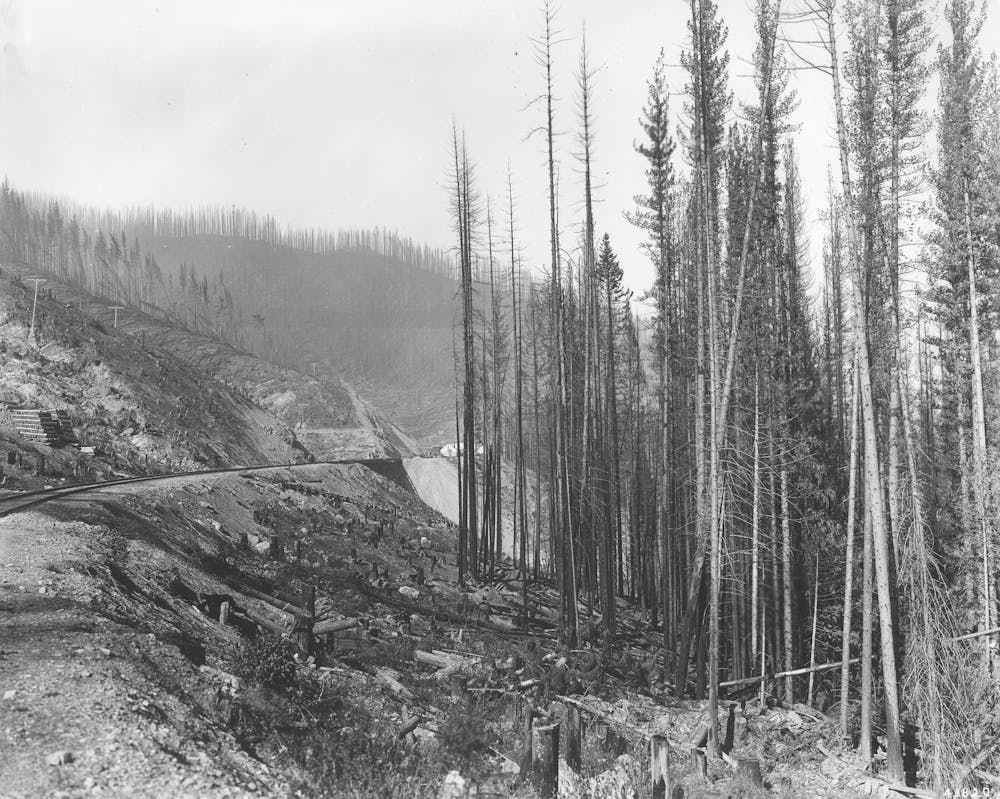
Accidental ignitions – from downed power lines, escaped campfires, dragging chains, railroads – expand when and where fires occur, and they lead to the majority of homes lost to fires. The fire that destroyed Lahaina, Hawaii, is the most recent example.
So what can we do?
Curbing greenhouse gas emissions from vehicles, power plants and other sources can help slow warming and the impacts of climate change on wildfires, ecosystems and communities. Forest thinning and prescribed burns can alter how forests burn, protecting humans and minimizing the most severe ecological impacts.
Reframing the challenge of living with wildfire – building with fire-resistant materials, reducing accidental ignitions and increasing preparedness for extreme events – can help minimize damage while maintaining the critical role that fires have played in forests across the Rocky Mountains for millennia.
Kyra Clark-Wolf, Postdoctoral Associate in Ecology, University of Colorado Boulder and Philip Higuera, Professor of Fire Ecology, University of Montana
This article is republished from The Conversation under a Creative Commons license. Read the original article.