 How to resolve AdBlock issue?
News
- Details
- Written by: Rachel Gur-Arie, Arizona State University
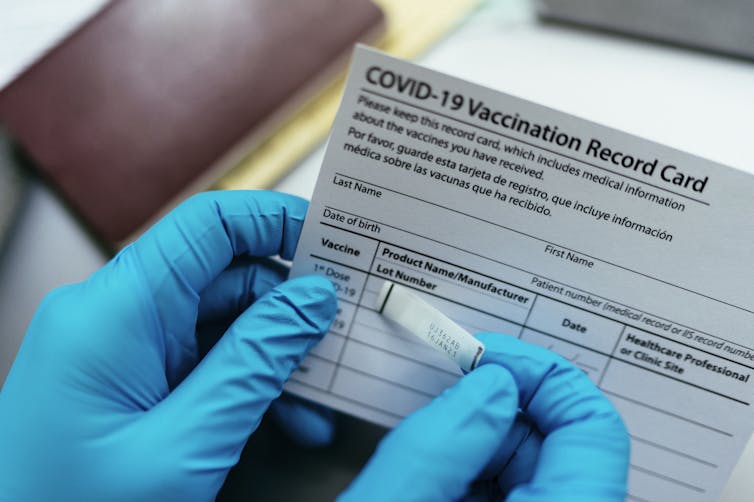
Ending pandemics is a social decision, not scientific. Governments and organizations rely on social, cultural and political considerations to decide when to officially declare the end of a pandemic. Ideally, leaders try to minimize the social, economic and public health burden of removing emergency restrictions while maximizing potential benefits.
Vaccine policy is a particularly complicated part of pandemic decision-making, involving a variety of other complex and often contradicting interests and considerations. Although COVID-19 vaccines have saved millions of lives in the U.S., vaccine policymaking throughout the pandemic was often reactive and politicized.
A late November 2022 Kaiser Family Foundation poll found that one-third of U.S. parents believed they should be able to decide not to vaccinate their children at all. The World Health Organization and the United Nations Children’s Fund reported that between 2019 and 2021, global childhood vaccination experienced its largest drop in the past 30 years.
The Biden administration formally removed federal COVID-19 vaccination requirements for federal employees and international travelers in May 2023. Soon after, the U.S. government officially ended the COVID-19 public health emergency. But COVID-19’s burden on health systems continues globally.
I am a public health ethicist who has spent most of my academic career thinking about the ethics of vaccine policies. For as long as they’ve been around, vaccines have been a classic case study in public health and bioethics. Vaccines highlight the tensions between personal autonomy and public good, and they show how the decision of an individual can have populationwide consequences.
COVID-19 is here to stay. Reflecting on the ethical considerations surrounding the rise – and unfolding fall – of COVID-19 vaccine mandates can help society better prepare for future disease outbreaks and pandemics.
Ethics of vaccine mandates
Vaccine mandates are the most restrictive form of vaccine policy in terms of personal autonomy. Vaccine policies can be conceptualized as a spectrum, ranging from least restrictive, such as passive recommendations like informational advertisements, to most restrictive, such as a vaccine mandate that fines those who refuse to comply.
Each sort of vaccine policy also has different forms. Some recommendations offer incentives, perhaps in the form of a monetary benefit, while others are only a verbal recommendation. Some vaccine mandates are mandatory in name only, with no practical consequences, while others may trigger termination of employment upon noncompliance.
COVID-19 vaccine mandates took many forms throughout the pandemic, including but not limited to employer mandates, school mandates and vaccination certificates – often referred to as vaccine passports or immunity passports – required for travel and participation in public life.

Because of ethical considerations, vaccine mandates are typically not the first option policymakers use to maximize vaccine uptake. Vaccine mandates are paternalistic by nature because they limit freedom of choice and bodily autonomy. Additionally, because some people may see vaccine mandates as invasive, they could potentially create challenges in maintaining and garnering trust in public health. This is why mandates are usually the last resort.
However, vaccine mandates can be justified from a public health perspective on multiple grounds. They’re a powerful and effective public health intervention.
Mandates can provide lasting protection against infectious diseases in various communities, including schools and health care settings. They can provide a public good by ensuring widespread vaccination to reduce the chance of outbreaks and disease transmission overall. Subsequently, an increase in community vaccine uptake due to mandates can protect immunocompromised and vulnerable people who are at higher risk of infection.
COVID-19 vaccine mandates
Early in the pandemic, arguments in favor of mandating COVID-19 vaccines for adults rested primarily on evidence that COVID-19 vaccination prevented disease transmission. In 2020 and 2021, COVID-19 vaccines seemed to have a strong effect on reducing transmission, therefore justifying vaccine mandates.
COVID-19 also posed a disproportionate threat to vulnerable people, including the immunocompromised, older adults, people with chronic conditions and poorer communities. As a result, these groups would have significantly benefited from a reduction in COVID-19 outbreaks and hospitalization.
Many researchers found personal liberty and religious objections insufficient to prevent mandating COVID-19 vaccines. Additionally, decision-makers in favor of mandates appealed to the COVID-19 vaccine’s ability to reduce disease severity and therefore hospitalization rates, alleviating the pressure on overwhelmed health care facilities.
However, the emergence of even more transmissible variants of the virus dramatically changed the decision-making landscape surrounding COVID-19 vaccine mandates.
The public health intention (and ethicality) of original COVID-19 vaccine mandates became less relevant as the scientific community understood that achieving herd immunity against COVID-19 was probably impossible because of uneven vaccine uptake, and breakthrough infections among the vaccinated became more common. Many countries like England and various states in the U.S. started to roll back COVID-19 vaccine mandates.
With the rollback and removal of vaccine mandates, decision-makers are still left with important policy questions: Should vaccine mandates be dismissed, or is there still sufficient ethical and scientific justification to keep them in place?
Vaccines are lifesaving medicines that can help everyone eligible to receive them. But vaccine mandates are context-dependent tools that require considering the time, place and population they are deployed in.
Though COVID-19 vaccine mandates are less of a publicly pressing issue today, many other vaccine mandates, particularly in schools, are currently being challenged. I believe this is a reflection of decreased trust in public health authorities, institutions and researchers – resulting in part from tumultuous decision-making during the COVID-19 pandemic.
Engaging in transparent and honest conversations surrounding vaccine mandates and other health policies can help rebuild and foster trust in public health institutions and interventions.
Rachel Gur-Arie, Assistant Professor of Nursing and Health Innovation, Arizona State University
This article is republished from The Conversation under a Creative Commons license. Read the original article.
- Details
- Written by: Elizabeth Larson

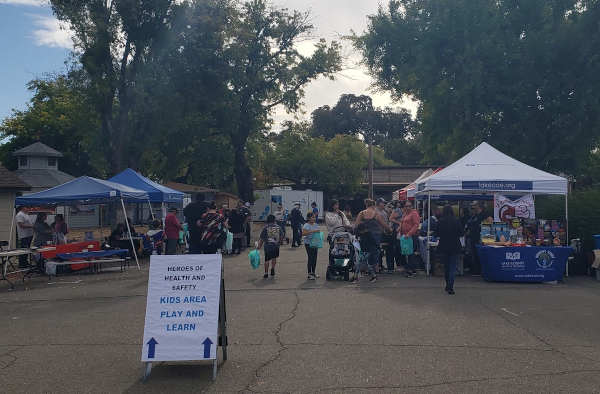
LAKEPORT, Calif. — Hundreds of people came to the Lake County Fairgrounds on Saturday to take part in a day of fun and health.
The 10th annual Heroes of Health and Safety Fair took place from 10 a.m. to 2 p.m.
The event was spread across the fairgrounds, with dozens of booths featuring local organizations, among them, nonprofits, local agencies that help families and children, law enforcement and health professionals.

Children were able to enter raffles for brand new bikes, pick up toys, snacks and other goodies at vendor booths, and learn more about healthy lifestyles.
Fire, police and rescue personnel were on hand on the racetrack to show their equipment and emergency response capabilities.
There also were a variety of health and dental screenings for adults and children, as well as flu and COVD-19 vaccine shots.
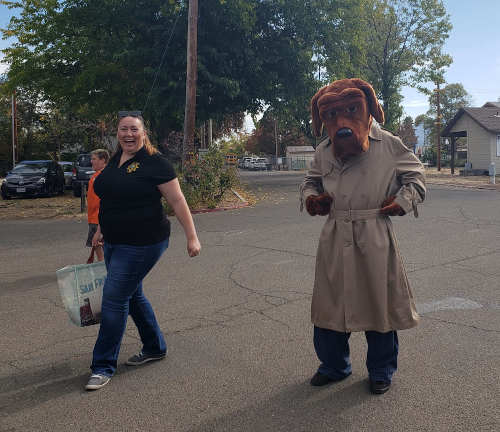
Making special appearances at the event were Smokey Bear, McGruff the crime dog and Sparky the fire dog.
Email Elizabeth Larson at
- Details
- Written by: Lake County News reports
The Mendocino County Sheriff’s Office said its deputies responded to the report of a plane crash in the 21000 block of Airport Road in Covelo at 6 p.m. Friday.
A short time later, deputies were informed the airplane was on fire and the fire was spreading into nearby vegetation.
Personnel from Cal Fire, United States Forestry Service, California Highway Patrol, and Round Valley Tribal Police Department responded to the crash scene as well, officials said.
Once the fire was contained, deputies began searching the debris field. They located the bodies of two deceased individuals who remain unidentified at this time due to the conditions of their bodies, she sheriff’s office said.
Deputies initiated a coroner's investigation specific to aircraft accident protocols and contacted the Federal Aviation Administration and the National Transportation Safety Board.
The circumstances/cause of the crash is currently being investigated by NTSB investigators who were making arrangements to respond to the crash scene upon being notified of the incident by the Mendocino County Sheriff's Office.
The Sheriff's Office Coroner's Division will continue the Coroner's Investigation in conjunction with the NTSB investigation.
Anyone with information that may assist investigators are urged to contact the Mendocino County Sheriff's Office Dispatch Center by calling 707-463-4086.
- Details
- Written by: Elizabeth Larson
Dogs available for adoption this week include mixes of boxer, Chihuahua, collie, dachshund, German shepherd, hound, Labrador retriever pit bull, Rhodesian ridgeback, Siberian husky, shepherd and treeing walker coonhound.
Dogs that are adopted from Lake County Animal Care and Control are either neutered or spayed, microchipped and, if old enough, given a rabies shot and county license before being released to their new owner. License fees do not apply to residents of the cities of Lakeport or Clearlake.
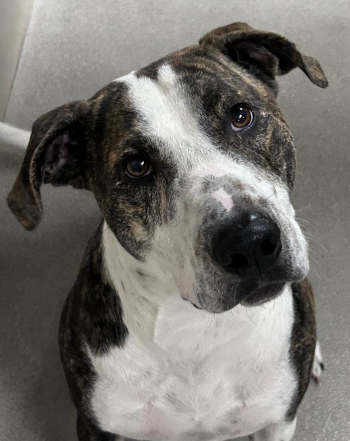
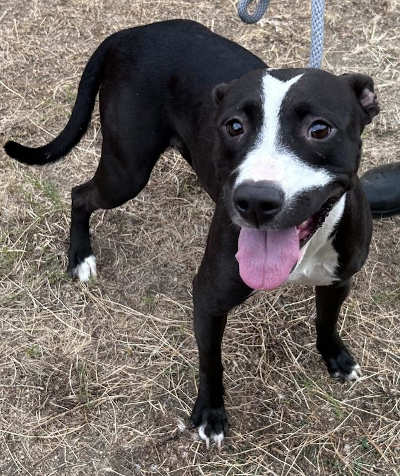
This week’s dogs include “Mom,” a 3-year-old female Labrador retriever-pit bull mix with a black and white coat. She is in kennel No. 29, ID No. LCAC-A-6120.
Another dog ready for her new home is a 3-year-old female pit bull terrier with a brindle coat with white markings. She is in kennel No. 20, ID No. LCAC-A-6103.
The adoptable dogs also include a 1-year-old female shepherd mix with a tan and black coat. She is in kennel No. 26, ID No. LCAC-A-6104.

Those dogs and the others shown on this page at the Lake County Animal Care and Control shelter have been cleared for adoption.
Call Lake County Animal Care and Control at 707-263-0278 or visit the shelter online for information on visiting or adopting.
Email Elizabeth Larson at